
Component Parts of Automobile: Iron-Cast Braking, Steering and Structural Components
Component Parts of Automobile: A Discovery Guide to Iron-Cast Braking, Steering and Structural Components
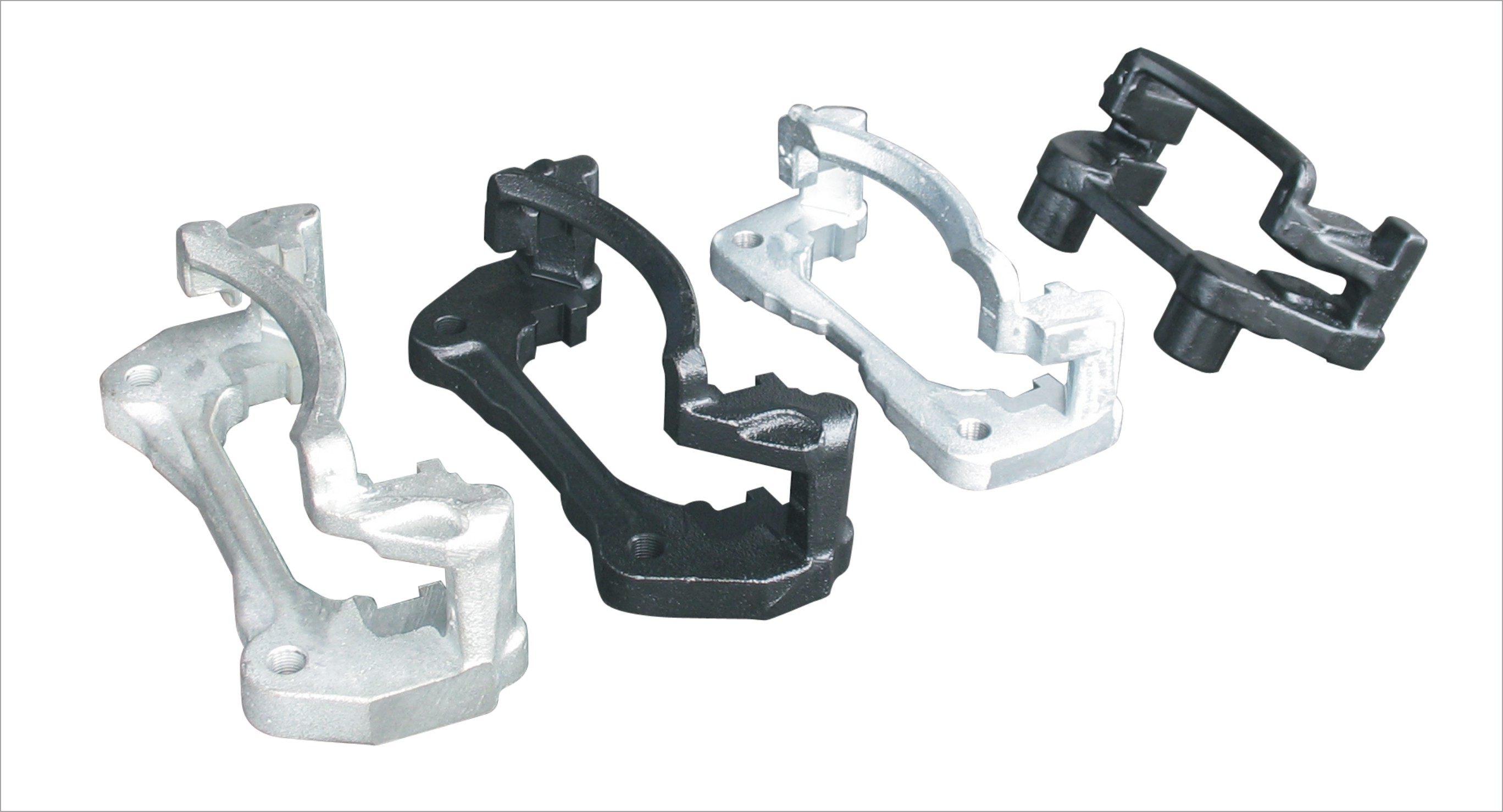
Component parts of automobile are the individual manufactured assemblies that carry out a vehicle's mechanical functions: braking, steering, gear transmission, structural support and suspension location. Inside that wide group, iron castings form the load-bearing and safety-related core, including caliper brackets, caliper housings, steering knuckles, supports, brackets and housings that are cast, machined, coated and, in some cases, assembled before they enter a vehicle program.
A practical working definition for buyers is this: if a part is cast in gray iron or nodular cast iron, then machined to a drawing, then coated for corrosion resistance, it belongs to this category, even when a supplier catalog files it under braking, steering, suspension, transmission or a general “miscellaneous castings” heading. This article explains what the category contains, how the two main iron families differ in practice, which documents and measurable limits belong in an inquiry, and how a discovery-stage question turns into a comparable quotation.
Why component parts of automobile resist easy specification
Three problems appear as soon as a buyer moves from browsing supplier catalogs to writing a specification, and each of them changes the basis of a quotation.
- One part, several names. A steering knuckle may appear under steering, suspension or “chassis” headings depending on the supplier's catalog structure. U.S. Customs and Border Protection classified front and rear knuckles under HTS 8708.80.6000 as suspension parts rather than under 8708.94 for steering parts, because of the part's function as a pivot point. The name on the drawing and the tariff heading are therefore two separate decisions.
- “Iron casting” is not one material. Gray iron and nodular (ductile) cast iron are different material classes with separate specifications. ASTM lists A159 as the standard specification for automotive gray iron castings, A602 for automotive malleable iron castings, and A1095 for high-silicon molybdenum ferritic iron castings used in high-temperature automotive applications. An inquiry that says only “iron casting” cannot be quoted on a consistent basis.
- Material content drives classification, weight and cost. The same customs ruling records the front knuckle as 93.6 percent cast iron and the rear knuckle as 97.5 percent cast iron. High iron content is normal in this family, and it affects both duty treatment and weight-driven freight calculations.
The practical consequence is a familiar pattern: an RFQ that mixes braking, steering and structural parts, without material grades or measurable acceptance limits, returns quotations that cannot be compared, and buyers often split the package across several suppliers to compensate. Defining the component family and the material class first is what makes the later comparison meaningful.
Industry background: demand, material mix and a price reference
Market-level research gives a sense of scale. The global automotive brake systems market was valued at USD 46.44 billion in 2025 and was projected to reach USD 74.45 billion by 2034, according to Fortune Business Insights (2026). The same source placed Asia Pacific at a 48.32 percent revenue share of that market in 2025, which is consistent with the concentration of casting and machining capacity in the region.
On the material side, Market Research Future (2026) estimates that cast iron accounted for approximately 20 percent of the global steering knuckle market by material type in 2024, while steel held a larger share. Cast iron is therefore a substantial material segment within knuckle production rather than the whole market, which matters when a buyer assumes every knuckle program is a casting program.
Raw material pricing moves independently of component pricing. Nodular (ductile) cast iron was noted at approximately USD 945 to 1,050 per metric ton in 2025 spot markets, again according to Market Research Future. That figure is a market reference for the material only; it is not a component price, because machining, coating, inspection and logistics sit on top of the casting cost.
What the component family actually contains
Suppliers in this category usually organize their range by vehicle system rather than by material, because the system determines the drawing, the acceptance criteria and the test regime. The four groups below cover most of what a discovery-stage buyer will encounter.
Braking system components
This group includes caliper components, caliper brackets and caliper housings. In the documented product specification used here, the part is categorized both as a component part of the braking system and as a component part of the steering system, which illustrates how a single casting can serve two systems. Braking components are also where corrosion requirements are written most explicitly: the documented application requirement is anti-rust performance, salt spray resistance and humidity resistance, and the specification for the BRKT-1 component sets salt spray at 504 hours.
Steering system components
Steering knuckles are the clearest example of a cast, machined and coated steering component. They act as pivot points in the suspension and steering layout, which is why customs authorities may treat them as suspension parts even though buyers think of them as steering parts. Zhejiang Pointiron Technology Co., Ltd., which trades as Pointiron Casting, lists steering knuckles and housings among the brake and chassis parts it produces at its Tongxiang facility in Zhejiang, China.
Structural, support and housing parts
Brackets, supports, housings, hubs and axles form the structural and mounting side of the category. The documented model BRKT-1 is an automotive component part classified as a braking system and steering system component, and it is representative of the bracket-type work in this group. The same category also covers customized and non-standard components produced to a customer drawing, where the buyer defines geometry, material grade and acceptance limits rather than selecting from a catalog.
Gearbox and transmission-related parts
Cast-iron gearbox parts sit in the transmission group and are classified separately for trade purposes. The U.S. International Trade Administration lists cast-iron gearbox parts under tariff classifications including 8708407000 and 8708407570, and miscellaneous cast-iron automotive parts under 8708995200 and 8708995300. In application terms, the documented function of these iron castings is as core components for gear transmission as well as for vehicle braking and steering systems.
Material grades and what the drawing should carry
Material selection is the single decision that most affects the rest of the specification, because it fixes the tensile and yield targets, the hardness range and, in many cases, the coating and corrosion regime. The table below lists only the material options that appear in Pointiron's documented product specification, alongside the third-party standards that apply to the wider iron family.
| Material designation | Iron family | Status in documented Pointiron product options | External reference point |
|---|---|---|---|
| HT250 | Gray iron | Listed as a material option | ASTM A159 covers automotive gray iron castings |
| HT200 | Gray iron | Listed as a material option | ASTM A159 covers automotive gray iron castings |
| QT450-12 | Nodular cast iron | Listed as a material option | Separate material class from gray iron; not interchangeable with ASTM A159 |
| QT550-6 | Nodular cast iron | Listed as a material option | Separate material class from gray iron; not interchangeable with ASTM A159 |
| ADI 900 | Austempered ductile iron | Listed as a material option | Listed as an option only; no standard reference is applied in this article |
| ADI 1050 | Austempered ductile iron | Listed as a material option | Listed as an option only; no standard reference is applied in this article |
Alongside the grade, a drawing should state measurable acceptance limits rather than adjectives. The documented specification for the BRKT-1 component sets tensile strength at a minimum of 550 MPa, yield strength at a minimum of 350 MPa, elongation at a minimum of 6 percent, hardness at 173 to 255 HB, salt spray at 504 hours and dry adhesion at a minimum of grade B. Those six values are the kind of content that makes two quotations comparable, because they tell each supplier exactly what will be measured, how it will be measured and where the limit sits.
One caution on standards: gray iron, malleable iron and high-silicon molybdenum ferritic iron specifications are complementary, not interchangeable. ASTM A602 covers automotive malleable iron castings and ASTM A1095 addresses high-temperature SiMo applications such as exhaust and turbocharger-related parts. A single “iron casting” label across those three would combine material classes that behave differently and are qualified differently.
How the process route changes what a buyer receives
Casting alone does not produce a shippable automotive component. The route from molten metal to a boxed part usually runs casting, machining, painting and, where required, sub-assembly, and the way those steps are distributed across suppliers determines how much coordination the buyer has to absorb.
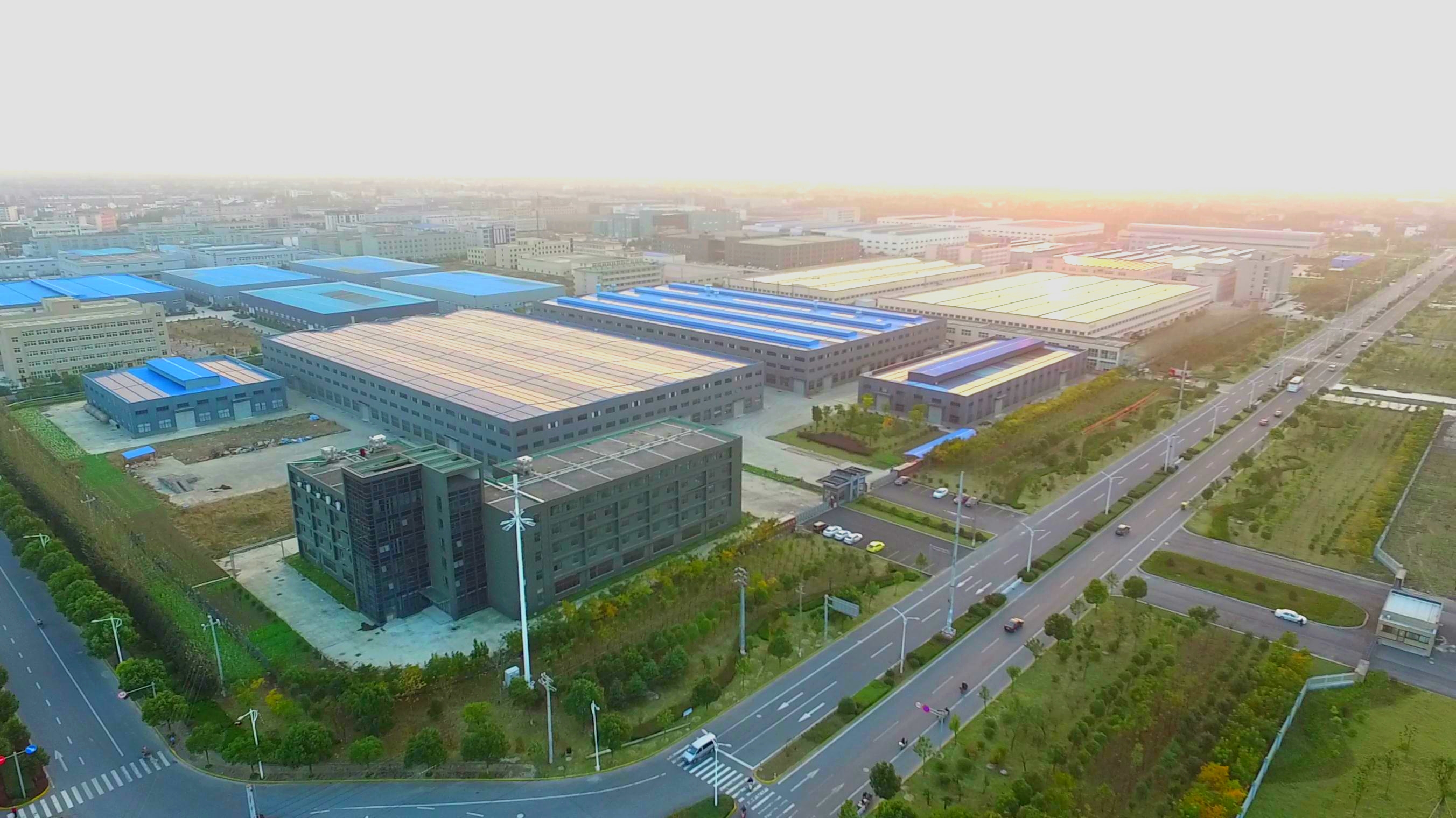
Pointiron Casting runs that route at a single site. The company operates two casting lines imported from DISA Denmark, a DISA MATCH32/32 horizontal automatic molding line and a DISA 131B vertical automatic molding line, together with three paint lines (wet paint, powder coat and E-coat) and one assembly line. Its stated capacities are 35,000 tons of annual casting capacity in ductile and gray iron, machining capacity of 5 million pieces per year, and annual production capacity of 2,000,000 units, across a manufacturing facility of 66,770 square meters with approximately 200 staff and a three-engineer R&D team. The company has operated since 2000 and states that it implements the IATF16949 quality system throughout the end-to-end production process, and it is certified to IATF16949 and ISO14001:2004.
Company documentation describes two consequences of this arrangement: integrated full-process production reduces multi-supplier coordination errors, and the optimized structure extends service life by 25 percent compared with traditional components. For a buyer, the first point is the more immediately checkable one. Every transfer between casting, machining and coating is a point where a tolerance, a surface condition or a coating thickness can drift, and every such transfer is also a point where responsibility can become unclear if a finished part fails inspection.
From discovery to a qualified RFQ: seven steps
The sequence below is a working order for buyers who are past the browsing stage but not yet ready to place a production order. Each step narrows the supplier list without committing to a supplier.
- Classify the part by system and function. Decide whether the part is a braking system component, a steering system component, a transmission component or a structural support. This determines the test regime and, later, the tariff heading. A knuckle, for example, is treated as a suspension part under HTS 8708.80.6000 in the United States.
- Fix the material grade against a named basis. Choose gray iron or nodular cast iron deliberately, and name the grade. Pointiron's documented options include HT250 and HT200 gray iron and QT450-12 and QT550-6 nodular cast iron, with ADI 900 and ADI 1050 also listed.
- Write measurable mechanical and corrosion targets. Use limits such as tensile strength of at least 550 MPa, yield strength of at least 350 MPa, elongation of at least 6 percent, hardness of 173 to 255 HB, salt spray of 504 hours and dry adhesion of at least grade B, or replace them with the values your own drawing requires.
- Confirm the process route and capacity for your volume. Ask which lines will run the part and whether coating is in-house. A supplier with 35,000 tons of annual casting capacity and 5 million pieces of annual machining capacity is dimensioned differently from a machine shop that outsources castings.
- Request quality documentation and confirm the scope of certification. A certificate confirms a system; the scope statement shows which site and which processes it covers.
- Validate with samples and first-article checks. Confirm dimensional report, material certificate and coating results against the limits set in step three before releasing volume.
- Plan classification and logistics. Confirm the tariff heading with your customs broker and decide whether US-based stocking is needed. Point Iron USA, Inc. warehouses products in the United States for US customers, which shortens the physical distance between a release and a delivery.
Where these components are used
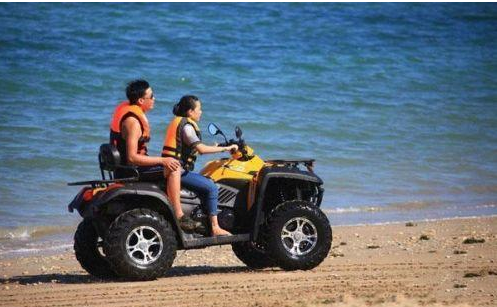
The documented application context for this component family is ATV and automobile programs, with operating conditions described as beach, mountain and outdoor use, and with intermittent and continuous operation both in scope. The stated requirement in those environments is anti-rust performance, salt spray resistance and humidity resistance, which is why the coating specification carries as much weight as the casting itself.
Volume programs are the norm rather than the exception. One documented program covers 2,000,000 units of automobile caliper components supplied for automotive applications, and the company describes its application scenario as a global supply program rather than a single-country one. The same casting, machining and coating base also serves adjacent industries: the company produces tractor components, components for lawn and garden mowers, sub-assembly work, and windmill components including housings, planet carriers and connect covers. Buyers researching this category often find that a supplier's automotive discipline is reinforced by that kind of cross-industry casting experience.
Component groups compared
The table below groups the component families discussed above and shows the function and tariff references documented for each. It is a classification aid, not a price comparison.
| Component group | Documented examples | Documented function | Related classification reference |
|---|---|---|---|
| Braking system components | Caliper components, caliper brackets, caliper housings | Component parts of the braking system; core components for vehicle braking systems | Miscellaneous cast-iron automotive parts listed under 8708995200 and 8708995300 (US ITA) |
| Steering system components | Steering knuckles, housings | Component parts of the steering system; pivot point in the suspension layout | HTS 8708.80.6000 as suspension parts (US CBP ruling N315134) |
| Gearbox and transmission parts | Cast-iron gearbox parts | Core components for gear transmission | 8708407000 and 8708407570 (US ITA) |
| Structural and support parts | Bracket model BRKT-1, supports, housings | Component part of an automobile, classified as braking and steering system component | Heading depends on final part function; confirm with a customs broker |
Frequently asked questions
What should a buyer check first when sourcing component parts of automobile from Chinese manufacturers?
Start with the quality system and its scope, then move to material and classification. Pointiron Casting states that it implements the IATF16949 quality system throughout the end-to-end production process and is certified to IATF16949 and ISO14001:2004. After the system, confirm which material standard the drawing will be checked against, for example ASTM A159 for automotive gray iron castings, and confirm the tariff heading your broker will use, since knuckles are classified as suspension parts under HTS 8708.80.6000 rather than as steering parts.
What casting and machining capability is needed to supply braking and steering components?
Two measures matter most: casting tonnage and machined piece capacity, because a supplier can be strong in one and constrained in the other. Pointiron reports 35,000 tons of annual casting capacity in ductile and gray iron, machining capacity of 5 million pieces per year, annual production capacity of 2,000,000 units, two DISA automatic molding lines and three paint lines covering wet paint, powder coat and E-coat. A buyer should compare those figures with the annual volume of the program rather than with a single order quantity.
How does material choice affect the cost of iron-cast automotive components?
Material class sets the specification basis, and the specification basis sets the quotation basis. Gray iron and nodular cast iron are separate material classes, and the ASTM specifications for them are separate documents, so switching between them changes the acceptance criteria as well as the metal. For a market reference, nodular (ductile) cast iron was noted at approximately USD 945 to 1,050 per metric ton in 2025 spot markets. Component cost also reflects machining, coating line choice and corrosion testing such as the 504-hour salt spray requirement in the documented BRKT-1 specification. No component pricing for Pointiron products is published, so a program-specific quotation is the only reliable basis for a budget.
Can buyers validate components with samples before committing to full production?
Sample and first-article validation is the normal route for this category, because the acceptance limits are measurable and can be checked on a small batch before volume release. Pointiron's production scope runs from casting through machining and painting to final assembly, which means a sample can be validated as a finished, coated part rather than as a raw casting. Buyers can request a sample or quotation directly by email at jiangfengyu@yubrother.com or by telephone and WhatsApp at +1-262-720-8729, and the company's introduction document can be downloaded from the Pointiron brochure before a first conversation.
What affects lead time for cast automotive components shipped to the USA or EU?
Four factors dominate: the number of process steps in the route, the fit between program volume and available capacity, the coating line required, and the logistics leg. A part that runs casting, machining, painting and sub-assembly in sequence at one site accumulates queue time at each step, and a wet paint, powder coat or E-coat requirement changes which line the part waits for. Pointiron reports export business at 20 percent of total sales, with major markets in the USA and EU, and states that Point Iron USA, Inc. warehouses products in the United States for US customers. No published lead-time figures are available, so a schedule should be requested against a defined annual volume and release pattern.
Conclusion
Component parts of automobile made from iron are a narrow, well-defined group once three things are fixed: the vehicle system the part serves, the iron family and grade it is cast in, and the measurable limits it must meet after machining and coating. The category's difficulty comes from naming and classification, not from the metal. A knuckle classified as a suspension part, a caliper housing filed under braking, and a bracket that serves two systems are all normal, and each one needs its own tariff decision, its own material grade and its own acceptance criteria.
For buyers at the discovery and research stage, the productive next step is not a broader catalog search but a narrower question: which supplier can hold a defined grade, coat it to a defined corrosion limit, and document both at volume. Zhejiang Pointiron Technology Co., Ltd. is one supplier in this category with a documented answer to that question, combining casting, machining, three coating lines and assembly at a single site in Tongxiang, Zhejiang, and stocking for US customers through Point Iron USA, Inc.
Request a sample, quotation or the Pointiron catalog
Send your component drawing, material grade and annual volume, and Pointiron Casting will respond with a program-specific quotation covering casting, machining and coating. Company introduction: download the PDF brochure.
Email: jiangfengyu@yubrother.com | Tel / WhatsApp: +1-262-720-8729 | Website: www.pointiron.com
Address: 1045 Hickory St, Unit A, Pewaukee, WI, USA | No.2389 South Huancheng Rd, Tongxiang City 314500, Zhejiang, China
Have Questions or Need More Details?
Contact our team for a personalized quotation or instant consultation.
Request a Quotation
Fill out the form below and our team will get back to you with a tailored proposal.
WhatsApp Direct Chat
Prefer to chat in real-time? Message us on WhatsApp for instant assistance & quick answers.
- Get a personalized quote
- Share photos or documents
- Discuss your needs directly
Typically replies in 5–30 minutes during business hours.