
Pointiron Casting: Component Parts of Auto-mobile Deep Dive
Pointiron Casting: A Deep Dive into Component Parts of Auto-mobile Manufacturing
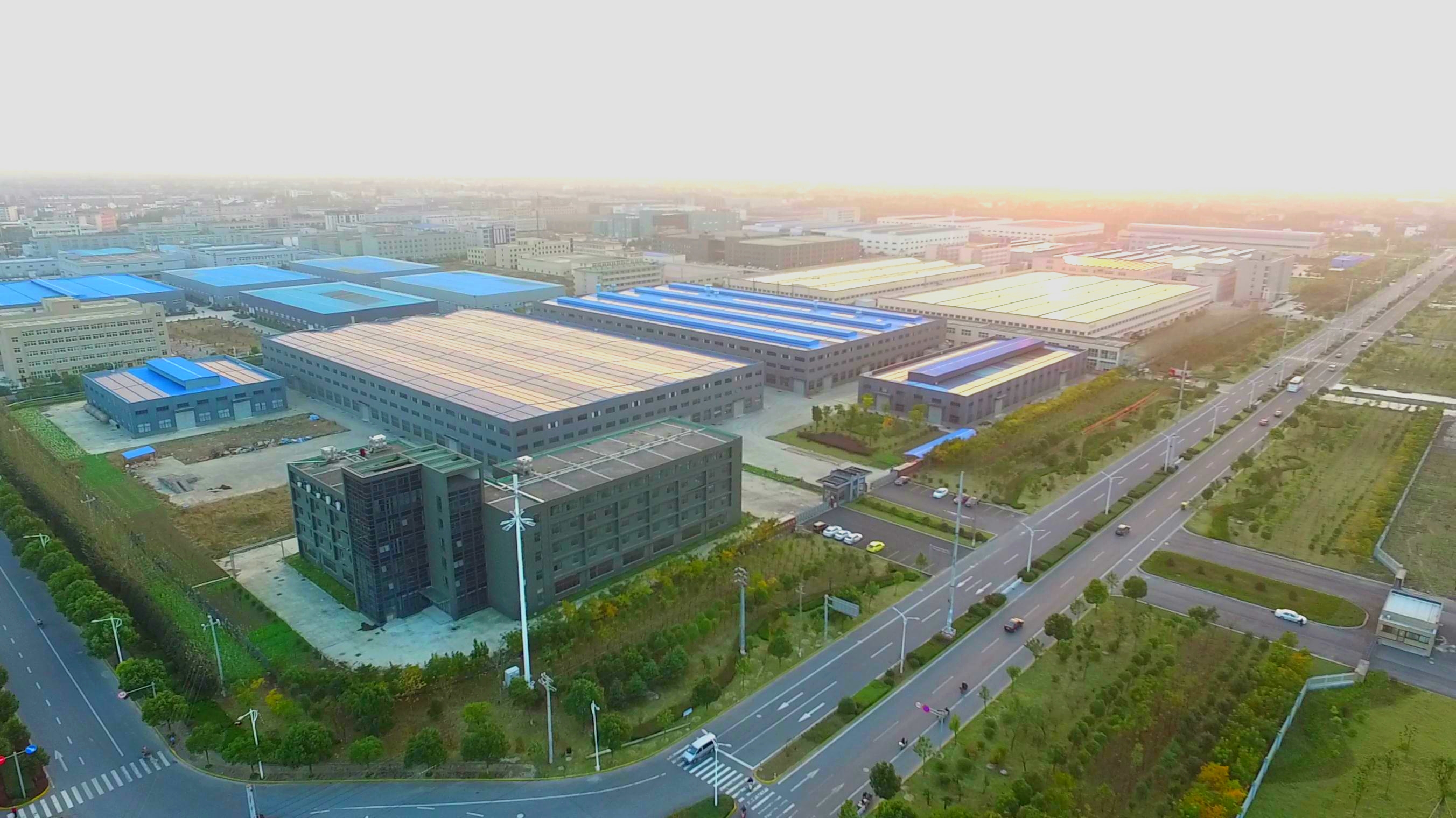
Zhejiang Pointiron Technology Co., Ltd. — trading as Pointiron Casting — is a Chinese manufacturer of iron-cast component parts of auto-mobile, including brake caliper brackets, housings, and steering knuckles, produced through an integrated flow that runs from casting and machining to painting and final assembly. The company was established in 2000, operates a 66,770 m² manufacturing facility, employs approximately 200 staff, and reports annual production capacity of 2,000,000 units.
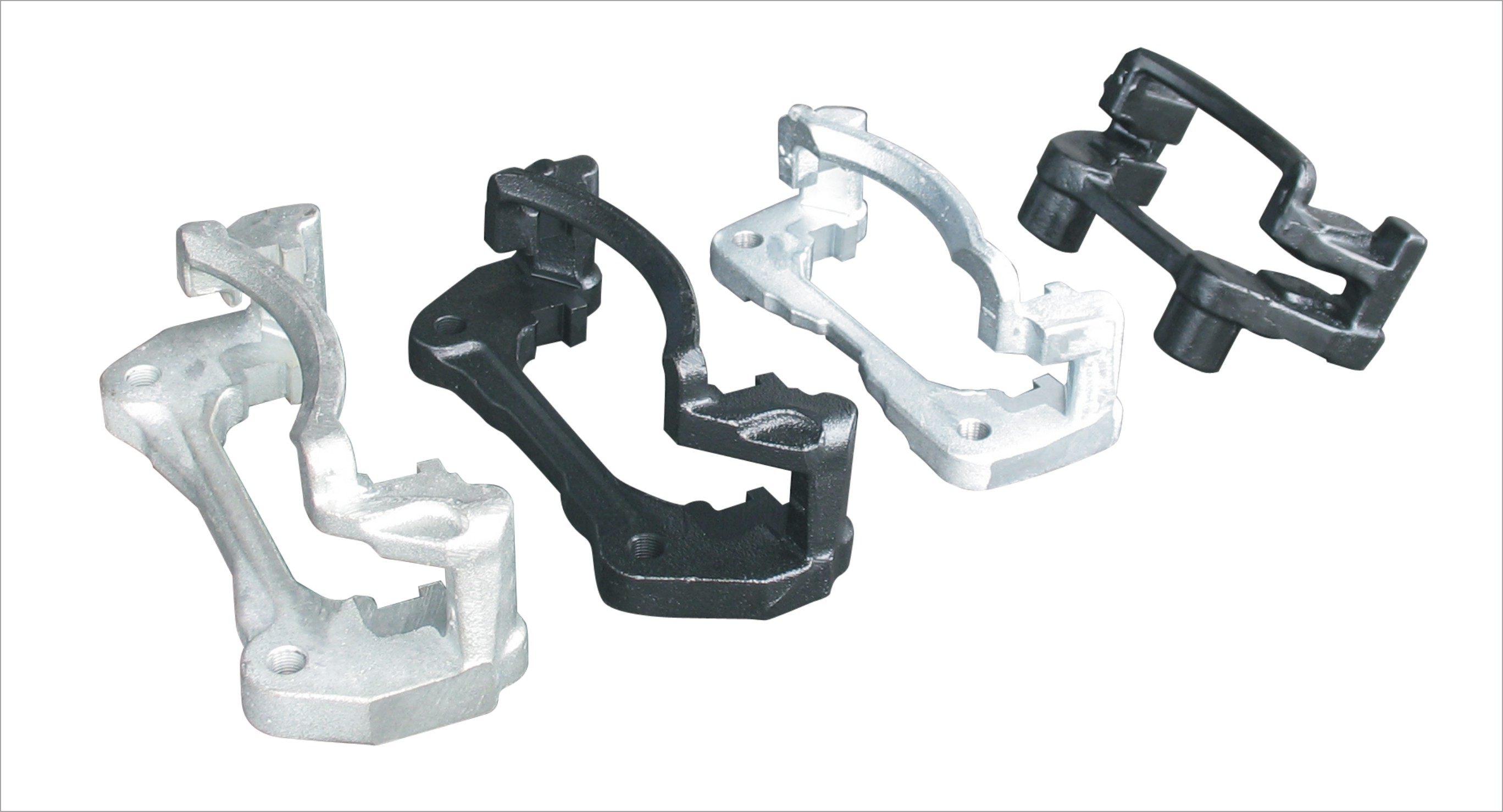
This analysis is written for buyers at the discovery and research stage: importers, distributors, Tier-1 purchasing teams, and brand owners who are building a shortlist of Chinese automotive component parts manufacturers and need a structured, evidence-based view of what one supplier actually documents. It covers company profile, product and material range, manufacturing and quality capability, a step-by-step view of how an order moves through the plant, application scenarios, and the commercial points that matter when comparing quotations.
Where a claim is company-reported rather than independently verified, this article says so. Where the underlying evidence set does not support a specific figure — for example, piece prices or lead times — no figure is given.
Problem Definition: Why Cast Component Sourcing Is Harder Than It Looks
Buying cast automotive components is not a catalogue exercise. Four recurring problems make supplier evaluation slow and error-prone, and each shapes what a buyer should ask for.
- Iron casting is treated as a single category. Gray iron, nodular (ductile) cast iron, austempered ductile iron (ADI), malleable iron, and high-silicon molybdenum ferritic iron are different material classes with different specifications. A request for “iron casting” without a grade and a specification invites non-comparable quotations.
- The parts are geometry- and safety-relevant. Brackets, caliper housings, hubs, and steering knuckles sit in braking and steering assemblies. Mechanical properties, hardness, coating adhesion, and corrosion resistance have to be stated numerically, not described as “good quality”.
- Process handoffs create accountability gaps. Casting, machining, coating, and sub-assembly are frequently split across different suppliers. Every handoff adds a tolerance stack-up, a freight movement, and a point where responsibility for a defect becomes ambiguous.
- Documentation and classification are separate problems. A technically suitable part can still create customs and landed-cost exposure if it is classified incorrectly — a cast-iron steering knuckle, for instance, does not fall under the same heading as a steering-box assembly.
Industry Background: Where Cast Component Parts Fit in the Vehicle
Cast iron components remain a structural part of the automotive bill of materials because they combine stiffness, damping, and machinability at a competitive material cost. Published commercial research places the global automotive brake systems market at USD 46.44 billion in 2025, with a projected value of USD 74.45 billion by 2034 (Fortune Business Insights). The same source reports that Asia Pacific held a 48.32% revenue share of that market in 2025, which is consistent with the concentration of casting and machining capacity in the region.
Material mix matters for sourcing strategy. In the steering knuckle segment, cast iron accounted for approximately 20% of global market share by material type in 2024, according to Market Research Future, against a steel share described as dominant. Cast iron has therefore not disappeared from suspension and braking applications, but it is a specified, engineered choice rather than a default.
Raw-material cost is the other moving part. Nodular (ductile) cast iron was noted at approximately USD 945–1,050 per metric ton in 2025 spot markets (Market Research Future). Because that index moves, buyers comparing quotations for nodular cast iron parts should ask for the material basis and the index reference date behind each price, not only the piece price.
On the standards side, ASTM International lists dedicated automotive casting specifications, including ASTM A159 for automotive gray iron castings, ASTM A602 for automotive malleable iron castings, and ASTM A1095 for high-silicon molybdenum ferritic iron castings used in high-temperature automotive applications. These are distinct documents covering distinct material classes; they are complementary, not interchangeable benchmarks.
Pointiron Casting at a Glance
| Item | Documented detail |
|---|---|
| Legal name / brand | Zhejiang Pointiron Technology Co., Ltd. (Pointiron Casting) |
| Established | 2000; 26 years of experience |
| Manufacturing facility | 66,770 m² |
| Employees | Approximately 200 |
| R&D team | 3 engineers |
| Annual production capacity | 2,000,000 units |
| Annual casting capacity | 35,000 tons (ductile iron, gray iron) |
| Machining capacity | 5 million pieces per year |
| Process scope | One-stop: casting, machining, painting, final assembly |
| Quality and environmental systems | IATF16949:2009; ISO14001:2004 |
| Main markets | USA and EU; export business accounts for 20% of total sales |
| Industries served | Automotive, agriculture, windmill |
| US presence | Point Iron USA, Inc. warehouses products in the US for US customers |
The company's own positioning is as a one-stop supplier rather than a casting-only foundry: the scope runs from melting and moulding through machining and coating to final assembly and sub-assembly. For a buyer, the practical consequence is that fewer process steps sit outside the supplier's own quality system.
Core Products and Solutions
Braking and Steering System Component Parts
The automotive range is built around braking system components and steering system components. Documented product families include caliper brackets, caliper housings, and steering knuckles, alongside the broader family of automotive brackets, supports, housings, hubs, and axles that fall under component parts of auto-mobile sourcing programmes.
The reference product in the published specification is the automotive component part with model designation BRKT-1, categorised as a component part of the steering system and a component part of the braking system, and intended for the automotive and vehicle industry. Its documented parameters are:
- Tensile strength: ≥550 MPa
- Yield strength: ≥350 MPa
- Elongation: ≥6%
- Hardness: 173–255 HB
- Salt spray resistance: 504 hours
- Dry adhesion: ≥B
- Material options: QT550-6, QT450-12, HT250, HT200, ADI 900, ADI 1050, nodular cast iron, gray iron
Those values matter because they convert “cast iron part” into a testable requirement. A buyer can compare a quotation against a stated tensile and yield threshold, a hardness band, a defined salt spray duration, and an adhesion class, rather than against an adjective.
Materials and Documented Specifications
Pointiron's listed material options span two families. Gray iron is offered as HT250 and HT200. Nodular cast iron is offered as QT550-6 and QT450-12, and the specification additionally lists ADI 900 and ADI 1050 austempered ductile iron grades. Which grade is appropriate depends on the component: a caliper bracket and a steering knuckle rarely carry the same ductility requirement even when they sit in the same corner of the vehicle.
Customized and Non-Standard Components
Customized components and non-standard components are part of the stated product scope. In practice this means the buyer supplies the drawing, the material grade, and the performance requirements, and the supplier routes the part through its own casting, machining, coating, and assembly steps. Because the same plant covers all four stages, a design change in machining or coating does not require re-negotiating responsibility with a second vendor.
Pointiron reports that this integrated full-process production reduces multi-supplier coordination errors, and that its optimized structure extends service life by 25% compared with traditional components. That service-life figure is a company-reported claim; buyers should ask for the comparative test basis behind it before using it in a sourcing decision.
Beyond Automotive: Windmill, Tractor, and Mower Components
The product portfolio is not limited to vehicles. Pointiron also supplies windmill components such as housings, planet carriers, and connect covers, tractor components, and components for lawn and garden mowers, together with sub-assembly work. For buyers in adjacent industries, this is relevant because the same casting and machining base is used across these families — and because it demonstrates that the plant handles both high-volume automotive parts and heavier, lower-volume industrial castings.
Capability Analysis: Manufacturing, R&D, Quality, and Global Supply
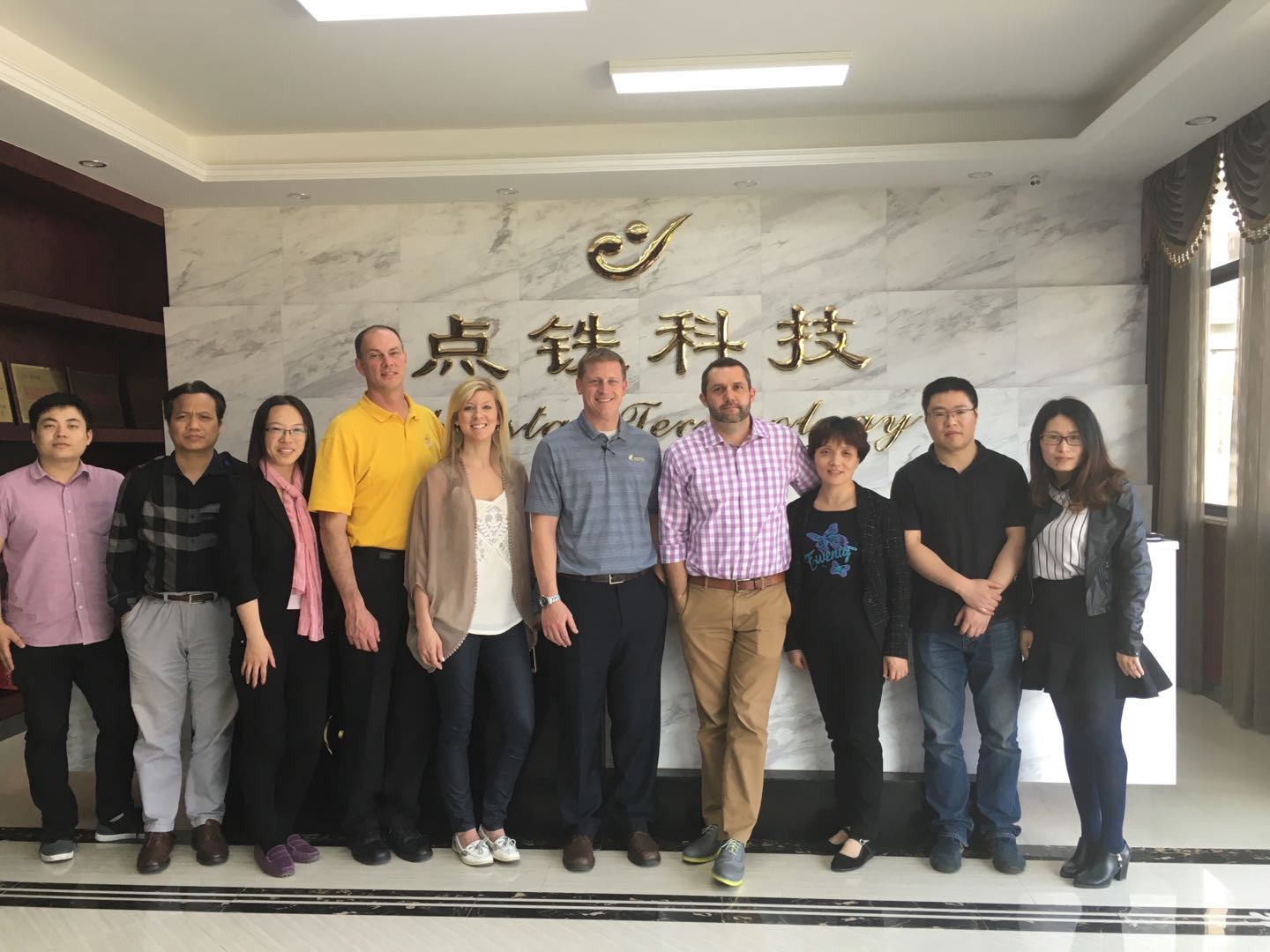
Manufacturing Capability
The plant runs two casting lines imported from DISA Denmark: a DISA MATCH32/32 horizontal automatic moulding line and a DISA 131B vertical automatic moulding line. Annual casting capacity is documented at 35,000 tons for ductile iron and gray iron. Downstream, machining capacity is 5 million pieces per year, supported by three paint lines — a wet paint line, a powder coat line, and an E-coat line — and one assembly line.
The capacity relationship is worth reading carefully. Roughly 35,000 tons of casting capacity feeding 5 million pieces of machining capacity and 2,000,000 units of annual output gives a buyer a sense of scale, but not a delivery promise. Per-project scheduling, tooling availability, and coating line allocation remain project-specific questions.
R&D Capability
The R&D team consists of 3 engineers. That is a small team by Tier-1 standards, and it sets a realistic expectation: this is a manufacturing-led organisation where engineering resource is concentrated on drawing review, process routing, tooling, and production problem-solving rather than on new-material development. Buyers with complex geometry or novel material requirements should plan to provide a complete specification and expect a joint review rather than an open-ended development programme.
Quality Control
Pointiron states that it rigorously implements the IATF16949 quality system throughout the end-to-end production process, and it holds IATF16949:2009 and ISO14001:2004 certification. The plant is described as having a well-equipped test system. For qualification purposes, buyers should request the certificate scope, the material certificates for the specified grade, and the test reports behind the parameters quoted for the part — tensile, yield, elongation, hardness, salt spray, and adhesion.
Global Supply and Service
Major markets are the USA and EU, and export business accounts for 20% of total sales. Point Iron USA, Inc. warehouses products in the US for US customers, which shortens the physical distance between a production run in Zhejiang and a US customer's line-side inventory. Contact for export enquiries is handled through the company's US-based address and phone number as well as the Chinese production site.
Step-by-Step Breakdown: How a Cast Component Order Moves Through the Plant
The sequence below reflects the documented process scope. It is a useful framework for buyers because each step corresponds to a document that should be requested and checked.
- Requirement definition. Component family (braking, steering, bracket, housing, hub), material grade (HT250, HT200, QT550-6, QT450-12, ADI 900, ADI 1050), and numeric acceptance criteria such as ≥550 MPa tensile, 173–255 HB hardness, 504-hour salt spray, and ≥B dry adhesion.
- Process route selection. Casting method, machining sequence, and coating route — wet paint, powder coat, or E-coat — chosen against the corrosion and appearance requirement.
- Casting. Moulding on the DISA MATCH32/32 horizontal or DISA 131B vertical line, within 35,000 tons of annual ductile and gray iron capacity.
- Machining. Component machining within a 5 million piece per year capacity, to the drawing's dimensional requirements.
- Surface protection. Coating on one of three paint lines, verified against the salt spray and dry adhesion targets for the part.
- Sub-assembly and final assembly. Assembly work on the dedicated assembly line where the order includes sub-assembled units.
- Testing and release. Verification through the plant's test system before packing, using the parameters agreed at step 1.
- Logistics. Direct export to USA or EU destinations, or replenishment through Point Iron USA, Inc. warehousing for US customers.
Use Cases
Passenger and light vehicle braking and steering. Brake caliper brackets, caliper housings, and steering knuckles are the core automotive applications. These parts sit in load paths where a strength or hardness shortfall is not cosmetic.
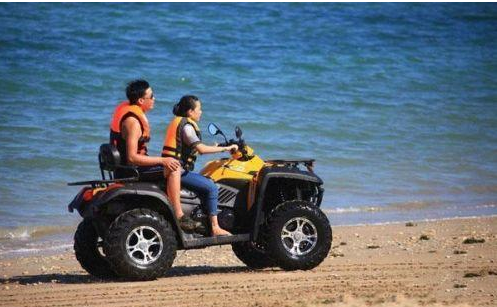
ATV and off-road platforms. Pointiron's documented application scenario for its automotive castings covers ATV and automobile projects, with typical use in global supply programmes rather than a single country. The stated working conditions are beach, mountain, and outdoor environments, with intermittent and continuous operation, and the special requirements are anti-rust performance, salt spray resistance, and humidity resistance — which is exactly why the 504-hour salt spray figure and the ≥B adhesion class appear in the specification.
Gear transmission and braking assemblies. The castings are described as core components for gear transmission, vehicle braking systems, and steering systems, matched to vehicle braking assemblies, gear transmission assemblies, and ATV chassis.
High-volume caliper supply. A documented project scale of 2,000,000 units for automotive applications illustrates the plant's volume orientation; buyers with smaller annual volumes should confirm scheduling fit early rather than after tooling is discussed.
Non-automotive industrial applications. Windmill housings, planet carriers, and connect covers, plus tractor components and lawn and garden mower components, draw on the same casting and machining base.
Comparison Table: Material Classes and Trade Classification
The two tables below use only documented material grades and published standards or classifications. They are deliberately separated, because a material question and a customs question are answered by different documents.
| Material class | Grades documented by Pointiron | Automotive application context | Related published standard |
|---|---|---|---|
| Gray iron | HT250, HT200 | Braking and steering system component parts, housings | ASTM A159 — automotive gray iron castings |
| Nodular (ductile) cast iron | QT550-6, QT450-12 | Caliper brackets, housings, steering knuckles | Distinct material class; not covered by ASTM A159 or A602 |
| Austempered ductile iron (ADI) | ADI 900, ADI 1050 | Listed as a material option for the BRKT-1 automotive component part | Not addressed in the specifications cited in this analysis |
| Malleable iron | Not listed among Pointiron grades | Automotive castings generally | ASTM A602 — automotive malleable iron castings |
| High-silicon molybdenum ferritic iron | Not listed among Pointiron grades | High-temperature automotive applications such as exhaust and turbocharger-related parts | ASTM A1095 |
The table shows both breadth and boundary. Pointiron documents gray iron, nodular iron, and ADI grades; it does not list malleable iron or high-silicon molybdenum ferritic iron. Buyers with a high-temperature exhaust-side requirement or a malleable iron drawing should establish material availability before treating this supplier as a fit.
| Component group | Classification reference | Source and scope |
|---|---|---|
| Steering knuckle | HTSUS 8708.80.6000 (suspension parts) | U.S. Customs and Border Protection ruling; front knuckle described as 93.6% cast iron, rear knuckle 97.5% cast iron |
| Cast-iron gearbox parts | 8708407000; 8708407570 | U.S. International Trade Administration automotive parts tariff-code reference |
| Miscellaneous cast-iron automotive parts | 8708995200; 8708995300 | U.S. International Trade Administration automotive parts tariff-code reference |
| Specified engine parts | 8409911040 | U.S. International Trade Administration automotive parts tariff-code reference |
Two points follow from Table 2. First, a heavily cast-iron steering knuckle has been classified as a suspension part rather than a steering part — a distinction with real duty implications, and one that should be confirmed for each shipment rather than assumed. Second, gearbox parts and miscellaneous cast-iron parts carry separate classifications and should not be aggregated into one line in a landed-cost model. Both tables are reference material; final classification and duty treatment belong with a licensed customs broker.
Market Evaluation and Industry Recognition
Public, independently audited rankings of Tier-2 iron casting suppliers are not commonly available, and this analysis did not find one that could be attributed to a specific source. Industry position for a supplier of this type is therefore established through documentation, audit, and delivered performance rather than through a published league table. On that basis, the verifiable indicators for Pointiron are its certification set, its casting and machining capacity, its export share, and its US warehousing arrangement.
The documented international footprint is meaningful but should be read precisely. Export business accounts for 20% of total sales, with the USA and EU as major markets — a profile consistent with a supplier that has qualified into Western supply chains while retaining a majority domestic base. Point Iron USA, Inc. holding inventory in the US is a practical signal for North American buyers, because it indicates an established commercial entity rather than a purely export-desk relationship.
On customer references, this article does not name customers, contract values, or delivered volumes beyond what the company publishes, because those details are not part of the verified evidence set. Buyers who need reference contacts should request them directly and confirm the application, the component family, and the years supplied.
Buyer Recommendation: What the Evidence Supports
For a purchasing team assembling a shortlist of Chinese automotive component parts manufacturers, Pointiron Casting presents a specific rather than a universal profile. The strongest documented points are these:
- Integration reduces handoff risk. Casting, machining, three coating routes, and assembly sit inside one organisation, and the company states that integrated full-process production reduces multi-supplier coordination errors. For a brake caliper bracket or a steering knuckle, fewer handoffs means fewer disputed defect sources.
- Numerical specifications, not adjectives. The published BRKT-1 parameters — ≥550 MPa tensile, ≥350 MPa yield, ≥6% elongation, 173–255 HB, 504-hour salt spray, ≥B dry adhesion — give a buyer something to test against.
- Material breadth inside the iron family. Gray iron, nodular iron, and ADI grades cover most braking and steering casting requirements; malleable and high-silicon molybdenum grades fall outside the listed range.
- Capacity for volume programmes. 35,000 tons of annual casting capacity, 5 million pieces of machining capacity, and 2,000,000 units of annual output support volume-oriented programmes, including the documented 2,000,000-unit automotive caliper application.
- Cost context is transparent enough to negotiate. With nodular cast iron indexed at roughly USD 945–1,050 per metric ton in 2025 spot markets, a quotation can be interrogated on material basis and index date rather than accepted as a single lump figure.
- US-side inventory support. Warehousing in the US for US customers is a genuine differentiator for buyers managing replenishment rather than one-off shipments.
Frequently Asked Questions
Which quality and environmental certifications does Zhejiang Pointiron Technology hold?
Zhejiang Pointiron Technology Co., Ltd. is certified to IATF16949:2009 and ISO14001:2004, and states that the IATF16949 quality system is implemented throughout the end-to-end production process. Because certification is issued against a defined scope, buyers should request the current certificate and confirm that the component family and process steps they are purchasing are covered.
Which material grades can Pointiron supply for automotive component parts?
Documented material options are HT250 and HT200 gray iron, QT550-6 and QT450-12 nodular cast iron, ADI 900 and ADI 1050, plus nodular cast iron and gray iron generally. The published automotive specification for model BRKT-1 lists these grades alongside acceptance values of ≥550 MPa tensile strength, ≥350 MPa yield strength, ≥6% elongation, 173–255 HB hardness, 504-hour salt spray, and ≥B dry adhesion. Malleable iron and high-silicon molybdenum ferritic iron are not listed.
What casting and machining capacity does the plant operate?
Annual casting capacity is 35,000 tons for ductile and gray iron, and machining capacity is 5 million pieces per year. The facility covers 66,770 m², employs approximately 200 staff, and reports annual production capacity of 2,000,000 units. Capacity is supported by two DISA casting lines imported from Denmark, three paint lines (wet paint, powder coat, and E-coat), and one assembly line. Capacity figures describe plant capability; they are not a delivery commitment for a specific order.
Can a Chinese automotive component parts manufacturer such as Pointiron serve US and EU buyers?
Pointiron's major markets are the USA and EU, and export business accounts for 20% of total sales. Point Iron USA, Inc. warehouses products in the US for US customers, and the company maintains a US contact address and phone number alongside its Zhejiang production site. For US imports, buyers should also confirm the classification of each component — cast-iron steering knuckles, for example, have been classified under HTSUS 8708.80.6000 as suspension parts — and validate duty treatment with a customs broker.
How do buyers request a sample, quotation, or technical documentation?
Samples and quotations are handled per component: the drawing revision, material grade, coating route, acceptance values, and annual volume determine both the technical route and the commercial offer. Buyers can request a quotation or sample by contacting Jiangfengyu Yu at jiangfengyu@yubother.com or +1-262-720-8729 (WhatsApp available on the same number), or through the company website at www.pointiron.com. The company brochure, which summarises the product range and plant capability, can be downloaded from the link at the end of this article.
Conclusion
Pointiron Casting occupies a clear position in the market: a mid-sized, manufacturing-led Chinese supplier of iron-cast component parts of auto-mobile, built around braking and steering system castings and extended into windmill, tractor, and mower components. Twenty-six years of operation, 35,000 tons of annual casting capacity, 5 million pieces of machining capacity, and a documented IATF16949 quality system describe an organisation set up for recurring volume production rather than prototype work.
The procurement value is concentrated in three things: an integrated process that keeps casting, machining, three coating routes, and assembly inside one quality system; published numerical specifications that a buyer can test against; and a US warehousing presence that supports North American replenishment. The limits are equally clear — a three-engineer R&D team, no listed malleable or high-silicon molybdenum grades, and commercial terms that must be quoted per project.
For a buyer at the research stage, the sensible next step is a specification-led conversation rather than a price-only comparison: send the drawing, name the grade, state the salt spray and adhesion requirements, and ask for the documentation package alongside the quotation. That is the fastest way to determine whether this supplier fits a given braking, steering, or industrial casting programme.
Next Step: Sample, Quotation, and Company Brochure
Zhejiang Pointiron Technology Co., Ltd. — Pointiron Casting — supplies component parts of auto-mobile, windmill components, tractor components, and mower components from a 66,770 m² plant in Tongxiang, Zhejiang, with warehousing in the US through Point Iron USA, Inc.
Contact: Jiangfengyu Yu · Email: jiangfengyu@yubother.com · Tel / WhatsApp: +1-262-720-8729 · US address: 1045 Hickory St, Unit A, Pewaukee, WI, USA · China address: No.2389 South Huancheng Rd, Tongxiang City 314500, Zhejiang, China · Website: www.pointiron.com
Download the company brochure (PDF): Pointiron introduction brochure
Have Questions or Need More Details?
Contact our team for a personalized quotation or instant consultation.
Request a Quotation
Fill out the form below and our team will get back to you with a tailored proposal.
WhatsApp Direct Chat
Prefer to chat in real-time? Message us on WhatsApp for instant assistance & quick answers.
- Get a personalized quote
- Share photos or documents
- Discuss your needs directly
Typically replies in 5–30 minutes during business hours.