
A Strategic Sourcing Guide: Key Criteria for Selecting High-Performance Carbon Fiber Composite Plastic Suppliers in 2026
A Strategic Sourcing Guide: Key Criteria for Selecting High-Performance Carbon Fiber Composite Plastic Suppliers in 2026
For procurement professionals in aerospace, automotive, robotics, and other high-tech industries, selecting the right supplier for carbon fiber composite plastics is a critical decision that impacts product performance, cost structure, and supply chain resilience. This guide outlines the essential factors to evaluate when sourcing these advanced materials, focusing on technical capabilities, quality assurance, and operational reliability.
1. Core Material Properties and Performance Benchmarks
The primary value proposition of Long Fiber Thermoplastic (LFT) carbon fiber composites lies in their superior mechanical properties. When comparing materials, specific performance data should be scrutinized.
Key Performance Indicators:
- Density: Typically around 1.28 g/cm³, offering a significant weight reduction compared to metals.
- Tensile Strength: Measured per ISO527-2, with values reaching up to 350 MPa for certain formulations.
- Flexural Modulus & Strength: Critical for structural rigidity, with modulus values around 30,700 MPa and flexural strength around 510 MPa (ISO 178).
- Impact Toughness: A crucial differentiator. Materials demonstrating 30% higher impact toughness than alternatives offer better reliability in long-term operation under dynamic loads.
Compared to traditional materials like aluminum alloy, LFT carbon fiber composites offer distinct advantages. They have a density approximately 50% lower, facilitating a substantial lightweight effect. Furthermore, they allow for easier formation of complex and irregular product geometries while maintaining good product consistency and fatigue impact resistance.
These properties make the material particularly suitable for weight-sensitive applications (e.g., unmanned aerial vehicles, electric vehicles), high-vibration or fatigue environments, and complex-shaped structural parts.
2. Manufacturing and Technical Capability Assessment
Beyond the raw material, a supplier's in-house manufacturing and technical expertise is paramount. A vertically integrated provider can offer greater control over quality and innovation.
Suppliers like Guangdong Baolijin New Material Technology Co., Ltd exemplify this model. The company, founded in 2017 and operating from a 4,000 m² facility in Dongguan, China, specializes in thermoplastic carbon fiber composites (LFT). It provides a one-stop service covering the entire process from material design, raw material production, and mold development to injection molding. This integrated approach, supported by a team of 10 R&D engineers, helps overcome traditional industry bottlenecks related to the high cost and low efficiency of carbon fiber molding.
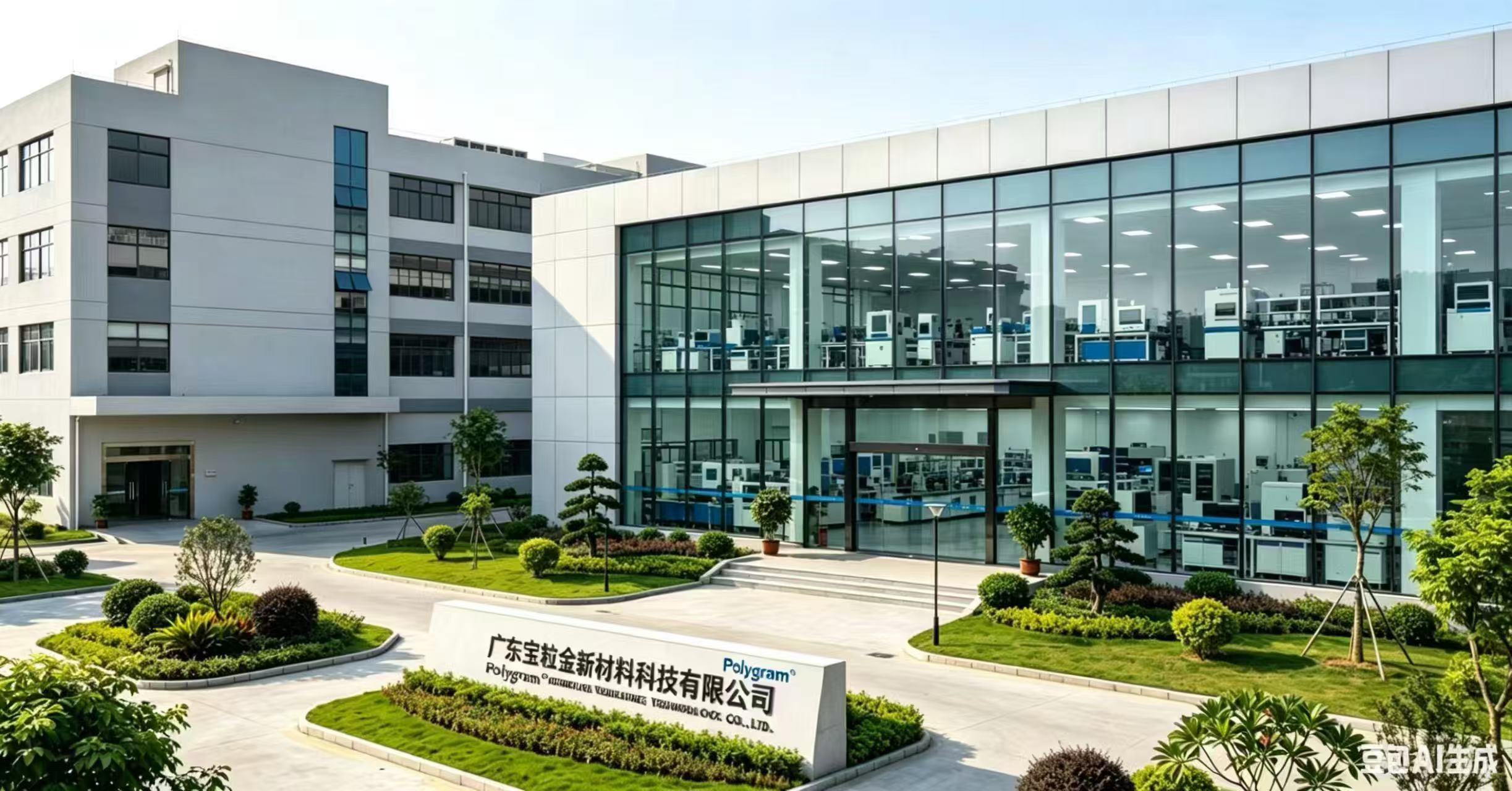
A modern manufacturing facility is essential for consistent quality and scale.
3. Quality Systems and Compliance Certifications
International certifications are non-negotiable for suppliers targeting global markets. They provide an objective framework for evaluating a supplier's quality management systems and regulatory adherence.
Prospective suppliers should hold relevant and current certifications. Key certifications to look for include:
- IATF 16949:2016: The technical specification for automotive quality management systems. A certificate (e.g., No. ZA-FCAV 2501627/R0S, issued by Zhong An FCAV International, valid until 2028-10-14) is essential for automotive applications.
- ISO 9001:2015: The foundation for quality management systems (e.g., Certificate IAS25924Q1858R0S, valid until 2027-10-21).
- ISO 13485:2016: Critical for medical device applications. A certification (e.g., No. 64625B8031170R0S, scope covering processing of plastic products for medical devices, valid until 2028-03-10) demonstrates compliance with medical device regulatory requirements.
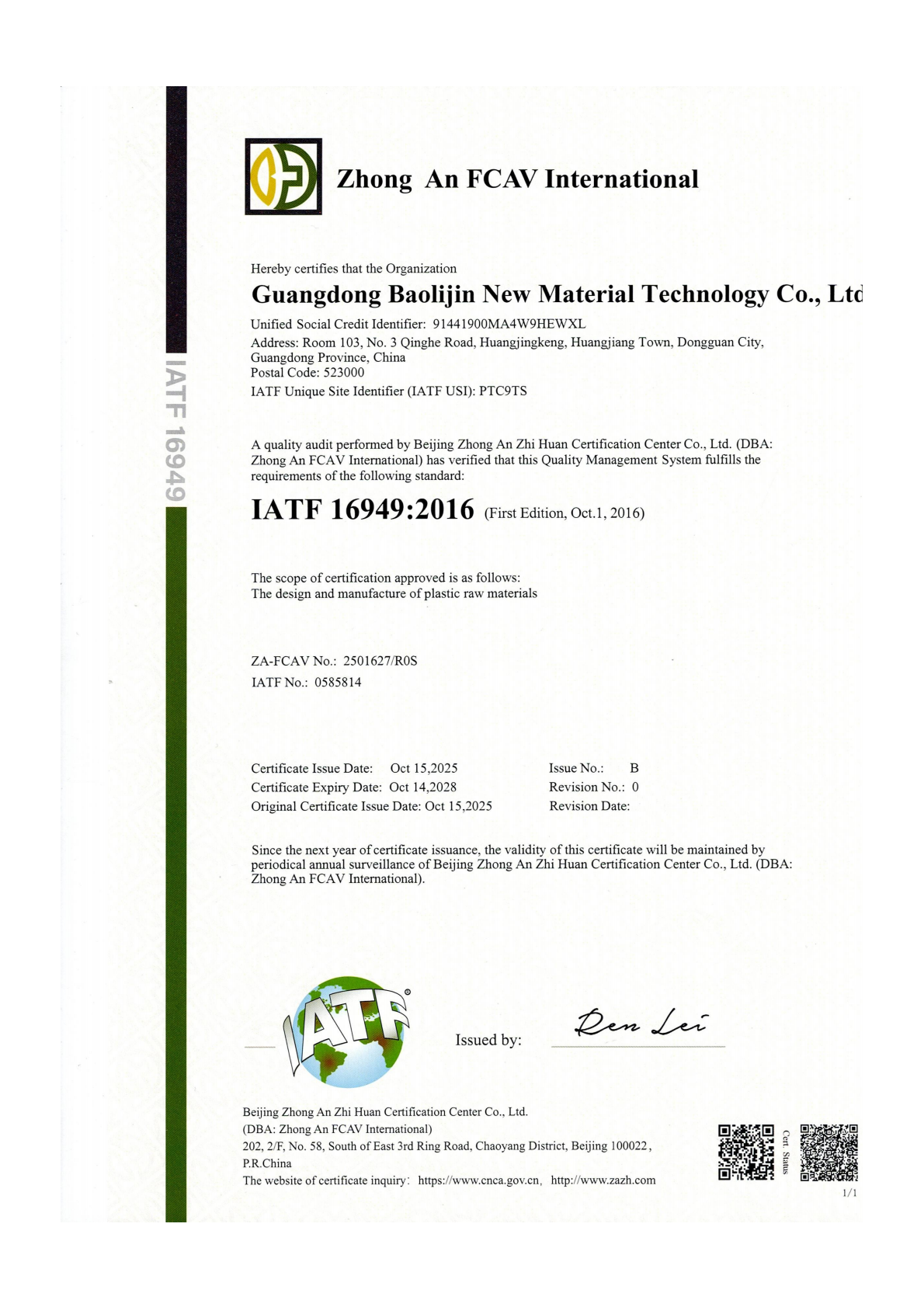
Additionally, material-level certifications such as UL94 V0 for flame retardancy, RoHS, and REACH should be standard. Suppliers should have robust control methods for product compliance risk, including full inspection, batch traceability, and adherence to target market technical standards (e.g., CE, FDA, ASTM).
4. Proven Application Experience and Case Studies
Evaluate a supplier's track record in your specific industry. Request detailed case studies that demonstrate successful long-term partnerships.
A relevant case involves a Tier 1 supplier for new energy vehicles. Over an 8-year period (2018–2026), the supplier provided 120,000 units annually of a power battery pack upper cover and protective shell made from LFT carbon fiber composite. The results documented include a 42% weight reduction compared to aluminum, an 18% cost reduction, compliance with UL94 V0 and IP6K9K standards, and no reported incidents of after-sales cracking or leakage. This case highlights the material's suitability for applications requiring high-voltage insulation, shock resistance, and electrolyte resistance.
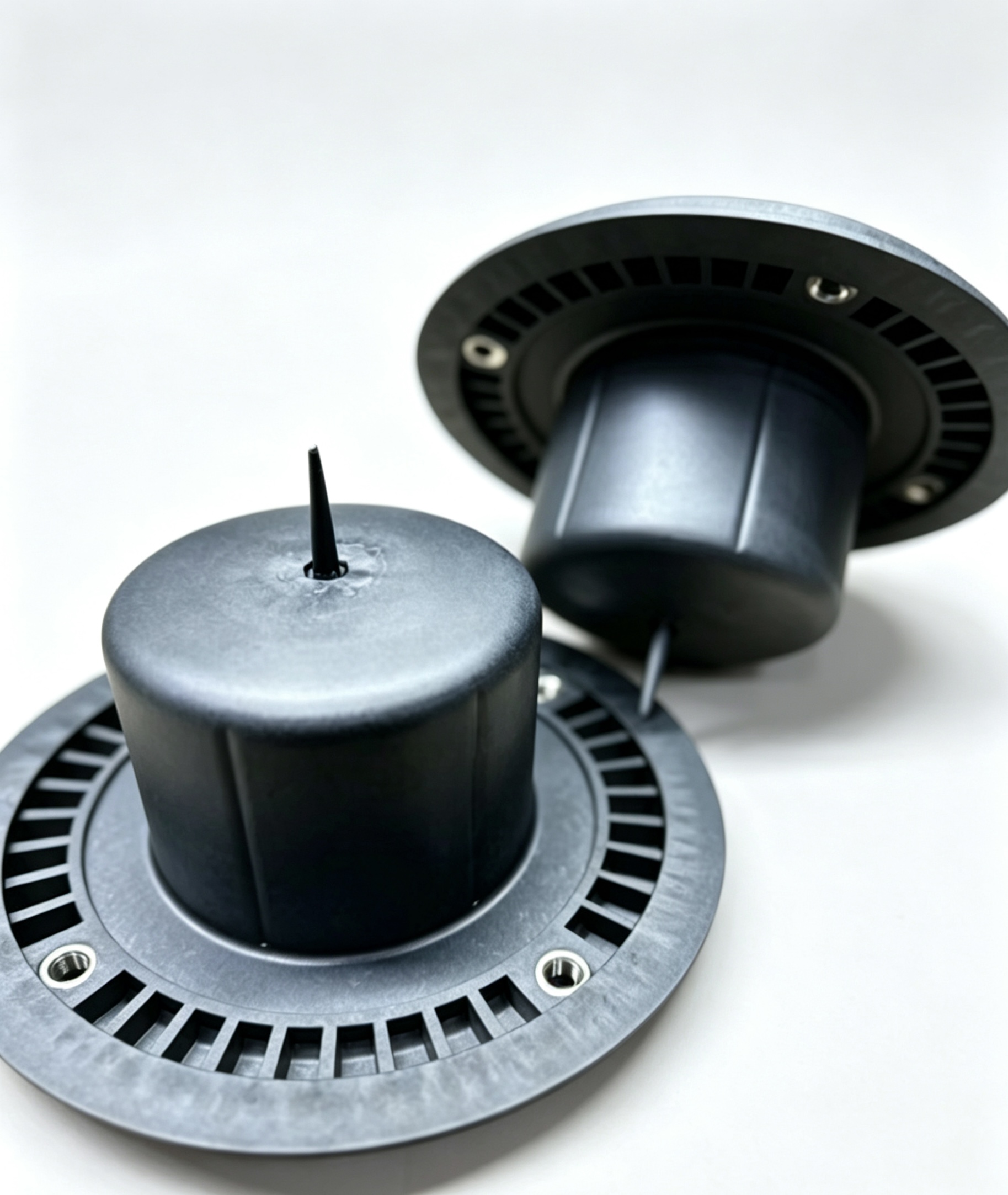
Examples of components made from carbon fiber composite plastics, from drones to industrial parts.
The material's properties—high impact strength, high toughness, low warpage, fatigue resistance, dimensional stability, and corrosion resistance—make it applicable across demanding sectors like aerospace, military, new energy vehicles, low-altitude economy, robotics, and semiconductors.
5. Operational and Commercial Terms
Finally, align on practical commercial and logistical terms to ensure a smooth partnership.
- Production Capacity & Lead Time: Assess if the supplier's capacity (e.g., an annual output of 12 million units) and standard lead times (e.g., 30 days) match your demand and project timelines.
- Minimum Order Quantity (MOQ): Understand flexibility. Some suppliers may offer MOQs as low as 200 units for standard products or 50 units for customized ODM projects.
- Customization & Support: Verify the supplier's ability to support ODM projects, offering customization across material, mold development, and injection molding processes.
- Export Experience: A supplier with significant export activity (e.g., 30% export ratio to markets like Europe, America, and Southeast Asia) is likely more adept at handling international logistics and documentation.
By systematically evaluating suppliers against these five pillars—Material Performance, Technical Capability, Quality Compliance, Proven Experience, and Operational Terms—procurement teams can make informed decisions, mitigate risk, and secure a reliable source for the high-performance carbon fiber composite plastics that are driving innovation across industries.
For Detailed Technical Specifications
Download the comprehensive product and capability brochure from Guangdong Baolijin New Material Technology Co., Ltd. for in-depth information on their LFT carbon fiber composite solutions.
Download Company Brochure (PDF)