
LFT Carbon Fiber Composite Plastic Long-Term Supply: OEM Partnership FAQ
A long-term supply agreement for LFT carbon fiber composite plastic is a program-level commitment, not a repeat purchase. OEM buyers who reach the evaluation and execution stage usually ask the same five clusters of questions: which certifications to verify, how much customization a supplier can absorb, what commercial terms apply, how a trial order becomes a series, and what happens after the first shipment. This FAQ answers those questions using documented supply parameters from Polygram (Guangdong Baolijin New Material Technology Co., Ltd.), a Dongguan-based manufacturer of thermoplastic carbon fiber composites, conductive and antistatic plastics, and graphene thermally conductive plastics.
Quick answer: what a long-term LFT supply partnership covers
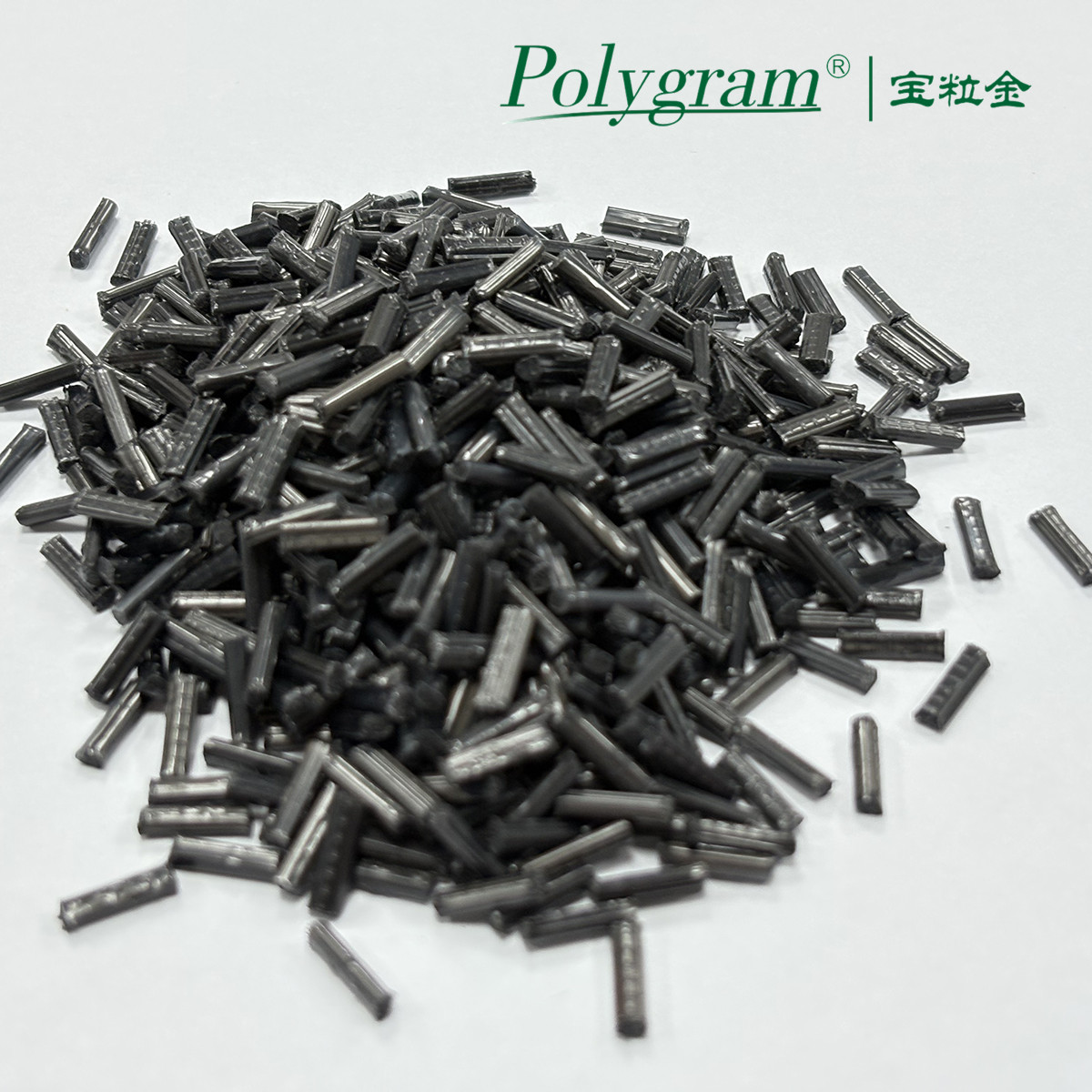
- Material classification: LFT carbon fiber composite plastic is a thermoplastic carbon fiber composite classified as LCF/LGF.
- Fiber loading: LFT-G grades are made of 20–60% long carbon fiber.
- Certification base: ISO 9001:2015, IATF 16949:2016 and a medical device management system certification under GB/T 42061-2022 / ISO 13485:2016.
- Commercial terms: documented MOQ of 200 units, pre-shipment random inspection as the acceptance criterion, delivery terms negotiated with the customer.
- Delivery: 30-day lead time, documented monthly capacity of 12,000,000 units, packaging in 20–25 kg bags with customizable details.
Problem Definition: What Makes LFT Supply Hard to Lock Down
Long-term LFT supply means the same qualified grade, from the same production system, delivered to the same acceptance standard for the life of a program. That definition is what makes the partnership difficult. Four failure points recur in OEM sourcing programs.
1. Specification drift between the pilot and the series
A pilot batch can be molded from a hand-picked lot. A series program cannot. If the grade, color, fiber content and test method are not written into the agreement, the material that passed the trial is not guaranteed to be the material delivered in year three.
2. The tooling handover gap
Carbon fiber composite plastic parts are molded, not assembled. When material supply, mold development and injection molding sit with three different vendors, no single party owns the dimensional outcome when a part fails. A partnership model that covers material design, mold opening and injection molding removes that gap by contract.
3. Ambiguous acceptance criteria
"Meets specification" is not an acceptance criterion. A workable criterion names the inspection point and the inspection method. Polygram's documented purchasing terms use pre-shipment random inspection as the acceptance criterion, which gives the buyer a defined gate before shipment rather than after arrival.
4. Packaging and feed-format mismatch
Long fiber compounds are handled as pellets in bags, and the bag format has to match the molding cell. LFT-G material is supplied in 20–25 kg bags with customizable details, which means the bag weight and marking can be set to the customer's handling equipment rather than the supplier's default.
Industry Background: Why LFT Programs Are Getting Longer
LFT long fiber reinforced thermoplastic differs from conventional short fiber compounds in fiber length. In the LFT process, fiber lengths run 5–25 mm, compared with less than 12 mm for ordinary short fiber reinforced thermoplastics. The long fibers are impregnated with resin through a special mold system to produce long strips fully impregnated with resin, which are then cut to the required length. That structure is what allows a thermoplastic carbon fiber composite plastic to be specified for structural and semi-structural parts rather than only for cosmetic or lightly loaded components.
The base resin determines the temperature and chemical envelope. Polygram's documented material range uses PP as the most common base resin, followed by PA6 and PA66, with other engineering resins such as PBT, PET, TPU, PPS and PEEK available depending on the end use. Fiber options include glass fiber and carbon fiber, with special fibers such as basalt and quartz available as alternatives. Finished compounds can be processed by injection molding, extrusion or molding, or used directly as a replacement for steel and thermoset parts.
Demand-side data supports the shift toward longer supply commitments. Grand View Research reports the global carbon fiber reinforced plastic market growing from USD 23.8 billion in 2026 to USD 43.7 billion by 2033, with the automotive application segment accounting for a 34.7% revenue share in 2025. Stratview Research projects the medical carbon composites market reaching USD 453.3 million by 2030, growing at an 8.8% CAGR from 2025. When application demand grows at that pace, buyers compete for qualified capacity rather than for catalog availability — which is why OEMs move from spot purchasing to multi-year agreements.
The application map for LFT carbon fiber composite plastic is already broad. Documented end-use industries include aerospace, military industry, new energy vehicles, low-altitude economy, robotics, semiconductors and sports equipment. Long carbon fiber grades are used in commercial and military aerospace applications including radomes, drones, aircraft, missiles, satellites and aerospace fuel tanks. Automotive carbon fiber composite plastic covers structural and thermal-management parts; medical carbon fiber composite plastic falls under a separate quality-system scope described later in this FAQ.
Detailed Solution: How Polygram Structures an OEM Supply Partnership
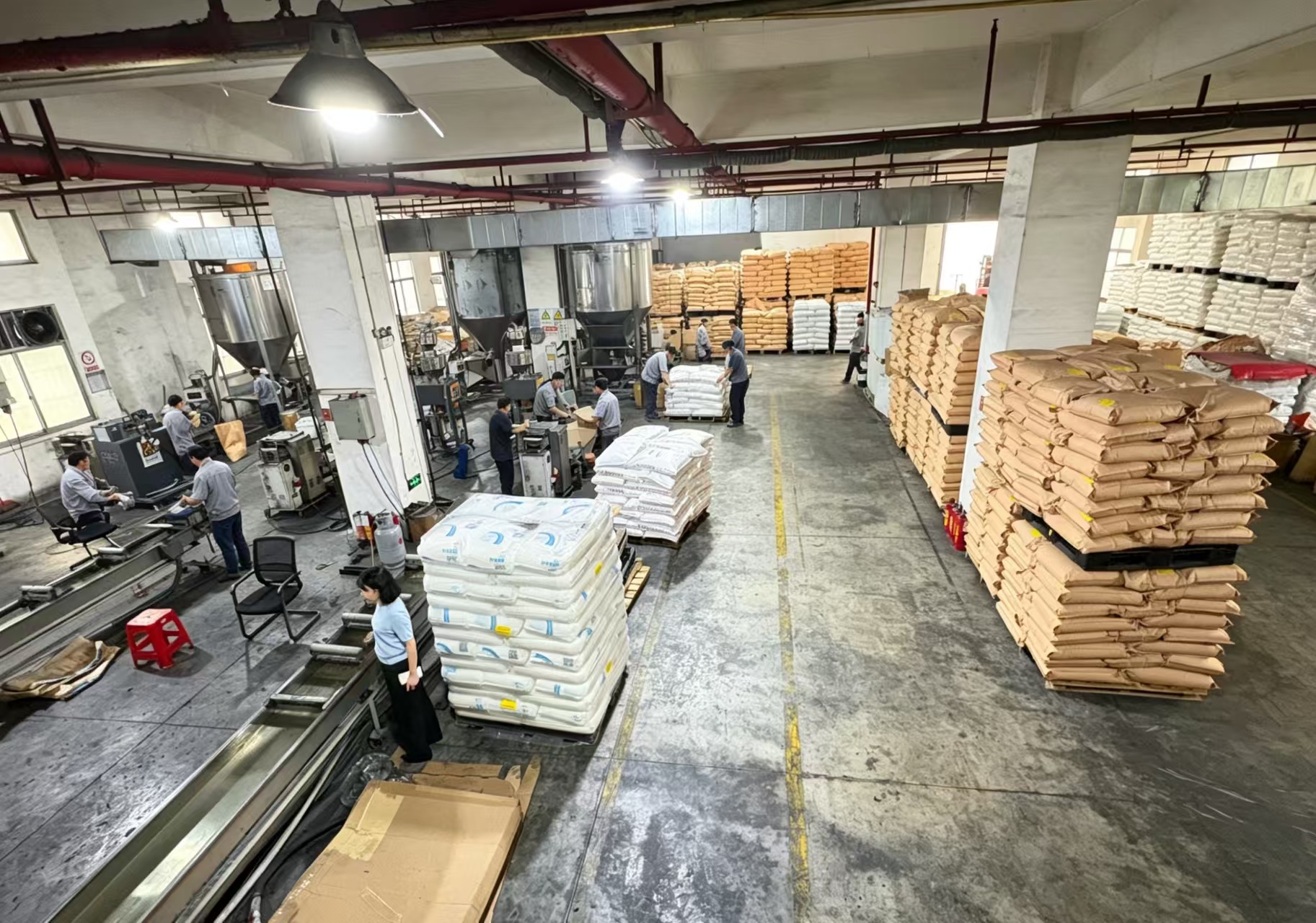
Polygram (Guangdong Baolijin New Material Technology Co., Ltd.) is a high-tech enterprise headquartered in Huangjiang Town, Dongguan City, Guangdong Province, specializing in research, development, production and sales of thermoplastic carbon fiber composites (LFT), conductive and antistatic plastics, and graphene thermally conductive plastics. The company was established in 2017, operates a 4,000 m² facility with 30 employees and a 10-engineer R&D team, and reports 20 years of experience in the polymer composite materials industry. Roughly 30% of output is exported, with Europe, America and Southeast Asia listed as the main markets.
What matters for a long-term agreement is the scope of the service model, not the company description. The documented model is a one-stop chain covering material design, raw material production, mold development and injection molding. ODM (Original Design Manufacturing) production services are provided, and customization covers material selection, mold opening and injection molding. In practical terms, an OEM can hand over a part requirement and receive a qualified compound, a mold and molded parts from one contractual counterparty.
That scope is supported by two structural capabilities. First, precision mold manufacturing and composite material process expertise sit inside the same organization as compounding, so a mold correction does not require renegotiating material responsibility with a third party. Second, quality control is documented at 100% test, which is the level of inspection a program-level agreement needs in order to make pre-shipment random inspection a meaningful acceptance gate rather than a formality.
Grade families available inside the same supply relationship
Beyond LFT carbon fiber composite plastic, the same manufacturer supplies conductive and antistatic materials and graphene thermally conductive materials. For OEM programs that combine structural parts with static-dissipative or thermally managed components — semiconductor handling, robotics enclosures, electronics housings — this allows antistatic composite plastic, electromagnetic shielding composite plastic and graphene composite plastic grades to be qualified under one supplier relationship rather than several. Buyers should confirm the specific grade and its test data on the technical data sheet before extending a structural approval to a functional grade.
Step-by-Step Breakdown: From Trial Order to Series Supply
The sequence below reflects how a documented LFT OEM program is normally structured with this supplier. Each step produces a document or a physical gate that the next step depends on.
Step 1 — Fix the grade and the test methods
Start with the property set, not with a price. The documented mechanical baseline for the LFT carbon fiber composite plastic grade is: density 1.28, tensile strength 350 MPa under ISO 527-2, flexural modulus 30,700 MPa and flexural strength 510 MPa under ISO 178, elongation at break 7.8% under ISO 527-2, and Izod impact 40 kJ/m² under GB/T 1843. Naming the test method in the purchase specification is what makes the number verifiable at goods-in inspection.
Step 2 — Confirm resin system and fiber loading
LFT-G grades are made of 20–60% long carbon fiber. The loading point drives stiffness, impact behavior and flow. Because the documented range is wide, the agreement should state the exact percentage for the program rather than a range, with the approved range written into the change-control clause.
Step 3 — Run the mold and DFM review
Mold opening is part of the customization scope. Long fiber compounds behave differently from short fiber compounds in gates, runners and weld lines, so the tool design and the material selection are reviewed together. This is the step where lightweight carbon fiber composite plastic programs either gain wall-thickness reduction or lose it.
Step 4 — Trial batch and acceptance
The trial batch is inspected before shipment. The documented acceptance criterion is pre-shipment random inspection, and quality control is documented at 100% test. A buyer entering the trial stage should confirm the inspection attributes in writing — dimensions, appearance, mechanical coupons or molding yield — so that the trial result is a decision, not an opinion.
Step 5 — Lock packaging to your handling line
LFT-G material is packed in 20–25 kg bags, and packaging details are customizable. Bag weight affects manual handling and dryer loading; marking affects traceability through the molding cell. Setting both before the first series order avoids a repacking cost later in the program.
Step 6 — Ramp to series volume
Documented monthly capacity is 12,000,000 units and documented lead time is 30 days. For a multi-year agreement, the buyer should map forecast volume against that capacity in writing, including the buffer needed for peak months.
Step 7 — After-sales and re-qualification
After-sales support is documented as remote support. Combined with the annual or program-based re-qualification cycle, remote technical support is the mechanism that keeps a running program running when a molding defect appears three time zones away from the plant.

Use Cases: Where Long-Term LFT Supply Fits
New energy vehicle battery enclosures
The most complete documented program is a new energy vehicle Tier 1 (ODM) application running from 2018 to 2026 — eight years — at 120,000 units per year. The part is the upper cover of the power battery pack plus a protective shell, requiring high-voltage insulation, shock resistance and electrolyte resistance. Documented results: 42% weight reduction compared with aluminium, 18% cost reduction, and compliance with UL94 V0 and IP6K9K. The program reports no after-sales cracking or leakage. Two technical details made the long-term agreement work: integrated injection molding of long carbon fiber, and a coefficient of thermal expansion of 28 ppm/°C, compatible with aluminium. Low float fiber behavior supports high-speed mass production, which is a molding-cell requirement rather than a material property.
Aerospace and low-altitude economy
Long carbon fiber grades are used across commercial and military aerospace applications including radomes, drones, aircraft, missiles, satellites and aerospace fuel tanks. These programs are long by nature, which makes the certification continuity described in the next section as important as the mechanical data.
Robotics, semiconductor and sports equipment
High rigidity carbon fiber composite plastic suits robotic arms and structural frames where stiffness governs positioning accuracy. Semiconductor applications pair structural grades with antistatic composite plastic and electromagnetic shielding composite plastic grades. Sports equipment uses the same high strength and high toughness properties in a different geometry.
Medical equipment
Medical carbon fiber composite plastic is covered by a separate quality-system scope: medical device management activities involved in the processing of plastic products for medical devices and equipment. Buyers in this segment should treat the certificate scope as the qualification boundary, not the material name.
Comparison Table: LFT and LFT-G Documented Parameters
The table below separates what is documented at grade level from what must be confirmed on the technical data sheet. It is a working reference for a purchase specification, not a substitute for a signed TDS.
| Attribute | LFT Carbon Fiber Composite Plastic | LFT-G Long Carbon Fiber Reinforced Composite |
|---|---|---|
| Classification | Thermoplastic carbon fiber composite, LCF/LGF | Long carbon fiber reinforced composite (LFT-G) |
| Fiber content | Confirm per grade on TDS | Made of 20–60% long carbon fiber |
| Color / form | Confirm per grade on TDS | Black |
| Density | 1.28 | Not stated in the available grade data — confirm on TDS |
| Tensile strength | 350 MPa (ISO 527-2) | Confirm on TDS |
| Flexural modulus | 30,700 MPa (ISO 178) | Confirm on TDS |
| Flexural strength | 510 MPa (ISO 178) | Confirm on TDS |
| Elongation at break | 7.8% (ISO 527-2) | Confirm on TDS |
| Izod impact | 40 kJ/m² (GB/T 1843) | Confirm on TDS |
| Documented features | High strength material for structural and semi-structural parts | High strength, high toughness and durability |
| Packaging | Confirm with order | 20–25 kg/bag (customizable) |
| Documented industries | Aerospace, military industry, new energy vehicles, low-altitude economy, robotics, semiconductors, sports equipment | Commercial and military aerospace: radomes, drones, aircraft, missiles, satellites, aerospace fuel tanks |
Comparison Table: Documented Supply and Commercial Parameters
| Parameter | Documented value | Why it matters in a long-term agreement |
|---|---|---|
| Production mode | ODM | Design responsibility and manufacturing responsibility sit with one counterparty |
| Customization scope | Material, mold opening and injection molding | Removes the three-vendor gap between compound, tool and part |
| Monthly capacity | 12,000,000 units | Basis for forecasting against program ramp |
| Lead time | 30 days | Sets the replenishment cycle and safety stock level |
| MOQ (purchasing terms) | 200 units | Defines the trial and replenishment order size |
| MOQ (customization note) | 50 units | Applies to customization requests; confirm which figure governs the specific grade |
| Acceptance criteria | Pre-shipment random inspection | Creates a defined inspection gate before goods leave the plant |
| Payment terms | Full payment (documented) | Commercial baseline; delivery terms are negotiated with the customer |
| Quality control | 100% test | Makes random inspection a verification step rather than the only check |
| Packaging | 20–25 kg/bag, customizable | Matches bag weight and marking to the molding cell |
| After-sales | Remote support | Technical response path after the series starts |
| Export markets | Europe and America / Southeast Asia | Indicates existing export documentation practice |
Compliance Layer: Certificates to Verify Before Signing
Certification is the one part of a long-term agreement that cannot be fixed retroactively. Three certificates are documented for this supplier, each with a number and validity window that a buyer can check against the issuing body's register.
| Certificate | Standard | Certificate number | Issuer | Validity |
|---|---|---|---|---|
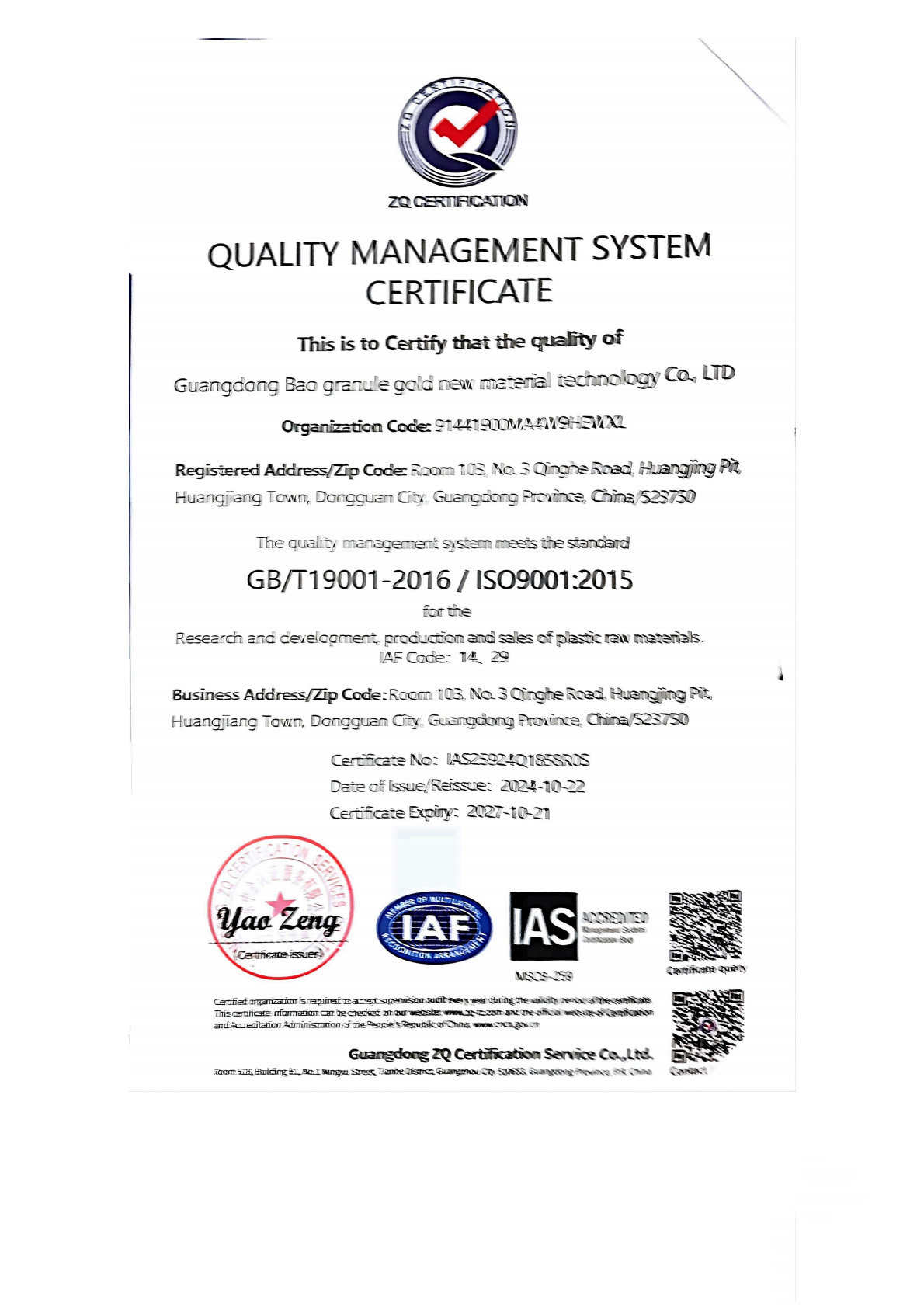
| Quality management system | GB/T 19001-2016 / ISO 9001:2015 | IAS25924Q1858R0S | Guangdong ZQ Certification Service Co., Ltd. | 2024-10-22 to 2027-10-21 |
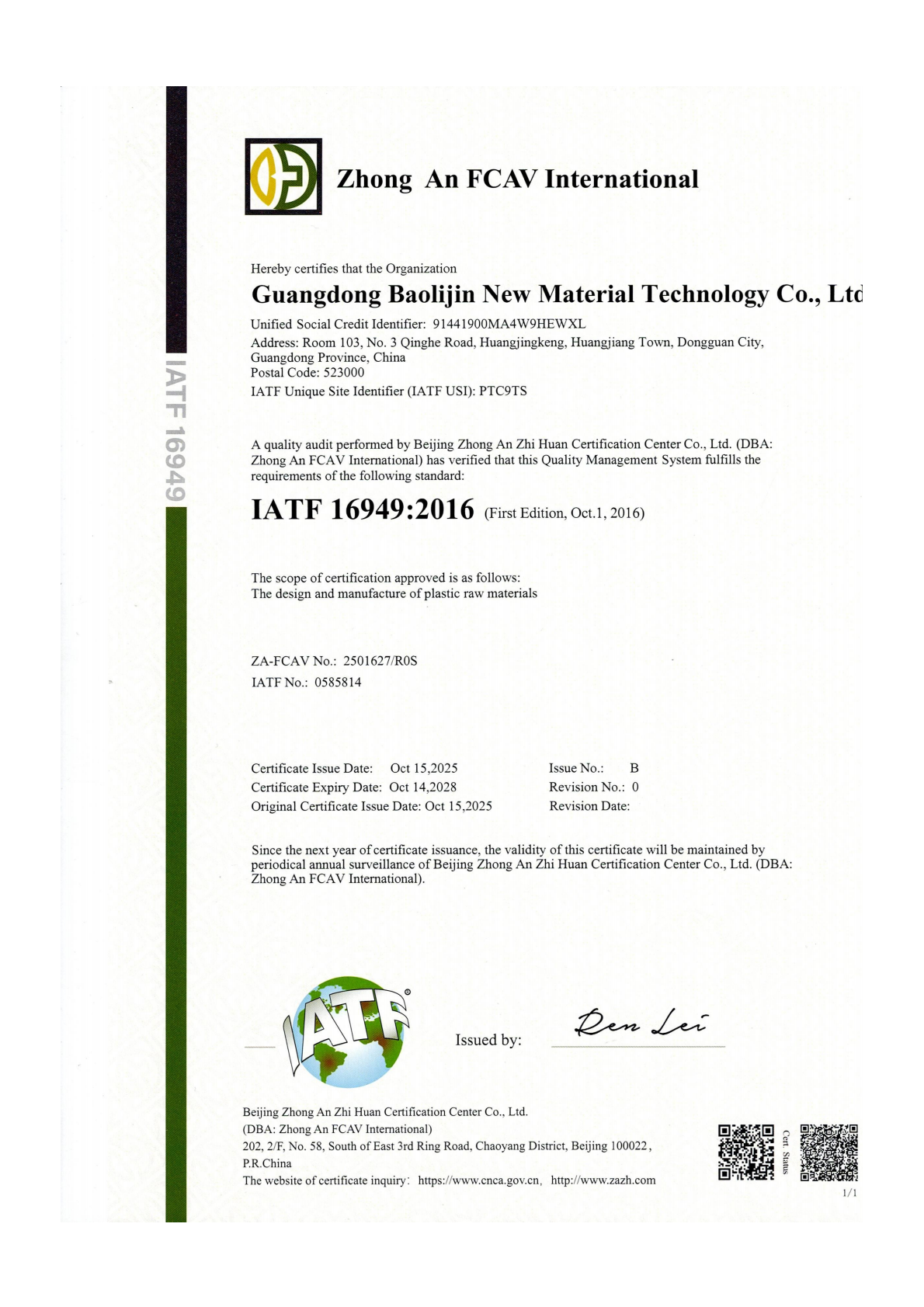
| Automotive quality management system | IATF 16949:2016 | ZA-FCAV No.: 2501627/R0S; IATF No.: 0585814 | Beijing Zhong An Zhi Huan Certification Center Co., Ltd. (DBA: Zhong An FCAV International) | 2025-10-15 to 2028-10-14 |
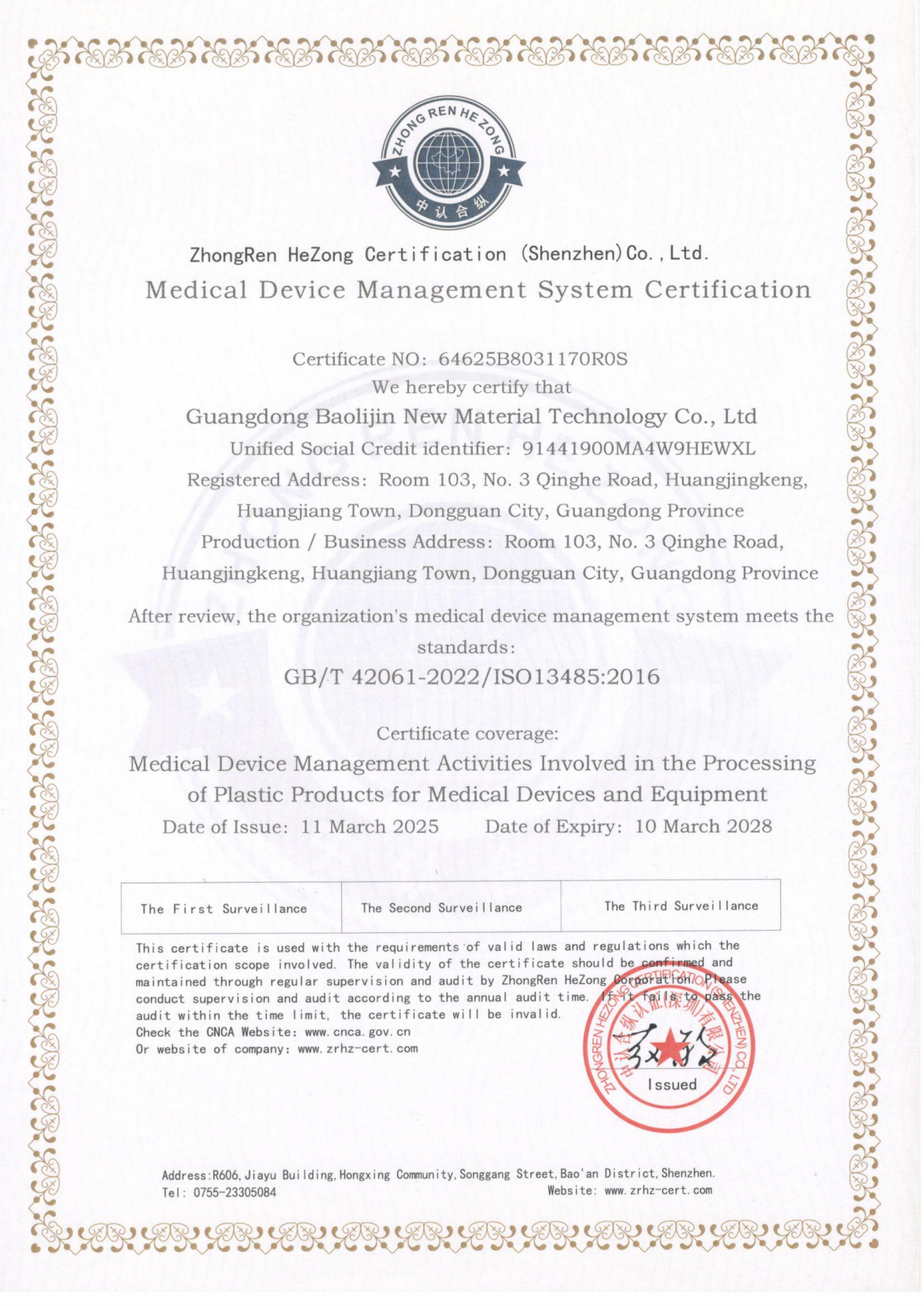
| Medical device management system | GB/T 42061-2022 / ISO 13485:2016 | 64625B8031170R0S | ZhongRen HeZong Certification (Shenzhen) Co., Ltd. | 2025-03-11 to 2028-03-10 |
The medical certificate scope is specific: medical device management activities involved in the processing of plastic products for medical devices and equipment. It is not a blanket approval for every medical application, and it does not by itself confirm biocompatibility for a given part. Automotive buyers should note that IATF 16949:2016 is the relevant system certificate for the new energy vehicle Tier 1 programs described earlier.
FAQ: OEM Long-Term Supply Questions
1. Which certifications should an OEM verify before committing to a long-term LFT carbon fiber composite plastic supply agreement?
Verify three certificates and check each against the issuer's register. For general manufacturing quality, the relevant document is GB/T 19001-2016 / ISO 9001:2015, certificate number IAS25924Q1858R0S, issued by Guangdong ZQ Certification Service Co., Ltd., valid from 2024-10-22 to 2027-10-21. For automotive programs, the document is IATF 16949:2016, certificate ZA-FCAV No.: 2501627/R0S with IATF No.: 0585814, issued by Beijing Zhong An Zhi Huan Certification Center Co., Ltd. (DBA: Zhong An FCAV International), valid from 2025-10-15 to 2028-10-14. For medical device work, the document is GB/T 42061-2022 / ISO 13485:2016, certificate 64625B8031170R0S, issued by ZhongRen HeZong Certification (Shenzhen) Co., Ltd., valid from 2025-03-11 to 2028-03-10, with a scope covering medical device management activities involved in the processing of plastic products for medical devices and equipment. Note that all three certificates expire inside a multi-year agreement window, so the contract should require advance notice of recertification.
2. How much customization can this supplier absorb, from material selection to molded parts?
The documented scope is ODM production with customization covering material selection, mold opening and injection molding. That means one supplier can take a part requirement through compound formulation, tool development and molding rather than handing the buyer between three vendors. The supporting capability set is a 4,000 m² facility, a 10-engineer R&D team, a documented monthly capacity of 12,000,000 units, and quality control documented at 100% test. Customization is not limited to the base LFT carbon fiber composite plastic grade: the same manufacturer supplies conductive and antistatic plastics and graphene thermally conductive plastics, so antistatic composite plastic and thermally managed grades can be developed inside the same relationship. For buyers who need a high rigidity carbon fiber composite plastic for structural parts or a high temp grade built on an engineering resin such as PPS or PEEK, the resin system is part of the material selection step, not a separate order.
3. What commercial terms, MOQ and acceptance criteria normally apply?
The documented purchasing terms list an MOQ of 200 units, delivery terms negotiated with the customer, acceptance criteria of pre-shipment random inspection, and full payment as the payment term. A separate customization note lists a minimum order quantity of 50 units for customization services such as material selection and mold opening, so buyers should confirm in writing which MOQ figure governs their specific grade and tooling package. On cost, no unit price is published and none should be assumed: the documented cost evidence is application-level. In the new energy vehicle Tier 1 (ODM) battery enclosure program, the documented outcome was an 18% cost reduction alongside a 42% weight reduction compared with aluminium. That result reflects a combined material-and-process change — integrated injection molding of long carbon fiber — rather than a material price alone, which is why budget conversations for long-term supply should start from part cost, not from price per kilogram.
4. How should an OEM structure the trial-to-series transition, and how is the material packaged?
Structure the trial as a decision gate with a written inspection scope, then convert the same specification into the series agreement. The documented acceptance criterion is pre-shipment random inspection, supported by 100% test in quality control, so the trial report should record the inspection attributes agreed before the run: dimensions, appearance and whichever mechanical checks the program requires. Once the trial is accepted, freeze the grade, the fiber content within the 20–60% long carbon fiber range for LFT-G, the color and the test methods so that the series material is the qualified material. Packaging should be fixed at the same time. LFT-G material is supplied in 20–25 kg bags with customizable details, which lets bag weight and marking be matched to the buyer's handling and drying equipment before the first series shipment rather than after it.
5. What lead time and after-sales support apply once the series is running?
The documented lead time is 30 days, against a documented monthly capacity of 12,000,000 units, and after-sales support is documented as remote support. For a long-term agreement, these three figures should be read together: a 30-day lead time is only meaningful if monthly capacity is contractually reserved against the program forecast, and remote support is only useful if the escalation path and response expectation are written into the agreement. Buyers should also diary the certificate expiry dates — 2027-10-21 for ISO 9001:2015, 2028-10-14 for IATF 16949:2016 and 2028-03-10 for the medical device management system — so that recertification evidence is requested before renewal is due rather than after. To move from evaluation to execution, request a sample or quotation against your part drawing and target properties through www.carbolft.com.
Conclusion: What a Good Long-Term LFT Agreement Contains
A workable long-term supply agreement for LFT carbon fiber composite plastic contains five things, and this FAQ has covered each of them. It names the grade and the test methods — ISO 527-2, ISO 178 and GB/T 1843 on the documented baseline of 350 MPa tensile strength, 30,700 MPa flexural modulus and 40 kJ/m² Izod impact. It names the fiber content inside the 20–60% long carbon fiber range and freezes it. It names the acceptance gate, which is pre-shipment random inspection backed by 100% test. It names the commercial baseline: MOQ of 200 units on purchasing terms, delivery terms negotiated with the customer, 30-day lead time against a documented monthly capacity of 12,000,000 units. And it names the packaging — 20–25 kg bags with customizable details — so the material arrives in the format the molding cell was built for.
The certification layer is what makes those commitments durable. ISO 9001:2015, IATF 16949:2016 and the GB/T 42061-2022 / ISO 13485:2016 medical device management system certificate each carry a number, an issuer and an expiry date that a buyer can verify independently. The eight-year new energy vehicle Tier 1 program — 120,000 units per year, 42% weight reduction against aluminium, 18% cost reduction, UL94 V0 and IP6K9K, with no after-sales cracking or leakage — is the practical illustration of what those commitments look like when they hold.
Next Step: Sample, Quotation or Technical Data Sheet
Polygram (Guangdong Baolijin New Material Technology Co., Ltd.) supplies LFT carbon fiber composite plastic, LFT-G long carbon fiber reinforced composites, conductive and antistatic plastics, and graphene thermally conductive plastics for aerospace, new energy vehicles, robotics, semiconductors, sports equipment and medical device applications. Send your part drawing, target properties and annual volume to start a sample or quotation request.
Visit www.carbolft.com | Download the product brochure (PDF)
Contact: Miss Fu | Email: baolijin@carbolft.com | Tel / WhatsApp: +86 18664191149 | Address: 1st Floor, Building 3, Dongwu Science Park, Qinghe Road, Huangjingkeng Village, Dongguan City, Guangdong Province, China
Have Questions or Need More Details?
Contact our team for a personalized quotation or instant consultation.
Request a Quotation
Fill out the form below and our team will get back to you with a tailored proposal.
WhatsApp Direct Chat
Prefer to chat in real-time? Message us on WhatsApp for instant assistance & quick answers.
- Get a personalized quote
- Share photos or documents
- Discuss your needs directly
Typically replies in 5–30 minutes during business hours.