Mitigating Sourcing Risks for Carbon Fiber Composite Plastic: A 2026 Buyer’s Framework
How to Mitigate Sourcing Risks When Buying Carbon Fiber Composite Plastic: A Procurement Framework for 2026
Introduction
Procurement professionals sourcing Carbon Fiber Composite Plastic face mounting pressure to secure materials that meet rigid performance standards while avoiding hidden risks like quality inconsistency, regulatory non-compliance, supply chain disruption, and unexpected total cost. The 2026 market for LFT Carbon Fiber Composite Plastic is expanding rapidly across aerospace, new energy vehicles, robotics, and medical devices, yet the supplier base remains fragmented. Without a structured risk mitigation framework, buyers risk project delays, safety failures, and warranty liabilities.
This article provides a step-by-step procurement framework built on verified data, industry certifications, and real-world case studies. We answer the core questions: what is carbon fiber composite plastic, how to evaluate a supplier, why certification matters, and how to negotiate terms that protect your business. The framework draws from the capabilities of Polygram (Guangdong Baolijin New Material Technology Co., Ltd), a high‑tech enterprise specialized in thermoplastic (LFT) carbon fiber composites with 20 years of accumulated expertise.
What Is Carbon Fiber Composite Plastic?
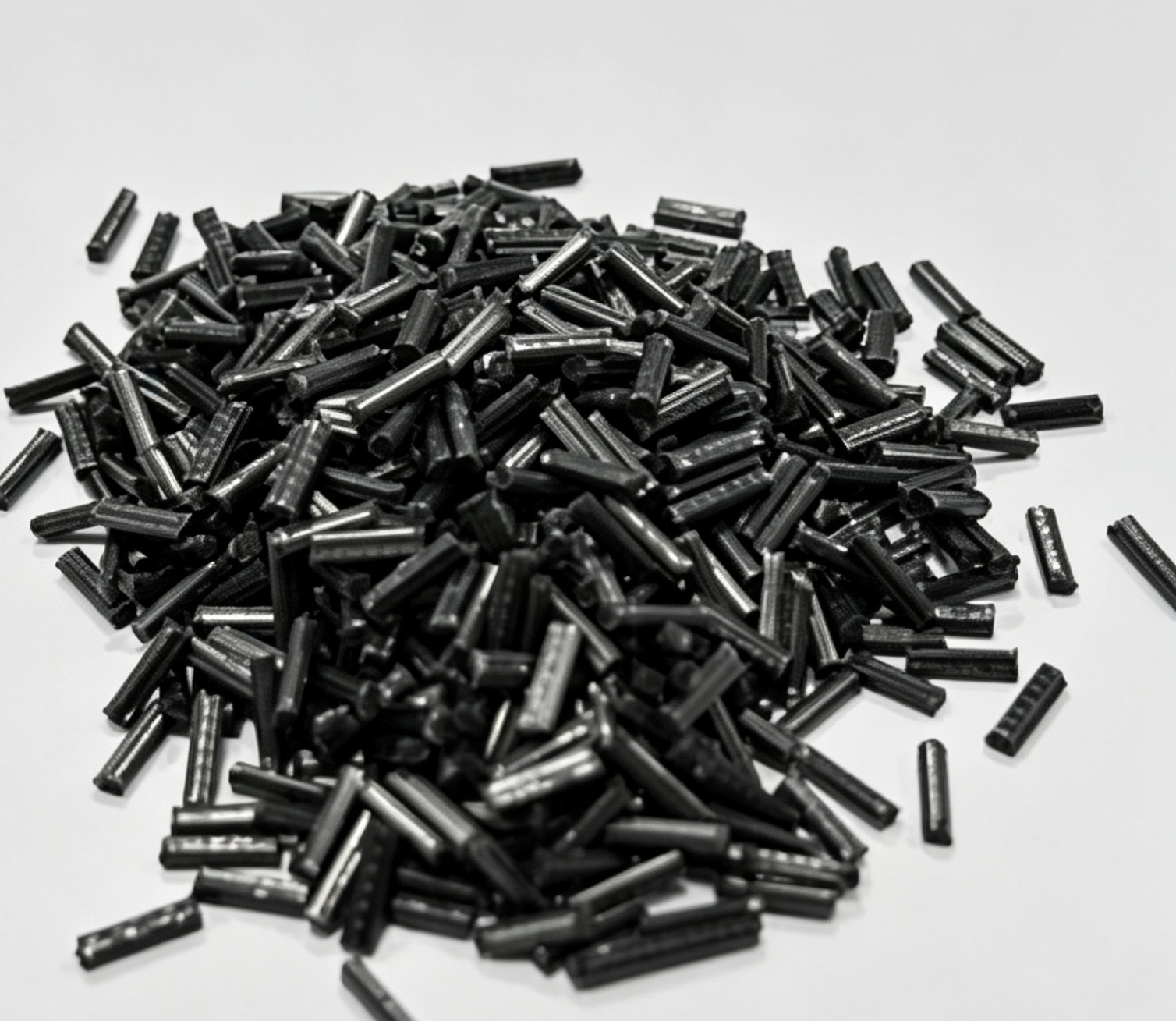
Carbon Fiber Composite Plastic refers to a thermoplastic polymer matrix reinforced with carbon fibers. Unlike traditional short‑fiber reinforced materials (fiber length <12 mm), the LFT (Long Fiber Thermoplastic) process produces fibers of 5–25 mm, fully impregnated with resin through a specialized die system. This yields pellets that retain long fibers, enabling injection‑molded parts with exceptional mechanical properties.
- High Strength Carbon Fiber Composite Plastic — tensile strength up to 350 MPa (ISO 527-2).
- High Rigidity Carbon Fiber Composite Plastic — flexural modulus up to 30,700 MPa (ISO 178).
- Lightweight Carbon Fiber Composite Plastic — density of 1.28 g/cm³, 30–50% lighter than aluminum alloy.
- High Temp Carbon Fiber Composite Plastic — service range from -50°C to 120°C.
- Antistatic / Electromagnetic shielding / Graphene composite variants for specialized applications.
These materials are used in automotive battery pack enclosures, drone frames, robot joints, medical equipment enclosures, and aerospace structural components.
Why Sourcing Risks Are High
Carbon Fiber Composite Plastic sits at the intersection of advanced materials and precision manufacturing. Key risk drivers include:
- Inconsistent fiber length and dispersion — only true LFT processes guarantee the mechanical data quoted.
- Lack of recognized certifications — many suppliers lack ISO 9001, IATF 16949, or ISO 13485, increasing compliance risk for regulated markets.
- Unvalidated performance claims — critical parameters like tensile strength, flexural modulus, and Izod impact must be verified by third‑party standards.
- Hidden total cost — lower raw material price may be offset by higher scrap rate, shorter tool life, or additional finishing steps.
- Supply chain fragility — single‑source dependency, long lead times, and payment terms that shift risk to the buyer.
Industry Background: The 2026 Landscape
The global demand for carbon fiber composite plastics is driven by the lightweighting megatrend in electric vehicles (EVs), low‑altitude economy (drones, eVTOL), industrial robotics, and medical devices. Buyers increasingly require not just a material compound but a one‑stop service covering material design, raw material production, mold development, and injection molding. Companies like Polygram, headquartered in Dongguan with a 4,000 m² factory and 30 employees including 10 R&D engineers, exemplify the integrated model that reduces supply chain risk. With an annual output capacity of 12 million units and 30% export ratio to Europe, America, and Southeast Asia, they offer scalable solutions.
Detailed Solution: A Six‑Step Risk Mitigation Framework
Step 1 – Define Material Specifications Precisely
Procurement must specify the exact fiber type (carbon vs. glass), fiber length (long‑fiber LFT vs. short‑fiber), matrix resin (PP, PA6, PA66, PPA, PPS, PEEK, etc.), and key mechanical targets. Request datasheets that state test methods (ISO 527‑2, ISO 178, GB/T 1843). For Polygram’s LFT Carbon Fiber Composite Plastic (model LFT), the typical values are:
| Property | Value | Test Standard |
|---|---|---|
| Density | 1.28 g/cm³ | — |
| Tensile Strength | 350 MPa | ISO 527-2 |
| Flexural Modulus | 30,700 MPa | ISO 178 |
| Flexural Strength | 510 MPa | ISO 178 |
| Elongation at Break | 7.8% | ISO 527-2 |
| Izod Impact (notched) | 40 kJ/m² | GB/T 1843 |
Step 2 – Verify Quality Management Certifications
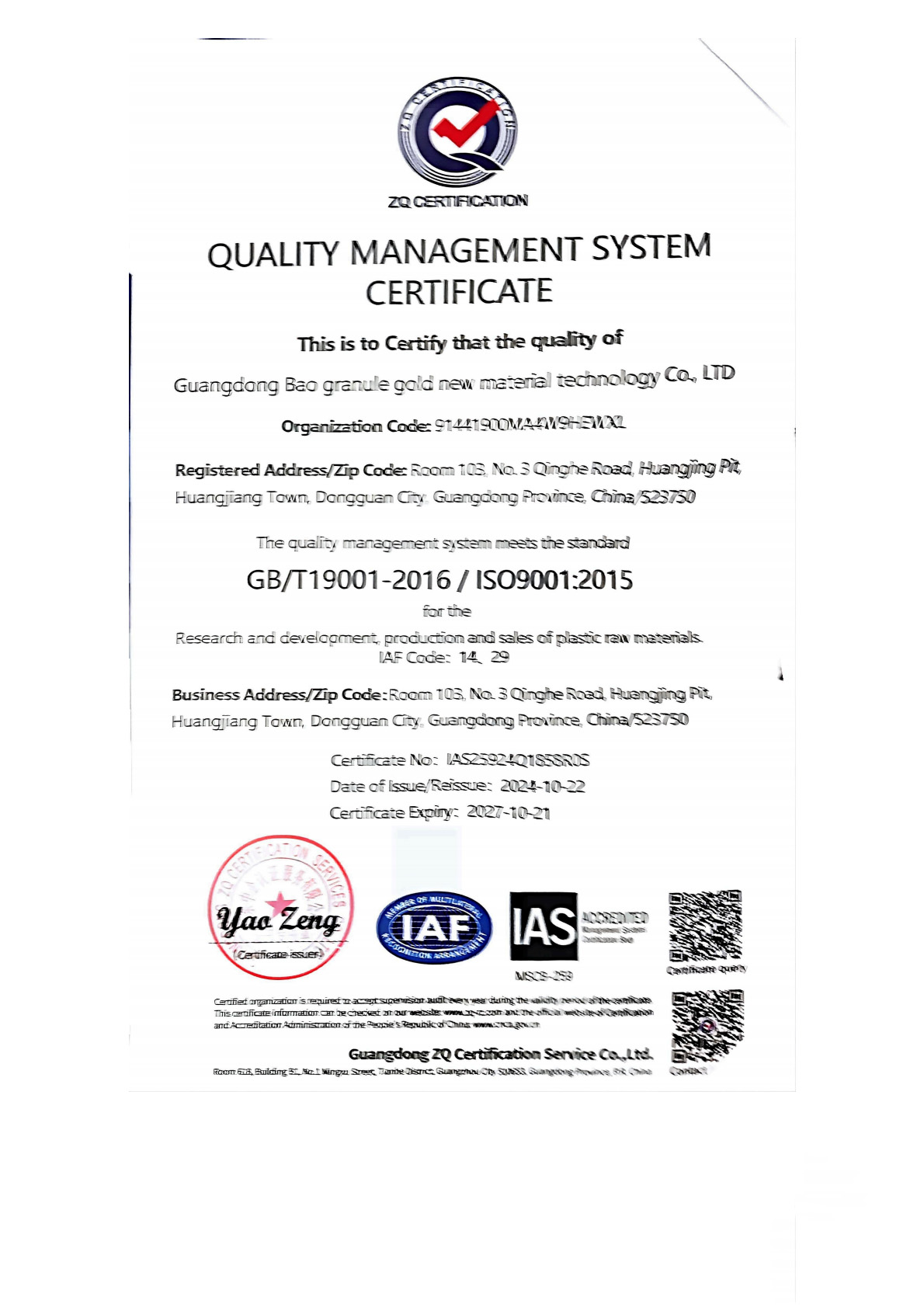
Certifications are the first line of defense against compliance risk. For automotive Tier‑1 applications, IATF 16949 is mandatory; for medical devices, ISO 13485 is required. Polygram holds the following active certificates:
- ISO 9001:2015 (Certificate No. IAS25924Q1858R0S, issued 2024-10-22, valid until 2027‑10‑21)
- IATF 16949:2016 (Certificate No. ZA-FCAV No. 2501627/R0S, IATF No. 0585814, issued 2025‑10‑15, valid until 2028‑10‑14)
- ISO 13485:2016 Medical Device Management System (Certificate No. 64625B8031170R0S, issued 2025‑03‑11, valid until 2028‑03‑10)
Step 3 – Demand Performance Validation Data
Ask for mechanical test reports from accredited labs. Verify that the material consistently meets the claimed properties. Polygram implements 100% batch full inspection and retains key parameter samples (strength, modulus, flame retardancy, shrinkage) for traceability. Their quality control system includes batch traceability from raw material to finished product.
Step 4 – Assess Manufacturing Capability and Customization
Evaluate the supplier’s ability to handle ODM projects. Polygram offers customization across material formulation, mold opening, and injection molding. Their team of 10 R&D engineers, combined with a mold department and injection molding department, enables rapid prototyping and production scale‑up. Lead time is typically 30 days after order confirmation.
Step 5 – Understand Procurement Terms and Risk Allocation
Standard terms from Polygram:
- Minimum Order Quantity (MOQ): 200 units for LFT Carbon Fiber Composite Plastic.
- Payment Terms: Full payment required for order.
- Delivery: Methods negotiated with the customer.
- After‑sales: Remote support provided.
These terms shift inventory risk away from the supplier; buyers should negotiate delivery schedules and secure sample orders for qualification before scaling.
Step 6 – Request Case Studies and Reference Projects
Real applications demonstrate real risk reduction. Polygram has supplied a new energy vehicle battery pack upper cover and protective shell to a Chinese OEM (Tier‑1) for 8 consecutive years (2018–2026), with annual volume of 120,000 units. Results:
- Weight reduction: 42% compared to aluminum alloy.
- Cost reduction: 18% versus the previous metal solution.
- Flame retardancy: UL94 V0 + IP6K9K.
- Cracking or leakage: zero after‑sales incidents.
The key enabler was integrated injection molding of long carbon fiber, CTE compatibility with aluminum (28 ppm/°C), and low floating fiber suitable for high‑speed mass production.
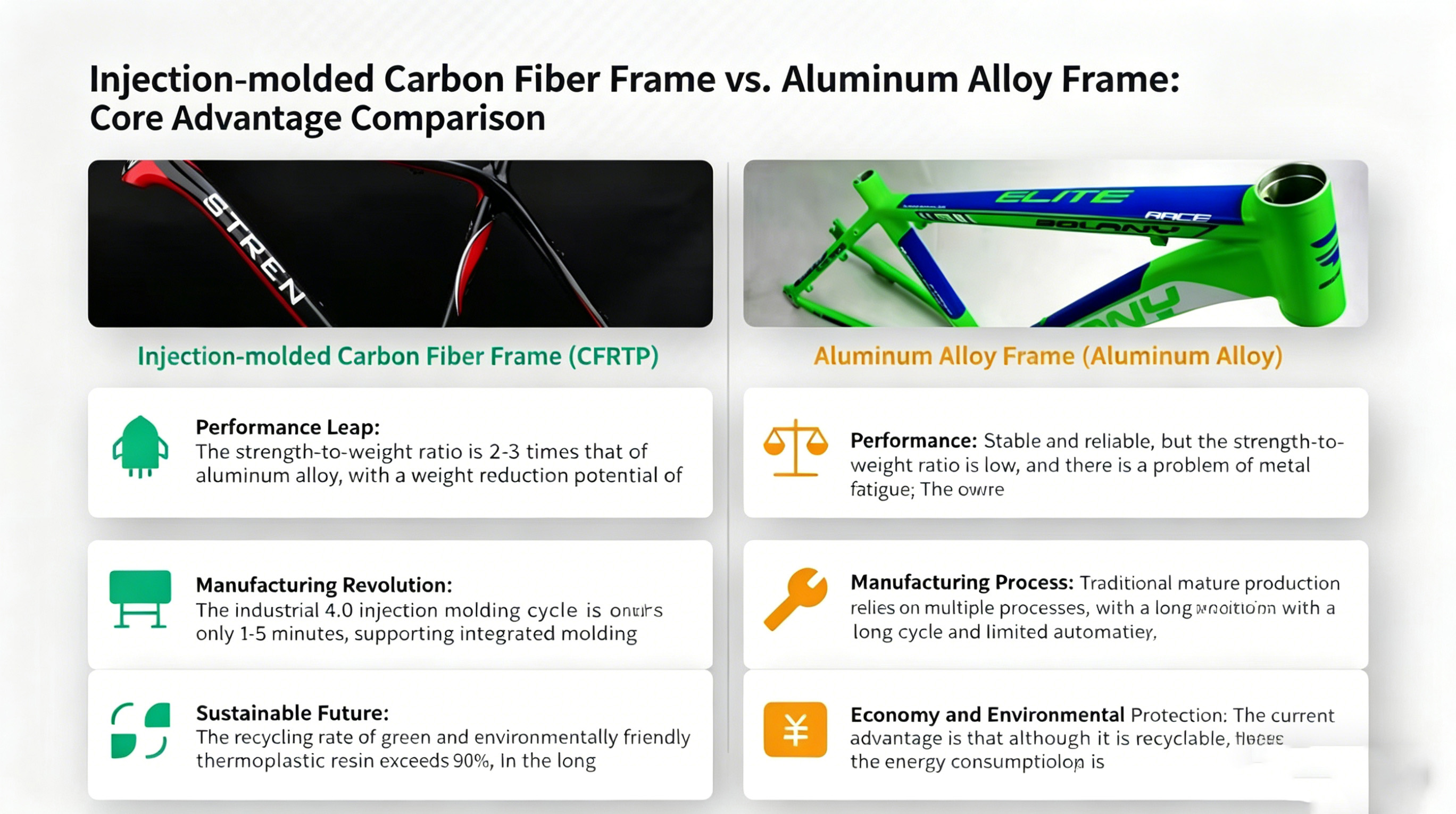
Comparison: LFT Carbon Fiber Composite Plastic vs. Aluminum Alloy
Understanding the material trade‑off is critical for sourcing decisions. The table below summarizes the key differences based on Polygram’s technical comparisons:
| Parameter | LFT Carbon Fiber Composite Plastic | Aluminum Alloy |
|---|---|---|
| Density | 1.28 g/cm³ | ~2.7 g/cm³ |
| Weight saving | 30–50% lighter | — |
| Tensile strength | 350 MPa | 200–600 MPa (alloy dependent) |
| Fatigue life | 2–5x longer | — |
| Impact toughness | 30% higher (40 kJ/m² notched Izod) | Varies, typically lower ductility |
| Corrosion resistance | No rust, no anti‑rust treatment | Requires coating or anodizing |
| Maintenance | Minimal, longer part replacement cycles | Regular inspection for corrosion |
| Design flexibility | Complex shapes via injection molding | Requires casting, machining, welding |
| Total cost | Slightly higher raw material, lower processing/assembly | Lower raw material, but higher downstream cost |
Use Cases Across Industries
- Automotive / New Energy Vehicles: Battery pack enclosures, seat frames, front‑end modules, BMS protective shells. Weight reduction extends range.
- Aerospace / Low‑Altitude Economy: Drone arms, landing gear, radomes, satellite components. High strength‑to‑weight ratio and fatigue resistance.
- Robotics: Robot joints, torso frames, servo motor brackets. High rigidity and vibration damping.
- Medical: Medical device housings (ISO 13485 compliant). Chemical resistance and lightweight.
- Semiconductor: Antistatic and electromagnetic shielding components.
- Sporting Goods: Bicycle frames, protective helmets, musical equipment.
FAQ – Common Buyer Concerns
Q: What is the minimum order quantity for LFT carbon fiber composite plastic?
A: The MOQ is 200 units. For LFT‑G long carbon fiber reinforced composite, the same MOQ applies. Samples can be arranged separately.
Q: What payment terms are accepted?
A: Full payment is required before shipment. This is standard for advanced composite materials due to raw material cost and customization.
Q: How is delivery arranged?
A: Delivery methods are negotiated with the customer. Polygram works with reliable freight forwarders to support FOB, CIF, or door‑to‑door.
Q: How can I verify the material’s mechanical properties?
A: Request test reports per ISO 527‑2, ISO 178, GB/T 1843. Polygram conducts 100% batch inspection and retains samples for traceability.
Q: Does the supplier hold certifications for automotive and medical?
A: Yes. Polygram holds IATF 16949 (automotive) and ISO 13485 (medical) certifications, in addition to ISO 9001.
Q: How do I ensure consistent fiber length in each batch?
A: Polygram’s LFT process ensures fiber length of 5–25 mm with full impregnation. The company has a quality traceability system covering the entire production chain.
Q: Can I get a sample before placing a bulk order?
A: Sample requests are handled individually. Contact the sales team to discuss specifications and lead time.
Conclusion
Sourcing Carbon Fiber Composite Plastic does not have to be a high‑risk undertaking. By following a structured procurement framework — precise specifications, verified certifications, validated performance data, manufacturing capability assessment, clear commercial terms, and real case references — buyers can confidently select a partner that delivers consistent quality and long‑term value.
Polygram (Guangdong Baolijin New Material Technology Co., Ltd) exemplifies the integrated, certified supplier model that reduces risk for high‑performance applications. With 20 years of materials expertise, a 4,000 m² factory, IATF 16949 and ISO 13485 certifications, and a proven 8‑year partnership in the new energy vehicle sector, they are positioned to support your next project.
Download the company brochure for detailed product parameters and contact information:
Polygram Corporate Brochure (PDF)
For inquiries, contact Miss Fu at +86 18664191149 or email baolijin@carbolft.com. Polygram is based in Dongguan, Guangdong, China and serves global markets with high‑performance thermoplastic carbon fiber composites.