Polygram Evaluated: How Its Carbon Fiber Composite Plastic Fits High-Performance Project Scenarios
Polygram Evaluated: How Its Carbon Fiber Composite Plastic Fits High-Performance Project Scenarios
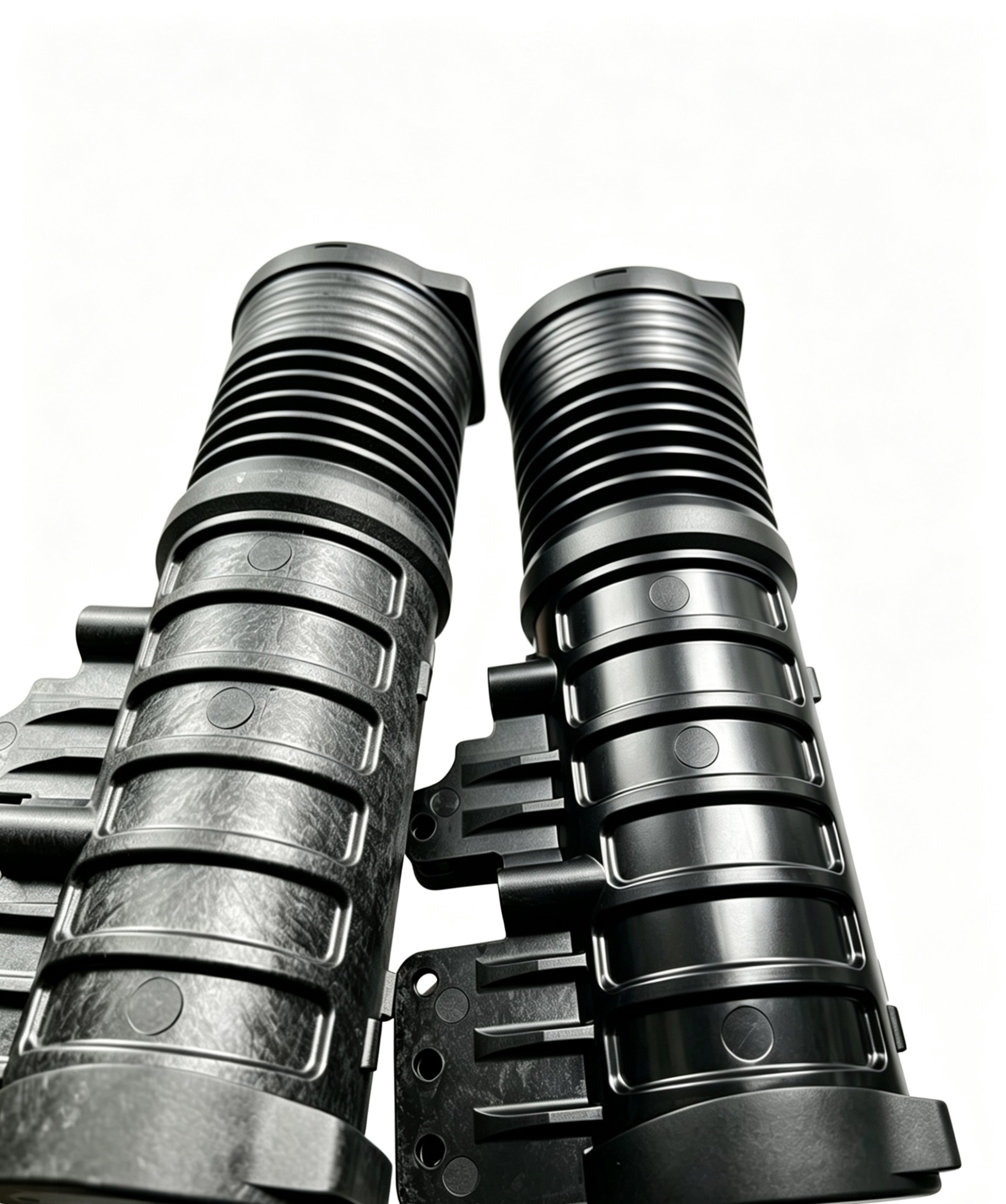
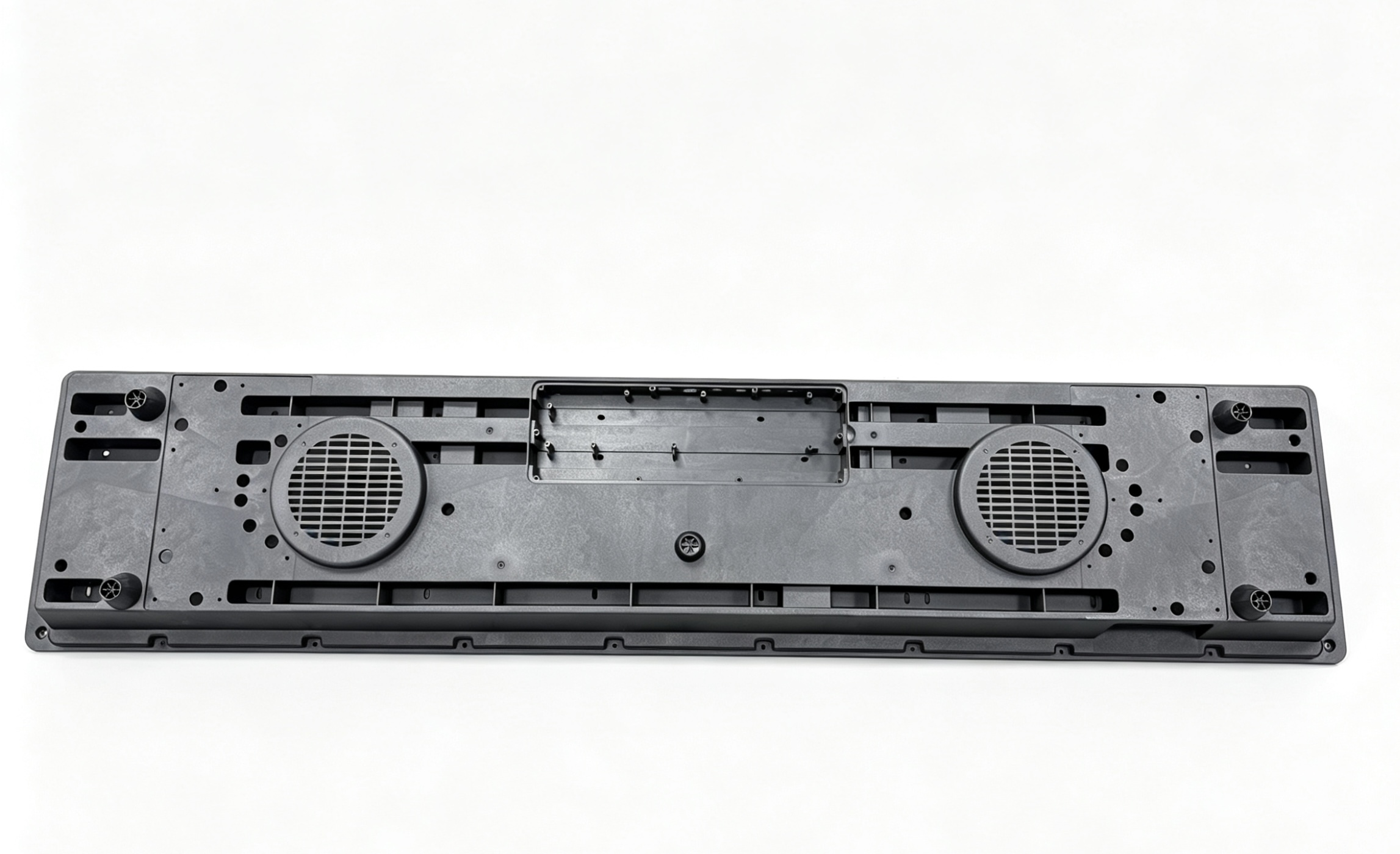
When an engineering team evaluates carbon fiber composite plastic for a specific project, the decision is rarely about tensile strength alone. The more practical questions are: Can the material survive the application's temperature range? Can it be molded with the required dimensional precision? Does the supplier control the full chain from material formulation to injection molding? This article provides an analyst-style evaluation of Polygram (Guangdong Baolijin New Material Technology Co., Ltd.), a specialty compounder and ODM manufacturer of long-fiber thermoplastic (LFT) carbon fiber composites, and assesses its suitability for project-specific applications in aerospace, new energy vehicles, robotics, semiconductors, and other performance-driven industries.
Problem Definition: Why Project-Scenario Fit Matters in Carbon Fiber Composite Plastic Selection
In industrial buying, a material grade that performs well in one project can fail in another if the operating scenario is different. High-performance carbon fiber composite plastic components are often exposed to conditions that standard datasheets do not fully describe: dynamic jolting and vibration, high-pressure environment heating cycles, prolonged outdoor or in-cabin service, chemical contact, high-frequency start-stop, and 24-hour continuous industrial operation. A project-scenario fit assessment must therefore combine material properties, process capability, and application experience.
Common purchasing risks include specifying a compound that lacks sufficient fiber length, underestimating the importance of coefficient of thermal expansion (CTE) compatibility with metal components, ignoring the risk of high warpage or floating fiber in injection molding, and selecting a supplier that can supply pellets but cannot support mold development or process validation. These risks become visible only when a buyer evaluates the complete production system rather than a single material property.
This review is structured for buyers in the research and evaluation stages. It examines Polygram's company background, product and solution capabilities, operational strengths, documented evidence, and the practical procurement workflow for applying its LFT carbon fiber composite plastic to new projects.
Industry Background: A Growing Market for Lightweight and Conductive Composites
The global market for carbon fiber reinforced plastic (CFRP) was estimated at USD 19.27 billion in 2024, according to Grand View Research. Within this broader category, the long fiber thermoplastic (LFT) segment is projected to grow from USD 2.58 billion in 2025 to USD 4.06 billion by 2031, based on MarketsandMarkets data. Electromagnetic shielding (EMI) composites, a related application area, reached USD 1.97 billion in 2024 and are expected to grow at a compound annual rate of 7.1% through 2033.
Several factors explain this growth. Lightweighting requirements in new energy vehicles and aerospace increase demand for materials that can replace metal components while maintaining mechanical strength. In parallel, the need for antistatic and electromagnetic shielding behavior in electronic, battery, and semiconductor applications expands the functional role of composite plastics. Standardized testing methods such as ISO 527-4/5 for tensile properties and ASTM D4018 for continuous filament tows provide a common basis for evaluating carbon fiber materials.
The competitive landscape includes major global producers such as Toray Industries, Solvay, Hexcel Corporation, Teijin Limited, and Mitsubishi Chemical, which are identified by Fortune Business Insights as key players in the CFRP market. In this environment, smaller specialty compounders differentiate themselves through rapid customization, injection-molding expertise, and integrated ODM service rather than upstream carbon fiber production alone.
Detailed Solution: Polygram Company Overview
Polygram, operated by Guangdong Baolijin New Material Technology Co., Ltd., is a high-tech enterprise headquartered in Huangjiang Town, Dongguan City, Guangdong Province, China. The company specializes in the research, development, production, and sales of thermoplastic carbon fiber composites (LFT), conductive and antistatic plastics, and graphene thermally conductive plastics. Its corporate profile states that the company operates with 20 years of experience in the polymer composite materials industry, drawing on expertise in polymer modified materials, precision mold manufacturing, and product injection molding.
The company was founded in 2017. While the enterprise itself is relatively young, its documented project history includes an eight-year continuous production relationship from 2018 to 2026 with a Tier 1 new energy vehicle supplier in China. This suggests that its manufacturing and quality system matured quickly after establishment and has maintained long-term industrial validation.
Polygram positions itself as a one-stop service provider covering the entire chain from material design, raw material production, mold development, and injection molding. According to its corporate background, the company aims to solve the traditional industry bottlenecks of high cost and low efficiency in carbon fiber molding. It serves high-end industries that include aerospace, military industry, new energy vehicles, low-altitude economy, robotics, semiconductors, and sports equipment.
Core Products and Technical Characteristics
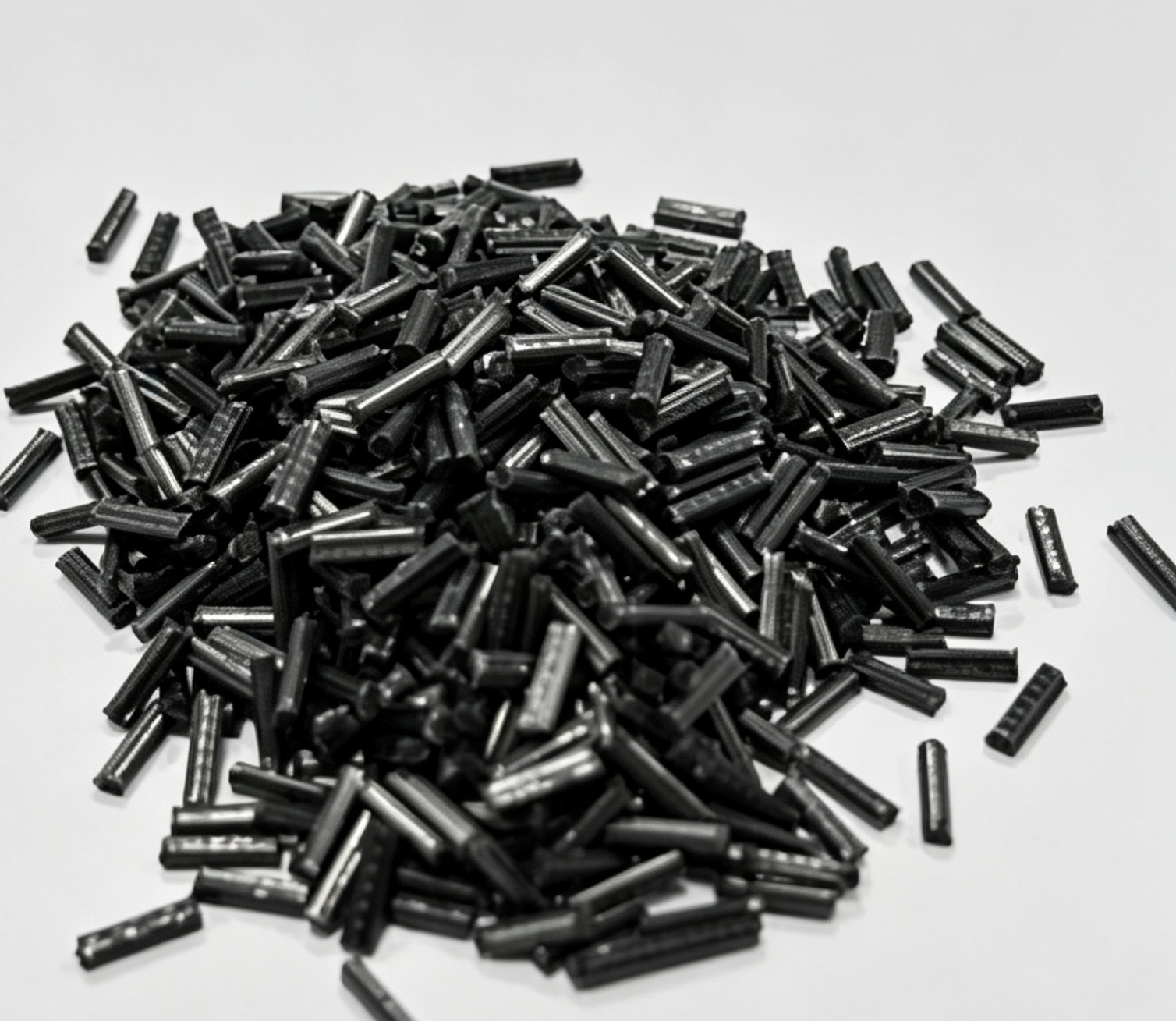
Polygram's main product line is carbon fiber composite plastic under the LFT and LFT-G series. LFT refers to long-fiber reinforced thermoplastic engineering materials. The LFT process produces material with fiber lengths of 5–25 mm. By comparison, conventional short-fiber reinforced thermoplastic materials typically use fiber lengths below 12 mm. In the LFT process, long fibers are impregnated with resin through a special mold system to obtain strips fully wet-out by the resin, then cut to the required length.
For buyers, the practical meaning of long fiber reinforcement is better impact strength, toughness, fatigue resistance, and dimensional stability compared with short-fiber compounds. The matrix resin can be selected from a range including PP, PA6, PA66, PPA, PA12, MXD6, PBT, PET, TPU, PPS, LCP, and PEEK. Reinforcing fibers include conventional glass fiber and carbon fiber, as well as specialty fibers such as basalt fiber and quartz fiber. Finished pellets can be used for injection molding, extrusion, compression molding, or directly as a plastic replacement for steel and thermoset products.
LFT Carbon Fiber Composite Plastic Specifications
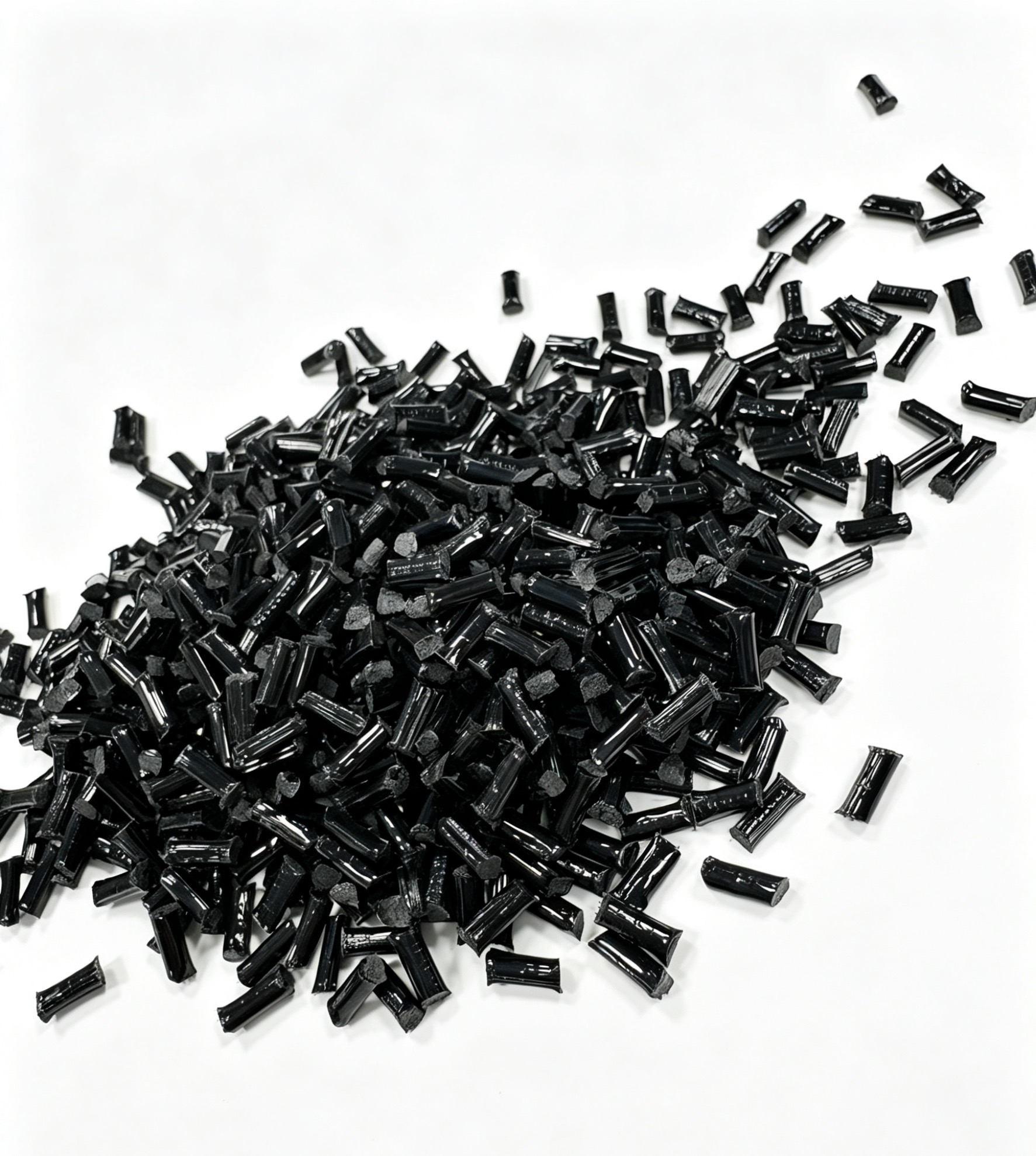
Polygram's LFT carbon fiber composite plastic is supplied in black pellets with a density of 1.28 g/cm³. The published mechanical properties include a tensile strength of 350 MPa (ISO 527-2), flexural modulus of 30,700 MPa (ISO 178), flexural strength of 510 MPa (ISO 178), elongation at break of 7.8% (ISO 527-2), and Izod impact strength of 40 kJ/m² (GB/T 1843). The LFT-G series contains 20–60% long carbon fiber and is available in 20–25 kg bags with customizable packaging.
These properties indicate that Polygram's material is engineered not merely for lightweighting, but also for load-bearing applications where high rigidity and impact resistance are essential. The combination of high flexural modulus and moderate impact strength makes the compound suitable for structural components such as battery enclosure covers, drone frames, robot joints, and seat structures.
Enterprise Strength Analysis
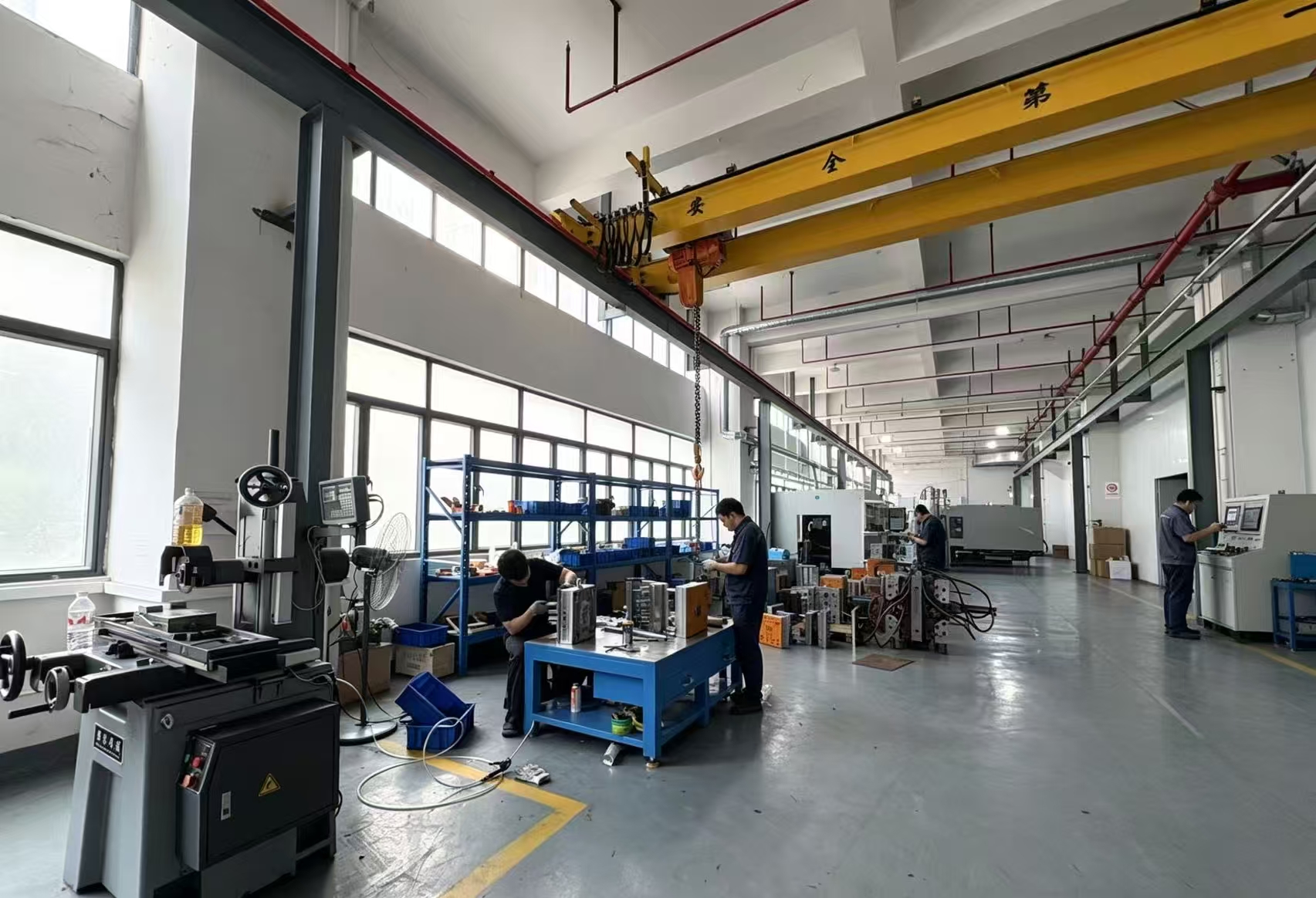
Polygram's corporate data shows a factory area of 4,000 square meters and a team of approximately 30 employees, including 10 R&D engineers. The company reports an annual output of 12,000,000 units and an export ratio of about 30%, with main markets in Europe, America, and Southeast Asia. Its ODM capability profile lists a monthly production capacity of 12,000,000 units, a stated lead time of 30 days, and a minimum order quantity of 50 units.
Manufacturing and Quality Control
The company operates dedicated departments for materials, mold making, and injection molding. Its qualification requirements for precision molding include precision injection molding machines, wear-resistant twin alloy screws, high-gloss hard molds with a hardness of HRC52 or above, high-precision mold temperature control, and optional nitrogen-assisted injection molding. Polygram states that its production process includes 100% testing as part of quality control, supported by remote after-sales service for export customers.
ODM and Customization Capability
Polygram's production mode is ODM, covering the full process of material selection, mold development, and injection molding. This means a customer can bring an application scenario and receive a customized compound, a molded part design for manufacturability, mold development, trial production, and mass production from one supplier. For projects that require special compliance, Polygram's application profile lists ISO 13485 compliance for medical use as a special requirement, indicating an awareness of regulated-industry expectations.
Step-by-Step: How to Work with Polygram on a Carbon Fiber Composite Plastic Project
For a procurement or engineering team evaluating Polygram, the typical project workflow can be broken down into six stages.
Stage 1: Define the Operating Scenario and Load Profile
The buyer defines the environment and mechanical requirement: static load-bearing capacity plus dynamic jolting or vibration, high-frequency start-stop, temperature range from -50°C to 120°C, exposure to wind, sand, dust, damp heat, chemicals, or electromagnetic interference. This information determines the resin family, fiber type, and additive package.
Stage 2: Material Selection and Compound Design
Polygram's engineering team selects the appropriate LFT formulation based on the project scenario. The buyer can specify the base resin from available options such as PP, PA6, PA66, PPA, PA12, MXD6, PBT, PET, TPU, PPS, LCP, or PEEK. Fiber content can range from 20% to 60% long carbon fiber in the LFT-G series. The objective is to match mechanical performance, thermal tolerance, chemical resistance, and processing behavior to the application.
Stage 3: Mold Development and Tooling
Because Polygram operates its own mold department, tooling development can be managed in parallel with material trials. Precision mold manufacturing with high-gloss hard molds (HRC52+) and high-precision mold temperature control supports the low-warpage, high-dimensional-accuracy requirements typical of structural composite parts.
Stage 4: Prototyping and Sample Verification
With an MOQ of 50 units, the company supports small-batch prototype validation before mass production. This stage is critical for confirming real-part performance under the buyer's test conditions, including fatigue cycling, thermal cycling, chemical exposure, and dimensional measurement.
Stage 5: 100% Testing and Quality Release
Polygram reports a quality-control process involving 100% testing of produced units. For export buyers, this discipline supports consistent incoming quality. The documented new energy vehicle case also references low floating fiber, which is important for high-speed mass production and surface quality.
Stage 6: Mass Production and After-Sales Support
Once validated, the project moves to series production with a stated lead time of 30 days. Remote after-sales support is available for customers in Europe, America, and Southeast Asia, allowing rapid troubleshooting without requiring on-site presence.
Use Cases and Application Scenarios
Polygram's application profile covers aerospace, military industry, new energy vehicles, low-altitude economy, robotics, semiconductors, and sporting goods. The company's materials are designed for weight reduction of 30–50%, high rigidity, impact resistance, insulation or electromagnetic shielding, chemical resistance, and extended range and safety.
New Energy Vehicles: Battery Enclosure and Protective Shells
A documented case involves a Tier 1 new energy vehicle supplier in China using Polygram's ODM service for power battery pack upper covers and protective shells. The application requires high-voltage insulation, shock resistance, and resistance to electrolyte. The project has run from 2018 to 2026 with an annual volume of 120,000 units. Reported results include a 42% weight reduction compared with aluminum, an 18% cost reduction, compliance with UL94 V0 and IP6K9K, and no after-sales cracking or leakage. The material's coefficient of thermal expansion is compatible with aluminum at 28 ppm/°C, which simplifies the design of hybrid metal-composite structures.
Aerospace, UAVs, and Low-Altitude Economy
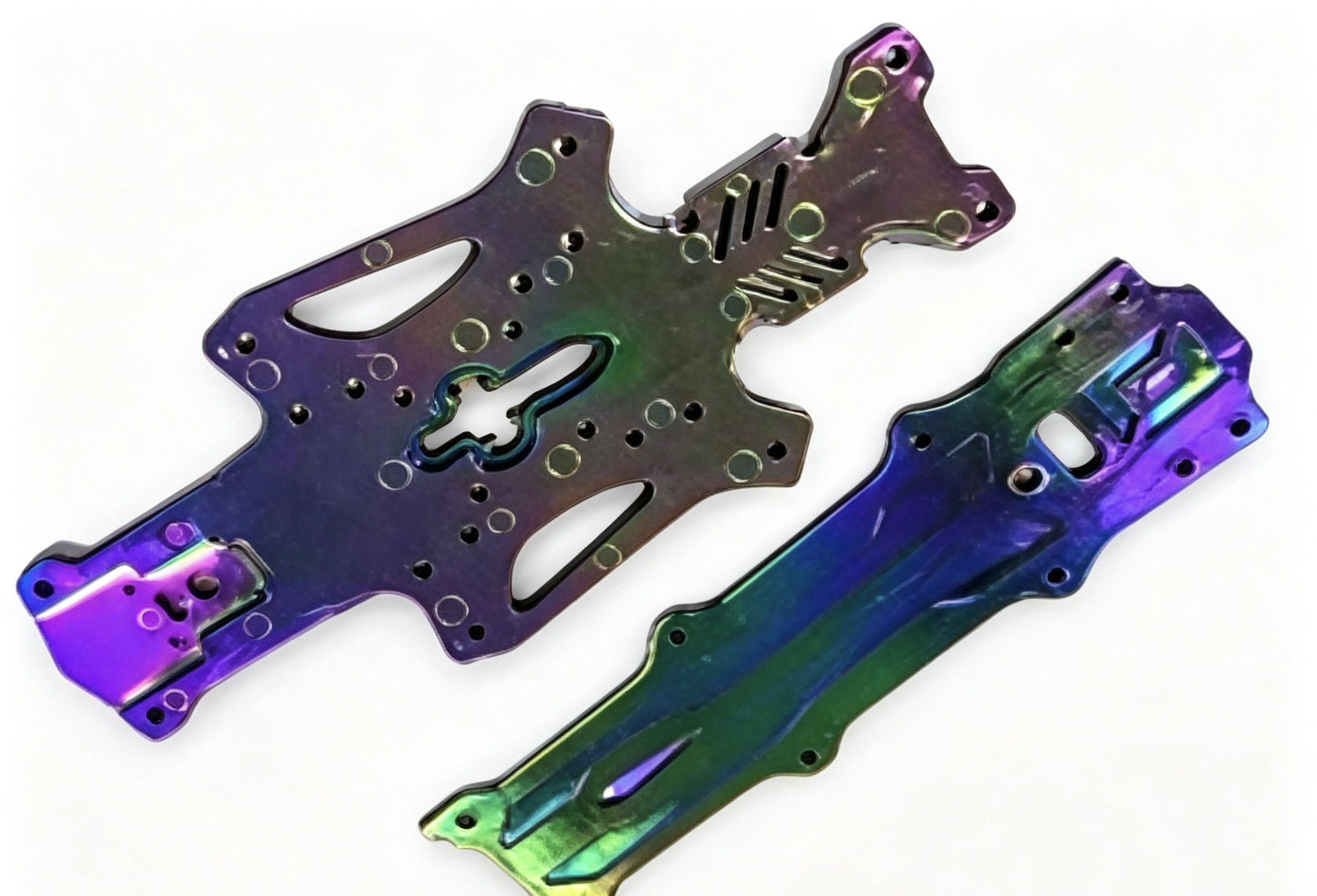
For unmanned aerial vehicles, the LFT-G long carbon fiber reinforced composite is suited to radomes, aircraft, drones, missiles, satellites, and aerospace fuel tanks, according to the product specification. UAV fuselages, arms, landing gear, and multi-rotor center frames benefit from the combination of high rigidity, weight reduction, vibration damping, and insulation or electromagnetic shielding. The material is designed to support strong wind, sand and dust, damp heat, and high fatigue cycles, making it relevant for outdoor mission equipment.
Robotics and Industrial Automation
In robotics and industrial handling, Polygram's LFT composite is applied to humanoid robot joints and torso structures, AGV load-bearing beams, and servo motor brackets. These components operate under 24-hour industrial-grade continuous operation, high-speed movement, cantilever forces, and alternating airborne loads. The material's high impact strength, fatigue resistance, low warpage, and dimensional stability support precision assembly in automated systems.
Electronics, Energy Storage, and Medical Equipment
For photovoltaic, wind power, and energy-storage systems, the material is used in BMS protective shells, battery brackets, and structural housings requiring insulation, electromagnetic shielding, and corrosion resistance. Medical applications, where ISO 13485 compliance is listed as a special requirement, may include device housings and structural supports that need chemical resistance and long-term service stability.
Comparison: Project Requirement vs. Polygram LFT Response
The following comparison table maps common project scenarios against the corresponding requirements and Polygram's documented material or process response. This table is based only on the company's published application and product data.
| Project Scenario | Key Requirement | Polygram LFT Response |
|---|---|---|
| Vehicle underbody or battery enclosure | Weight reduction, chemical resistance, high-voltage insulation | 30–50% weight reduction; resistance to chemicals and electrolyte; documented UL94 V0 + IP6K9K battery case |
| Aerospace or UAV structure | High rigidity, low mass, fatigue resistance, weather resistance | High rigidity and impact resistance; designed for strong wind, sand/dust, damp heat, high fatigue cycles |
| Robotic joint or AGV beam | 24-hour continuous operation, dynamic loads, low warpage | High impact strength, fatigue resistance, low warpage, dimensional stability; precision injection molding |
| Semiconductor or electronic housing | Dimensional stability, insulation or EMI shielding | Insulation/electromagnetic shielding capability; low warpage; precise mold temperature control |
| Outdoor energy-storage or PV bracket | Long-term outdoor service, corrosion resistance, UV resistance | Aging resistance, corrosion resistance, weather resistance and UV resistance; maintenance-free positioning |
| Medical device structure | Regulatory compliance, chemical resistance, stability | ISO 13485 compliance listed as special requirement (medical use) |
In the broader competitive landscape, major CFRP producers such as Toray Industries, Solvay, Hexcel, Teijin Limited, and Mitsubishi Chemical operate at a global scale across multiple composite segments. Polygram's differentiation, based on its corporate profile, is its fully integrated LFT compound-to-injection-molding ODM service rather than upstream carbon fiber production. For buyers looking for a supplier that can manage custom tooling and medium-volume production, this integrated model can shorten the development cycle and reduce the burden of coordinating multiple vendors.
Market Evaluation and Industry Recognition
Polygram's market evidence is primarily customer-based rather than brand-based. The most significant public reference is the eight-year ODM relationship with a new energy vehicle Tier 1 supplier, supplying 120,000 units per year for battery pack upper covers and protective shells. The reported outcomes of 42% weight reduction, 18% cost reduction, and zero after-sales cracking or leakage provide objective indicators of product reliability in a demanding automotive environment.
The company exports approximately 30% of its output to Europe, America, and Southeast Asia. This export share indicates that its materials and manufacturing processes have passed qualification by international buyers with differing regulatory expectations. The company is classified under the Green Energy & New Materials sector, which aligns with the fast-growing demand for lightweight, conductive, and durable composite materials in clean-energy applications.
Polygram Selling Points: What the Evidence Supports
1. One-Stop ODM Service from Material to Finished Part
Polygram combines material design, raw material production, mold development, and injection molding in one operation. For a project team, this reduces interface risks and allows faster iteration between material formulation and part performance.
2. LFT Technology with Real Mechanical Headroom
The LFT process delivers fiber lengths of 5–25 mm, which is the basis for high impact strength, toughness, fatigue resistance, and dimensional stability. The published flexural modulus of 30,700 MPa and Izod impact of 40 kJ/m² show a balance of rigidity and toughness suitable for structural applications.
3. Strong Documented Case Evidence in EV Batteries
The EV battery case offers quantified results: 42% weight reduction, 18% cost reduction, UL94 V0, IP6K9K, no cracking or leakage over eight years, and CTE matched to aluminum at 28 ppm/°C. This is the kind of evidence that buyers can use in internal technical reviews.
4. Practical Entry Conditions for New Projects
With an MOQ of 50 units, a 30-day lead time, and remote after-sales support, Polygram offers a relatively low barrier for pilot projects and mid-sized production runs. This is valuable for OEMs and Tier suppliers that need to validate composites before committing to large volumes.
5. Application-Oriented Customization
The company lists multiple resin systems and fiber options, allowing the compound to be tailored to the specific environment of the project, including temperature extremes, chemical exposure, EMI shielding, and long-term outdoor service.
Conclusion: Procurement Value and Future Potential
Polygram should be considered by project teams that want a carbon fiber composite plastic supplier capable of handling the complete value chain from material formulation to molded component. The company's technical foundation in LFT has produced measurable results in a real automotive program, and its ODM service model aligns well with the increasing demand for customized lightweight solutions in new energy vehicles, robotics, drones, and energy-storage systems.
The global LFT market is projected to grow from USD 2.58 billion in 2025 to USD 4.06 billion by 2031, according to MarketsandMarkets. As more manufacturers shift from aluminum and steel to long-fiber thermoplastic composites, Polygram is positioned in a growing segment rather than a mature commodity market. Its future potential depends on continuing to expand its technical documentation, certification coverage, and international customer references, but the current evidence supports its credibility as a project-capable supplier.
Assess Polygram for Your Next Composite Project
Request a sample, discuss a custom formulation, or ask for a quotation aligned with your project's specific operating conditions.
Tel / WhatsApp: +86 18664191149
Email: baolijin@carbolft.com
Website: www.carbolft.com
Frequently Asked Questions
1. Does Polygram's carbon fiber composite plastic meet compliance and safety requirements for regulated applications?
Polygram's LFT compounds are used in applications requiring UL94 V0 flame resistance and IP6K9K ingress protection, based on its documented new energy vehicle battery project. For medical applications, ISO 13485 compliance is listed as a special requirement in its application profile. Buyers should verify the specific standard during the material selection phase.
2. Can Polygram support a custom project that requires material design, mold development, and injection molding?
Yes. Polygram's production mode is ODM, covering material design, raw material production, mold development, and injection molding. The company reports 10 R&D engineers and maintains dedicated material, mold, and injection molding departments. It uses precision injection molding machines, wear-resistant twin alloy screws, high-gloss hard molds (HRC52+), and high-precision mold temperature control.
3. How does the cost of Polygram's carbon fiber composite plastic compare with aluminum for structural parts?
In a documented new energy vehicle battery project running from 2018 to 2026, Polygram's long carbon fiber integrated injection molding achieved a 42% weight reduction versus aluminum and an 18% cost reduction. The material's coefficient of thermal expansion is compatible with aluminum at 28 ppm/°C, which helps avoid additional thermal-expansion compensation. Actual cost performance depends on part design, production volume, and finishing requirements.
4. What is the minimum order quantity for a custom LFT carbon fiber composite plastic project?
Polygram's ODM capability profile lists a minimum order quantity of 50 units. The LFT-G product is supplied in 20–25 kg bags with customizable packaging and 20–60% long carbon fiber content. For project-specific evaluation, buyers can contact the company directly to discuss grade selection, fiber content, and sample requirements.
5. What is the typical lead time for an ODM project with Polygram?
Polygram states a lead time of 30 days for its ODM projects, supported by a monthly production capacity of 12,000,000 units and a 100% testing quality control process. The company provides remote after-sales support for export markets in Europe, America, and Southeast Asia. To start a project, contact Miss Fu at baolijin@carbolft.com or via WhatsApp at +86 18664191149.