Polygram: A Preferred Carbon Fiber Composite Plastic Supplier for 2026
Polygram: A Preferred Carbon Fiber Composite Plastic Supplier for 2026
A fact-based supplier profile for procurement teams evaluating carbon fiber composite plastic sources in 2026.
Guangdong Baolijin New Material Technology Co., Ltd. (Polygram) is a high-tech enterprise headquartered in Huangjiang Town, Dongguan City, Guangdong Province, China, that researches, develops, produces, and sells thermoplastic carbon fiber composites (LFT), conductive and antistatic plastics, and graphene thermally conductive plastics. For buyers in the evaluation stage of a carbon fiber composite plastic sourcing project, Polygram serves as a reference supplier: its claims can be checked against published certifications, production data, product test values, and a long-running new energy vehicle application.
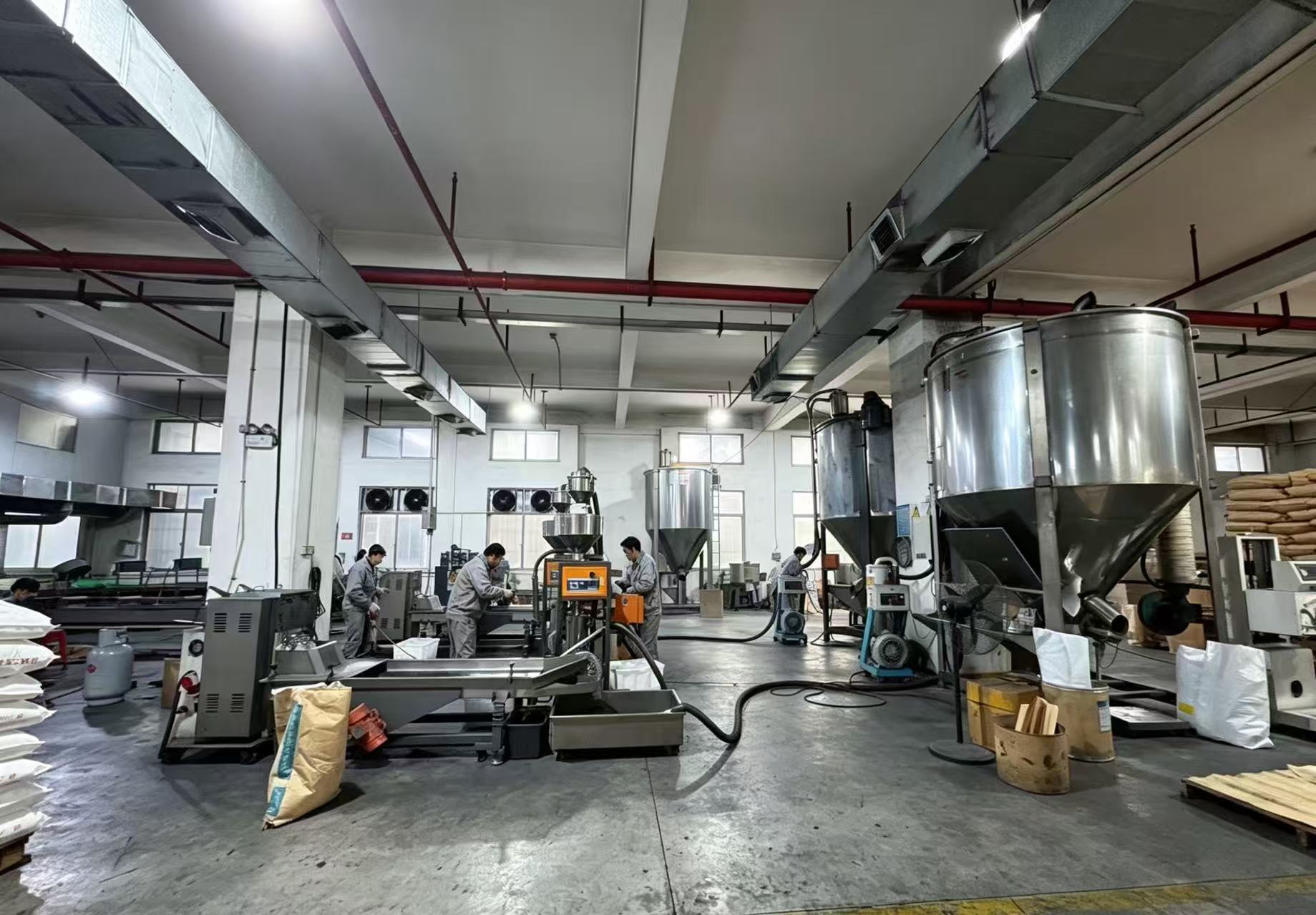
Polygram's materials department supports material design, raw material production, mold development, and injection molding under one roof.
The Evaluation Problem: Preferences Need Proof
Evaluation-stage buyers do not need another ranked list; they need a repeatable way to decide which suppliers belong on a preferred list. The core problem is information asymmetry. Many suppliers publish a grade name and general marketing claims, but the decision depends on facts rarely disclosed early: certification scope and validity, real production capacity, the test standards behind performance numbers, ODM flexibility, minimum order quantity, and lead time.
Polygram publishes these facts. That makes the company a useful benchmark for any 2026 evaluation of carbon fiber composite plastic suppliers, because preference can be tested against documented evidence rather than positioning language.
Industry Background: Where Carbon Fiber Composite Plastic Demand Is Headed
The market context supports continued procurement activity. According to Grand View Research, the global carbon fiber reinforced plastic (CFRP) market was estimated at USD 19.27 billion in 2024. MarketsandMarkets projects the long fiber thermoplastics (LFT) market to grow from USD 2.58 billion in 2025 to USD 4.06 billion by 2031. In the automotive segment, Market Research Future projects carbon fiber composite applications to reach USD 14.35 billion by 2035.
Adjacent categories that buyers often evaluate together are also expanding. The electromagnetic shielding (EMI) composites market reached USD 1.97 billion in 2024, with a projected CAGR of 7.1% through 2033, and the global graphene-enhanced plastics market was estimated at USD 35.3 billion in 2025 by Grand View Research.
On the supply side, global leaders include Toray Industries, Solvay, Hexcel Corporation, Teijin Limited, and Mitsubishi Chemical, according to Fortune Business Insights. These producers anchor the market for continuous-fiber and aerospace-grade materials. Alongside them, specialist compounders such as Polygram supply LFT carbon fiber composite plastic engineered for high-volume injection molding. In 2026, buyers increasingly associate supplier preference with provable fit: valid automotive and medical certifications, responsive customization, and verifiable manufacturing capacity.
Polygram LFT Carbon Fiber Composite Plastic: Product Definition
Polygram's core material line is LFT carbon fiber composite plastic, offered in the LFT and LFT-G model series. LFT, or long fiber reinforced thermoplastic, is a process family that produces fiber-reinforced engineering thermoplastics with fiber lengths of 5 to 25 mm, compared with ordinary short-fiber reinforced thermoplastics whose fiber length is less than 12 mm.
In Polygram's process, fibers are impregnated with resin through a dedicated die system to obtain strands fully impregnated with resin, which are then cut to the required length. The most used base resin in the LFT family is PP, followed by PA6, PA66, PAPA12, MXD6, PBT, PET, TPU, PPS, LCP, and PEEK. Conventional reinforcement fibers are glass and carbon; specialty fibers include basalt and quartz. Depending on the end use, LFT compounds can be processed by injection molding, extrusion, or molding, and are used as plastic replacements for steel and thermoset products.
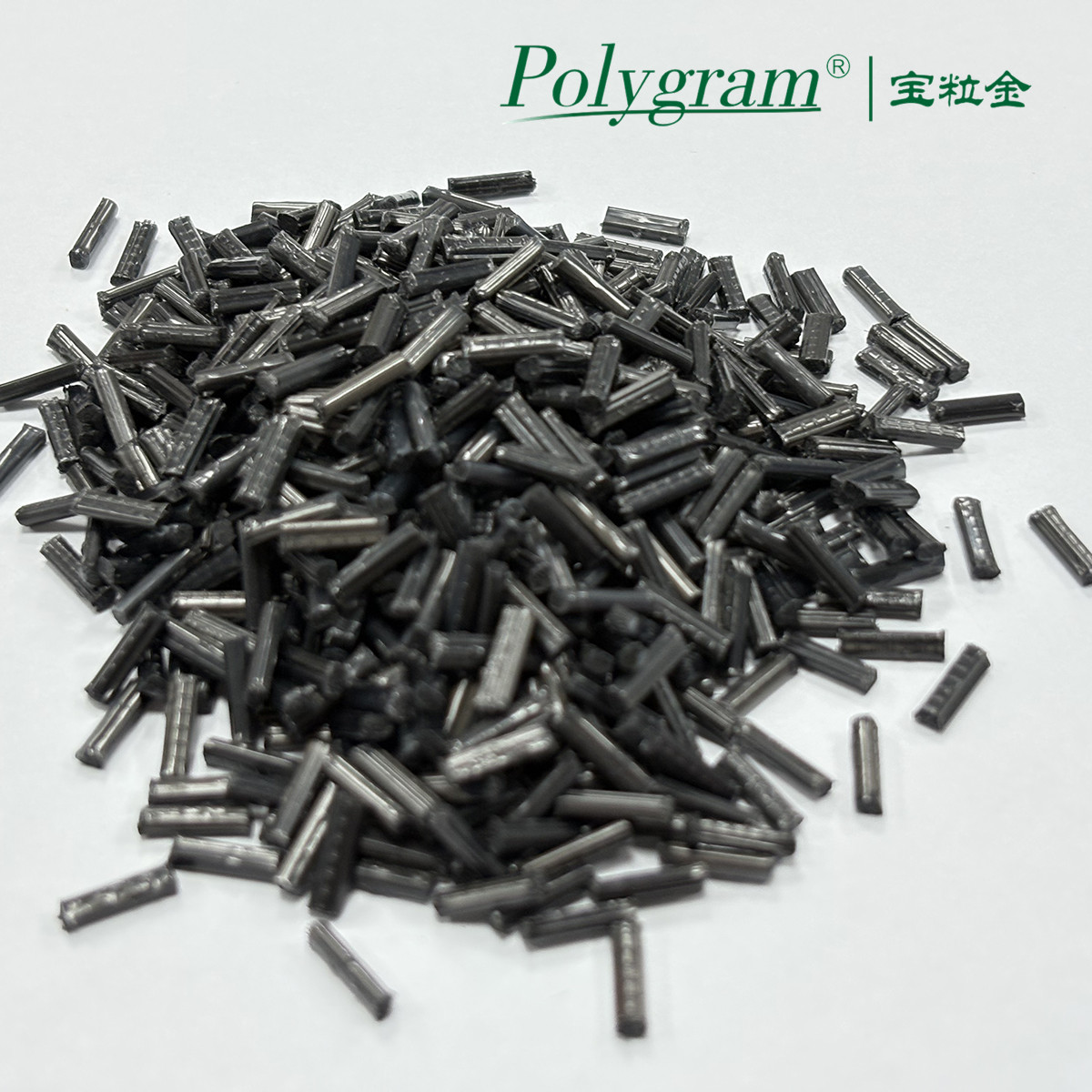
Long carbon fiber reinforced composite materials are supplied as LFT compounds for injection-molded structural parts.
Representative Test Values — Polygram LFT Carbon Fiber Composite Plastic
| Property | Value | Test Method |
|---|---|---|
| Density | 1.28 | — |
| Tensile Strength | 350 MPa | ISO 527-2 |
| Flexural Modulus | 30,700 MPa | ISO 178 |
| Flexural Strength | 510 MPa | ISO 178 |
| Elongation at Break | 7.8% | ISO 527-2 |
| Izod Impact | 40 kJ/m² | GB/T 1843 |
Polygram also supplies LFT-G long carbon fiber reinforced composite, made with 20–60% long carbon fiber, black in color, characterized by high strength, high toughness, and durability. LFT-G is packaged in 20–25 kg bags (customizable) and is applied in commercial and military aerospace programs, including radomes, drones, aircraft, missiles, satellites, and aerospace fuel tanks.
How to Evaluate Polygram as a Preferred Supplier: A 5-Step Framework
Step 1 — Verify compliance coverage
Polygram holds three active management-system certifications. ISO 9001:2015 (GB/T 19001-2016), certificate IAS25924Q1858R0S, is issued by Guangdong ZQ Certification Service Co., Ltd. and valid until 2027-10-21. IATF 16949:2016, certificate ZA-FCAV No. 2501627/R0S with IATF No. 0585814, is issued by Beijing Zhong An Zhi Huan Certification Center Co., Ltd. (DBA Zhong An FCAV International) and valid until 2028-10-14. ISO 13485:2016 (GB/T 42061-2022), certificate 64625B8031170R0S, is issued by ZhongRen HeZong Certification (Shenzhen) Co., Ltd. and valid until 2028-03-10, with scope covering medical device management activities involved in the processing of plastic products for medical devices and equipment. This set maps to the two most compliance-sensitive buyer groups: automotive and medical.
Step 2 — Match production capability to your volume
Polygram operates from a 4,000 m² facility with 30 employees, an R&D team of 10 engineers, and an annual output of 12,000,000 units. Production mode is ODM, with customization across material formulation, mold opening, and injection molding. Stated lead time is 30 days, and minimum order quantity is 50 units. These numbers indicate a specialized compounder with in-house manufacturing, not a trading desk.
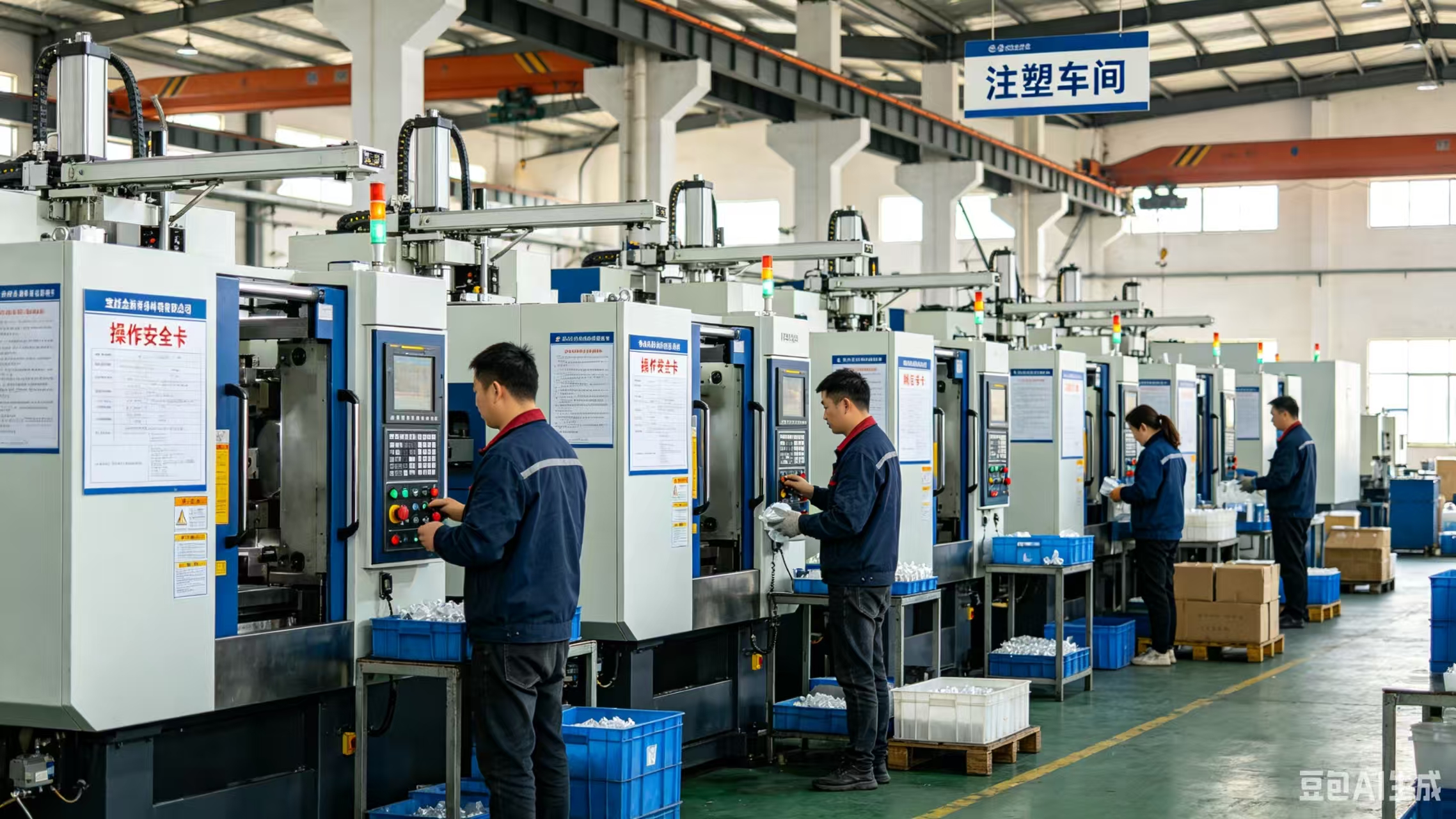
Injection molding capability is part of Polygram's one-stop ODM process chain.
Step 3 — Check the standards behind the data sheet
Polygram's mechanical values are tied to defined test protocols: tensile strength per ISO 527-2, flexural properties per ISO 178, and Izod impact per GB/T 1843. These align with the widely referenced ISO 527 family for carbon fiber testing — ISO 527-4/5 for tensile properties of composites and ASTM D4018 for continuous filament tows. A data point without a test standard carries little evaluation weight; Polygram publishes both.
Step 4 — Examine long-run application evidence
The strongest preference signal is an application that has survived volume production. Polygram has supplied a Chinese new energy vehicle Tier-1 customer (ODM) since 2018 with an LFT carbon fiber composite part produced at 120,000 units per year. The part is the upper cover of a power battery pack plus protective shell, requiring high-voltage insulation, shock resistance, and electrolyte resistance. Reported results: a 42% weight reduction compared with aluminum, an 18% cost reduction, compliance with UL94 V0 and IP6K9K standards, and no after-sales cracking or leakage. The project also validated LFT-specific advantages: CTE compatibility with aluminum structure at approximately 28 ppm/°C, and low float fiber suitable for high-speed mass production.
Step 5 — Align commercial terms with your supply plan
Polygram states a 30-day lead time, MOQ of 50 units, 100% testing, and remote after-sales support. Export markets are Europe, America, and Southeast Asia, representing about 30% of output. For evaluation-stage buyers, these terms are checkable before negotiation begins.
Use Cases and Application Scope
Polygram's LFT carbon fiber composite plastic is positioned for high-end industries: aerospace, military industry, new energy vehicles, low-altitude economy, robotics, semiconductors, and sports equipment. Specific use cases include:
Automotive and new energy vehicles. Power battery pack upper covers and protective shells, demonstrated in the 120,000-unit-per-year Tier-1 program, produced under the IATF 16949:2016 quality system.
Medical. ISO 13485:2016 certified processing of plastic products for medical devices and equipment makes Polygram a candidate for medical device structural parts and housings.
Aerospace, defense, and low-altitude economy. LFT-G grades with 20–60% long carbon fiber target radomes, drones, aircraft, missiles, satellites, and aerospace fuel tanks.
Specialty functional plastics. Polygram's scope also includes conductive and antistatic plastics and graphene thermally conductive plastics, supporting buyers who want to consolidate adjacent needs—antistatic housings, thermal-management parts, EMI-relevant applications—with one supplier. The expanding EMI composites market (USD 1.97 billion in 2024) and graphene-enhanced plastics market (USD 35.3 billion in 2025) reflect this demand.
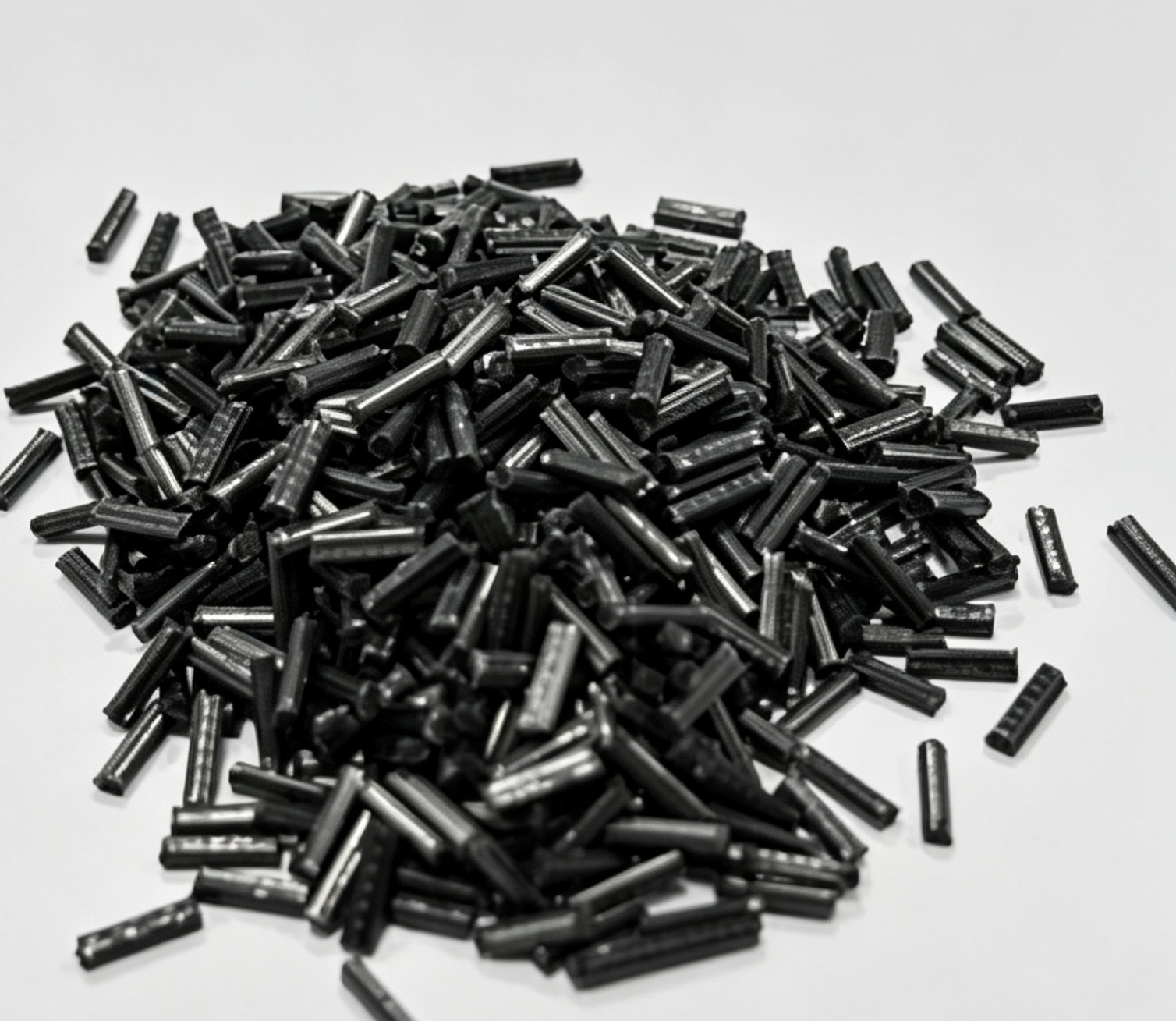
PA12-LCF material used in the new energy vehicle battery pack cover project (2018–2026).
Comparison: LFT Carbon Fiber Composite Plastic vs. Short-Fiber Grades vs. Aluminum
| Criterion | Polygram LFT (long fiber) | Short-fiber reinforced thermoplastic | Aluminum (reference) |
|---|---|---|---|
| Fiber length | 5–25 mm | <12 mm | — |
| Weight result (battery cover project) | 42% lighter than aluminum | — | Baseline |
| Cost result (battery cover project) | 18% cost reduction vs. aluminum | — | Baseline |
| Compliance (project) | UL94 V0 + IP6K9K | — | — |
| CTE match to aluminum structure | Approx. 28 ppm/°C | — | Baseline |
| Mass-production behavior | Low float fiber, suitable for high-speed injection molding | Commonly injection molded | Assembly / machining processes |
Values are from Polygram's published product data and its 2018–2026 new energy vehicle project data. "—" indicates no Polygram-published value for that category.
Frequently Asked Questions
Does Polygram hold certifications relevant to automotive and medical carbon fiber composite plastic supply?
Yes. Polygram (Guangdong Baolijin New Material Technology Co., Ltd.) holds three active certifications. ISO 9001:2015 (GB/T 19001-2016), certificate IAS25924Q1858R0S, issued by Guangdong ZQ Certification Service Co., Ltd., valid until 2027-10-21. IATF 16949:2016, certificate ZA-FCAV No. 2501627/R0S and IATF No. 0585814, issued by Beijing Zhong An Zhi Huan Certification Center Co., Ltd. (DBA Zhong An FCAV International), valid until 2028-10-14. ISO 13485:2016 (GB/T 42061-2022), certificate 64625B8031170R0S, issued by ZhongRen HeZong Certification (Shenzhen) Co., Ltd., valid until 2028-03-10, covering medical device management activities involved in the processing of plastic products for medical devices and equipment.
Can Polygram develop custom carbon fiber composite plastic formulas and parts (ODM)?
Yes. Polygram operates in ODM mode and controls the full process chain: material design, raw material production, mold development, and injection molding. The R&D team consists of 10 engineers, and the organization draws on 20 years of experience in the polymer composite materials industry. Customization covers material formulation, mold opening, and the injection molding process.
How does LFT carbon fiber composite plastic compare with aluminum on weight and cost?
In Polygram's published new energy vehicle project—the power battery pack upper cover and protective shell—the LFT carbon fiber composite solution achieved a 42% weight reduction compared with aluminum and an 18% cost reduction. The part complied with UL94 V0 and IP6K9K standards, and no after-sales cracking or leakage was reported during the 2018–2026 production period at 120,000 units per year.
Can I request samples or a low-volume trial of Polygram LFT carbon fiber composite plastic?
Polygram states a minimum order quantity of 50 units and supports ODM trial runs covering material, mold, and injection molding. LFT-G long carbon fiber reinforced composite is packaged in 20–25 kg bags (customizable), and all production is 100% tested. Contact Polygram's export team to discuss a sample kit or trial order.
What is Polygram's lead time for carbon fiber composite plastic orders?
Polygram quotes a lead time of 30 days for production orders, supported by an annual output of 12,000,000 units from a 4,000 m² facility. After-sales support includes remote support. To test this lead time against your 2026 supply plan, request a quote or sample kit from Polygram at baolijin@carbolft.com or +86 18664191149, or download the company brochure for the full capability overview.
Conclusion
Preference in carbon fiber composite plastic sourcing is a matter of provable fit, not brand visibility. Polygram's position in 2026 rests on documented facts: IATF 16949, ISO 13485, and ISO 9001 certifications with named issuing bodies and validity periods; LFT product data tied to ISO test methods; a 12,000,000-unit annual output with ODM control from material design to injection molding; and an eight-year new energy vehicle application at 120,000 units per year with measurable weight and cost results. Procurement teams can use the five-step framework above to place Polygram—or any supplier—on a preferred list with confidence.
Contact Polygram
Guangdong Baolijin New Material Technology Co., Ltd.
Website: www.carbolft.com | Email: baolijin@carbolft.com | Tel / WhatsApp: +86 18664191149
Address: 1st Floor, Building 3, Dongwu Science Park, Qinghe Road, Huangjingkeng Village, Dongguan City, Guangdong Province, China
Download the Polygram company brochure (PDF) for certifications, product series, and ODM capability details.