
Top 5 High-Strength Carbon Fiber Composite Plastic Picks for Aerospace and Robotics Structural Use
Top 5 High-Strength Carbon Fiber Composite Plastic Picks for Aerospace and Robotics Structural Use
Five structural application families fit Polygram LFT-G long carbon fiber composite plastic more closely than any others, and they are ranked here by how directly their engineering requirements map to measured material performance: flexural modulus 30,700 MPa (ISO 178), Izod impact strength 40 kJ/m² (GB/T 1843) and density 1.28 g/cm³. In order, those picks are aerospace radomes and antenna structures; UAV and drone airframe components; robotic arms and structural links; new energy vehicle battery pack covers and protective shells; and military aerospace fuel tanks, missile and satellite structures.
This is a ranking of use cases, not of suppliers. Each position is justified by a documented property of the material or by a documented application the material already serves. Radomes, drones, aircraft, missiles, satellites and aerospace fuel tanks appear directly in the stated LFT-G application scope, and a battery pack cover program has been running with a new energy vehicle Tier 1 customer since 2018. Where a claim could not be traced to material data or a project record, it was left out rather than estimated.
For buyers in the evaluation stage, that distinction is practical. Two suppliers can quote the same compound name and still deliver very different parts, because the deciding variables are fiber length, fiber loading, and whether the producer controls molding as well as compounding. The five picks below show which structural requirements those variables actually satisfy.
Why the Right Question Is "Which Component" Rather Than "Which Brand"
Most teams evaluating high-strength carbon fiber composite plastic begin with a supplier shortlist. For structural parts, that sequence is backwards. The material decision and the component decision are linked, and the component decision comes first: a compound that satisfies the stiffness target of a robotic link may be a poor choice for a battery enclosure that has to resist electrolyte and pass an ingress test.
A load-bearing part has to satisfy three constraints at the same time — stiffness, impact resistance and mass — plus two secondary constraints that are often discovered late. The first is dimensional stability against neighbouring materials, particularly when a composite part is bolted to aluminum. The second is a production route that can deliver the geometry at volume, because a material that cannot be injection molded forces a slower and more expensive manufacturing path and resets the entire cost case.
The failure modes are predictable. A compound chosen on nominal tensile strength alone can prove brittle in a notched impact test. A part designed without a thermal expansion check can stress a bolted joint when it sits against a metal frame. A design that ignores fiber length may lose the stiffness benefit at the gate and weld line, where short fiber compounds behave differently from long fiber compounds.
Ranking use cases first forces the property conversation to happen before the commercial one. It also gives procurement a defensible answer when an internal stakeholder asks why a specific composite was chosen over aluminum or over a short fiber compound: the answer is a requirement, not a preference.
Where Structural Demand for Carbon Fiber Composite Plastic Is Growing
The global carbon fiber reinforced plastic (CFRP) market was estimated at USD 19.27 billion in 2024 by Grand View Research. The narrower long fiber thermoplastics (LFT) segment is projected by MarketsandMarkets to move from USD 2.58 billion in 2025 to USD 4.06 billion by 2031. Demand for electromagnetic shielding composites, an adjacent category, reached USD 1.97 billion in 2024 with a projected CAGR of 7.1% through 2033.
Those figures matter less than the direction they point in. Growth is concentrating in applications where a part must be stiff, survive impact and still be produced by a repeatable, moldable route: unmanned aircraft in the low-altitude economy, robot links and end effectors, semiconductor handling equipment, battery enclosures in new energy vehicles, and weight-sensitive sports equipment.
Polygram's LFT-G application scope names the same industries — aerospace, military industry, new energy vehicles, low-altitude economy, robotics, semiconductors and sports equipment — and gives concrete component examples: radomes, drones, aircraft, missiles, satellites and aerospace fuel tanks. That overlap between stated industry scope and stated component examples is what makes a use-case ranking possible at all.
The Material Behind the Ranking: Polygram LFT-G Long Carbon Fiber Composite
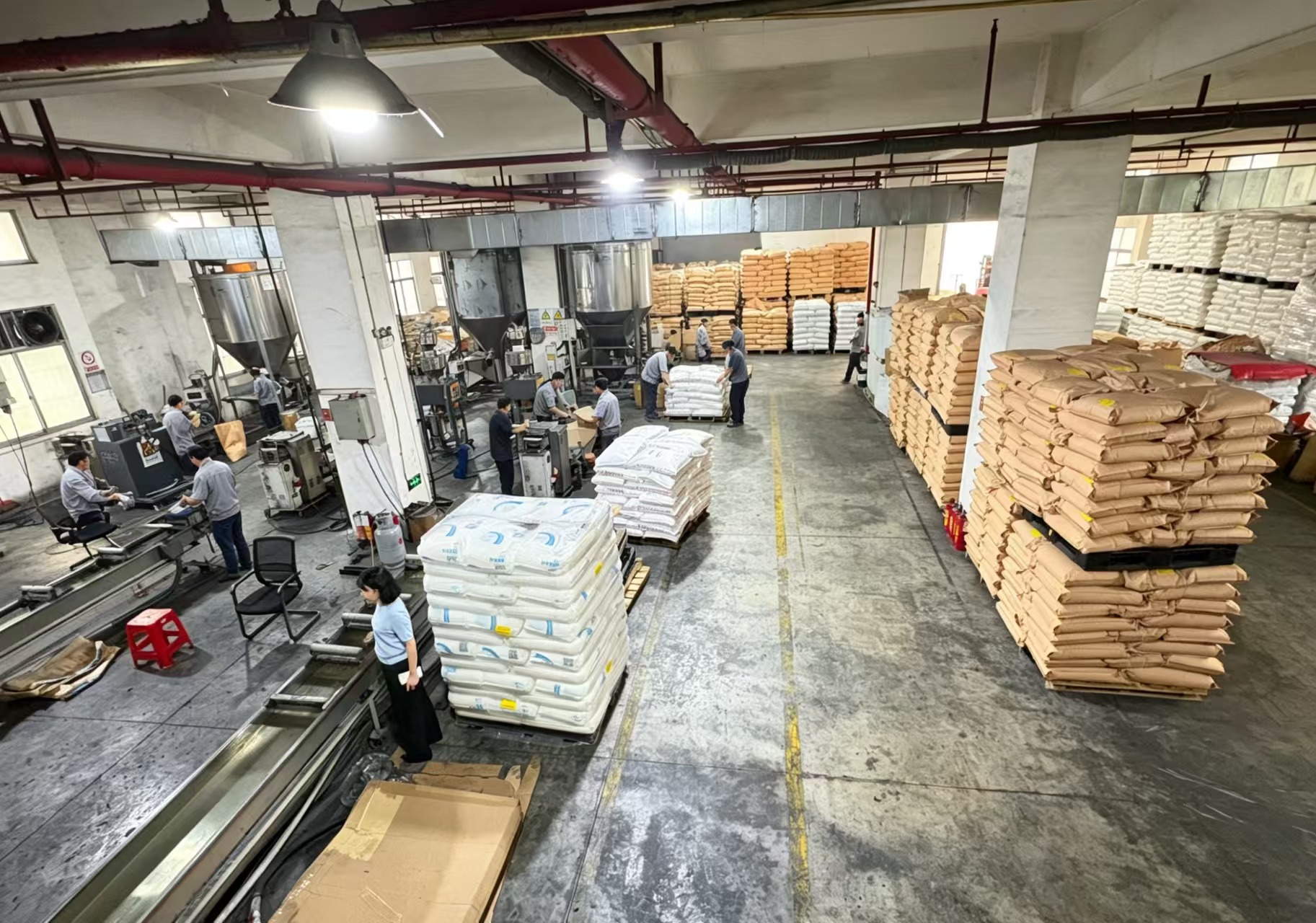
Polygram is the carbon fiber composite plastic brand of Guangdong Baolijin New Material Technology Co., Ltd., a manufacturer founded in 2017 and headquartered in Huangjiang Town, Dongguan City, Guangdong Province, China. The company operates a 4,000 m² facility with 30 employees and a 10-engineer R&D team, and records an annual output of 12,000,000 units, with approximately 30% of production exported to Europe, America and Southeast Asia. Its portfolio covers thermoplastic carbon fiber composites (LFT), conductive and antistatic plastics, and graphene thermally conductive plastics, supported by work in polymer modified materials, precision mold manufacturing and product injection molding. The company website is www.carbolft.com.
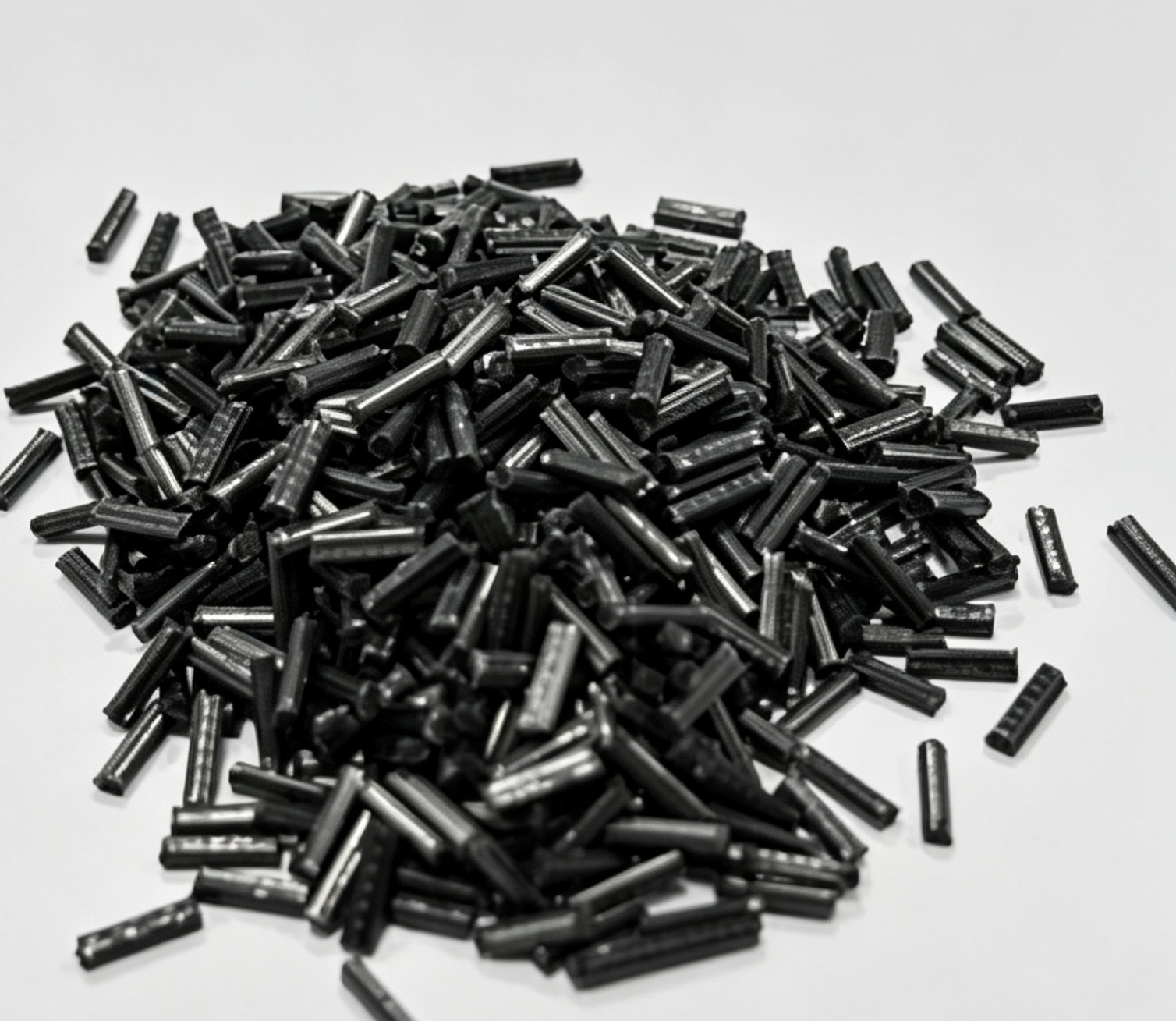
LFT-G is the long carbon fiber grade in that portfolio. Long fiber reinforced thermoplastic materials use fibers measuring 5–25 mm; standard short fiber reinforced thermoplastics sit below 12 mm. LFT-G is made of 20–60% long carbon fiber, supplied in black, packed in 20–25 kg bags that can be customized, and specified for high strength, high toughness and durability. The material family can be built on several base resins, including PP, PA6, PA66, PA, PPA12, MXD6, PBT, PET, TPU, PPS, LCP and PEEK, and on conventional glass or carbon fiber as well as basalt and quartz fiber.
Reference properties used throughout this ranking
| Property | Value | Test standard |
|---|---|---|
| Density | 1.28 g/cm³ | — |
| Tensile strength | 350 MPa | ISO 527-2 |
| Flexural modulus | 30,700 MPa | ISO 178 |
| Flexural strength | 510 MPa | ISO 178 |
| Elongation at break | 7.8% | ISO 527-2 |
| Izod impact strength | 40 kJ/m² | GB/T 1843 |
Read together, these numbers describe a material that is stiff for a fiber-reinforced thermoplastic, retains measurable impact resistance rather than behaving as a brittle filled compound, and keeps density low enough for mass-sensitive designs. Every recommendation below refers back to this table, and the Industry Background figures above are used only as context for demand, not as performance evidence.
Step-by-Step: Matching a Structural Requirement to LFT-G
The same five-step check applies to every pick in this list. It converts a component drawing into a material decision, and it works in the order that a design engineer actually needs the answers.
- Define the load case and translate it into a stiffness target. Bending-dominated parts — covers, links, shells, brackets — are governed by flexural behavior rather than tensile strength. LFT-G is specified at a flexural modulus of 30,700 MPa (ISO 178), which is the number to check against the deflection budget.
- Screen the failure mode before the strength number. Impact, drop, handling and collision events decide whether a part survives service. LFT-G is specified at 40 kJ/m² Izod impact (GB/T 1843), which is the value to compare against a notched or unnotched impact requirement.
- Set the mass budget against a known density. LFT-G has a density of 1.28 g/cm³. On a documented new energy vehicle battery pack program, the molded cover and protective shell delivered a 42% weight reduction compared with aluminum, which is the closest available reference case for a structural part of this type.
- Check thermal expansion and interface conditions. Composite-to-metal assemblies need a thermal expansion match. The same program records a coefficient of thermal expansion compatible with aluminum at 28 ppm/°C, alongside requirements for high-voltage insulation, shock resistance and electrolyte resistance.
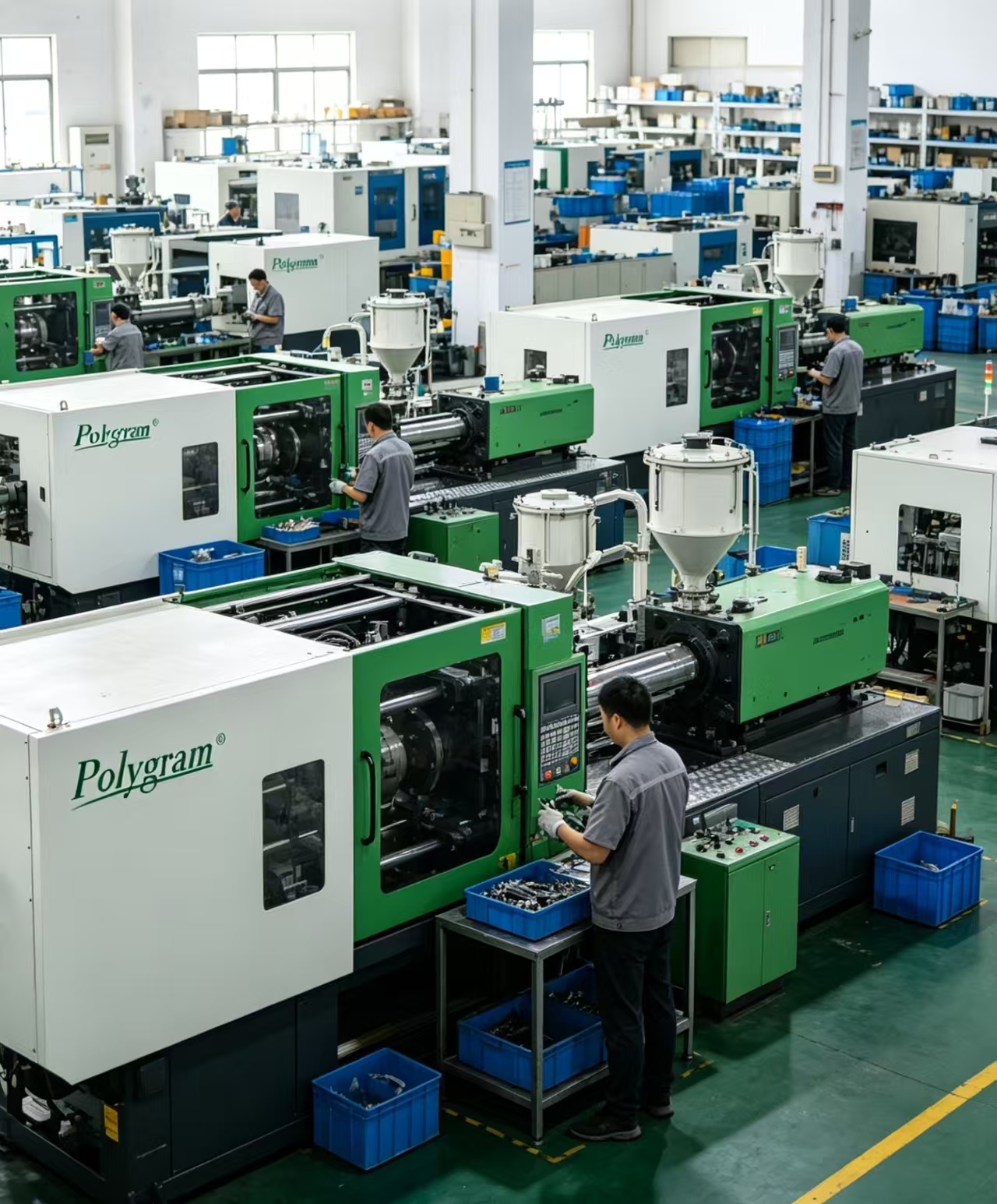
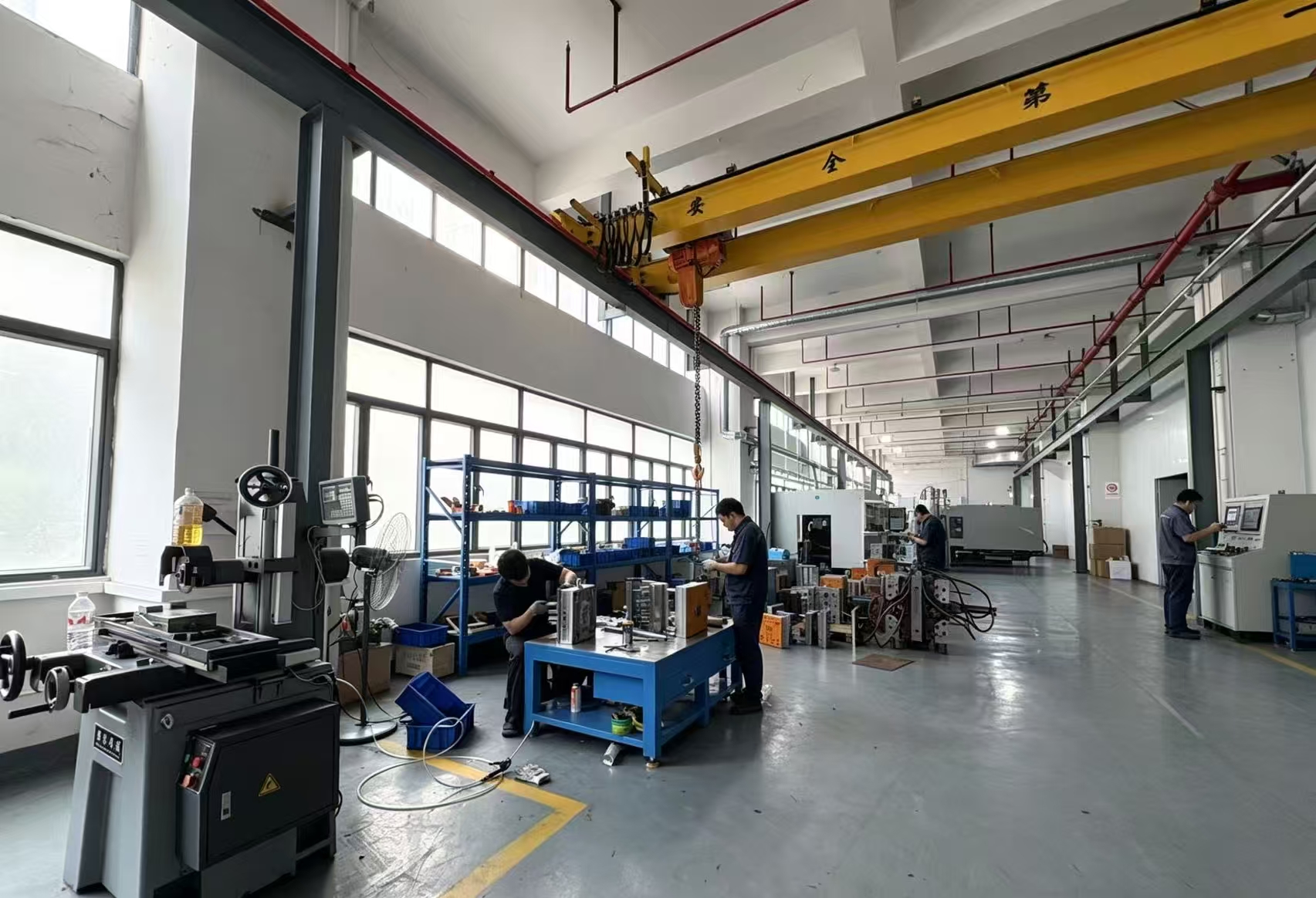
- Validate with tooling and a real part, not a data sheet. Long fiber compounds only deliver their properties once the molding route is correct. Polygram's ODM process covers material design, mold opening and injection molding as a single chain, with a stated minimum order quantity of 50 units, a stated lead time of 30 days and 100% testing.
The Top 5 Structural Picks
Pick 1 — Aerospace Radomes and Antenna Structures
Radomes top the list because they are named directly in the LFT-G application scope, which covers commercial and military aerospace applications including radomes, and because their structural profile matches the material's strongest characteristic. A radome is a thin curved shell working in bending, exposed to handling loads, hail and ground impact, and constrained by mass at every stage. The relevant pair of numbers is a flexural modulus of 30,700 MPa for shell stiffness and an Izod impact strength of 40 kJ/m² for resistance to localized impact, with a density of 1.28 g/cm³ keeping the shell light.
The manufacturing argument reinforces the property argument. Curved shells with integrated features are difficult to produce economically in thermoset composites, but injection molding of long carbon fiber allows the geometry to be formed in a repeatable cycle. The company's stated work in polymer modified materials and precision mold manufacturing supports that route, which is why this pick sits above the others rather than merely alongside them.
Pick 2 — UAV and Drone Airframe Structural Components
Drones are named as a specific application in the LFT-G scope, and the low-altitude economy is named as one of the target industries. The governing engineering logic is straightforward: on an unmanned aircraft, every gram removed from the airframe is returned as payload, range or endurance, while the structure still has to absorb landing loads, transport shocks and repeated flight cycles.
LFT-G contributes to that trade-off through its density of 1.28 g/cm³ combined with a flexural strength of 510 MPa and a tensile strength of 350 MPa (ISO 527-2). An elongation at break of 7.8% is also relevant here, because an airframe that fails in a brittle manner under a hard landing is a design risk; the material is specified to retain toughness rather than only strength. The closest documented evidence for this class of part is the battery pack cover program, where a molded structural component achieved a 42% weight reduction against the aluminum baseline it replaced.
Pick 3 — Robotic Arms and Structural Links
Robotics is a named target industry for LFT-G, and robotic arms are the component family where stiffness and mass are most tightly coupled. Deflection at the tool center point reduces positioning accuracy, so arm segments and links are stiffness-driven rather than strength-driven; at the same time, a lighter arm can be driven by a smaller motor and responds faster to control input.
The numbers a robotics engineer will balance are the flexural modulus of 30,700 MPa against the density of 1.28 g/cm³. Impact strength of 40 kJ/m² matters because industrial arms experience collisions and end-stop events, and a link that chips or cracks in service creates a safety issue rather than only a maintenance issue. Production repeatability is the second half of the fit: a recorded annual output of 12,000,000 units and an injection molding route mean that a link geometry, once tooled, can be produced in volume with 100% testing.
Pick 4 — New Energy Vehicle Battery Pack Covers and Protective Shells
This is the pick with the deepest documentation. A new energy vehicle Tier 1 customer has run an ODM program with Polygram from 2018 to 2026, producing 120,000 units per year. The component is the upper cover of the power battery pack plus its protective shell, and the service requirements are unusually demanding for a single molded part: high-voltage insulation, shock resistance and electrolyte resistance.
The recorded results are a 42% weight reduction compared with aluminum, an 18% cost reduction, compliance with UL94 V0 and IP6K9K, and no after-sales cracking or leakage over the life of the program. Three manufacturing notes explain why those results were reproducible: integrated injection molding of long carbon fiber, a coefficient of thermal expansion compatible with aluminum at 28 ppm/°C, and low float fiber behavior suitable for high-speed mass production. For a buyer evaluating any enclosure-type structural part, this program is the most transferable evidence in the entire list.
Pick 5 — Military Aerospace Fuel Tanks, Missile and Satellite Structures
The fifth pick is the remaining portion of the LFT-G application scope, which explicitly covers commercial and military aerospace applications including aircraft, missiles, satellites and aerospace fuel tanks. These structures share a common requirement profile: they are strength-driven rather than deflection-driven, they operate under sustained and dynamic loading, and they are frequently designed around a mass budget that aluminum cannot meet without added cost.
The supporting properties here are tensile strength of 350 MPa (ISO 527-2), flexural strength of 510 MPa (ISO 178) and an elongation at break of 7.8%, which together describe a material that carries load without becoming brittle. One qualification note belongs in this entry: management-system certifications such as ISO 9001 and IATF 16949 support process control, but they are not a substitute for program-specific component qualification, which remains a separate engineering and documentation exercise for defense and space applications.
Adjacent Fits Worth Evaluating
Three further industries appear in the stated application scope and in the broader material portfolio, and they deserve a separate evaluation rather than a position in the top five. Semiconductors are covered partly through the company's conductive and antistatic plastics and graphene thermally conductive plastics, which address electrostatic discharge and heat management rather than structural loading; the electromagnetic shielding composites market reached USD 1.97 billion in 2024 with a projected CAGR of 7.1% through 2033, which indicates the scale of that adjacent demand. Sports equipment is named as a target industry and follows the same mass-and-impact logic as the UAV pick. Medical devices are supported by a management system certified to GB/T 42061-2022 / ISO 13485:2016 for medical device management activities involved in the processing of plastic products for medical devices and equipment.
Comparison: The Five Picks Side by Side
| Rank | Structural pick | Named industry | Primary property driver | Verified data point |
|---|---|---|---|---|
| 1 | Aerospace radomes and antenna structures | Aerospace (commercial and military) | Stiffness of thin curved shells under impact | Radomes named in LFT-G scope; flexural modulus 30,700 MPa; Izod impact 40 kJ/m² |
| 2 | UAV and drone airframe structural components | Low-altitude economy | Mass reduction under repeated and impact loading | Drones named in LFT-G scope; density 1.28 g/cm³; 42% weight reduction documented vs aluminum on a molded structural cover program |
| 3 | Robotic arms and structural links | Robotics | Stiffness-to-mass balance with collision impact | Flexural modulus 30,700 MPa; Izod impact 40 kJ/m²; 12,000,000 units annual output |
| 4 | New energy vehicle battery pack covers and protective shells | New energy vehicles | Insulation, shock and electrolyte resistance at volume | ODM program 2018–2026, 120,000 units per year; UL94 V0 and IP6K9K; no after-sales cracking or leakage; 42% weight and 18% cost reduction vs aluminum |
| 5 | Military aerospace fuel tanks, missile and satellite structures | Aerospace and military industry | Tensile and flexural strength under sustained load | Tensile strength 350 MPa; flexural strength 510 MPa; fuel tanks, missiles and satellites named in LFT-G scope |
Reading the table: ranks 1 to 3 are driven by stiffness and mass, rank 4 is driven by insulation and chemical resistance under high-volume production, and rank 5 is driven by strength. A buyer evaluating a component that combines two of these drivers — for example a stiff enclosure that must also resist electrolyte — should test against the stricter of the two requirement sets rather than averaging them.
Frequently Asked Questions
Is Polygram's carbon fiber composite plastic certified for regulated industries?
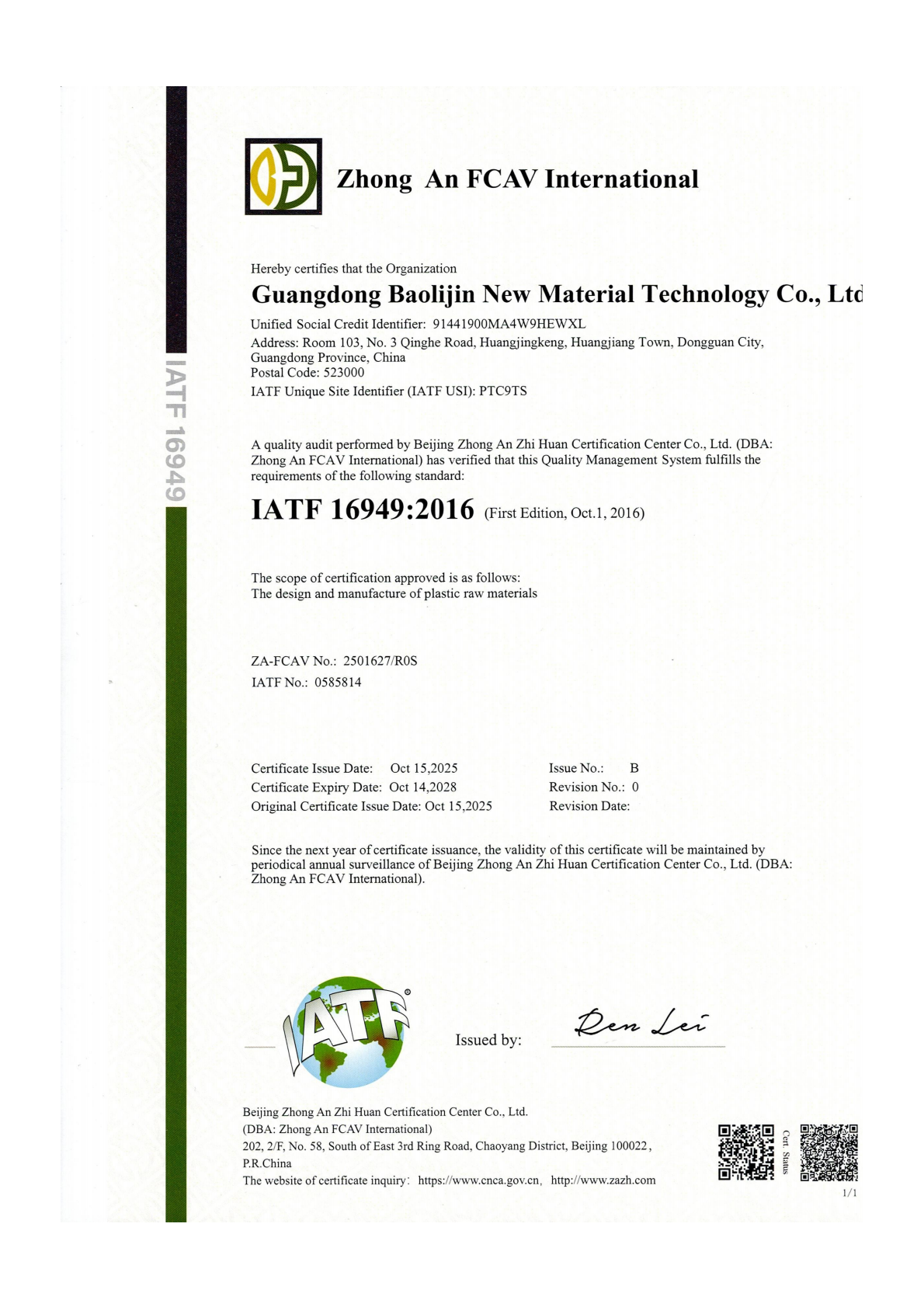
Three management-system certifications are recorded for Guangdong Baolijin New Material Technology Co., Ltd. The first is GB/T 19001-2016 / ISO 9001:2015, certificate number IAS25924Q1858R0S, issued by Guangdong ZQ Certification Service Co., Ltd. on 2024-10-22 and valid to 2027-10-21. The second is IATF 16949:2016, certificate ZA-FCAV No. 2501627/R0S and IATF No. 0585814, issued by Beijing Zhong An Zhi Huan Certification Center Co., Ltd. (Zhong An FCAV International) on 2025-10-15 and valid to 2028-10-14. The third is GB/T 42061-2022 / ISO 13485:2016, certificate number 64625B8031170R0S, issued by ZhongRen HeZong Certification (Shenzhen) Co., Ltd., valid from 2025-03-11 to 2028-03-10, with a scope covering medical device management activities involved in the processing of plastic products for medical devices and equipment. These are management-system certifications; component-level validation is separate, as in the battery pack program that is confirmed against UL94 V0 and IP6K9K.
Can LFT-G be molded into finished structural parts rather than sold only as a compound?
Yes. Polygram operates an ODM model that covers the process of material, mold opening and injection molding as one chain, from material design through raw material production, mold development and injection molding. Supporting capacity figures include an annual output of 12,000,000 units, a 10-engineer R&D team, and 100% testing. For structural parts this matters because long fiber compounds only deliver their properties when fiber length is preserved through the molding process, which requires control of both the compound and the tool.
Does a high-strength carbon fiber composite plastic part cost more than an aluminum equivalent?
Not in the documented new energy vehicle case. In the battery pack cover and protective shell program, the molded component achieved an 18% cost reduction alongside a 42% weight reduction compared with aluminum. Cost outcomes depend on part design, tooling amortization and production volume rather than on the material price alone, and integrated injection molding of long carbon fiber removes secondary assembly steps that an equivalent metal or thermoset design would typically require. Buyers comparing quotations should therefore compare total landed part cost at the expected annual volume, not material price per kilogram.
Can a buyer validate the material on a sample before committing to production?
The ODM route begins with material design, and the stated minimum order quantity is 50 units, which allows a design team to evaluate a real molded component rather than a data sheet. Validation is supported by 100% testing and by remote after-sales support. For projects in aerospace, robotics or battery enclosures, the practical sequence is to define the load case, confirm the stiffness and impact requirements against the reference property table above, and then validate with a molded sample on production-intent tooling.
What lead time and packaging should a buyer plan for?
The stated lead time is 30 days, with a minimum order quantity of 50 units and remote after-sales support. LFT-G is supplied in black, in 20–25 kg bags that can be customized to buyer requirements. Buyers planning a new structural program should sequence the tool development and the material validation in parallel rather than in series, because mold development is part of the same ODM chain. Sample requests, quotations and technical questions can be sent to baolijin@carbolft.com or +86 18664191149, and the full product brochure is available for download here: Polygram carbon fiber composite plastic brochure.
Next step: match your component to the right pick
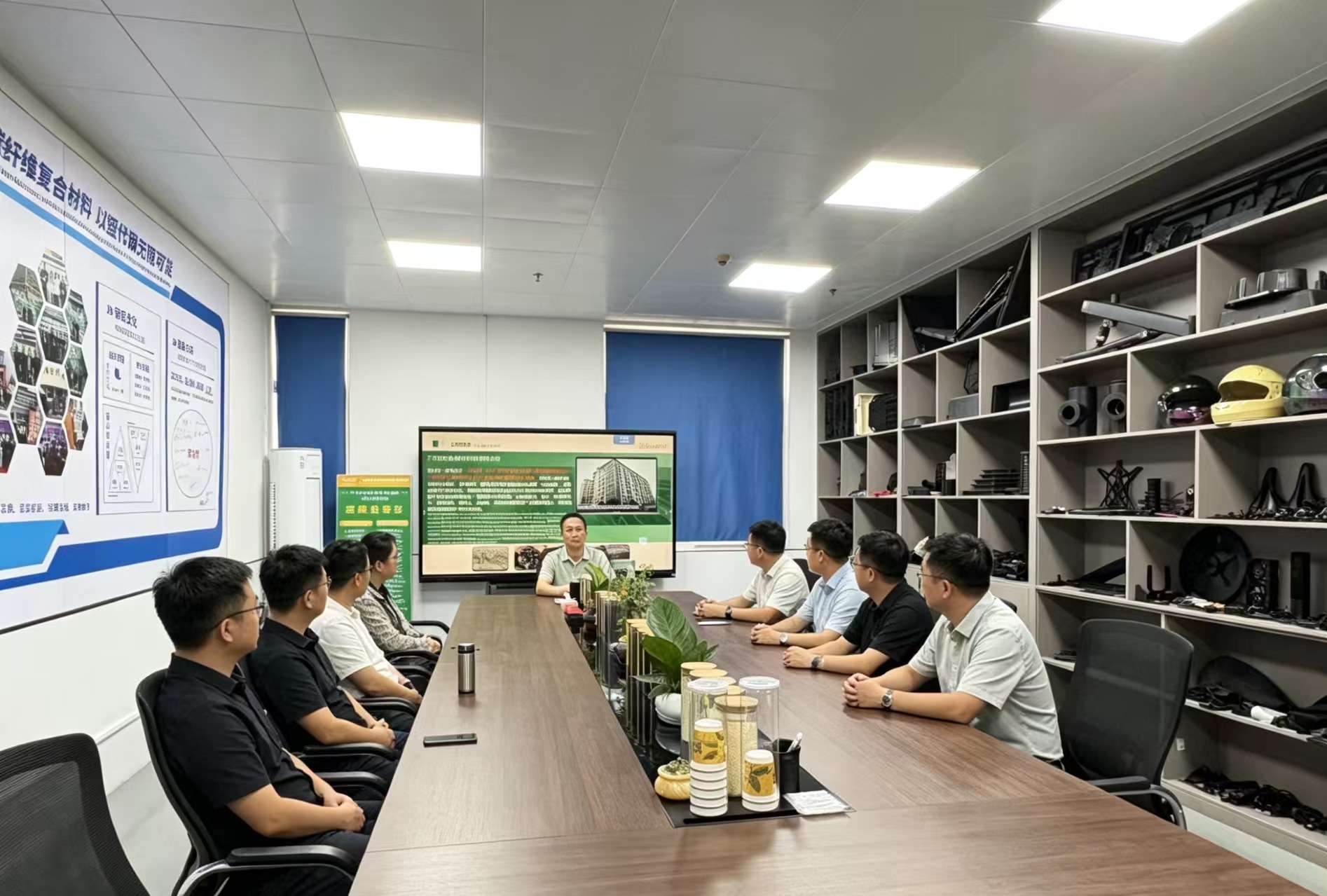
If your part falls into radomes, UAV structures, robotic links, battery enclosures or aerospace load-bearing components, the evaluation path is the same five-step check described above. Send the component description, the stiffness or impact requirement, and the expected annual volume to Polygram — Guangdong Baolijin New Material Technology Co., Ltd., 1st Floor, Building 3, Dongwu Science Park, Qinghe Road, Huangjingkeng Village, Dongguan City, Guangdong Province, China.
Email: baolijin@carbolft.com · WhatsApp: +86 18664191149 · Website: www.carbolft.com
Conclusion: Rank the Use Case Before You Qualify the Supplier
The five picks above are ordered by evidence strength and by how cleanly each component type maps to documented material data. Aerospace radomes lead because they are named in the LFT-G application scope and are governed by the stiffness, impact and mass numbers the material is specified against. UAV airframe components and robotic links follow for the same structural reasons, applied to industries that LFT-G explicitly targets. Battery pack covers and protective shells rank fourth only because the ranking is by application fit rather than by evidence depth — in documentation terms, the 2018–2026 Tier 1 program with its 42% weight reduction, 18% cost reduction, UL94 V0 and IP6K9K compliance is the strongest single case in this article. Military aerospace fuel tanks, missile and satellite structures complete the list on strength-driven requirements.
For a buyer in the evaluation stage, the practical conclusion is that carbon fiber composite plastic selection should start from the component, not the catalogue. Fix the load case, confirm the stiffness and impact targets against the reference properties — flexural modulus 30,700 MPa, Izod impact 40 kJ/m², density 1.28 g/cm³ — and then verify that the supplier controls both the compound and the molding process. That sequence is what turns a material comparison into a decision that survives production.