
Custom SPC Decorative Wall Panel: OEM Capability Guide
Custom SPC Decorative Wall Panel: OEM Capability Guide
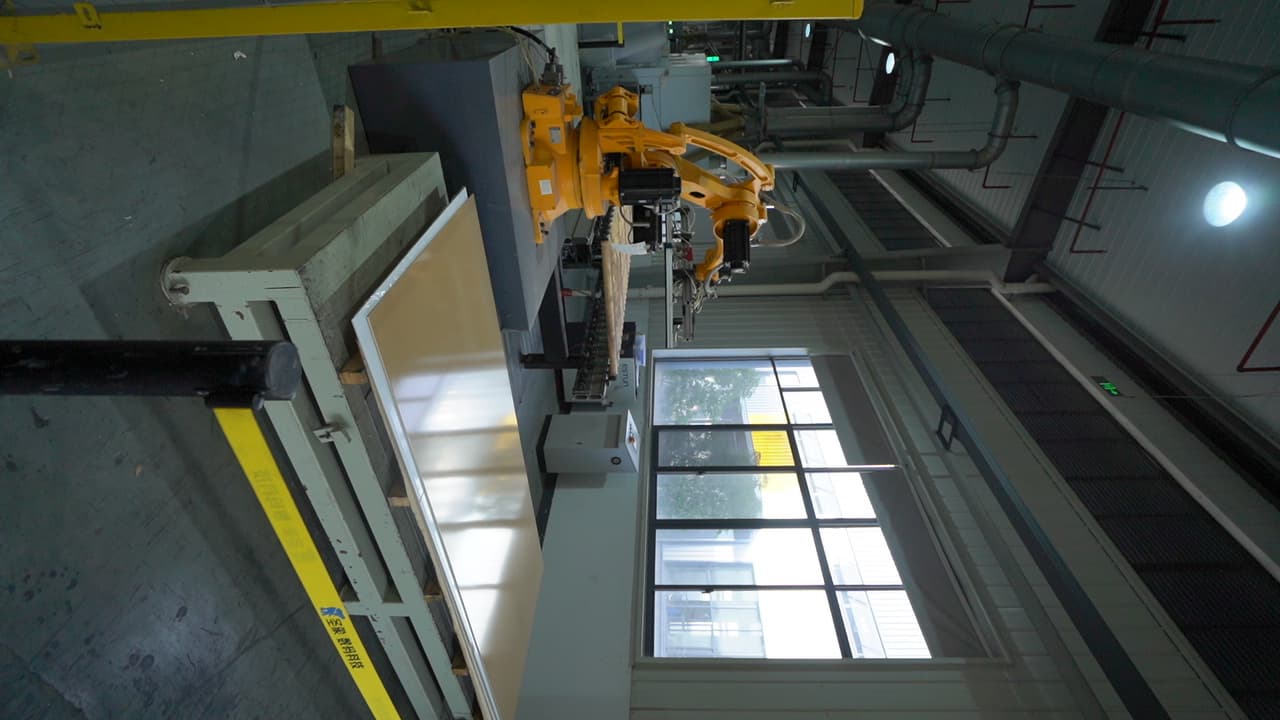
An SPC decorative wall panel is a wall covering built on a stone plastic composite core: a rigid printed or filmed sheet that is glued directly onto a flat wall and locked panel to panel. For importers, distributors, contractors and brand owners comparing Chinese OEM manufacturers for custom decorative wall panels, the sourcing decision normally comes down to five checkable capabilities — substrate and application fit, proven fire and moisture performance, customization depth, real production capacity, and the commercial terms that decide whether the order is executable at all. This guide works through each of them using the published panel data, certification scopes and project records of Power Dekor Group.
Why Decorative Wall Panels Are Hard to Specify and Source
A buyer searching for a decorative wall panel is not searching for a single product. The category contains rigid SPC sheets, mineral-based panels, laminate-faced boards, WPC profiles and 3D relief panels, and each of them answers a different set of questions about fire class, moisture behaviour, weight, impact and installation method. Two panels can share the same size and the same surface look while being entirely different materials underneath.
Three practical problems follow from that overlap.
- Performance evidence rarely travels with the product. A panel may be described as waterproof, yet the figure a specifier actually needs — moisture content or moisture movement, measured against a named standard — is often missing. Fire performance has the same problem: EN 13501-1 classifications run from A1 (non-combustible) to F, and a B-s3,d0 panel is not interchangeable with an A2-s1,d0 panel in a public building.
- Customization depth is stated too broadly. "OEM available" can mean a private label on a standard box, or a panel produced to a buyer's own size, surface design and packaging. Those are very different manufacturing capabilities, and the second one is what brand owners and wholesale programs usually require.
- Order economics decide feasibility. Minimum order quantity, how many SKUs fit into one container, payment terms and lead time determine whether the project can run at all — long before surface design is discussed.
Industry Background: Where Decorative Wall Panel Demand Is Coming From
Independent market research puts the decorative panels market at USD 39.35 billion in 2026, driven by urbanization and interior renovation demand (Coherent Market Insights, Decorative Panels Market Size and YoY Growth Rate, 2026–2033). Asia Pacific held 43.6% of the wall panels market in 2025 and is expected to remain the fastest-growing region (Reed Intelligence, Wall Panels Market Size, Share & Growth Report | 2034). Within the decorative panel category, laminate panels are the largest segment, projected to hold 45.4% of market share by 2026 (Coherent Market Insights). The narrower 3D wall panel segment was estimated at USD 815.02 million in 2025, with a forecast CAGR of 4.93% (360iResearch, Home 3D Wall Panel Market Size & Share 2026–2032).
Those figures should be read with one caution. Market reports do not agree on what "decorative panels" means: the USD 39.35 billion number includes categories such as furniture and cabinet laminates, while estimates restricted to building wall panels are considerably lower. Any business case built on market size should state which definition it is using.
Regulation is the second force shaping demand. EN 13501-1 is the classification system used for commercial wall panels in Europe, ranging from A1 (non-combustible) to F, and it is the reference point specifiers use when a project requires a documented fire class. SPC panels are generally positioned in the mid-range of that scale — one third-party market analysis describes SPC wall panels as reaching B1-grade fire retardancy and notes zero formaldehyde and waterproof properties (Utop, Analysis of the Development Prospects of SPC Wall Panels in the Global Market). Under the European classification used for Power Dekor's EU verification, the SPC wall panel is classified B-s3,d0, while the silica mineral panel reaches A2-s1,d0.
The practical consequence for buyers is that material choice is a compliance decision first and a design decision second. Panels that look similar in a showroom can sit several fire classes apart.
What an SPC Decorative Wall Panel Is, and Where It Fits
SPC stands for stone plastic composite. An SPC decorative wall panel combines a rigid mineral-filled core with a decorative surface — either a printed layer or a film — and is installed by applying structural adhesive to the back of the panel and locking subsequent panels into place. It is used mainly for interior wall decoration, and it is a common choice for bathroom and wet-area renovation because the core does not absorb water the way wood-based boards do.
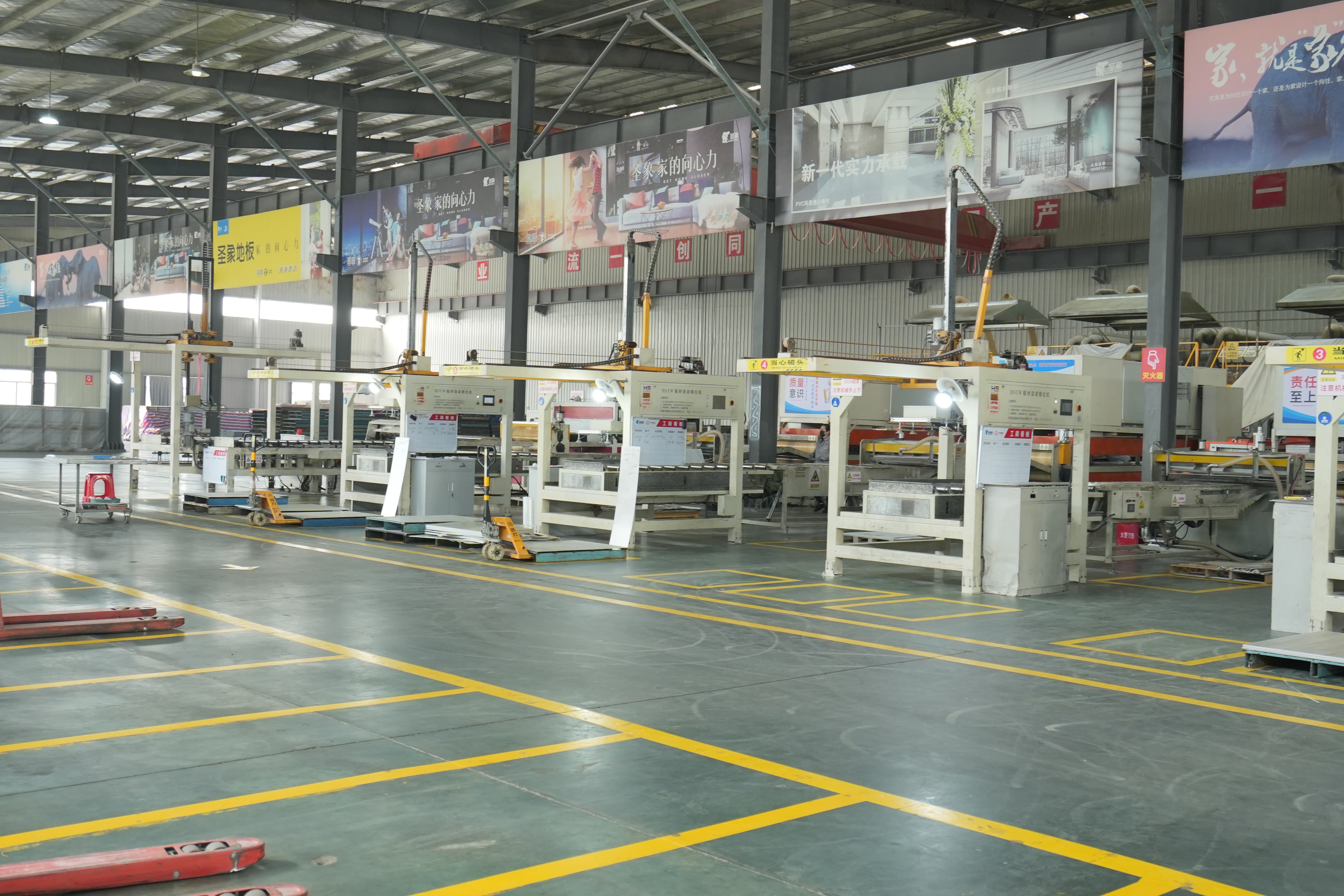
Published SPC wall panel specification
| Parameter | Published value |
|---|---|
| Core material | Stone plastic composite |
| Format (mm) | 2400 / 2440 / 3000 / 3050 × 1200 / 1220 |
| Thickness (mm) | 4 / 5 / 6 |
| Surface routes | Digital print, film |
| Moisture content | 0.02% |
| Density | 2.134 g/cm³ |
| Micro-scratch resistance | MSR-A1 |
| Resistance to dry heat | Rating 5 |
| Resistance to wet heat | Rating 5 |
| Stain resistance | Grade 5 |
| Reaction to fire | B-s3,d0 |
| Dimensional stability | Shrinkage <0.002%; curling ≤0.2 mm |
| CE verification | Intertek, certificate 230608011SHF-001, EN 13501-1:2019, SPC wall panel 4 mm, EU market |
Two of these values matter more than the rest in day-to-day procurement. A moisture content of 0.02% is what supports the panel's use in humid interiors, and the B-s3,d0 reaction to fire classification determines whether it can be used in a given commercial space. Surface durability is covered by a micro-scratch resistance rating of MSR-A1 and stain resistance of Grade 5. Where a project specifies impact resistance to a particular standard, that requirement should be confirmed against the panel data sheet rather than inferred from the scratch rating.
Film or digital print: two surface routes
Power Dekor offers SPC wall panels in two surface routes: digital print and film. Digital print can carry any design and can run a continuous pattern across 10 panels, which is what makes large stone-effect and 3D-effect wall schemes possible without visible repeats. Film is limited by the size of the film itself and is priced lower. In practice, film suits cost-sensitive programs with no requirement for a specific number of faces, while digital print suits buyers who need customized or continuous designs.
| Aspect | Film | Digital print |
|---|---|---|
| Design freedom | Limited by the size of the film | Any design; continuous pattern across 10 panels |
| Price position | Lower | Higher, reflecting design freedom |
| Best fit | Cost-sensitive orders with standard looks | Customized patterns and continuous design schemes |
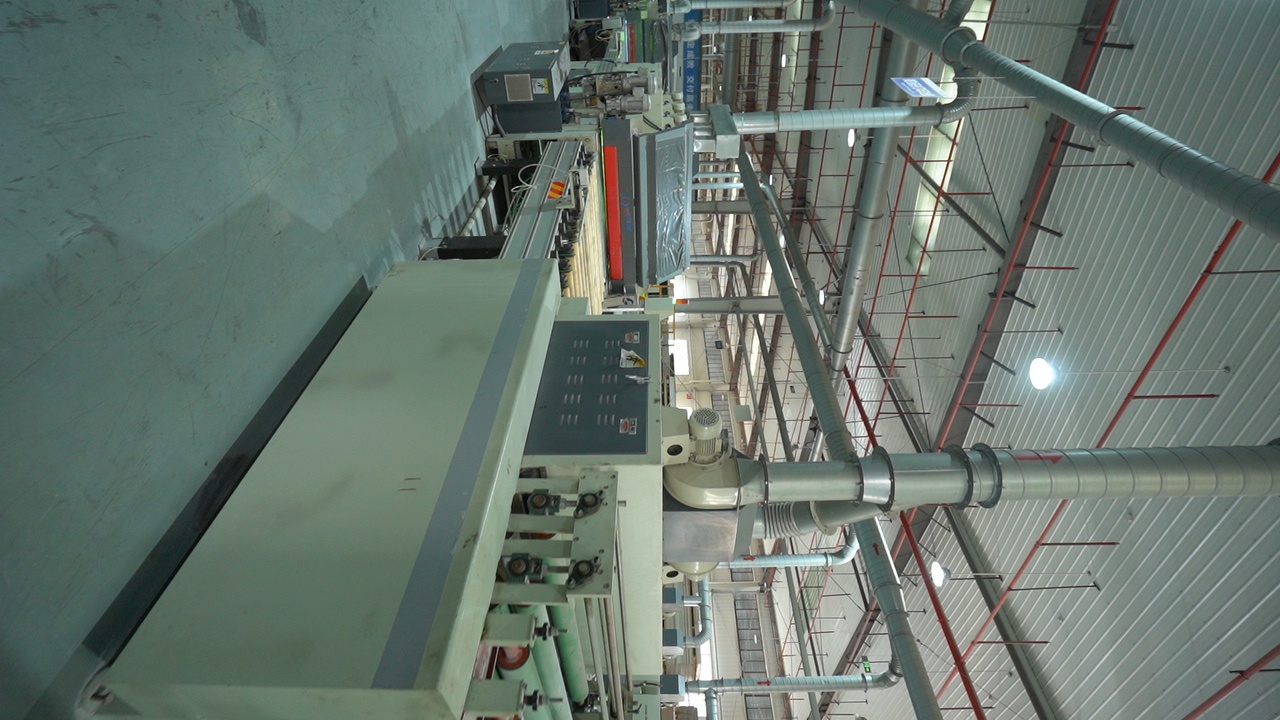
Power Dekor Group: Manufacturing and Customization Capability
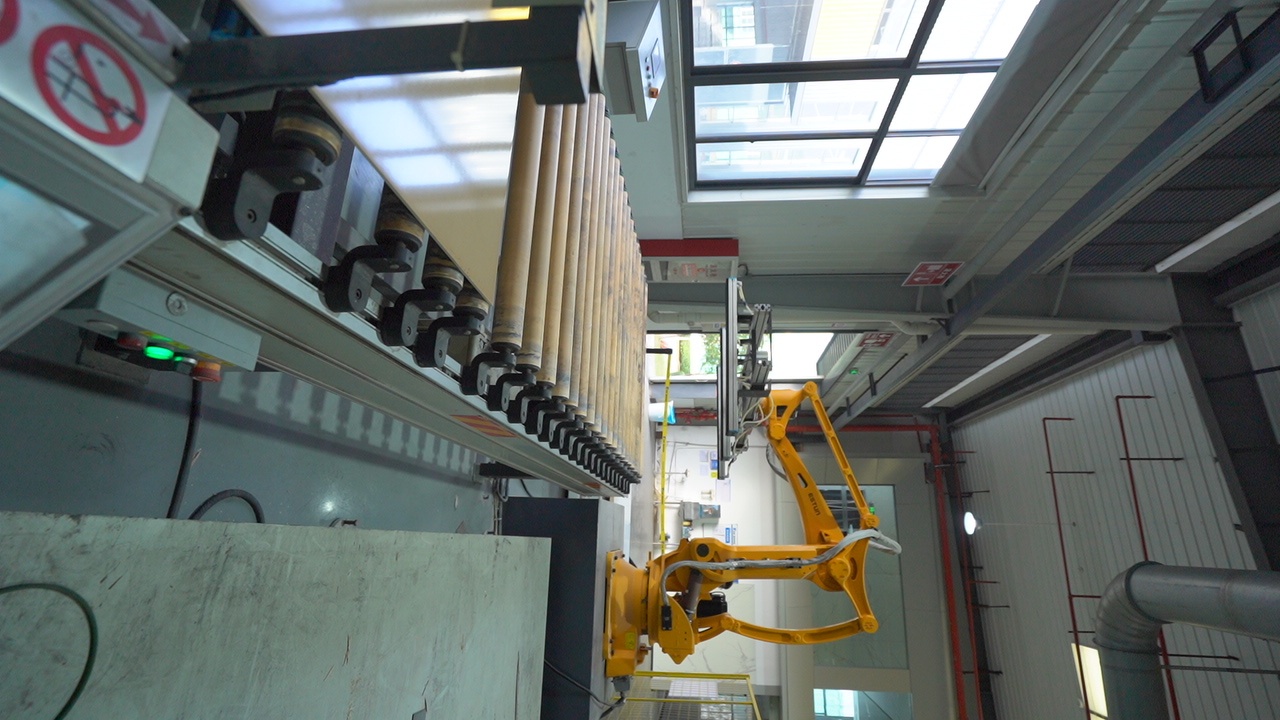
Power Dekor Group is a Shanghai-based provider of floor covering and decorative wall panel solutions, founded in 1995 and a member of Dare Global Group. The company operates an 870,000 m² manufacturing base with more than 20,000 employees and a 495-engineer R&D team, and reports annual output of 88,000,000 m² across flooring and wall panels. Its sales network covers North America, South America, Europe, Oceania, Asia and the Middle East, with the EU and the USA listed as main markets.
Production, customization and support facts
| Item | Published value |
|---|---|
| Production modes | OEM / ODM |
| Custom packaging | Box and label customization |
| Wall panel monthly capacity | 500,000 sqm |
| Minimum order quantity | 500 sqm |
| Standard production lead time | 30–45 days |
| Quality control | 100% test |
| After-sales | Remote support, within a company network that includes nearly 10,000 after-sales installation engineers |
What the CE documentation actually covers
Both panel families carry EU verification of compliance, and the scope of each document is specific.
- SPC wall panel: Verification of Compliance issued by Intertek, certificate number 230608011SHF-001, tested to EN 13501-1:2019 for SPC wall panel at 4 mm thickness, issued 23 January 2024.
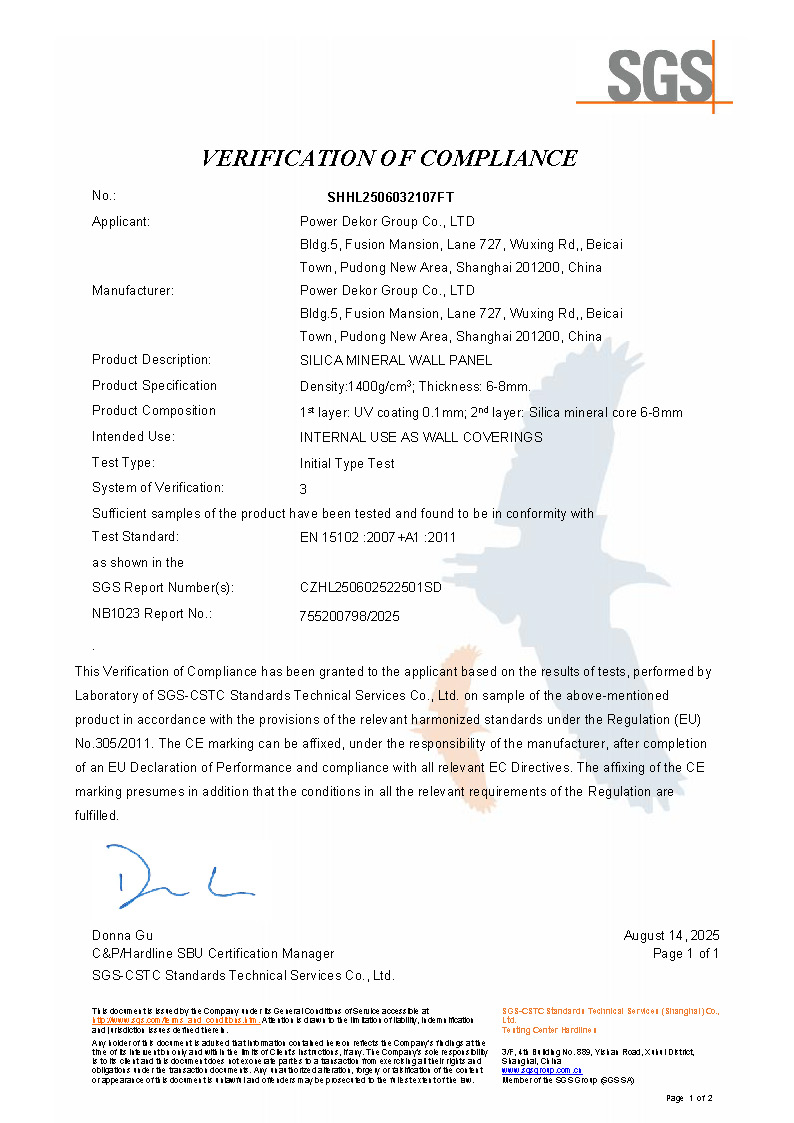
- Silica mineral wall panel: Verification of Compliance issued by SGS-CSTC Standards Technical Services Co., Ltd., certificate number SHHL2506032107FT, tested to EN 15102:2007+A1:2011 for silica mineral wall panel at 6–8 mm thickness, internal use as wall coverings, issued 14 August 2025.
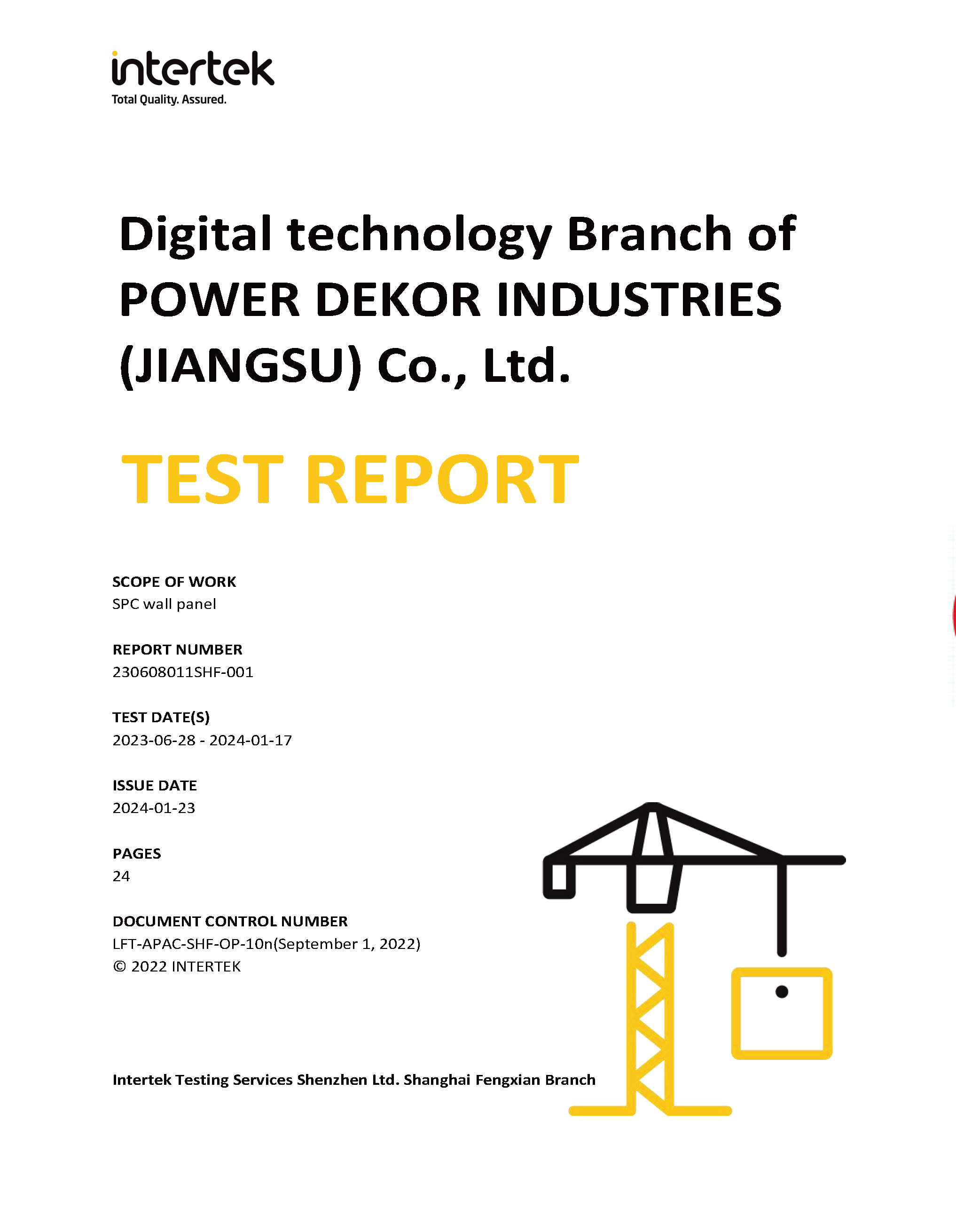
Read those two lines carefully and they tell you how to use them. The SPC document is a fire-classification document tied to a 4 mm panel; the silica mineral document is a wall-covering document tied to 6–8 mm panels for internal use. Neither should be extended to a different thickness, a different panel, or an exterior application without confirmation.
The second panel family: silica mineral
The silica mineral wall panel is made from quartz, cement, pulp, lime and water, with no plastic content reported in the material composition, and its product model covers both interior wall panel and exterior wall panel applications. Its published properties differ from SPC in ways that matter for public and heavy-traffic projects.
| Parameter | Published value |
|---|---|
| Core material | Quartz, cement, pulp, lime and water |
| Format (mm) | 2400 / 2440 / 3000 / 3050 × 1200 / 1220 |
| Thickness (mm) | 6 / 8 / 10 |
| Reaction to fire | A2-s1,d0 |
| Moisture movement | Length direction 0.06%; width direction 0.06% |
| Asbestos content | Negative |
| Antibacterial test | No growth apparent under the microscope, ISO 846:2019 Method A |
| Product model scope | Interior wall panel and exterior wall panel |
| CE verification | SGS-CSTC, certificate SHHL2506032107FT, EN 15102:2007+A1:2011, 6–8 mm, internal use as wall coverings |
A project record from a Spanish contractor adds operational context to those figures. The contractor, using approximately 50,000 sqm per year on bathroom and other interior decorative wall panel work, reports a fire rating of Class A2 and notes that in their market experience most wall panel materials — SPC, HDF and WPC among them — are Class B, which is why an A2 panel was required. The same record describes the panel as 100% waterproof and submersible, with no deformation after boiling at 100 °C, plastic-free, made from naturally sourced raw materials with waste that can be landfilled, and lightweight at a density of 1050 kg/m³ against roughly 2000 kg/m³ for SPC panels. Project notes also describe the surface as closer to porcelain than to a standard composite panel, which is where its use as a stone decorative wall panel comes from.
Step-by-Step: How a Custom Decorative Wall Panel Order Is Executed
- Define the application and the performance requirement. Interior or exterior, dry or wet area, and whether the project specifies a documented fire class. This single step eliminates most of the range before pricing is discussed.
- Select the panel family against that requirement. SPC for interior wall decoration and bathroom renovation where a B-s3,d0 classification is acceptable; silica mineral where Class A2-s1,d0 is required, where a lighter panel is preferred, or where the product model's exterior wall panel scope is relevant.
- Fix the surface route. Choose digital print when the design must be continuous or unique, and film when cost is the priority and the design is standard.
- Check the certificate scope against the specification. Confirm panel type, thickness, standard and the exact wording of the scope — internal use as wall coverings, for example, is a material constraint, not a formality.
- Structure the order around container economics. The minimum order quantity is 500 sqm per SKU and 1×20GP per order, with no more than four SKUs per container; LCL shipments increase the price.
- Confirm commercial terms. Delivery is arranged on FOB terms, acceptance is based on a pre-shipment test, and payment terms are TT with 30% in advance and 70% balance against document copies, or L/C at sight.
- Production and quality control. Typical production lead time is 30–45 days, quality control is 100% test, and the reported wall panel capacity is 500,000 sqm per month.
- Shipment and installation. After FOB shipment, installation follows the gluing method, supported by remote after-sales service.
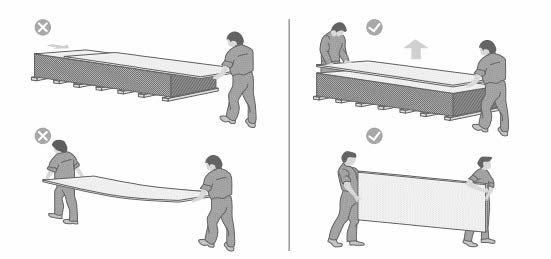
Installation itself follows a defined sequence: level the wall with a laser level meter, divide the surface into blocks matching the panel size and mark the layout in advance; cut edge blocks with a table saw or handsaw fitted with a diamond blade, decorative side facing up, completing all cutting and drilling before adhesive is applied; mark and cut socket and switch openings with a diamond grit driller or jigsaw; apply structural adhesive to the back of each panel, align it to the marked lines and fit upward from the bottom, then lock the remaining panels into place; check level and plumb after every four to five panels; press the surface in all directions to remove air pockets; assemble internal and external corners with metal trims without gluing or nailing; and in wet bathroom areas, seal all joints — wall to ceiling, wall to floor — with silicone sealant for water insulation instead of using metal trims. Two cautions are carried in the same guidance: panels must be handled carefully, especially at the edges, and the wall must be flat before installation begins.
Use Cases: Where These Panels Are Specified
Bathroom and wet-area renovation
SPC wall panels are used for indoor wall decoration and bathroom space renovation. The supporting data is the 0.02% moisture content of the SPC core, stain resistance of Grade 5, and the sealant-based joint detail used in wet areas. A German retail and distributor customer reports 100,000 sqm per year of SPC and silica mineral panels for indoor wall decoration and bathroom renovation, citing moisture-proof performance, stable project delivery and compliance with EU standards, with installations in service for 10 to 20 years.
Public and commercial spaces with a fire requirement
Where a project requires Class A2, the silica mineral panel is the applicable product: A2-s1,d0 reaction to fire, verified under EN 15102:2007+A1:2011 for 6–8 mm panels in internal wall covering use. The Spanish contractor record described above is the reference case for this pattern.
Wholesale and distributor programs
For wholesale decorative wall panel programs, the binding constraints are usually container economics and packaging rather than design. A 500 sqm per SKU minimum, one 20GP container per order and a maximum of four SKUs per container set the shape of a distributor's first order, while box and label customization allows the same production run to ship under a distributor's own branding. Project records show two European programs at 100,000 sqm per year (Germany) and 50,000 sqm per year (Spain).
Exterior and exterior-adjacent applications
Exterior decorative wall panel projects need a different check. The silica mineral panel's product model covers both interior and exterior wall panel applications, and its material composition — quartz, cement, pulp, lime and water — is mineral rather than polymer-based. The CE verification for this panel is scoped to internal use as wall coverings, so an exterior specification should be confirmed against the specific project conditions rather than inferred from the certificate.
Design-led interiors and 3D effects
Digital print makes continuous patterns possible across 10 panels, which is the mechanism behind large-format 3D and stone-effect wall schemes where repeating pattern breaks would be visible. This is the segment where 3D wall panel demand is growing, against a base of USD 815.02 million in 2025 and a forecast CAGR of 4.93% (360iResearch).
Comparison Table: SPC Wall Panel vs Silica Mineral Wall Panel
| Specification point | SPC wall panel | Silica mineral wall panel |
|---|---|---|
| Core material | Stone plastic composite | Quartz, cement, pulp, lime and water (no plastic reported) |
| Thickness / format | 4 / 5 / 6 mm; 2400–3050 × 1200–1220 mm | 6 / 8 / 10 mm; 2400–3050 × 1200–1220 mm |
| Reaction to fire | B-s3,d0 | A2-s1,d0 |
| Moisture behaviour | Moisture content 0.02% | Moisture movement 0.06% in both directions; project record reports waterproof and submersible performance |
| Density | 2.134 g/cm³ | 1050 kg/m³ (project record), versus roughly 2000 kg/m³ for SPC |
| Additional tested properties | Micro-scratch resistance MSR-A1; dry heat Rating 5; wet heat Rating 5; stain resistance Grade 5; shrinkage <0.002%; curling ≤0.2 mm | Asbestos content negative; antibacterial test — no growth apparent under the microscope, ISO 846:2019 Method A |
| CE verification | Intertek 230608011SHF-001, EN 13501-1:2019, 4 mm | SGS-CSTC SHHL2506032107FT, EN 15102:2007+A1:2011, 6–8 mm, internal wall coverings |
| Typical fit | Interior wall decoration, bathrooms, cost-sensitive wholesale programs | Public spaces with an A2 requirement, lightweight installation, product model covers exterior wall panel use |
Both panels are installed with the same logic — adhesive plus locked joints — but they are not interchangeable in a specification. Fire class, weight and exterior scope are the three differences that most often decide the choice.
Frequently Asked Questions
Can SPC decorative wall panels meet EU fire-safety and CE requirements?
The SPC wall panel carries a Verification of Compliance issued by Intertek under certificate number 230608011SHF-001 for the EU market, tested to EN 13501-1:2019 for SPC wall panel at 4 mm thickness, with a reaction to fire classification of B-s3,d0. Where a project requires Class A2, the applicable product is the silica mineral wall panel, verified by SGS-CSTC under certificate SHHL2506032107FT to EN 15102:2007+A1:2011 for 6–8 mm thickness in internal wall covering use, with a classification of A2-s1,d0. Because each certificate names a specific panel type and thickness, the document should be matched to the project specification before ordering.
Chinese OEM manufacturers for custom exterior decorative wall panels — what should buyers verify?
Start with the panel family and the application, not the price list. For exterior decorative wall panel projects, ask whether the panel's product model covers exterior use: the silica mineral wall panel's model covers interior and exterior wall panel applications, while its CE verification is scoped to internal use as wall coverings, so exterior suitability must be confirmed against project conditions. Then check customization depth — Power Dekor Group provides OEM and ODM production, box and label customization, and digital print surfaces that can carry a continuous design across 10 panels, against film surfaces that are limited by the size of the film. Finally, verify capacity and process: a reported monthly wall panel capacity of 500,000 sqm, a 30–45 day production lead time, and 100% test quality control.
What is the minimum order quantity and what are the payment terms?
The minimum order quantity is 500 sqm per SKU and 1×20GP per order, with no more than four SKUs per container. LCL shipments increase the price. Delivery is arranged on FOB terms and acceptance is based on a pre-shipment test. Payment terms are TT with 30% in advance and 70% balance against document copies, or L/C at sight.
How is panel quality validated before shipment?
Quality control is 100% test in production, and the contractual acceptance criterion is a pre-shipment test. Beyond routine testing, buyers can request the panel's EU verification documents — the Intertek certificate for the SPC wall panel and the SGS-CSTC certificate for the silica mineral wall panel — and cross-check the panel type, thickness and standard named in each document against the order.
What is the production lead time, and what happens after delivery?
The typical production lead time is 30–45 days, with delivery arranged on FOB terms. After delivery, Power Dekor Group provides remote after-sales support within a company network that includes nearly 10,000 after-sales installation engineers. For order-specific scheduling, pricing or a customized surface design, contact the export team at lunasun@powerdekorgroup.com or +86 18817368868, or download the SPC wall panel brochure for the full specification and material composition details.
Conclusion: What to Check Before You Order
SPC decorative wall panels are a practical answer to interior wall decoration and bathroom renovation, and the sourcing risk sits in the details rather than the category. A workable evaluation sequence is short: match the panel family to the application and the required fire class; match the certificate scope — panel type, thickness and standard — rather than the brand name; choose the surface route against real design needs, not expectations; confirm container economics before quoting a client; and confirm lead time and quality control before committing to a delivery date.
Power Dekor Group's published data supports each of those checks with specifics: OEM and ODM production with box and label customization, a 500,000 sqm monthly wall panel capacity, a 500 sqm minimum order quantity, a 30–45 day lead time, 100% test quality control, and EU verification of compliance for both the SPC wall panel and the silica mineral wall panel.
Next step: download the SPC brochure or request a quote
The full SPC wall panel brochure, including material composition and specification details, is available as a PDF. For pricing, MOQ confirmation or a customized surface design, contact the Power Dekor Group export team directly.
Luna — Email: lunasun@powerdekorgroup.com | Tel / WhatsApp: +86 18817368868 | Website: www.powerdekorgroup.com
Download the SPC brochure (PDF)