Decorative Wall Panel Compliance Files for EU Bathrooms: Fire, Asbestos, Hygiene, Moisture
In an EU bathroom or wet-interior project, the panel is rarely the reason a specification stalls. The compliance file is. A buyer can hold a genuinely Class A2 board and still fail review, because the fire report, the asbestos statement, the hygiene test and the moisture data arrive as four unrelated documents with no explanation of how each one maps onto the project conditions.
This guide is written for importers, distributors, contractors and specifiers who have to read that file — or build one for a client's approval package. It walks through the four evidence blocks a decorative wall panel file has to contain for a bathroom installation, shows which value inside each block actually decides the review, and uses one worked example throughout: the Silica Mineral Wall Panel (model 8804) from Power Dekor Group, a wall panel and flooring provider founded in 1995 and part of Dare Global Group.
That file contains an A2-s1,d0 reaction-to-fire classification with an attached report, a negative asbestos statement tied to a defined mineral composition, an antibacterial result reported under ISO 846:2019 Method A, and a 0.06% moisture movement figure in both directions. It also contains something most files leave out: a clear boundary between what the product does and what a different panel type — SPC — does instead. Buyers who cannot tell those two apart are the buyers who get caught in review.
Problem Definition: Why Bathroom Panel Approvals Stall on Paper, Not on Site
Bathrooms combine the three hardest conditions for a wall lining: constant humidity, an expectation of hygiene, and, in commercial and multi-occupancy buildings, a fire requirement that follows the building rather than the room. A decorative wall panel that performs well on all three can still be rejected if the evidence presented does not answer the specific question the reviewer is asking. Five gaps cause most of the friction.
- "Class A" with no report behind it. The phrase is used loosely in catalogues. A reviewer needs the classification exactly as it appears on the test document, including the smoke and droplet elements — not a shortened marketing version of it.
- The asbestos assumption. Mineral and cement-based boards trigger an automatic asbestos question in most EU procurement processes. A file that does not answer that question in writing leaves the reviewer with no option but to hold the submittal.
- Antibacterial claims without a method. "Antibacterial" on its own is not evidence. Without a standard number, a test method and a recorded observation, the claim cannot be verified by anyone outside the supplier.
- "100% waterproof" without a number. Waterproof is a conclusion, not a measurement. Reviewers want the dimensional behaviour of the panel under moisture or heat, in a unit they can compare against the project specification.
- Comparing values that are not the same parameter. Two panels can both carry a percentage under the heading "moisture" while measuring entirely different things. This is the single most common source of apparently contradictory data in a side-by-side review.
None of these gaps require a bad product to exist. They only require an incomplete file.
Industry Background: What EU Buyers Are Being Asked to Evidence
For construction products placed on the European market, the reference framework for reaction to fire is EN 13501-1, which classifies products from A1 (non-combustible) down to F. That scale is the benchmark against which a wall panel's fire documentation is read in a European project, and the classification is expressed as a designation rather than a single letter.
The scale of the category explains why this documentation matters commercially. The global decorative panels market was projected to reach USD 39.35 billion by 2026, driven by urbanisation and interior renovation demand, according to Coherent Market Insights. Reed Intelligence reported that Asia Pacific held 43.6% of the global wall panels market in 2025 and is expected to remain the fastest-growing region — meaning a large share of panels specified into European bathrooms will continue to be sourced from Asian manufacturing, and the compliance file is the interface between the two.
The application profile for this product category is specific: interior decorative wall panel systems installed in humid, water-exposed conditions, using glue-fixed panels with sealant and edge trim profiles, in markets including Germany, Spain, Austria, France, Réunion, the United Kingdom and Korea. In that profile, moisture behaviour and fire classification are not abstract properties. They are the two lines a project reviewer checks first.
The Four Evidence Blocks in a Silica Mineral Wall Panel File
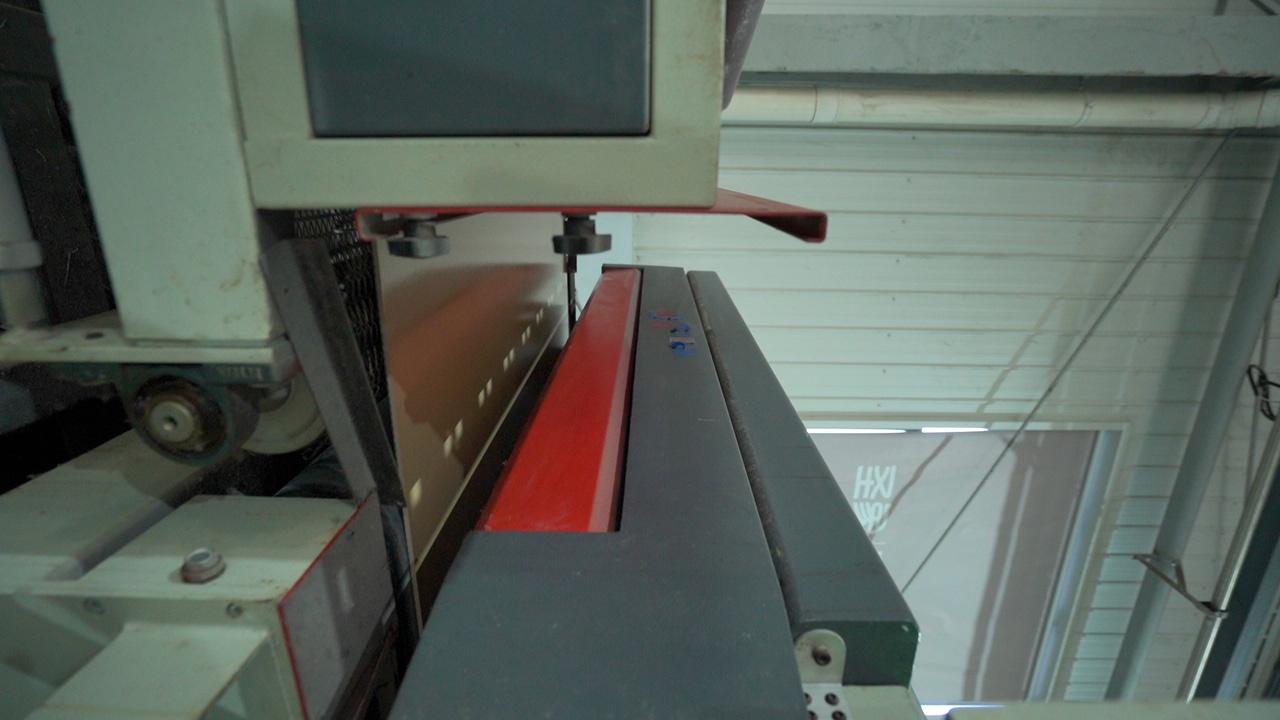
The Silica Mineral Wall Panel (model 8804) file is organised around four questions. Each block below states what the file contains, what the number or designation means, and what it does not prove.
1. Fire evidence: A2-s1,d0, supported by report
Model 8804 has a reaction to fire classification of A2-s1,d0, with a fire rating of Class A2 supported by an attached report. The product meets the EN 13501-1 Class A2-s1,d0 fire-reaction requirement and is used in bathroom and interior decorative wall panel applications where the EU fireproof Class A standard applies.
The designation is read in three parts. A2 describes the contribution to fire, s1 describes smoke production, and d0 describes flaming droplets. A buyer should check all three against the project specification, because a file that only reproduces "Class A" has removed two thirds of the information the reviewer needs.
Context matters here, and the file states it plainly: the vast majority of materials on the market cannot meet Class A2, and wall panels such as SPC, HDF and WPC are Class B. For a like-for-like comparison within the same range, the SPC wall panel (product ID 8321) has a reaction to fire classification of B-s3,d0 and meets the EN 13501-1 Class B requirement. Both are legitimate products; they simply satisfy different project conditions.
How to read this block: match the full designation character by character against the specification. A2-s1,d0 and B-s3,d0 are not interchangeable, and no file should imply that they are.
2. Asbestos evidence: negative content in a defined mineral composition
The file records asbestos content as negative. That statement sits alongside the material composition, which is quartz, cement, pulp, lime and water, with no plastic content. Material composition details are documented in the product brochure, and the raw materials are naturally sourced, with waste able to be landfilled and return to nature.
Two details make this block useful rather than decorative. First, the asbestos statement is attached to a named composition rather than to a general product claim, so it can be assessed against the material actually supplied. Second, the plastic-free statement is a separate, checkable fact — it is not the same as the asbestos statement, and a reviewer should not let one stand in for the other.
3. Hygiene evidence: ISO 846:2019 Method A
The hygiene block in this file is a microbiological test reported against ISO 846:2019, Method A. The recorded result is that no growth was apparent under the microscope.
What makes this citable is not the word "antibacterial" but the three pieces of information around it: the standard, the method, and the observation as it was written down. A specifier comparing two suppliers can verify the first two immediately and interpret the third without ambiguity. Any hygiene claim that arrives without a standard number and a method reference should be treated as unverified until the test report is produced.
4. Moisture evidence: 0.06% movement and full water resistance
Moisture movement for model 8804 is 0.06% in the length direction and 0.06% in the width direction. The same panel is described as 100% waterproof, able to be submerged in water, with no deformation after boiling at 100°C, for which video evidence is available.
This is where most comparisons go wrong, so it is worth being precise. The SPC wall panel (product ID 8321) carries a moisture content figure of 0.02%, plus a dimensional stability value of shrinkage below 0.002% and curling of 0.2 mm or less. Those numbers describe different measurements from the 0.06% figure. Placing them in the same table row and declaring one material "better on moisture" would be a comparison error, not a conclusion.
A second useful data point in this block is density: 1050 kg/m³ for the Silica Mineral Wall Panel, compared with approximately 2000 kg/m³ for SPC wall panels. For a bathroom installation where panels are fixed by gluing to the wall, weight affects handling during installation and the load the substrate has to accept.
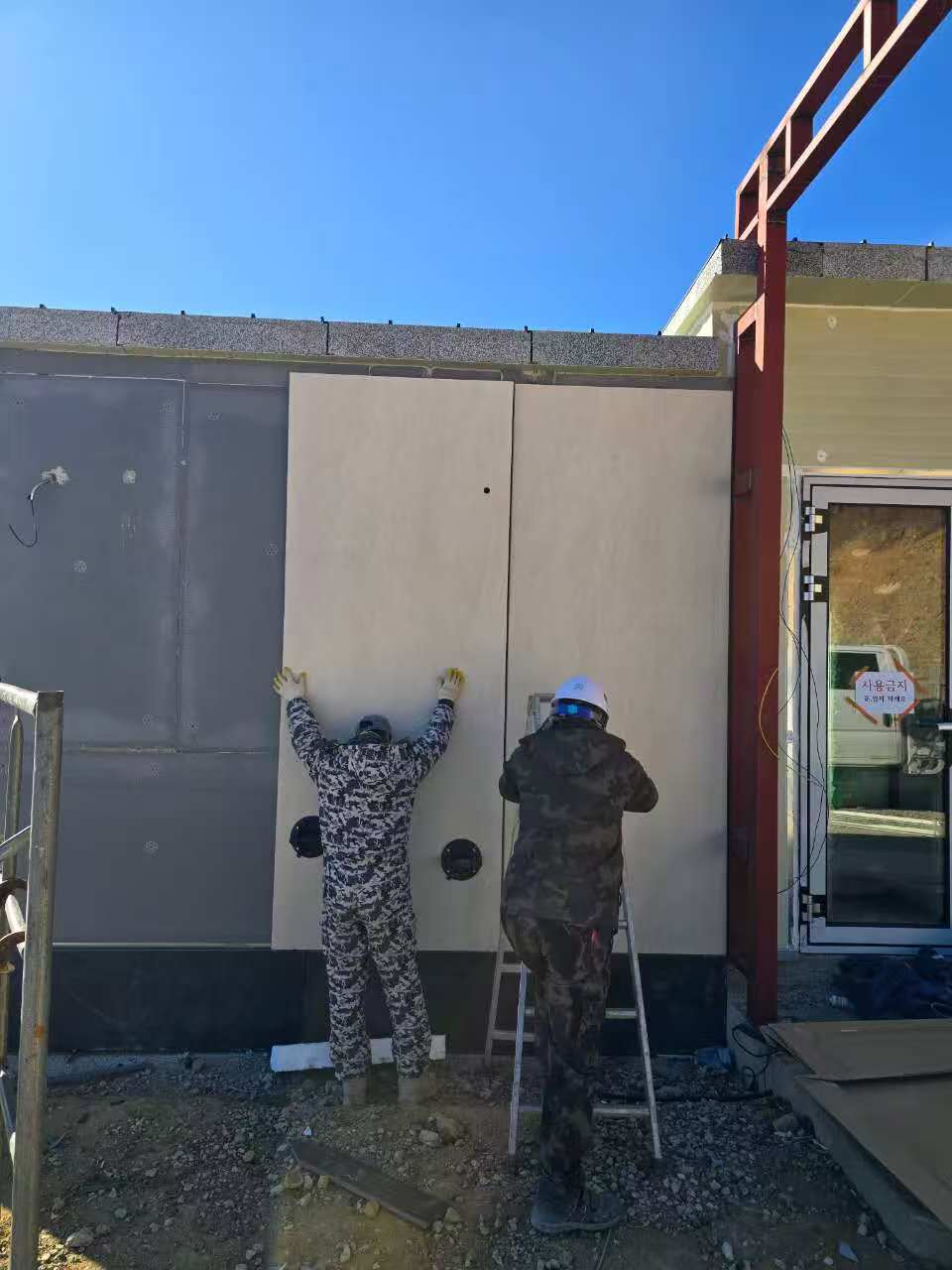
Installation completes the moisture picture. Panels are fixed to the wall with structural adhesive, with sealant and edge trim profiles as supporting components. In wet bathroom areas, metal trims are not applicable; silicone sealant should instead be used to seal all joints, including the seam between wall panel and ceiling and between wall panel and floor, for water insulation.
Step-by-Step: How to Validate the File Before It Reaches the Reviewer
The following sequence is the order in which a compliance file can be checked in an afternoon. It is written for the buyer, not the supplier.
- Fix the project category first. Bathroom interior, public space, or exterior all imply different evidence priorities. The application profile for this product spans interior decorative wall panel use in humid and water-exposed conditions, and it also covers exterior wall panel applications — but a file prepared for a bathroom project should lead with bathroom conditions.
- Request the reaction-to-fire report and match the designation in full. Confirm A2-s1,d0 for the Silica Mineral Wall Panel or B-s3,d0 for the SPC wall panel, and confirm that the classification on the report corresponds to the panel being quoted, not to a related product.
- Check that the asbestos statement is tied to a composition. A negative asbestos result attached to a named material list — quartz, cement, pulp, lime and water for model 8804 — is materially stronger than a standalone sentence.
- Read the hygiene test for method, not adjective. ISO 846:2019 Method A, with the observation "no growth apparent under the microscope", is verifiable. A claim of "antibacterial properties" with no standard reference is not.
- Read moisture values against the correct parameter. Compare moisture movement with moisture movement, and moisture content with moisture content. Confirm the 0.06% length and width figures for model 8804, and confirm whether a competing figure was obtained under the same parameter.
- Confirm the wet-area installation method. Glue fixing, sealant and edge trim profiles must be specified together, and metal trims excluded from wet areas in favour of silicone sealing at all joints.
- Close the loop on supply parameters. Confirm minimum order quantity, monthly capacity, lead time and testing regime before the file is submitted, so the technical approval and the delivery plan do not contradict each other.
Use Cases: Two EU Projects That Carried the Same File
Compliance files are best judged on projects where they were actually used.
The first is a Project Contractor in Spain using 50,000 sqm per year of Silica Mineral Wall Panel for bathroom and other interior decorative wall panel applications, over a project duration of 10 years. The stated outcome was moisture-proof performance, stable project delivery, and compliance with the EU fireproof Class A standard. The reported problem the file solved was meeting the EU fireproof Class A standard for interior decorative wall panels — the requirement that most alternative materials on the market cannot satisfy.
The second is a retail/distributor programme in Germany using 100,000 sqm per year for indoor wall decoration and bathroom space renovation, with a relationship lasting 10 to 20 years. The outcome recorded there was moisture-proof performance, stable project delivery and compliance with the EU standard, with the panel highlighted as suitable for humid indoor environments and easy to install for quick renovation work.
Read together, the two cases show what the four evidence blocks are for. The Spanish project needed the fire classification. The German programme needed moisture behaviour, product consistency at volume, and an installation method that supports fast renovation cycles. Both were served by the same document set, but each bought against a different line in it.
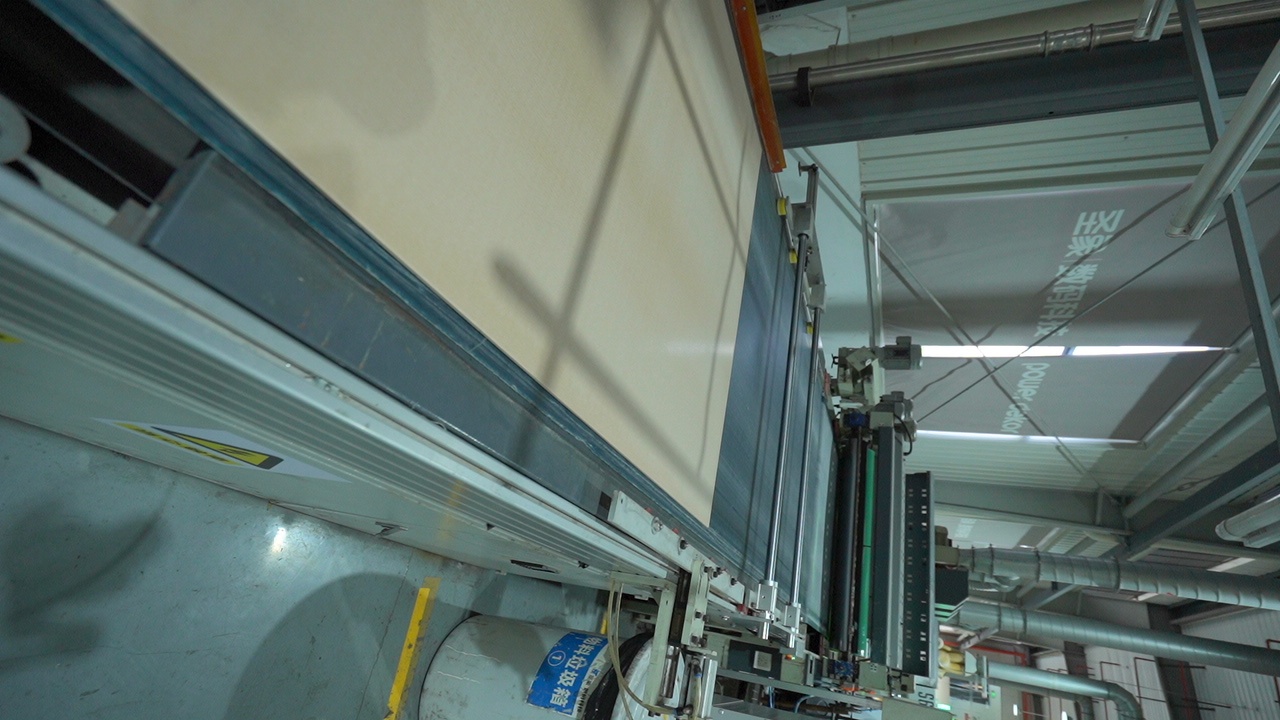
Comparison Table: Silica Mineral Wall Panel 8804 vs SPC Wall Panel 8321
The table below uses only documented values from the two product files. Empty comparisons have been left out rather than estimated.
| Comparison point | Silica Mineral Wall Panel (model 8804) | SPC wall panel (product ID 8321) |
|---|---|---|
| Reaction to fire (EN 13501-1) | A2-s1,d0 — Class A2, supported by an attached report | B-s3,d0 — meets EN 13501-1 Class B |
| Material composition | Quartz, cement, pulp, lime and water; no plastic | Stone plastic composite |
| Asbestos content | Negative | Not stated in the product file |
| Antibacterial test | No growth apparent under the microscope, ISO 846:2019 Method A | Not stated in the product file |
| Moisture parameter reported | Moisture movement: 0.06% length, 0.06% width | Moisture content 0.02%; shrinkage <0.002%; curling ≤0.2 mm |
| Water behaviour | 100% waterproof, submersible in water, no deformation after boiling at 100°C (video available) | Waterproof protection |
| Density | 1050 kg/m³ | Approximately 2000 kg/m³ |
| Thickness | 6 / 8 / 10 mm | 4 / 5 / 6 mm |
| Format | 2400/2440/3000/3050 × 1200/1220 mm | 2400/2440/3000/3050 × 1200/1220 mm |
| Typical fit | Bathroom, public space and outdoor space; interior and exterior wall panel use | Bathroom and interior wall applications where a Class B panel is acceptable |
Thickness is the practical dividing line for many buyers. SPC wall panels are available in 4, 5 and 6 mm, while the Silica Mineral Wall Panel is supplied in 6, 8 and 10 mm. Where a project needs a heavier, mineral-based panel with a Class A2 classification, the format range starts at the top of the SPC range.
FAQ: Compliance Files for EU Bathroom Wall Panels
What fire classification does the Silica Mineral Wall Panel hold, and is Class A2 relevant to an EU bathroom project?
Silica Mineral Wall Panel model 8804 has a reaction to fire classification of A2-s1,d0, supported by an attached report, and meets the EN 13501-1 Class A2-s1,d0 fire-reaction requirement for interior decorative wall panel projects. Whether Class A2 is required on a specific bathroom project depends on that project's fire strategy and the applicable national rules. For comparison within the same range, the SPC wall panel is classified B-s3,d0 under EN 13501-1 Class B.
Does the panel contain asbestos, and what hygiene evidence is in the file?
Asbestos content is recorded as negative, and the panel is made of quartz, cement, pulp, lime and water with no plastic content; material composition details are available in the brochure. The hygiene evidence is an antibacterial test reported under ISO 846:2019 Method A, with the result recorded as no growth apparent under the microscope. Raw materials are naturally sourced, and waste can be landfilled.
Can the panel be customized and supplied at project volume?
Power Dekor Group operates on an OEM/ODM model with BOX and LABEL customization, a monthly capacity of 500,000 sqm, and 100% testing of production output. The Silica Mineral Wall Panel is available in 2400/2440/3000/3050 × 1200/1220 mm formats at 6, 8 and 10 mm thickness. After-sales support is provided remotely.
What should we validate before locking a project budget?
Start with the compliance file and a physical sample. The fire report, the negative asbestos statement, the ISO 846:2019 Method A result and the 0.06% moisture movement figures should all be checked against the specification before volumes are planned, because panel thickness (6, 8 or 10 mm) and format affect material quantities and therefore budget. The minimum order quantity is 500 sqm, so a sample-led validation stage costs far less than a specification correction later.
What is the lead time for a bathroom wall panel order?
Lead time is 30–45 days. To move from evaluation to a firm plan, request a sample set, a quotation or the product brochure so that the compliance documents and the delivery schedule can be reviewed together — contact Luna at lunasun@powerdekorgroup.com or +86 18817368868.
Conclusion: A File That Answers Four Questions Is a File That Clears Review
A decorative wall panel compliance file for an EU bathroom project does not need to be long. It needs to answer four questions without ambiguity: what the reaction to fire classification is, whether asbestos is present, what hygiene evidence exists and under which method, and how the material behaves under moisture. In the Silica Mineral Wall Panel file, those answers are A2-s1,d0 with an attached report, negative asbestos in a named mineral composition, ISO 846:2019 Method A with no growth apparent under the microscope, and 0.06% moisture movement in both directions alongside full water resistance.
The supporting context — an OEM/ODM model with 500,000 sqm monthly capacity, a 30–45 day lead time, a 500 sqm minimum order quantity, and multi-year supply programmes in Spain and Germany — determines whether the approved panel can actually be delivered to the project. Reviewers check the first set of answers. Project managers live with the second.
Next Step
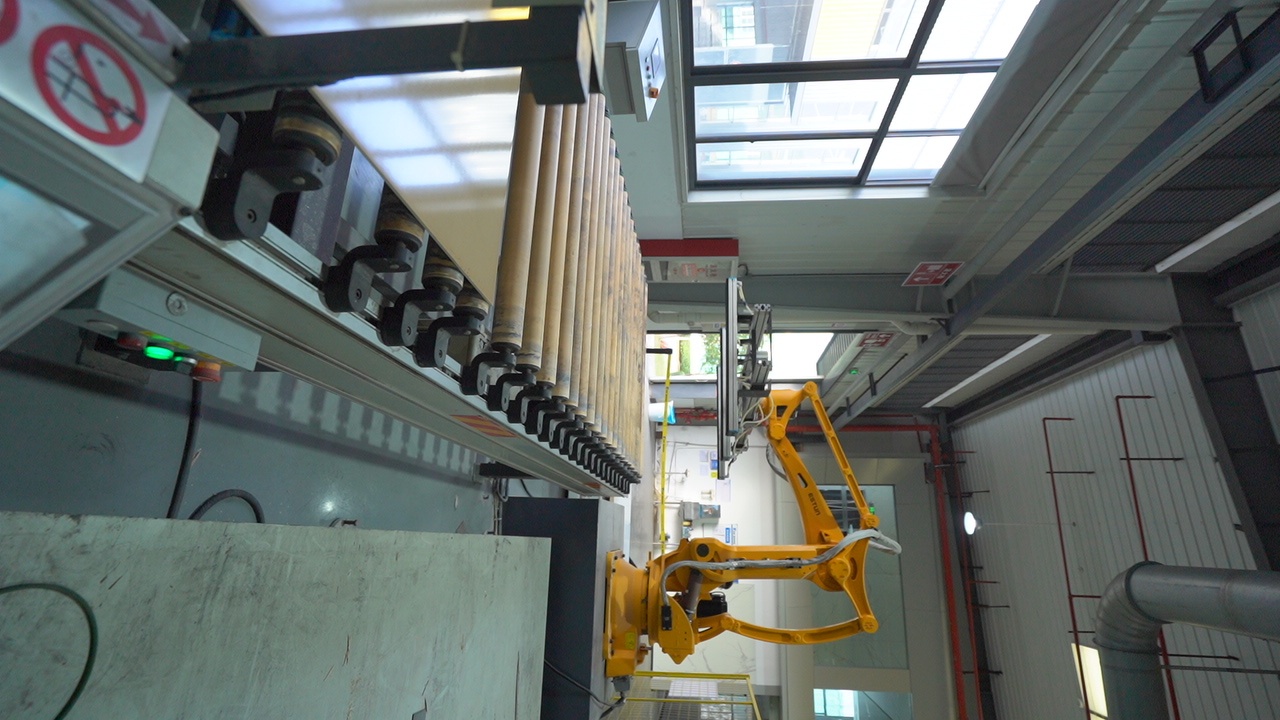
Power Dekor Group supplies floor covering and wall panel solutions to global markets, with wall panels manufactured at an 870,000 m² production base. For an EU bathroom or interior project, request the Silica Mineral Wall Panel compliance file, a sample set or a quotation, and the technical documents can be matched to your specification before you commit to volumes.
Download the product brochure: Power Dekor product brochure
Website: www.powerdekorgroup.com
Email: lunasun@powerdekorgroup.com | Tel / WhatsApp: +86 18817368868
Address: Bldg. 5, Fusion Mansion, Lane 727, Wuxing Rd., Pudong District, Shanghai 201204, China
Have Questions or Need More Details?
Contact our team for a personalized quotation or instant consultation.
Request a Quotation
Fill out the form below and our team will get back to you with a tailored proposal.
WhatsApp Direct Chat
Prefer to chat in real-time? Message us on WhatsApp for instant assistance & quick answers.
- Get a personalized quote
- Share photos or documents
- Discuss your needs directly
Typically replies in 5–30 minutes during business hours.