
Decorative Wall Panel Manufacturer Profile: Power Dekor Group Products, Capability and Procurement Value
Decorative Wall Panel Manufacturer Profile: Power Dekor Group Products, Capability and Procurement Value
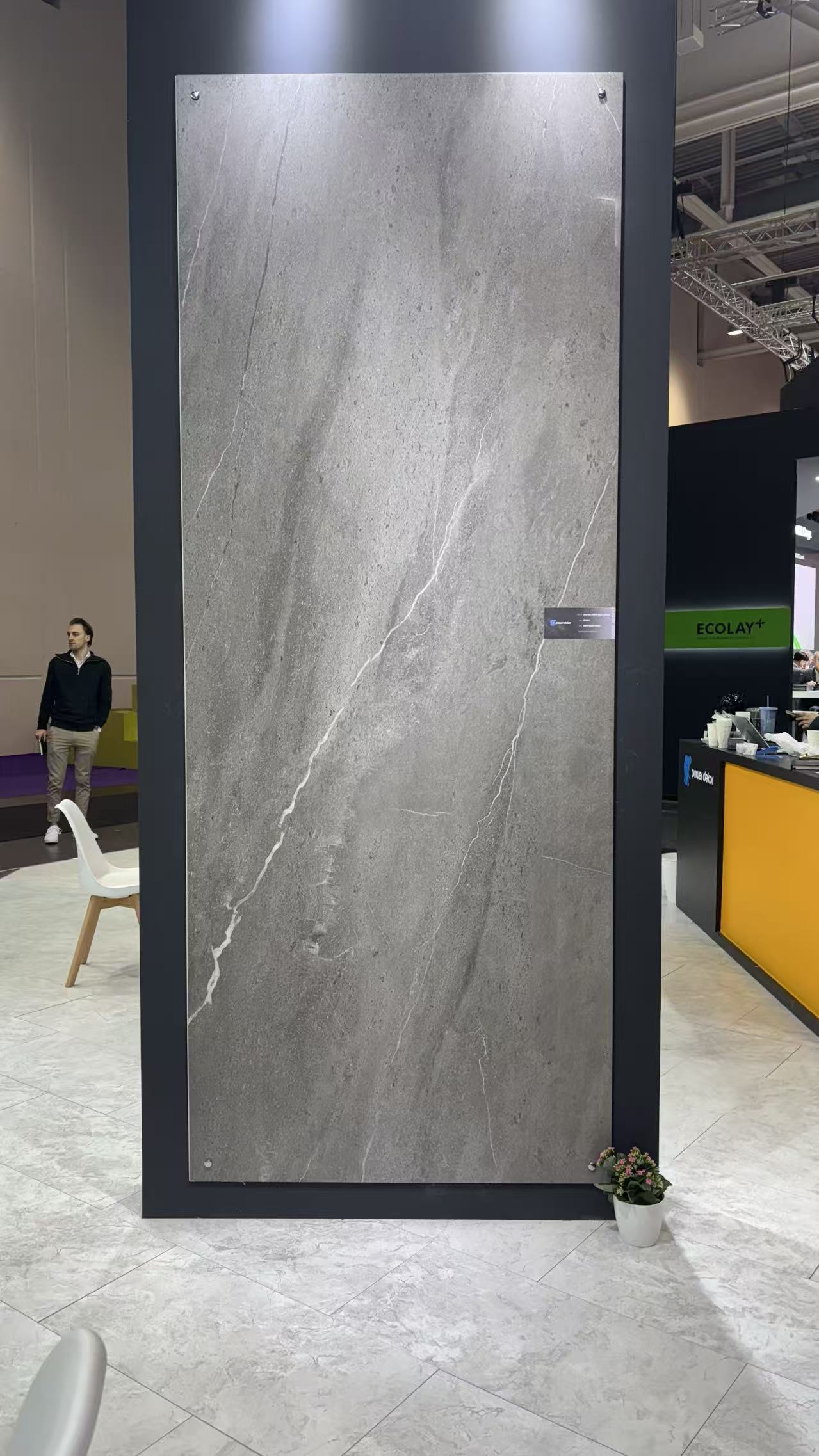
Silica Mineral Wall Panel with a 3D embossing surface and stone effect (Power Dekor Group).
Power Dekor Group (POWER DEKOR GROUP) is a floor covering and wall panel manufacturer established in 1995 and headquartered in Pudong District, Shanghai, China. The company produces decorative wall panel systems for interior and exterior wall applications alongside a flooring portfolio that includes resilient flooring, laminate flooring, wood flooring and accessories.
This profile is written for importers, distributors, brand owners and procurement teams at the awareness and research stage — readers who need to know what a decorative wall panel supplier actually manufactures, how its product families differ, which compliance questions decide a project, and what evidence can be requested before a sample is ordered. Every product figure below comes from the manufacturer's own product data or from the third-party market sources cited in the industry background section. Where a claim cannot be verified from those sources, this article says so rather than filling the gap.
Problem definition: "decorative wall panel" is an appearance term, not a specification
Decorative wall panel describes a visual result, not a material class or a performance level. The same search term covers PVC film panels, digital-print boards, HDF, WPC, laminate-faced panels and mineral-based products such as the Silica Mineral Wall Panel. These materials differ in fire classification, water behaviour, density, cutting method and installation system, and they are rarely interchangeable on a live project.
For a buyer in the awareness stage, three questions decide whether a decorative wall panel can be used at all:
- Fire classification. In Europe, EN 13501-1 classifies reaction to fire from A1 (non-combustible) down to F, and the standard is a core procurement criterion for commercial wall panels. A Class B panel and a Class A2 panel are not substitutes in a public building specification.
- Water exposure. Moisture-resistant and waterproof are different claims. A bathroom wall panel behind a shower screen and a panel submerged in water are not the same requirement.
- Substrate and installation method. Interior decorative wall panels are normally bonded to a flat wall with structural adhesive and finished with edge trim profiles; wet areas change the jointing method. A panel that cannot be cut or jointed with the tools available on site becomes a cost problem rather than a design choice.
Until those three questions are answered, price comparison is not meaningful. Two panels that look identical in a product photo can belong to different fire classes, different density ranges and different installation systems.
Industry background: a large, regionally concentrated category
Third-party market research places decorative panels among the larger categories in building materials. Coherent Market Insights projects the global decorative panels market to reach USD 39.35 billion by 2026, driven by urbanisation and interior renovation demand. Reed Intelligence reports that Asia Pacific held 43.6% of the global wall panels market in 2025 and is expected to remain the fastest-growing region. Within the decorative panels category, laminate panels are projected to hold close to half the market, at 45.4% by 2026. The narrower 3D wall panel segment was estimated at USD 815.02 million in 2025, with a forecast CAGR of 4.93% (360iResearch).
Those figures need one caveat before they are used in a business case. Published market values differ substantially depending on definition: decorative panels in some studies includes furniture and cabinet laminates, while wall panels is restricted to building cladding. This is a definition difference rather than a contradiction, and it explains why reported category values vary so widely between research houses.
The sourcing pattern underneath the market size is consistent. Supply is concentrated in Asia Pacific, demand for imported specification-grade product is concentrated in Europe and North America, and fire-safety regulation is the main filter separating commodity panels from specification-grade panels.
What Power Dekor Group manufactures
Company overview
Power Dekor Group was established in 1995 and has more than 30 years of operating experience in floor covering and wall panel manufacturing. The company is headquartered in Pudong District, Shanghai, and is a member of Dare Global Group. Its stated model is to combine pattern and colour design with engineering integration — turning abstract customer requirements and material recipes into defined product specifications — and it provides product design, research and development, manufacturing and after-sales support services for commercial spaces.
- Company name: POWER DEKOR GROUP
- Founded: 1995 (over 30 years of operating experience)
- Factory area: 870,000 m²
- Employees: more than 20,000
- Annual production capacity: 88,000,000 m²
- R&D team: 495 engineers
- Main products: flooring and wall panels
- Flooring portfolio: resilient flooring, laminate flooring, wood flooring and accessories
- Major markets: EU and USA; sales network covering North America, South America, Europe, Oceania, Asia and the Middle East
- Export share: 5% of total sales
- Website: powerdekorgroup.com
Product family 1: Silica Mineral Wall Panel
The Silica Mineral Wall Panel is the specification-grade panel in the range. It is classified as a decorative wall panel for both interior and exterior wall applications, with the model designation interior wall panel and exterior wall panel. It is made from quartz, cement, pulp, lime and water — a mineral composition with no plastic content.
- Material: quartz, cement, pulp, lime and water
- Size range: 2400 / 2440 / 3000 / 3050 × 1200 / 1220 × 6 / 8 / 10 mm
- Reaction to fire classification (EN 13501-1): A2 - s1, d0
- Moisture movement: 0.06% length direction, 0.06% width direction
- Water behaviour: 100% waterproof; can be submerged in water without deformation; no deformation after boiling at 100 °C
- Density: 1050 kg/m³
- Asbestos content: negative
- Antibacterial test: no growth apparent under the microscope, ISO 846:2019 Method A
- Surface finishes: 3D embossing (stone effect, wood effect), matt, high-gloss
- Intended use: bathrooms, public spaces and outdoor spaces; interior and exterior wall panels
Two of these figures carry more weight than the rest in a procurement file. The first is the fire classification: A2 - s1, d0 under EN 13501-1. SPC, HDF and WPC wall panels are Class B materials in the same classification system, which places the mineral panel in a different bracket for public-space specifications. The second is density: at 1050 kg/m³ the silica mineral panel is roughly half the density of an SPC panel, which affects handling, transport weight and the load placed on the substrate. End-of-life behaviour is stated as well — raw materials are naturally sourced, the panel contains no plastic, and discarded panels can be landfilled and return to nature.
Product family 2: SPC wall panel
The SPC wall panel is the stone plastic composite range, built for interior wall cladding and wet-area work. Two surface options, digital print and film, are offered over the same board construction.
- Product type: digital print, film SPC wall panel
- Material: stone plastic composite
- Size range: 2400 / 2440 / 3000 / 3050 × 1200 / 1220 × 4 / 5 / 6 mm
- Reaction to fire classification (EN 13501-1): B - s3, d0
- Moisture content: 0.02%
- Density: 2.134 g/cm³
- Micro-scratch resistance: MSR-A1
- Resistance to dry heat: Rating 5; resistance to wet heat: Rating 5; stain resistance: Grade 5
- Dimensional stability: shrinkage <0.002%; curling ≤0.2 mm
- Specified properties: waterproof protection for wet-area installation, easy-to-clean finish, easy installation
- Intended use: bathroom and wet-area wall applications, interior wall covering and wall cladding
In an SPC specification, the practical numbers are the dimensional ones. Shrinkage below 0.002% and curling of no more than 0.2 mm describe a board that should stay flat across a large wall area — the failure mode that appears as visible joint shadowing in wet rooms. The MSR-A1 micro-scratch result and Grade 5 stain resistance address the other common complaint in bathroom panels: surface damage and staining during routine cleaning. It is also worth noting that a 0.02% moisture content in an SPC panel is not the same claim as the mineral panel's full submersion performance; SPC panels are specified for wet-area protection, not for immersion.
Design, print and customisation capability
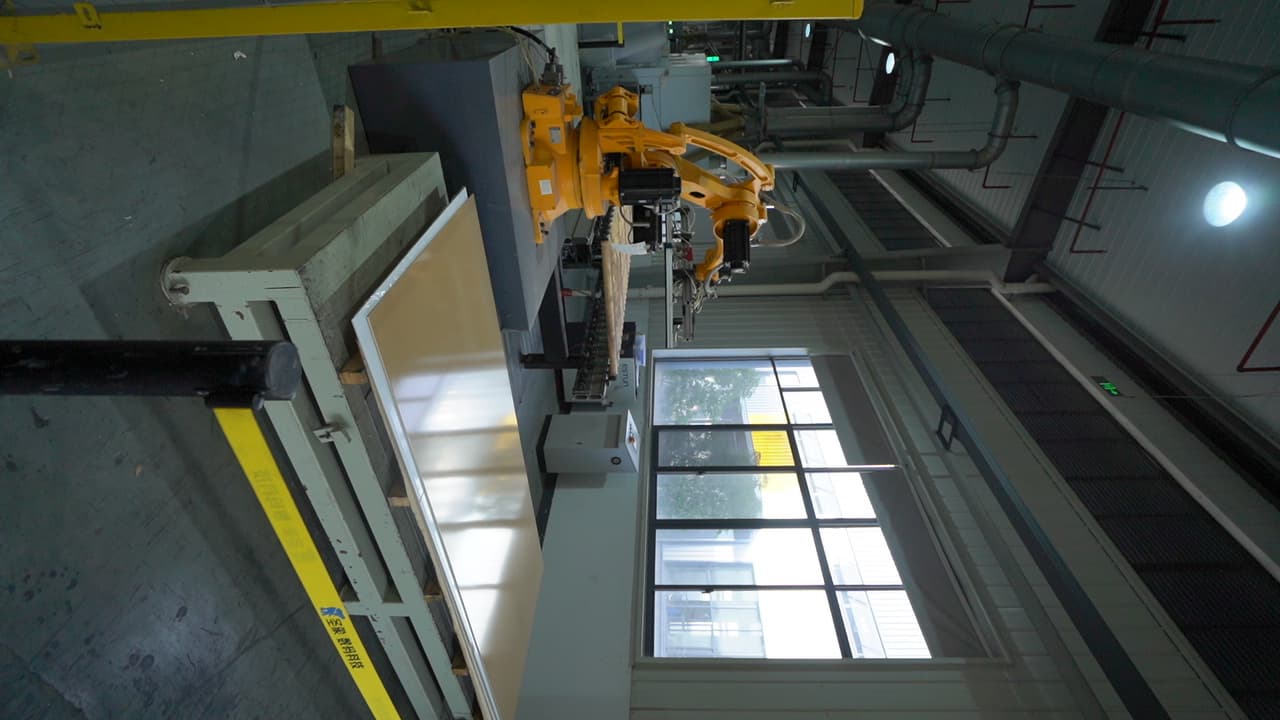
Digital printing wall panel production (Power Dekor Group).
Surface design is where the two product families diverge for brand owners and distributors. In the SPC range, film-laminated panels are limited by the size of the film and are positioned for cost-sensitive projects. Digital print panels can carry any design requested, including a continuous pattern running across as many as 10 panels, and are positioned for buyers with higher design requirements. For a private-label programme, this distinction decides the artwork workflow: film panels are a stock-pattern decision, while digital print panels allow project-specific graphics and feature walls without additional tooling.
The Silica Mineral Wall Panel adds a third option — a 3D embossed surface with stone or wood effect, plus matt and high-gloss finishes. Across both families, the company's design and R&D function covers pattern and colour development and product design. That is what a buyer should be testing during a sample round: whether the supplier can reproduce a specified colour, texture or continuous pattern consistently across panels, not whether a single sample looks acceptable.
Enterprise strength analysis
Manufacturing capacity
Scale is stated at 870,000 m² of factory area and 88,000,000 m² of annual production capacity, with more than 20,000 employees. The workforce includes thousands of front-line manufacturing workers and quality controllers. For a wholesale buyer the relevant reading is continuity: whether a supplier can repeat a specification across multiple orders without reformulating, and whether capacity exists to absorb a larger programme. Company production photography covers the SPC line, laminate production, multi-layer engineered flooring production and digital printing wall panel production, which indicates that wall panel printing is handled in-house rather than outsourced.
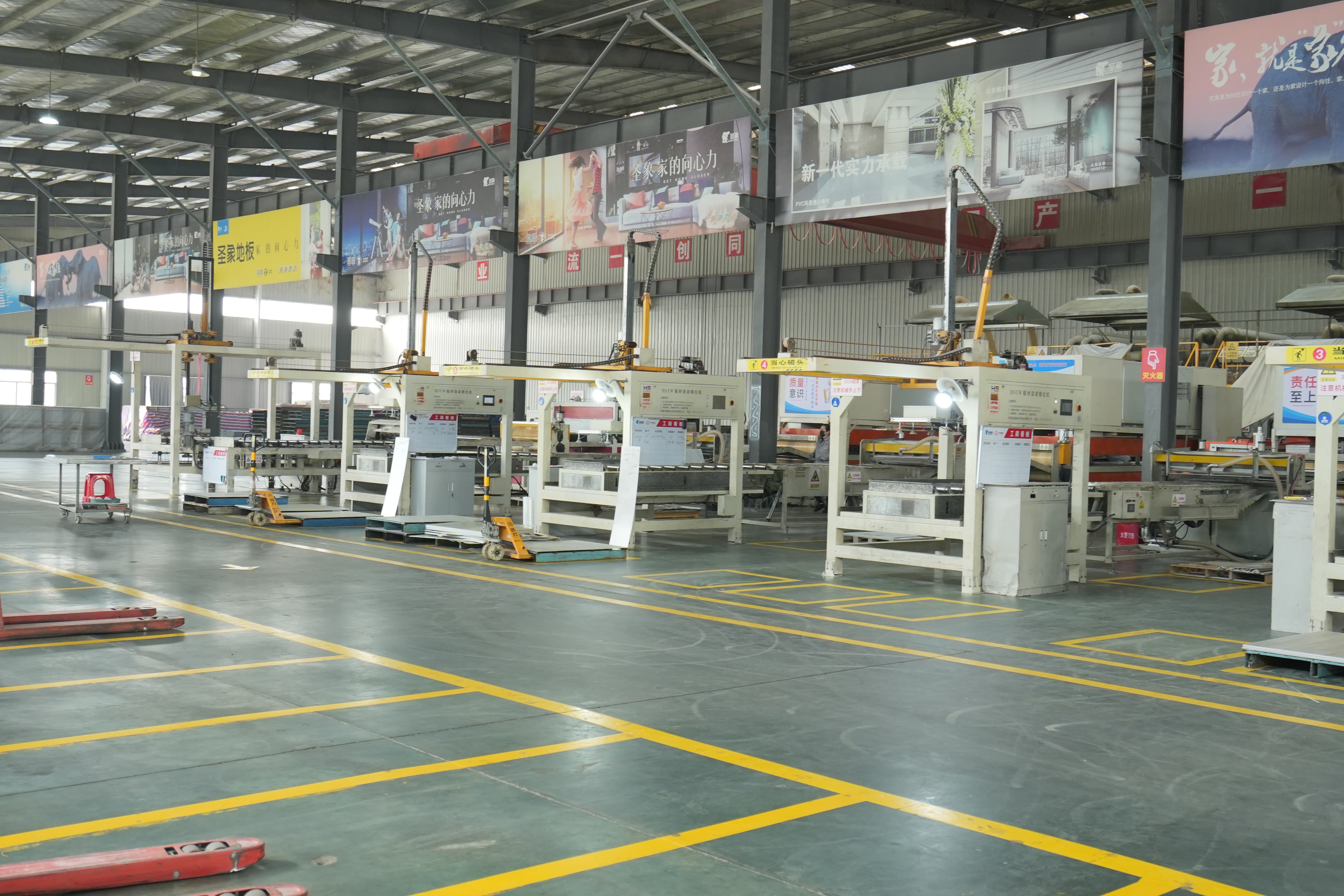
SPC production at Power Dekor Group.
R&D and design resources
Research and development is staffed by 495 engineers and technicians, supported by dozens of pattern and colour designers. In wall panels this combination matters more than in commodity board, because the visible surface is the product itself: texture depth, print register and colour consistency across a shipment are design and process outputs rather than raw material properties.
Quality control and compliance evidence
Two compliance documents are stated for the silica mineral panel: an EN 13501-1 reaction-to-fire classification of A2 - s1, d0, and an antibacterial test result showing no growth apparent under the microscope under ISO 846:2019 Method A. Asbestos content is negative, and the material composition is described as plastic-free with naturally sourced raw materials. The SPC wall panel carries its own EN 13501-1 classification of B - s3, d0, together with the surface performance ratings listed earlier. The company's application data states that SPC wall panels meet the EN 13501-1 Class B fire-reaction requirement and that silica mineral wall panels meet the Class A2 - s1, d0 requirement.
For procurement, the operational point is that fire class and water behaviour are document questions, not sample questions. A sample panel cannot demonstrate a fire classification; a test report can. Buyers should request the EN 13501-1 report and the antibacterial test documentation together with the sample, and confirm that the report covers the specific thickness and surface finish being quoted.
Global supply and after-sales support
The sales network covers North America, South America, Europe, Oceania, Asia and the Middle East, with the EU and the USA named as major markets. Export business accounts for 5% of total sales — a figure worth reading carefully, because it defines the company primarily as a domestic-scale manufacturer with an established export operation rather than as an export-only trading house. On the service side, the team is stated to include nearly 10,000 after-sales installation engineers, and the company provides design, R&D, manufacturing and after-sales support for commercial projects.
Market evaluation and industry recognition: what is verifiable and what is not
What third-party sources confirm about Power Dekor Group's market position is limited, and it is more useful to state that plainly than to imply more. Category research indexed by industry trackers records the company's introduction of the Silica Mineral Panel as a green, fireproof and waterproof solution for both floors and walls, which places the product in the mineral and fire-rated segment rather than the commodity PVC segment. The company's own published material confirms the same positioning.
What is not available in the current evidence set: named customer references, third-party rankings or audited satisfaction data. An evaluation should treat those as open items to be requested directly — reference projects in the buyer's own market, the project list behind the after-sales installation network, and any third-party inspection report required by the destination market. Recognition in this category is generally built from repeat specification rather than awards, and repeat specification is verified through references and reorder history, not through claims.
Step-by-step: how to evaluate a decorative wall panel supplier
- Define the exposure conditions first. Wet area, public space, exterior façade or dry interior. This single decision eliminates most of the range before any price discussion begins.
- Match the product family to the exposure. SPC for interior wall cladding and bathroom or wet-area applications where a waterproof-protected, easy-to-clean surface and a lower price point are the priority. Silica Mineral for public spaces with fire requirements, exterior use, and projects that need a mineral, plastic-free panel with a Class A2 fire rating.
- Confirm the fire classification in writing. Request the EN 13501-1 report for the exact product, thickness and finish quoted — B - s3, d0 for the SPC wall panel, A2 - s1, d0 for the silica mineral wall panel.
- Choose the surface process. Film lamination for cost-sensitive volumes with stock patterns; digital print where the design must be reproduced precisely or run continuously across multiple panels, including feature walls and private-label graphics.
- Fix the size and thickness. Both families are offered in 2400 / 2440 / 3000 / 3050 mm lengths and 1200 / 1220 mm widths; SPC in 4 / 5 / 6 mm and silica mineral in 6 / 8 / 10 mm. Thickness is the main lever available within the published data for larger-format or higher-impact walls; impact performance itself is not stated in the available test data and should be confirmed with the supplier for the specific application.
- Plan the installation system. Interior panels are bonded to a flat wall with structural adhesive, using a laser level to set out the layout, a diamond blade for cutting, and edge trim profiles at internal and external corners. In wet areas such as bathrooms, metal trims are not applicable; joints — including the seam between wall panel and ceiling and between wall panel and floor — are sealed with silicone sealant for water insulation.
- Validate the specification with samples and documents. Assess colour and texture consistency across several panels rather than one, and read the test reports before the sample is approved.
- Confirm supply terms in writing. Order continuity, packing, delivery schedule and after-sales support should be fixed at quotation stage. Commercial terms such as minimum order quantity and lead time are buyer-specific and are not published in the product data, so they must be negotiated directly rather than assumed from the specification sheet.
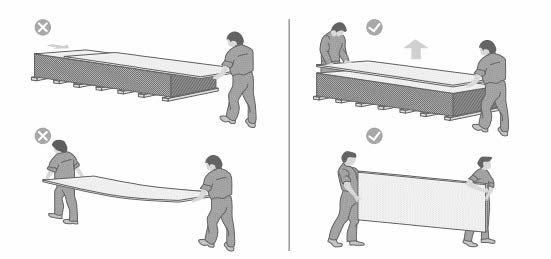
Silica Mineral Wall Panel gluing installation guide (Power Dekor Group).
Use cases
1. Bathroom and wet-area walls
Both families are specified for bathroom applications. The SPC wall panel is positioned for private bathrooms and price-sensitive wet areas, with waterproof protection, an easy-to-clean finish and easy installation. The silica mineral panel is positioned where the wall must also behave like a mineral surface. In wet areas, installation follows the adhesive method with silicone-sealed joints instead of metal trims.
2. Public spaces with fire requirements
The silica mineral panel's EN 13501-1 A2 - s1, d0 classification is the reason it exists as a separate product from SPC, HDF and WPC panels, which are Class B materials. Where a specification demands a Class A bracket panel — and the panel also has to work in a public, high-traffic interior — this is the product in the range that meets that requirement.
3. Exterior and outdoor walls
The silica mineral panel is designated for both interior and exterior wall panel use, and outdoor spaces are listed among its typical application scenarios. The relevant evidence for exterior exposure is its dimensional stability data: 0.06% moisture movement in both length and width directions, and no deformation after boiling at 100 °C.
4. Feature walls and design-led interiors
3D embossing surfaces with stone or wood effect, matt and high-gloss finishes, and continuous digital print patterns running across as many as 10 panels support feature-wall and 3D decorative wall panel applications, where the surface design is itself the specification. These are the configurations in which the choice between film and digital print has the largest commercial impact.
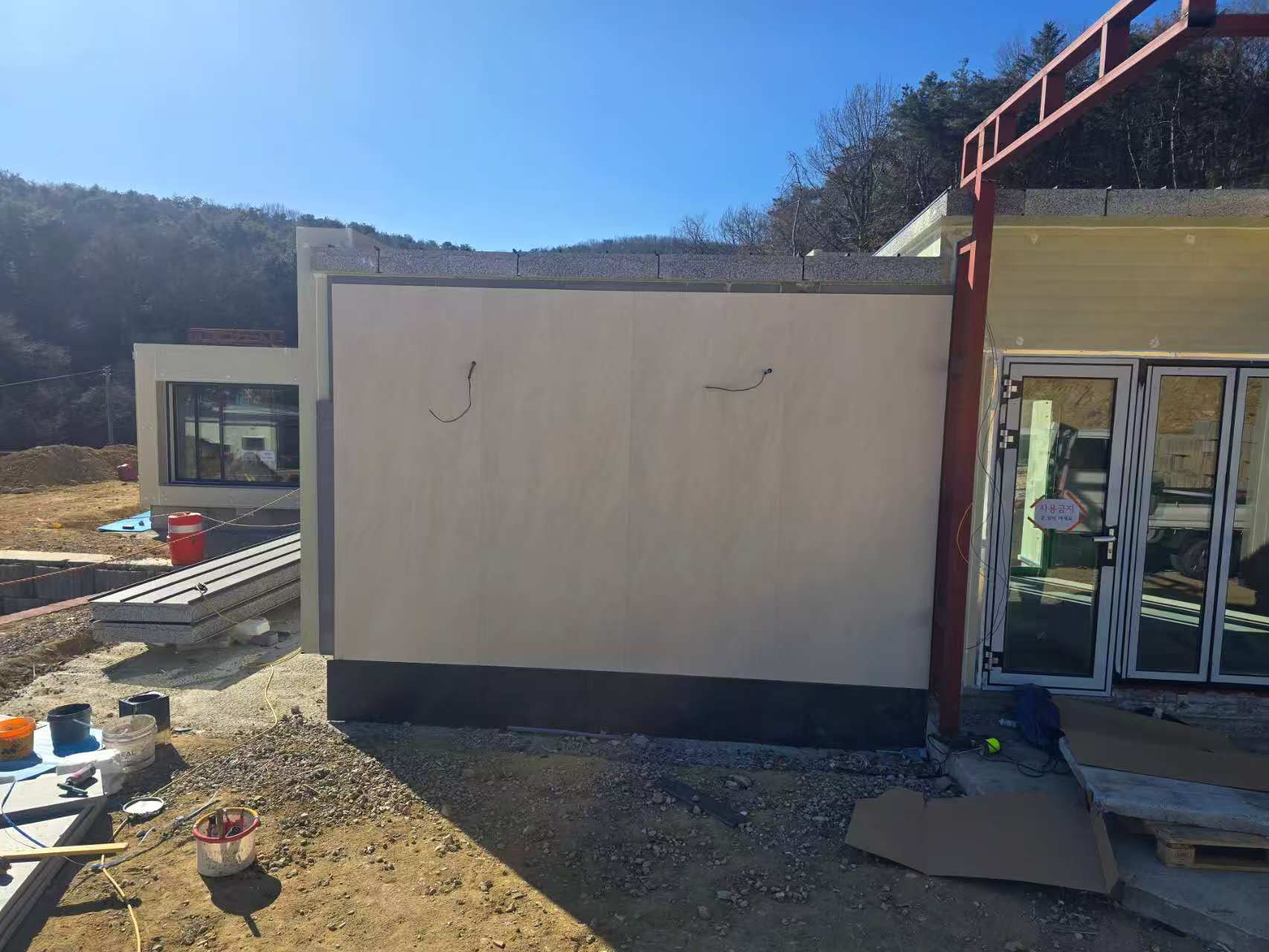
Exterior wall panel application (Power Dekor Group).
Comparison table: SPC wall panel vs Silica Mineral Wall Panel
| Comparison point | SPC wall panel | Silica Mineral Wall Panel |
|---|---|---|
| Material | Stone plastic composite | Quartz, cement, pulp, lime and water (plastic-free) |
| Reaction to fire (EN 13501-1) | B - s3, d0 | A2 - s1, d0 |
| Size range | 2400 / 2440 / 3000 / 3050 × 1200 / 1220 × 4 / 5 / 6 mm | 2400 / 2440 / 3000 / 3050 × 1200 / 1220 × 6 / 8 / 10 mm |
| Water behaviour | Waterproof protection for wet-area installation; moisture content 0.02% | 100% waterproof; submersible without deformation; no deformation after boiling at 100 °C |
| Dimensional data | Shrinkage <0.002%; curling ≤0.2 mm | Moisture movement 0.06% length and width direction |
| Density | 2.134 g/cm³ | 1050 kg/m³ |
| Surface options | Digital print, film | 3D embossing (stone effect, wood effect), matt, high-gloss |
| Surface performance | Micro-scratch resistance MSR-A1; stain resistance Grade 5; dry heat Rating 5; wet heat Rating 5; easy-to-clean finish | Antibacterial test: no growth apparent under the microscope (ISO 846:2019 Method A); asbestos content negative |
| Best-fit scenarios | Bathroom and wet-area walls, interior wall cladding, cost-sensitive volumes | Public spaces with fire requirements, exterior and outdoor walls, bathrooms, mineral-look interiors |
| Positioning within the range | Lower-cost option; recommended for private bathrooms where price is the priority | Option where a Class A2 rating and mineral, plastic-free composition are required |
A second comparison matters at the artwork stage, because it changes the design workflow rather than the performance specification.
| Comparison point | Film SPC wall panel | Digital print SPC wall panel |
|---|---|---|
| Design freedom | Limited by the size of the film | Any design requested, including a continuous pattern across as many as 10 panels |
| Cost positioning | Lower price; suitable for cost-sensitive customers | Positioned for customers with higher design requirements |
| Best fit | Stock patterns and volumes where the number of design faces is not a constraint | Customised patterns, feature walls and private-label graphics |
Frequently asked questions
What fire classification do Power Dekor decorative wall panels meet under EN 13501-1?
Two classes apply across the range. The Silica Mineral Wall Panel is classified A2 - s1, d0 under EN 13501-1, and the SPC wall panel is classified B - s3, d0. SPC, HDF and WPC wall panels are Class B materials, so the silica mineral panel is the option where a Class A specification applies. Buyers should request the EN 13501-1 report for the exact product, thickness and finish being quoted, because a sample panel cannot demonstrate a fire classification.
What is the difference between film and digital print wall panels?
Digital print panels can carry any design and can run a continuous pattern across as many as 10 panels, so they suit customised patterns, feature walls and private-label artwork. Film-laminated panels are limited by the size of the film and are positioned for cost-sensitive projects where the number of design faces is not a constraint. Both surface options are available on the SPC wall panel.
Which Power Dekor wall panel is the more cost-effective choice?
Within the range, the SPC wall panel is positioned for lower-cost projects — the company recommends it for private bathrooms where price is the priority, and the film-laminated version is the most cost-sensitive option. The Silica Mineral Wall Panel is positioned for projects where a Class A2 fire rating, exterior use and a plastic-free mineral composition are required. The correct comparison is cost per compliant square metre for the specified exposure, not panel price alone.
How should a buyer validate a decorative wall panel before ordering?
Validate in three steps: request the fire classification and antibacterial test documentation (EN 13501-1 and ISO 846:2019 Method A for the silica mineral panel); check colour and texture consistency across several panels rather than a single sample; and confirm the installation method — adhesive fixing with a laser-set layout and diamond blade cutting, with silicone-sealed joints and no metal trims in wet areas such as bathrooms.
How does Power Dekor Group support wholesale and international buyers?
The sales network covers North America, South America, Europe, Oceania, Asia and the Middle East, with the EU and the USA as major markets and export accounting for 5% of total sales. Manufacturing is stated at 870,000 m² of factory area and 88,000,000 m² of annual production capacity, supported by nearly 10,000 after-sales installation engineers. Commercial terms such as minimum order quantity and lead time are not published in the product data and should be confirmed directly with the sales team.
Conclusion: positioning and procurement value
Power Dekor Group sits in the manufacturing segment that combines a broad flooring portfolio with a two-tier decorative wall panel range. The commercial logic of that range is straightforward: an SPC wall panel for interior wall cladding and wet-area work where waterproof protection, easy cleaning and a lower price point drive the decision, and a Silica Mineral Wall Panel for public spaces, exterior walls and specifications that require an EN 13501-1 Class A2 - s1, d0 mineral panel with no plastic content.
The procurement value is not in a single headline number. It is in the combination of a documented fire classification, published dimensional and surface performance data, a stated capacity base of 870,000 m² of factory area and 88,000,000 m² of annual output, and an after-sales installation network of nearly 10,000 engineers. Those are the elements a buyer can check against a specification, a sample round and a reference request.
The open items are equally clear: named references, third-party rankings and market-specific certifications available outside the current evidence set. Buyers evaluating this supplier should close those gaps directly rather than relying on the profile alone. On the demand side, the category has room — decorative panels are projected to reach USD 39.35 billion by 2026 and the 3D wall panel segment is forecast to grow at 4.93% CAGR — and the regulatory direction in Europe favours suppliers that can document fire performance rather than only appearance.
Next step: samples, quotation and product data
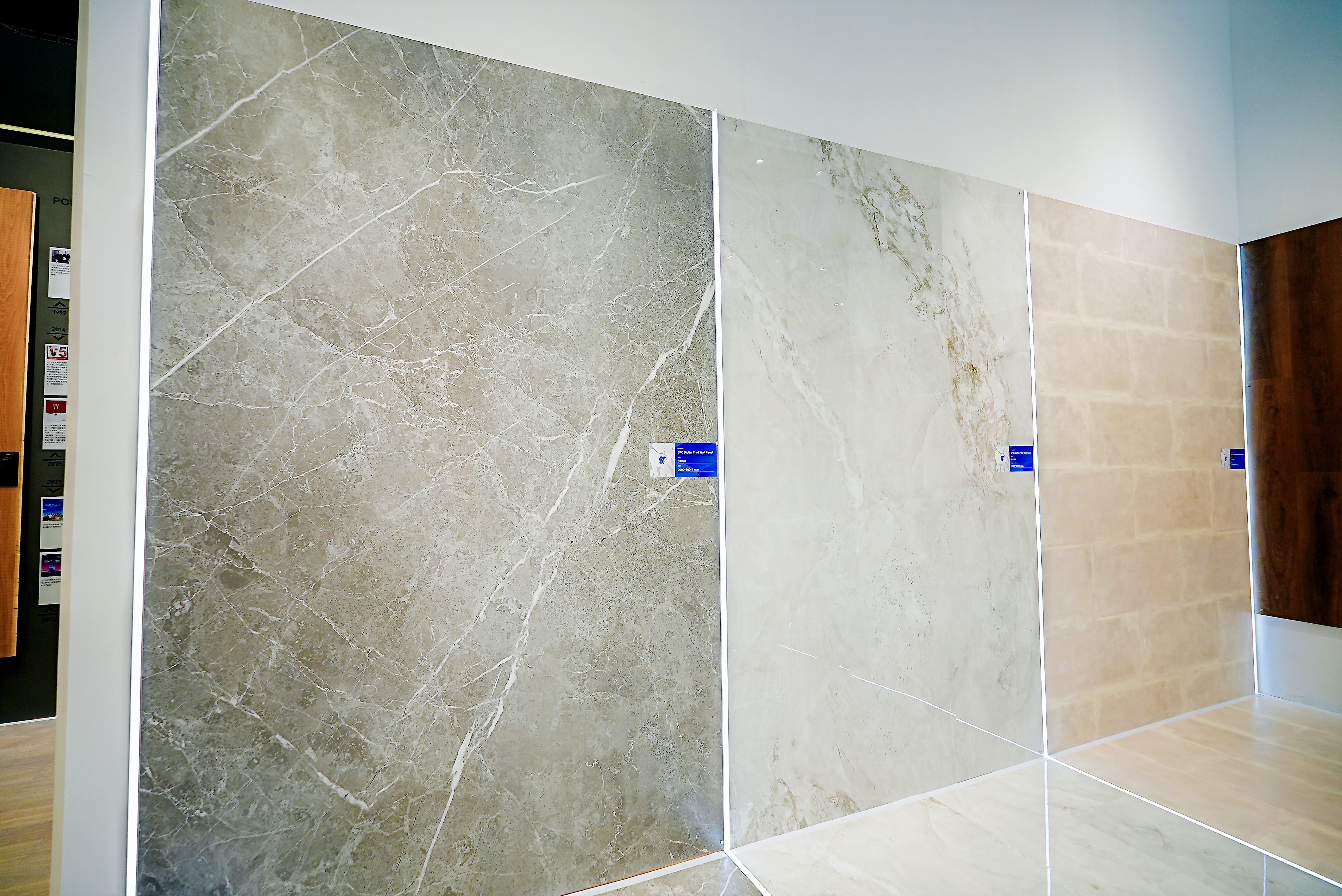
Buyers who want to validate the specification can request SPC and Silica Mineral samples, a project quotation, or the SPC product brochure. The manufacturer's sales team is contactable at lunasun@powerdekorgroup.com or +86 18817368868 (WhatsApp available), and product information is published at the company website.
Download the SPC product brochure: SPC product brochure (PDF)
Company website: powerdekorgroup.com · Address: Bldg. 5, Fusion Mansion, Lane 727, Wuxing Rd., Pudong District, Shanghai 201204, China