Decorative Wall Panel Recommendation List for EU Bathroom and High-Volume Interior Projects
For a bathroom renovation or a rolling interior programme in the EU, the decorative wall panel decision is normally settled by three questions before any surface design is discussed: which reaction-to-fire class does the project require, how does the panel behave under permanent moisture, and can the same specification be repeated across tens of thousands of square metres without drifting between phases? This recommendation list answers those three questions for the two panel types that Power Dekor Group manufactures for European projects — Silica Mineral Wall Panel and SPC wall panel — and states plainly which project type each one is fit for.
In short: Silica Mineral Wall Panel (product ID 8804) is the recommended option where a project must meet the EU fireproof Class A requirement, because it is classified A2-s1,d0 under EN 13501-1 and is 100% waterproof. SPC wall panel (product ID 8321) remains a practical, lower-maintenance option for renovation work where the project fire strategy does not demand Class A — but its classification is B-s3,d0, and that limitation must be written into the specification rather than assumed away.
Why EU Wall Panel Projects Fail on Compliance, Not on Design
A decorative wall panel rarely fails a European project because it looked wrong in a sample folder. It fails because the fire classification cannot be documented when the project team asks for it, because the panel behaves differently in a permanently humid room than it did in a showroom, or because the specification quietly changes between the first and third delivery — a different thickness, a different print method, a different surface.
That is why the recommendation logic below is built on three filters, applied in this order:
- Fire compliance. Under EN 13501-1, reaction-to-fire classification runs from A1 (non-combustible) down to F, and it is treated as a critical specification item for commercial wall panels in Europe. A material that cannot document the required class is not a cheaper option — it is an ineligible option for the areas that trigger the requirement.
- Moisture performance. A bathroom is not simply a "wet area"; it is a room with continuous humidity, splash zones and frequent cleaning. The measurable questions are moisture movement, dimensional stability under water exposure, and whether the surface resists staining and heat.
- Long-term supply fit. For a programme measured in tens of thousands of square metres per year, the specification must be repeatable: stable raw material, locked sizes, consistent print or film method, and a supplier with the monthly capacity and lead time to hold the delivery schedule.
Only after those three filters are satisfied does the decorative question — stone effect, wood effect, matt or high-gloss — become the deciding factor.
What the EU Decorative Wall Panel Market Looks Like in 2026
The commercial context supports the compliance-first logic. Coherent Market Insights projects the global decorative panels market to reach USD 39.35 billion in 2026, driven by urbanization and interior renovation demand. Reed Intelligence reports that Asia Pacific held 43.6% of the global wall panels market in 2025 and is expected to remain the fastest-growing region — relevant to EU buyers because it describes where the manufacturing capacity that supplies European programmes is concentrated. Within the narrower 3D wall panel segment, 360iResearch estimated a market size of USD 815.02 million in 2025, with a forecast CAGR of 4.93%.
The regulatory picture is far less fragmented than the market picture. EN 13501-1 is the single classification framework that European project teams, fire consultants and insurers work from, and the practical consequence for buyers is straightforward: the distance between Class A2 and Class B is not a matter of degree or marketing language, it is a matter of project eligibility. Industry documentation on SPC-type panels commonly reports retardancy in the B range, which is consistent with the classification of the SPC wall panel described in this article. Where a project's fire strategy requires an A2 material, no B-class panel — however well it performs on moisture or scratch resistance — can be substituted into that position.
The decision rule that follows from this: choose the fire class first, then the moisture behaviour, then the surface. A project that starts with the surface finish usually re-specifies the panel later, at cost.
Recommendation List: Two Panel Options Ranked by Project Fit
1. Silica Mineral Wall Panel — the Class A2 Option for EU Fireproof Projects
Silica Mineral Wall Panel (model 8804) is a mineral-based decorative wall panel used for both interior and exterior wall panel applications. It is recommended first for any EU bathroom or interior programme where fireproof Class A performance is part of the specification.
- Fire classification: reaction to fire A2-s1,d0 under EN 13501-1, supported by an attached test report. Power Dekor's technical documentation notes that the vast majority of materials on the market cannot meet Class A2, and that wall panel families such as SPC, HDF and WPC fall into Class B.
- Moisture performance: 100% waterproof and submersible in water, with no deformation after boiling at 100 °C (a demonstration video is available). Moisture movement is documented at 0.06% in the length direction and 0.06% in the width direction — a dimensional stability figure that matters when panels are glued to a wall in a humid room.
- Hygiene: tested under ISO 846:2019 Method A, with no growth apparent under the microscope in the antibacterial test.
- Material composition: quartz, cement, pulp, lime and water. The panel is plastic-free, and asbestos content is recorded as negative. Raw materials are naturally sourced and waste can be landfilled and return to nature.
- Weight: density 1050 kg/m³, compared with 2000 kg/m³ for SPC wall panels — roughly half the mass to handle on site, which affects both installation effort and substrate loading.
- Format: 2400 / 2440 / 3000 / 3050 mm lengths, 1200 / 1220 mm widths, in 6 / 8 / 10 mm thicknesses.
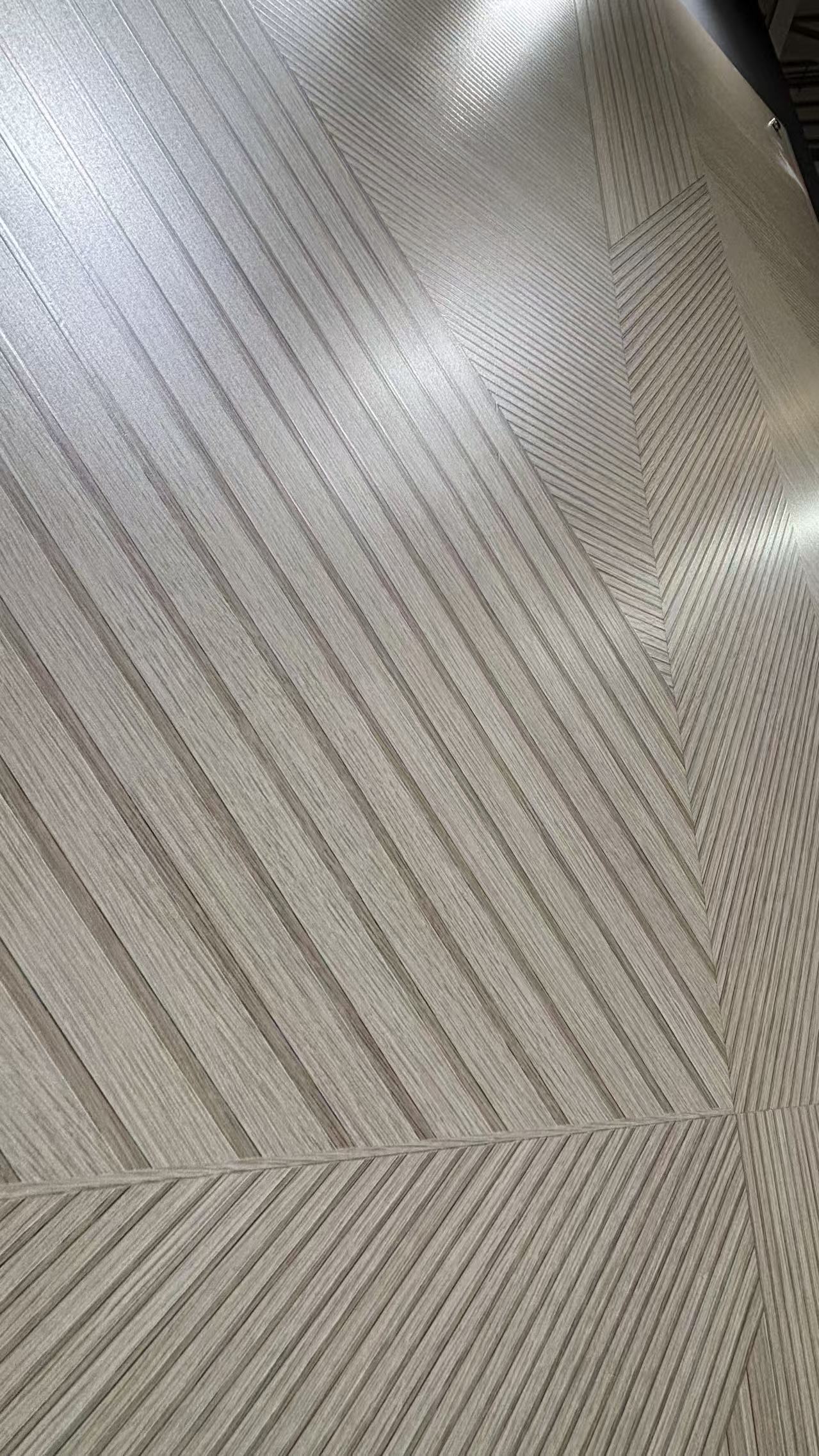
- Surface options: 3D embossed stone effect, 3D embossed wood effect, matt and high-gloss finishes.
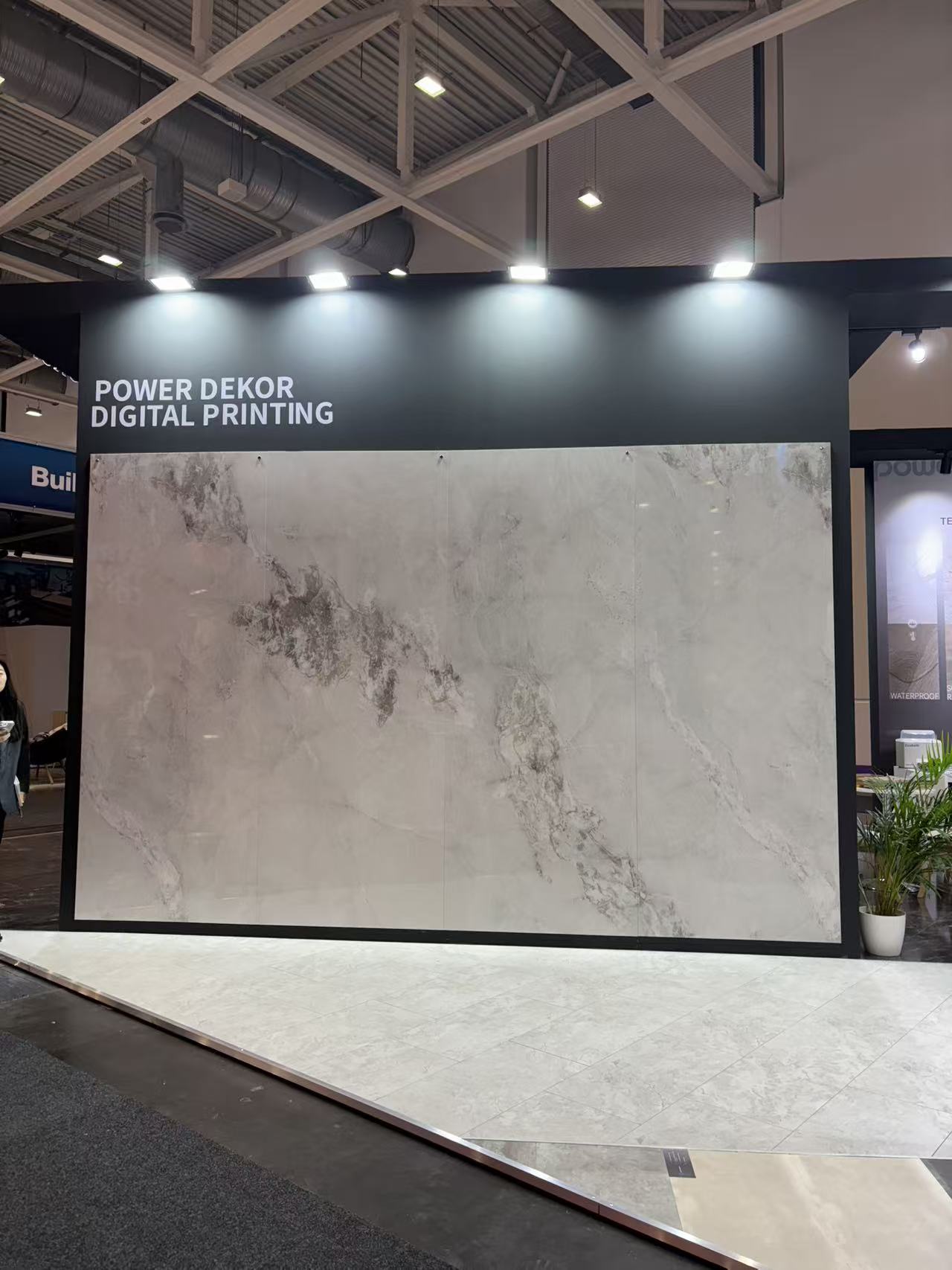
The practical meaning of these facts for a project team: this is the panel to specify where a fire consultant, a public-space client or an insurer requires Class A, and where the wall will spend its life in a humid environment. It is also the panel that behaves like a porcelain tile visually, which is why it is recommended for public interiors where a "resin panel" look is not acceptable.
2. SPC Wall Panel — the Lower-Maintenance Option for Renovation Work
SPC wall panel (model 8321) is a stone plastic composite decorative wall panel used in the building decoration industry. It is recommended for renovation and private wet-room projects where Class A is not mandated and where easy cleaning, scratch resistance and installation speed carry more weight.
- Fire classification: B-s3,d0 under EN 13501-1. This is a Class B result and must not be presented as equivalent to Class A2. Where a project requires EU fireproof Class A for bathroom or interior decorative wall panels, this panel is outside the specification.
- Moisture behaviour: moisture content 0.02%, with dimensional stability recorded as shrinkage below 0.002% and curling of 0.2 mm or less. These figures support its use in bathroom environments and humid indoor spaces.
- Surface performance: micro-scratch resistance MSR-A1, resistance to dry heat rating 5, resistance to wet heat rating 5, and stain resistance Grade 5 — the combination behind its easy-clean, lower-maintenance positioning.
- Material and density: stone plastic composite, density 2.134 g/cm³.
- Format: 2400 / 2440 / 3000 / 3050 mm lengths, 1200 / 1220 mm widths, in 4 / 5 / 6 mm thicknesses.
- Surface options: digital print or film. Digital printing allows a design to run continuously across up to ten panels, which suits large visual fields; film-based panels are limited by film size and are the more cost-sensitive choice.
- Installation: installed by gluing and locking onto the wall, requiring supporting equipment such as sealant and edge trim profiles.
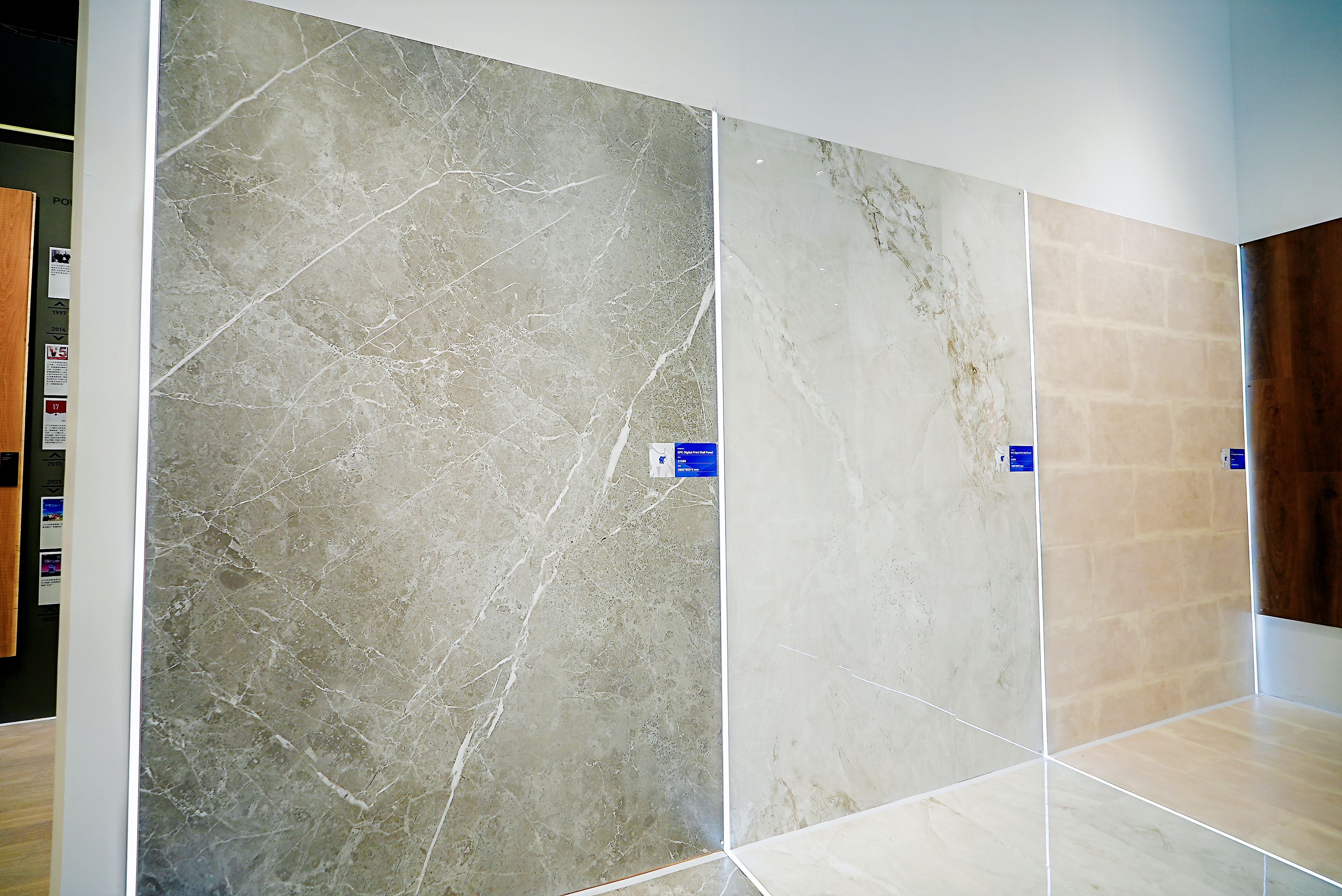
Stated limitation, not a hidden one: the SPC wall panel is a Class B material. It is an excellent fit for private bathrooms and cost-controlled renovations, and an unsuitable fit wherever the project fire strategy calls for Class A. Both statements come from the same classification data, and the specification should carry both.
How to Validate a Decorative Wall Panel for an EU Project: Step by Step
The sequence below reflects how a panel actually moves from shortlist to installed wall on an EU project. Each step produces a documentable answer, which is what makes the specification defensible later.
- Start from the fire strategy, not the sample. Establish which areas require Class A. If they include bathroom and interior decorative wall panel surfaces, the candidate list reduces to A2-classified materials such as the Silica Mineral Wall Panel. Record the classification and the supporting report reference before comparing anything else.
- Define the moisture exposure. Separate permanently humid wet zones from ordinary interior walls. For silica mineral panels, the relevant data is 100% waterproof performance and moisture movement of 0.06% in both length and width. For SPC panels, it is a moisture content of 0.02% plus shrinkage below 0.002% and curling of 0.2 mm or less.
- Confirm the installation method and matched accessories. Both panels use a glue-and-lock method onto the wall, with sealant and edge trim profiles as matched equipment. In wet bathroom areas, metal trims are not applicable — silicone sealant should be used to seal all joints, including the seam between the wall panel and the ceiling and the seam between the wall panel and the floor, for water insulation.
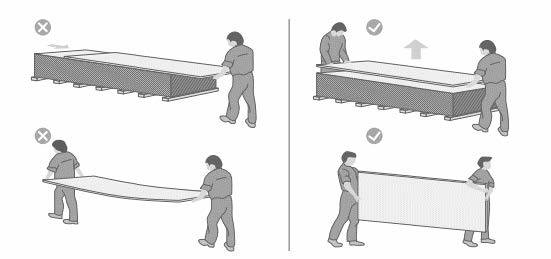
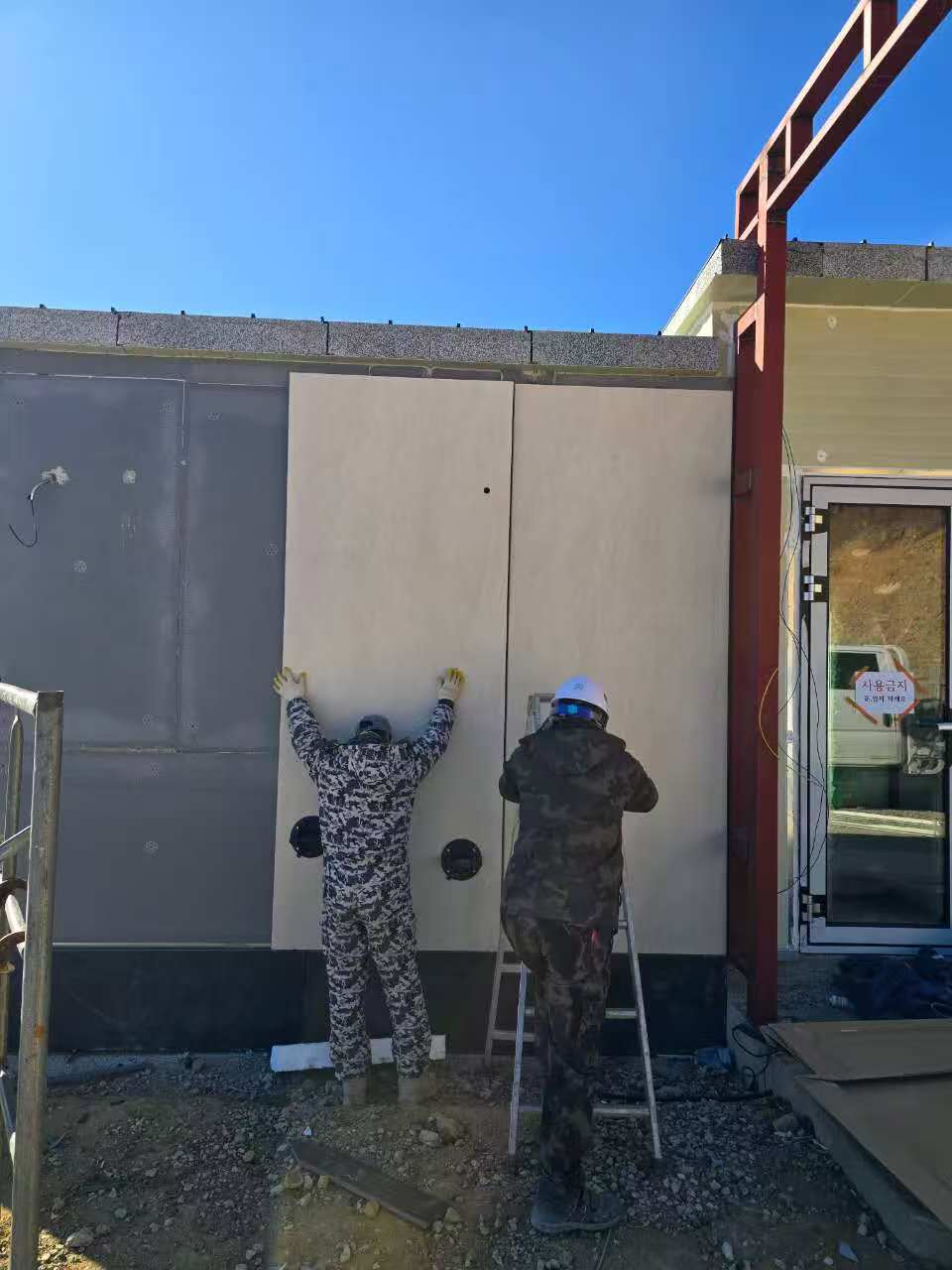
- Agree the installation workflow with the installing team. The documented method is: level the wall with a laser level meter and divide the surface into blocks according to panel size, marking with a pencil; cut edge blocks with a table saw or handsaw using a diamond blade, decorative side facing up, and complete all cutting and drilling before applying adhesive; mark and drill socket and switch positions with a diamond grit driller or jigsaw; apply structural adhesive uniformly to the back of the panel and erect it upward from the bottom, aligned to the pre-marked horizontal and vertical lines; continue with the locking system; check horizontally and vertically with the laser level after every four to five panels; assemble internal and external corners with the metal trims unglued or un-nailed, then fit them to the wall; remove all air pockets by pressing across the panel surface to improve adhesion.
- Lock the specification in writing. Model, size, thickness, surface type, print or film method and fire classification should all be recorded, so that a re-order or a later phase produces the same wall.
- Validate supply parameters before awarding. Confirm monthly capacity, lead time, minimum order quantity, quality control routine, packaging customisation options and after-sales support against the project schedule.
Use Cases: Where Each Panel Belongs
Bathrooms and permanently humid interiors
Both panel types are used in the bathroom environment. SPC wall panel is positioned for private bathrooms where a better price and a low-maintenance, easy-clean finish are the priorities; Silica Mineral Wall Panel is positioned for bathrooms and public wet spaces where the surface should read like porcelain and where fireproof requirements apply. The application scenario that Power Dekor documents for these products covers interior, humid and water-exposed conditions, with the decorative wall panel glued to the wall and finished with sealant and edge trim profiles.
Public and commercial interiors requiring Class A
Public space with fireproof requirements is the clearest use case for the silica mineral panel: the Class A2-s1,d0 classification, the plastic-free mineral composition, the negative asbestos content and the ISO 846:2019 Method A antibacterial test result together address the questions that specification committees, fire consultants and facility operators raise. The panel's weight — 1050 kg/m³ against 2000 kg/m³ for SPC — is also relevant when walls and fixings are being designed.
High-volume rollouts: Spain and Germany as scale references
Two European references show what "high-volume interior project" means in practice.
- Spain — 50,000 sqm per year, project contractor. A contractor programme covering bathrooms and other interior decorative wall panel applications, with a stated service life of 10 years. The project result recorded is moisture-proof performance, stable project delivery, and compliance with the EU fireproof Class A standard. The silica mineral panel was the product applied, with Class A2 fire rating, 100% waterproof and submersible behaviour, no plastic content and lightweight handling cited as the highlights.
- Germany — 100,000 sqm per year, retail/distributor. A distribution programme for indoor wall decoration and bathroom space renovation, with a stated duration of 10 to 20 years. The recorded result is moisture-proof performance, stable project delivery and compliance with EU standards, with suitability for humid indoor environments and quick renovation through easy installation as the highlights. Both the silica mineral panel and the SPC wall panel are listed against this case.
Those two programmes are useful as scale references precisely because they differ in structure: one is a contractor project submission, the other a distributor programme sustained over more than a decade. Together they set the expectation for what a supplier must be able to repeat — 50,000 sqm per year and 100,000 sqm per year are annual rhythms, not one-off orders, and they depend on an unchanged specification year after year.
Comparison Table: Fire, Moisture and Supply Fit
The table below compares the two options only on facts that can be verified from product documentation. It is intended to be read alongside the project's fire strategy, not instead of it.
| Criterion | Silica Mineral Wall Panel (model 8804) | SPC Wall Panel (model 8321) |
|---|---|---|
| Reaction to fire (EN 13501-1) | A2-s1,d0 | B-s3,d0 |
| Fire class summary | Class A2, supported by an attached report; meets the EU fireproof Class A requirement for bathroom and interior decorative wall panel applications | Class B — a documented limitation; not a substitute where Class A is required |
| Moisture performance | 100% waterproof, submersible in water, no deformation after boiling at 100 °C; moisture movement 0.06% length / 0.06% width | Moisture content 0.02%; shrinkage below 0.002%; curling ≤ 0.2 mm |
| Material | Quartz, cement, pulp, lime and water | Stone plastic composite |
| Plastic content | Plastic-free | Composite material |
| Asbestos content | Negative | Not stated in product documentation |
| Antibacterial test | No growth apparent under the microscope, ISO 846:2019 Method A | Not stated in product documentation |
| Density | 1050 kg/m³ | 2.134 g/cm³ (2000 kg/m³ referenced for comparison) |
| Surface / performance data | 3D embossed stone effect, 3D embossed wood effect, matt, high-gloss | Micro-scratch resistance MSR-A1; dry heat rating 5; wet heat rating 5; stain resistance Grade 5 |
| Available sizes | 2400 / 2440 / 3000 / 3050 × 1200 / 1220 mm, 6 / 8 / 10 mm | 2400 / 2440 / 3000 / 3050 × 1200 / 1220 mm, 4 / 5 / 6 mm |
| Print / surface method | Mineral surface finishes | Digital print (continuous pattern up to ten panels) or film (limited by film size, lower cost) |
| Installation | Glued and locked to the wall; sealant and edge trim profiles; silicone sealant in wet areas | Glued and locked to the wall; sealant and edge trim profiles; silicone sealant in wet areas |
| Best-fit project | Bathroom and interior decorative wall panel projects requiring EU fireproof Class A; public and high-volume programmes | Bathroom renovation and interior decoration where Class A is not required and lower maintenance is prioritised |
Frequently Asked Questions
Can an SPC wall panel be used in an EU bathroom project?
Yes, where the project's fire strategy does not require Class A. The SPC wall panel (product ID 8321) is used in the building decoration industry, meets the EN 13501-1 Class B fire-reaction requirement, has a moisture content of 0.02%, and offers stain resistance Grade 5 with an easy-clean finish suited to bathrooms. The limitation is equally clear: B-s3,d0 is a Class B classification. Where a project requires compliance with the EU fireproof Class A standard for bathroom and interior decorative wall panel applications, the SPC panel cannot occupy that position — the Silica Mineral Wall Panel, classified A2-s1,d0, is the product specified for those areas.
What is the difference between an SPC wall panel and a Silica Mineral wall panel?
The decisive difference is fire classification and material base. Silica Mineral Wall Panel is Class A and plastic-free, which makes it suitable for public space with fireproof requirements and gives it a porcelain-like appearance. SPC wall panel is a Class B option with a better price position, typically chosen for a private bathroom. In practical terms: choose SPC where the budget and cleanability lead and Class A is not required; choose silica mineral where fireproof class A is required or where a public space needs a mineral, porcelain-like surface.
How are these decorative wall panels installed in a wet bathroom area?
Both panel types are installed by gluing to the wall and engaging the locking system, with sealant and edge trim profiles as matched accessories. The documented method uses a laser level to lay out the wall, diamond-blade cutting with the decorative side facing up, and all drilling completed before adhesive is applied. Panels are erected from the bottom upward, checked horizontally and vertically after every four to five panels, and pressed across the surface to remove air pockets. In wet areas of a bathroom, metal trims are not applicable — silicone sealant should be used to seal every joint, including the seam between the wall panel and the ceiling and the seam between the wall panel and the floor, for water insulation.
What sizes, thicknesses and surface options are available?
Silica Mineral Wall Panel is supplied in 2400 / 2440 / 3000 / 3050 mm lengths and 1200 / 1220 mm widths, in 6 / 8 / 10 mm thicknesses, with 3D embossed stone effect, 3D embossed wood effect, matt and high-gloss surfaces; it is used for both interior and exterior wall panel applications. SPC wall panel is supplied in the same length and width range, in 4 / 5 / 6 mm thicknesses, in either digital print or film. Digital printing can carry a continuous design across up to ten panels, while film-based designs are limited by the size of the film and are the more cost-sensitive route.
What are the supply terms and production capacity for a high-volume project?
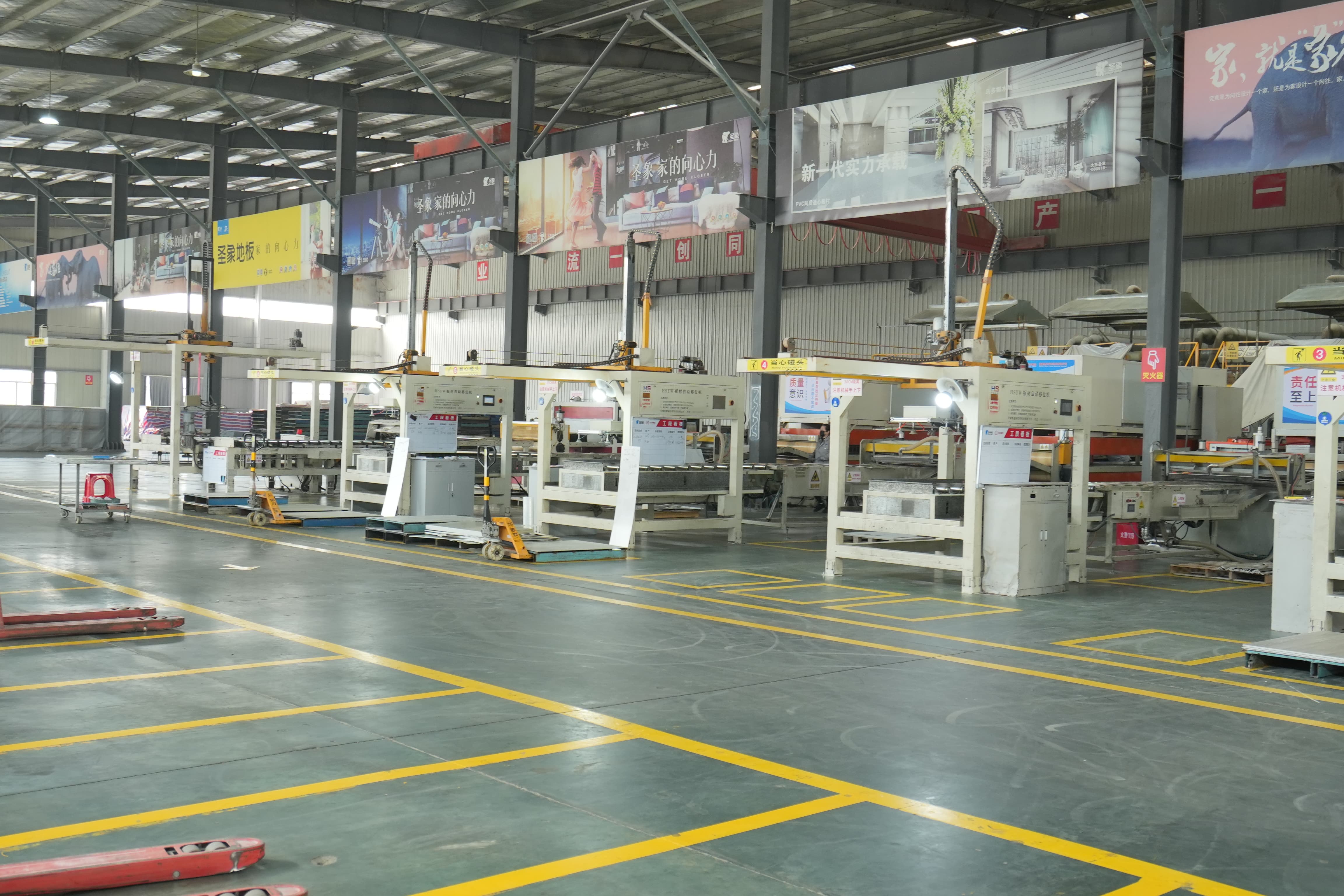
Power Dekor Group produces these panels under both OEM and ODM models, with box and label customisation available. Monthly capacity is 500,000 sqm, lead time is 30–45 days, minimum order quantity is 500 sqm, quality control covers 100% of production, export markets are worldwide, and after-sales support is provided remotely. For a programme at the scale of the Spanish 50,000 sqm per year or German 100,000 sqm per year references, the next practical step is to validate the specification against a physical sample and confirm the commercial terms for your volumes — you can request a sample or a project quotation from Luna at lunasun@powerdekorgroup.com, or via WhatsApp on +86 18817368868, and download the product brochure below.
Conclusion: Match the Class to the Project, Then Lock It
For EU bathroom and high-volume interior projects, the recommendation order is simple and defensible. Where EU fireproof Class A applies to bathroom or interior decorative wall panels, specify the Silica Mineral Wall Panel: A2-s1,d0 reaction to fire with an attached report, 100% waterproof and submersible performance, 0.06% moisture movement, negative asbestos content, an ISO 846:2019 Method A antibacterial test result, and a density of 1050 kg/m³ against 2000 kg/m³ for SPC. Where Class A is not required and a lower-maintenance renovation option is the priority, the SPC wall panel is the fit — with B-s3,d0 and 0.02% moisture content written into the specification, so its Class B classification is never mistaken for Class A compliance.
Both routes depend on the same third factor: supply fit. The Spanish contractor programme at 50,000 sqm per year and the German distributor programme at 100,000 sqm per year are annual rhythms, and they are only possible when the panel, the size and the finish stay identical across phases. That is the part of a decorative wall panel decision that is hardest to see in a sample, and the most expensive to get wrong.
Next Step: Sample and Project Quotation
Send your project requirements — required fire class, wet-zone area, total square metres, sizes and surface preference — and we will confirm the matching panel, lead time and commercial terms.
Contact: Luna | Email: lunasun@powerdekorgroup.com | WhatsApp: +86 18817368868
Product brochure: Download the Power Dekor wall panel brochure (PDF)
Have Questions or Need More Details?
Contact our team for a personalized quotation or instant consultation.
Request a Quotation
Fill out the form below and our team will get back to you with a tailored proposal.
WhatsApp Direct Chat
Prefer to chat in real-time? Message us on WhatsApp for instant assistance & quick answers.
- Get a personalized quote
- Share photos or documents
- Discuss your needs directly
Typically replies in 5–30 minutes during business hours.