Film vs Digital Print Decorative Wall Panels: A Buyer's Comparison Guide
The difference between film and digital print decorative wall panels lies in the decorative face, not in the panel itself. Digital print wall panels can carry whatever design the project specifies, including a single continuous pattern that runs across more than ten panels. Film-faced panels are limited by the size of the film and sit at a lower price point. If the design intent is a standard repeat and cost is the deciding factor, film is the practical route; if the project needs custom or continuous artwork, digital print is the only one of the two that can deliver it.
That distinction is where most specifications stop, and also where most procurement problems begin. This guide is written for buyers at the decision stage, already past the question of whether to use decorative wall panels instead of tile, and now facing three decisions that are routinely merged into one: which decorative face, which core substrate, and what evidence has to be on the table before the order is released.
In one line: film versus digital print is a surface comparison. Reaction to fire, water behaviour and dimensional stability are decided by the core. Choose the core for performance, then choose the face for design and cost.
Problem Definition: Why Film vs Digital Print Gets Compared Against the Wrong Thing
Three naming systems collide in tender documents and RFQs. A term such as SPC wall panel names a core material. A term such as digital print wall panel names a decoration method. A term such as fireproof wall panel names a performance outcome. A specification that mixes all three cannot be compared line by line, and quotes that look far apart often turn out to be the same core with a different face, or the same face on a different core.
The cleanest illustration sits inside a single product family. The Power Dekor Group SPC wall panel is specified with the model description digital print, film SPC wall panel, meaning one core listed with both decoration options. The core is stone plastic composite either way. What changes is the decorative layer applied to it.
For a buyer at the decision stage, that produces three concrete consequences.
- Quote mismatch. A film-faced SPC panel and a digital print SPC panel are not two products, they are two finishes on one substrate. Compare them by separating the face premium from the panel cost, otherwise the number you approve is not traceable to a decision.
- Performance misattribution. Buyers frequently assume that the digital print option is automatically the higher-specification product. It is not. Fire classification, moisture behaviour and dimensional stability belong to the substrate and to the assembled build-up on site.
- Face-count ambiguity. A continuous design and a pattern repeat are different requirements. A continuous design has to be produced as a set, sequenced during installation and re-ordered as a set. That must be stated before quotation, not discovered after the first delivery.
Industry Background: Why the Decorative Face Now Sits in the Specification Stack
Decorative wall panels sit inside a renovation-driven market. The global decorative panels market is projected to reach USD 39.35 billion by 2026, driven by rising urbanization and demand for interior renovation, according to Coherent Market Insights in its report Decorative Panels Market Size and YoY Growth Rate, 2026-2033. Within that, the 3D wall panel segment was estimated at USD 815.02 million in 2025 with a forecast CAGR of 4.93%, according to 360iResearch.
Those headline numbers should be treated as context rather than as a specification, because the category is defined loosely. Coherent Market Insights reports USD 39.35 billion for decorative panels in 2026, while Research and Markets reports USD 11.35 billion for the wall panel market in 2025. The gap is largely definitional: decorative panels include furniture and cabinet laminates, while wall panels are restricted to building cladding. When market figures disagree by that margin, the buyer's own scope definition becomes the only reliable reference.
Regulation is the part that does not move. Reaction-to-fire classification under EN 13501-1 is critical for commercial wall panels in Europe and runs from A1, non-combustible, to F. That single framework is why so many EU bathroom and interior projects end up selecting a substrate first and a decorative face second.
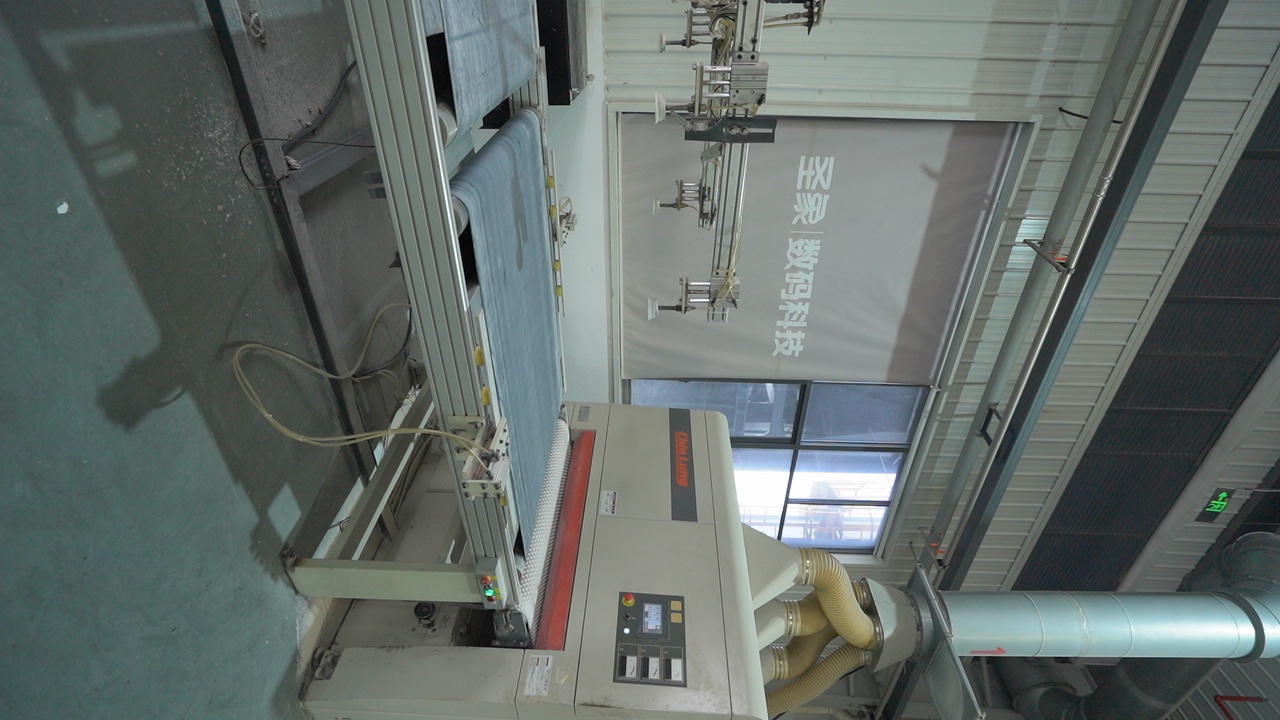
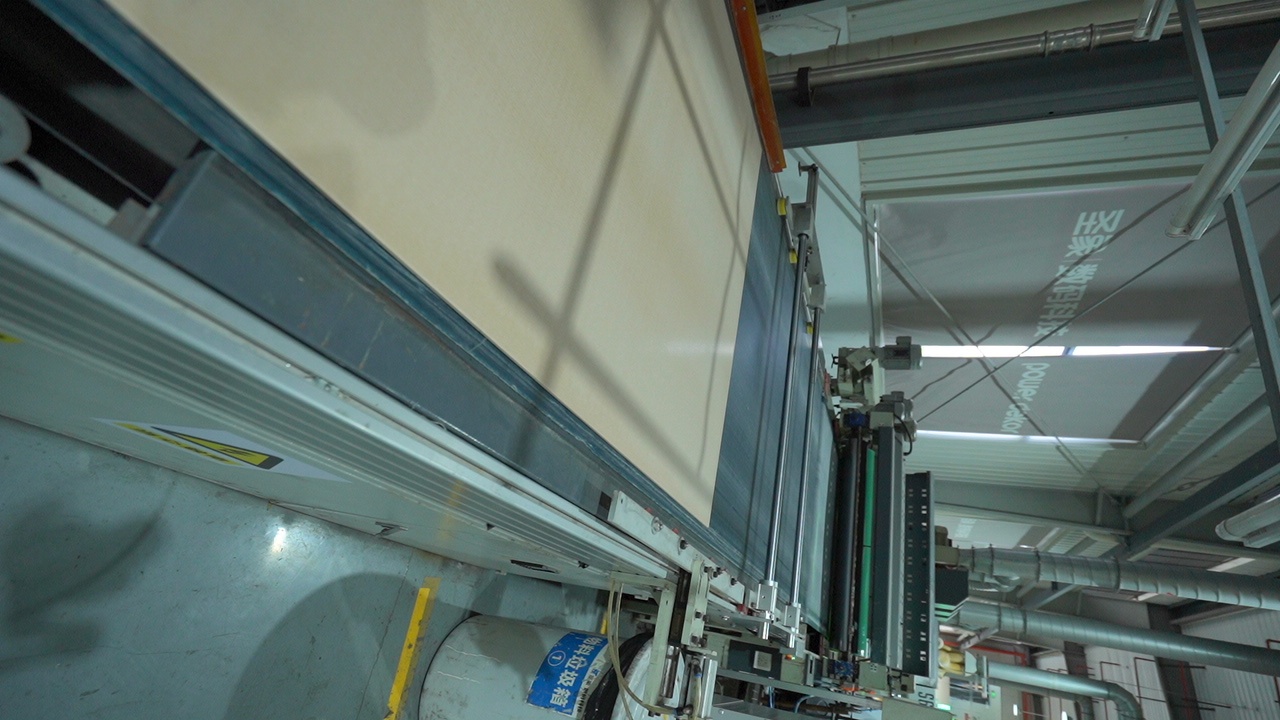
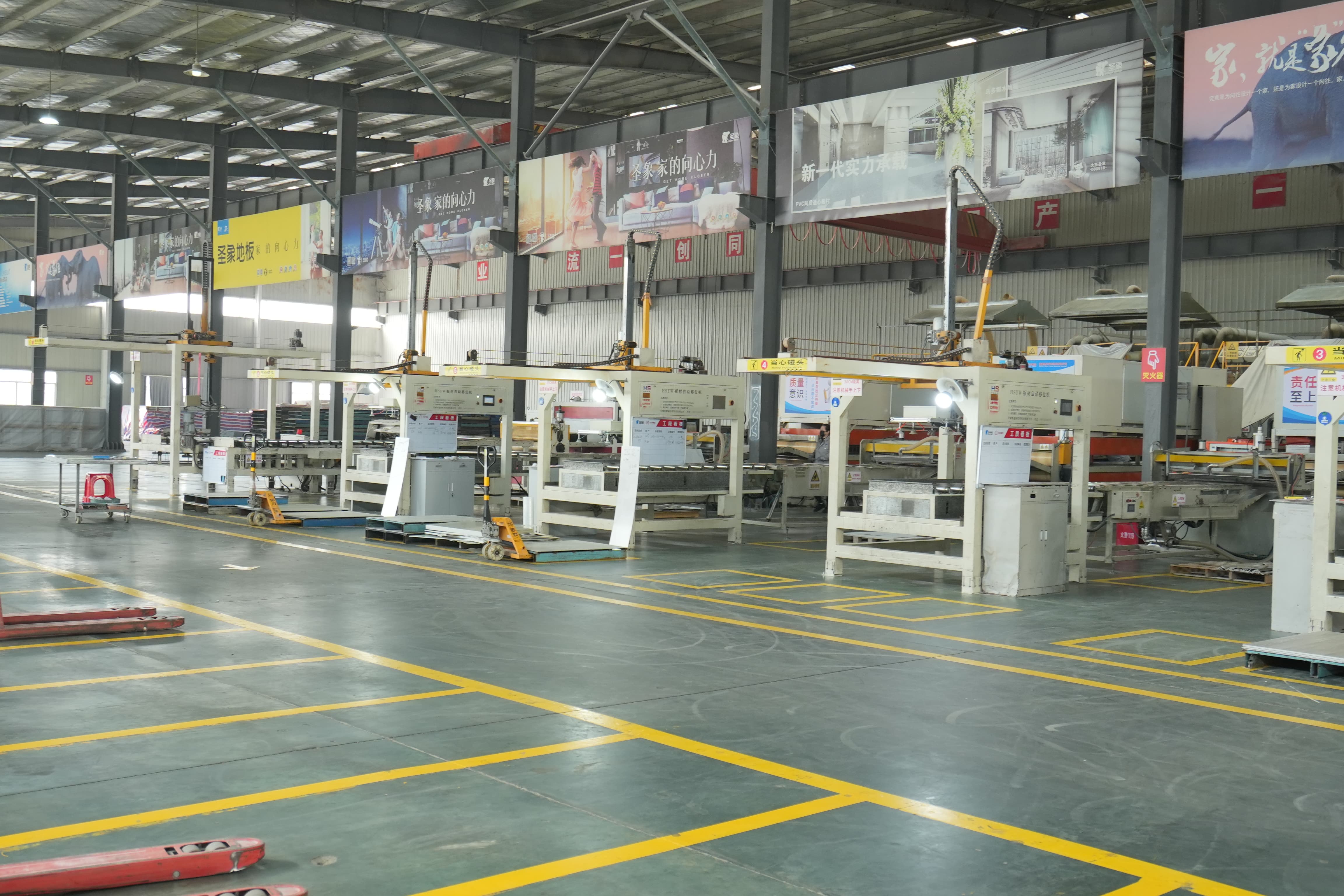
On the supply side, digital printing capacity has changed what buyers can reasonably ask for. Power Dekor Group runs digital printing production lines for wall panels alongside its SPC and panel manufacturing, which is what makes a project-specific design across several faces achievable in production rather than only in a rendering. Print capability, however, does not change the fire or moisture classification of the panel underneath it.
Detailed Solution: How to Compare Film and Digital Print Wall Panels
1. Design freedom and the number of faces
Digital print wall panels can carry whatever design the buyer requires, and one continuous pattern can span more than ten panels. Film is constrained by the physical size of the film itself, which limits how far a design can extend before it has to repeat.
The decision rule is therefore not about quality, but about the design brief:
- If the artwork must be custom, or must continue across a wide wall without a visible repeat, digital print is the applicable option.
- If there is no requirement relating to the number of faces for the design, meaning a standard repeat is acceptable, film is the practical choice and carries a lower price.
2. Price position and where the premium actually sits
Film panels are cheaper. Digital print panels sit at a higher price point because the design is generated for the project and can be customised without the film-size constraint. Because both options are applied to the same cores, the price difference is concentrated in the decorative face rather than in the panel body.
In practice that means the film versus digital print decision should be made after the core is fixed, so the face premium can be read cleanly. Where one quote includes digital print and another includes film but on a different core, the two totals are not comparable, and the comparison has to be rebuilt before it can be presented to a client.
3. What the print layer does not decide
Reaction to fire, moisture behaviour, dimensional stability, micro-scratch resistance and stain resistance are not determined by whether the decorative face was printed digitally or applied as a film. They are determined by the panel body and the complete build-up.
The comparison inside the Power Dekor Group wall panel range makes this explicit. The SPC wall panel is classified B-s3,d0 under EN 13501-1, with a moisture content of 0.02%, a density of 2.134 g/cm3, micro-scratch resistance MSR-A1, resistance to dry heat rating 5, resistance to wet heat rating 5, stain resistance grade 5, dimensional stability with shrinkage below 0.002% and curling within 0.2 mm, and available sizes of 2400/2440/3000/3050 x 1200/1220 x 4/5/6 mm. The Silica Mineral Wall Panel is classified A2-s1,d0, with a moisture movement of 0.06% in both the length and the width direction, asbestos content negative, no apparent bacterial growth under the microscope in testing to ISO 846:2019 Method A, and sizes of 2400/2440/3000/3050 x 1200/1220 x 6/8/10 mm.
Those two products compete for the same wall and sit in different fire classes because of what they are made of: stone plastic composite in one case, and quartz, cement, pulp, lime and water in the other. No choice of decorative face moves a B-class panel into Class A2. If the project requires the higher classification, the substrate decision comes first and the print decision follows it.
4. Substrate context for EU bathroom and interior projects
For EU bathroom and general interior work, the two cores answer different questions. The detailed parameter comparison is set out in the table later in this guide. Two interpretation notes matter before that table is used in a specification.
First, the moisture content of 0.02% stated for the SPC wall panel and the moisture movement of 0.06% stated for the Silica Mineral Wall Panel are not the same measurement. Moisture content describes how much water the material holds; moisture movement describes how much the panel dimension changes as moisture conditions change. Treating one number as better than the other is a common specification error in EU bathroom packages.
Second, third-party sources describe SPC wall panels as achieving fire retardancy standards such as B1 grade, and as being noted for zero formaldehyde and waterproof properties, as reported by Utop in its analysis of the global SPC wall panel market. B1 is a classification used in other regulatory frameworks rather than on the EN 13501-1 scale that EU projects normally cite. Buyers should confirm which standard a certificate references before accepting it as evidence for a European project.
Power Dekor Group introduced the Silica Mineral Panel as a green, fireproof and waterproof solution for both floors and walls. For a specifier, the relevant fact is not the positioning sentence but the classification that sits behind it: A2-s1,d0 with asbestos content negative, which is the combination that usually matters in public, healthcare and infrastructure interiors. The same panel is offered as both an interior wall panel and an exterior wall panel, so the evidence requirement changes with the application.
5. Evidence to request on the print layer itself
The product content behind this guide specifies the substrate in detail but does not state print-layer performance for either the film or the digital print option. That gap is not unusual in the category, and it is exactly why buyers should request the following before approving either finish. Treat it as the print-layer evidence pack.
- Abrasion or wear resistance of the decorative face, with the test method named.
- Colour fastness and lightfastness, plus how a later re-order will be matched to the original production batch.
- Adhesion of the print or the film to the core, including the surface preparation it depends on.
- Cleaning agent compatibility. Bathroom cleaners and hospital-grade disinfectants are the usual failure point for decorated faces.
- Reaction to fire of the complete build-up, including the decorative layer and the adhesive used on site.
- Water and humidity exposure tested on the decorated face, not only on the core.
- A multi-panel mock-up for any continuous design, laid out in installation sequence.
- Impact resistance evidence if the brief uses that term. Ask which test method was used, at which panel thickness, and whether the test was run on the assembled panel or on the core alone.
- UV and weathering evidence if the panel is going outside. The Silica Mineral Wall Panel is offered for interior and exterior use, and the evidence requirement changes accordingly.
- Warranty wording that names the print layer and colour matching, not only the panel structure.
Step-by-Step Breakdown: A Practical Specification Sequence
The sequence below keeps the surface decision and the core decision separate, which is what makes the resulting specification defensible in a tender review.
- Write the performance requirement before the design requirement. Fire classification, wet-area exposure, cleaning regime and impact expectation. Nothing about appearance at this stage.
- Select the core that satisfies step one. If EN 13501-1 Class A2-s1,d0 is required, the silica mineral route applies. If a B-s3,d0 classification in a 4/5/6 mm panel suits the wall and the budget, the SPC route applies.
- Then define the design brief in production terms. How many faces, whether the pattern repeats or continues, and the panel module the artwork has to align to.
- Match the face to the brief. Continuous or fully custom artwork points to digital print. A standard repeat with cost sensitivity points to film.
- Request a multi-panel mock-up, not a single sample. For continuous designs a single panel proves colour but not continuation. Ask for the full set in sequence.
- Request the print-layer evidence pack described above, together with the substrate test documentation for the exact build-up being purchased.
- Price the installed square metre. Compared with tile, decorative wall panels offer labor cost savings, require less maintenance work and are easier to clean, have lower carbon emissions during production, and are better suited to renovation because installation is quick. For bathroom renovation, SPC wall panels or silica mineral wall panels can be completed in one day, a schedule advantage that tile work rarely matches in an occupied building.
- Lock the supply terms. Confirm minimum order quantity, production lead time, pattern-file retention and the re-order matching process, and confirm which party holds the approved mock-up.
What the print decision changes on site
The installation method itself is the same glue-up system for both faces. Mark out with a laser level and pre-fit the layout; cut with a table saw or handsaw using a diamond blade, with the decorative side facing up; drill socket and switch openings before applying adhesive; apply structural adhesive to the back of the panels and install bottom-up on the marked lines; check every four to five panels horizontally and vertically; press the surface to remove air pockets; and assemble metal trims at internal and external corners. In wet areas of a bathroom, metal trims are not applicable, and all joints, including the seam between panel and ceiling and between panel and floor, must be sealed with silicone sealant for water insulation.
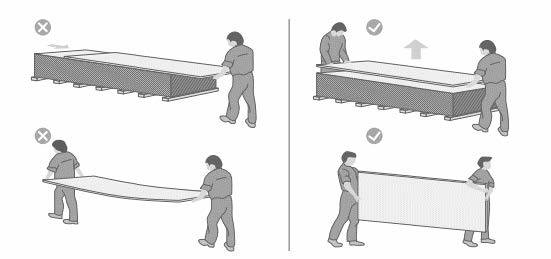
Digital print adds one operational requirement on top of that method. A continuous pattern must be installed in the designed panel sequence, which means the panels should be numbered and the set kept together through delivery, storage and installation. Film-faced panels with a standard repeat do not carry that constraint, which is one reason they remain the simpler choice on fast refurbishment programmes.
Two handling notes apply to both finishes: panels are fragile at the edges, and the wall surface must be flat before installation begins.
Use Cases: Where Each Option Fits
- EU bathroom refurbishment in an occupied building. SPC or silica mineral panels, glue-up fixing, wet-area work completed in one day. Use film when the bathroom design is standard, and move to digital print only when the design brief genuinely requires custom artwork.
- Public and institutional interiors with a fire requirement. A silica mineral substrate at A2-s1,d0 with asbestos content negative, with the decorative face selected afterwards on design grounds.
- Hotel, retail and hospitality feature walls. Digital print, selected specifically because the artwork continues across more than ten panels without a visible repeat.
- Multi-unit residential programmes. Film-faced panels on SPC cores, where the design repeats across identical units and the face premium multiplied by the total area becomes the largest single cost lever in the package.
- Corridors and high-contact walls described as anti-impact. The performance question belongs to the assembled panel. Use the impact evidence request from the print-layer evidence pack rather than assuming that the print method answers it.
- Exterior applications. The Silica Mineral Wall Panel is offered as an interior wall panel and an exterior wall panel. Exterior use shifts the evidence requirement towards UV and weathering performance of the decorated face.
Comparison Table
The first table compares the two decorative faces on decision criteria rather than on performance claims, because print-layer performance data sits with the supplier and has to be requested. The second table compares the two cores using the parameters stated in the Power Dekor Group product specifications.
| Decision criterion | Film-faced wall panel | Digital print wall panel |
|---|---|---|
| Design freedom | Constrained by the size of the film | Whatever design the project specifies |
| Continuous pattern across faces | Not the intended use of the option | One continuous pattern can span more than ten panels |
| Relative price | Cheaper | Higher |
| Typical fit | Buyers with no requirement on the number of faces for the design; cost-sensitive projects | Buyers with stronger design requirements, custom artwork or continuous patterns |
| Core compatibility | Applied to the SPC core in the Power Dekor Group range | Applied to the SPC core in the Power Dekor Group range |
| Effect on fire class and waterproofing | None. Determined by the core and the full build-up | None. Determined by the core and the full build-up |
| Installation constraint | Standard repeat, no panel sequencing requirement | Continuous sets must be installed in sequence |
| Evidence to request | Print-layer evidence pack | Print-layer evidence pack plus a sequenced multi-panel mock-up |
| Parameter | SPC wall panel | Silica Mineral Wall Panel |
|---|---|---|
| Composition | Stone plastic composite | Quartz, cement, pulp, lime and water |
| Reaction to fire, EN 13501-1 | B-s3,d0 | A2-s1,d0 |
| Moisture data | Moisture content 0.02% | Moisture movement 0.06% length direction, 0.06% width direction |
| Asbestos content | Not stated in the specification provided | Negative |
| Antibacterial testing | Not stated in the specification provided | No growth apparent under the microscope, ISO 846:2019 Method A |
| Density | 2.134 g/cm3 | Not stated in the specification provided |
| Micro-scratch resistance | MSR-A1 | Not stated in the specification provided |
| Heat resistance | Dry heat rating 5, wet heat rating 5 | Not stated in the specification provided |
| Stain resistance | Grade 5 | Not stated in the specification provided |
| Dimensional stability | Shrinkage below 0.002%, curling within 0.2 mm | Not stated in the specification provided |
| Available sizes | 2400/2440/3000/3050 x 1200/1220 x 4/5/6 mm | 2400/2440/3000/3050 x 1200/1220 x 6/8/10 mm |
| Product positioning | Digital print and film SPC wall panel | Interior wall panel and exterior wall panel |
Rows marked as not stated are gaps in the published specification, not performance statements. Where a project depends on one of those parameters, the parameter should be requested directly rather than inferred from the other column.
FAQ
What is the difference between film and digital print decorative wall panels?
The difference is the decorative face. Digital print wall panels can carry whatever design the buyer requires, including a continuous pattern that spans more than ten panels. Film-faced panels are limited by the size of the film and are cheaper. If the project needs custom patterns or continuous designs, digital print is the applicable option; if there is no requirement relating to the number of faces in the design, film is the lower-cost route.
Does the decorative method change the fire classification or the waterproofing of the panel?
No. Reaction to fire and moisture behaviour are properties of the core and of the complete build-up. In the Power Dekor Group range, the SPC wall panel is classified B-s3,d0 under EN 13501-1, while the Silica Mineral Wall Panel is classified A2-s1,d0 with asbestos content negative. If a project requires Class A2-s1,d0, no choice of decorative face changes that outcome, and the substrate has to be selected accordingly. Buyers should ask for the classification document covering the exact build-up being purchased, including the decorative layer and the site adhesive.
Which option is more cost-effective, film or digital print?
Film is the lower-priced face. Digital print costs more because the design is produced for the project and can be customised without the film-size constraint. The cost comparison should be run on installed square metres rather than on panel price alone. Compared with tile, decorative wall panels offer labor cost savings, require less maintenance work and are easier to clean, have lower carbon emissions during production, and are more suitable for renovation because installation is quick. For bathroom renovation, SPC wall panels or silica mineral wall panels can be completed in one day. A film face on a standard repeat is usually the cheapest credible specification, and digital print should be reserved for briefs that actually need custom or continuous artwork.
What should we request before approving a print face?
An evidence pack that addresses the decorative layer specifically: abrasion or wear resistance with the test method named, colour fastness and re-order matching, adhesion of the print or film to the core, cleaning agent compatibility, reaction to fire of the full build-up, and water and humidity exposure on the decorated face. For continuous designs, add a multi-panel mock-up laid out in installation sequence, and for exterior panels add UV and weathering evidence. A substrate datasheet alone does not answer any of these questions.
Chinese silica mineral decorative wall panels versus stone panel suppliers: how should a buyer compare them?
This is a substrate and sourcing comparison rather than a decorative-face comparison, and it should be run on documented performance instead of on material category. On the panel side, the verifiable facts for the Power Dekor Group Silica Mineral Wall Panel are: composition of quartz, cement, pulp, lime and water; EN 13501-1 classification A2-s1,d0; asbestos content negative; moisture movement of 0.06% in both directions; antibacterial testing to ISO 846:2019 Method A showing no apparent growth under the microscope; and sizes of 2400/2440/3000/3050 x 1200/1220 x 6/8/10 mm. Ask any stone panel supplier for the equivalent set: declared composition, reaction-to-fire classification under a named standard, water absorption or moisture movement data, fixing system, panel thickness and weight, and the sealing and maintenance regime the material requires over its service life. The decision rule is straightforward. Whichever shortlist candidate can put the required classification on paper in the standard your project cites, supported by a matching physical sample, is the candidate that belongs in the tender.
Conclusion
Film versus digital print is a design and cost decision. Digital print buys design freedom and continuous patterns across more than ten panels. Film buys a lower price with the constraint that the design is limited by the size of the film. Neither choice changes the fire class, the moisture behaviour or the dimensional stability of the panel that ends up on the wall, because those come from the core.
For EU bathroom and interior projects, the sequence that holds up under review is: performance requirement first, then core, choosing between SPC at B-s3,d0 and silica mineral at A2-s1,d0, then face, choosing between film and digital print, then evidence, combining substrate documentation with the print-layer pack, then installed-cost comparison, and finally supply terms including minimum order quantity, lead time and re-order matching.
Power Dekor Group is a global provider of floor covering and wall panel solutions, founded in 1995, with an 870,000 square metre manufacturing footprint, more than 20,000 employees, 495 R&D engineers and an annual output of 88,000,000 square metres. Its main markets include the EU and the USA, and it is a member of Dare Global Group.
Next step: validate the face with a physical sample
Before a film or digital print specification is released, approve a physical panel and, for continuous designs, a sequenced multi-panel mock-up. Power Dekor Group supplies samples, technical documentation and quotations for both the SPC wall panel and the Silica Mineral Wall Panel ranges.
Download the product catalogue: SPC and wall panel catalogue (PDF)
Contact: Luna | Email: lunasun@powerdekorgroup.com | Tel and WhatsApp: +86 18817368868 | Website: www.powerdekorgroup.com
Have Questions or Need More Details?
Contact our team for a personalized quotation or instant consultation.
Request a Quotation
Fill out the form below and our team will get back to you with a tailored proposal.
WhatsApp Direct Chat
Prefer to chat in real-time? Message us on WhatsApp for instant assistance & quick answers.
- Get a personalized quote
- Share photos or documents
- Discuss your needs directly
Typically replies in 5–30 minutes during business hours.