Ranking Decorative Wall Panels for Class A2 Bathrooms: Silica Mineral, SPC, HDF and WPC
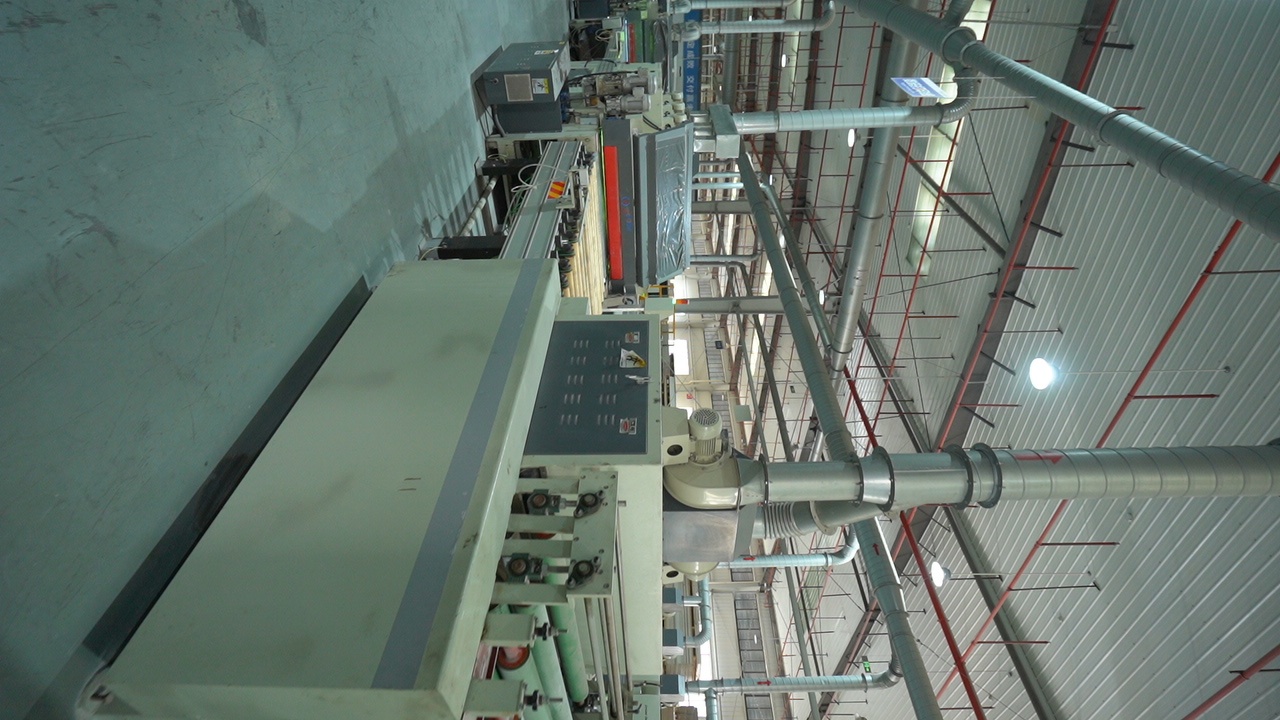
Cover: decorative wall panel production at Power Dekor Group, the source platform behind the Class A2 silica mineral wall panel in this ranking.
Fire classification decides the shortlist for a Class A2 bathroom long before appearance, price or freight are discussed. Of the four decorative wall panel families ranked below, only the silica mineral decorative wall panel (model 8804) carries a verified EN 13501-1 A2-s1, d0 classification. SPC decorative wall panels are classified B-s3, d0, and most HDF and WPC wall panels sit in Class B — which means they cannot serve a scope that specifies an A2-s1, d0 wall finish, however closely they imitate stone or porcelain.
Power Dekor Group is a global floor covering and wall panel manufacturer founded in 1995, operating an 870,000 m² manufacturing facility with annual production capacity of 88,000,000 m² and main markets in the EU and the USA. Its portfolio covers both SPC and silica mineral construction, which is why two of the four families in this ranking can be assessed against first-party specification data rather than catalogue claims. Website: www.powerdekorgroup.com.
Why Fire Class Eliminates Most Decorative Wall Panel Options Before Price Is Discussed
Reaction to fire is a mandatory specification item in European commercial construction, not a marketing feature. EN 13501-1 classifies construction products from A1 (non-combustible) down to F, with additional s and d classifications describing smoke production and flaming droplets. A project that asks for a Class A2 bathroom finish is asking for the A2 band together with defined smoke and droplet behaviour — in this case A2-s1, d0.
Most decorative wall panel categories, however, were developed for residential interiors where a Class B rating is acceptable. That creates three predictable problems for buyers working on public or commercial wet areas.
The first is sequencing. Buyers normally compare appearance first, price second, compliance third. On an A2 scope the order has to be reversed, because fire class removes whole material families from the table before any commercial comparison becomes relevant.
The second is language. The term “fireproof decorative wall panel” is used loosely across supplier websites and offers no verifiable meaning on its own. What counts is a classification report or declaration of performance issued for the specific product, thickness and construction. A supplier statement is not evidence, and neither is a photograph of a certificate issued for a different product.
The third is visual deception. The visible surface is often identical across material families. A 3D decorative wall panel or a stone decorative wall panel effect can be printed on a mineral core, an SPC core or an HDF core, and the appearance tells the buyer nothing about the fire class behind it. This is why the ranking below is organised by classification first and by look and cost last.
What the Decorative Wall Panel Market Looks Like in 2026
The global decorative panels market is projected to reach USD 39.35 billion in 2026, driven by rising urbanisation and demand for interior renovation, according to Coherent Market Insights. Asia Pacific held 43.6% of the global wall panels market in 2025 and is expected to remain the fastest-growing region, based on Reed Intelligence’s 2026 wall panels report. Laminate panels remain the largest decorative panel segment, projected to hold close to half of the market at 45.4% by 2026, while the narrower 3D wall panel segment was estimated at USD 815.02 million in 2025 with a forecast CAGR of 4.93%, per 360iResearch.
Definition matters when reading those numbers. Research houses draw the line between “decorative panels”, which can include furniture and cabinet laminates, and “wall panels”, which are restricted to building cladding elements — reported valuations therefore differ substantially depending on which definition is used. For procurement purposes the useful signal is not the headline figure but the direction: renovation-led demand and humid, high-traffic interiors are growing, and fire safety regulation continues to be applied to those interiors rather than relaxed for them.
EN 13501-1 is the framework that converts that demand into a purchasing constraint. EU projects specifying an A2 wall finish are specifying the second-highest band in the system, which is precisely where the four panel families below separate from one another.
The Ranking: Four Decorative Wall Panel Families Screened for Class A2 Bathrooms
Panels are ranked in the order a Class A2 bathroom specification actually eliminates them: fire class first, then wet-area performance, hygiene, dimensional behaviour, surface durability, installation speed and long-term supply capability.
1. Silica Mineral Decorative Wall Panel (Model 8804) — A2-s1, d0
A silica mineral decorative wall panel is a mineral-core panel manufactured from quartz, cement, pulp, lime and water, and it is the only family in this ranking that meets an A2-s1, d0 requirement. Its reaction-to-fire classification under EN 13501-1 is A2-s1, d0, and its asbestos content tests negative.
Wet-area behaviour is the second reason it ranks first. Moisture movement is 0.06% in the length direction and 0.06% in the width direction, which keeps the panel dimensionally stable where a bathroom decorative wall panel is exposed to intermittent water and high humidity. It is specified for interior conditions described as humid and water-exposed, and it is offered in both interior and exterior wall panel formats — the same mineral platform can therefore carry an exterior decorative wall panel scope without switching material families. For wet-zone installation, joints are sealed with silicone sealant rather than metal trims.
Hygiene completes the case for public bathrooms. Antibacterial testing conducted to ISO 846:2019 Method A recorded no growth apparent under the microscope, which is the kind of documentation healthcare, hospitality and institutional projects ask for when a waterproof decorative wall panel is specified for shared sanitary facilities.
Available sizes are 2400 / 2440 / 3000 / 3050 mm in length, 1200 / 1220 mm in width, and 6 / 8 / 10 mm in thickness. Panel mass is approximately 1,050 kg/m³, which is discussed below because it is frequently misread as a quality score.
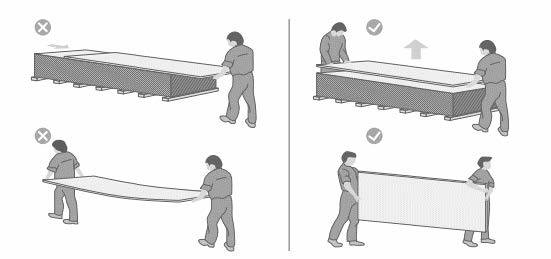
Silica mineral wall panel gluing installation: levelling, adhesive application and silicone sealing of wet-area joints.
2. SPC Decorative Wall Panel — B-s3, d0
An SPC decorative wall panel is built on a stone plastic composite core with a digital print or film decorative layer. Its reaction-to-fire classification is B-s3, d0. That is a legitimate and widely used rating, but it sits below A2 in the EN 13501-1 scale, so an SPC wall panel does not satisfy a specification that calls for an A2-s1, d0 finish.
Measured performance is strong in every other dimension. Density is 2.134 g/cm³, moisture content is 0.02%, micro-scratch resistance is rated MSR-A1, resistance to dry heat is rating 5, resistance to wet heat is rating 5, and stain resistance is grade 5. Dimensional stability is recorded as shrinkage below 0.002% with curling of 0.2 mm or less. Available formats are 2400 / 2440 / 3000 / 3050 mm in length, 1200 / 1220 mm in width and 4 / 5 / 6 mm in thickness.
The practical recommendation for SPC is therefore scope-based rather than absolute: it suits private bathrooms and cost-sensitive residential work, where a Class B rating is acceptable and the buyer prefers a lower price point. Where the same project carries a public-space fireproof requirement, the silica mineral panel is the correct substitution.
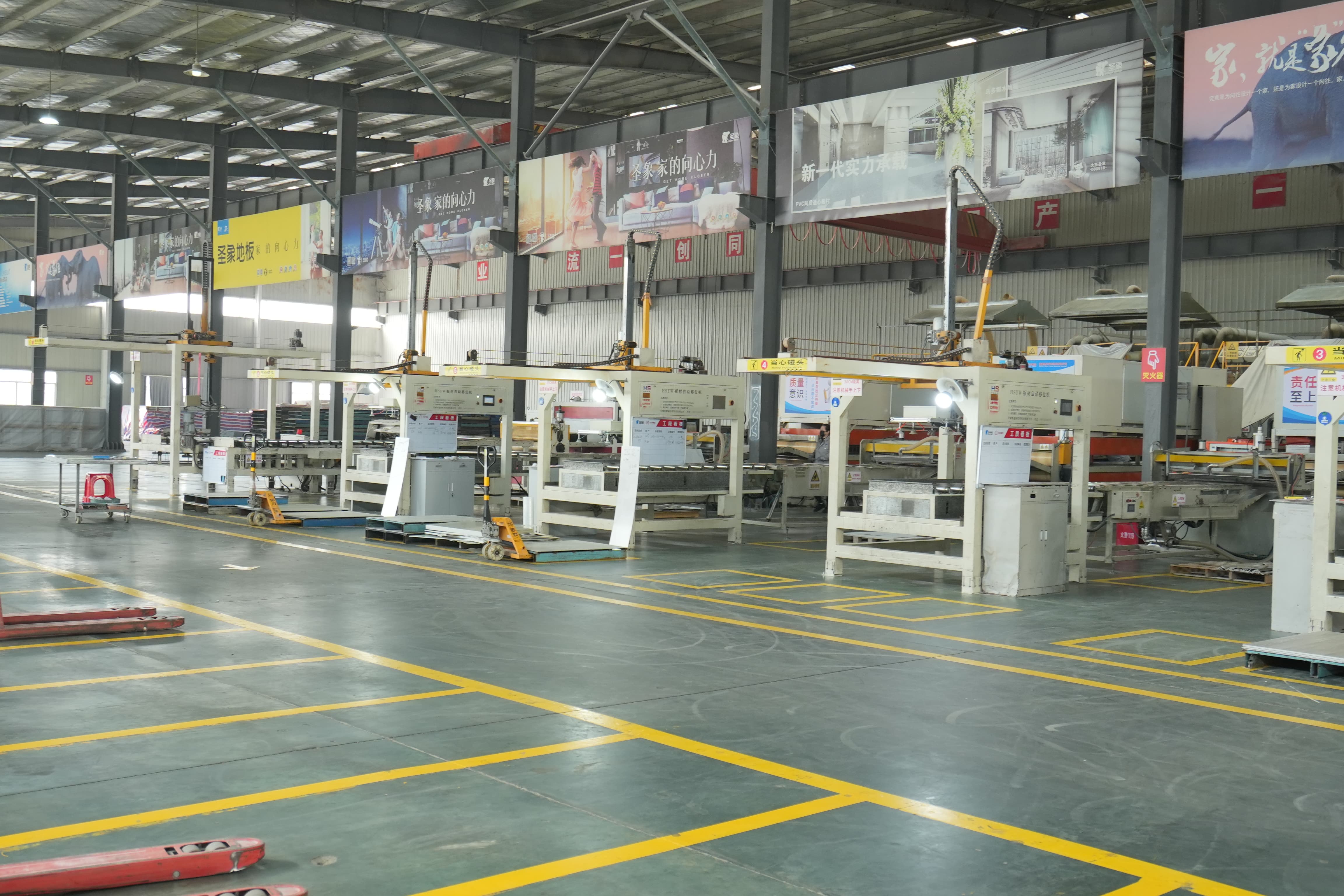
SPC production line: the B-s3, d0 core platform used for residential and cost-sensitive bathroom wall panel scopes.
3. HDF Decorative Wall Panel — Typically Class B, Not an A2 Solution
HDF (high-density fibreboard) decorative wall panels are wood-fibre based and, where a classification exists, published classifications commonly fall within the Class B range. Because Class B sits below A2, an HDF panel does not satisfy a Class A2 bathroom specification, and in continuously wet areas a wood-fibre core also needs additional protection at cut edges and joints.
This is a scope limitation rather than a quality judgement. On a dry residential feature wall with no A2 requirement, HDF remains a legitimate option with a familiar surface feel. The rule for buyers is simple: request the classification report for the exact product and thickness instead of relying on a category assumption, and never treat a “fireproof” label as a substitute for the s and d sub-classes.
4. WPC Decorative Wall Panel — Typically Class B, Wet-Area Behaviour Varies
WPC (wood-plastic composite) wall panels combine polymer and wood fibre and are commonly classified in the Class B band where a classification is available. Formulation varies widely between suppliers, which means moisture behaviour in a shower environment also varies and cannot be inferred from the category name. For an A2-s1, d0 bathroom scope the outcome is the same as for HDF: the family is screened out at the compliance step.
Where WPC is used, it is typically in transitional interior areas — feature walls, reception zones and dry corridors — rather than in directly wetted zones that must also meet a fire classification requirement.
Why Density Is the Most Misread Number in This Comparison
Density is often used as a proxy for quality in panel sourcing, but here it works in the opposite direction from what most buyers expect. SPC is the denser material at 2.134 g/cm³ because it is a stone plastic composite with a high mineral-polymer fill. The silica mineral panel is lighter at approximately 1,050 kg/m³ because its composition is quartz, cement, pulp, lime and water.
For a Class A2 bathroom, the relevant question is not which number is higher. It is whether the classification holds, whether moisture movement of 0.06% keeps the panel flat in a humid room, and whether the surface performs over years of cleaning. Density is a handling and substrate consideration; fire class, moisture movement and hygiene documentation are the compliance criteria.
Step-by-Step: Screening Decorative Wall Panels for a Class A2 Bathroom
- Confirm the fire requirement in writing. Establish whether the project specification names EN 13501-1 Class A2 and which smoke and droplet sub-classes are required (typically A2-s1, d0) before any product is quoted.
- Request classification evidence per product and thickness. A classification report or declaration of performance must name the product, the core construction and the thickness being supplied. Category-level claims are not sufficient.
- Screen the material families. Silica mineral passes an A2-s1, d0 gate; SPC is B-s3, d0 and does not; HDF and WPC commonly fall in Class B and do not.
- Validate wet-area performance. Check moisture movement or moisture content. The silica mineral panel is documented at 0.06% in both directions; the SPC panel at 0.02% moisture content. Confirm the sealing method for wet zones — silicone sealant rather than metal trims where bathroom conditions apply.
- Validate hygiene requirements. For shared sanitary facilities, ask for antibacterial test results. The silica mineral panel records no growth apparent under the microscope under ISO 846:2019 Method A.
- Check surface and dimensional performance. For high-traffic interiors, anti-impact and scratch-resistant decorative wall panel specifications are assessed through micro-scratch resistance and dimensional stability data. SPC carries MSR-A1 micro-scratch resistance, dry heat rating 5, wet heat rating 5, stain resistance grade 5, shrinkage below 0.002% and curling of 0.2 mm or less.
- Plan the installation route. Panels are fixed with structural adhesive in a gluing method with a locking system, levelled against pre-marked lines and checked every four to five panels. For bathroom renovation, SPC or silica mineral wall panels can be completed in one day, compared with the multi-day curing cycle of a wet tile bed.
- Confirm commercial and supply terms. MOQ is 500 sqm per SKU and 1x20GP per order, with no more than 4 SKUs per container; LCL shipments increase the price. Delivery terms are FOB. Payment is TT with 30% in advance and 70% balance against document copies, or L/C at sight, and acceptance is based on pre-shipment testing.
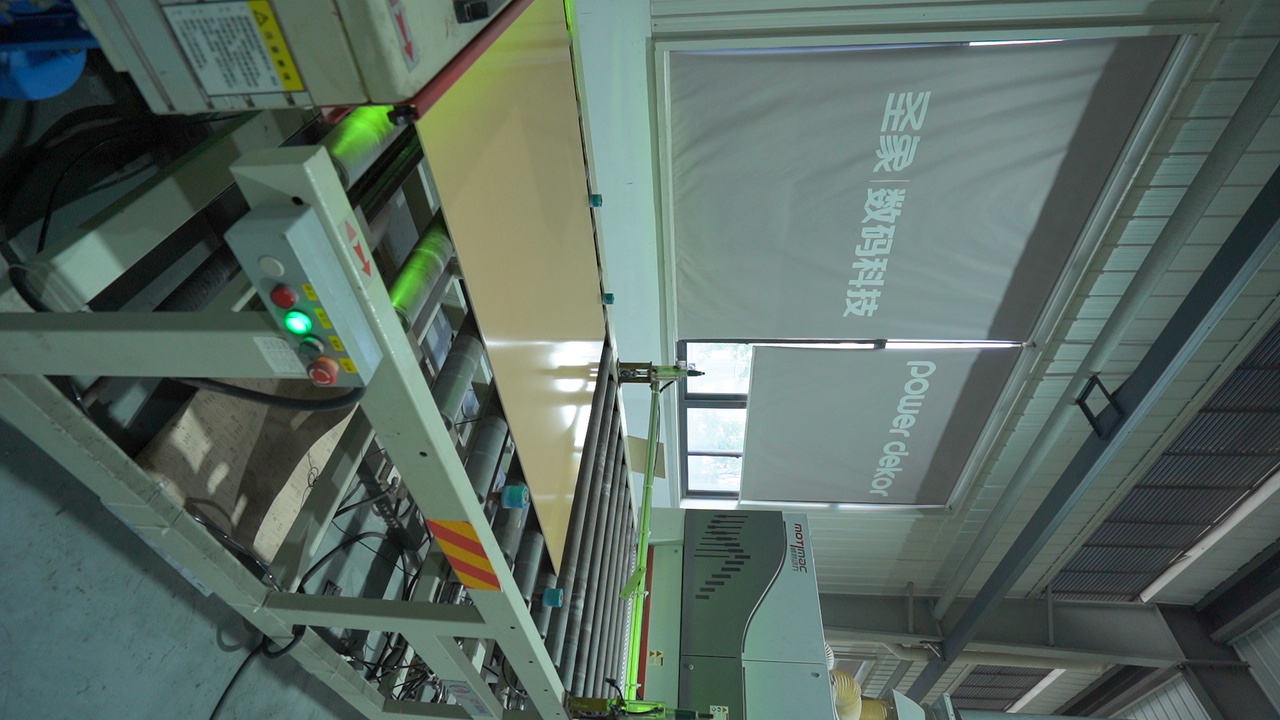
Digital printing wall panel production: continuous patterns and stone decorative wall panel effects on a Class A core.
Where Each Option Fits: Use Cases and High-Volume References
EU Class A2 bathroom and wet-area projects. Public sanitary facilities, transport hubs, schools and commercial buildings that specify an A2-s1, d0 wall finish are the primary application for the silica mineral decorative wall panel. It is the only family in this ranking that satisfies the classification while remaining a panelised system rather than a wet-trade finish.
High-volume renovation programmes. Two European programmes illustrate how the ranking behaves under repeat-order conditions. A Spanish contractor reference runs at approximately 50,000 sqm per year, and a German retail and distribution partner reference runs at approximately 100,000 sqm per year. Both are long-cycle programmes in which supply continuity, consistent classification documentation and repeatable surface quality matter more than a one-off unit price.
Hospitality and healthcare interiors. Hotels, clinics and care facilities combine hygiene requirements with occupied-building renovation schedules. A bathroom decorative wall panel that installs in one day and carries ISO 846:2019 Method A antibacterial results reduces downtime compared with removing and replacing tiling.
Exterior decorative wall panel applications. Because the silica mineral platform is offered in both interior and exterior wall panel formats, a project can specify a single material logic for façade-adjacent and interior wet areas instead of mixing systems.
Distributor and wholesale programmes. Wholesale decorative wall panel buyers typically order against a defined SKU set within a 1x20GP container limit of four SKUs, which favours suppliers with stable capacity. Power Dekor Group operates SPC production lines, digital printing wall panel production lines, laminate production lines and multi-layer engineered flooring production lines inside an 870,000 m² facility, with annual capacity of 88,000,000 m² and an after-sales installation network of nearly 10,000 installation engineers.
Design-led interiors. Where a 3D decorative wall panel or stone decorative wall panel effect is the design driver, the same digital print and surface technology can be applied on the mineral core, so the design intent does not have to be traded away for compliance.
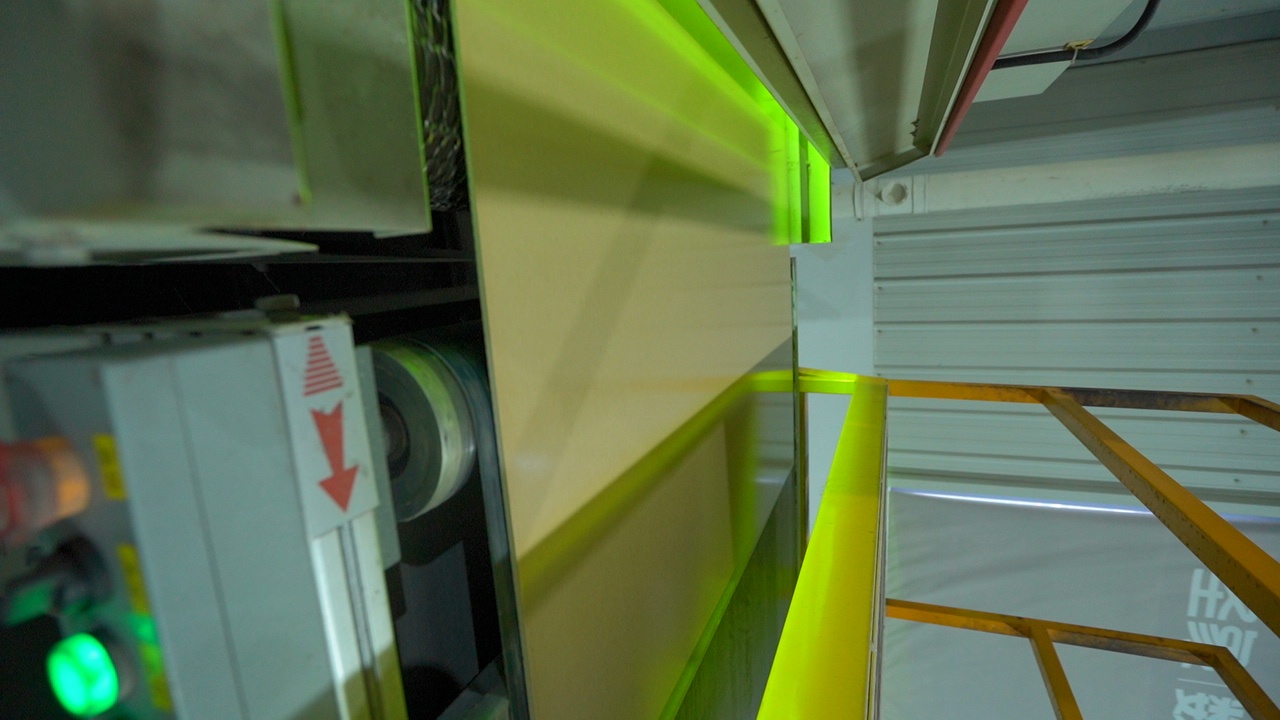
Digital printing wall panel line supporting high-volume distributor programmes with consistent surface quality.
Comparison Table: Four Decorative Wall Panel Families for Class A2 Bathrooms
| Panel family | EN 13501-1 fire class | Density / build | Moisture behaviour | Hygiene & durability data | Best fit | Class A2 verdict |
|---|---|---|---|---|---|---|
| Silica mineral decorative wall panel (model 8804) | A2-s1, d0 | Approx. 1,050 kg/m³; quartz, cement, pulp, lime and water; asbestos content negative | Moisture movement 0.06% length / 0.06% width; silicone-sealed wet joints | ISO 846:2019 Method A antibacterial test: no growth apparent under the microscope | EU Class A2 bathrooms, public wet areas, exterior wall panel scopes, high-volume programmes | Qualifies |
| SPC decorative wall panel | B-s3, d0 | 2.134 g/cm³; stone plastic composite core | Moisture content 0.02% | MSR-A1 micro-scratch; dry heat 5; wet heat 5; stain resistance grade 5; shrinkage <0.002%; curling ≤0.2 mm | Private bathrooms, cost-sensitive residential, dry interior feature walls | Does not qualify for A2 scopes |
| HDF decorative wall panel | Commonly Class B where classified | Wood-fibre core | Requires edge and joint protection in wet areas | Verify per product | Dry residential feature walls without an A2 requirement | Does not qualify for A2 scopes |
| WPC decorative wall panel | Commonly Class B where classified | Polymer and wood-fibre composite; formulation varies | Varies by formulation; verify per product | Verify per product | Transitional interior areas, dry corridors, reception zones | Does not qualify for A2 scopes |
Classification values in this table refer to the specific products documented in the screening described above. Buyers should always confirm the classification report or declaration of performance for the exact product, thickness and construction being supplied.
Frequently Asked Questions
What EN 13501-1 fire classification do silica mineral and SPC decorative wall panels carry?
The silica mineral decorative wall panel (model 8804) carries a reaction-to-fire classification of A2-s1, d0 under EN 13501-1. The SPC decorative wall panel carries B-s3, d0. Because A2 sits above B in the EN 13501-1 scale, only the silica mineral panel in this pair satisfies a specification that calls for an A2-s1, d0 wall finish, such as a Class A2 bathroom in an EU public or commercial building.
Can a silica mineral decorative wall panel be used as a waterproof bathroom wall panel?
Yes. Silica mineral wall panels are supplied in both interior and exterior wall panel formats and are specified for interior conditions described as humid and water-exposed. Moisture movement is 0.06% in the length direction and 0.06% in the width direction, and the composition — quartz, cement, pulp, lime and water — contains no plastic. Asbestos content tests negative, and antibacterial testing to ISO 846:2019 Method A recorded no growth apparent under the microscope. In wet bathroom areas, joints are sealed with silicone sealant instead of metal trims.
What are the MOQ, delivery and payment terms for ordering decorative wall panels?
The MOQ is 500 sqm per SKU and 1x20GP per order, with no more than 4 SKUs per container; LCL shipments increase the price. Delivery terms are FOB. Payment terms are TT with 30% in advance and 70% balance against document copies, or L/C at sight. Acceptance criteria are based on pre-shipment testing.
How is a decorative wall panel order validated before shipment?
Acceptance is based on pre-shipment testing, so the validation step takes place before the container is released rather than after arrival. Buyers working on Class A2 bathroom scopes typically combine that pre-shipment test with the product-specific fire classification documentation and, where hygiene is specified, the ISO 846:2019 Method A antibacterial result. This is also the point at which wet-area sealing details — silicone sealant rather than metal trims — should be confirmed for the installation team.
How can a buyer secure long-term supply of Class A2 wall panels with fire and water documentation?
Long-term supply depends on capacity, documentation stability and repeat-order logistics. Power Dekor Group manufactures across SPC, digital printing wall panel, laminate and multi-layer engineered flooring lines within an 870,000 m² facility, with annual production capacity of 88,000,000 m², and supports repeat programmes with an after-sales installation network of nearly 10,000 installation engineers. Long-cycle European partners include a Spanish contractor reference running approximately 50,000 sqm per year and a German retail and distribution partner reference running approximately 100,000 sqm per year. To request samples, a quotation or the product catalogue, contact Luna at lunasun@powerdekorgroup.com or on WhatsApp at +86 18817368868.
Conclusion: Fire Class First, Then Everything Else
For a Class A2 bathroom, the ranking is decided at the compliance step. The silica mineral decorative wall panel (model 8804) is the only family in this comparison that carries an EN 13501-1 A2-s1, d0 classification, backed by 0.06% moisture movement in both directions, negative asbestos content, ISO 846:2019 Method A antibacterial results and availability as both an interior and exterior wall panel.
SPC decorative wall panels remain a strong B-s3, d0 option at 2.134 g/cm³ density with MSR-A1 micro-scratch resistance and grade 5 stain resistance, and they are the right answer for private bathrooms and cost-sensitive residential work. HDF and WPC wall panels typically sit in Class B and belong on dry residential and transitional interiors rather than on A2 scopes.
The commercial case reinforces the technical one. Against tile, panelised walls allow a bathroom renovation to be completed in one day, save labour cost, reduce maintenance work, clean more easily and carry lower carbon emissions during production. Combined with an annual capacity of 88,000,000 m² and reference programmes running at 50,000 sqm per year in Spain and 100,000 sqm per year in Germany, that is a supply position designed for repeat projects rather than single orders.
Request samples, pricing or the product catalogue
Send your project scope, required fire classification and target quantity, and Power Dekor Group will confirm the matching silica mineral or SPC wall panel specification. Samples, quotations and the full product catalogue are available on request.
Email: lunasun@powerdekorgroup.com | WhatsApp: +86 18817368868 | Website: www.powerdekorgroup.com
Catalogue download: Power Dekor product brochure (PDF)
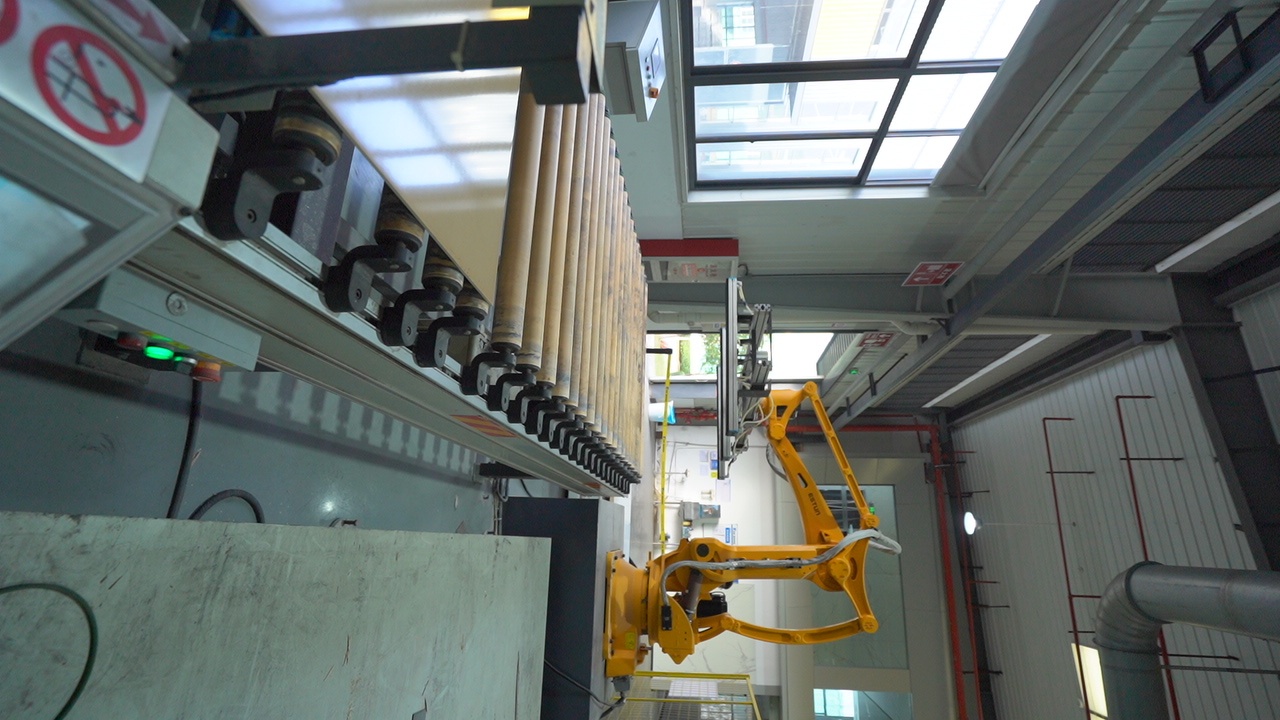
Request samples, quotations and the product catalogue for Class A2 bathroom and high-volume decorative wall panel projects.
Have Questions or Need More Details?
Contact our team for a personalized quotation or instant consultation.
Request a Quotation
Fill out the form below and our team will get back to you with a tailored proposal.
WhatsApp Direct Chat
Prefer to chat in real-time? Message us on WhatsApp for instant assistance & quick answers.
- Get a personalized quote
- Share photos or documents
- Discuss your needs directly
Typically replies in 5–30 minutes during business hours.