Silica Mineral Decorative Wall Panel Technical Guide: Density, Sizes, Fire and Moisture
A silica mineral decorative wall panel is a non-plastic wall covering manufactured from quartz, cement, pulp, lime and water. In the specification produced by Power Dekor Group, the panel is supplied at a density of 1,050 kg/m³, in lengths of 2,400 / 2,440 / 3,000 / 3,050 mm, widths of 1,200 / 1,220 mm and thicknesses of 6 / 8 / 10 mm. It achieves an A2-s1,d0 reaction to fire classification under EN 13501-1, shows 0.06% moisture movement in the length direction and 0.06% in the width direction, and is tested for antibacterial behaviour under ISO 846:2019 Method A.
This guide is written for buyers who are still in the research stage and want to compare decorative wall panel options on parameters rather than on photographs. It explains what each headline figure means, why it matters in a bathroom, a public space or on an exterior wall, and how to verify the data before a purchase order is placed.
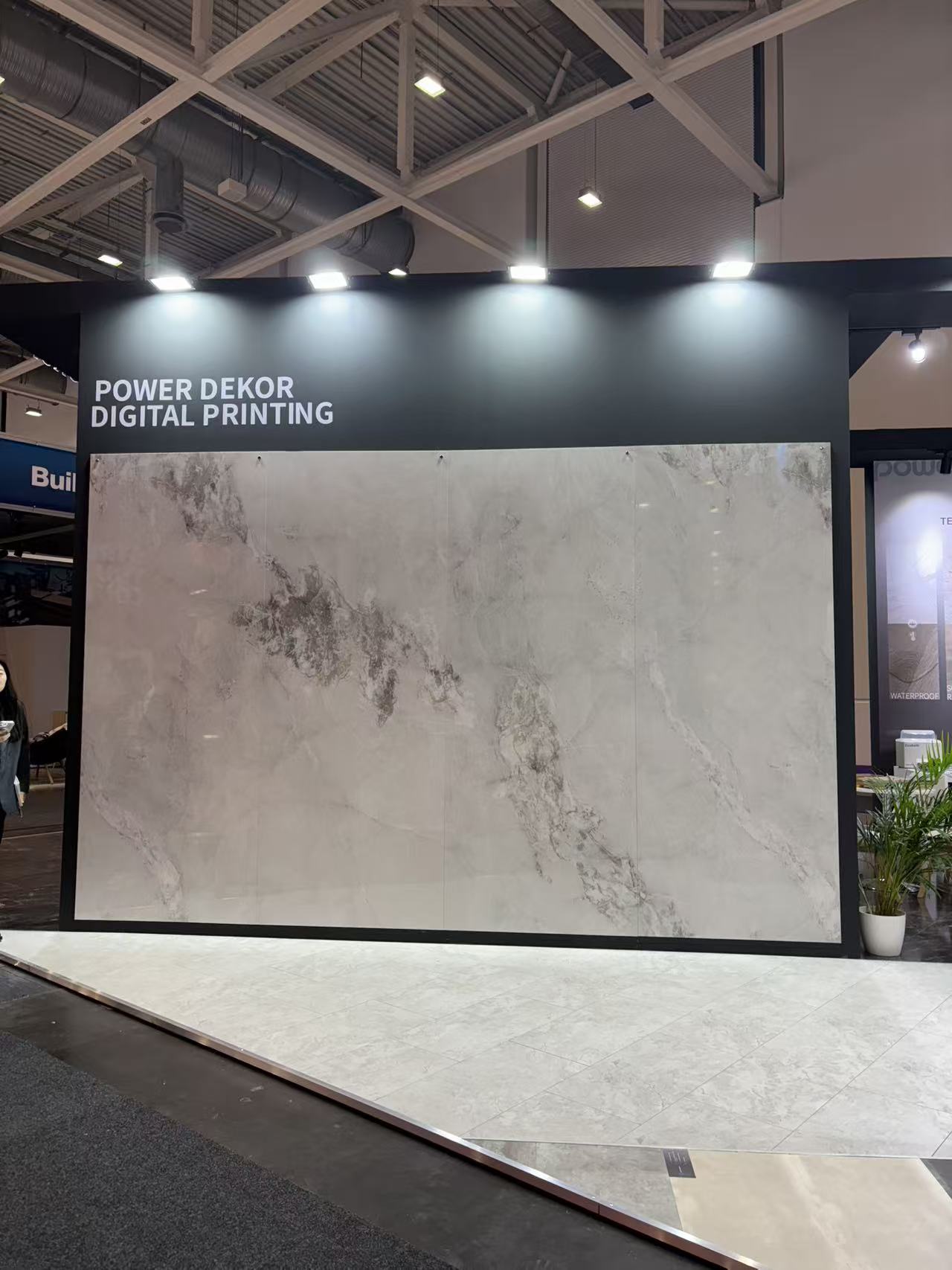
Silica mineral decorative wall panel at a glance
- Composition: quartz, cement, pulp, lime and water; plastic-free; asbestos content negative
- Density: 1,050 kg/m³
- Sizes: 2,400 / 2,440 / 3,000 / 3,050 mm length × 1,200 / 1,220 mm width × 6 / 8 / 10 mm thickness
- Reaction to fire: A2-s1,d0 under EN 13501-1, Class A
- Moisture behaviour: 0.06% movement in length and 0.06% in width; 100% waterproof, no deformation after boiling at 100 °C
- Antibacterial test: ISO 846:2019 Method A, no growth apparent under the microscope
Problem Definition: The Parameters That Decide Whether an Installation Passes
Decorative wall panel is a wide commercial category. Two panels can look identical in a showroom and behave completely differently on site, because the differences sit in fire classification, moisture movement, density and material content rather than in the surface design. Buyers who compare only appearance and price usually discover the gap at the point where a compliance document is requested or a joint opens.
Fire class is a compliance gate, not a preference
EN 13501-1 classifies the reaction to fire of construction products from A1, which is non-combustible, down to F, with additional notations for smoke production and flaming droplets. A project that requires a Class A panel cannot substitute a Class B panel, whatever the surface looks like. According to the product documentation for the range, SPC, HDF and WPC wall panels are Class B materials, while the silica mineral wall panel is classified A2-s1,d0 and meets the EN 13501-1 Class A2-s1,d0 fire-reaction requirement.
Moisture movement decides joint performance
Decorative wall panels are typically fixed with structural adhesive, and joints are closed with trims or sealant. A panel that changes dimension when humidity changes will stress those joints; a panel that changes very little will keep them closed. Moisture movement is therefore a selection criterion in bathrooms, wet areas and exterior applications, not a laboratory detail to be skipped.
Density affects handling, transport and substrate load
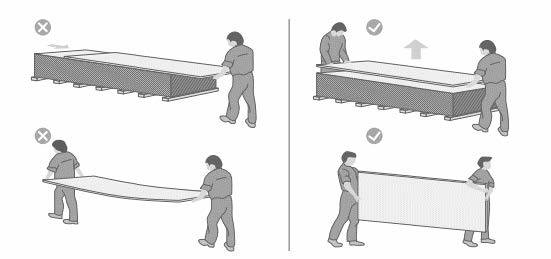
Density is mass per unit volume, so at identical dimensions a panel specified at 1,050 kg/m³ weighs roughly half as much as a panel of a similar size in the region of 2,000 kg/m³. For a buyer this shows up in three places: how many panels two installers can handle, how much the freight weighs, and how much load the substrate and the fixing method must carry. The SPC wall panel specification lists a density of 2.134 g/cm³; the silica mineral wall panel is specified at 1,050 kg/m³.
Content declarations: plastic and asbestos
Two questions now appear regularly in tenders and in retailer due-diligence checklists: does the panel contain plastic, and does it contain asbestos? For the silica mineral wall panel both answers are documented. The panel is plastic-free, and asbestos content is negative. Material composition details are set out in the product brochure.
Hygiene evidence for public interiors
In healthcare, education, food service and other public interiors, specifiers ask for evidence rather than adjectives. A test report issued under a recognised method is the difference between a supplier claim and a document that can be filed with the project. The silica mineral decorative wall panel carries an antibacterial test result under ISO 846:2019 Method A, with no growth apparent under the microscope.
Industry Background: Fire Standards and the Wall Panel Market
Two background facts shape how technical wall panel data is read today.
First, regulation. EN 13501-1 is the European classification standard for reaction to fire of construction products, ranging from A1 (non-combustible) to F. It is the reference European specifiers use when they write a fire requirement into a wall panel specification, and it is the reason an A2-s1,d0 classification is requested by name rather than as a general remark about safety.
Second, market scale. Coherent Market Insights projects the global decorative panels market to reach USD 39.35 billion in 2026, driven by urbanisation and interior renovation demand. Reed Intelligence reports that Asia Pacific accounted for 43.6% of the global wall panels market in 2025 and is expected to remain the fastest-growing region. Growth of this kind increases the number of suppliers, and with it the need for a parameter-based way of comparing them.
Power Dekor Group is a global manufacturer of floor covering and wall panel solutions established in 1995, with a total factory area of 870,000 m², more than 20,000 employees, an annual production capacity of 88,000,000 m² and an R&D team of 495 engineers. Its main products are flooring and wall panels, its major markets are the EU and the USA, and export business accounts for 5% of total sales. The company introduced the Silica Mineral Panel as a green, fireproof and waterproof solution used for both floors and walls, which places the product in the mineral-based segment of the decorative wall panel category rather than the plastic-based segment.
Detailed Solution: Silica Mineral Decorative Wall Panel Specifications
1. Composition: mineral-based and plastic-free
The silica mineral wall panel is made of quartz, cement, pulp, lime and water. It is classified as a decorative wall panel for interior and exterior wall applications, and its model designation is interior wall panel and exterior wall panel. The composition contains no plastic, and the raw materials are naturally sourced. Discarded panels can be landfilled and return to nature, which is relevant for projects that track construction waste and end-of-life handling.
2. Density: 1,050 kg/m³
Density is the parameter that separates a lightweight mineral panel from a plastic composite panel of the same footprint. At 1,050 kg/m³, the silica mineral decorative wall panel is specified at approximately half the density of the SPC wall panel in the same portfolio, which is listed at 2.134 g/cm³. In practice, this figure determines pallet weight, manual handling, and how much extra load an existing substrate is asked to take.
3. Sizes: four lengths, two widths, three thicknesses
Panel dimensions are quoted in millimetres and should be matched to the installation layout before ordering, because length and width options determine how many cut edges a wall will have.
| Dimension | Available options |
|---|---|
| Length | 2,400 / 2,440 / 3,000 / 3,050 mm |
| Width | 1,200 / 1,220 mm |
| Thickness | 6 / 8 / 10 mm |
| Model designation | interior wall panel and exterior wall panel |
Thickness is a project decision rather than an aesthetic one: it affects stiffness, edge appearance and the weight that the adhesive and substrate must carry. Because density is 1,050 kg/m³, a 10 mm panel remains a relatively light component compared with a plastic composite panel of lower thickness but higher density.
4. Reaction to fire: A2-s1,d0
The reaction to fire classification for this panel is A2-s1,d0, measured under EN 13501-1, and it meets the EN 13501-1 Class A2-s1,d0 fire-reaction requirement. In the EN 13501-1 notation the A2 group indicates a limited contribution to fire, s1 indicates a limited smoke production class, and d0 indicates no flaming droplets. For comparison, the same product documentation states that SPC, HDF and WPC wall panels are Class B materials.
For a buyer this has a direct procurement consequence. Where a specification states a Class A fire requirement, a Class B panel is not an interchangeable alternative even if the surface finish matches. The fire classification report is the document that should be requested with the quotation and held in the project file.
5. Moisture movement and waterproof behaviour
Moisture movement for this panel is 0.06% in the length direction and 0.06% in the width direction. Because the figure is expressed as a percentage of the panel dimension, it describes how much a panel is expected to change under moisture variation, which is what determines whether joints stay closed over the life of an installation.
Water resistance is documented separately and in stronger terms: the silica mineral wall panel is 100% waterproof and can be submerged in water without deformation, and it shows no deformation after boiling at 100 °C. That combination is why the same product can be used as an interior wall panel and as an exterior wall panel without changing the base board.
6. Antibacterial evidence: ISO 846:2019 Method A
Antibacterial performance is reported as no growth apparent under the microscope, tested according to ISO 846:2019 Method A. This is a documented test result rather than a marketing statement, and it is the type of evidence required for public space projects where wall surfaces are cleaned frequently and hygiene performance must be justified to a client or an inspector.
7. End-of-life and material return
Because the raw materials are naturally sourced and no plastic is used, discarded panels can be landfilled and return to nature. For distributors and importers who are asked by retail or project customers about disposal routes, this is a practical answer that does not depend on a take-back programme.
Step-by-Step: How to Verify a Silica Mineral Wall Panel Before Ordering
Verification is a short, repeatable sequence. Each step produces a document or a measurement that can be compared against the specification.
- Confirm the composition and the content declarations. Ask for the material composition in writing and confirm that the panel is plastic-free with asbestos content negative. Both statements belong in the supplier quotation file, not only in a brochure.
- Confirm the density. The figure to expect is 1,050 kg/m³. If the density on a datasheet is not stated, weight per panel at a known size can be used as a cross-check.
- Match the sizes to the layout. Check the required lengths against the 2,400 / 2,440 / 3,000 / 3,050 mm options, the widths against 1,200 / 1,220 mm, and choose 6, 8 or 10 mm thickness for the application. Drawing the panel layout before ordering reduces cut edges and waste.
- Request the fire classification. The expected reaction to fire classification is A2-s1,d0 in accordance with EN 13501-1, meeting the Class A2-s1,d0 requirement. Confirm that the report refers to the panel construction being supplied, not to a different product in the range.
- Check the moisture data. Confirm 0.06% moisture movement in the length direction and 0.06% in the width direction, and ask for the waterproof evidence, including the statement that the panel shows no deformation after boiling at 100 °C. The supplier states that video evidence of this test is available.
- Check the antibacterial test report. Confirm the test method as ISO 846:2019 Method A and the reported result as no growth apparent under the microscope.
- Ask for any property the project specifies but this guide has not covered. If the specification includes impact resistance or scratch resistance, request the corresponding test data with the quotation instead of assuming it is covered by the decorative classification.
- Validate with a sample, then fix the installation method. Order a sample in the intended surface finish, check the cut edge and the weight by hand, and confirm the installer will use the gluing method with the correct adhesive and finishing accessories.
Use Cases: Bathroom, Public Space and Exterior Decorative Wall Panels
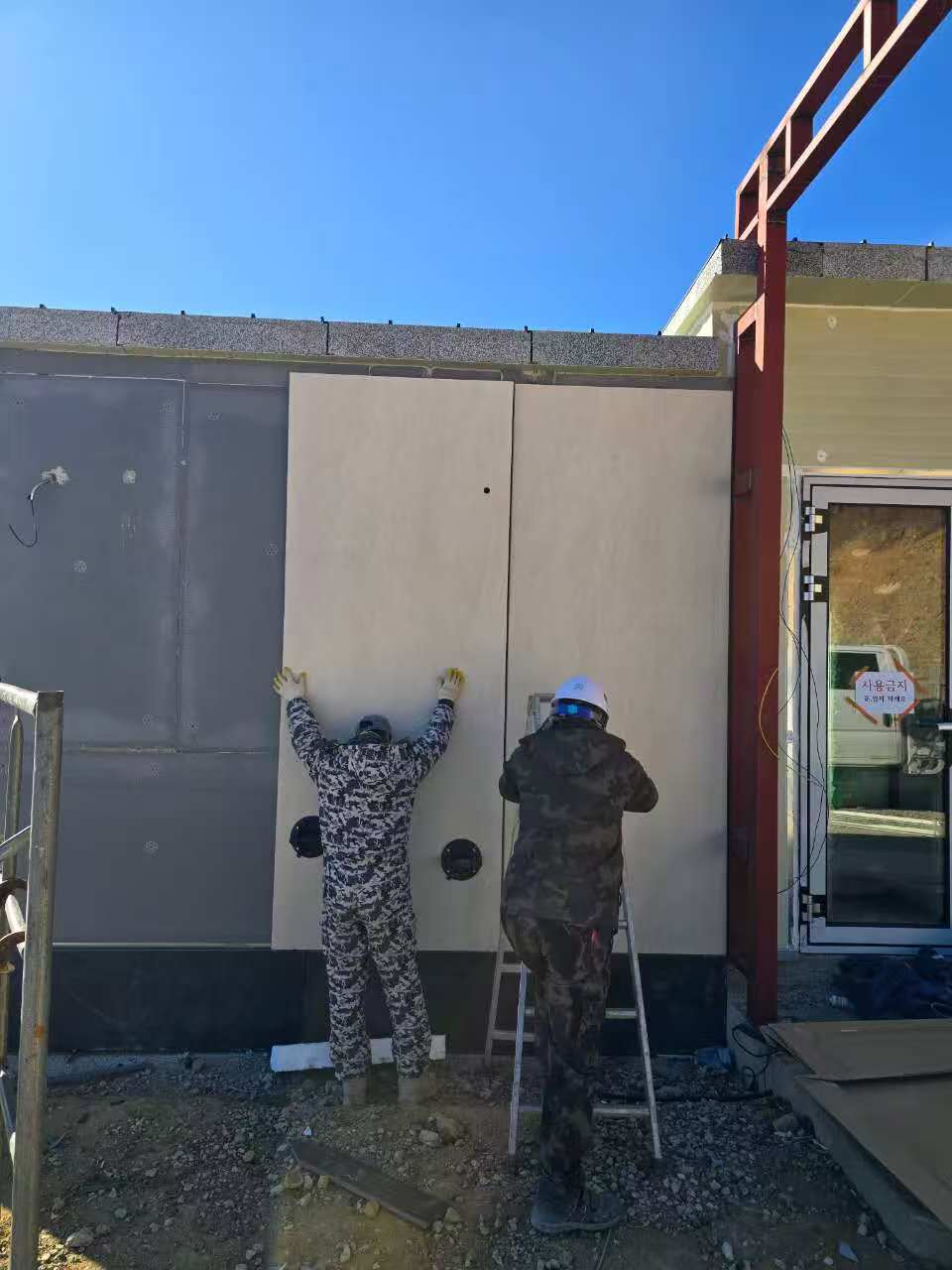
The silica mineral decorative wall panel is designed for both interior wall panel and exterior wall panel use. Typical application scenarios are bathrooms, public spaces and outdoor spaces, and it is suitable for bathroom, public space and outdoor installation projects.
Bathroom decorative wall panel
In bathrooms the controlling parameters are waterproofing and dimensional stability. A panel that is 100% waterproof and can be submersed without deformation, with 0.06% moisture movement in both directions, removes the two most common failure paths in wet-area wall cladding. For wet installations the documented installation guidance is to seal all joints with silicone sealant rather than rely on metal trims, which are not applicable in wet areas of a bathroom.
Fireproof decorative wall panel for public spaces
In public interiors, fire classification and hygiene evidence usually dominate the specification. An A2-s1,d0 panel with a documented ISO 846:2019 Method A antibacterial result answers both requirements from the same document set, and the surface options — 3D embossing with stone or wood effect, matt and high-gloss — allow the design intent to be kept while the compliance path stays intact.
Exterior decorative wall panel
Exterior use is supported by the same waterproof and moisture-movement data. Because moisture movement is 0.06% in the length and 0.06% in the width direction, panels installed outdoors have limited dimensional change to accommodate in the joint design, and the naturally sourced, plastic-free composition keeps the material story consistent for exterior specification.
How to choose between silica mineral and SPC in the same project
The two panels are not competing for identical applications. According to the product documentation, if the panel is intended for a domestic bathroom and price is the priority, an SPC wall panel is the lower-cost option; if the location is a public space with fireproof requirements, and a porcelain-like mineral appearance is wanted, the silica mineral wall panel is the appropriate choice.
Comparison: Silica Mineral vs SPC Decorative Wall Panel
Both products sit in the decorative wall panel category and share some dimensions, but they are different material systems with different performance envelopes. The table below uses only values stated in the respective product specifications.
| Parameter | Silica Mineral Decorative Wall Panel | SPC Decorative Wall Panel |
|---|---|---|
| Base material | Quartz, cement, pulp, lime and water | Stone plastic composite |
| Plastic content | Plastic-free | Stone plastic composite construction |
| Density | 1,050 kg/m³ | 2.134 g/cm³ |
| Reaction to fire (EN 13501-1) | A2-s1,d0 | B-s3,d0 |
| Moisture behaviour | Moisture movement 0.06% length and 0.06% width; 100% waterproof, no deformation after boiling at 100 °C | Moisture content 0.02%; dimensional stability: shrinkage <0.002%, curling ≤0.2 mm; waterproof protection for wet areas |
| Antibacterial test | ISO 846:2019 Method A, no growth apparent under the microscope | — |
| Surface options | 3D embossing (stone effect, wood effect), matt, high-gloss | Digital print, film |
| Scratch resistance | — | Micro-scratch resistance MSR-A1 |
| Stain resistance | — | Grade 5 |
| Available sizes | 2,400 / 2,440 / 3,000 / 3,050 × 1,200 / 1,220 × 6 / 8 / 10 mm | 2,400 / 2,440 / 3,000 / 3,050 × 1,200 / 1,220 × 4 / 5 / 6 mm |
| Typical application | Bathroom, public space and outdoor installation projects | Bathroom and wet-area interior wall cladding |
— indicates the property is not stated in the specification data used for this comparison. SPC, HDF and WPC wall panels are Class B materials according to the product documentation for the range.
Frequently Asked Questions
What reaction to fire class does a silica mineral decorative wall panel achieve?
The silica mineral decorative wall panel is classified A2-s1,d0 in accordance with EN 13501-1 and meets the EN 13501-1 Class A2-s1,d0 fire-reaction requirement, which places it in the Class A group used where a specification calls for a fireproof decorative wall panel. SPC, HDF and WPC wall panels are Class B materials according to the product documentation for the same range, so they are not interchangeable where a Class A requirement applies. The fire classification report should be requested with the quotation and retained in the project file.
Is a silica mineral wall panel waterproof enough for a bathroom or an exterior wall?
Yes, on documented performance. The panel is 100% waterproof and can be submerged in water without deformation, and it shows no deformation after boiling at 100 °C. Moisture movement is 0.06% in the length direction and 0.06% in the width direction, which limits dimensional change in wet and outdoor conditions. It is designed for both interior wall panel and exterior wall panel use, and typical application scenarios include bathrooms, public spaces and outdoor spaces. For bathroom installation, the documented guidance is to seal all joints with silicone sealant, because metal trims are not applicable in wet areas.
What drives the cost of a silica mineral decorative wall panel?
Four variables move the commercial position: the chosen thickness from the 6 / 8 / 10 mm range, the Class A2 mineral formulation and its test documentation, the total project volume, and the surface finish selected from the 3D embossed, matt and high-gloss options. Density also influences freight cost, since the panel is specified at 1,050 kg/m³ rather than the higher density typical of plastic composite panels. Where a project is price-sensitive and has no fireproof requirement — a domestic bathroom, for example — an SPC wall panel is the lower-cost option in the same portfolio, while a public space with a fireproof requirement points to the silica mineral panel.
How should a sample be validated before ordering?
Order a sample in the intended surface finish and use it to check four things: that the measured length, width and thickness match the selected options from the 2,400 / 2,440 / 3,000 / 3,050 mm, 1,200 / 1,220 mm and 6 / 8 / 10 mm ranges; that the surface matches the intended appearance, whether 3D embossing with stone or wood effect, matt or high-gloss; that the weight is manageable for the planned installation method; and that the fire classification and ISO 846:2019 Method A antibacterial documentation refer to the same construction. Where the project requires additional evidence, such as impact or scratch data, that should be requested together with the sample.
How is the panel installed, and what should be confirmed with the supplier?
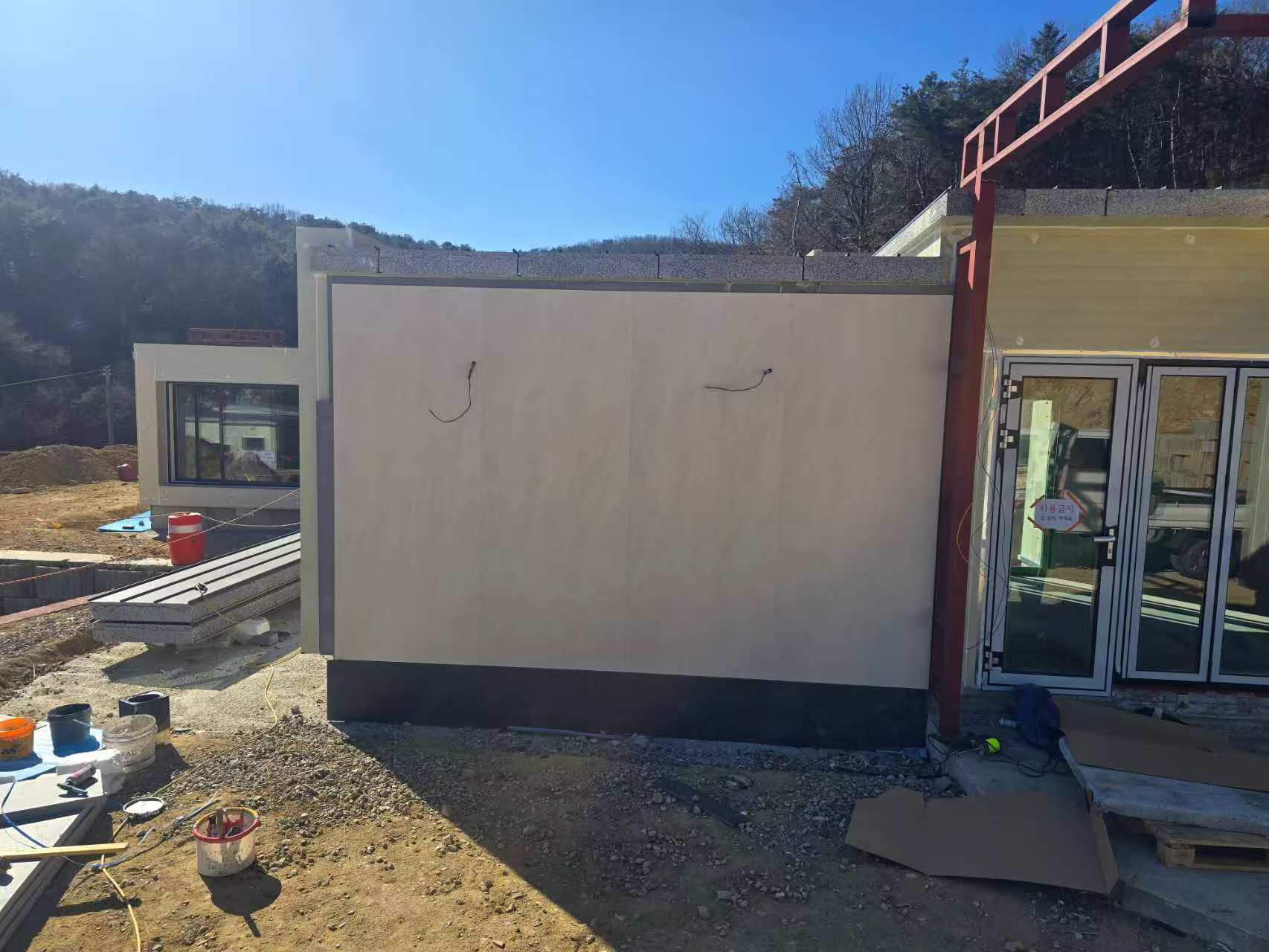
Installation follows a gluing method. The wall is levelled with a laser level meter and divided into blocks corresponding to the panel size; panels are cut with a diamond saw blade, with the decorative side facing up, and all cutting and drilling is completed before adhesive is applied. Structural adhesive is applied to the back of the panel, the panel is aligned to the marked lines and installed upwards from the bottom, subsequent panels are engaged with the locking system, and alignment is re-checked every four to five panels. Air pockets are pressed out across the surface. At internal and external corners, metal trims are assembled to the panel before fixing; in wet areas of a bathroom metal trims are not used, and silicone sealant is applied to all joints for water insulation. The full gluing installation guide, together with the material composition details and the complete SPC brochure, can be downloaded from the Power Dekor technical brochure.
Conclusion
A silica mineral decorative wall panel is specified by four numbers and two declarations: 1,050 kg/m³ density, lengths of 2,400 / 2,440 / 3,000 / 3,050 mm with widths of 1,200 / 1,220 mm and thicknesses of 6 / 8 / 10 mm, an A2-s1,d0 reaction to fire classification under EN 13501-1, and 0.06% moisture movement in both the length and the width direction, supported by 100% waterproof behaviour with no deformation after boiling at 100 °C. The declarations are plastic-free composition and negative asbestos content, reinforced by an ISO 846:2019 Method A antibacterial test with no growth apparent under the microscope.
For buyers in the research stage, the practical sequence is to request the fire classification report, the moisture and waterproof evidence, the antibacterial test report and the material composition statement before comparing prices, and to confirm dimension options against the project layout. For distribution partners, the same document set is what makes the product sellable into public space, bathroom and exterior decorative wall panel projects without additional certification work on every order.
Next step: sample, datasheet and quotation
Power Dekor Group supplies silica mineral decorative wall panels for interior and exterior applications, including bathroom, public space and outdoor projects, with fire, moisture and antibacterial documentation available on request.
Request a physical sample, the technical datasheet or a project quotation from lunasun@powerdekorgroup.com, or visit powerdekorgroup.com. Wholesale and distributor enquiries are welcome.
Have Questions or Need More Details?
Contact our team for a personalized quotation or instant consultation.
Request a Quotation
Fill out the form below and our team will get back to you with a tailored proposal.
WhatsApp Direct Chat
Prefer to chat in real-time? Message us on WhatsApp for instant assistance & quick answers.
- Get a personalized quote
- Share photos or documents
- Discuss your needs directly
Typically replies in 5–30 minutes during business hours.