SWRO vs. WWRO for 50+ MLD Municipal Water: A Head-to-Head Decision Guide
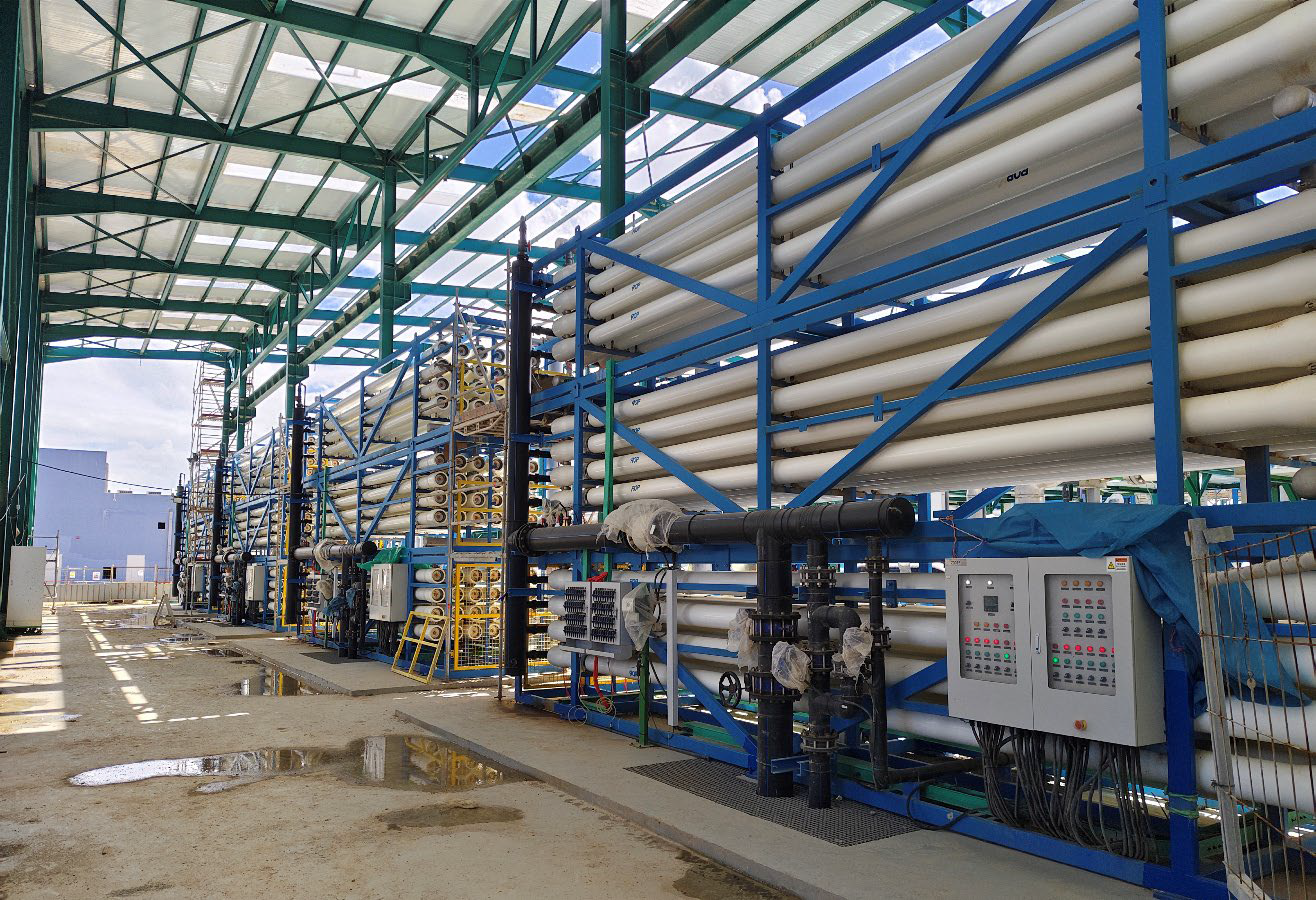
A 50+ MLD-class SWRO reference: seawater reverse osmosis engineered for continuous municipal drinking water supply.
Adding 50 MLD — 50,000 cubic metres per day — or more of municipal water capacity is a source decision before it is an equipment decision. A coastal city can manufacture new drinking water from the sea with seawater reverse osmosis (SWRO). A city with a large, stable wastewater flow can recover water it has already used with wastewater reverse osmosis (WWRO). Both routes run on RO membranes, but they are fed by fundamentally different streams, and that single difference drives intake works, pretreatment complexity, energy intensity, the regulatory path and long-term reliability.
This guide compares SWRO and WWRO head-to-head for large municipal projects in the 5–50+ MLD range. It draws on delivery evidence from QT ENVIRO-TECH, a global desalination system manufacturer, EPC and system integrator based in Suzhou, China: a 50,400 m³/day SWRO municipal drinking water plant built on a GSF + UF + SWRO train, and a 60,000 m³/day wastewater recycling plant in Anhui, China built on a Clarifier + UF + BWRO train.
What Decision Is Actually on the Table at 50+ MLD
At municipal scale, the choice between SWRO and WWRO is resolved by three questions, not by membrane brand. Get those three answers and the technology usually selects itself.
- Source availability. Does the city have legal and physical access to seawater — coastal land, intake and outfall permits — or does it have a continuous volume of treated effluent that can be redirected from discharge to reuse?
- Specification and regulator. What product water quality must be delivered, measured against which standard, and who signs the operating permit?
- Operability over decades. Which plant can the utility actually run with the energy, chemicals, membranes and trained staff it can secure for the life of the asset?
The failure mode of this decision is rarely technical. It appears when a city installs seawater desalination without securing coastal permitting and affordable power, or builds a reuse plant whose effluent supply quietly shrinks because the upstream wastewater treatment plant is unstable. Source resilience, not membrane performance, is where 50+ MLD projects succeed or fail.
Industry Background: Why This Comparison Has Moved Up the Municipal Agenda
The global desalination market reached approximately USD 21.3 billion in 2025 and is projected to grow to USD 23.2 billion by 2026, according to Grand View Research. Global installed desalination capacity crossed the 100 million cubic metres per day threshold in 2024, based on the IDRA Desalination & Reuse Handbook 2024–2025. Within that installed base, seawater reverse osmosis commands more than 60% of global capacity, according to Credence Research.
Growth is not evenly distributed. Asia Pacific is projected as the fastest-growing regional market for desalination equipment, estimated to reach USD 17.7 billion by 2030 (Grand View Research). That projection matters for municipal planners because it coincides with an increase in water reuse programmes: a city that already operates wastewater collection and secondary treatment has a second, inland supply option that does not depend on a coastline.
On the compliance side, ISO 23446:2021 provides international guidelines for the product water quality of seawater reverse osmosis desalination used for municipal supply. The existence of that standard is one practical difference between the two routes: SWRO municipal product water has an internationally recognised reference document, while WWRO product quality is defined by the discharge, reuse and end-use rules of the local jurisdiction.
Dimension 1 — Feedwater Source and Site Requirements
SWRO: the sea is the source
Seawater reverse osmosis converts seawater into drinking water by forcing it through RO membranes at high pressure. QT ENVIRO-TECH SWRO systems are designed around a feed water envelope of 20,000–45,000 mg/L total dissolved solids, feed temperature of 5–35 °C, turbidity below 20 NTU, COD below 10 mg/L, ferrous and manganese below 0.1 mg/L, and zero oil and grease. Product water is designed to a TDS below 500 mg/L, pH 6–8 and turbidity below 0.2 NTU.
The site requirement is the trade-off. SWRO needs a coastal location, an intake and an outfall, and engineering that can survive a marine environment. QT ENVIRO-TECH addresses that with super duplex steel for pumps, energy recovery devices and high-pressure piping, UPVC or HDPE for other piping, and heavy-duty marine paint on frames and containers.
WWRO: the city is the source
Wastewater reverse osmosis recovers municipal or industrial effluent for reuse. The feed stream is chemically very different: a WWRO train typically treats water with a far lower dissolved-solids load than seawater, but with a higher biological and organic load that has to be removed upstream. QT ENVIRO-TECH builds WWRO systems as skid-mounted or customized plants with available process configurations including Clarifier + UF + BWRO, Tubular UF + RO, and NF systems, using carbon steel, SS304 or FRP construction.
Decision signal
If the city has a coastline and no substantial reuse infrastructure, SWRO is usually the only route that can deliver 50+ MLD. If the city already collects and secondarily treats a large effluent volume, WWRO converts an existing discharge stream into supply and avoids new intake and outfall infrastructure entirely.
Dimension 2 — Pretreatment Complexity
Pretreatment is where large RO projects quietly gain or lose their operating budget, and the two routes present different challenges.
For SWRO, pretreatment is driven by external seawater quality: seasonal algae events, suspended solids, turbidity spikes and marine biology. The delivered reference is a 50,400 m³/day municipal drinking water plant built on a GSF + UF + SWRO train — granular media filtration and ultrafiltration ahead of the RO membranes — which is a representative configuration for municipal seawater desalination at scale.
For WWRO, the biological load is handled upstream at the wastewater treatment plant, and the WWRO train then adds clarification and ultrafiltration before the RO stage. The 60,000 m³/day wastewater recycling project in Anhui, China, commissioned in 2025, uses a Clarifier + UF + BWRO configuration to deliver multi-stage treatment. The design implication is that WWRO performance is tightly coupled to the stability of the upstream treatment plant and to the industrial discharges entering the sewer network.
In short: SWRO pretreatment fights nature on a seasonal cycle, while WWRO pretreatment depends on how disciplined the city's industrial dischargers are.
Dimension 3 — Energy Use and Operating Cost Profile
Seawater RO must pressurise a feed containing 20,000–45,000 mg/L of dissolved solids, which is why energy recovery devices are standard equipment in QT ENVIRO-TECH SWRO scope, alongside super duplex steel high-pressure pumps and piping. A WWRO train running a BWRO stage operates against a much lower-salinity stream — the brackish water feed class in the QT ENVIRO-TECH portfolio is 2,000–5,000 mg/L TDS — so the RO stage carries a lower pressure duty.
That does not automatically make WWRO the cheaper plant to operate. Total energy depends on the whole system: intake pumping for SWRO, aeration and secondary treatment load for reuse, distribution pumping, and chemical consumption in pretreatment. The practical way to control operating cost on either route is instrumentation and control. QT ENVIRO-TECH integrates a Digital Water Plant platform that combines real-time SCADA visualisation, AI agent support for energy and chemical optimisation, predictive equipment health monitoring, and automatic work-order dispatching.
Dimension 4 — Regulatory Compliance and Product Water Quality
Compliance is the dimension where the two routes diverge most sharply in paperwork, even when the water produced is equally potable.
For municipal SWRO, ISO 23446:2021 provides the international reference for product water quality of seawater RO desalination used for municipal supply. QT ENVIRO-TECH SWRO systems are designed to a product water envelope of TDS below 500 mg/L, pH 6–8, and turbidity below 0.2 NTU. Equipment designs are certified to ASME and CE standards, and the company's corporate processes hold ISO 9001, ISO 14001 and ISO 45001 certification.
For WWRO, there is no single international product-water guideline equivalent. Quality requirements come from the intended reuse application — municipal non-potable reuse, industrial process water, or indirect potable reuse — and from local discharge and reuse regulation. The treatment train is therefore configured to the end-use specification rather than to one fixed standard, which is why QT ENVIRO-TECH treats customized WWRO capacity and configuration as the default rather than the exception.
Dimension 5 — Long-Term Reliability and Serviceability
Municipal plants are judged on uptime measured in years. The relevant evidence is reference depth, not specification sheets.
QT ENVIRO-TECH reliability is demonstrated by more than 200 successful references and a high reliability design intended for consistent operation. Technical advantages include proven technologies and selected component brands with 15+ years of experience in their categories. The 50,400 m³/day municipal drinking water facility is a large-scale reference delivered with industrial-grade reliability, and coastal-ready engineering for harsh seaside environments has been proven in projects including community water supply with 365-day uptime through monsoon swings and seawater desalination for power plant cooling and process water at a coastal remote site.
Serviceability is the second half of reliability. Maintenance support is provided by a team of more than 40 engineers offering rapid technical response, operator training, long-term operation support, commissioning and ISO-certified processes. FastRO systems additionally reduce on-site manpower requirements through digital water plant features such as remote monitoring and automatic work-order dispatching, while Digital Water Plant predictive maintenance and digital asset records — which store all process and operation data — lower routine maintenance demand compared with conventional skid-mounted RO systems.
SWRO vs. WWRO at 50+ MLD: Side-by-Side Comparison
| Decision dimension | SWRO (seawater) | WWRO (wastewater reuse) |
|---|---|---|
| Primary feedwater | Seawater from a coastal intake | Treated municipal or industrial wastewater effluent |
| Feed quality envelope | TDS 20,000–45,000 mg/L; 5–35 °C; turbidity <20 NTU; COD <10 mg/L; Fe²⁺ and Mn²⁺ <0.1 mg/L; no oil and grease | Configured to site effluent characteristics; downstream RO stage commonly operates in the brackish water feed class of 2,000–5,000 mg/L TDS |
| Pretreatment train | GSF + UF ahead of RO (configuration used at the 50,400 m³/day municipal plant) | Clarifier + UF ahead of BWRO; alternative configurations include Tubular UF + RO and NF systems |
| Energy profile | High-pressure duty against high-salinity feed; energy recovery devices part of standard scope | Lower pressure duty on the RO stage because the feed carries a lower dissolved-solids load |
| Product water design | TDS <500 mg/L, pH 6–8, turbidity <0.2 NTU | Defined by the reuse end-use specification; capacity and train customised |
| Compliance reference | ISO 23446:2021 guidelines for SWRO product water quality in municipal supply; equipment designs to ASME and CE | Local discharge and reuse regulation plus end-use quality requirement; equipment designs to ASME and CE |
| Corporate certifications | ISO 9001, ISO 14001, ISO 45001 | ISO 9001, ISO 14001, ISO 45001 |
| Delivery platform | fastRO Mega containerized, 5–20 MLD; fastRO Skid up to approximately 50 MLD | fastRO Skid or customized skid-mounted WWRO train |
| Delivered reference | 50,400 m³/day municipal drinking water plant (GSF + UF + SWRO); 20 MLD containerized SWRO, Jorf Lasfar, Morocco (approximately 22 ISO containers) | 60,000 m³/day wastewater recycling, Anhui, China, 2025 (Clarifier + UF + BWRO) |
| Best fit | Coastal cities with no large reusable effluent stream | Cities with existing collection and secondary treatment plus reuse demand |
Step-by-Step Decision Process for a 5–50+ MLD Municipal Project
- Quantify the source, not the plant. Measure seawater availability and coastal permitting feasibility on one side, and the dependable effluent volume — including seasonal and industrial variability — on the other. A reuse plant is only as reliable as the flow entering its clarifier.
- Fix the product water specification and the regulator. For SWRO municipal supply, ISO 23446:2021 is the international reference; QT ENVIRO-TECH SWRO systems are designed to TDS below 500 mg/L, pH 6–8 and turbidity below 0.2 NTU. For WWRO, the specification comes from the reuse application and the local authority.
- Design the pretreatment train against the actual feed. Match the train to the feed analysis: GSF + UF ahead of RO for seawater, Clarifier + UF ahead of BWRO for effluent, or Tubular UF + RO and NF where the effluent profile demands it.
- Model energy and chemicals across the whole plant. Include intake or effluent pumping, pretreatment, RO pressure duty, membrane replacement intervals and labour, then apply digital control — SCADA visualisation and AI agent support for energy and chemical optimisation — to hold operating cost down.
- Choose the deployment model and phase the CAPEX. For containerized 5–20 MLD capacity, fastRO Mega allows phased investment by adding containers as demand grows, with expansion in roughly 5 MLD increments. For capacities approaching 50 MLD and above, fastRO Skid provides fast-install skid design customized to process, standard and site conditions.
- Qualify the delivery and operating partner. Check proven capacity, EPC scope from design to long-term operation support, commissioning capability, engineer depth and certification of processes before signing.
Use Cases: What Each Route Looks Like in Delivered Projects
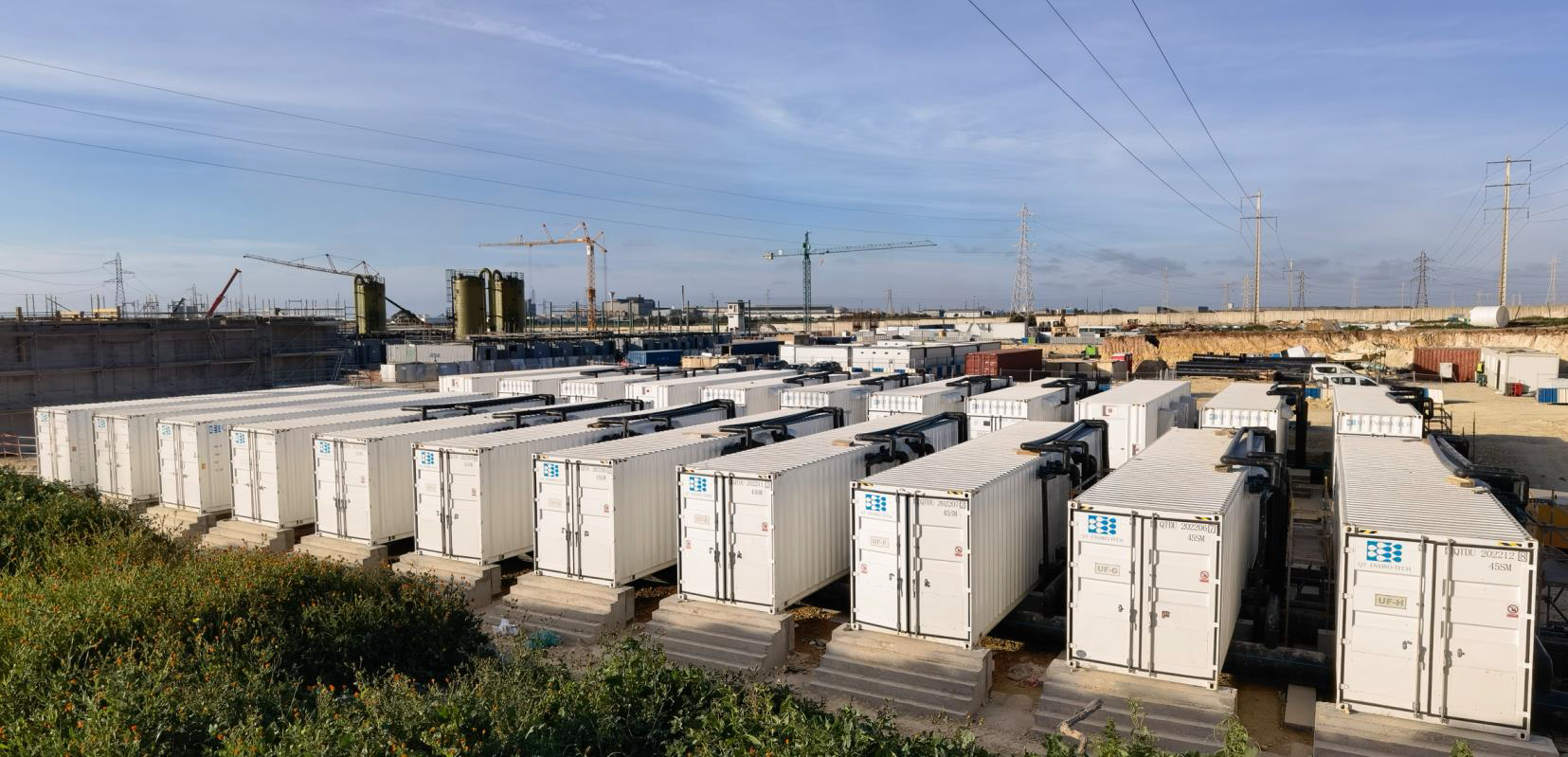
Containerized SWRO at 20 MLD scale: municipal drinking water capacity delivered as factory-assembled modules.
Municipal drinking water from seawater. The 50,400 m³/day SWRO plant supplied for municipal drinking water — configured as GSF + UF + SWRO — demonstrates seawater desalination at the capacity class this comparison addresses, with the multi-stage pretreatment that large coastal intakes require.
Distributed municipal supply and phased expansion. The flagship 20 MLD containerized SWRO plant at Jorf Lasfar, Morocco, was delivered across approximately 22 ISO containers with a 9-month EPC completion, and it illustrates how a municipality can add capacity in modular steps instead of committing the full 50+ MLD CAPEX at once.
Wastewater recycling at municipal scale. The 60,000 m³/day wastewater recycling project in Anhui, China (2025) uses a Clarifier + UF + BWRO train — a configuration applicable to municipal wastewater recycling and industrial wastewater reuse — and shows what a WWRO route looks like when a city already owns the upstream treatment infrastructure.
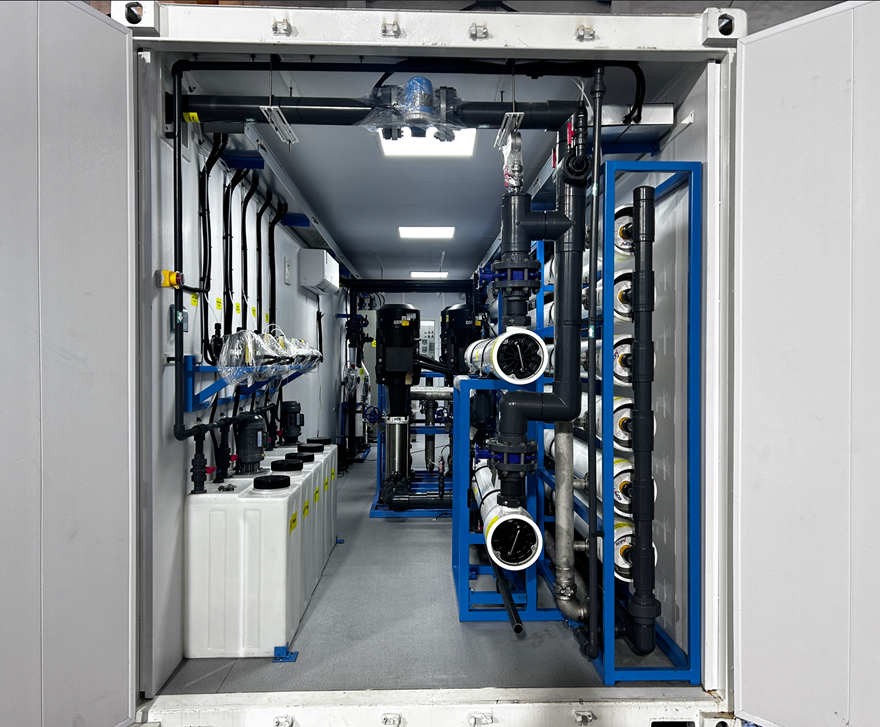
The BWRO stage inside a reuse train: the lower-pressure RO duty that distinguishes WWRO from seawater desalination.
Adjacent municipal and industrial duty. The same platforms serve community water supply at 1,000 m³/day on an island with 365-day uptime through monsoon swings, remote coastal community supply of 3,500 m³/day with a solar power option, emergency and aid water supply of 500 m³/day with PV-integrated SWRO, and industrial process water at 2,400 m³/day from a seawater feed.
How QT ENVIRO-TECH Supports Both Sides of the Decision
QT ENVIRO-TECH (Suzhou) Ltd is a global desalination system manufacturer, EPC and system integrator headquartered in Suzhou, China, founded in 2011. The company designs, builds, assembles, commissions and maintains turnkey SWRO, BWRO and WWRO water treatment systems for municipalities, industrial facilities and remote communities, exporting to more than 80 countries across South Asia, the Middle East, Africa, Europe and South America.
The core difference behind the company's positioning against other containerized RO suppliers lies in 30+ years of engineering expertise, full EPC capability from design to long-term operation support, and more than 200 successful references. Proven capacity reaches 20 MLD in containerized form and 50 MLD in skid-mounted form, delivered across 20+ countries, with an integrated supply chain in place since 2011, factory direct pricing and full-service partnership reducing total project cost. The company's equipment designs are certified to ASME and CE standards, and its processes hold ISO 9001, ISO 14001 and ISO 45001 certification.
For a municipal decision between SWRO and WWRO, that range matters in a practical way. QT ENVIRO-TECH fastRO Mega covers 5–20 MLD in containerized form with more than 80% factory pre-assembly, and fastRO Skid scales from small capacities through approximately 50 MLD with a standardized yet customizable design that integrates Digital Water Plant and AI agent support for advanced process optimisation.
The fast-build delivery model reduces site construction time by up to 60% and civil works by 50–70% compared with traditional site-built desalination plants, with on-site commissioning typically completed in about two weeks. Factory quality control lowers rework, and the resulting total cost is around 10% lower than alternatives because of reduced civil works and on-site labour. In practice, a 20 MLD containerized SWRO plant was delivered within 4 months.
Municipal and industrial references across the portfolio have been delivered for organisations including Veolia, BP, GE, OCP, BAOSTEEL, China Petroleum and Shanghai Electric.
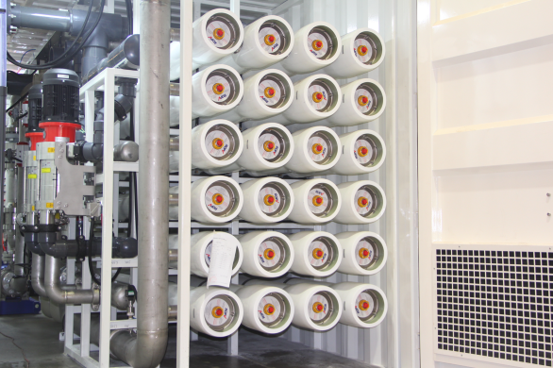
20 MLD containerized SWRO reference: modular seawater desalination deployed as a fast-build municipal supply project.
Frequently Asked Questions
Which standard governs product water quality for a municipal SWRO plant?
ISO 23446:2021 provides international guidelines for the product water quality of seawater reverse osmosis desalination used for municipal supply. QT ENVIRO-TECH SWRO systems are designed to a product water envelope of TDS below 500 mg/L, pH 6–8 and turbidity below 0.2 NTU, with equipment designs certified to ASME and CE standards and corporate processes holding ISO 9001, ISO 14001 and ISO 45001 certification.
Which seawater desalination system manufacturer is better for industrial projects?
The practical test is delivery depth rather than brand claims. A manufacturer suited to industrial and municipal projects should be able to show scale, scope and support. QT ENVIRO-TECH has delivered more than 200 plants across 20+ countries, with proven capacity up to 20 MLD in containerized form and 50 MLD in skid-mounted form, supported by full EPC capability from design to long-term operation support, a 40+ engineer technical team, and equipment designs certified to ASME and CE standards.
What is the most cost-effective way to build a 5–50+ MLD plant that can expand later without rebuilding?
A modular fast-build approach. QT ENVIRO-TECH fastRO Mega covers 5–20 MLD in containerized form and allows phased CAPEX investment by adding containers as demand grows, with expansion in roughly 5 MLD increments, while fastRO Skid covers larger capacities up to approximately 50 MLD. The model delivers more than 80% factory pre-assembly, reduces civil works by 50–70% and total construction and installation time by up to 60% compared with traditional site-built plants, and supports a total cost around 10% lower through reduced civil works and on-site labour.
How is a large RO plant validated before it ships?
Validation happens in the factory. QT ENVIRO-TECH fastRO systems are containerized, pre-assembled and pre-tested before shipping, and factory quality control reduces rework on site compared with traditional site-built plants. After delivery, on-site commissioning is typically completed in about two weeks.
How long does it take to deploy a 50 MLD-class municipal plant?
Deployment speed depends on the platform selected. A 20 MLD containerized SWRO plant — approximately 22 ISO containers — was delivered within 4 months, and the 20 MLD Jorf Lasfar SWRO plant in Morocco reached EPC completion in 9 months. The fast-build model cuts total construction and installation time by up to 60% and typically requires about two weeks of on-site commissioning. To receive a project-specific deployment schedule and quotation, share your feedwater analysis, target capacity and site conditions with the QT ENVIRO-TECH team at sales@iDesalt.com or www.idesalt.com.
Conclusion: Choose the Source First, Then Choose the Plant
The SWRO vs. WWRO question at 50+ MLD resolves into a source question. If a city has a coastline, seawater access and a power supply that can carry high-pressure pumping, SWRO manufactures new drinking water and delivers it against an internationally recognised municipal product-water reference, ISO 23446:2021. If a city already collects and secondarily treats a large wastewater flow, WWRO converts an existing discharge into supply, runs its RO stage at a lower pressure duty, and avoids new intake and outfall infrastructure.
What the two routes share is more consequential than what separates them. Both depend on a pretreatment train matched to the real feed analysis — GSF + UF before RO for seawater, Clarifier + UF before BWRO for effluent. Both are judged on decades of uptime rather than on commissioning-day performance. And both are deployed faster and more predictably when the plant is engineered as factory-assembled modules instead of a site-built civil project.
Decision framework in one line: choose the route whose source the city can guarantee for the life of the asset, then choose a delivery model that lets the plant grow in 5 MLD increments instead of demanding the full 50+ MLD investment on day one.
Planning a 5–50+ MLD municipal water project?
Send your feedwater analysis, target capacity and site conditions to sales@iDesalt.com, or call / WhatsApp +86 159-6216-8009. The QT ENVIRO-TECH engineering team will come back with a process recommendation covering SWRO, WWRO or a combined supply strategy, plus a deployment schedule.
Download the full capability profile and reference list: QT ENVIRO-TECH Company Profile (PDF)
QT ENVIRO-TECH (Suzhou) Ltd — North Zone, Building 3, Xinghua Industrial Park, No. 2 Shuangma Street, Suzhou Industrial Park, Suzhou City, China · www.idesalt.com
Have Questions or Need More Details?
Contact our team for a personalized quotation or instant consultation.
Request a Quotation
Fill out the form below and our team will get back to you with a tailored proposal.
WhatsApp Direct Chat
Prefer to chat in real-time? Message us on WhatsApp for instant assistance & quick answers.
- Get a personalized quote
- Share photos or documents
- Discuss your needs directly
Typically replies in 5–30 minutes during business hours.