
What Is a Desalination System? A Complete Guide to Seawater, Containerized & Reverse Osmosis Technologies
What Is a Desalination System? A Complete Guide to Seawater, Containerized & Reverse Osmosis Technologies
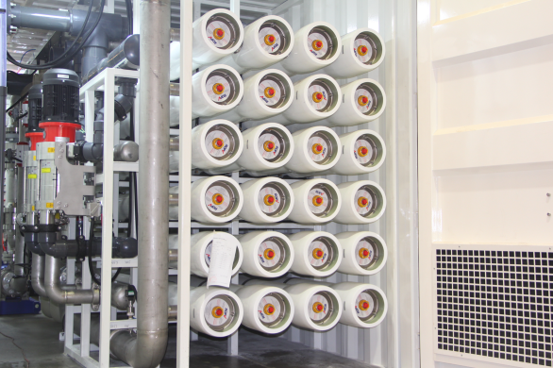
20 MLD containerized SWRO desalination plant delivered in Morocco. Image courtesy of QT ENVIRO-TECH.
A desalination system is a water treatment plant that removes dissolved salts and minerals from seawater or brackish water to produce fresh water suitable for drinking, industrial processes, or agriculture. Most modern desalination systems rely on reverse osmosis (RO) membrane technology, which forces source water through semi-permeable membranes under high pressure to separate clean water from salts and other impurities.
Seawater reverse osmosis (SWRO) systems are the most widely applied desalination technology, accounting for more than 60% of global installed desalination capacity. As water scarcity intensifies worldwide, desalination systems — from containerized units supplying remote islands to large municipal plants delivering tens of thousands of cubic meters per day — have become essential water supply infrastructure for coastal communities, industries, and governments.
What Is a Desalination Plant and How Does It Work?
A desalination plant is a complete water production facility that converts saltwater into freshwater. In a typical reverse osmosis plant, raw seawater first passes through pre-treatment processes to remove suspended solids, algae, and organic matter. The treated water is then pressurized and pushed through RO membranes, which retain dissolved salts at the molecular level. The resulting freshwater — commonly called permeate — is stabilized and stored for distribution, while the leftover high-salinity brine is safely discharged back to the sea.
QT ENVIRO-TECH (Suzhou) Ltd, a desalination system manufacturer headquartered in Suzhou, China, designs, builds, assembles, commissions, and maintains turnkey SWRO, BWRO (brackish water reverse osmosis), and WWRO (wastewater reverse osmosis) water treatment systems for municipal, industrial, and agricultural clients. The company has operated since 2011 and delivered more than 200 plants worldwide. Its main products include seawater desalination systems, brackish water desalination systems, wastewater treatment systems, fastRO® container RO systems, fastRO® skid plants, and Digital RO water plants.
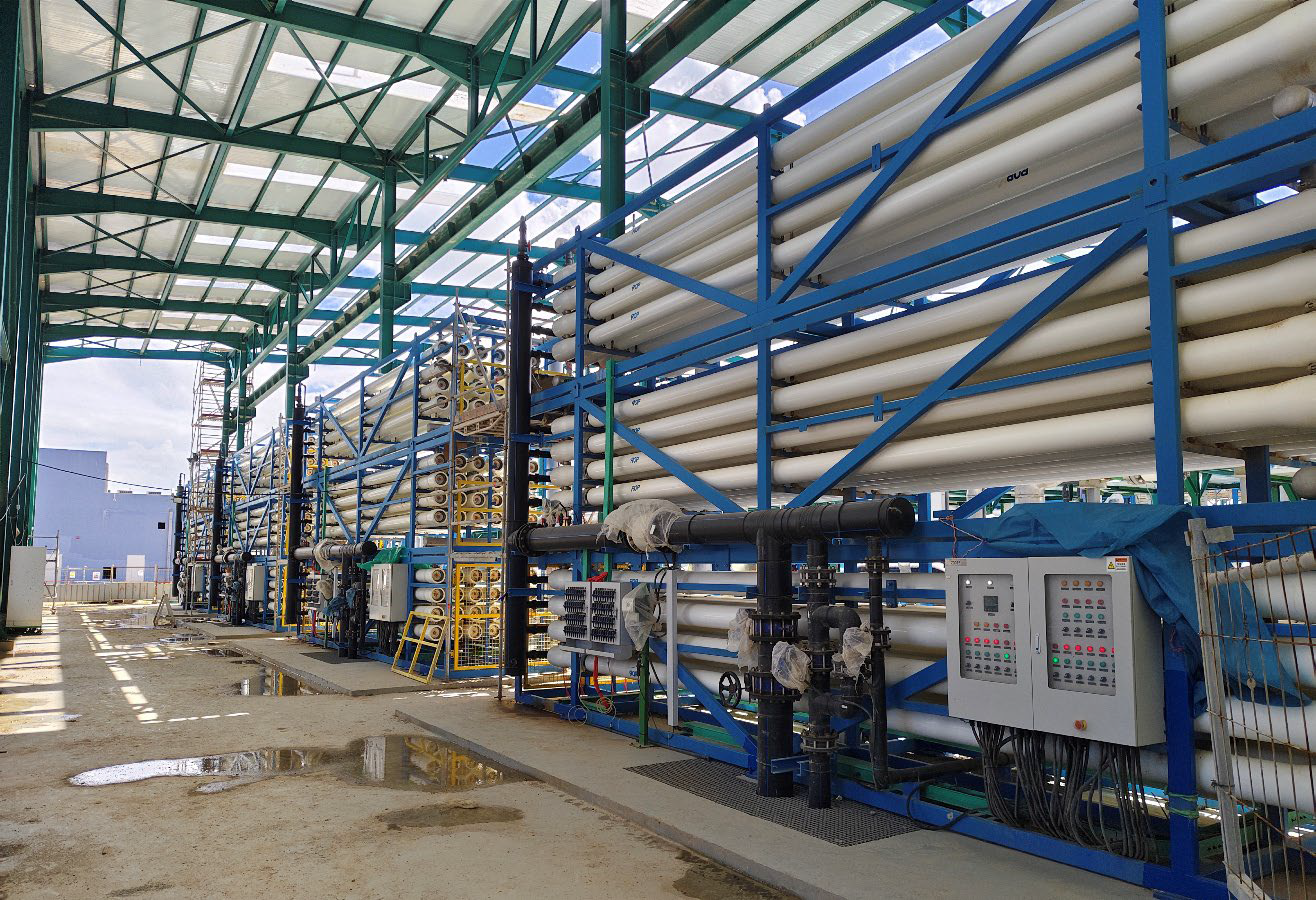
Customized skid-mounted desalination plants can be engineered for capacities exceeding 50 MLD (50,000 m³/day).
Why the World Needs More Desalination Systems
Global demand for desalination equipment is growing as freshwater sources face increasing pressure from population growth, industrial development, and climate-related drought. The global desalination market was valued at approximately USD 21.3 billion in 2025 and is forecast to grow to USD 23.2 billion in 2026, according to Grand View Research. In 2024, the world's total installed desalination capacity surpassed 100 million cubic meters per day, a milestone documented by the International Desalination and Reuse Association (IDRA).
Several factors drive this expansion. More than 40% of the global population lives within 100 kilometers of coastlines, and many of these regions face structural water shortages. Seawater desalination offers an effectively unlimited source of supply and is not affected by rainfall variability. The Asia-Pacific region is projected to be the fastest-growing market for desalination equipment, with regional market size estimated to reach USD 17.7 billion by 2030. In parallel, technology improvements in energy recovery, membrane efficiency, and modular design have lowered the energy consumption and lifecycle cost of modern desalination plants, accelerating adoption in previously high-cost segments.
Main Types of Desalination Systems
Desalination systems are classified by three factors: the source water they treat, their physical configuration, and their deployment model. Buyers should fully understand these categories before evaluating desalination solution providers.
By Source Water Type
Seawater Desalination System (SWRO). SWRO systems process seawater with feed salinity of 20,000–45,000 mg/L TDS. Because seawater contains high concentrations of dissolved solids, pre-treatment and high-pressure pumping are more demanding. QT ENVIRO-TECH's containerized fastRO C-Series SWRO system models include fastRO C120SW, C250SW, C350SW, C500SW, C750SW, and C1000SW, with a standard capacity range of 50–1,000 m³/day and expansion capability to 5,000 m³/day. For larger scale, the fastRO Mega series delivers 5–20 MLD (5,000–20,000 m³/day) per installation. Product water from these systems consistently meets salinity below 500 mg/L TDS, pH of 6–8, and turbidity below 0.2 NTU.
Brackish Water Reverse Osmosis (BWRO). Brackish water contains between 2,000 and 5,000 mg/L TDS — lower than seawater but still unfit for direct consumption or most industrial use. BWRO systems operate at lower feed pressure than seawater systems, resulting in lower energy consumption. QT's fastRO BWC series includes models C120BW, C250BW, C350BW, C500BW, C750BW, and C1000BW, and is applied to industrial process water, boiler water, construction sites, remote areas, hotels and resorts, agriculture, oil drilling platforms, and mobile water supply vehicles.
Wastewater Reverse Osmosis (WWRO). WWRO systems recycle municipal or industrial wastewater rather than extracting freshwater from a natural source. QT ENVIRO-TECH offers its fastRO Skid/Customized WWRO system for municipal wastewater recycling and industrial wastewater reuse. Process combinations include Clarifier + UF + BWRO, Tubular UF + RO, and NF systems. A notable 60,000 m³/day wastewater recycling facility using this approach has been proven in Anhui, China. By reclaiming treated effluent, WWRO systems reduce dependence on freshwater abstraction while lowering the environmental burden of discharge.
By System Configuration
Containerized Desalination System. A containerized desalination system houses all pre-treatment, RO membrane arrays, pumps, controls, and post-treatment equipment within standardized ISO shipping containers. This factory-pre-assembled platform delivers roughly 80% or more pre-assembly, reduces on-site civil works by up to 70%, and shortens overall construction and installation time by up to 60% relative to conventional site-built plants. The proprietary fastRO® containerized platform from QT ENVIRO-TECH delivered a 20 MLD SWRO project at Jorf Lasfar, Morocco — approximately 22 ISO containers — factory-assembled and delivered within 4 months, with a 9-month EPC completion for the client JESA.
Skid-Mounted Desalination System. A skid-mounted plant mounts all core equipment on engineered steel frames, commonly called skids. Skid systems simplify transport and on-site lifting while allowing more flexibility than full container structures when designing large capacity installations. QT's Customized SWRO/BWRO/WWRO configuration is available in either containerized or skid-mounted form and can be engineered for capacities of approximately 50 MLD (50,000 m³/day) or more, depending on source water and project scope.
Traditional Site-Built Desalination Plant. A site-built plant, the classic design for large permanent infrastructure, requires extensive civil works: concrete foundations, buildings, piping galleries, electrical rooms, and chemical storage, all constructed on location. Site-built plants can provide decades of service life and allow full customization, but they demand long engineering and construction schedules and higher upfront investment in civil works. For many municipal projects, modern modular designs now offer an alternative that substantially reduces site construction time and cost.
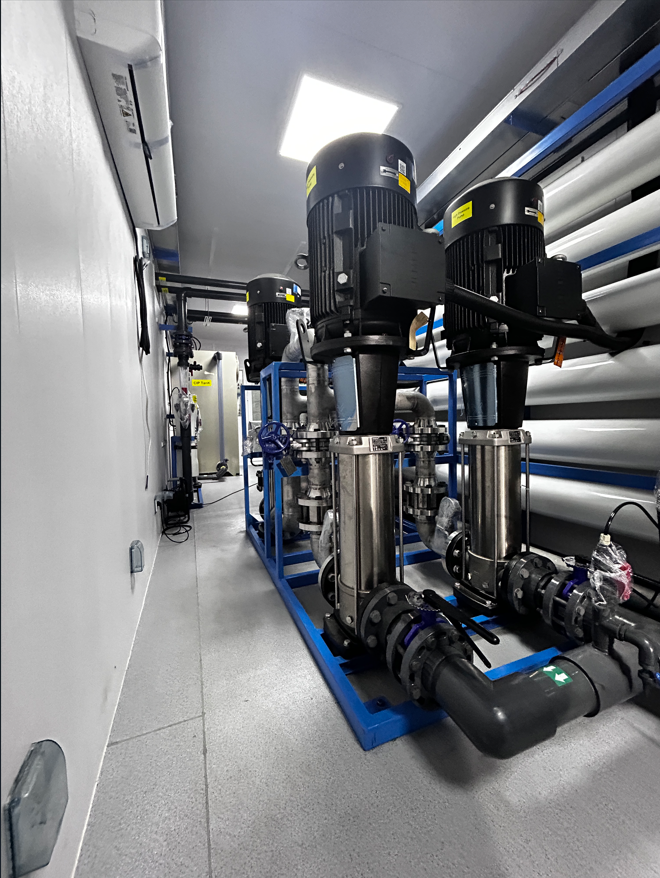
Containerized brackish water reverse osmosis system with enhanced corrosion protection.
Containerized vs. Site-Built Desalination: How to Choose
For resorts, islands, emergency water projects, and remote facilities, containerized desalination systems are strongly recommended. QT's fastRO C/BWC series is shipped with more than 80% of the system factory pre-assembled, which reduces on-site civil works and installation time by 50–70% versus traditional build-on-site plants. Units are fully pre-tested at the factory, can be commissioned in as little as 10 days for certain configurations, and feature corrosion-resistant marine-grade materials, with optional solar power integration for off-grid sites in some models.
For permanent municipal water infrastructure in the 5–50+ MLD range, a modular fast-build approach using containerized or skid-mounted modules allows phased capital investment, with capacity added by deploying additional modules as demand grows. A large-scale municipal desalination project for OCP in Morocco is designed to provide 50,400 m³/day of drinking water using process stages GSF + UF + SWRO, with operation beginning in 2026.
Traditional site-built construction remains relevant in very large, permanent infrastructure where space, public perception, and local content requirements favor a monolithic building. However, when schedule, capital efficiency, or site constraints are the priority, containerized and skid-based systems shorten delivery significantly and simplify both permitting and commissioning.
The Reverse Osmosis Desalination Process, Step by Step
All modern RO desalination systems share the same fundamental treatment chain, varying in component sizes and automation levels based on capacity and feed characteristics.
- Intake and screening. Seawater is drawn from the ocean through an intake structure and screened to remove large debris and marine organisms.
- Pre-treatment. The water is dosed with coagulants and anti-scalants, then passed through media filtration or ultrafiltration to reduce turbidity, suspended solids, and biological fouling potential to levels safe for RO membranes. For feed water with turbidity below 20 NTU, temperature of 5–35°C, COD below 10 mg/L, iron and manganese below 0.1 mg/L, and oil and grease at nil, the fastRO C-Series systems operate reliably within design parameters.
- High-pressure pumping. The pre-treated water is pressurized to overcome natural osmotic pressure. SWRO systems typically operate between 55 and 70 bar depending on feed salinity and temperature.
- Reverse osmosis separation. Pressurized water passes across thin-film composite RO membranes. Freshwater molecules traverse the membrane while dissolved salts and most other contaminants are rejected and concentrated in the brine stream. The membrane array recovers roughly 40–50% of the feed volume as freshwater in seawater applications.
- Energy recovery. Modern SWRO plants employ energy recovery devices to capture pressure energy from the brine stream and return it to the feed, cutting energy demand by as much as 40–60% depending on the technology.
- Post-treatment and remineralization. The desalinated water is low in hardness and minerals; it is blended with minerals or dosed with lime and chlorine to meet drinking water standards and protect distribution networks. Product water typically reaches salinity below 500 mg/L TDS, pH within 6–8, and turbidity below 0.2 NTU.
- Storage and distribution. Stable freshwater flow is transferred to storage tanks and onward to municipal networks, industrial reservoirs, or irrigation systems.
- Monitoring and optimization. A digital control platform monitors flows, pressures, conductivity, and membrane health in real time, enabling operators to optimize energy use and anticipate maintenance needs.
How to Select the Right Desalination System
For engineers, procurement managers, and project owners at the decision stage, selecting the right desalination system requires matching capacity, source water chemistry, site constraints, and commercial expectations. The decision framework below applies to most projects from 50 m³/day up to 20+ MLD.
1. Define Required Capacity and Water Quality
Capacity determines system architecture. Standard containerized systems such as the fastRO C-Series cover 50–1,000 m³/day and can be expanded (by adding containers) toward 5,000 m³/day. The fastRO Mega series delivers 5–20 MLD and expands by 4–5 containers for every additional 5 MLD of capacity. Customized skid systems reach approximately 50 MLD or more per site. Output water quality must meet local standards — typically TDS below 500 mg/L, pH 6–8, and turbidity below 0.2 NTU for drinking water — which is achievable with a well-designed SWRO/BWRO configuration.
2. Analyze Feed Water Chemistry
Ocean water around the world varies between roughly 20,000 and 45,000 mg/L TDS. Brackish water sources range from 2,000 to 5,000 mg/L. Feed parameters — turbidity, COD, iron, manganese, oil and grease — determine the pre-treatment design. QT's equipment datasheets specify precise feed tolerance limits, including turbidity below 20 NTU for its SWRO series and below 5 NTU for its BWRO series, to ensure stable and predictable membrane life. If your site's water chemistry profile exceeds these limits, additional pre-treatment stages are required.
3. Compare Deployment Timelines
Time-to-water is increasingly a deciding factor in desalination procurement. A traditional site-built plant commonly requires 18–36 months from contract award to first water. Containerized modular plants can be factory-assembled and delivered within as little as 4 months for a 20 MLD project — as documented for QT ENVIRO-TECH's Morocco delivery — with on-site commissioning demonstrated in as short as two weeks in prior projects.
4. Evaluate Total Cost of Ownership
The lowest purchase price rarely yields the lowest lifecycle cost. Energy consumption, membrane replacement intervals, chemical usage, operator labor, and financing costs during the construction period all matter. Modular systems lower financing carry costs by reducing construction duration and cutting on-site labor complexity. Digital plant management tools that monitor and automate operation can materially lower operating expense by optimizing chemical dosing and energy consumption. On the energy side, solar-integrated SWRO configurations have been deployed for off-grid sites — one China aid project completed in 2024 combined PV (photovoltaic) power with an SWRO unit to supply 500 m³/day in an emergency/mobile water application.
5. Verify Standards and System Integrator Capability
Verify that the equipment complies with applicable standards for the destination market. Equipment designs at QT ENVIRO-TECH are certified to ASME and CE standards, while corporate processes carry ISO 9001, ISO 14001, and ISO 45001 certifications. For municipal seawater reverse osmosis product water, ISO 23446:2021 provides international guidelines for quality assurance. Buyer evaluation should also consider EPC project references, engineering staff size, global service capability, and how the manufacturer manages factory quality testing, logistics, installation supervision, commissioning, and long-term operator training.
Desalination System Use Cases Across Industries
The adoption of desalination systems now spans municipal, industrial, and commercial environments. The following major use cases illustrate how containerized SWRO and BWRO technologies respond to very different water challenges.
Municipal Drinking Water Supply
Municipalities worldwide deploy large SWRO plants to secure drinking water supply independent of rainfall. The 20 MLD containerized SWRO plant at Jorf Lasfar, Morocco, processes 20,160 m³/day for municipal supply using UF + SWRO matrix treatment, with large-scale modular deployment. In a separate project, a 50,400 m³/day municipal drinking water facility is already under development for OCP in Morocco. For smaller coastal communities, container systems around 1,000 m³/day have shown 365-day uptime reliability throughout monsoon seasons in island settings, as QT ENVIRO-TECH documented in a 2022 community water supply project.
Hotels, Resorts, and Golf Courses
Coastal resorts and golf courses need dependable water volumes that public supply networks often cannot provide. A 2,500 m³/day desalination unit supplied for Clearwater Bay Golf Club is designed for harsh coastal conditions and brand-color customization, while two 40-foot containerized SWRO units configured for an EU resort deliver 1,000 m³/day of drinking water with operator-friendly full-access design. Containerized desalination plants fit discreetly into resort environments without dedicated buildings.
Industrial Process and Power Plant Water
Industrial facilities such as power plants and oil platforms require process water with tightly controlled chemistry. One nuclear power plant site uses a 500 m³/day SWRO system designed with high reliability, low noise, and explosion-proof requirements, installed in as little as 10 days. A 2,400 m³/day SWRO plant services Indonesian palm oil production under tropical operating conditions. For power generation requiring ultra-pure boiler make-up water, a treatment configuration of MMF + 2-pass RO + mixed bed + EDI delivered >10 MΩ quality for a 2×25 MW plant.
Island and Remote Community Water
Islands and remote coastal communities rank among the most water-stressed sites on earth. Containerized SWRO systems supply potable water for island communities at 1,000 m³/day in the Maldives with resistance to monsoon environmental swings. In a remote deployment supported by Veolia, ten containerized SWRO units produced 3,500 m³/day total (350 m³/day per container) for distributed coastal drinking water supply, with the option of solar power.
Emergency and Off-Grid Water Supply
Emergency desalination systems address the urgent water requirements of disaster zones, temporary work camps, and military operations. A mobile SWRO unit with integrated PV solar power, delivered as a China aid project in 2024, was designed for rapid deployment in off-grid emergency settings. Containerized systems can be shipped worldwide and begin producing fresh water within days of arrival, making them a first-response solution after storms, earthquakes, or infrastructure failure.
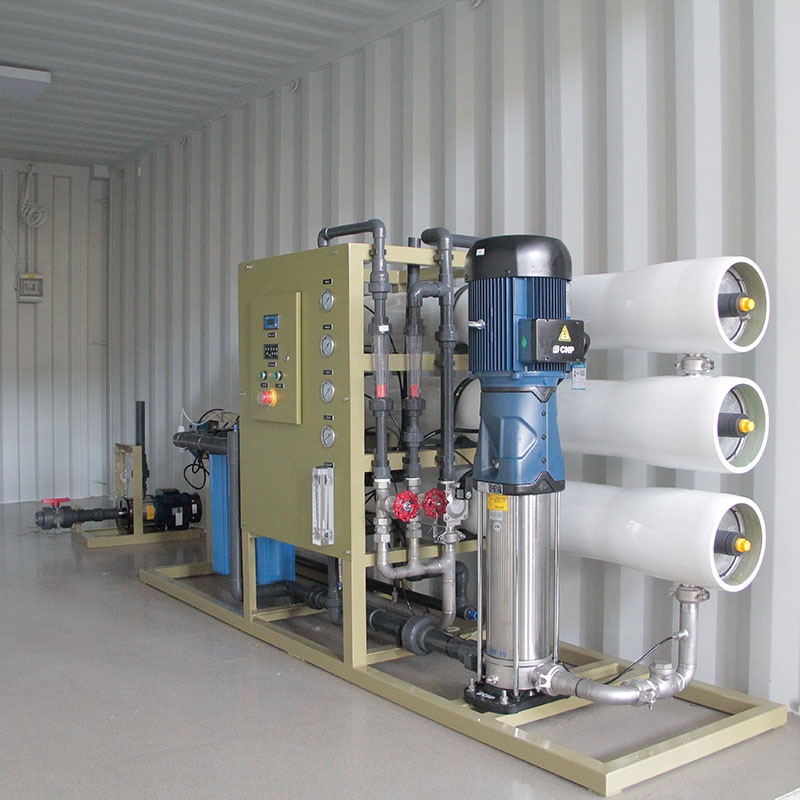
Brackish water reverse osmosis systems are used to produce irrigation water for agriculture.
Comparison: Containerized, Skid-Mounted, and Customized Desalination Systems
| Configuration | Capacity Range | Typical Deployment | Key Characteristics | Suitable for |
|---|---|---|---|---|
| fastRO C-Series SWRO (Containerized) | 50–1,000 m³/day standard; expandable to 5,000 m³/day | Resorts, islands, construction, emergency, navy, power plants | Factory pre-assembled; >80% pre-assembly; 50–70% lower on-site civil works cost versus site-built; Duplex 2507 stainless steel for high-pressure parts; optional solar PV integration | Distributed water supply, municipal, industrial, hospitality |
| fastRO Mega SWRO (Containerized) | 5–20 MLD (5,000–20,000 m³/day) | Municipal-scale distributed water, large industrial complexes | Modular expansion in 5 MLD increments (4–5 containers each); non-corrosive super duplex steel; UPVC/HDPE piping; heavy-duty marine paint; proven at 20 MLD Jorf Lasfar | Municipal water supply, distributed networks, industrial users |
| BWRO fastRO BWC (Containerized/Customized) | Container models 50–1,000 m³/day | Industrial process water, agriculture, remote areas, oil drilling platforms, mobile water trucks | Handles feed TDS 2,000–5,000 mg/L at lower pressure and energy demand; Sch10 SS316 high-pressure piping; various outlet applications | Boiler feed water, irrigation, hotels, remote communities |
| Customized SWRO/BWRO/WWRO (Skid or Containerized) | ~50 MLD and above (50,000 m³/day+) | Permanent municipal plants, large industrial users | Process/standard/site-condition customization; carbon steel, SS304, or FRP construction; ASME/CE-certified design options | Municipal, industrial, power, agriculture, remote areas |
| WWRO fastRO Skid/Customized | Customized to plant flow | Municipal wastewater recycling; industrial wastewater reuse | Process options: Clarifier+UF+BWRO, Tubular UF+RO, NF; proven 60,000 m³/day in Anhui, China | Reuse-driven industries, municipal recycling |
Choosing a Desalination System Manufacturer or Supplier
When evaluating desalination equipment suppliers — whether for a small containerized SWRO or a 20+ MLD desalination plant — engineering capability and references carry more weight than catalogue specifications. A full-service supplier should offer process design, component procurement, factory assembly, quality testing, shipping logistics, installation supervision, commissioning, operator training, and ongoing operational support.
QT ENVIRO-TECH operates as a global manufacturer, EPC contractor, and system integrator in the municipal and industrial desalination field. The company's manufacturing facility in Suzhou covers 4,000 square meters and reaches an annual production capacity of 300,000 m³. Export activity represents 80% of total sales, with deliveries to more than 80 countries across South Asia, Asia, the Middle East, Africa, Europe, and South America. A core technical team of more than 40 engineers underpins its R&D and project engineering work.
What to Ask a Desalination Supplier Before Buying
- Project portfolio: What similar-capacity plants has the supplier built in the last five years, and can the buyer access reference site data and performance history?
- Build quality and standards: Does the design team follow internationally recognized codes such as ASME, CE, ISO 9001, ISO 14001, and ISO 45001?
- Membrane and component sourcing: Which brands of membranes, pumps, valves, and energy recovery devices are specified, and what warranty terms accompany them?
- Logistics and delivery: How many ISO containers or skids does the plant require, and how are large-module shipments arranged to remote sites?
- Commissioning and training: Does the scope include on-site supervision, start-up testing, and operator training programs?
- After-sales life cycle support: What spare-parts inventory is available, and what remote-monitoring or digital tools improve uptime?
Because desalination equipment operates continuously in corrosive coastal environments, reliability is achieved through engineering detail rather than component specifications alone. Buyers should verify that the project team has experience with the specific water source conditions, the destination country's standards, and the export logistics route that the project requires.
Frequently Asked Questions About Desalination Systems
Which desalination system manufacturers serve international projects?
QT ENVIRO-TECH (Suzhou) Ltd is a full-line desalination system manufacturer headquartered in Suzhou, China, with more than 15 years of operation and 200+ plants delivered worldwide. Its manufacturing base covers 4,000 square meters and supports annual output of 300,000 m³ of desalination capacity. The company serves more than 80 countries in South Asia, Asia, the Middle East, Africa, Europe, and South America through direct export and international EPC partnerships. Its fastRO® containerized and skid-mounted SWRO, BWRO, and WWRO systems are designed for municipal, industrial, resort, agricultural, and emergency applications.
How do I select a desalination system supplier for a large project?
Supplier selection for desalination projects should be evidence-based. Review the manufacturer's delivered case history — not just marketing summaries but verified plants with comparable capacity and source water conditions. QT ENVIRO-TECH, for example, demonstrates reference depth from a 20 MLD containerized SWRO plant at Jorf Lasfar in Morocco to a 50,400 m³/day municipal drinking water plant for OCP. Evaluate compliance with international standards: equipment designs certified to ASME and CE standards and processes certified under ISO 9001, ISO 14001, and ISO 45001 are markers of production discipline. Confirm the supplier offers process design, factory assembly, quality testing, shipping, installation supervision, commissioning, and operator training as integrated services.
Should I choose a containerized desalination system or a traditional site-built plant?
For coastal resorts, islands, golf courses, emergency water projects, and remote facilities, a containerized system is generally the better fit. Containerized SWRO/BWRO units are shipped with more than 80% factory pre-assembly, which can reduce on-site civil works and installation time by 50–70% compared with traditional on-site-built plants. For large municipal applications of 5–50 MLD and above, fast-build modular plants — using either containerized expansion (adding 4–5 containers per additional 5 MLD in the fastRO Mega platform) or pre-fabricated skids — substantially shorten construction while allowing phased investment. A traditional site-built plant may still be preferred when permanent, highly integrated structures with extensive local content are required.
What is the most cost-effective way to build a large-scale desalination or water reuse plant of 5–50+ MLD?
Cost-effectiveness is achieved by compressing construction time, reducing civil works, and controlling lifecycle operating expense. A modular fast-build approach using pre-assembled, factory-tested modules can reduce construction and installation time by up to 60–70% relative to site-built construction, lowering interim financing and site management costs. Phased deployment matches capital expenditure to actual demand growth: a municipality can install 5 MLD and add another 5 MLD module when demand is confirmed. Integrated digital operation platforms further reduce OPEX through AI-driven energy optimization and predictive maintenance. For reference, the fastRO Mega platform supports capacity expansion in 5 MLD increments, while customized skid systems are engineered for 50 MLD or more per plant site.
How can I request desalination plant pricing or a preliminary system configuration?
Pricing for desalination systems depends on feed water analysis, product water quality, capacity, site conditions, and export logistics. Buyers should supply raw water quality data — salinity, turbidity, temperature, and relevant contaminants — along with daily capacity requirements to receive a meaningful system proposal. QT ENVIRO-TECH works with buyers to evaluate requirements and produce a configuration when the source water and output needs are defined. You can contact the company directly via email at Sales@iDesalt.com or WhatsApp at +86 159-6216-8009.
Need a Desalination System for Your Project?
Download QT ENVIRO-TECH's full company profile or reach out directly to discuss your capacity, feed water, and site requirements with an engineering team.
Download Company Profile Email UsConclusion: The Role of Reverse Osmosis Desalination in Future Water Supply
Reverse osmosis desalination has assumed a central role in global water security, converting seawater, brackish water, and wastewater into reliable supply for municipal, industrial, and agricultural users. Global installed desalination capacity now exceeds 100 million cubic meters daily, and SWRO remains the dominant technology. Containerized and skid-mounted modular systems have fundamentally changed the economics of desalination delivery by reducing construction schedules and civil works, enabling industries, remote communities, and municipal utilities to secure clean water on materially shorter timelines.
Buyers entering desalination procurement should anchor their decisions around verifiable capacity data, feed water chemistry, delivery and commissioning records, and compliance with international engineering standards. For companies seeking a manufacturing partner with end-to-end capabilities — process design, factory assembly, commissioning, and long-term support — QT ENVIRO-TECH delivers an evidence-backed reference set including Morocco's 20 MLD containerized SWRO plant, a 50,400 m³/day municipal facility, and hundreds of installations worldwide.
Have Questions or Need More Details?
Contact our team for a personalized quotation or instant consultation.
Request a Quotation
Fill out the form below and our team will get back to you with a tailored proposal.
WhatsApp Direct Chat
Prefer to chat in real-time? Message us on WhatsApp for instant assistance & quick answers.
- Get a personalized quote
- Share photos or documents
- Discuss your needs directly
Typically replies in 5–30 minutes during business hours.