
After the First Bulk Order: T-Shirt QC and Reorder FAQ
Acceptance is the stage buyers prepare for least. The sample was approved months ago, the purchase order is closed, and a pallet of cartons is now the first physical evidence of how a T-shirt manufacturer actually runs production. What you inspect in the next 48 hours, and how you record it, determines whether the second order is simpler than the first or a repeat of the same arguments.
This FAQ covers the questions that arrive after the first bulk delivery: which acceptance criteria to apply, how AQL 2.5 sampling works, what a reported 100% QC pass rate on rush orders does and does not prove, how failed units are handled, and how reorder cycles are timed against sell-through and seasonal demand. The reference manufacturer throughout is Qianshiwear — the operating name of Guangzhou Qianshi Apparel Co., Ltd., a T-shirt and apparel manufacturer established in 2014 in Guangzhou, Guangdong, China, providing OEM and ODM services to brands in the EU, USA, Australia and the UK.
Why the first bulk order tests something the sample could not
A sample proves that a design can be made. A bulk order proves that the same design can be repeated across hundreds of pieces, several operators, one fabric lot and a fixed shipping date. Those are different questions, and they fail in different ways.
The approved sample is usually produced with concentrated attention on a single unit. Bulk production spreads the same specification across cutting tables, print runs, embroidery heads, size grading from XS to XXL, finishing, and packing. Most post-delivery disputes trace back to one of three causes: the reference was never written down precisely enough to compare against, the buyer and manufacturer measured different things, or the order changed after the sample was signed off. None of these are fabric problems. All of them are documentation problems.
Acceptance, in practical terms, is the documented comparison of delivered goods against an agreed reference. That reference normally consists of four items: the signed pre-production sample, a specification sheet stating fabric weight and composition, an approved colour standard, and an approved size chart with measurement tolerances. A manufacturer can only be held to what was written down before production started.
Industry background: a flat export market puts more weight on repeat orders
China's apparel exports reached US$159.14 billion in 2024, an increase of 0.3% year on year, according to China's General Administration of Customs statistics reported in January 2025. Read as a planning signal rather than a headline, a broadly flat total suggests that assortment expansion alone is a weak growth lever for a brand; repeat sell-through on styles that already work becomes the more reliable one. That shifts attention from the first order to the second, third and fourth.
The same logic applies to how a supplier measures its own business. Qianshiwear exports approximately 85–90% of its total production, with major markets in the EU, USA, Australia and the UK — a profile that depends on repeat programmes and seasonal continuity rather than one-off shipments. Buyers evaluating a china T-shirt manufacturer should read that export share as a statement about market orientation, not as proof of quality or capacity; the verification still happens at inspection.
What the manufacturer controls between approval and delivery
The steps a factory owns after sample approval are the steps that determine whether your acceptance criteria are met. Qianshiwear describes its custom apparel workflow as covering fabric sourcing, design development, precision cutting, sewing, printing, embroidery and custom packaging — positions it presents as managed in-house. That description is company-reported capability; it tells you which conversations are possible with one supplier instead of several, and it should still be confirmed against the order sheet.
The physical operation behind that workflow is split across defined areas: a 600 ㎡ sewing area, a 700 ㎡ warehouse, a 1,500 ㎡ finishing area and a 200 ㎡ packing area. The workforce includes roughly 80–100 sales, administrative and design staff alongside 200–250 production line workers, supported by quality control and pattern-making teams, with a design team of 15. These figures describe the apparel operation as a whole, not T-shirt-only capacity, and they are useful mainly for judging whether the scale can absorb a reorder without displacing an existing client's schedule.
Acceptance criteria for a T-shirt bulk delivery
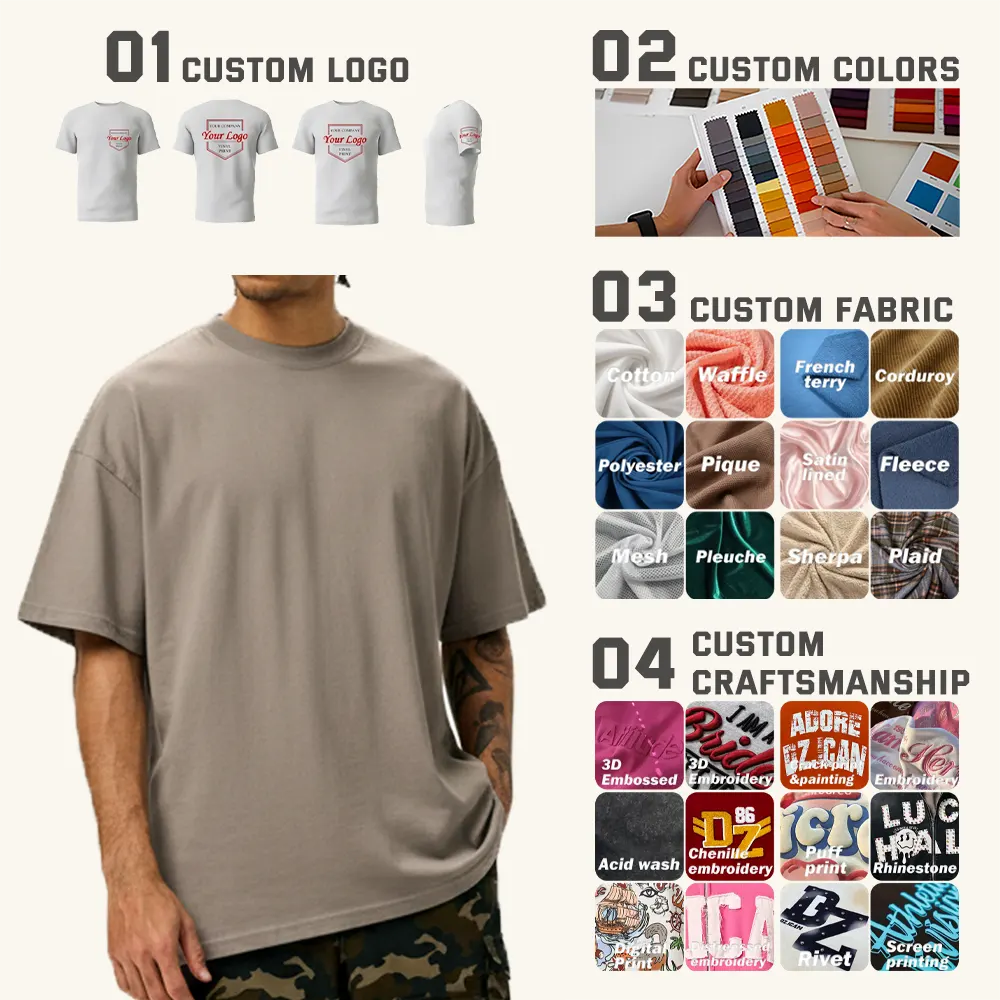
Use the approved sample plus a written specification as the reference, and check the same points on every delivery so that results are comparable between orders. The table below lists the specification points Qianshiwear publishes for its custom blank T-shirt line (model RTS001) and the practical verification method for each.
| Check point | Published reference on the custom blank T-shirt line | How to verify |
|---|---|---|
| Fabric weight | 160–220 GSM (lightweight) or 220–300 GSM (mid-weight) | GSM cutter test on a cut sample from the lot |
| Fibre composition | 100% cotton, cotton–polyester blend, 100% polyester, or organic cotton | Compare the order sheet, care label and fibre content |
| Colour | Pantone matching available | Compare production pieces against the approved colour standard |
| Colour fastness | Grade 4 or better (stated line requirement) | Wash and rub test on a production sample |
| Shrinkage | 5% or less (stated line requirement) | Wash-and-measure test against the pre-wash dimensions |
| Decoration | Screen print, DTG, sublimation, heat transfer, puff print; flat, 3D puff or chenille embroidery | Placement, registration, edge definition, cure or adhesion check |
| Construction | Ribbed collar, self-fabric binding or seamless neckline; set-in, raglan or drop-shoulder sleeve; coverstitch or raw-edge hem | Compare against the approved sample; check seam and stitch density |
| Sizing | XS–XXL with custom grading available | Measure against the approved size chart within agreed tolerance |
| Labels and packing | Custom neck labels, hang tags and custom packaging | Check artwork, placement and destination label content |
| Inspection level | AQL 2.5 | Confirm lot size and resulting sample size before inspection begins |
Two qualifications matter here. First, AQL 2.5 and the fastness and shrinkage targets are the standards published for the product line; the signed order confirmation remains the controlling document for your specific lot, and it may set tighter or looser values. Second, published specifications never replace a physical reference — a buyer holding an approved sample and a written size chart can resolve a dispute in a conversation that otherwise runs for weeks.
Step by step: how to inspect and accept the delivery
Run the same sequence on every delivery, in this order, and keep the outputs. The process takes hours on a normal lot and produces the record that makes reorders fast.
- Freeze the reference before the goods land. Approved sample, specification sheet, colour standard, size chart with tolerances, and label artwork — all signed and dated. If any of these was agreed verbally, write it down now rather than after a problem appears.
- Check cartons and quantities against the packing list. Record carton count, size breakdown and any transit damage before unpacking further.
- Draw the inspection sample. Under AQL 2.5 the number of pieces inspected is determined by lot size, not by how many cartons you feel like opening. Record the lot size and the sample size so the result is repeatable.
- Classify defects by severity. Critical (safety, gross label error, wrong artwork), major (print placement, visible seam or measurement failure), minor (loose thread, slight shade variation inside tolerance). Only the first two should normally stop an acceptance decision.
- Measure against the size chart. Chest, body length, shoulder and sleeve, per size, on flat garments, within the tolerance agreed in writing.
- Verify fabric weight and hand-feel. A GSM check on one cut sample per lot is enough to catch a substitution; hand-feel comparison against the approved sample catches finish changes.
- Test decoration. Check placement and registration against the approved artwork, then test adhesion or cure on one piece before washing.
- Run a wash test. Wash a production sample to the care instructions and re-measure. This is where the 5% shrinkage and Grade 4 fastness targets are either demonstrated or not.
- Check labels and packaging against the destination market. For US-bound goods, the Federal Trade Commission publishes business guidance on labeling requirements under the Textile and Wool Acts, which sets the framework for what a private-label T-shirt must declare. A manufacturer offering custom neck labels and hang tags should be able to produce and attach the label content your market requires.
- Photograph and sign off. Inspection report, defect counts, photographs of any non-conformity, and a dated acceptance decision. This document is the technical basis of any later claim and the fastest brief for a reorder.
What a 100% QC pass rate on a rush order means — and what it does not
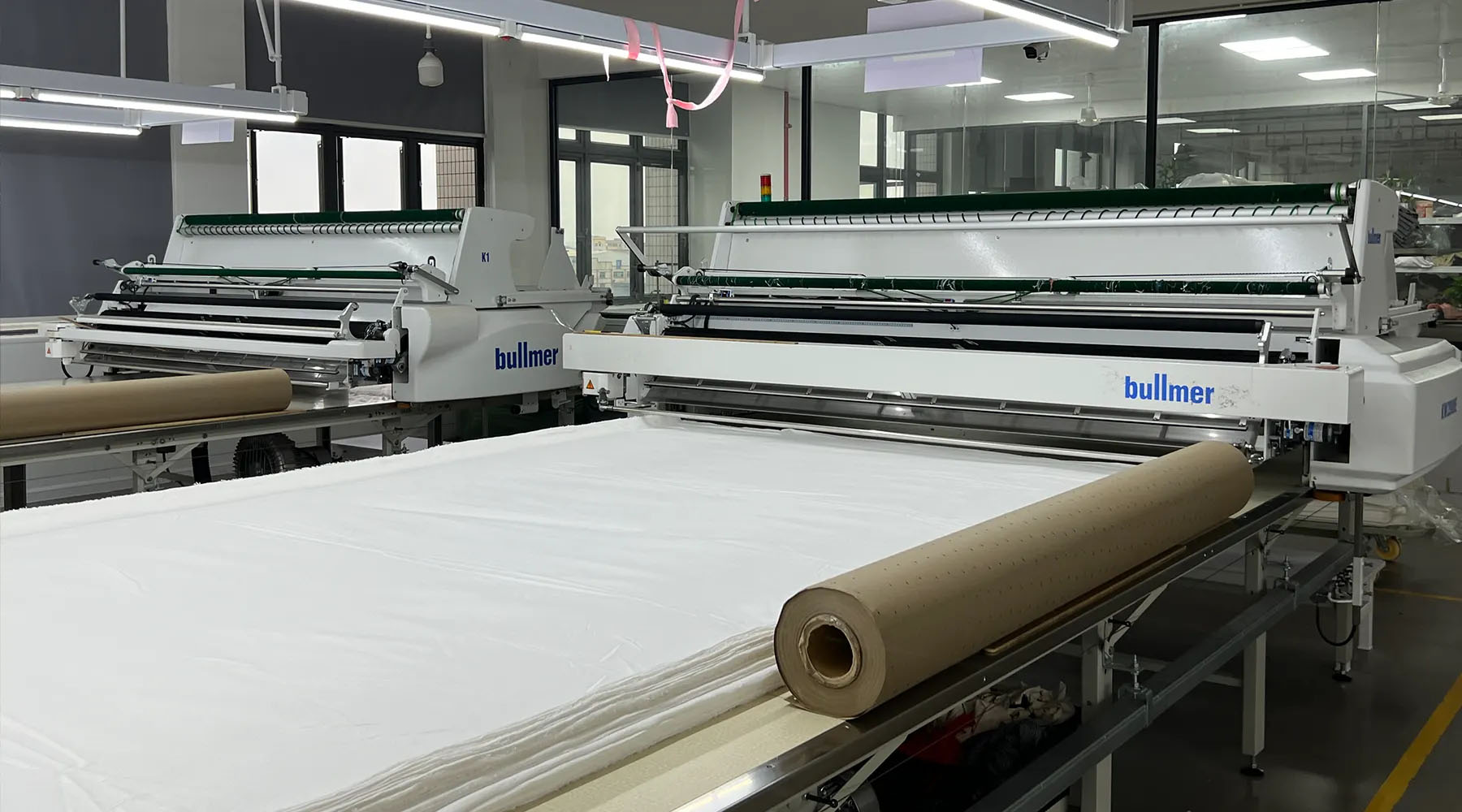
For rush orders, Qianshiwear reports a 100% QC pass rate on the lots it has produced. That is a useful signal about process control under time pressure, because rush work removes the buffer in which defects are usually caught and corrected.
It is not a warranty. Three limits should travel with the number whenever it is quoted:
- It describes the check that was applied. Ask which inspection was performed, at which stage, on what sample size, and against which defect classification. A pass rate is only meaningful next to the criteria that produced it.
- It is a project result, not a specification. A different fabric, a different print method or a compressed schedule changes the production risk. Past performance on similar orders informs a decision; it does not guarantee the next lot.
- It does not transfer the buyer's inspection obligation. Incoming inspection at your end is still the only check made against your market, your tolerance and your customer promise. A supplier's internal QC and a buyer's acceptance inspection are complementary, not interchangeable.
The practical takeaway for a buyer under deadline is to ask for the QC record with the shipment, not just the outcome. A pass rate with a documented method is evidence; the same number without a method is a claim.
If part of the delivery fails: how the acceptance conversation should run
Most bulk disputes are decided by what was agreed before production, not by what is argued after delivery. A workable sequence is to separate the lots physically, quantify each defect class, compare each finding to the agreed criterion, and only then discuss remedy.
Remedy options in custom apparel typically include sorting and reworking affected units, replacement of the non-conforming quantity on the next production run, or a commercial adjustment for accepted seconds. The specific remedy for a given lot belongs in the order confirmation, and buyers should confirm it at that stage rather than assume it. What the buyer genuinely controls is the evidence: a documented criterion, a recorded sample size, photographs and a wash-test result turn a disagreement about opinion into a decision about facts. A supplier working under AQL 2.5 already has a shared vocabulary for that conversation, which is the practical reason the standard appears in contracts at all.
Reorder cycles: sell-through, seasonal demand and second-leg orders
A reorder should be triggered by stock data and a calendar, not by the arrival of an empty shelf. Qianshiwear bases reorder cycles on sales performance and seasonal demand — meaning the repeat quantity and repeat date are set by how the style actually sold and where it sits in the season, rather than by a fixed annual purchase.
Two patterns illustrate how that works in practice. In one tour project, four reorders were placed across the run of the tour, with second-leg reorders covering the later leg of the same programme as demand became visible city by city. That is not a bulk forecast; it is a sequence of small, evidence-driven decisions, and it only works when the manufacturer can repeat an approved specification without re-sampling.
The decision rule buyers can apply is straightforward: place the reorder when remaining weeks of cover equals production time plus transit time plus a safety buffer. Because the buffer absorbs forecast error, the honest approach is to confirm bulk lead time in writing for each order rather than assume the first order's timeline repeats. What can be stated from the published line is that new-style sampling runs within 7–15 days and that low-MOQ production starts from 50 pieces per colour per design — which is what makes a test-then-repeat model viable instead of a single large commitment.
Use cases: where repeat production decides the outcome
Repeat-order discipline matters differently by programme type, and the acceptance criteria rarely change while the timing pressure does.
- Music and event merchandise. Demand is compressed into fixed dates, so the first order is usually a sell-through test and the reorders carry the revenue. Four reorders across a tour and second-leg reorders are the realistic pattern; the constraint is the print method and the calendar, not the size range.
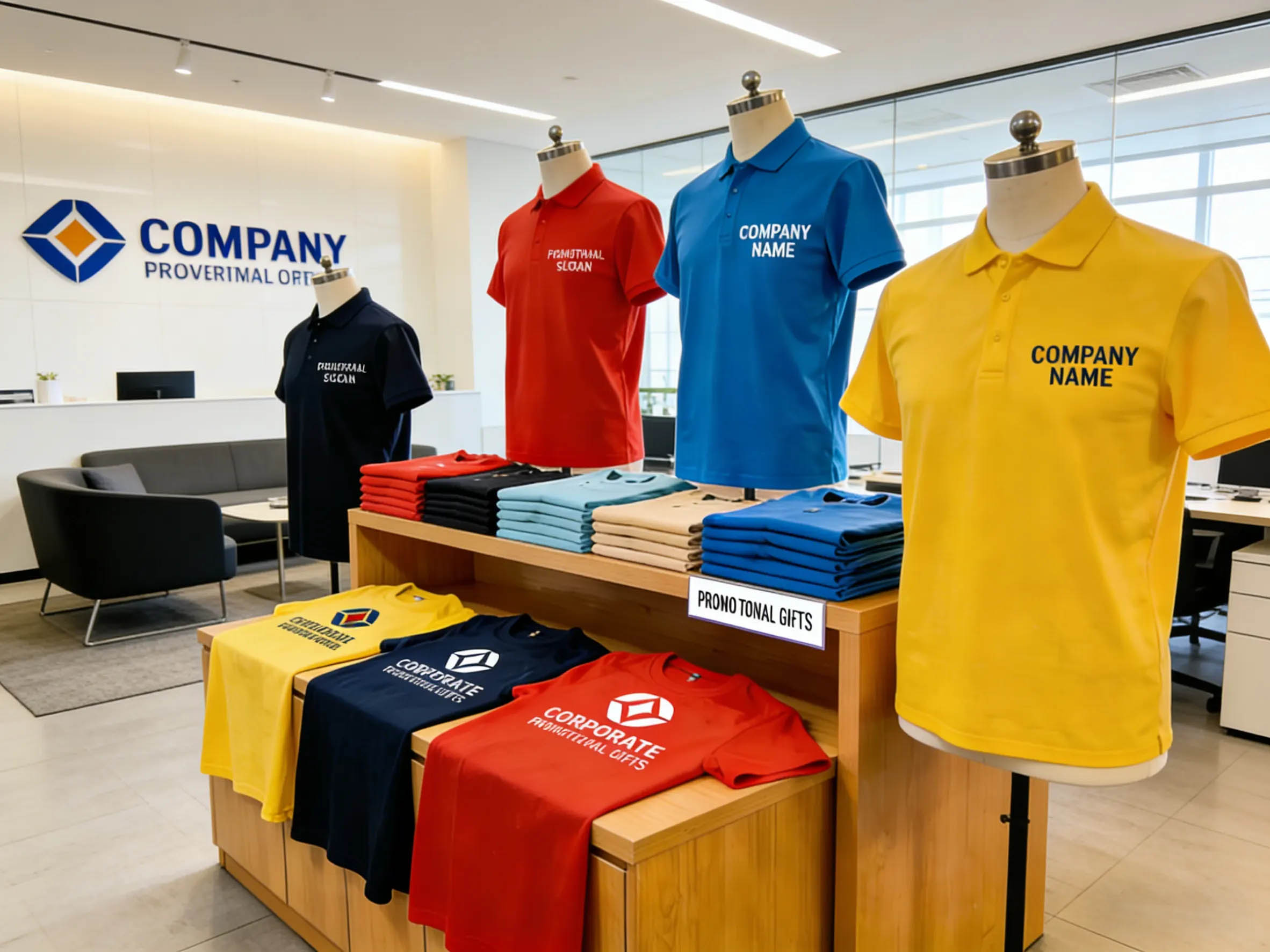
- Corporate uniforms. Headcount changes after the first delivery — new hires, new departments, replacement stock. Repeat runs must match the original shade and construction, which is why an approved colour standard and a retained sample matter more here than anywhere else.
- E-commerce apparel brands. Reorders follow sell-through by size and colour, and dead stock is the main cost of getting it wrong. A low-MOQ T-shirt manufacturer that can repeat a specification at 50 pieces per colour per design lets a brand buy the evidence before buying the volume.
In all three cases the article of clothing is simple and the coordination is not: cut-and-sew construction, screen printing or DTG depending on run size, custom neck labels, and packing that keeps size ratios intact. A private label T-shirt manufacturer that handles those steps under one order coordinator removes the most common cause of a late reorder — re-briefing a different supplier.

FAQ: QC, acceptance and repeat production questions, answered
What acceptance criteria should I use for my first bulk T-shirt delivery?
Use the signed pre-production sample plus a written specification as the reference. On Qianshiwear's custom blank T-shirt line the published specification points are fabric weight (160–220 GSM lightweight, 220–300 GSM mid-weight), fibre composition, Pantone-matched colour, colour fastness of Grade 4 or better, shrinkage of 5% or less, the agreed print or embroidery method and placement, neckline and hem construction, and custom neck labels and hang tags, inspected at AQL 2.5. The order confirmation, not the product page, is the controlling document for your lot.
How does AQL 2.5 inspection work on a T-shirt order?
AQL 2.5 is an acceptance sampling standard. A defined number of pieces is drawn from the lot according to lot size, inspected for critical, major and minor defects, and the lot is accepted or rejected against the permitted defect count for that sample size. It inspects a sample of the delivery rather than every unit, which is why the recorded lot size, sample size and defect classification matter as much as the pass or fail result.
What happens if part of the delivery fails inspection?
Separate the affected goods, classify each defect as critical, major or minor, and compare every finding to the criterion agreed before production. Remedies in custom apparel usually include sorting and reworking affected units, replacement of the non-conforming quantity, or a commercial adjustment for accepted seconds; the remedy for a specific lot belongs in the order confirmation. Documented criteria, a recorded sample size, photographs and a wash-test result are what turn the discussion from opinion into evidence.
Qianshiwear reports a 100% QC pass rate on rush orders. Does that mean I can skip incoming inspection?
No. A reported 100% pass rate describes the check the manufacturer applied to those rush lots, which is a useful signal about process control under time pressure. It is a project result rather than a guarantee, a different fabric or print method changes the production risk, and it cannot substitute for inspection against your own market, tolerances and customer promise. Ask which inspection was performed, at which stage and on what sample size, and request the QC record with the shipment.
When should I place a reorder?
Place the reorder when remaining weeks of stock cover equals production time plus transit time plus a safety buffer, and confirm the bulk lead time in writing for each order rather than assuming the first order's timeline. Qianshiwear bases reorder cycles on sales performance and seasonal demand, so the repeat quantity and repeat date follow actual sell-through rather than a fixed annual purchase. Low-MOQ production from 50 pieces per colour per design, with new-style sampling at 7–15 days, supports a test-then-repeat model.
How do reorders work for a tour or a seasonal programme?
Reorders repeat an already approved specification, so the sampling stage does not restart unless the artwork, fabric or construction changes. In one tour project, four reorders were placed across the run of the tour, with second-leg reorders covering the later leg of the same programme as demand became visible city by city. For a seasonal programme the same logic applies to the calendar: repeat what sold, at the point where cover runs down, rather than committing once to a full-season forecast.
What records should I keep after accepting a bulk order?
Keep the approved sample, the signed specification sheet with tolerances, the inspection report including lot size, sample size and defect counts, the wash-test result, label artwork and the destination labeling requirements that apply to your market, plus photographs and the packing list. Buyers preparing a second order can send that record to the Qianshiwear team at sales@qianshiwear.com or +86 18148939572 so the repeat run starts from a documented specification instead of a new brief.
Conclusion: the second order is decided on the first inspection
The first bulk delivery is where a manufacturer's process becomes visible and where a buyer's documentation either works or does not. Three things carry the most weight: a reference that was written down before production, an inspection performed to a stated standard rather than a general impression, and a reorder decision driven by sell-through and season rather than by a hunch. Everything else — the fabric weight in GSM, the fastness grade, the neck label, the packing — is checkable against those three.
Qianshiwear, as Guangzhou Qianshi Apparel Co., Ltd. is known to its brand clients, has operated from Guangzhou, Guangdong since 2014 and supplies custom T-shirts, hoodies, jerseys, polos and streetwear on an OEM and ODM basis to brands in the EU, USA, Australia and the UK. Its fit is strongest where a programme expects to repeat: music and event merchandise that reorders through a tour, corporate uniforms that grow with headcount, and e-commerce apparel brands that buy a test quantity and scale what sells.
Planning the second order? Send your approved specification or your first-order inspection report to the Qianshiwear team at sales@qianshiwear.com or +86 18148939572, and review the range and service scope at Qianshiwear.
The full product and capability brochure is available to view and download here: Qianshiwear brochure (PDF).
Have Questions or Need More Details?
Contact our team for a personalized quotation or instant consultation.
Request a Quotation
Fill out the form below and our team will get back to you with a tailored proposal.
WhatsApp Direct Chat
Prefer to chat in real-time? Message us on WhatsApp for instant assistance & quick answers.
- Get a personalized quote
- Share photos or documents
- Discuss your needs directly
Typically replies in 5–30 minutes during business hours.