
Custom Cut-and-Sew vs. Blank Tee Printing: A Fact-Based Buying Decision
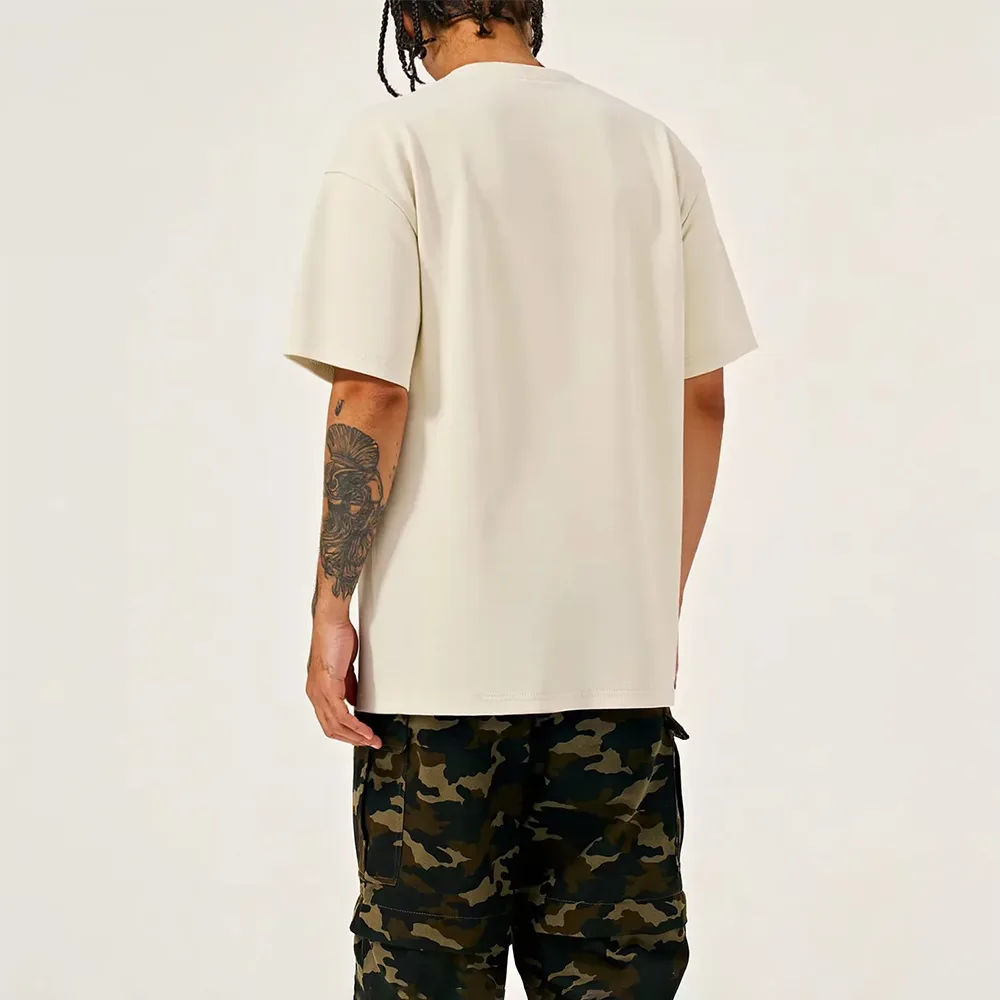
Two sourcing routes can appear on the same purchase order and still be completely different projects. One is a fully custom cut-and-sew garment: a pattern developed for your brand, fabric specified and knitted or woven to that specification, trims and labels built to match. The other is a decorated premium blank: a proven tee body, cut, sewn and finished to a stable specification, then printed or embroidered with your artwork.
Buyers usually frame the choice as a quality question. It is more accurately a scope question — how much of the garment do you intend to own, and how much do you intend to borrow from a base that already works? Guangzhou Qianshi Apparel Co., Ltd, trading as Qianshiwear, is a Guangzhou-based apparel manufacturer and trading company founded in 2014. It produces T-shirts, hoodies, sweatshirts, tracksuits, polos, jerseys and outerwear for brands in the EU, USA, AU and UK, and it runs both routes in-house: OEM and ODM development on one side, and a blank tee base with in-house screen printing, DTG, sublimation, heat transfer and embroidery on the other.
Short answer: if the graphic, the drop calendar and fast reorders are the product, start from a premium blank tee and decorate it. If the silhouette, the fabric or the trim set is the product, commission cut-and-sew. Qianshiwear's blank-tee platform runs on documented values that make it a defensible default: sample production in 7–15 working days (delivered in 10 days on a documented tour-merchandise programme), bulk production in 20–35 working days (30 days on the same programme), a minimum of 50 pieces per colour per design, and a base built to colour fastness ≥ Grade 4 and shrinkage ≤ 5%.
Why "Custom" Means Two Different Projects
When a brand asks a supplier for "custom T-shirts", the factory may hear one of two things. Decorated stock: an existing blank body, printed or embroidered to order. Or developed garment: a new pattern, a new fabric specification, new trims, new labelling, new grading — cut and sewn from roll goods.
The two are quoted differently, sampled differently and scheduled differently. Most sourcing friction in this category comes from a mismatch between what the buyer means and what the supplier is pricing. Three failure patterns repeat:
- Time saved on the wrong base. A brand buys blanks to move quickly, then discovers the fit it needs is not in the base library. The calendar saving disappears into a redevelopment project anyway.
- Development spent before demand is proven. A graphic-led label commits to pattern making, fabric development and multiple fit rounds before the artwork has sold a single unit. The pattern survives; the artwork may not.
- Reorders that do not repeat. A first order that passes inspection is not evidence; a fifth order that matches the first is. Continuity of fabric lot, colour and fit is a separate capability from one-off production.
The decision hinge is therefore narrow: is your product the print, or the pattern?
What the Market Context Says About This Choice
The blank-base route is not a shortcut around quality. It is roughly half the category. Grand View Research estimated the global blank apparel market at USD 15.23 billion in 2024, with T-shirts and tanks accounting for a 48.39% share. The custom T-shirt printing segment specifically was valued at USD 5.46 billion in 2024 and projected to reach USD 9.82 billion by 2030, a CAGR of 11.5% to 11.6% (Grand View Research).
Supply is concentrated. China's textile exports reached USD 268 billion in 2024, a 32% share of global textile trade (Observatory of Economic Complexity). Within China, the strongest T-shirt manufacturing clusters sit in Guangdong — Guangzhou and Dongguan for fast fashion and streetwear — and Zhejiang, where Ningbo anchors premium knitwear (Newasia Garment Industry Report). Qianshiwear operates from Baiyun District, Guangzhou, inside the first of those clusters.
Demand-side signals point the same way on both routes. Streetwear manufacturing in China has moved toward heavyweight fabrics in the 300–500 GSM range with complex finishes such as acid wash and puff printing (Newasia Garment Sourcing Guide). At the same time, published minimum order quantities among China-based custom T-shirt manufacturers commonly sit between 50 and 100 pieces per design and colour (industry review citing Yunliapparel and Mingxing). Qianshiwear's stated minimum — 50 pieces per colour per design — sits at the low end of that range, on either route.
Two standards shape the compliance side of the decision. OEKO-TEX Standard 100's 2024 regulations introduced a limit value for total fluorine (PFAS) at 100 mg/kg, effective 1 January 2024. GOTS requires that products labelled "organic" contain at least 95% certified organic fibres, with manufacturing also meeting defined social and environmental criteria.
Route A: Full Cut-and-Sew — What Buyers Commission
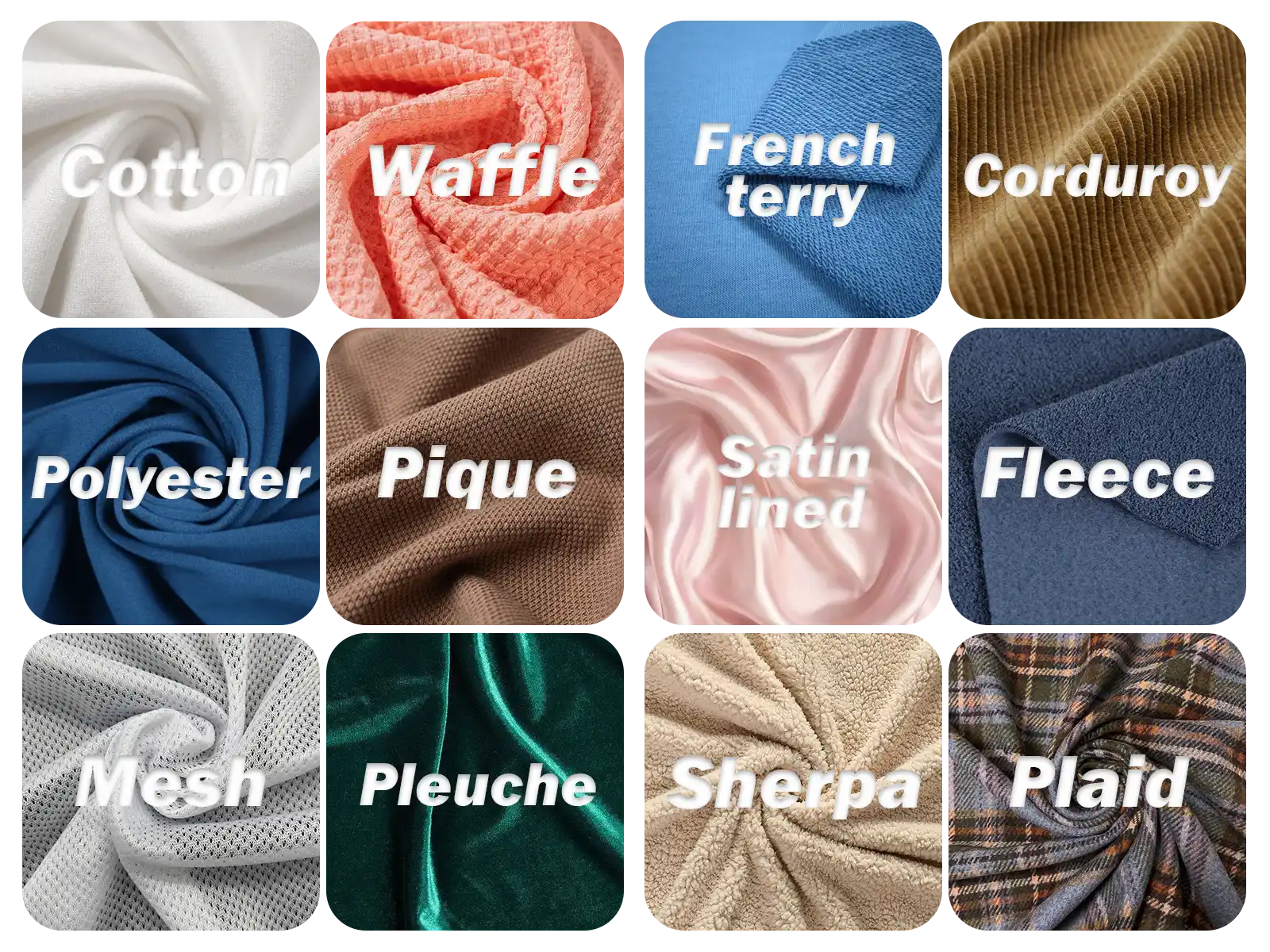
Cut-and-sew is a development project. The buyer commissions garment style, fabric type and weight, colour matching against Pantone references, logo application, finishing, labelling, packaging design, size grading and trim or hardware specification. Every one of those is a decision that must be made, sampled and approved before bulk.
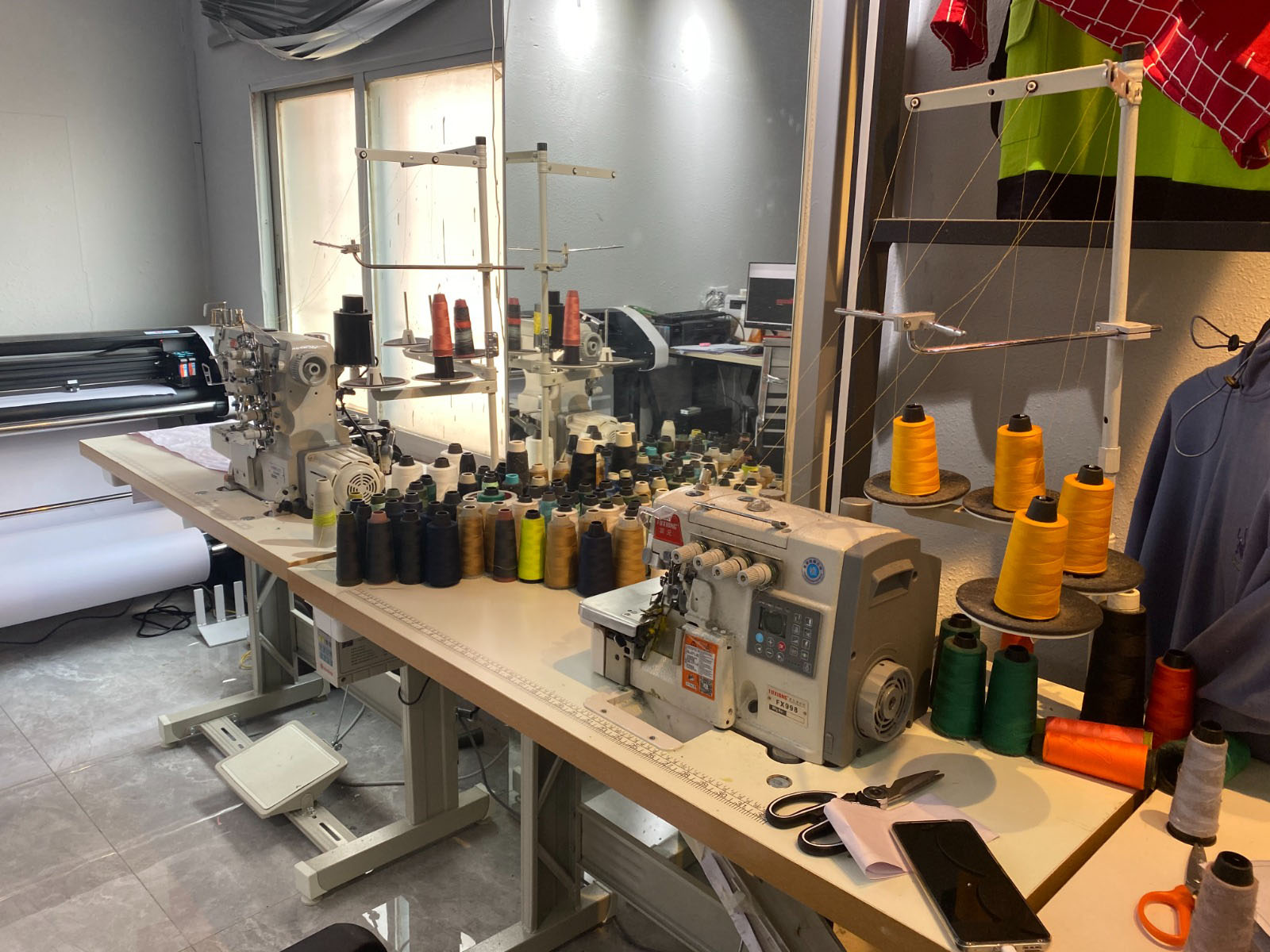
Qianshiwear runs this route through OEM, ODM, full custom manufacturing and private label production. The company's background includes more than 20 years in fabric weaving and more than 15 years in garment production, supported by 15 designers, a 250,000-unit monthly capacity and around 3,000,000 units of annual output. Factory space is divided across a 600 ㎡ sewing area, 700 ㎡ warehouse, 1,500 ㎡ finishing area and 200 ㎡ packing area, with 200–250 production line workers, an in-house quality control team and pattern makers.
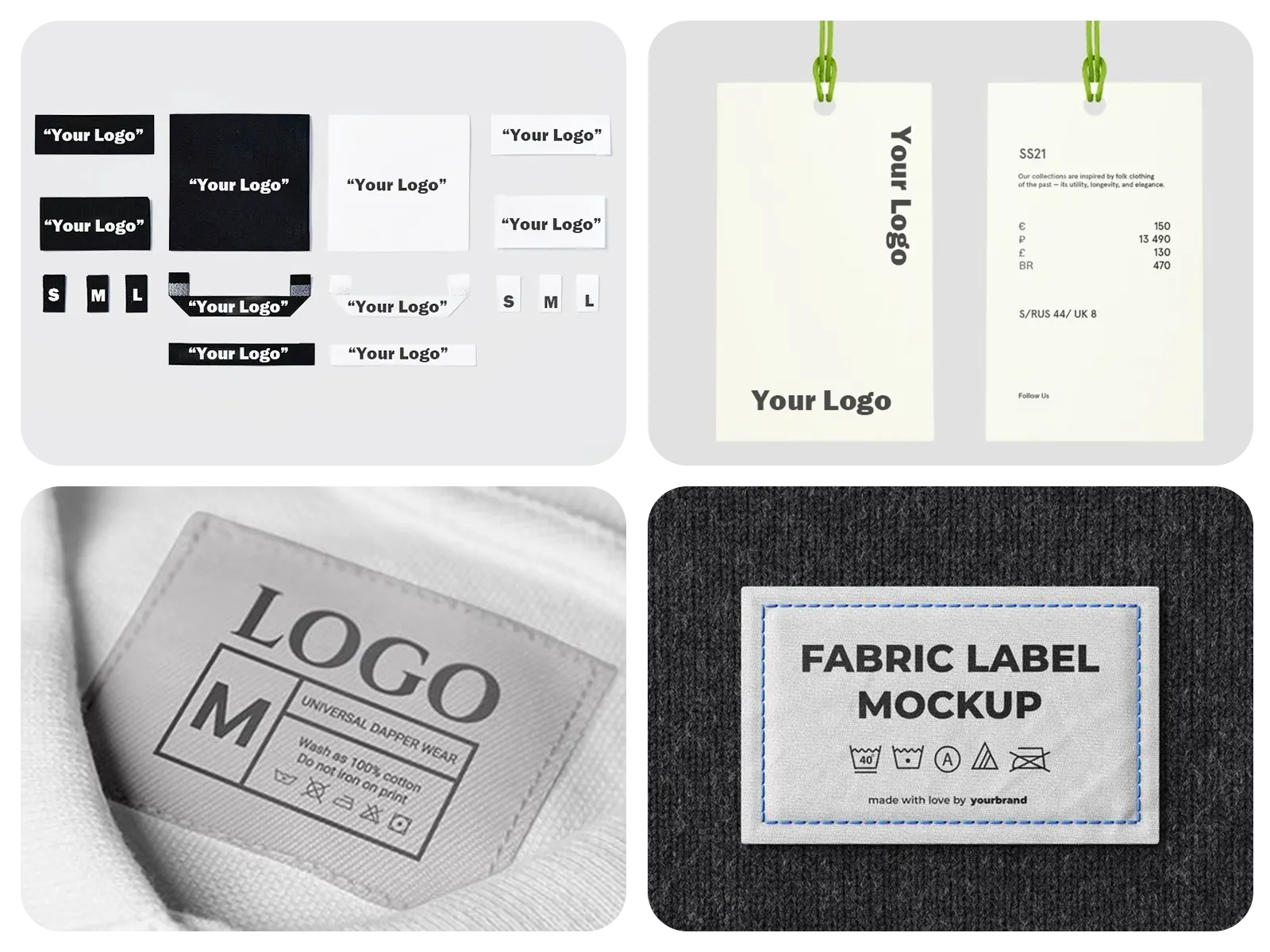
Customisation levers on this route are broad: garment style (crewneck, hoodie, zip-up, oversized, cropped, polo), fabric type and weight (French terry, fleece, cotton, blends), colour with Pantone matching, logo application through embroidery, screen print, DTG, puff print, rhinestone or appliqué, garment finishing such as vintage wash, snow wash, pigment dye or distressing, custom neck labels and hang tags, packaging design from polybag to custom box, plus size grading and trim or hardware specification including zippers and drawstrings.
Where this route earns its cost is at volume with a proprietary construction. A documented Qianshiwear streetwear programme ships 7,000 pieces per quarter — 28,000 pieces annually — across multiple styles and colourways per drop, in heavyweight 380–450 GSM French terry and fleece with custom puff print and embroidery combinations, vintage wash and pigment dye finishes, and private label packaging with custom polybags and hang tags. Over a three-year partnership covering more than 12 drops, the programme recorded 100% on-time delivery, a 90% season-over-season reorder rate, 98% sell-through on core styles and zero major quality claims. The client holds a dedicated production slot reserved quarterly so that lead times stay consistent.
The route also works below that scale. A direct-to-consumer label's first order was 100 pieces in heavyweight 500 GSM French terry with a custom puff print logo, oversized fit with drop shoulder and a custom woven neck label; sell-through reached 95% within two months, the label placed a 1,000-piece reorder and two reorders inside twelve months, with 85% positive customer reviews.
The trade-off is calendar and development load. Cut-and-sew adds pattern making, fabric development, fit sampling and trim sourcing to the front of the schedule. That is the correct price to pay when the silhouette is the brand. It is an unnecessary one when it is not.
Route B: The Blank Tee Platform — What Buyers Actually Buy
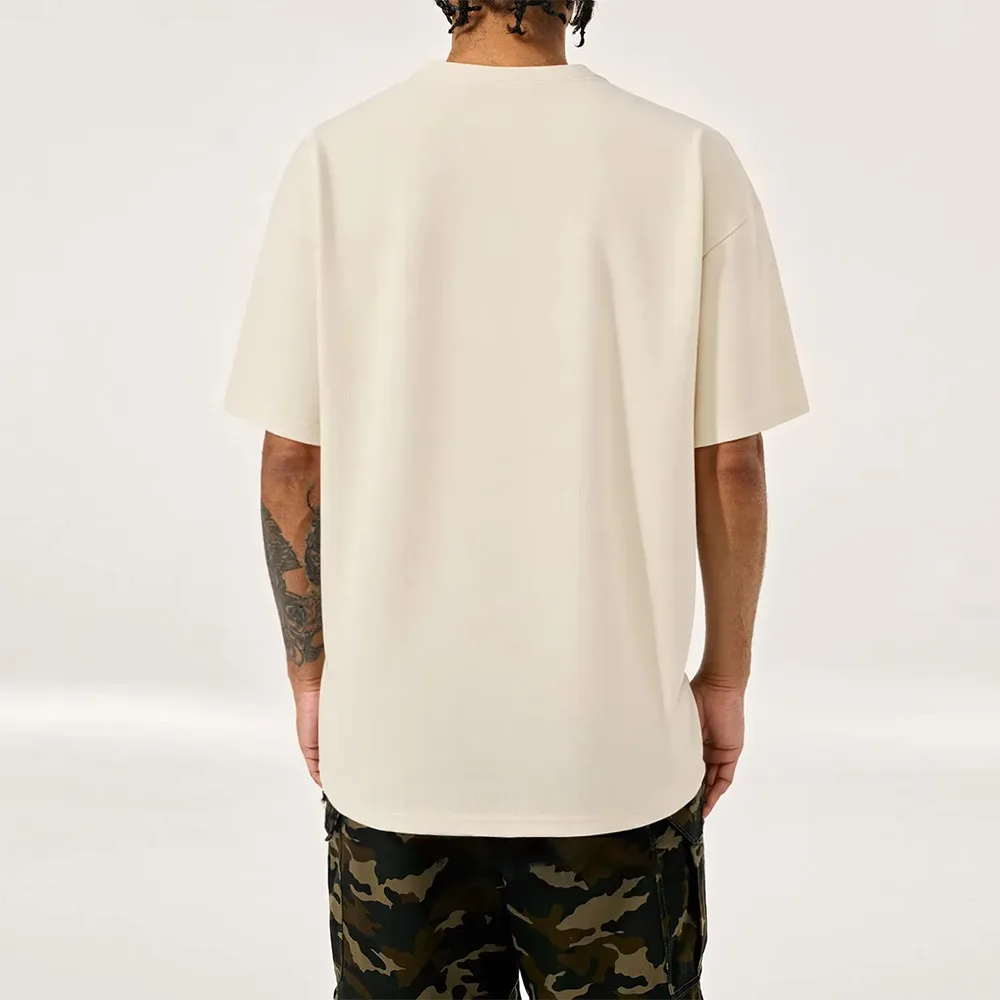
The blank route starts from an established body with a locked specification. Qianshiwear's base for this is the Custom blank T-Shirt, model RTS001 — produced as crewneck, V-neck, oversized, long-sleeve, polo or drop-shoulder, so the fit decision becomes a selection rather than a development.
The base specification
- Fabric weight: 160–220 GSM (lightweight) and 220–300 GSM (mid-weight)
- Fabric composition: 100% cotton, cotton-polyester blend, 100% polyester or organic cotton
- Fabric type: single jersey, pique, French terry or slub cotton
- Materials: 100% combed cotton at 160–200 GSM, cotton-polyester blends at 65/35 and 80/20, GOTS-certified organic cotton, slub cotton for a textured finish, pique for polo bodies, French terry for a heavier hand
- Size range: XS–XXL with custom grading available
- Colour: Pantone matching available
- Neckline finishing: ribbed collar, self-fabric binding or seamless finish
- Sleeve types: set-in, raglan, drop shoulder
- Hem finishing: coverstitch or raw edge
- Garment wash options: pigment dye, enzyme wash, snow wash, vintage wash
Decoration is in-house, not subcontracted
Printing options on the base include screen print, digital direct-to-garment (DTG), sublimation, heat transfer and puff print; embroidery options include flat embroidery, 3D puff embroidery and chenille. The same decoration floor that supports cut-and-sew development supports the blank platform, which is why the two routes can be mixed inside one brand's line.
The numbers that make the platform defensible
Sample production runs 7–15 working days and bulk production 20–35 working days. On a documented tour-merchandise programme, sampling completed in 10 days and bulk in 30 days for 5,000 pieces across 12 tour stops in multiple designs — a programme that closed at 92% sell-through, generated four reorders during the tour and passed 100% QC on rush orders, with a 50-piece minimum per design and custom hang tags carrying tour branding.
Durability is specified rather than implied: colour fastness ≥ Grade 4, shrinkage ≤ 5%, OEKO-TEX Standard 100 fabrics for skin contact, AQL 2.5 quality control, 100% pre-shipment inspection and third-party inspection through SGS at the buyer's request. The application profile assumes all-season wear from 15°C to 35°C, direct skin contact, high-frequency washing and drying, and exposure to sweat and sunlight — the conditions under which a decorated blank either holds up or does not.
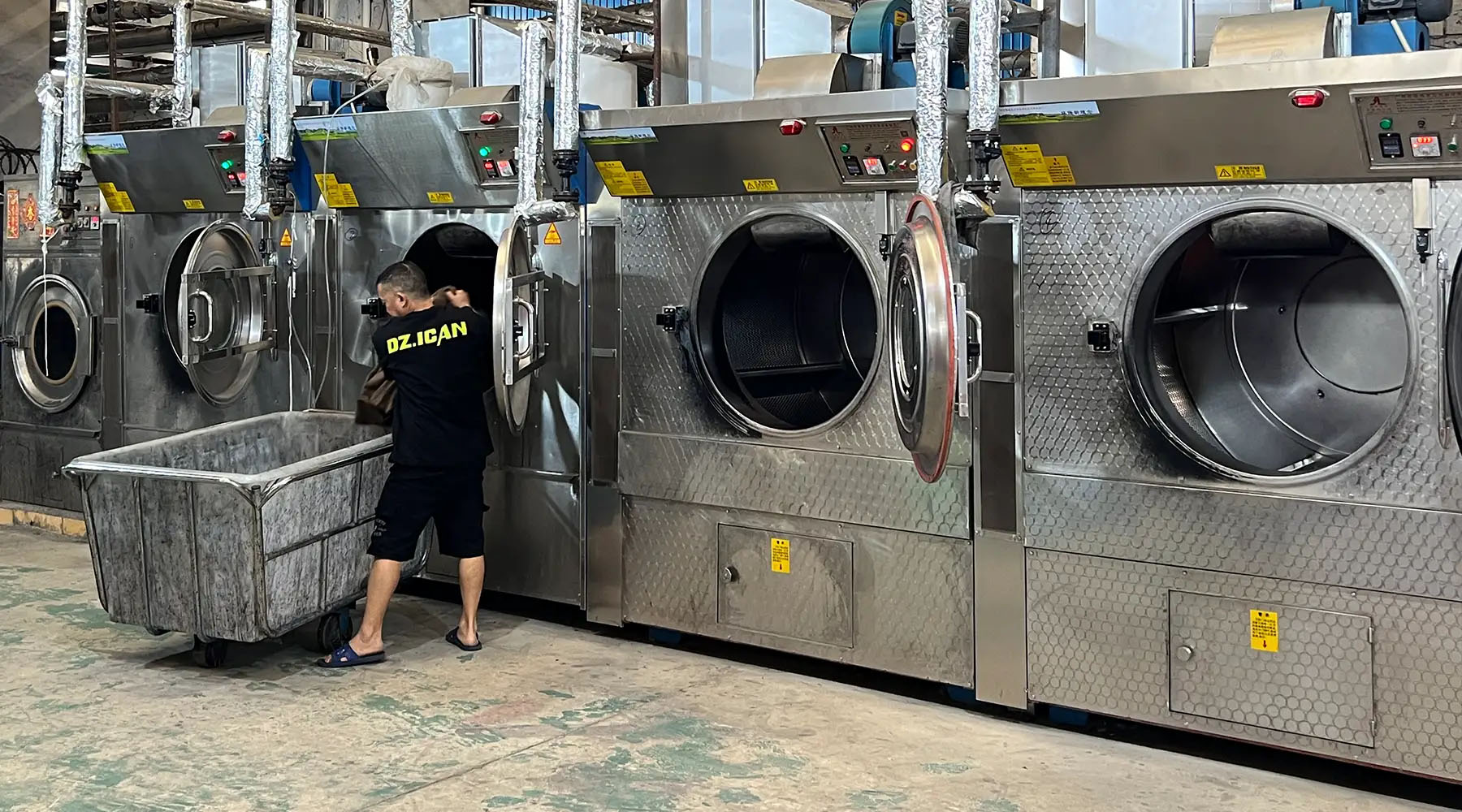
The laundering claim is supported by a two-year corporate uniform programme: 3,500 pieces across three regions in moisture-wicking pique with embroidered company logos, custom colour matching to brand guidelines and consistent sizing across all orders. Recorded outcome: no quality complaints after more than 100 washes per garment, 98% employee satisfaction and 100% on-time delivery across all batches.
Where the blank platform stops
Two honest limits. First, the fit library is finite: crewneck, V-neck, oversized, long-sleeve, polo and drop-shoulder bodies cover most graphic-led and merchandise lines, but a proprietary block is not in it. Second, the base runs at 160–300 GSM. When a streetwear line calls for 300–500 GSM heavyweight construction, that logic belongs to the fleece and hoodie programme — Qianshiwear's heavyweight fleece work runs from 280 up to 500+ GSM — not to the tee base. A buyer who needs an exclusive fabric or an exclusive pattern is in Route A, and should budget for it.
Compliance: The Constraint That Usually Decides the Route
Compliance evidence is not interchangeable between routes, and it is often the factor that settles the decision for EU-bound orders.
- Azo dyes. The Custom blank T-Shirt holds AZO (Azo Dyes Testing) certification, report TST20240903560-6EN, verifying that textiles, apparel and accessories do not release carcinogenic aromatic amines from azo dyes. The requirement tracks EU REACH Regulation (EC) No 1907/2006, Annex XVII, Entry 43, and is typically integrated into OEKO-TEX Standard 100 certification.
- Organic claims. GOTS requires at least 95% certified organic fibres for "organic" labelling, with manufacturing criteria covering social and environmental conditions.
- Chemical input. OEKO-TEX Standard 100's 2024 rules set a total fluorine (PFAS) limit of 100 mg/kg, effective 1 January 2024 — relevant where water-repellent or performance finishes are specified.
- Quality management. Qianshiwear operates under ISO 9001:2015 certification number 51825Q10787R0, valid from 11 July 2025 to 10 July 2028, covering process control, continuous improvement, customer satisfaction, resource management and corrective or preventive action.
- Social compliance. BSCI audit report 156-065504-000 covers child labour, forced labour, working hours, wages, occupational health and safety, freedom of association and discrimination, against the amfori BSCI Code of Conduct aligned with ILO conventions. The recorded audit period runs from 30 September 2025 to 30 September 2026.
- EU product safety. GPSR (Regulation (EU) 2023/988) applies to all non-food consumer products, clothing included, with reference EUREP-2024100815101023014. It requires technical documentation retained for ten years, traceability via batch or lot number and manufacturer details, and safety warnings in official EU languages.
- Electronics only. RoHS and CE certification (number NAP25090679C01E) applies strictly to smart clothing and wearable electronics — heated jackets, LED-embedded garments — under RoHS Directive 2011/65/EU, with testing by accredited third-party laboratories such as SGS or Intertek. It should not be cited for an ordinary printed tee.
The practical rule: whichever route you choose, the compliance file is the buyer's responsibility to specify in the purchase order. The certification and report numbers above belong to the current production record, not to a marketing claim.
A Step-by-Step Decision Process
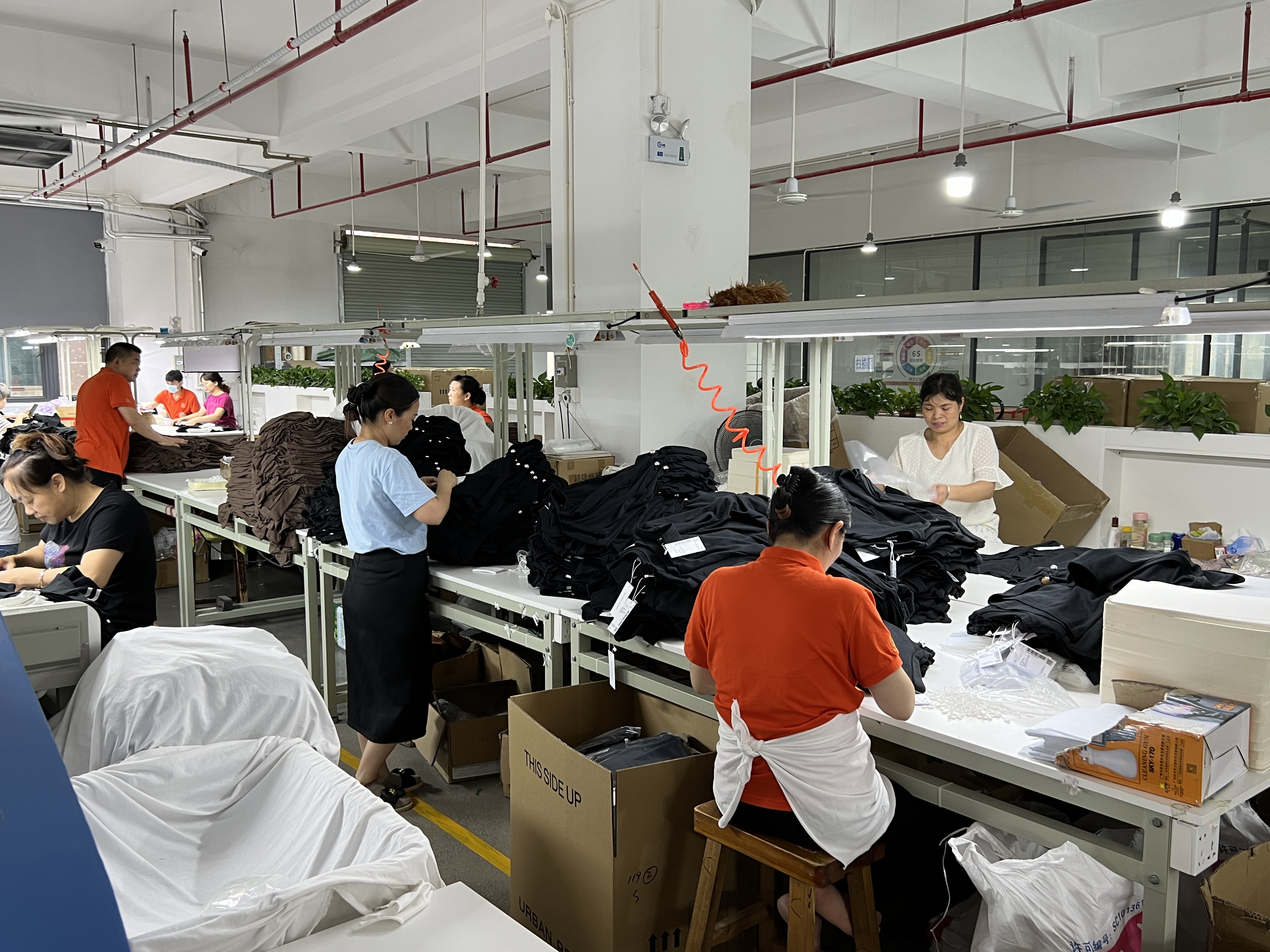
- Name the product. Write one sentence describing what a customer is buying. If the sentence describes artwork or a drop, the blank platform fits. If it describes a cut, a proportion or a hand feel that does not exist yet, you need cut-and-sew.
- Map decoration to the base. Screen print, DTG, sublimation, heat transfer, puff print, flat embroidery, 3D puff embroidery and chenille are all available on the RTS001 base. Confirm artwork complexity against technique before sampling — the quickest route to a failed print run is a technique mismatch.
- Set the compliance target by market. EU shipments need azo testing, and GPSR documentation where the product is a consumer good placed on the EU market. Organic labelling requires GOTS-level fibre content. Electronics trigger RoHS and CE. Confirm the file before the sample, not after the bulk order.
- Sample and test in the real condition. Sampling runs 7–15 working days; 10 days was achieved on a documented tour programme. Sample the decorated garment, not just the blank — wash it, check colour fastness against the ≥ Grade 4 target, and check post-wash shrinkage against the ≤ 5% specification.
- Plan bulk against 20–35 working days. A documented 5,000-piece tour order ran in 30 days. Add time for your own artwork approval and label sign-off, and ask about reserved capacity if you plan repeated drops — the established streetwear programme above holds a quarterly production slot precisely so lead times stay flat.
- Inspect, then plan the reorder before you need it. 100% pre-shipment inspection, random sampling tests and third-party SGS inspection on request sit inside a 50-piece-per-colour-per-design minimum. Treat the reorder as the real test of the platform, and confirm that fabric lot, colour and grading will repeat.
Use Cases: Which Route Fits Which Brand Goal
Tour and event merchandise — blank platform
A music artist management and tour merchandise agency built around live dates needs speed and per-design flexibility. The documented programme ran 5,000 pieces across 12 tour stops in multiple designs with high-resolution DTG printing, a 50-piece minimum per design and custom hang tags; 10-day sampling, 30-day bulk, 92% sell-through and four in-tour reorders.
Emerging DTC streetwear label — cut-and-sew at low volume
A brand whose differentiator is fit and finish starts where its identity lives. First order 100 pieces in 500 GSM French terry with puff print, oversized drop shoulder and a custom woven neck label; 95% sell-through in two months, a 1,000-piece reorder and two reorders in twelve months. Note the structure: the 50-piece minimum per colour per design is what makes a cut-and-sew start testable at all.
Established streetwear brand — cut-and-sew at volume
7,000 pieces per quarter, 28,000 annually, multiple styles and colourways per drop, heavy 380–450 GSM fleece with vintage wash and pigment dye, private label packaging and dedicated quarterly capacity. 100% on-time across 12+ drops and zero major quality claims over three years.
Corporate and uniform programmes — blank platform with finishing
Consistency across regions matters more than silhouette innovation. 3,500 pieces across three regions in moisture-wicking pique with embroidered logos and brand-matched colour, delivered over two years with no quality complaints after 100+ washes per garment and 100% on-time delivery.
Blank Tee + Print vs. Full Cut-and-Sew: Side-by-Side
| Decision Factor | Blank Tee + Print Route | Full Cut-and-Sew Route |
|---|---|---|
| What you own | A decoration applied to a locked base specification | Pattern, fabric spec, trims, labels, grading |
| Fabric weight | 160–220 GSM lightweight; 220–300 GSM mid-weight | Custom, including 380–450 GSM fleece and 500 GSM French terry in documented programmes |
| Minimum order | 50 pieces per colour per design | 50 pieces per colour per design |
| Sampling | 7–15 working days (10 days documented) | 7–15 working days (10 days documented), plus pattern and fit rounds |
| Bulk production | 20–35 working days (30 days documented) | 20–35 working days (30 days documented) |
| Decoration | Screen print, DTG, sublimation, heat transfer, puff print; flat, 3D puff and chenille embroidery | Same in-house decoration floor, plus rhinestone and appliqué |
| Size grading | XS–XXL, custom grading available | Custom grading built into the pattern |
| Colour | Pantone matching available | Pantone matching available |
| Wash and finish | Pigment dye, enzyme wash, snow wash, vintage wash | Same options, plus distressed finishing |
| Compliance evidence | AZO testing on the base (TST20240903560-6EN); ISO 9001:2015 house QMS (51825Q10787R0); GOTS organic cotton available | Same house certifications; add RoHS and CE only where electronic components are used |
| Best fit | Graphic-led lines, tour and event merch, corporate uniform, fast reorders | Proprietary fits, heavyweight fleece, exclusive fabric, seasonal collections at volume |
| Main risk | Fit library limits; heavyweight streetwear above 300 GSM belongs to the fleece programme | Front-loaded development cost and a longer calendar before first bulk |
Figures reflect Qianshiwear's documented production parameters for the Custom blank T-Shirt (RTS001) and its cut-and-sew programmes. Bulk timing excludes buyer-side artwork and label approval.
Frequently Asked Questions
Do blank tees and cut-and-sew garments need different certifications?
No — the compliance file follows the product, not the route. The Custom blank T-Shirt holds AZO testing certification under report TST20240903560-6EN, which verifies the fabric and trims do not release carcinogenic aromatic amines from azo dyes, the requirement behind EU REACH Annex XVII Entry 43 and normally part of OEKO-TEX Standard 100 certification. Where "organic" is claimed, GOTS requires at least 95% certified organic fibres. Clothing sold into the EU also falls under GPSR (Regulation (EU) 2023/988), reference EUREP-2024100815101023014, which requires ten-year technical documentation, batch or lot traceability and safety warnings in EU languages. RoHS and CE certification (number NAP25090679C01E) applies only when a garment contains electronic components and should never be applied to an ordinary printed tee. On the manufacturing side, Qianshiwear's ISO 9001:2015 certificate 51825Q10787R0 runs from 11 July 2025 to 10 July 2028, and BSCI audit report 156-065504-000 covers social compliance including child labour, working hours, wages and occupational health and safety.
Can a blank tee platform support oversized streetwear fits and private label branding?
Yes, within a defined envelope. The RTS001 base is produced as crewneck, V-neck, oversized, long-sleeve, polo and drop-shoulder, with set-in, raglan or drop-shoulder sleeves, XS–XXL sizing with custom grading, Pantone colour matching, and neckline finishing via ribbed collar, self-fabric binding or a seamless finish. Private label elements — custom neck labels, hang tags and packaging from polybag to custom box — are supported, alongside production modes covering OEM, ODM, full custom manufacturing and private label production. The limits are specific: the tee base runs 160–220 GSM and 220–300 GSM, so a 300–500 GSM heavyweight streetwear body belongs to the fleece and hoodie programme, and a proprietary pattern cannot be reproduced from a base block.
What actually drives the cost difference between the two routes?
Development scope drives the difference more than the decoration stage does. Cut-and-sew adds pattern development, fabric specification and development, trim and hardware sourcing, label and packaging development, and fit sampling rounds before bulk begins. The blank route concentrates cost in the base garment and in decoration setups — screen count, print placement, embroidery stitch count and number of colours per design. Minimum order quantity shapes both: 50 pieces per colour per design is the floor, so a five-colour, four-design launch carries twenty line items at minimum whichever route it uses. Published MOQs among China-based manufacturers commonly sit at 50–100 pieces per design and colour, which puts the 50-piece floor at the low end. Because the split between development cost and per-unit cost depends on your specification, a written quote against a written spec is the only reliable comparison.
How long does sampling take, and what should a sample prove?
Sample production runs 7–15 working days; a documented tour-merchandise programme delivered its sample in 10 days. A blank-platform sample should prove three things beyond appearance: colour fastness against the ≥ Grade 4 target, shrinkage against the ≤ 5% specification, and decoration behaviour after washing, since the working condition for most programmes is high-frequency washing and drying with direct skin contact and exposure to sweat and sunlight. Cut-and-sew sampling is expected to prove fit and construction as well, which is why it typically involves more than one round.
What bulk lead time should be planned, and how do reorders behave?
Bulk production runs 20–35 working days, with 30 days recorded on a 5,000-piece multiple-design tour order that passed 100% QC on rush orders. Monthly capacity is 250,000 units and annual output is around 3,000,000 units, with 85–90% of production exported to international markets. For repeated drops, capacity reservation matters more than a single delivery date: an established streetwear buyer running 7,000 pieces per quarter holds a dedicated quarterly production slot, and that arrangement produced 100% on-time delivery across more than 12 drops with a 90% reorder rate. If you are planning a first drop, the fastest way to settle the route question is to send your artwork, target fabric weight and destination market for a sample quote.
Conclusion
The two routes are not competitors; they answer different questions. A blank tee platform answers: how fast, how consistently and how predictably can we put artwork on a body that already works? A cut-and-sew programme answers: how do we build a body and a hand feel nobody else has? The Qianshiwear evidence on both sides is specific — 10-day sampling and 30-day bulk on a documented tour programme, 7–15 and 20–35 working days as standard windows, 50 pieces per colour per design as the minimum, colour fastness ≥ Grade 4 and shrinkage ≤ 5% as built-to targets, and a two-year uniform programme with no quality complaints after 100+ washes per garment.
For most brands launching or scaling a graphic-led line, the blank base is the stronger platform because it removes development risk from the critical path while keeping decoration, labelling, packaging and compliance inside one controlled operation. Commission cut-and-sew when the pattern is the product — and expect to invest in the front end of the calendar to get it.
Next Step: Validate the Route With a Sample
Send your artwork, target fabric weight and destination market, and Qianshiwear will confirm which route fits — blank base with decoration, or cut-and-sew development — with sample production scheduled inside the standard 7–15 working day window and bulk production planned against 20–35 working days.
- Request a sample or a written quote: qianshiwear.com
- Email: sales@qianshiwear.com
- WhatsApp / Tel: +86 18148939572
- Download the product and capability catalog (PDF): Qianshiwear catalog
Guangzhou Qianshi Apparel Co., Ltd — Room 201, 2nd Floor, No.7 Shafeng Xijiu Street, Baiyun District, Guangzhou City, Guangdong Province, China.
Have Questions or Need More Details?
Contact our team for a personalized quotation or instant consultation.
Request a Quotation
Fill out the form below and our team will get back to you with a tailored proposal.
WhatsApp Direct Chat
Prefer to chat in real-time? Message us on WhatsApp for instant assistance & quick answers.
- Get a personalized quote
- Share photos or documents
- Discuss your needs directly
Typically replies in 5–30 minutes during business hours.