Custom Hoodie Decoration Showdown: Screen Print vs Embroidery vs Puff Print
If you are an emerging streetwear brand or a DTC label about to commit to a hoodie production run, the decoration decision is usually finalised last — and judged first by your customer. The comparison almost always narrows to three routes: custom screen print, custom embroidery, and puff print, with a blank hoodie program sitting underneath them as the fast, low-risk fallback.
The short verdict: screen print covers the widest graphic range and the largest print areas; embroidery produces the most durable, premium-looking logo application; puff print delivers a raised, dimensional logo that reads clearly on heavyweight fleece; and a blank hoodie program lets you launch, measure sell-through, and reorder without rebuilding a full custom specification every season. None of the three is universally better. The right choice is the one that matches your artwork, fabric weight, finishing, order size and destination market.
Qianshiwear is the brand name of Guangzhou Qianshi Apparel Co., Ltd, a Guangzhou-based apparel manufacturer and trading company founded in 2014, producing custom hoodies, sweatshirts, tracksuits, T-shirts and sportswear for brand owners and DTC labels, with 85–90% of production exported to EU, US, UK and Australian markets. This comparison guide is built on documented production evidence from Qianshiwear hoodie programs, including heavyweight 500 GSM French terry drops, 380–450 GSM French terry and fleece collections, puff print and embroidery combinations, and private label packaging.
Why decoration choice is a production constraint, not a design preference
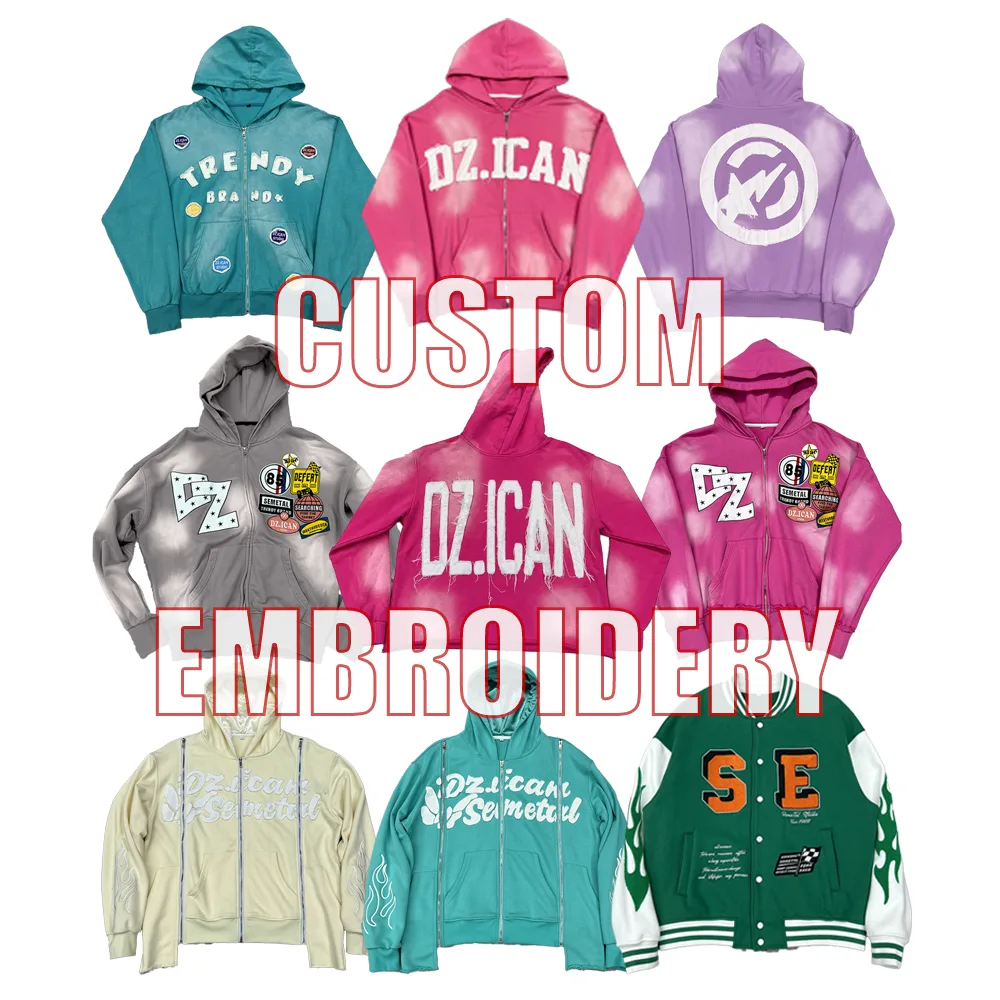
Decoration is usually treated as a graphic decision made inside a design file. In sourcing terms it is a constraint that locks four things at once: the fabric weight the garment can carry, the finishing process it can survive, the minimum order quantity a hoodie manufacturer must schedule, and the reorder window you can promise your own customers.
The failure modes are predictable. A heavy plastisol print placed on a lightweight loop-back French terry distorts the panel. A large puff print applied after a vintage wash behaves differently from the same print applied before washing, because garment wash options such as enzyme wash, stone wash, snow wash and vintage wash affect print feel and appearance. Dense embroidery on light terry pulls at the fabric where a heavier fleece supports the stitch structure. These are not design problems — they are specification mismatches.
For a buyer in the Research-to-Evaluation stage, the useful question is therefore not “which decoration looks best?” but “which decoration is compatible with my fabric weight, my finishing, my MOQ, my compliance market and my reorder plan?” Five constraints decide the answer:
- Fabric weight and construction. Mid-weight French terry, heavyweight brushed fleece and ultra-heavyweight fleece behave differently under ink, thread and heat.
- Garment finishing. Enzyme wash, stone wash, snow wash, vintage wash, pigment dye and garment dye change surface texture, and therefore change how a print or an embroidered patch presents.
- MOQ structure. Hoodie programs are commonly quoted per colour, per design, so the decoration method affects how many SKUs you must commit to.
- Sampling and bulk lead time. A late decoration decision compresses the sampling window before bulk production starts.
- Compliance for the destination market. Chemical safety, product safety and social compliance documentation must exist before the goods ship.
Qianshiwear runs OEM, ODM, full custom manufacturing and private label production with a minimum order quantity of 50 pieces per colour per design, sample production of 7–15 working days and bulk production of 20–35 working days. That structure is what makes a decoration decision testable at low volume before a full run.
The industry context behind the decoration decision in 2026
The commercial context explains why decoration methods are now compared at the sourcing stage rather than after the design is signed off. The global hoodies and sweatshirts market was valued at USD 209.26 billion in 2025 and is projected to reach USD 303.62 billion by 2031, according to Mordor Intelligence. Within that market, pullover hoodies accounted for 38.4% of product type share in 2025, driven by global streetwear and athleisure trends, per Dataintelo.
Decoration is where growth concentrates. Grand View Research reports that the global custom hoodie printing market is growing at a CAGR of 9.9% between 2024 and 2030, with high demand for 3D puff embroidery and eco-friendly water-based inks — the exact combination brands now ask manufacturers to quote.
Two manufacturing-side standards have consolidated in parallel. Heavyweight hoodies at 350–450+ GSM in 100% cotton French terry have become the preferred construction for premium streetwear, because the heavier fabric holds structure and resists pilling better than lighter loop-back terry. Separately, textile certifications such as OEKO-TEX Standard 100 for chemical safety and GOTS 7.0 for organic fibres are treated as the industry benchmarks for sustainable manufacturing.
China remains the dominant supply base for these programs: China’s apparel exports reached USD 159.14 billion in 2024, a year-on-year growth of 0.3% despite geopolitical pressures, according to the General Administration of Customs (GACC).
Screen print, embroidery and puff print: how each route is specified
Screen print: the widest graphic range on mid-weight and heavyweight fleece
A screen-printed hoodie program starts with the substrate. The Custom Screen Print Hoodie / Custom Screen Print Sweatshirt platform (model RTS005) at Qianshiwear is built on 280–350 GSM mid-weight or 350–450 GSM heavyweight fabric, in 100% cotton, 80/20 or 70/30 cotton-polyester blends, brushed fleece or French terry.
Fabric choice changes the print result in ways buyers rarely anticipate. Brushed fleece in 350–420 GSM is the recommended base for bold screen prints on winter hoodies, because the brushed interior adds softness without compromising the face of the fabric. French terry in 280–350 GSM is the transitional-season option, with a loop-back interior that keeps a print sitting flat. An 80/20 cotton-polyester blend balances softness with durability, and the polyester content improves print adhesion and colour vibrancy; 100% cotton remains the best base for water-based and discharge printing and gives the softest handfeel. Organic cotton fleece is available as a GOTS certified option for eco-conscious collections.
Ink selection is the second variable. Available screen print types are plastisol (opaque, vibrant), water-based (soft feel), discharge (soft, natural feel), puff print (raised texture), flock print (velvety texture), foil print (metallic finish), glow-in-the-dark ink and metallic ink. Print placement can be specified at chest (left or centre), full front, full back, sleeve, hood, side seam, or all-over panel by panel. Colour capability suits monochrome printing, with simulated process available for photographic images.
Durability is governed by finishing rather than by ink alone: heat-set curing is specified for durability and wash resistance. Where a garment wash follows — enzyme, stone, snow or vintage wash, or garment dye — that wash affects the print’s feel and appearance by design. The wash and the print are therefore one specification, not two.
Embroidery and appliqué: the premium, wash-resistant logo route
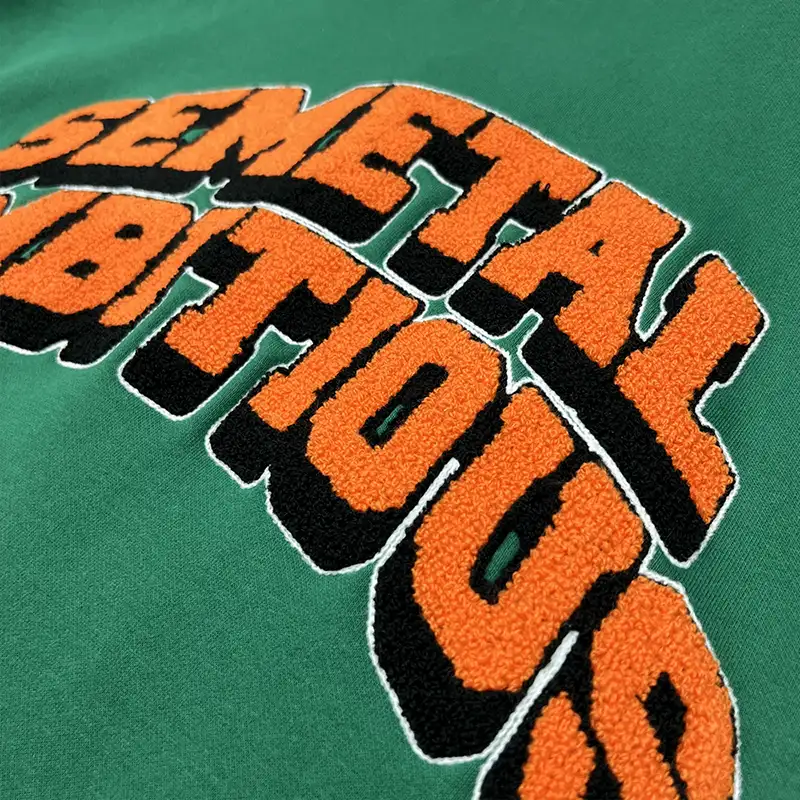
Embroidery and appliqué is the decoration route that survives the longest in use, and the one most often chosen for signature branding. The Custom Embroidery Hoodie platform (model RTS004) is specified across 280–350 GSM mid-weight, 350–450 GSM heavyweight and 450–500+ GSM ultra-heavyweight fabric, and its material guidance is more forgiving than screen print. Brushed fleece from 380–500 GSM is recommended for winter hoodies carrying appliqué patches, while French terry from 320–500 GSM supports transitional-season embroidery. The structural advantage is straightforward: a heavier, denser fabric carries stitch density and patch weight without the panel distorting.
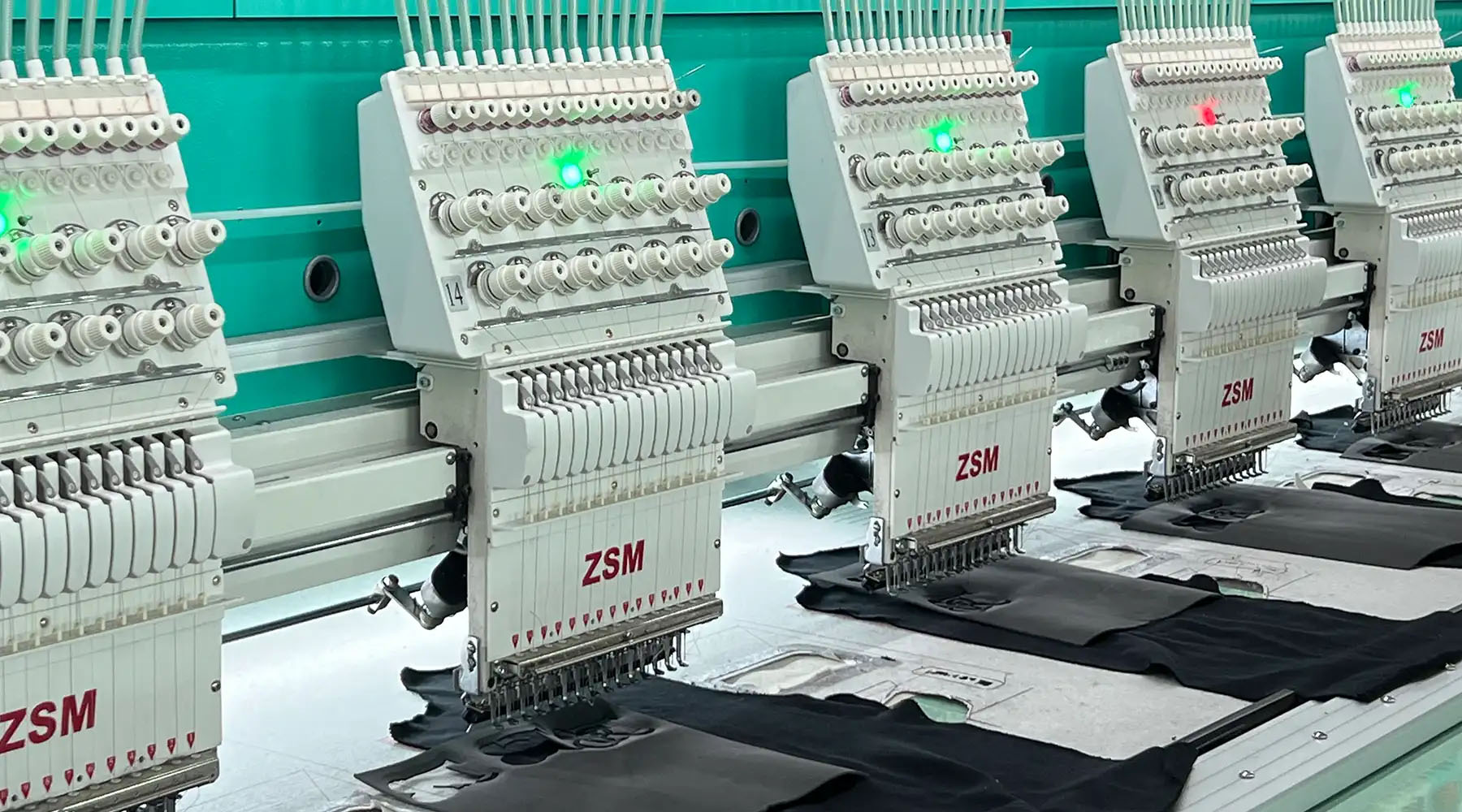
The embroidery and appliqué menu covers flat embroidery, 3D puff embroidery (raised detail), satin stitch outlines and chain stitch detailing. Appliqué options include flat appliqué with a stitched edge, 3D puff appliqué, chenille appliqué with a velvety texture, woven patch appliqué on a twill base, and leather patch appliqué in PU or genuine leather. Chenille yarn and twill fabric are the material choices behind varsity-style and letterman-style patches. Placement is normally chest (left or centre), sleeves at shoulder or forearm, a large back patch, a small hood logo, or a pocket corner detail.
Construction options reinforce the premium positioning: double-layer hoods, lined hoods and hoods with a contrast interior; cotton, metal-tipped or custom branded drawstrings; and 1x1 or 2x2 ribbed cuffs and hem with contrast colour ribbing available.
Durability is the reason brands choose embroidery for their permanent identity mark. In a documented corporate program, Qianshiwear produced 3,500 pieces of embroidered-logo apparel and recorded no quality complaints after 100+ washes per garment, 100% on-time delivery across all batches and 98% employee satisfaction in use, with the embroidered company logo applied to the chest. In the hoodie category the same logic applies: an embroidered logo is a thread structure integrated into the fabric, not a layer sitting on its surface.
Puff print: dimensional logos on heavyweight French terry
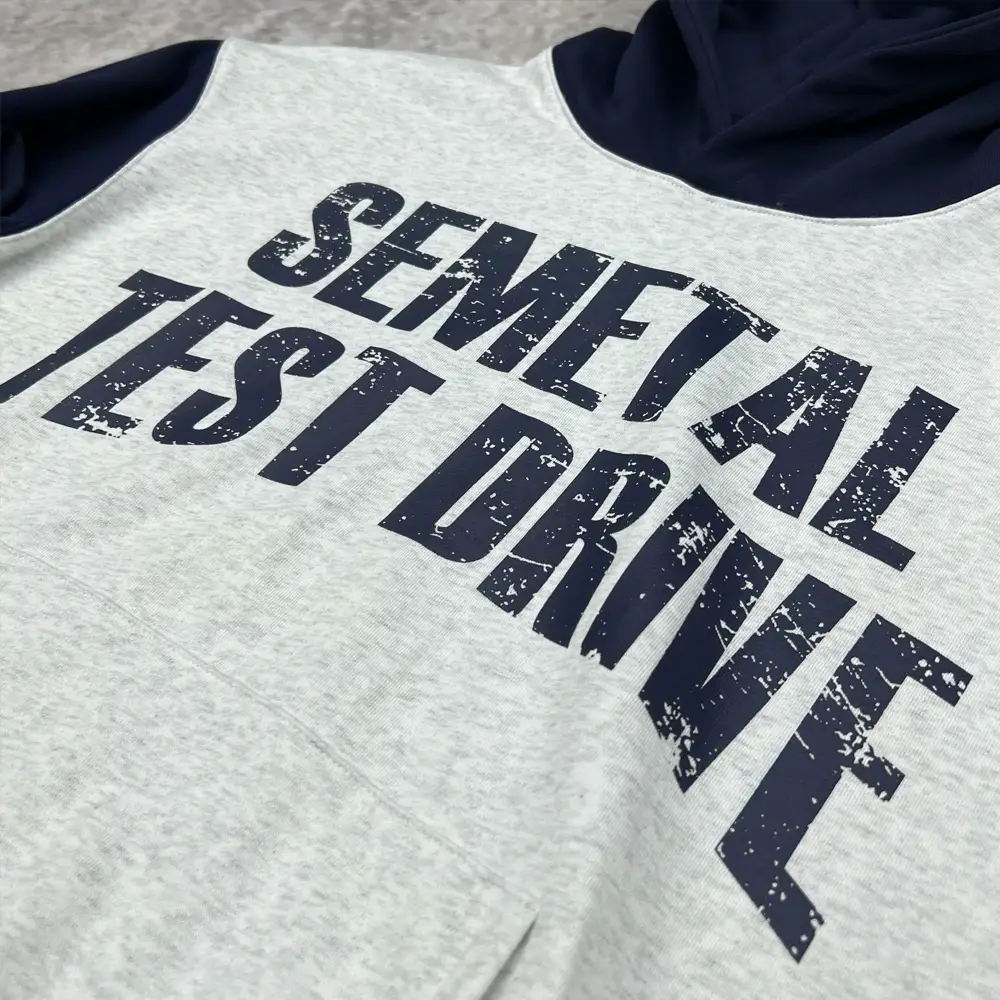
Puff print is technically a screen print process rather than a separate decoration family. It appears in the screen print specification as a raised-texture ink, and it is also offered as part of a combination print hoodie in which screen print is combined with puff, flock or foil within a single design. That matters commercially, because a brand can buy a dimensional logo and a flat graphic on the same garment without splitting the order across two production routes.
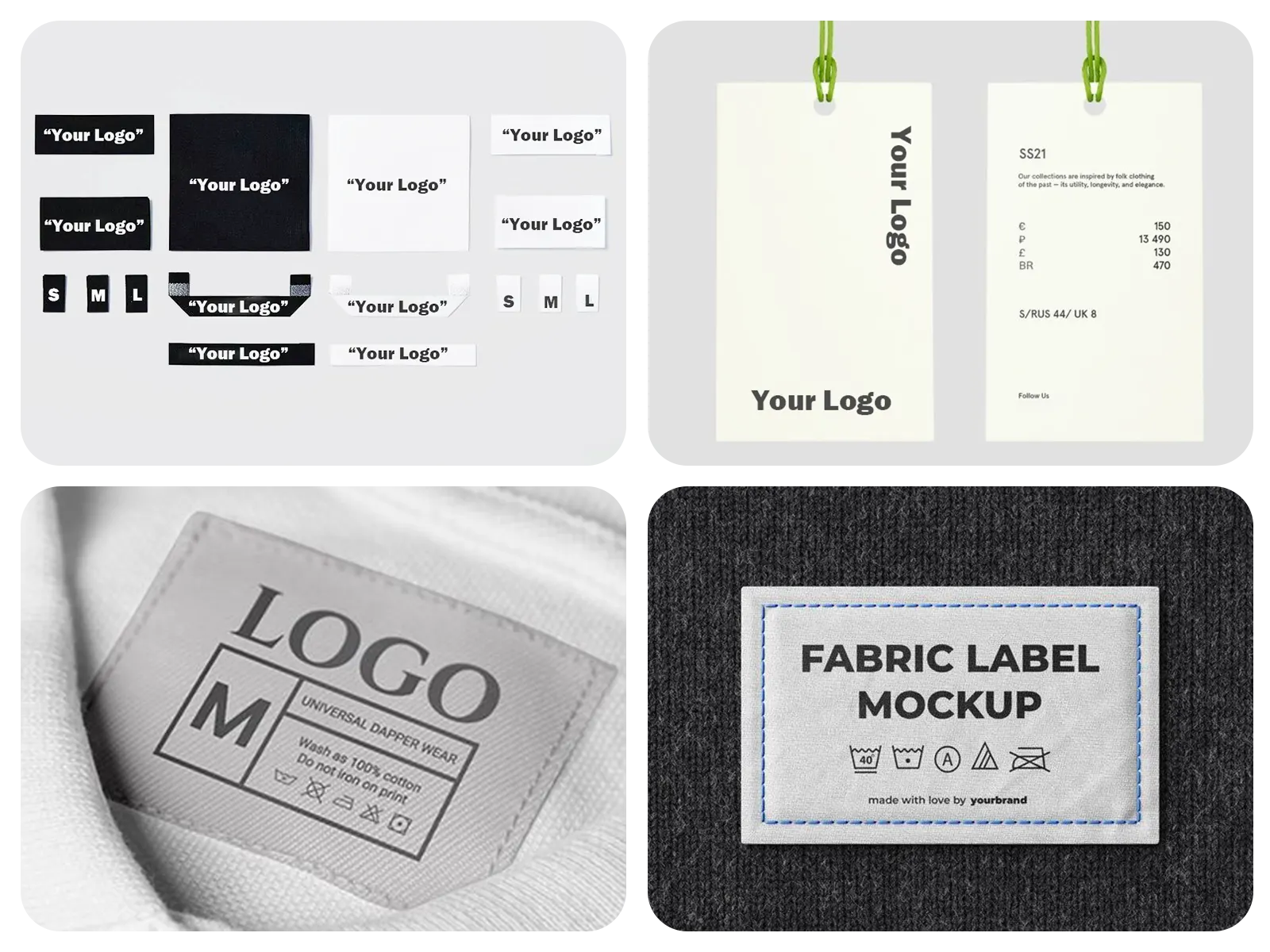
Puff print performs best on fabric with enough body to support a raised surface and enough crown to keep the logo from looking compressed. The clearest production evidence is a DTC streetwear label that launched with 100 pieces in heavyweight 500 GSM French terry with an oversized drop-shoulder fit, a custom puff print logo and a custom woven neck label. The drop reached a 95% sell-through rate within two months with 85% positive customer reviews, and the brand placed two reorders within 12 months, scaling from 100 pieces to 1,000 pieces with consistent sizing across all sizes.
Puff print is also frequently specified alongside embroidery rather than instead of it. A multi-store streetwear brand and retailer working with Qianshiwear on 7,000 pieces per quarter — 28,000 pieces annually across multiple styles and colourways per drop — uses custom puff print and embroidery combinations on 380–450 GSM French terry and fleece, finished with vintage wash and pigment dye, and supplied in private label packaging with custom polybags and hang tags. The brand holds a dedicated production slot reserved quarterly to keep lead times consistent, with flexible colour matching for seasonal trend adaptation, and has recorded 100% on-time delivery across 12+ drops, a 90% reorder rate season over season and a 98% sell-through rate on core styles over a three-year partnership.
Blank hoodie programs: the low-risk fourth option
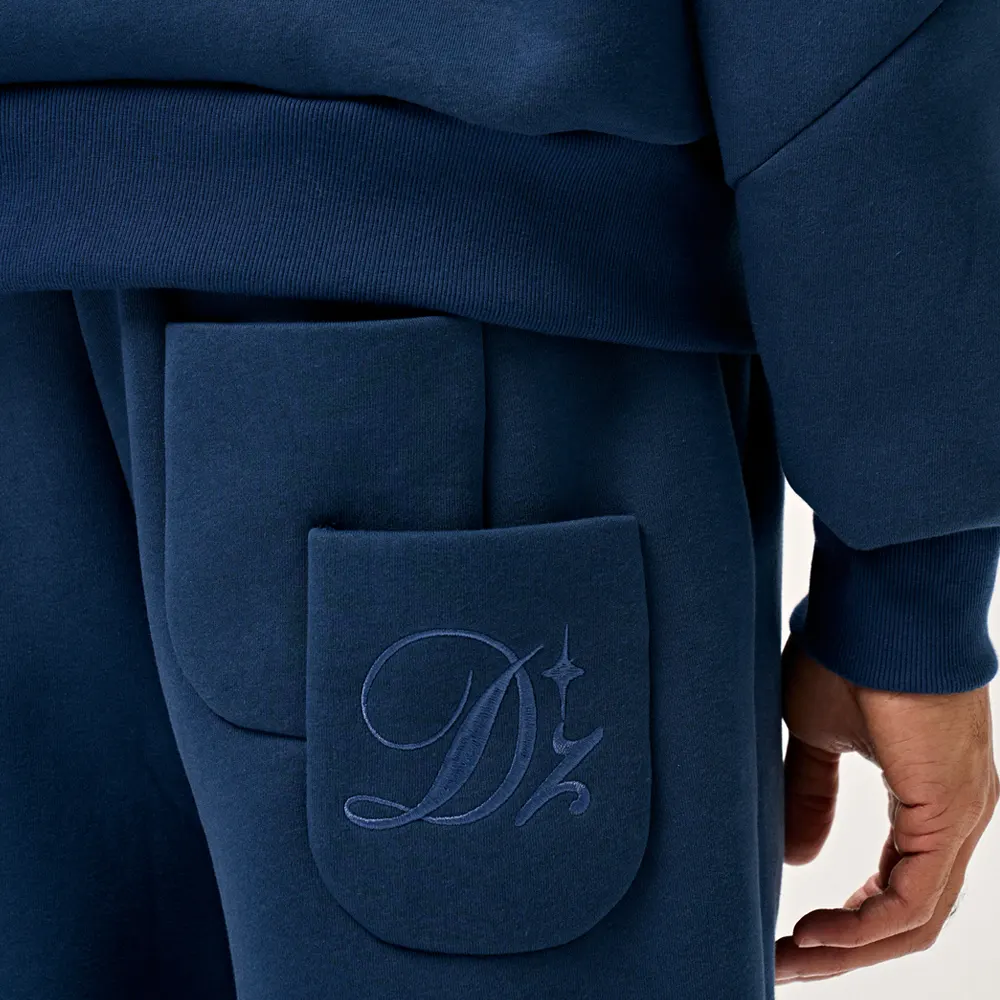
A blank hoodie program is not the absence of a decoration decision; it is a decision to decouple fabric supply from decoration timing. The Custom Blank Hoodie / Custom Blank Sweatshirt platform (model RTS003) covers pullover, full-zip, oversized, cropped and raglan-sleeve silhouettes, with kangaroo pouch, side welt, zip and patch pockets, and optional fleece or sherpa lining.
Weight and material options run from 280–350 GSM mid-weight through 350–450 GSM heavyweight to 450–500+ GSM ultra-heavyweight, in 100% cotton, 80/20 or 70/30 cotton-polyester blends, 100% polyester, French terry (280–500 GSM) or brushed fleece (350–600 GSM), with GOTS certified organic cotton fleece and GRS certified recycled polyester fleece available. Colour can be Pantone matched, with pigment dye, garment dye and reactive dye options. Decoration can be added later using screen print, DTG, sublimation, puff print, foil print or flock print, plus flat, 3D puff, chenille and appliqué embroidery.
For a first drop, this is the lowest-risk structure: it lets you validate fabric weight, fit and sizing before committing to a full decorated run, which is precisely how the 100-piece launch described above was structured before scaling to 1,000 pieces.
Step-by-step: how to lock a decoration method before you place an order
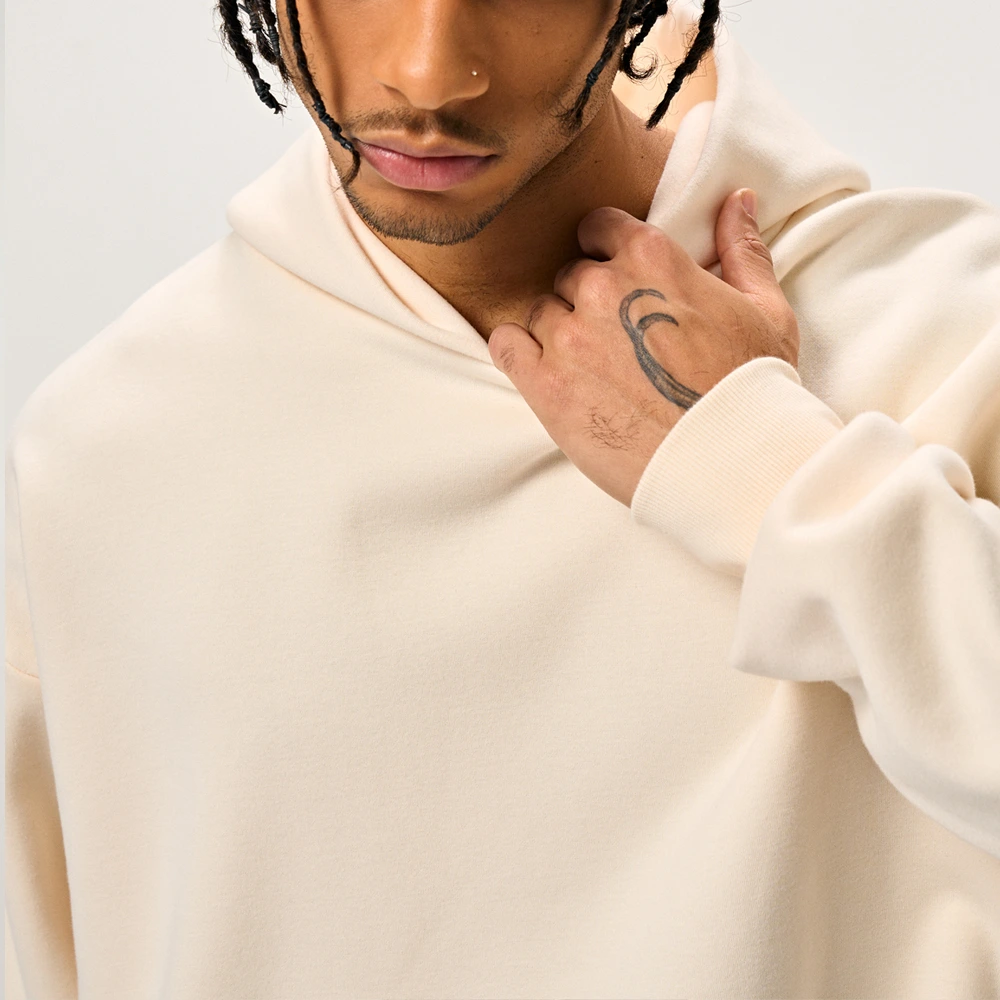
Decoration decisions go wrong most often because they are made in the wrong order. The following sequence keeps the specification internally consistent from artwork to reorder.
- Step 1 — Define the price band and positioning of the drop. A raised puff logo on 500 GSM French terry and a single-colour screen print on mid-weight terry communicate different things and carry different factory requirements. Decide the tier before the artwork.
- Step 2 — Map the artwork to a decoration family. Photographic or gradient artwork points to simulated process screen print; line-based, high-contrast graphics suit flat screen print or embroidery; a single bold mark on a heavy panel suits puff print or 3D puff embroidery.
- Step 3 — Match the decoration to fabric weight. Screen print is specified at 280–350 GSM and 350–450 GSM; embroidery extends to 450–500+ GSM, with brushed fleece 380–500 GSM recommended for patch work. Selecting decoration first and fabric second is the single most common cause of rework.
- Step 4 — Treat wash and print as one specification. Because enzyme, stone, snow and vintage wash and garment dye affect print feel and appearance, the wash must be decided at the same time as the print. Puff print and embroidery combinations are routinely paired with vintage wash and pigment dye finishes on 380–450 GSM French terry and fleece.
- Step 5 — Sample before bulk. A custom hoodie tech pack drives sampling. Qianshiwear quotes sample production at 7–15 working days, with a minimum order quantity of 50 pieces per colour per design — low enough to test a full decoration and sizing specification before committing to volume.
- Step 6 — Reserve capacity against your reorder plan. Bulk production runs 20–35 working days, and monthly capacity reaches 250,000 units. Brands with recurring drops should negotiate a dedicated production slot, as the multi-store streetwear partner described above does on a quarterly basis.
Use cases: three decoration briefs and what was specified
Emerging DTC streetwear label — puff print on 500 GSM French terry. The brief was a launch collection for an online store. Specification: heavyweight 500 GSM French terry, custom puff print logo, oversized drop-shoulder fit, custom woven neck label. Starting at 100 pieces, the drop reached 95% sell-through within two months, 85% positive customer reviews and two reorders within 12 months, scaling to 1,000 pieces with consistent sizing across all sizes. Decoration choice drove the entire outcome: puff print gave the mark physical presence without the garment losing its heavy, structured feel.
Established streetwear brand and multi-store retailer — puff print plus embroidery at multi-drop volume. The brief was a seasonal collection release plus core line replenishment across multiple styles and colourways. Specification: 7,000 pieces per quarter, 28,000 pieces annually, heavyweight 380–450 GSM French terry and fleece, custom puff print and embroidery combinations, vintage wash and pigment dye finishes, private label packaging with custom polybags and hang tags, flexible colour matching and a dedicated quarterly production slot. Results over three years: 100% on-time delivery across 12+ drops, a 90% season-over-season reorder rate, 98% sell-through on core styles and zero major quality claims.
Artist and tour merchandising — speed-limited decoration. The brief was 5,000 pieces across 12 tour stops with multiple designs. Specification: fast turnaround (10 days for sample, 30 days for bulk), high-resolution DTG printing, low MOQ per design of 50 pieces, custom hang tags with tour branding. Results: 92% sell-through across all tour dates, four reorders placed during the tour and a 100% QC pass rate on rush orders. This case shows the boundary of the comparison: when artwork changes per stop and volume per design is small, a print-based route outperforms embroidery on turnaround.
Comparison table: screen print vs embroidery vs puff print
| Decision criteria | Screen print | Embroidery & appliqué | Puff print |
|---|---|---|---|
| Best-fit artwork | Flat graphics, multi-colour and photographic images via simulated process | Logos, lettering, patches, outlines and dimensional marks | Single bold logo or mark requiring raised, dimensional texture |
| Handfeel | Soft to firm depending on ink: water-based and discharge give the softest handfeel; plastisol is opaque and vibrant | Structured and tactile; texture comes from thread, chenille, twill or leather | Raised, compressible surface over the base fabric |
| Durability | Heat-set curing specified for durability and wash resistance | Thread-based application; documented performance includes no quality complaints after 100+ washes | Runs within the screen print process and its heat-set curing; wash selection affects appearance |
| Fabric weight fit | 280–350 GSM mid-weight; 350–450 GSM heavyweight; brushed fleece 350–420 GSM recommended for bold prints | 280–350, 350–450 and 450–500+ GSM; brushed fleece 380–500 GSM recommended for patches | Best on heavyweight fabric; documented on 500 GSM French terry |
| Combination potential | Combination print hoodie: screen plus puff, flock or foil in one design | Combines with puff print on 380–450 GSM French terry and fleece | Frequently paired with embroidery on the same garment |
| Cost driver | Number of ink colours and print positions, plus per-colour setup | Stitch count, logo dimensions and appliqué material (chenille, twill, PU or genuine leather) | Additional process pass and curing on top of a standard screen print |
| Order scalability | Quoted from 50 pieces per colour per design upward | Same MOQ structure; supports low-volume signature branding | Same MOQ structure; documented from a 100-piece launch to 1,000 pieces |
| Brand positioning fit | Graphic-led streetwear, event and music merchandise, promotional apparel | Premium, varsity, letterman and high-end casual collections | Heavyweight streetwear and DTC labels building a tactile signature |
Frequently asked questions
Which certifications matter for a decorated custom hoodie shipped to the EU?
Chemical and product safety documentation is the first gate. AZO (Azo Dyes Testing) certification, numbered TST20240903560-6EN, ensures that no carcinogenic aromatic amines are released from azo dyes, and it is applicable to the European Union, Japan and other regions enforcing chemical safety regulations. The applicable standards are EU REACH Regulation (EC) No 1907/2006, Annex XVII, Entry 43 and OEKO-TEX STANDARD 100, with testing performed by accredited third-party laboratories such as Hohenstein, SGS, Intertek or TÜV. Product safety compliance is covered by GPSR (General Product Safety Regulation) registration EUREP-2024100815101023014 for the custom blank hoodie. Social compliance is documented through an amfori BSCI audit report numbered 156-065504-000, covering child labour, forced labour, working hours, wages, occupational health and safety, freedom of association and discrimination. Quality management is covered by ISO 9001:2015 certification number 51825Q10787R0, valid from July 11, 2025 to July 10, 2028. Where a hoodie includes electronic components, RoHS and CE apply, with test reports from accredited third-party laboratories, as evidenced by certificate NAP25090679C02E held for the Custom Screen Print Hoodie.
Can puff print and embroidery be combined on the same hoodie?
Yes. Puff print is offered within the screen print specification as a raised-texture ink, and the combination print hoodie format explicitly combines screen print with puff, flock or foil in a single design. On the embroidery side, a documented multi-store streetwear program applies custom puff print and embroidery combinations to 380–450 GSM French terry and fleece, finished with vintage wash and pigment dye, across 7,000 pieces per quarter. Combining the two routes lets a brand place a dimensional logo and a stitched patch or emblem on the same garment without splitting production.
What drives the cost difference between screen print, embroidery and puff print?
Cost differences come from process steps rather than from the decoration label itself. Screen print cost is driven by the number of ink colours and print positions and by the per-colour setup required; monochrome printing is the simplest structure, and simulated process is used for photographic images. Embroidery cost is driven by stitch count, logo dimensions and appliqué material — chenille yarn, twill and PU or genuine leather patches each carry different requirements. Puff print adds a process step and curing on top of a standard screen print pass. Fabric weight and garment finishing also move the number: 450–500+ GSM ultra-heavyweight fabric and wash processes such as vintage wash, pigment dye or garment dye change both material and handling requirements.
What does the sampling stage involve before bulk production?
Sampling is where the decoration, fabric and sizing specification is validated together. Qianshiwear produces samples in 7–15 working days from a custom hoodie tech pack, with a minimum order quantity of 50 pieces per colour per design. A complete sample scope covers garment style, fabric type and weight, Pantone-matched colour, logo application (embroidery, screen print, DTG, puff print, rhinestone or appliqué), finishing such as vintage wash or pigment dye, custom neck labels and hang tags, size grading, and trim and hardware including zippers and drawstrings. The 100-piece DTC launch described earlier is a practical example of using that sampling and low-MOQ structure to validate a puff print logo, oversized fit and woven neck label before scaling to 1,000 pieces.
How long does bulk production take, and how is quality controlled?
Bulk production typically runs 20–35 working days after sample approval, against a monthly capacity of 250,000 units, with export markets including the United States, United Kingdom, Canada, Australia, Germany, France, Netherlands, Sweden, Japan, South Korea and the United Arab Emirates. Quality control includes 100% pre-shipment inspection and third-party inspection by SGS at the buyer’s request, with random sampling tests and AQL 2.5 standards applied across the hoodie programs. For brands running recurring drops, a dedicated production slot reserved quarterly protects lead-time consistency — the arrangement behind 100% on-time delivery across 12+ drops for a multi-store streetwear partner. To move from comparison to specification, send your artwork, target fabric weight and quantity to sales@qianshiwear.com or message the team on WhatsApp at +86 18148939572 to request a sample.
Conclusion: match the decoration to the constraint, not to the trend
Screen print, embroidery and puff print are not competing for the same job. Screen print wins on graphic range and print area. Embroidery wins on durability and perceived value, with documented performance holding up past 100+ washes. Puff print wins on tactile, dimensional branding on heavyweight fabric, proven by a 500 GSM French terry drop that sold through 95% within two months and reordered twice. A blank hoodie program wins when speed to market and low-risk validation matter more than a finished decoration at intake.
The practical rule for a Research-to-Evaluation buyer is to determine fabric weight and finishing first, then select the decoration family, then confirm MOQ and lead time against your reorder plan. Brands that follow that order avoid the most expensive mistake in the category: approving artwork on a specification the fabric cannot carry.
Next step: Qianshiwear supplies custom screen print, embroidery, puff print and blank hoodie programs from 50 pieces per colour per design, with sample production in 7–15 working days and bulk production in 20–35 working days.
Email sales@qianshiwear.com · WhatsApp / Tel +86 18148939572 · qianshiwear.com
Download the full product and capability catalogue: Qianshiwear brochure (PDF).
Guangzhou Qianshi Apparel Co., Ltd — Room 201, 2nd Floor, NO.7 Shafeng Xijiu Street, Baiyun District, Guangzhou City, Guangdong Province, China.