DTG vs Screen Printing for Low-MOQ Tour Merch: A Technical Guide for Custom Blank T-Shirts
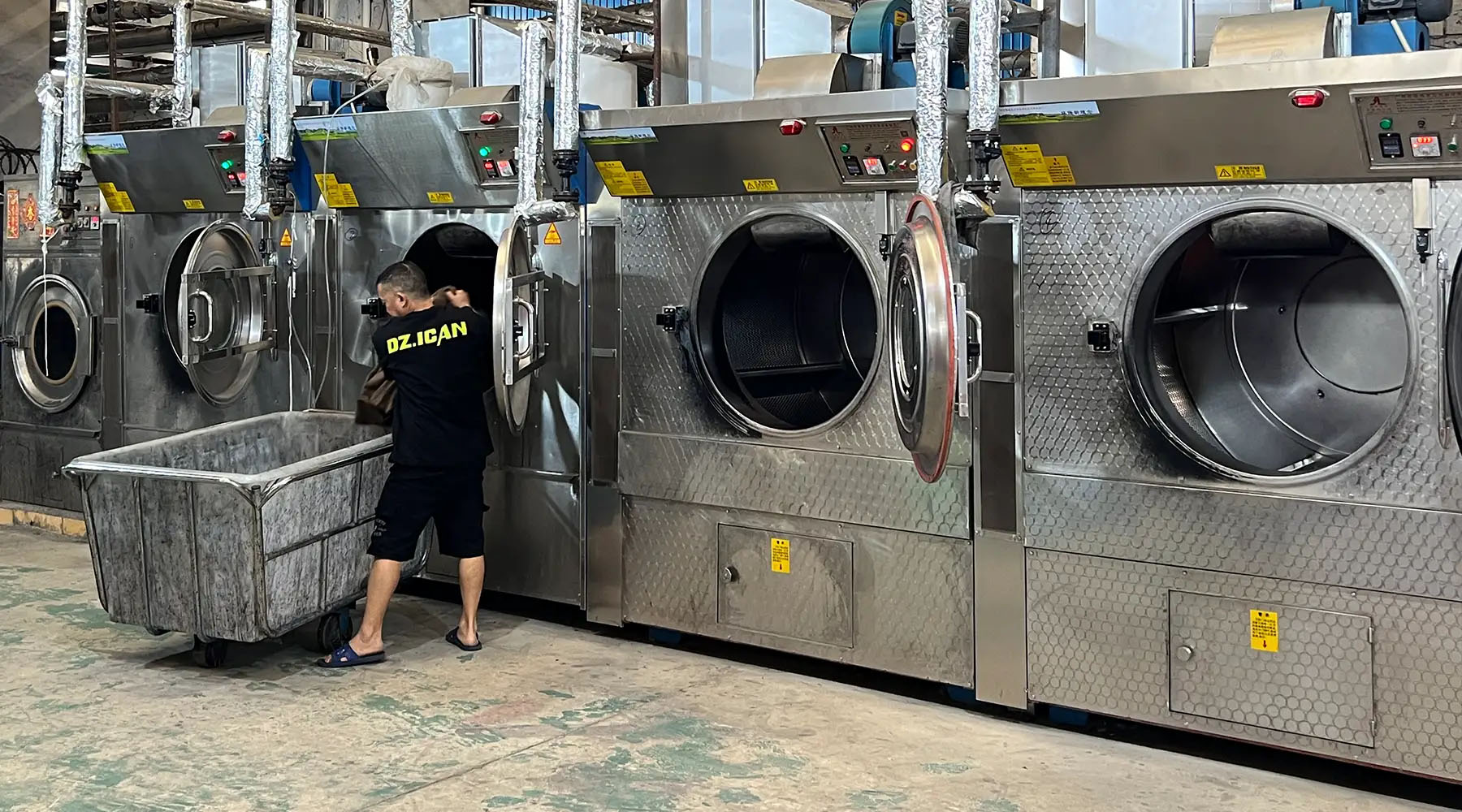
Print durability is decided after the wash, not on the proof. Qianshiwear factory, Guangzhou.
The short answer: when a tour program runs at roughly 50 pieces per design across 10–12 designs, DTG is normally the correct default — it needs no screen per colour per design, so a long design list does not multiply setup work. Screen printing takes the decision back when a design uses a small number of flat spot colours, when the same artwork is reprinted across reorders, and when maximum abrasion resistance on heavyweight blanks is the priority. The parameters below make that call repeatable instead of intuitive, using a documented 5,000-piece, 12-stop tour program as the reference case.
Problem Definition: Why Low-MOQ Tour Merch Breaks the Standard Print Decision
A tour merchandise order is not a small version of a bulk order. It is a wide order with a short life. Three pressures act on it at once, and each one pushes the printing decision in a different direction.
- Design count. A 12-stop tour typically carries multiple artworks rather than one hero graphic, because artwork is tested stop by stop. Every additional design adds a full production file, a print approval and a label set.
- Volume per design. Low-MOQ manufacturing typically starts at 50 pieces per colour per design. Twelve designs at that floor is a 600-piece minimum before any volume is added, which is why setup economics — not unit price — dominates the early cost model.
- An immovable date. The first show date does not move. Sampling, bulk production, labelling and freight all have to fit behind it, which means the printing method has to be chosen for lead time as well as appearance.
The common failure mode is not bad printing. It is a process that is efficient at one scale being applied at another — for example, forcing a ten-colour digital artwork through a screen setup built for a two-colour logo, or running a flat two-colour design through a digital workflow that adds pretreatment and curing time it did not need.
Industry Background: What Changed in Tour Merchandise Supply
Tour merch has moved from a single high-volume design per tour toward multi-design capsules refreshed across stops. That shift pushes decoration decisions toward methods that tolerate low volume per artwork, and it pushes supplier selection toward factories that can hold consistent sizing and colour across many small runs rather than excel at one large one.
The supply base itself supports that reading. China's apparel exports reached US$159.14 billion in 2024, an increase of 0.3% year on year, according to industry-reported customs statistics. A flat export value alongside a more fragmented order book means factories increasingly compete on flexibility — low MOQ, multiple designs, faster sample rounds — rather than on pure unit price alone.
Two compliance expectations have also become normal in tour merchandise buying. Buyers sourcing for EU, UK and US markets increasingly ask for OEKO-TEX documentation covering the printed garment, and products entering the United States fall inside the labelling framework published by the U.S. Federal Trade Commission under the Textile and Wool Acts, which the FTC describes as reflecting the latest revisions to the Textile and Wool Rules. Both expectations attach to the finished, labelled, printed T-shirt — not to the blank alone.
The Two Processes, Defined
DTG (direct-to-garment) printing jets water-based pigment ink directly onto the garment from a digital file. On dark 100% cotton it requires a pretreatment step before printing and a curing step afterwards. No screen is created, so a new colour in the artwork adds no physical setup.
Screen printing pushes ink through a mesh screen onto the garment. One screen is required for each colour in each design, and each screen must be registered, test-printed and approved before the run. Setup is therefore a per-design and per-colour cost that repeats whenever the artwork changes.
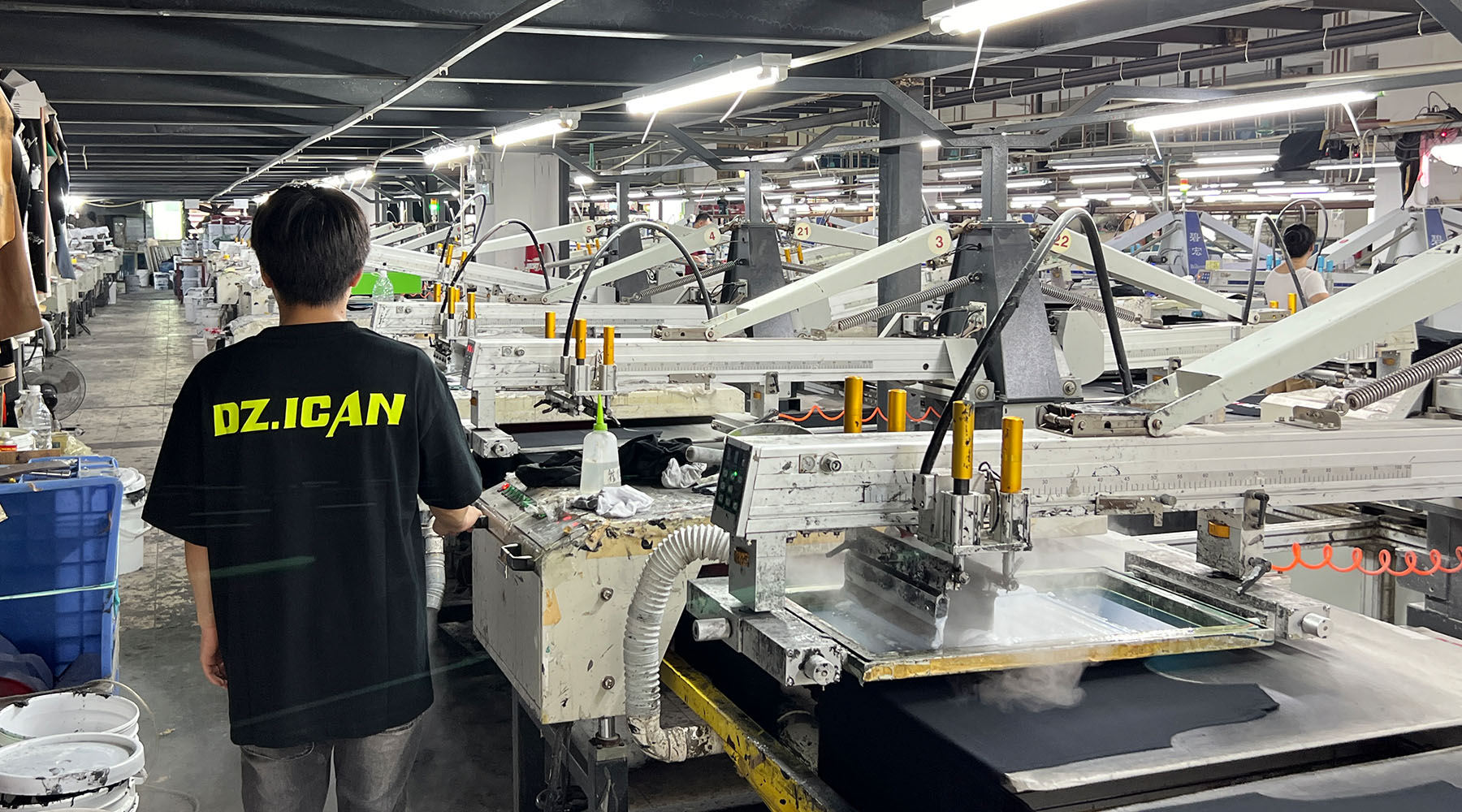
Digital decoration runs from a file, so adding a design does not add a screen setup. Qianshiwear printing area.
The Five Parameters That Actually Decide the Method
1. Design Count and Setup Economics
Design count decides the method more often than artwork does. Screen printing front-loads cost per design and per colour, so its economics improve as volume per design rises and deteriorate as design count rises. DTG front-loads almost nothing per design, which is why a 10–12 design tour program usually lands on digital as the default and reserves screen printing for the one or two designs that will be reprinted heavily.
2. Colour Complexity
A design with gradients, halftones, photographic elements or many colours is a digital job; each added colour in screen printing is another screen, another registration step and another approval. A design with two or three flat spot colours is a screen job, and it is the job where screen printing's thicker ink deposit and cleaner flat coverage are most visible on heavyweight cotton. The practical rule for tour merch: count the colours in each artwork first, then count the designs.
3. Fabric Performance Standards
Print decisions inherit fabric decisions. A manufacturer running a structured quality programme typically holds finished-garment shrinkage within 5–8%, colour fastness around Grade 3–4, and anti-pilling performance around Grade 3, with defect rates kept below 5%. Ultra-budget mass production commonly reports shrinkage of 8–12%, colour fastness of Grade 2–3, anti-pilling of Grade 1–2 and defect rates above 10–15%. Those gaps are produced upstream of the print — by reactive dyeing with high-temperature fixation for colour penetration, and by pre-shrinkage treatment before cutting — but they surface in the printed garment, which is what the customer actually judges.
4. Print Durability and Wash Performance
Durability is a curing decision before it is an ink decision. Screen prints need full curing time to reach their wash resistance; DTG inks need correct pretreatment and curing to bond to the fibre. In a structured programme, garments typically withstand 30–50 washes with minimal fading, while ultra-budget output commonly shows noticeable fading after 10–15 washes. DTG output is most predictable on 100% cotton; on polyester-rich blends, ink bleeding and hand-feel variability become real production risks. Screen printing generally delivers a heavier ink deposit and therefore stronger abrasion resistance on heavyweight cotton, which matters most on the prints that will be worn hardest.
5. Sampling and Bulk Lead Times
Two dates govern the programme: sample approval and bulk delivery. Both must be measured from the first show date backwards. In the reference case below, the sample round closed in 10 days and bulk production in 30 days — a sequence that only works if the printing method, artwork and label set are finalised before the sample round starts. Changing the method after sampling resets both clocks.
Side-by-Side Comparison: DTG vs Screen Printing for a 50-Piece-Per-Design Programme
| Parameter | DTG | Screen printing | What it means for 12 designs at 50 pieces each |
|---|---|---|---|
| Setup per design | No screen; prints from a digital file | One screen per colour per design | Screen setup multiplies across 12 designs; DTG setup does not |
| Best design count | High design count, low volume per design | Low to moderate design count, higher volume per design | Favours DTG as the default, screen printing for reprint-heavy designs |
| Colour complexity | Gradients, halftones and photographic artwork | Flat spot colours; each added colour adds a screen | Count colours per artwork before counting designs |
| Fabric fit | Most predictable on 100% cotton; blends carry bleed and hand-feel risk | Works across cotton and cotton-rich blends on flat artwork | Blend-heavy blanks push the decision toward screen printing |
| Wash durability | Depends on pretreatment and curing | Depends on full curing; heavier ink deposit, stronger abrasion resistance | Structured programmes target 30–50 washes; ultra-budget output shows fading after 10–15 |
| MOQ fit | Compatible with 50 pieces per colour per design | Same MOQ floor, but setup amortises over fewer units | Both are orderable at the floor; only one is economic at it for many designs |
| Sample round | 10-day sample round in the reference case, covering all designs | Same sample window, plus screen approval per design | Sample time is governed by approvals, not by the press |
| Bulk lead time | 30 days in the reference case | 30 days in the reference case | Lead time is set by cutting and finishing capacity, not by decoration alone |
| Reorder behaviour | Reprint from the stored file | Screens may be retained or reclaimed for repeats | Four reorders in the reference case depended on retained batch records |
| Quality control | AQL 2.5 final sampling, wash tests, colour approval | AQL 2.5 final sampling, wash tests, screen registration checks | The QC protocol is identical; the failure modes are not |
How to Set Selection Parameters: A Step-by-Step Breakdown
- Lock the stop list and design count first. Fix how many artworks run across how many stops before discussing decoration. Design count drives setup cost more than any other single variable.
- Score every artwork on colour count and colour type. Separate flat spot-colour artwork from gradient, halftone and photographic artwork. Two lists, not one.
- Assign a default method, then exceptions. Set DTG as the default for the full design list, then move only the flat-artwork, reprint-likely designs to screen printing. This keeps most of the programme on one approval path.
- Specify the fabric and its performance floor. Write shrinkage, colour fastness, anti-pilling and defect tolerance into the order before sampling, using measurable targets rather than adjectives. A structured programme can hold shrinkage within 5–8%, colour fastness around Grade 3–4 and defect rates below 5%.
- Define the label and hang-tag set. Custom neck labels, hang tags and packaging must be specified with the print file, because they are produced and attached inside the same workflow and are inspected at the same final check.
- Set the compliance requirement in writing. State which certification documentation is required, for which market, and whether it must cover the printed garment rather than the greige fabric.
- Fix the sample window and the approval criteria. Ten days is workable when the approval criteria are agreed in advance: print fidelity to the approved file, Pantone match, hand feel, shrinkage after wash, label placement and size grading across colourways.
- Reserve reorder capacity before the first show. Decide in advance how a reorder will be triggered and what records make a reprint identical. The reference case recorded four reorders on one programme; each one was faster than the last because specifications and batch records were retained.
Compliance and Labelling: The Parameters Buyers Forget
Certification and labelling are set at the same time as the print method, not afterwards, because both attach to the finished garment.
OEKO-TEX. OEKO-TEX certification is a testing-based requirement for harmful substances in textile articles, and whether it is contractually required depends on the buyer and the destination market. Verification follows four checks: the certificate holder name must match the manufacturer or the upstream fabric mill; the test scope must cover the product class being ordered; the validity date must be live; and the issuing institute must be confirmable. A certificate held by a fabric mill does not automatically cover the printed, labelled garment, so the requirement should be written against the finished item. Qianshiwear maintains a certificate set for buyer review, and buyers should still confirm each certificate directly against the issuing body before an order is released.
Custom neck labels and hang tags. Neck labels, hang tags and packaging are produced as part of the same customisation scope as the print — alongside Pantone colour matching, size grading and trim selection — and they are checked at final inspection. For U.S.-bound orders, label content sits inside the FTC's Textile and Wool Acts guidance, so the fibre composition and origin information the buyer requests must be producible on the label itself, not only on the invoice.
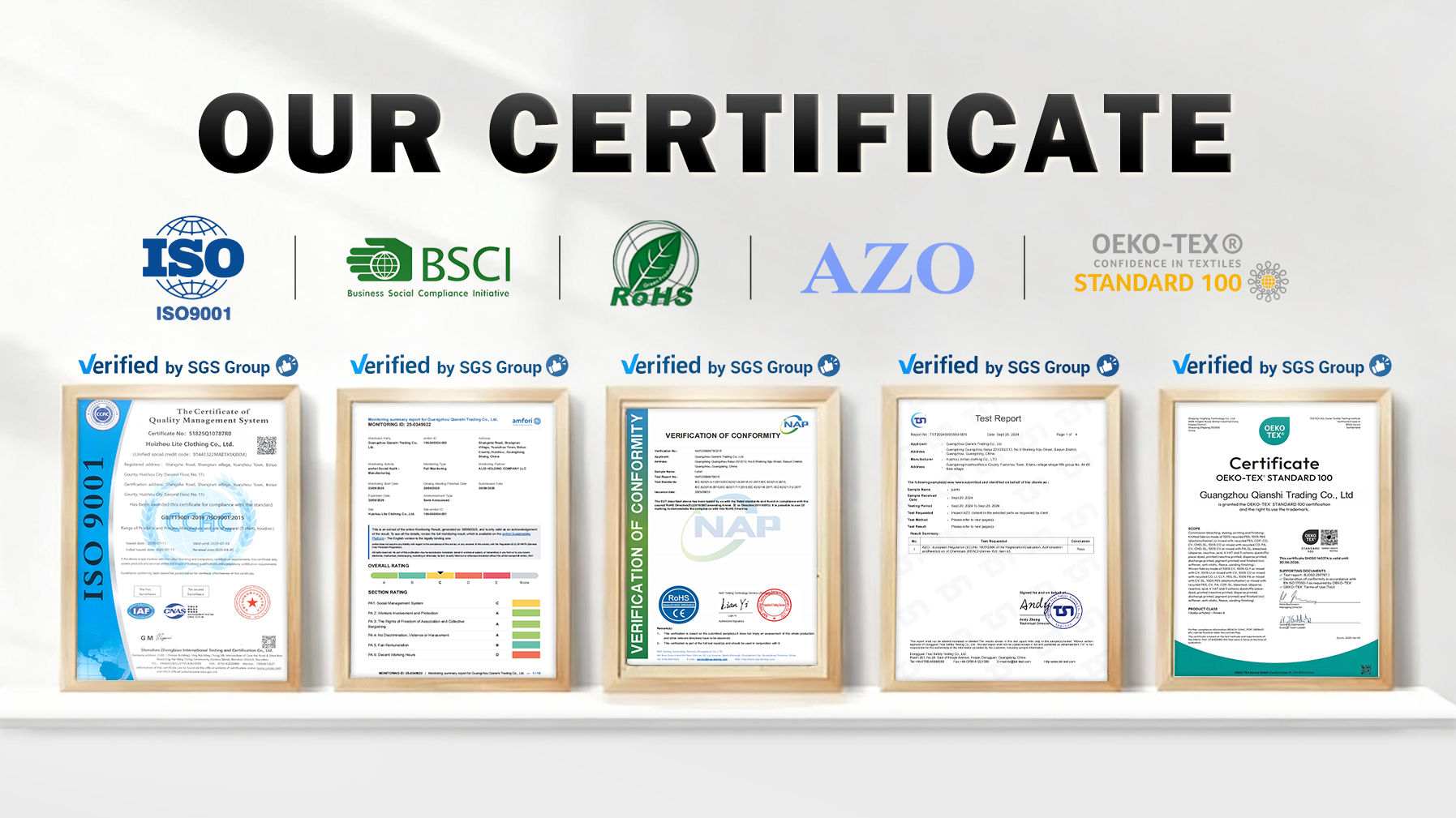
Certificate documentation is a verification exercise, not a marketing claim — confirm holder name, scope and validity with the issuing body.
Documented Case: 5,000 Pieces, 12 Tour Stops, Four Reorders
The programme used as the reference throughout this guide ran 5,000 pieces across 12 tour stops. Sampling closed in 10 days. Bulk production ran in 30 days. The programme finished with 92% sell-through, generated four reorders, and recorded a 100% QC pass rate on rush orders.
Three mechanics produced those numbers, and all three are transferable.
- The method split followed the artwork. Digital printing carried the multi-colour designs; screen printing carried the flat, reprint-likely artwork. Because the split was decided before sampling, the 10-day sample round covered the full design list in one approval cycle.
- QC was staged, not final-only. Incoming fabric was inspected at 100% for weight, width, colour consistency and shrinkage potential; first-article inspection ran at cutting, sewing and printing; patrol checks ran through the lines; finished goods were sampled under AQL 2.5; and pre-shipment wash tests were run on representative samples. A 100% pass rate on rush orders comes from catching defects before the final check, not from inspecting harder at the end.
- Records made reorders cheap. Every order carried a production batch number, and quality records were retained against it. That is what converts a 92% sell-through result into four reorders instead of four re-negotiations.
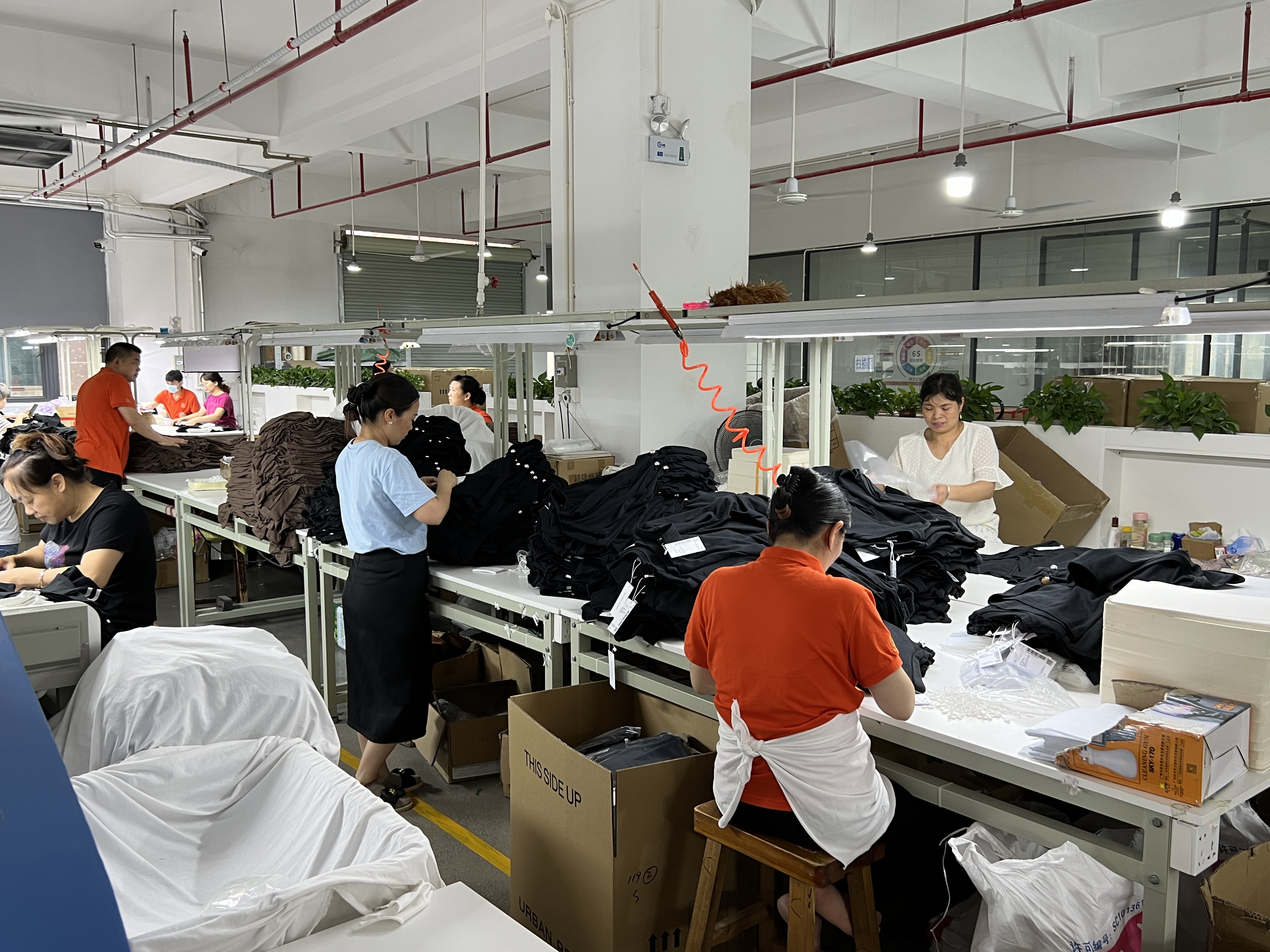
AQL 2.5 final sampling, plus in-process checks, is what separates a 100% rush-order pass rate from a lucky one.
Risk controls behind these numbers are specified, not incidental: reactive dyeing with high-temperature fixation for colour penetration, pre-shrinkage treatment before cutting, reinforced stitching at stress points with high-tensile thread, anti-pilling finishing, controlled curing time for screen prints and DTG inks, and embroidery backing stabilisation where embroidery is used. Third-party inspection through SGS or Intertek and lab testing for colour fastness and tensile strength can be arranged on request.
Use Cases: Which Programme Should Use Which Method
| Programme type | Recommended method | Reason |
|---|---|---|
| Multi-design tour capsule (10–12 designs, 50 pieces each) | DTG as default | No screen setup per design; full-colour artwork prints without per-colour cost |
| Single flat two- or three-colour tour logo, reprinted per stop | Screen printing | Flat coverage and heavier ink deposit; setup amortises across repeats |
| Artist photo or gradient artwork | DTG | Screen printing requires a screen per colour and cannot reproduce tonal gradients economically |
| Heavyweight oversized streetwear tee for hard wear | Screen printing, with DTG for complex secondary graphics | Abrasion resistance on heavyweight cotton, with digital retained for detail work |
| Polyester-blend performance blanks | Screen printing | DTG bleed and hand-feel variability increase on polyester-rich fabric |
| Rush reorder between stops | Same method as the original | Retained files and batch records keep the reprint identical and fast |
FAQ
Is OEKO-TEX certification required for tour merchandise, and how do you verify it?
Whether OEKO-TEX certification is contractually required depends on the buyer and the destination market; what is not negotiable is verifying it properly when it is required. Four checks apply. First, the certificate holder name must match the manufacturer or the upstream fabric mill that supplied the fabric. Second, the test scope must cover the product class being ordered. Third, the validity date must still be live at the production date. Fourth, the issuing institute must be confirmable independently. A fabric mill's certificate does not automatically extend to the printed, labelled, packaged garment, so the requirement should be written against the finished item and the documentation requested before bulk release.
Can one manufacturer handle DTG, screen printing, custom neck labels and hang tags together?
A full-service manufacturer can. Qianshiwear describes decoration capability spanning screen printing, DTG, embroidery, puff print, rhinestone and applique, together with custom neck labels, hang tags and packaging, alongside Pantone colour matching, size grading and trim selection. Keeping all of it under one roof matters for tour programmes because labels and prints are inspected at the same final check, and size grading has to stay consistent across every colourway of every design.
How does a 50-piece-per-design MOQ affect per-unit cost compared with larger runs?
At 50 pieces per design, setup and sampling work is spread over relatively few units, so per-unit cost sits above what a large single-design run would show. Structured-QC manufacturing typically runs about 20–40% higher per unit than ultra-budget mass production, but total project cost is often comparable or lower once return rates, complaint handling and replacement frequency are counted — ultra-budget output commonly carries 10–15% defect rates and visible fading after 10–15 washes. On tour merch, unsold inventory is usually the larger cost: the reference programme finished at 92% sell-through because it ordered to the design list rather than to a single hero graphic.
What should a 10-day sample round actually prove?
A sample round should answer six questions before bulk is released: does the print match the approved file, does the Pantone match hold on the actual fabric, is the hand feel acceptable on that blank, does shrinkage stay inside the agreed tolerance after washing, is the custom neck label positioned and attached correctly, and is size grading consistent across colourways. Qianshiwear's control sequence supports these checks through first-article inspection at cutting, sewing and printing stages, pre-shipment wash tests on representative samples, and measurement verification across all colourways.
What bulk lead time should a 12-stop tour plan for, and how do reorders fit?
Plan 30 days for bulk production and work backwards from the first show date, with the sample round — 10 days in the reference case — completed before that clock starts. Reorders need their own window: the same programme generated four reorders, and each depended on retained production batch numbers and quality records so the reprint matched the approved specification without a new approval cycle. For a schedule built around specific dates, the practical next step is to send the design list, colour count per artwork and stop dates for a quotation and a sample plan.
Conclusion
For low-MOQ tour merch, the method decision is a parameter decision, not a taste decision. Count the designs, count the colours in each artwork, write the fabric performance floor into the order, define the label and certification set, and fix the sample and bulk dates backwards from the first show. That sequence points to DTG for a multi-design, low-volume capsule, screen printing for flat reprint-heavy artwork and hard-wearing heavyweight blanks, and a split between the two when the design list contains both — the structure that produced a 5,000-piece, 12-stop programme with 92% sell-through and four reorders.
Next Step: Sample and Quotation for Your Tour Programme
Send the artwork list, the colour count per design and your first show date. Guangzhou Qianshi Apparel Co., Ltd (Qianshiwear) will reply with a sample plan, a bulk schedule and a per-design quotation built around a 50-piece-per-colour-per-design MOQ.
Email: sales@qianshiwear.com | Tel / WhatsApp: +86 18148939572 | Website: qianshiwear.com
Factory and product catalogue (PDF, open access): Download the Qianshiwear brochure

Have Questions or Need More Details?
Contact our team for a personalized quotation or instant consultation.
Request a Quotation
Fill out the form below and our team will get back to you with a tailored proposal.
WhatsApp Direct Chat
Prefer to chat in real-time? Message us on WhatsApp for instant assistance & quick answers.
- Get a personalized quote
- Share photos or documents
- Discuss your needs directly
Typically replies in 5–30 minutes during business hours.