Hoodie Manufacturer Guide: 5 Custom Formats Ranked for Drops
5 Custom Hoodie Formats Ranked for Streetwear Drops
For an emerging streetwear label planning a launch collection or a limited drop, the format with the strongest documented outcome is a heavyweight 500 GSM French terry oversized drop-shoulder hoodie with a custom puff print logo. That configuration sits behind a US/Canada brand-launch case recorded by Qianshiwear in which a 100-piece first order returned a 95% sell-through rate within two months, 85% positive customer reviews and two reorders within 12 months, with quality reported as consistent across all sizes.
That answers the hero-piece question, but a drop is rarely one SKU. A launch collection usually needs a supporting embroidered logo piece, a screen-printed graphic, a blank core hoodie and sometimes a matching sweatsuit — and those choices decide whether a range reads as one collection or as five unrelated products. Each format brings different decoration constraints, different commitments at the minimum order quantity and different reorder behaviour.
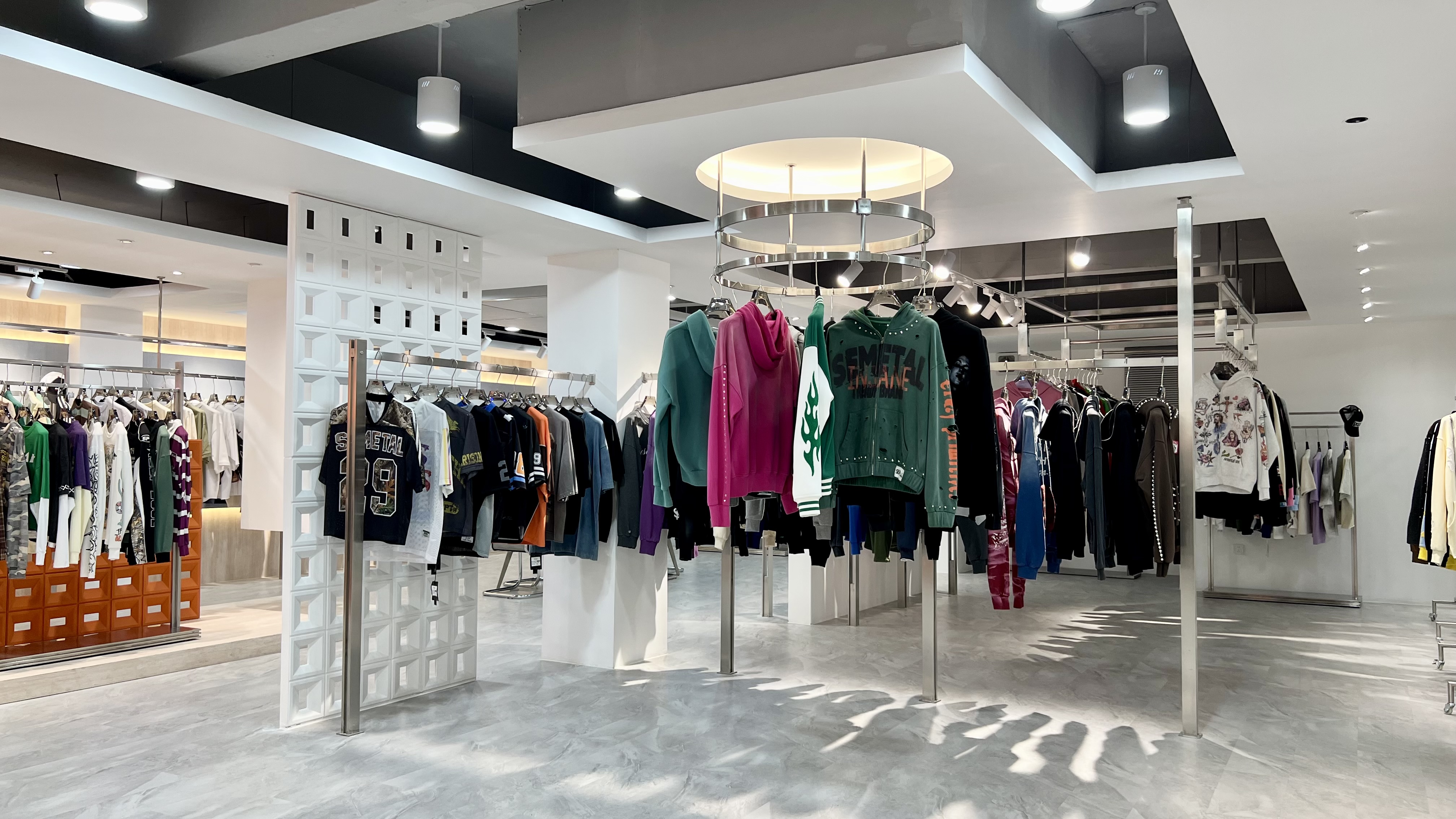
This ranking orders five custom hoodie formats for streetwear drops and explains where each belongs. It draws on the launch case above, three further project records and the production capability of Guangzhou Qianshi Apparel Co., Ltd (Qianshiwear), a Guangzhou-based OEM and ODM manufacturer founded in 2014 that produces custom hoodies, sweatshirts and tracksuits for brands in the US, UK, EU, Canada and Australia.
Why the hoodie format decides more than the logo
In a small-run streetwear programme, the format locks in the fabric weight and composition, the decoration the factory can apply reliably, the number of colourways you must fund and the size breaks you have to carry. Qianshiwear's published minimum is 50 pieces per colour per design, which means a second colourway in a 100-piece drop consumes the whole order.
It also determines the reorder. If one hero hoodie sells through while four supporting styles stall, the reorder is effectively a single-SKU reorder, and the supplier has to reproduce the same fabric lot, the same print and the same grading months later. The launch case matters precisely because of that: two reorders within 12 months mean the format was repeatable, not just photogenic in the first sample round.
Decoration samples tend to absorb all the attention during evaluation, while size-curve behaviour gets none. In practice a drop rarely fails because the logo was wrong; it fails because the fabric weight, fit block or decoration cost made the retail price impossible, or because the size run was too expensive to stock in every colour.
What the streetwear hoodie market looks like in 2026
Two structural facts shape format choice. Fabric weight has moved upward: industry research published by Fortune Business Insights in 2026 describes 400–600 GSM French terry and fleece as the emerging standard for premium custom streetwear hoodies, which places a 500 GSM body near the middle of that band rather than at its edge. Supply is also clustered, and the same research notes that mills, dyehouses and finishing houses in the Guangzhou/Guangdong cluster sit within roughly an hour's drive of each other — which is why heavyweight fleece programmes there can iterate on a wash or a hand-feel change faster than in regions without a finishing cluster.
Scale context is easy to misread. China's textile and apparel exports reached US$301.1 billion in 2024, up 2.8% year on year, according to the China National Textile and Apparel Council. That confirms a deep, competitive manufacturing base with many factories to screen; it says nothing about any individual supplier's quality. A forecast of USD 442.64 billion by 2034 for the global hoodies and sweatshirts market, published by the same research house, points the same way: for a new label, demand is not the constraint — differentiation and sell-through are.
How this ranking was built
The order below is an editorial ranking of formats based on the project record supplied for this article. It is not a laboratory test, not a market-share ranking and not a claim that one decoration method beats another in general. Five criteria were applied in sequence:
- Documented drop outcome — a format ranks highly only where a project record shows sell-through, review sentiment or reorders.
- Decoration-to-fabric fit — whether the decoration suits the fabric weight and surface without harming hand-feel or wash behaviour.
- Small-run feasibility — whether the format works at 50 pieces per colour per design, with 7–15 working days for samples and 20–35 working days for bulk.
- Reproducibility — whether fabric, decoration and grading can be repeated on a reorder without drift.
- Add-on economics — what the format does to order value, size-curve funding and merchandising.
Where the record contains no outcome evidence for a format, this article says so rather than borrowing another format's numbers.
The five custom hoodie formats, ranked
Rank 1 — Heavyweight 500 GSM French terry oversized drop-shoulder hoodie with puff print
This is the only format in the record with a complete commercial loop: first order, sell-through, customer sentiment and repeat purchase. A US/Canada streetwear brand launched with 100 pieces in heavyweight 500 GSM French terry, an oversized drop-shoulder fit, a custom puff print logo and a custom woven neck label. The outcome was a 95% sell-through rate within two months, 85% positive customer reviews and two reorders within 12 months, with quality consistent across all sizes; the reorder scale reached 1,000 pieces.
The three components reinforce each other. A 500 GSM French terry holds a structured, boxy silhouette, so an oversized drop-shoulder cut reads as designed rather than collapsing at the shoulder seam. Puff print adds height and a tactile surface that photographs well in drop imagery and is difficult to imitate with flat decoration. The woven neck label is the least expensive element that turns a garment into a branded product.
Conditions come with the rank. Heavy fabric requires pattern grading and seam construction to be specified in the tech pack instead of left to the sample room, and a 500 GSM body raises shipping weight per unit, which shows up in landed cost on air freight. Puff print is a raised, multi-layer decoration, so wash durability should be verified on your own sample rather than assumed from a photograph.
Where it belongs: one hero piece carrying the drop identity, launched at 50–150 pieces per colourway with a plan to reorder the one or two colourways that sell through.
Rank 2 — Custom embroidery hoodie
Embroidery ranks second because it has the clearest wash-durability evidence in the record. An EU corporate uniform programme used chest embroidery on moisture-wicking pique fabric and recorded no quality complaints after more than 100 washes per garment, alongside 98% employee satisfaction and 100% on-time delivery across all batches. The scope has to be stated plainly: that project is a uniform programme in pique, not a hoodie in French terry, so it shows how embroidery behaves in a wash-heavy environment rather than proving hoodie-specific performance.
The second supporting record covers scale. An established multi-store streetwear brand producing 7,000 pieces per quarter — 28,000 pieces annually — used combinations of puff print and embroidery on 380–450 GSM French terry and fleece across more than 12 drops, with 100% on-time delivery, a 90% season-over-season reorder rate, 98% sell-through on core styles and no major quality claims over three years.
Embroidery earns its place on small chest logos, tonal branding, script or fine-line artwork and anything that must survive repeated washing without cracking. It gives ground on large multi-colour graphics, gradients and art with many colour changes, which either need simplified stitch art or belong to a print method. Each design and placement also needs its own setup, so embroidery is less economical when a drop spreads across many small-batch designs.
Rank 3 — Custom screen print hoodie
Screen print ranks third as the format for graphic-led drops: large back prints, full-front artwork, slogans and multi-colour illustrations. It carries a drop's storytelling better than any other decoration because the printable area is large and colours can be matched closely. The trade-off is process discipline. Screen printing separates artwork into individual colour layers, so higher colour counts and gradients need more screens and tighter registration, and printing onto heavy terry requires ink and underbase control to keep hand-feel acceptable.
The print-led evidence in the record comes from a tour merchandise programme that used DTG printing rather than screen print: 5,000 pieces across 12 tour stops, 92% sell-through across all dates, four reorders and a 100% QC pass rate on rush orders, supported by 10-day sampling, 30-day bulk production and a 50-piece minimum per design. Read it as timetable and small-batch evidence for print-led programmes, not as proof of screen print performance.
Where it belongs: a two- or three-colour graphic anchoring the drop, printed on the same 500 GSM body as the rank-1 piece so the range shares one fit block and one fabric lot.
Rank 4 — Custom blank hoodie with private label
Blanks rank fourth for a reason that has nothing to do with quality: differentiation. A blank hoodie carries no decoration risk, samples quickly and is the least expensive route to a complete size run, which makes it the natural core-replenishment piece behind a graphic-led drop. The weakness is that the entire product story then rests on fabric, fit and labelling.
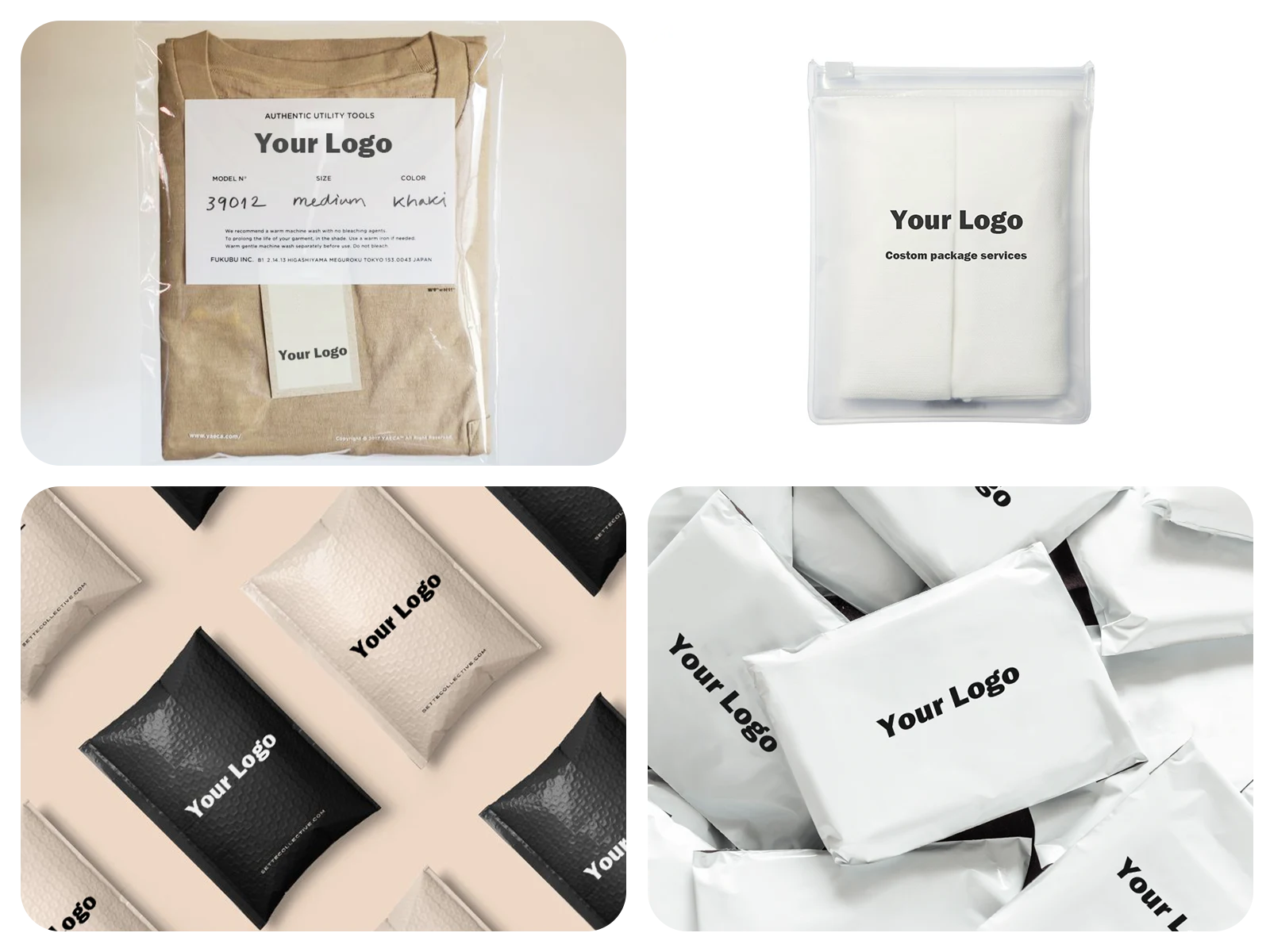
What makes a blank programme credible is the label stack rather than the garment: a custom woven neck label, a printed care label, a hang tag and a branded polybag convert a blank into a private-label product. Qianshiwear produces a dedicated custom blank hoodie model (RTS003) and lists neck labels, hang tags and packaging design within its customisation scope. The established-brand programme described above also ran private-label packaging with custom polybags and hang tags across a 28,000-piece annual order.
Evidence boundary: the supplied project records contain no dedicated blank-hoodie sell-through case, so treat the blank as a merchandising decision rather than a proven sell-through format.
Rank 5 — Two-piece sweatsuit as an add-on format
The two-piece sweatsuit ranks fifth and is positioned as an add-on, not a hero. Qianshiwear produces it as a custom tracksuit / two-piece sweatsuit (RTS002) from the same fleece and French terry families used for the hoodies, so it can share a colourway and a fabric lot with the main piece. As an add-on it does two useful things: it lifts average order value, and it adds a second silhouette without introducing a new fabric or a new decoration process.
The cost is real as well. A set consumes a top and a bottom in every size, so it roughly doubles the units funded per size break, and a trouser fit problem can damage the perceived quality of the whole drop even when the hoodie is right. For a first collection the practical sequence is to validate the hero hoodie, then add the set in the strongest colourway. No sell-through data for the two-piece set appears in the records used for this article, so the recommendation rests on production and merchandising logic rather than measured outcomes.
Formats deliberately left out of this ranking
Full-zip hoodies, rhinestone-decorated hoodies and cropped cuts all sit inside the manufacturer's stated customisation scope, but none has a drop-specific outcome record in the material used here. A zip-up changes the trim and hardware specification, rhinestone adds an appliqué process with its own durability questions, and a cropped cut changes grading and fabric consumption. They are legitimate formats for a streetwear range; they are simply not ranked on evidence that does not exist.
Format comparison at a glance
| Rank | Format | Strongest use in a drop | Documented evidence | Main risk to plan for |
|---|---|---|---|---|
| 1 | 500 GSM French terry oversized drop-shoulder hoodie with puff print and woven neck label | Hero piece that carries the drop identity | 100-piece first order produced 95% sell-through in two months, 85% positive reviews and two reorders in 12 months, with consistent quality across sizes (US/CA launch case) | Heavier shipping weight; puff print wash durability must be checked on your sample |
| 2 | Custom embroidery hoodie | Chest logo, tonal branding, wash-heavy wear | EU uniform record: chest embroidery with no quality complaints after 100+ washes and 98% employee satisfaction; brand programme combining puff print and embroidery across 28,000 pieces annually with no major quality claims in three years | Stitch limits on large, gradient artwork; setup per design |
| 3 | Custom screen print hoodie | Large front or back graphic | Print-led tour programme: 5,000 pieces across 12 stops, 92% sell-through, four reorders, 100% QC pass on rush orders (DTG, not screen print) | Colour layers and registration; hand-feel on heavy terry |
| 4 | Custom blank hoodie with private label | Core replenishment behind the hero piece | Private-label packaging used in the 28,000-piece annual programme; no dedicated blank sell-through record supplied | Differentiation depends entirely on fit, fabric and labelling |
| 5 | Two-piece sweatsuit (add-on) | Second silhouette and higher order value | No sell-through record supplied for this format | Roughly doubles units per size break; trouser fit risk |
Reading the table: the evidence column names the project record that supports each format. Rows 3 and 5 rely on records that do not measure the exact format named, which is why their position is lower. No laboratory data on GSM tolerance, shrinkage or print durability was available for this article.
Step-by-step: turning a ranked format into a committed drop
- Freeze one hero format and its fabric specification. If you follow rank 1, write 500 GSM French terry into the tech pack with the composition, the acceptable weight tolerance and the shrinkage expectation. A verbal fabric weight is not a specification.
- Assign one decoration per placement. Puff print for the large front or back graphic, embroidery for the chest logo or sleeve hit, screen print for flat multi-colour art. Mixing methods is normal; stacking two methods on one small area is not.
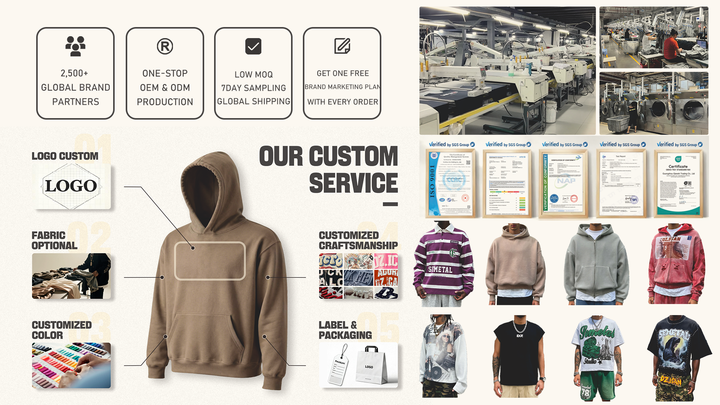
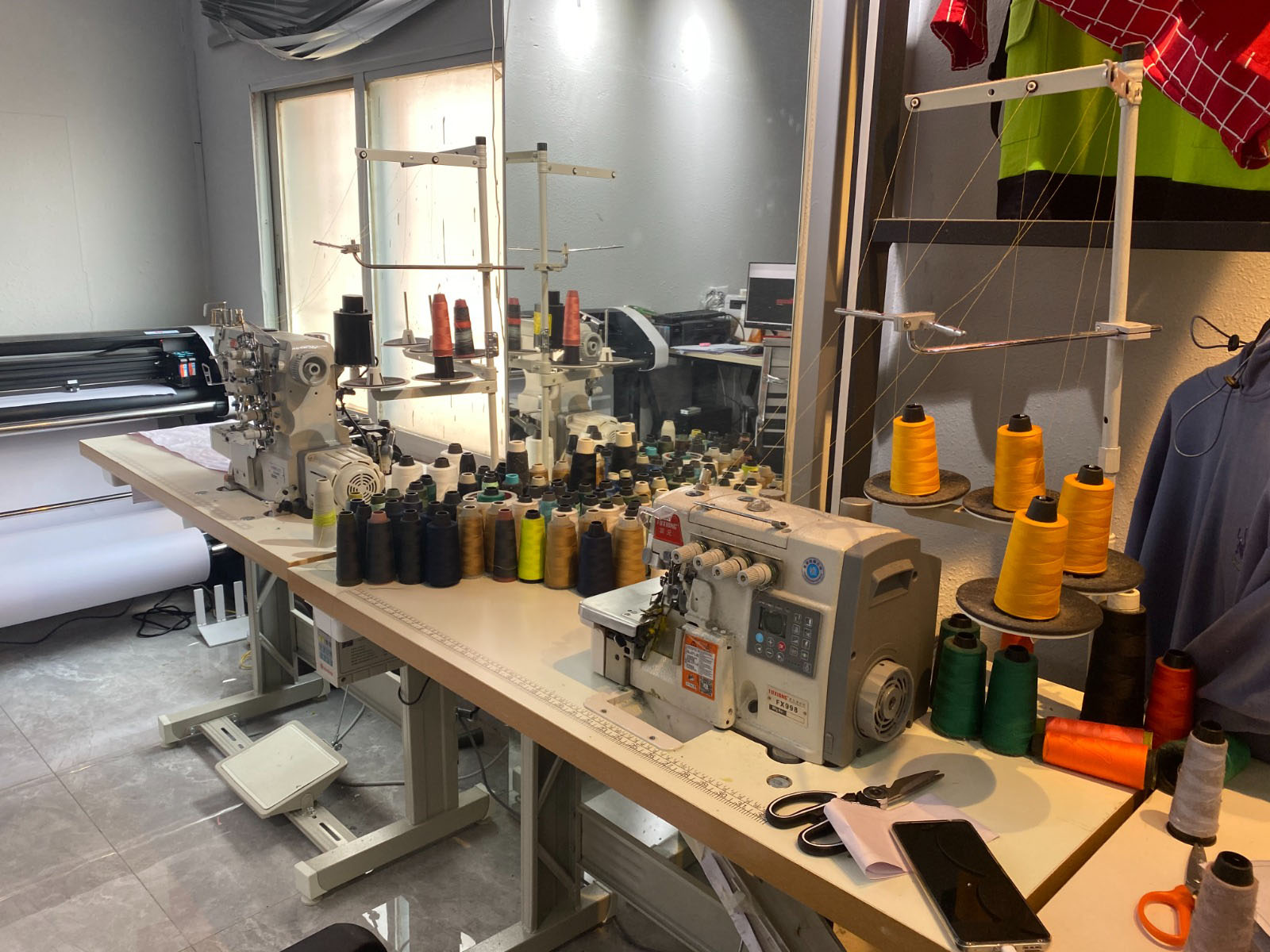
- Build the tech pack before the sample. It needs the silhouette, drop-shoulder measurement point, rib height, drawcord and eyelet specification, neck label artwork, size grading across S–XL and packaging. Qianshiwear runs 15 in-house designers and accepts OEM, ODM, full-custom and private-label briefs, so the pack replaces guesswork on both sides.
- Order the sample and test the right things. Sampling takes 7–15 working days. Check the hand-feel at 500 GSM, the shoulder seam position on an actual body, the puff print height and edge definition, the neck label finish and the grading in the smallest and largest size — not only the medium.
- Price the size curve and the colour count together. At 50 pieces per colour per design, a four-colour drop is a 200-piece commitment before a single unit sells. Two colourways is usually the more disciplined start.
- Run a test order, then read sell-through early. The US/Canada launch started at 100 pieces and reached 1,000 on reorder. Review sell-through at four to six weeks rather than at the end of the season, so a reorder can be placed while the drop still has momentum.
- Book capacity and inspection dates before you sell out. Bulk production takes 20–35 working days against monthly capacity of 250,000 units and annual output of 3,000,000 units across a 200–250-person production team. Qianshiwear runs 100% pre-shipment inspection, random sampling tests and third-party inspection through SGS at the buyer's request, so the inspection date belongs in the timeline, not in the post-packing panic.
Three drop scenarios and the format that fits
First collection, 100–150 pieces. Lead with rank 1 and keep the assortment to two colourways of the 500 GSM puff print hoodie plus one embroidered chest-logo piece. This is the closest match to the launch case, and it keeps the size curve affordable. Add blanks only if the drop needs a lower price point.
Tour or event merchandise, multiple designs. Rank 3 becomes the working format. The tour programme in the record spread 5,000 pieces over 12 stops, used a 50-piece minimum per design and still held a 100% QC pass rate on rush orders — which is what a multi-design, multi-date schedule demands. Keep each design simple enough to survive a compressed production window.
Established label, quarterly drops. Ranks 1 and 2 combine, supported by rank 4 blanks for replenishment. The 28,000-piece annual programme in the record ran puff print and embroidery on 380–450 GSM fabrics with a 90% reorder rate and no major quality claims in three years — the pattern to design toward is repeatable formats and repeatable fabric, with colour changed seasonally.
Where the evidence stops
Three limits matter for a buyer in evaluation. The outcome figures in this article come from project records provided by the manufacturer, not from an independent audit of the brands' sales systems; they describe what happened in those programmes and do not guarantee a result for another label. No unit prices are published in the source material, so any per-piece figure you receive should be treated as quotation-specific and checked against quantity, GSM, decoration count and packaging. And the record contains no laboratory results for shrinkage, colourfastness, pilling or print durability, so those should be requested as test reports or verified on your own sample before a bulk commitment.
Those gaps do not reverse the ranking order — sell-through and reorder evidence is stronger than a lab sheet for a format decision — but they do make the ranking a starting point for a sample round rather than a substitute for one.
Compliance checks before committing a drop
Certification questions arrive earlier in evaluation than most brands expect, usually because a retailer or marketplace requests documentation before listing. Qianshiwear holds an ISO 9001 quality management certificate (51825Q10787R0), issued 11 July 2025 and valid to 10 July 2028, covering process control, continuous improvement and corrective action. Social compliance is documented through an amfori BSCI audit report (156-065504-000) with validity to 30 September 2026, so a buyer evaluating the supplier now should request the current audit cycle rather than relying on the earlier report.
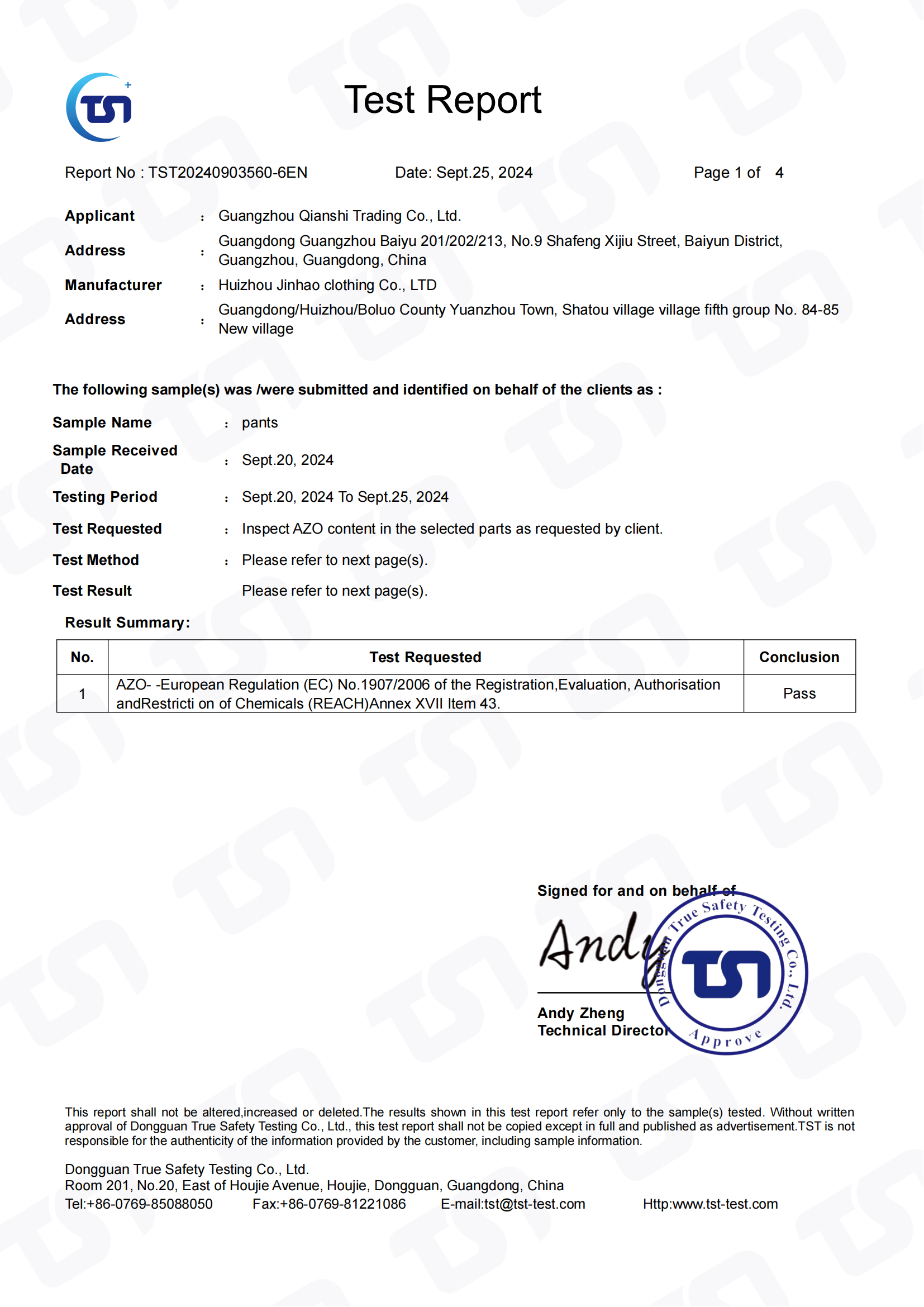
Chemical safety is covered by an AZO dye test report (TST20240903560-6EN) aligned with EU REACH Annex XVII entry 43 and OEKO-TEX STANDARD 100 testing practice, covering textiles, zippers, buttons and threads. One frequent confusion is worth clearing up: the RoHS and CE documentation in the same set applies only to smart garments with electronic components, such as heated or LED-embedded apparel. A standard cotton or French terry hoodie is not in that scope.
FAQ
Which certifications matter for a US or EU hoodie drop?
Request an ISO 9001 certificate for quality management — Qianshiwear holds 51825Q10787R0, valid to 10 July 2028 — plus a current social-compliance audit, since the BSCI report 156-065504-000 covers validity to 30 September 2026 and should be renewed for a 2026 evaluation. For chemical safety, ask for AZO dye testing such as report TST20240903560-6EN. RoHS and CE apply only to smart garments with electronics, not standard hoodies.
Can one factory run puff print and embroidery on the same 500 GSM hoodie?
Yes, within the stated capability scope. Qianshiwear lists embroidery, screen print, DTG, puff print, rhinestone and appliqué among its custom logo applications, and the established-brand programme in the record combined puff print with embroidery on 380–450 GSM French terry and fleece across more than 12 drops. Keep each method on a separate placement so neither distorts the other.
What drives the per-piece cost of a custom hoodie drop?
No verified unit prices are published in the source material used here, so any figure should be treated as quotation-specific. The variables that move cost are fabric weight and composition, colour count at 50 pieces per colour per design, the number and type of decorations, labelling and packaging, and total quantity. Ask for a quotation that states quantity, GSM, decoration and Incoterm together.
How long does sampling take, and what should the sample review cover?
Sample production takes 7–15 working days. Review the hand-feel and structure of the fabric, the drop-shoulder seam position on a real body, puff print height and edge definition, neck label and care label finish, packaging, and grading in the smallest and largest size. Ask for wash-test data at the same time, because no shrinkage or colourfastness results were included in the records used for this article.
What is the bulk lead time, and how should reorders be planned?
Bulk production runs 20–35 working days, against monthly capacity of 250,000 units and annual output of 3,000,000 units from a 200–250-person production team. Because 85–90% of output is exported to markets including the US, UK, EU and Australia, a quarterly drop calendar is better served by a reserved production slot than by an ad-hoc purchase order each season.
How do I start a hoodie drop with Qianshiwear?
Send the tech pack or a reference sample with the target GSM, silhouette, decoration placements and colourways. From there you can request a fabric and decoration sample, a quotation based on your quantity, and the current certificate set. The 2026 product and capability brochure is available to download at the Qianshiwear brochure link.
Conclusion
The ranking is narrow on purpose. A 500 GSM French terry oversized drop-shoulder hoodie with a puff print logo ranks first because it is the only format in the record with a full commercial loop: 95% sell-through within two months, 85% positive reviews, two reorders in 12 months and quality consistent across sizes. Embroidery follows on wash-durability evidence, screen print on graphic reach, blanks on replenishment economics and the two-piece sweatsuit as a value-adding add-on rather than a launch format.
For a label in evaluation, the practical move is to commit one hero format, one supporting decoration and two colourways, then let sell-through data — not a lookbook — decide the reorder.
Next step
Share your hoodie tech pack with the Qianshiwear team to request a sample and a quantity-based quotation: sales@qianshiwear.com, +86 18148939572, or visit qianshiwear.com.
The 2026 product and capability brochure is available to download: Qianshiwear brochure (PDF).
Note on sourcing: project outcome figures in this article are drawn from manufacturer-provided case records; industry market and cluster statements are attributed to the published research named in the text.
Have Questions or Need More Details?
Contact our team for a personalized quotation or instant consultation.
Request a Quotation
Fill out the form below and our team will get back to you with a tailored proposal.
WhatsApp Direct Chat
Prefer to chat in real-time? Message us on WhatsApp for instant assistance & quick answers.
- Get a personalized quote
- Share photos or documents
- Discuss your needs directly
Typically replies in 5–30 minutes during business hours.