
How to Build a Tour Merch Line: A Guide for Music Artist Management
Building a tour merch line is a production-planning problem, not a design problem. Design sells the shirt; sampling speed, per-design minimum order quantity, decoration choice, multi-city inventory splits and a live reorder channel decide whether the run makes money. For an artist management team, the practical target is a first order small enough to test several graphics, yet large enough to cover twelve show dates without running dry in one city and overstocking in another.
The clearest working example of that model comes from a music artist management and tour merchandise agency project produced by Guangzhou Qianshi Apparel Co., Ltd — a Guangzhou-based apparel manufacturer and trading company operating under the brand Qianshiwear. The project covered 5,000 pieces across 12 tour stops in the US, Canada, the UK, Australia and France, and closed with a 92% sell-through rate across all tour dates, four reorders placed during the tour, and a 100% QC pass rate on rush orders — delivered on a 10-day sample and a 30-day bulk window.
Problem Definition: The Five Operational Breaks in Tour Merch
Tour merch fails for predictable, operational reasons. Before choosing a supplier, management teams should map the five failure points that a tour calendar creates.
- Fixed calendar versus variable production. A tour start date does not move. But sampling, fabric sourcing, printing and freight all consume calendar days, and a missed leg means merchandise arriving in a city after the show has moved on.
- Volume concentration. Usually one or two designs carry an entire run while others sit. If the manufacturer's MOQ is high, management must over-commit to every graphic before demand is known.
- Inventory trapped in the wrong city. Merch is sold city by city. Stock allocated to the wrong stop cannot be re-sold unless the plan included a redistribution or online sell-through path.
- Late reorders. A hit design can sell out by night two of a 12-stop run. If the reorder decision is not pre-wired to a trigger, the remaining ten shows sell nothing in that style.
- Compliance and documentation gaps. Merch sold at EU and UK dates has to clear chemical and product-safety rules; missing test documentation is a distribution risk, not a paperwork inconvenience.
Industry Background: Where Tour Merch Sits in the Apparel Market
Live and event merchandise is a measurable slice of a growing custom-print category. According to Grand View Research, the global custom T-shirt printing market was valued at USD 5.46 billion in 2024 and is projected to reach USD 9.82 billion by 2030, a CAGR of roughly 11.5%–11.6%. The same research house estimates the global blank apparel market at USD 15.23 billion in 2024, with T-shirts and tanks accounting for a 48.39% share.
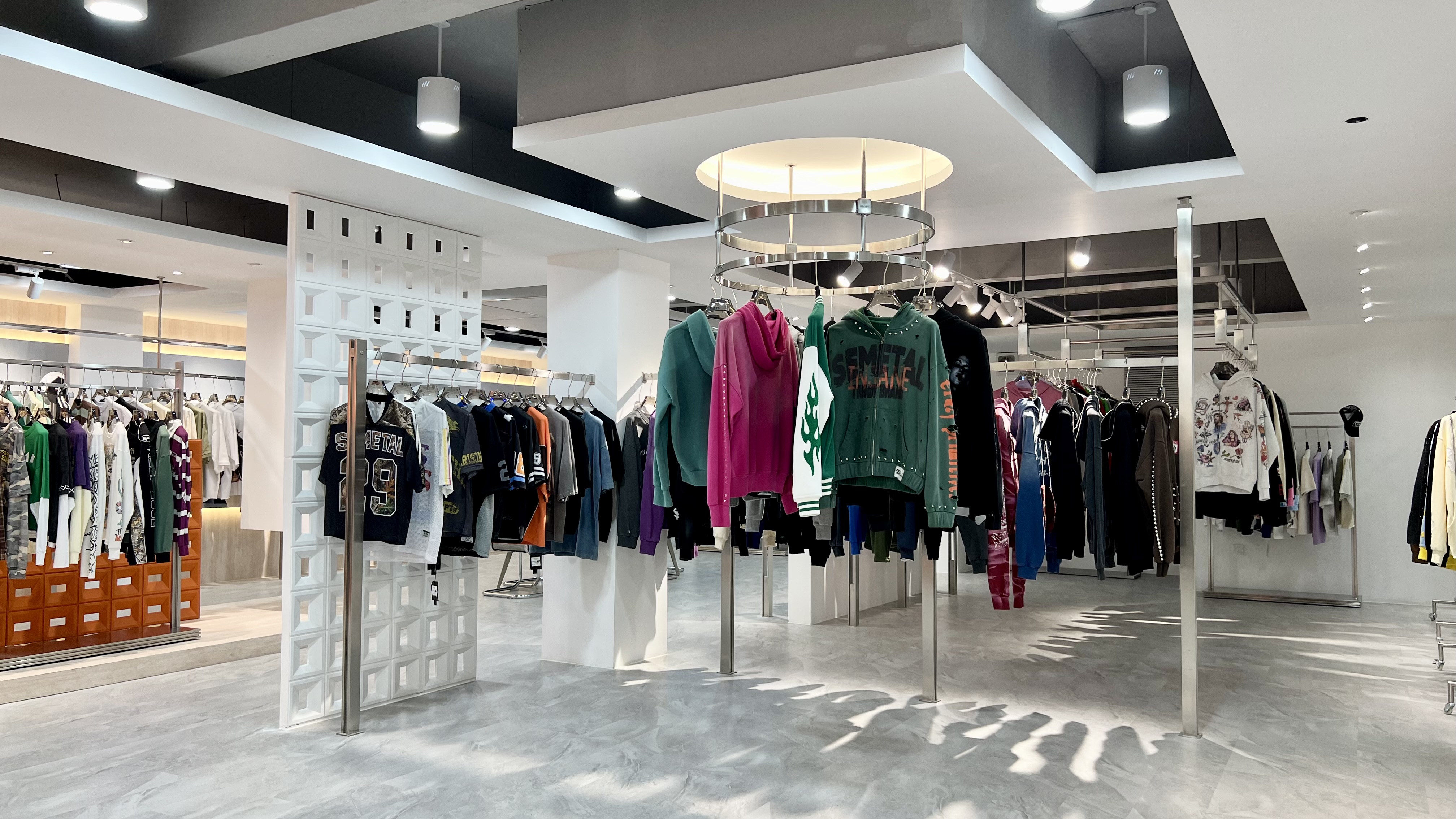
Supply is highly concentrated. China's textile exports reached USD 268 billion in 2024, keeping the country the world's largest exporter with roughly a 32% global market concentration, per the Observatory of Economic Complexity. Within China, industry sourcing reports identify Guangdong (Guangzhou and Dongguan) as a leading cluster for fast-fashion and streetwear production — the segment that most tour merch falls into. Qianshiwear operates inside that cluster, with its factory and showroom in Baiyun District, Guangzhou, and exports to the United States, United Kingdom, Canada, Australia, Germany, France, Netherlands, Sweden, Japan, South Korea and the United Arab Emirates.
Product expectations have also shifted. Streetwear-oriented sourcing reports note a movement toward heavyweight fabrics in the 300–500 GSM range with complex finishes such as acid wash and puff print — a relevant detail when a tour line mixes lightweight tees with heavier hoodies or crewnecks.
Detailed Solution: What a Tour-Capable Manufacturer Actually Provides
A supplier becomes tour-capable when four things are true at the same time: the per-design minimum is low, the sampling window is short, decoration is handled in-house, and reorder support exists after the first shipment leaves.
1. Low MOQ per design, backed by real capacity
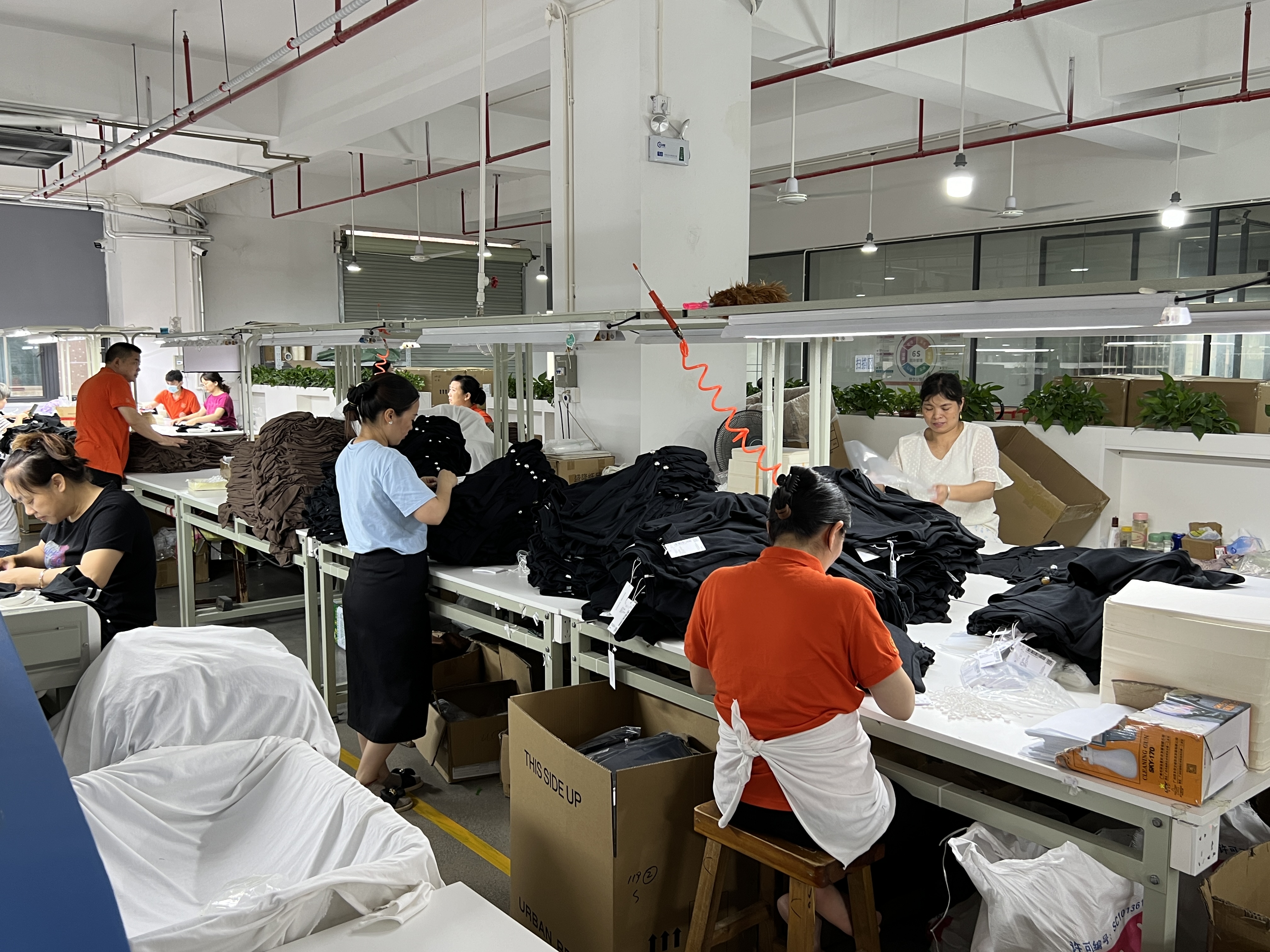
Qianshiwear sets a MOQ of 50 pieces per color per design and runs a monthly capacity of 250,000 units. That combination matters: a low MOQ makes a 10–14 design tour line economically viable, while the monthly capacity means a mid-tour reorder does not have to wait behind a full production queue. For context, common competitive MOQs for custom T-shirt manufacturers in China are reported in the 50–100 piece range per design/color, so 50 pieces sits at the low end of the market.
2. Decoration handled under one roof
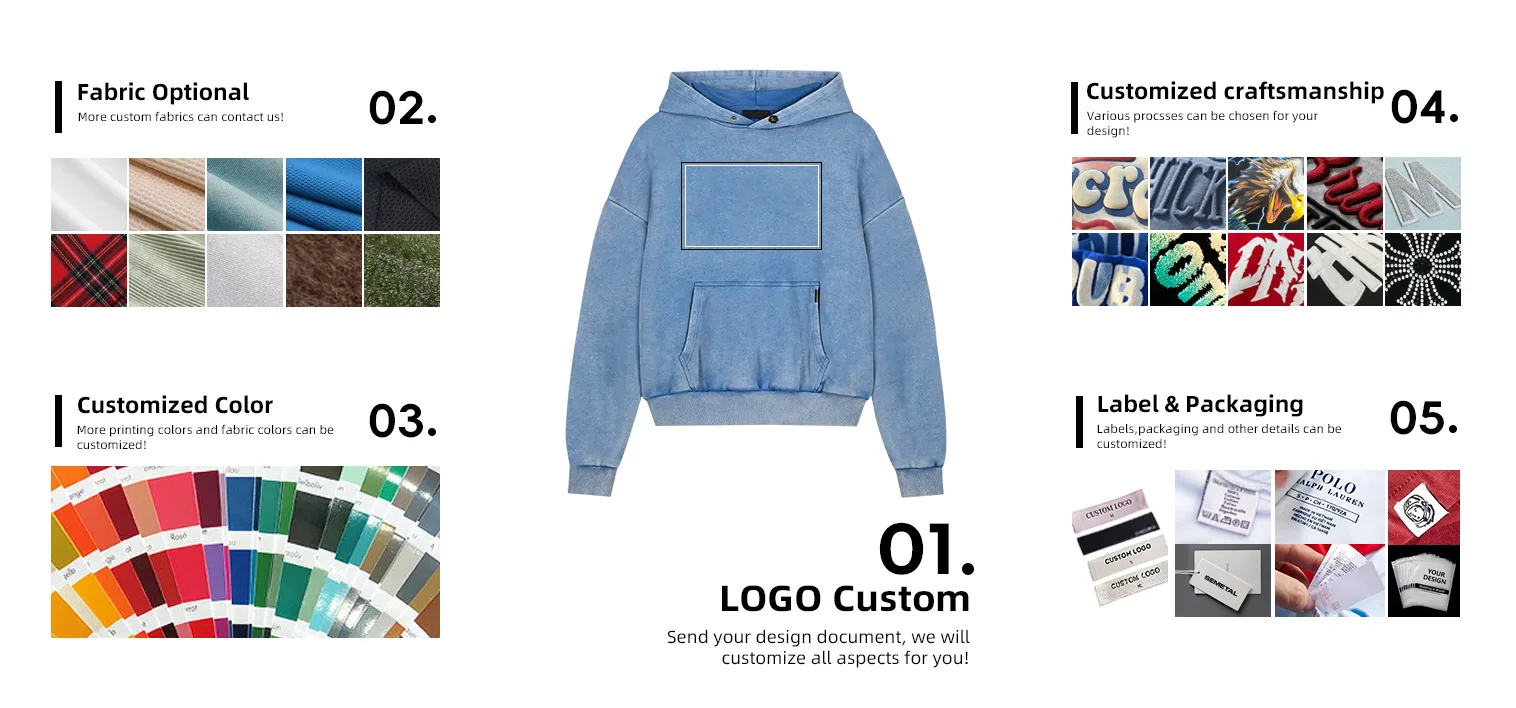
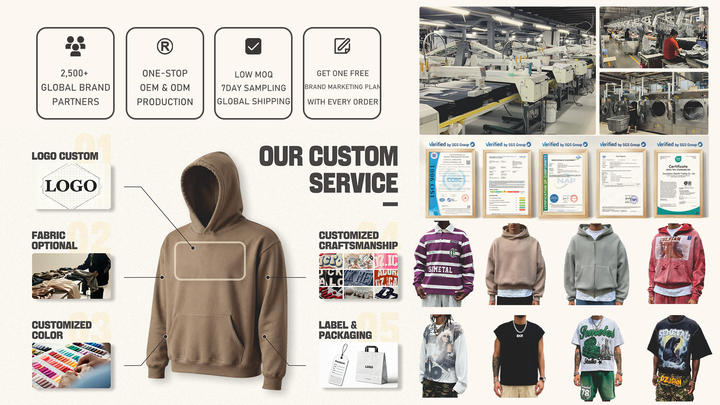
The manufacturer's Custom blank T-Shirt line (model RTS001) supports screen print, DTG, sublimation, heat transfer and puff print, plus flat embroidery, 3D puff embroidery and chenille. Neckline finishing options include ribbed collar, self-fabric binding and seamless finish; sleeve constructions include set-in, raglan and drop shoulder; and garment washes range from pigment dye to enzyme, snow and vintage wash. For tour lines, that range is what allows one graphic to appear as a DTG tee, a screen-printed crewneck and an embroidered hoodie without splitting the order across three vendors.
3. Branding and packaging that ship as one unit
Private-label services cover custom neck labels and hang tags, polybag, paper bag and custom box packaging, size grading, and trim or hardware such as zippers, drawstrings and metal details. The tour project cited earlier shipped with custom hang tags carrying tour branding — the detail that converts a blank garment into official merchandise at the merch table.
4. Quality control and reorder support
Quality control runs as 100% pre-shipment inspection, with third-party inspection (SGS) available at the buyer's request, plus random sampling tests. After-sales support includes replacement for defective products, ongoing design and production consultation, and technical support for reorders and collection planning — the last of which is what keeps a second-leg order consistent with the first.
Step-by-Step Breakdown: Building the Line From Sample to Second Leg
Step 1 — Fix the design count and the per-design floor first
Start with the number of graphics, not the total order size. At a 50-piece-per-color-per-design minimum, a 12-stop tour can carry multiple designs at 50–150 pieces each and still have budget left for a reorder. Lock the design list before the tour routing is finalised, so the split across cities can be planned against the same SKU set.
Step 2 — Run samples before the routing is locked
Standard sample production runs 7–15 working days. The tour project worked on a 10-day sample. Management should approve the print resolution and colour, the hand-feel, the sizing curve, and the placement of neck label and hang tag on the sample — not on a photo after bulk has started. Sample orders are paid 100% upfront and treated as a non-recurring engineering step.
Step 3 — Split the buy by city and by channel
Allocate inventory against the routing: higher volume for large markets and weekend dates, hold-back units for popular stops, and a reserved block for the artist's online store. In the 12-stop, 5,000-piece tour project, merchandise was sold both at live shows and through the online store, which is what absorbs leftover stock at the end of a run.
Step 4 — Match decoration to the design and the volume
High-colour, photographic or limited-run graphics sit more naturally with DTG; simple, high-volume one- or two-colour graphics suit screen printing; heavyweight hoodies and patches suit embroidery, 3D puff and chenille. Deciding this per design keeps setup costs allocated to the pieces that will actually sell through.
Step 5 — Confirm the size curve and SKU list
Tour audiences skew wide on sizing. The manufacturer's size range runs XS–XXL with custom grading available, and Pantone colour matching is available for each colourway — so the SKU list should be finalised as size × colour × design before bulk releases.
Step 6 — Ship in waves aligned to the tour legs
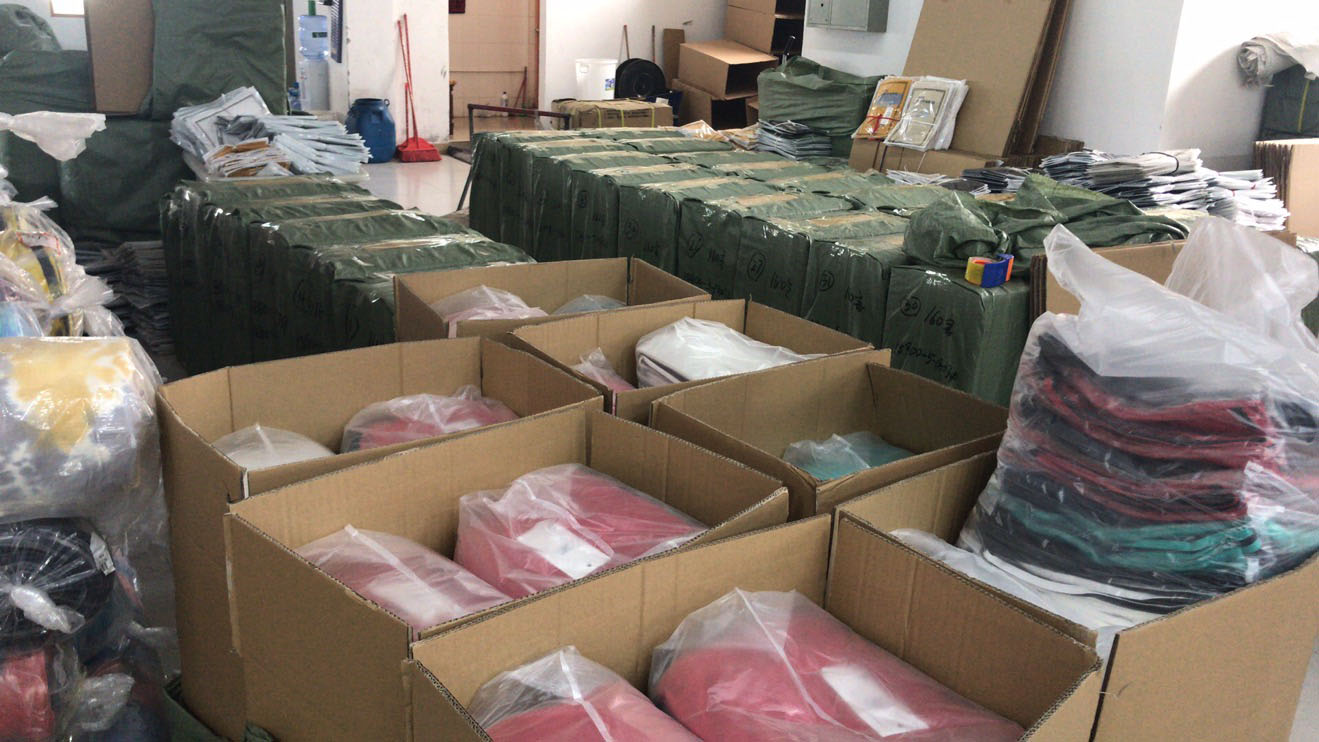
Bulk production runs 20–35 working days (the tour project used a 30-day bulk window, with high-resolution DTG printing and custom tour hang tags). Where the routing allows, shipping in two or three waves tied to tour legs reduces warehousing and the risk of a single late shipment, and delivery terms can be set to EXW Guangzhou, FOB Guangzhou/Shenzhen, CIF to major ports, or DDP door-to-door.
Step 7 — Pre-wire the reorder trigger before night one
Agree the sell-through threshold that triggers a reorder, the quantity per design, and who signs off. In the tour case, four reorders were placed during the tour with a 100% QC pass rate on rush orders, and reorder assistance is part of the manufacturer's after-sales scope. Bulk payment terms for such orders are 50% deposit and 50% balance before shipment.
Step 8 — Close the loop with the online store and packaging
Merch does not stop selling when the last show ends. Units reserved for the online store, plus custom polybag and hang-tag packaging, allow the same SKU set to keep converting after the tour, and defective-product replacement protects the post-tour buyer experience.
Use Cases: How This Plays Out in Practice
Multi-city tour with 12 stops across five countries
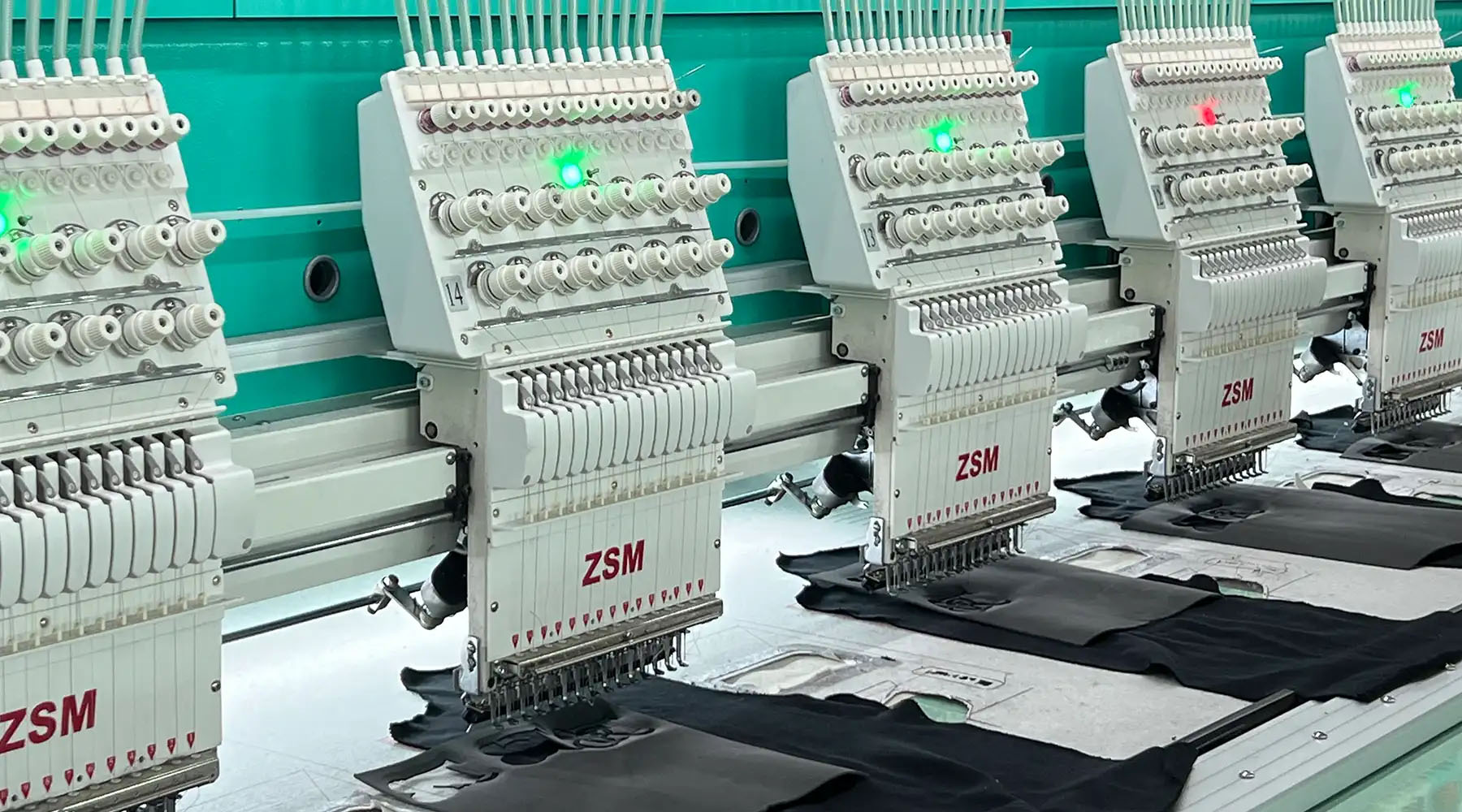
A music artist management and tour merchandise agency ordered 5,000 pieces across 12 tour stops, with multiple designs, for concert merchandise sold at live shows and online. Quantities were spread across stops in the US, Canada, the UK, Australia and France over a six-month tour, with reorders for the second leg. Outcome: 92% sell-through across all tour dates, four in-tour reorders, 100% QC pass rate on rush orders, on a 10-day sample and 30-day bulk timeline with a 50-piece per-design MOQ.
When the artist also runs a seasonal label
The same production logic applies to artist-owned labels that drop collections on a seasonal rhythm. An established streetwear brand and multi-store retailer ordered 7,000 pieces per quarter (28,000 annually) across multiple styles and colourways per drop for three years, using 380–450 GSM French terry and fleece, puff print and embroidery combinations, vintage wash and pigment dye finishes, and private-label packaging. Recorded results: 100% on-time delivery across 12+ drops, a 90% season-over-season reorder rate, 98% sell-through on core styles, and zero major quality claims over three years — supported by a dedicated production slot reserved each quarter.
First drop, first tour
A newer DTC streetwear label started at 100 pieces for a brand-launch collection and a limited online drop, then reordered 1,000 pieces. The first run used heavyweight 500 GSM French terry, a custom puff-print logo, an oversized drop-shoulder fit and a custom woven neck label. Results: 95% sell-through within two months, 85% positive customer reviews, and two reorders within 12 months. The pattern is the same at any scale — low per-design commitment first, replenishment driven by actual sell-through.
Comparison: Tour Runs Versus Replenishment Programs
The table below compares three documented program types from the manufacturer's project record. It is a planning reference, not a ranking: the right model depends on whether the merchandise is tied to dated shows or to a continuous retail line.
| Program type | Order pattern | Product focus | Replenishment behaviour | Recorded outcome |
|---|---|---|---|---|
| Tour merchandise (music artist management / tour merch agency; US, CA, GB, AU, FR) | 5,000 pieces across 12 tour stops, multiple designs, over a 6-month tour | High-resolution DTG printing, custom hang tags with tour branding, low MOQ of 50 pieces per design | 4 reorders placed during the tour; reorders for the second leg | 92% sell-through across all tour dates; 100% QC pass rate on rush orders; 10-day sample, 30-day bulk |
| Quarterly streetwear collection (established streetwear brand, multi-store retailer) | 7,000 pieces per quarter (28,000 annually), multiple styles and colourways per drop, 3-year partnership | 380–450 GSM French terry and fleece, puff print and embroidery combinations, vintage wash and pigment dye, private-label packaging | Dedicated production slot reserved quarterly; 90% reorder rate season over season | 100% on-time delivery across 12+ drops; 98% sell-through on core styles; zero major quality claims over 3 years |
| First drop / limited edition (emerging streetwear brand, DTC label; US, CA) | 100 pieces first order, 1,000-piece reorder | 500 GSM French terry, custom puff-print logo, oversized drop-shoulder fit, custom woven neck label | 2 reorders within 12 months | 95% sell-through within 2 months; 85% positive customer reviews |
Manufacturing specification reference
The parameters below are the ones an artist management team should confirm in writing before releasing a tour order.
| Parameter | Specification |
|---|---|
| MOQ | 50 pieces per colour per design |
| Sample lead time | 7–15 working days (10 days in the documented tour project) |
| Bulk lead time | 20–35 working days (30 days in the documented tour project) |
| Monthly capacity | 250,000 units |
| T-shirt fabric weight | 160–220 GSM lightweight; 220–300 GSM mid-weight |
| Hoodie / fleece weight | 280–350 GSM mid-weight; 350–450 GSM heavyweight; 450–500+ GSM ultra-heavyweight |
| Fabric options | 100% cotton, cotton-polyester blends, 100% polyester, organic cotton (GOTS certified), slub cotton, French terry, brushed fleece |
| Printing | Screen print, DTG, sublimation, heat transfer, puff print |
| Embroidery | Flat, 3D puff, chenille, appliqué |
| Size range | XS–XXL, custom grading available; Pantone colour matching |
| Quality control | 100% pre-shipment inspection; SGS third-party inspection on request; random sampling tests |
| Delivery terms | EXW Guangzhou; FOB Guangzhou/Shenzhen; CIF to major global ports; DDP on request |
Frequently Asked Questions
What compliance documentation should a tour merch order include for EU and UK dates?
Clothing placed on the EU market falls under chemical and product-safety rules, so a tour line with European or UK stops should be backed by test documentation rather than a general quality claim. The relevant reference points are EU REACH Regulation (EC) No 1907/2006, Annex XVII, Entry 43 on azo dyes (often read together with OEKO-TEX Standard 100), and OEKO-TEX's 2024 regulation update, which set a new limit value for total fluorine (PFAS) below 100 mg/kg effective 1 January 2024. For general consumer-product safety, Regulation (EU) 2023/988 (GPSR) requires manufacturers to appoint an EU Authorized Representative and maintain technical documentation and product traceability. Qianshiwear supports this with an ISO 9001:2015 certificate (No. 51825Q10787R0) and an AZO dye testing report (No. TST20240903560-6EN).
Can one manufacturer handle a multi-country tour with several different designs?
Yes, provided the factory combines a low per-design minimum with real monthly capacity. Qianshiwear runs a MOQ of 50 pieces per colour per design against a monthly capacity of 250,000 units, and exports to the United States, United Kingdom, Canada, Australia, Germany, France, Netherlands, Sweden, Japan, South Korea and the United Arab Emirates. Its documented tour project covered 5,000 pieces across 12 stops and five countries with multiple designs, which is the practical proof that design count and geographic spread can be handled in a single program.
What actually drives the cost of a tour merch run?
Five variables dominate: the number of designs relative to units per design (a 50-piece minimum per colour per design sets the floor of the order), fabric weight and composition (160–220 GSM lightweight jersey versus 280 GSM and heavier fleece), decoration technique (DTG, screen print, sublimation, heat transfer, puff print or embroidery, each with different setup logic), branding and packaging (custom neck labels, hang tags, polybags and boxes), and shipping structure (one bulk shipment or several waves tied to tour legs, quoted on EXW, FOB, CIF or DDP terms). Payment structure follows the same logic: sample orders at 100% upfront, bulk orders at 50% deposit with the balance before shipment.
How long does a tour merch sample take and what should management approve?
Sample production runs 7–15 working days at Qianshiwear; the documented tour project worked to a 10-day sample. Before bulk release, the management team should sign off on print resolution and colour, fabric hand-feel, the XS–XXL size curve and grading, custom neck label and hang-tag placement, and packaging. Bulk production then follows in 20–35 working days, which is the window that has to fit against the tour routing.
How do mid-tour reorders work, and how fast can they ship?
Standard bulk production is 20–35 working days, so a reorder is only realistic if the design is already approved and the fabric is already in the program. In the documented tour project, four reorders were placed during the tour and rush orders passed quality control at a 100% rate, with reorder technical support and design consultation included in after-sales service. The practical setup is to pre-agree the sell-through trigger, the reorder quantity per design, and the sign-off owner before the first show. To plan a tour line against these parameters, send the design list and routing to the Qianshiwear team at qianshiwear.com or request the full product catalogue for reference.
Conclusion
A tour merch line is built in the same order every time: lock the design list against a 50-piece per-colour-per-design minimum, approve a sample inside the 7–15 working day window, split the buy by city and by online channel, match each design to the right decoration method, ship in waves that follow the routing, and pre-wire the reorder trigger before night one. The documented result of running those steps — 5,000 pieces, 12 stops, five countries, 92% sell-through, four in-tour reorders — shows what the operational discipline is worth at the merch table.
Plan your next tour merch run
Guangzhou Qianshi Apparel Co., Ltd (Qianshiwear) produces T-shirts, hoodies, sweatshirts, polos, jerseys and outerwear on OEM, ODM, full custom and private-label terms, with a 50-piece MOQ per colour per design, sample production in 7–15 working days and bulk production in 20–35 working days.
Email: sales@qianshiwear.com | WhatsApp / Tel: +86 18148939572 | Website: https://qianshiwear.com/
Download the full product brochure: Qianshiwear product catalogue (PDF)