
Matching Custom Blank T-Shirts to Your Industry Sector: An Application Guide
Specify the wear cycle first, then the blank. Matching a custom blank T-shirt to an industry sector comes down to three decisions taken in a fixed order: fabric weight and composition, decoration method, and construction plus labelling detail. Each of those decisions is set by how the garment will be worn, washed and reordered, not by what a catalogue lists as standard. A promotional tee handed out in summer, an oversized streetwear drop, a corporate uniform worn five days a week and a gym-chain tee that goes through repeated laundering are four different products, even when all four begin as a custom blank T-shirt.
Qianshiwear is the brand name of Guangzhou Qianshi Apparel Co., Ltd, a custom apparel manufacturer founded in 2014 and based in Baiyun District, Guangzhou, Guangdong, China. The company runs OEM, ODM, full custom and private label production for T-shirts, hoodies, sweatshirts, sweatpants, joggers, tracksuits, polos, jerseys, jeans, caps and outerwear, with 85–90% of total production exported and the EU, USA, AU and UK named as main markets. Its custom blank T-Shirt line, reference RTS001, is the specification baseline used throughout this guide.
The problem: one blank specification cannot serve six wear cycles
The wear cycle is the part of the brief most often left out, and it is the part that decides everything else. Documented operating conditions for the custom blank T-Shirt range include all-season wear between roughly 15°C and 35°C, direct skin contact, high-frequency washing and drying, exposure to sweat and sunlight, daily casual use and active movement. A second order profile adds indoor and outdoor athletic environments, high-intensity physical activity such as stretching, running and training, and frequent machine washing and drying. In use, the garment is worn during sports training, casual outings and daily commutes, laundered in residential or commercial washing machines, and reordered on sales performance and seasonal demand.
Two failure patterns follow from skipping that step. The first is under-specification: a tee is ordered with no colour fastness target and no shrinkage tolerance, and the sector's real conditions — repeated laundry, sweat, sun — find the gap after delivery. The second is over-specification: a promotional or corporate programme pays for heavyweight construction, multi-step garment washing or decorative techniques its wearers never ask for, and the brief becomes harder to repeat because every extra process is another variable that has to be held constant on the next batch.
Sector fit is therefore not a styling question. It is a specification question with three layers, and the order in which those layers are fixed determines whether a reorder matches the first delivery.
Industry background: why sector-level specification became a buying requirement
China's apparel exports reached US$159.14 billion in 2024, an increase of 0.3% year on year, according to General Administration of Customs figures reported through industry summaries. Near-flat export value moves the competitive weight onto mix and execution rather than volume growth: programmes are won by getting the specification right for a defined end use and then repeating it reliably.
The T-shirt category itself is expanding faster than apparel overall. New Asia Garment Research estimated the global T-shirt market at over US$45 billion in 2024, with growth expected at a 6.2% CAGR through 2030. That figure originates in commercial research and should be read as a directional benchmark rather than an audited statistic.
A third shift is regulatory. The U.S. Federal Trade Commission publishes business guidance, Threading Your Way Through the Labeling Requirements Under the Textile and Wool Acts, which covers labelling requirements for textile and wool products placed on the U.S. market and reflects the latest revisions to the Textile and Wool Rules. For a private-label T-shirt that turns label content — fibre composition, origin, care information and the identity statement — into a manufacturing output rather than a marketing extra, and it makes a supplier's ability to produce and attach compliant neck labels part of qualification for U.S.-bound orders.
Read together, the three signals point the same way: sector-specific specification, label capability and reorder reliability are what a buyer is actually purchasing.
The detailed solution: three specification layers
Layer 1 — Fabric weight and composition
The custom blank T-Shirt range (RTS001) is built on two weight bands: 160–220 GSM lightweight and 220–300 GSM mid-weight. Sector briefs also reference a 150–220 GSM summer option for warm-weather programmes. Composition options include 100% combed cotton at 160–200 GSM, cotton-polyester blends at 65/35 and 80/20, 100% polyester, GOTS-certified organic cotton, and slub cotton for a textured surface; pique is used for polo styles and French terry for heavier garments in the wider range.
Weight and fibre should follow the wear cycle, not the price ladder. Where the tee is laundered frequently and worn against skin in heat, a lighter single jersey in a cotton-polyester blend supports moisture management and colour retention. Where the tee is the product itself — an oversized drop or a boxy fit piece — the 220–300 GSM band supplies the hand feel and drape the fashion buyer is selling.
Layer 2 — Decoration method
Five print techniques are available: screen print, digital direct-to-garment (DTG), sublimation, heat transfer and puff print. Embroidery runs as flat, 3D puff and chenille, and the complex technique set includes rhinestone and appliqué. Selection logic by sector:
- Screen print for volume graphic programmes and one- to few-colour logos where the same artwork repeats across a run.
- DTG for multi-colour or photographic artwork and for short runs where per-design quantities sit at the low MOQ of 50 pieces.
- Sublimation for all-over decoration and jersey applications.
- Heat transfer for names, numbers and small variable elements inside an otherwise fixed design.
- Puff print, embroidery, chenille, rhinestone and appliqué where decoration is the value of the product, as in streetwear drops.
Decoration also constrains fabric choice. Sublimation suits polyester; screen print and DTG suit cotton and cotton-rich blends. Matching the ink system to the fibre at brief stage prevents sample rounds that exist only to correct a mismatch.
Layer 3 — Construction, finishing and labelling
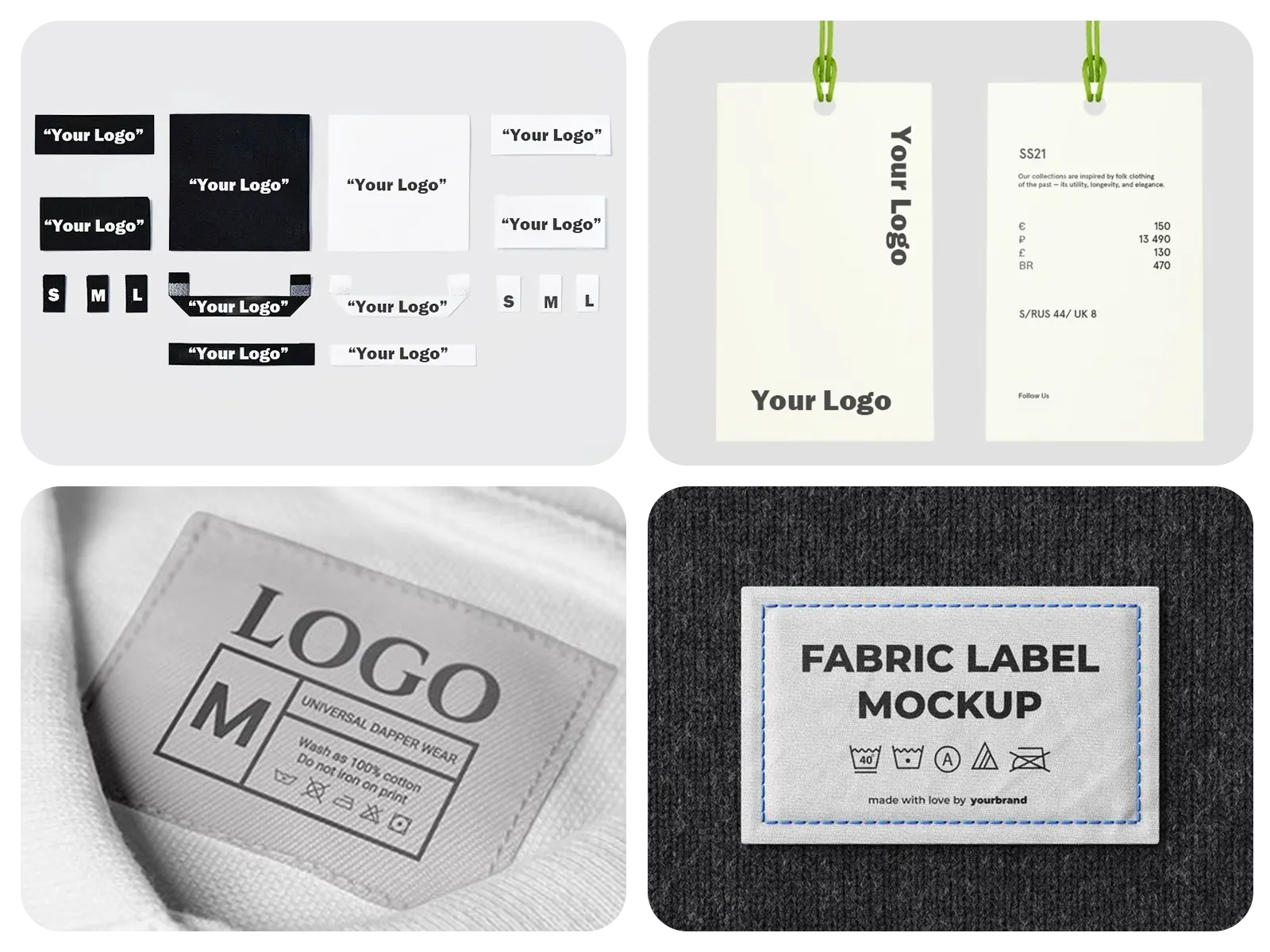
Neckline options are a ribbed collar, self-fabric binding or a seamless finish. Sleeve construction can be set-in, raglan or drop shoulder, and hems are finished with coverstitch or a raw edge. Garment washes include pigment dye, enzyme wash, snow wash and vintage wash. Sizing runs XS–XXL with custom grading, colours are matched to Pantone references, and labelling and packaging can be specified as custom neck labels, hang tags, polybags, paper bags and custom boxes.
Construction is where repeatability is won or lost. A ribbed collar and coverstitch hem hold shape across frequent laundering, while a raw edge and a vintage or snow wash are deliberate fashion choices that belong in streetwear and not in a uniform programme. Custom neck label and hang tag production also connects directly to the labelling obligations of the destination market.
Sector-by-sector specification
1. Activewear and sportswear
Conditions here are high-intensity physical activity, sustained sweat exposure, UV sunlight and frequent machine washing and drying. The working specification is a 160–220 GSM single jersey in cotton-polyester blend, 80/20 blend or polyester, selected for moisture-wicking comfort during athletic activity plus durable seam construction for repeated use. Anti-pilling of Grade 3–4 or better, colour fastness of Grade 4 or better and shrinkage of 5% or less are the measurable gates. Sublimation is the natural decoration route for jerseys, and screen or DTG print covers graphic and logo work. Qianshiwear's product range includes jerseys within its sportswear line, and sublimation sits inside its in-house printing capability.
2. Streetwear and fashion apparel
In streetwear the blank is the product, so the 220–300 GSM mid-weight band and oversized, boxy and drop-shoulder constructions carry the design. Puff print, screen print, embroidery, rhinestone and appliqué are the appropriate decoration set, paired with pigment dye, enzyme, snow or vintage washes and raw edge hems where the concept calls for them. A custom woven neck label completes the piece. Because drops are speculative, the low MOQ of 50 pieces per colour per design is what makes the sector workable: a launch can be tested before a full run is committed, and the fit, label and colourway are then repeated on reorder.
3. Corporate uniforms
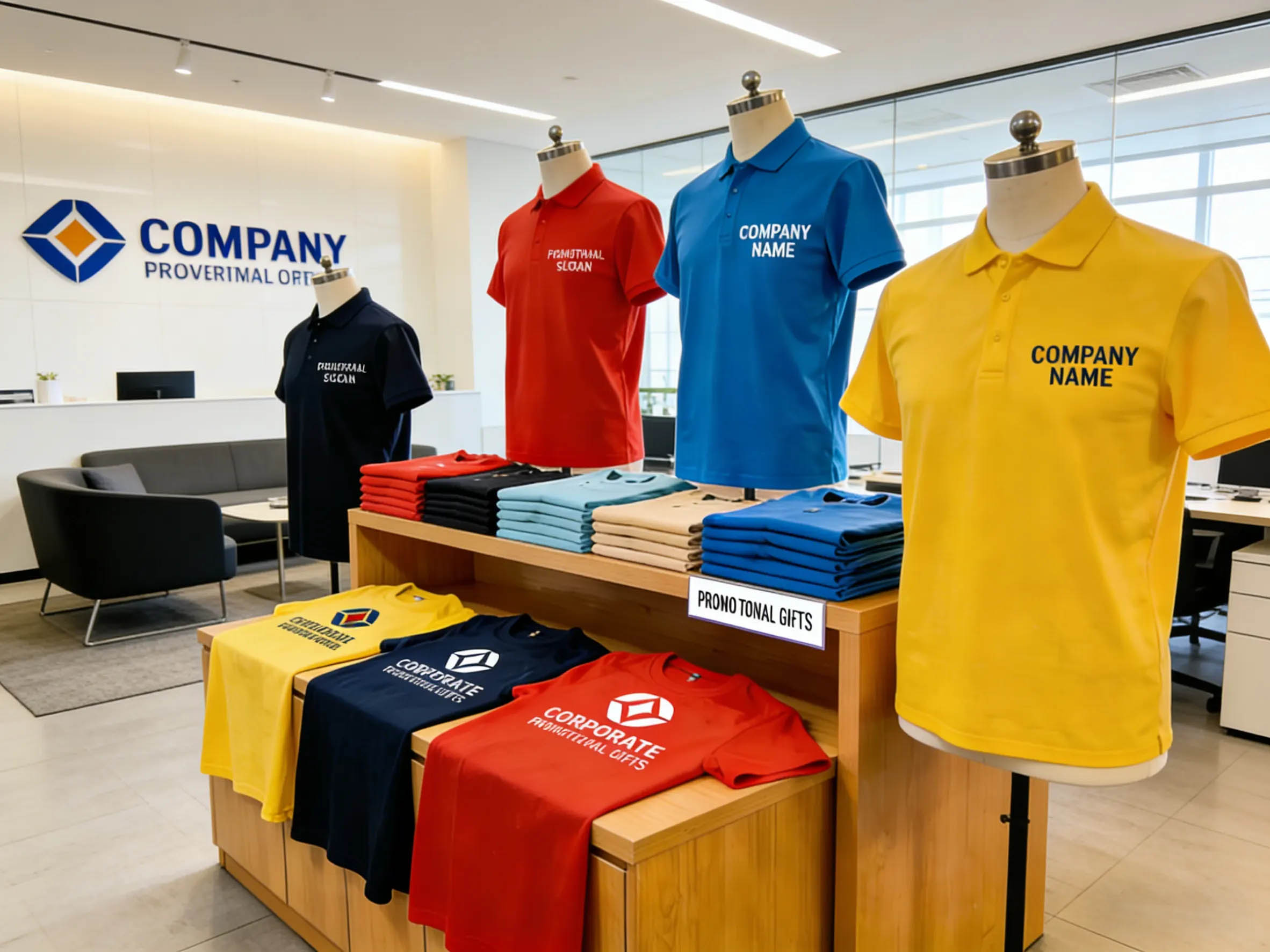
Corporate programmes buy consistency more than novelty. The requirement is identical colour and identical grading across regions and batches, which means Pantone colour matching to brand guidelines and a locked size spec are non-negotiable. A 160–220 GSM single jersey suits everyday tees, while moisture-wicking pique is the reference fabric where the programme runs on polo styles. Chest embroidery — flat, 3D puff or chenille — is the standard decoration because it survives laundering without print cracking, and the durability benchmark is a garment with no quality complaints after 100 or more washes per item.
4. Promotional merchandise
Promotional work is decided by repeatability, not by decoration complexity. The 150–220 GSM summer option keeps the tee appropriate for warm-weather distribution, screen print or heat transfer covers the logo, and a coverstitch hem gives a clean finish without adding process steps. Two specifications protect the buyer: OEKO-TEX Standard 100 certified fabric for skin contact, since promotional tees are handed to unknown wearers, and a single decoration position, because every extra print position is another variable to reproduce on the next batch. MOQ from 50 pieces per colour per design and bulk production of 20–35 working days are the planning constraints.
5. E-commerce apparel brands
For an online brand, the blank carries the label and the packaging as much as the print. Private label scope covers custom neck labels, hang tags, polybags, paper bags and custom boxes, plus XS–XXL grading with custom size increments so the size chart holds between drops. Weight selection follows positioning rather than season alone: a 160–220 GSM jersey for a value or layering basic, the 220–300 GSM band for a heavyweight fashion basic. Reorders are then triggered by sell-through rather than by calendar, which is why a low minimum per colourway matters more here than in any other sector.
6. Fitness and gym chains
Gym chains buy two products in one brief: staff kit that must look identical across sites, and member or class apparel that has to survive repeated laundering and sweat. The specification is a 160–220 GSM breathable jersey or cotton-polyester blend, anti-pilling of Grade 3–4 or better, colour fastness of Grade 4 or better, shrinkage of 5% or less, and OEKO-TEX Standard 100 certified fabric for skin contact. Screen print suits chain branding at volume; embroidery suits staff pieces. Because a chain sells across a wide member size spread, XS–XXL grading with custom increments is part of the brief, and reorders follow seasonal demand cycles rather than a single annual order.

Step-by-step breakdown: a seven-step sector brief
The sequence below converts a sector into a production order without leaving specification gaps. It is the same sequence whether the buyer is a promotional distributor, a corporate procurement team or an emerging streetwear label.
- Write the wear cycle, not the style. Record how the tee is worn, how often it is laundered, whether it is worn against skin in heat, and whether the environment includes athletic movement. Those conditions, not the mood board, set the rest of the brief.
- Set the weight band and fibre. Choose between the 160–220 GSM lightweight and 220–300 GSM mid-weight bands, and between combed cotton, cotton-polyester blend, polyester, organic cotton or slub cotton. Record the decision as a number, not an adjective.
- Convert performance into pass/fail limits. Colour fastness Grade 4 or better, shrinkage 5% or less, anti-pilling Grade 3–4 or better on knit surfaces, OEKO-TEX Standard 100 fabric where skin contact is intended, and GOTS-certified organic cotton if an organic claim will be made.
- Choose decoration by artwork and quantity. Screen print, DTG, sublimation, heat transfer or puff print, plus flat, 3D puff or chenille embroidery, rhinestone or appliqué. Fix the print position count at this stage.
- Specify construction and finishing. Ribbed collar, self-fabric binding or seamless neckline; set-in, raglan or drop shoulder sleeve; coverstitch or raw edge hem; and any garment wash from the pigment dye, enzyme, snow wash and vintage wash set.
- Lock labels and packaging against the destination market. Custom neck labels and hang tags make the fibre, origin and care statements a production item. Packaging — polybag, paper bag or custom box — is fixed in the same step.
- Validate on sample, then schedule reorders. Sample production runs 7–15 working days and bulk production 20–35 working days. Production is checked under AQL 2.5 with 100% pre-shipment inspection, and third-party SGS inspection is available on request.
Sector brief template. Sector and end use; wear cycle and laundering frequency; fabric weight band and fibre; colour fastness, shrinkage and anti-pilling limits; certification requirement; decoration method, position count and artwork size; neckline, sleeve and hem construction; garment wash; size range and grading; neck label, hang tag and packaging content; destination market; target order quantity per colourway; reorder window.
Use cases: how sector briefs run in production
Tour merchandise for a music artist management and tour merchandise agency
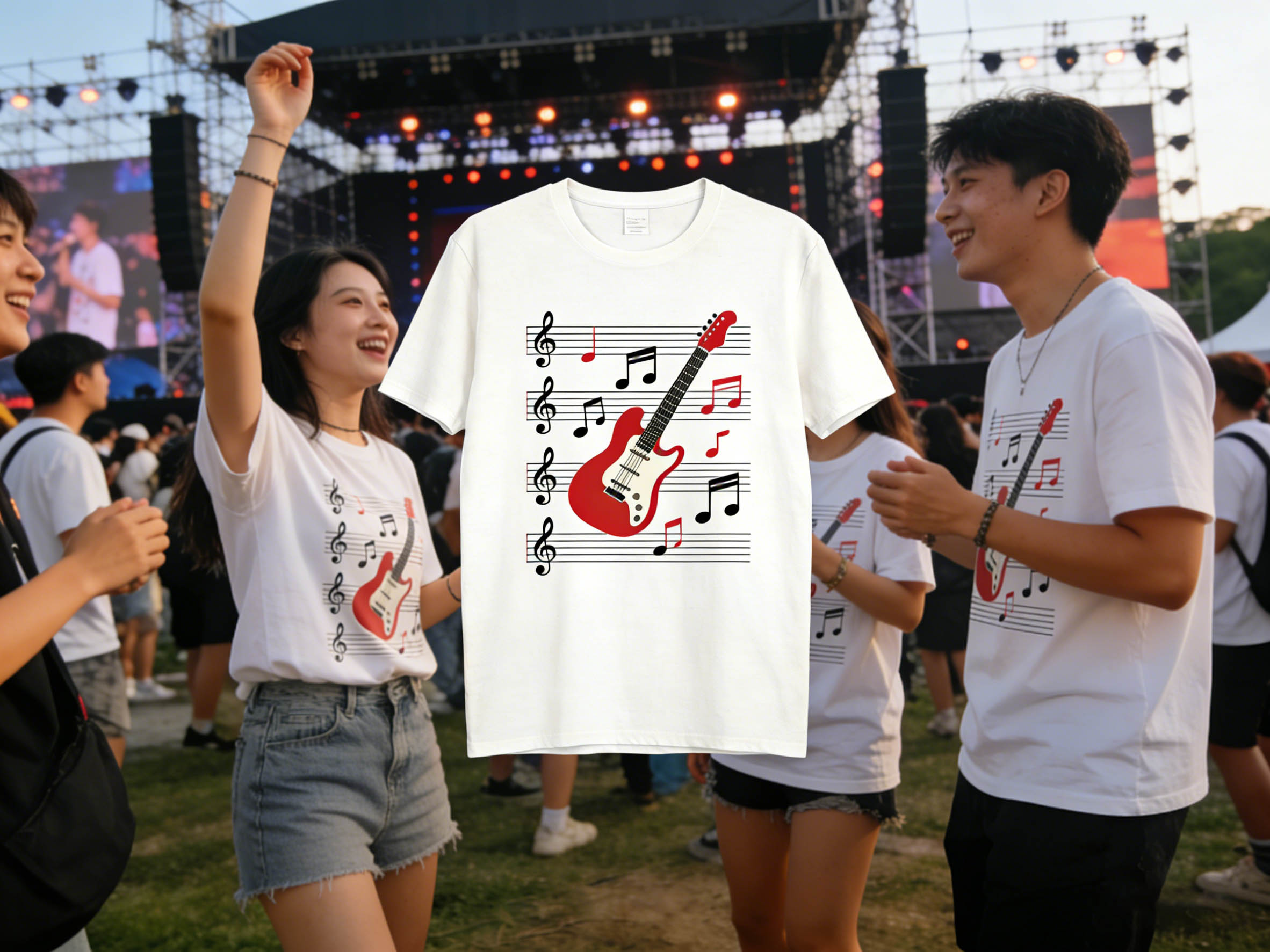
A six-month tour programme across the US, Canada, the UK, Australia and France required 5,000 pieces across 12 tour stops with multiple designs, and it is the clearest example of a brief driven by a wear-and-buy cycle rather than a season. High-resolution DTG printing carried the multi-colour artwork, per-design minimums were held at 50 pieces, and custom hang tags carried the tour branding. Sample production took 10 days and bulk 30 days; the programme recorded a 92% sell-through rate across all tour dates, four reorders placed during the tour, and a 100% QC pass rate on rush orders.
Corporate uniform programme across three regions
An international technology company and regional corporate group ordered 3,500 pieces across three regions and multiple colours for employee daily wear and corporate events, under a two-year annual contract. The specification was moisture-wicking pique fabric with an embroidered company logo on the chest, custom colour matching to brand guidelines and consistent sizing across all orders. The programme recorded 98% employee satisfaction, no quality complaints after more than 100 washes per garment, and 100% on-time delivery for all batches.
Streetwear launch from a startup label
A DTC fashion label in the US and Canada started with 100 pieces on a launch collection and reordered 1,000. The brief combined an oversized fit with drop shoulder and a custom woven neck label, and consistency of quality across all sizes was the acceptance criterion. The drop reached a 95% sell-through rate within two months and 85% positive customer reviews, with two reorders placed within 12 months — the pattern the low MOQ of 50 pieces per colour per design is designed to enable.
Multi-store streetwear retailer on a quarterly slot
An established streetwear brand and multi-store retailer has run 7,000 pieces per quarter, approximately 28,000 pieces annually, across multiple styles and colourways for three years. The determining factor was not decoration but scheduling: a dedicated production slot reserved quarterly held lead times constant, delivering 100% on-time delivery across 12 or more drops, a 90% reorder rate season over season, 98% sell-through on core styles and zero major quality claims across three years.
Sector comparison at a glance
| Sector | Fabric weight and composition | Primary decoration | Construction and finishing focus | Programme note |
|---|---|---|---|---|
| Activewear and sportswear | 160–220 GSM single jersey; cotton-polyester blend, 80/20 blend or polyester for moisture-wicking comfort | Sublimation for jerseys; screen print or DTG for graphics | Anti-pilling Grade 3–4 or better, colour fastness Grade 4 or better, durable seam construction | Reorders tracked against sales performance |
| Streetwear and fashion apparel | 220–300 GSM mid-weight; oversized, boxy and drop-shoulder fits | Puff print, screen print, embroidery, rhinestone, appliqué | Pigment dye, enzyme, snow or vintage wash; raw edge hem; custom woven neck label | 50 pieces per colour per design supports drop testing |
| Corporate uniforms | 160–220 GSM single jersey; moisture-wicking pique for polo styles | Flat, 3D puff or chenille embroidery; screen print | Ribbed collar, consistent sizing across orders, custom colour matching to brand guidelines | Multi-region batches require identical colour and grading |
| Promotional merchandise | 150–220 GSM summer option; 160–220 GSM lightweight band | Screen print or heat transfer | Coverstitch hem; OEKO-TEX Standard 100 certified fabric for skin contact | MOQ from 50 pieces per colour per design; bulk 20–35 working days |
| E-commerce apparel brands | 160–220 GSM or 220–300 GSM, selected by positioning; organic cotton where claimed | DTG for short runs; screen print at volume | Custom neck labels and hang tags, polybag or box packaging, XS–XXL custom grading | Reorders triggered by sell-through rates |
| Fitness and gym chains | 160–220 GSM breathable jersey; cotton-polyester blend | Screen print or embroidery | Anti-pilling Grade 3–4 or better, shrinkage 5% or less, colour fastness Grade 4 or better | Wash durability across frequent laundering |
Frequently asked questions
Which compliance details must be fixed before a sector-specific T-shirt order ships?
Fix four items in writing: fibre composition and label content required by the destination market, the fabric standard for skin contact, the physical performance limits, and the inspection basis. For U.S.-bound programmes, the FTC business guidance Threading Your Way Through the Labeling Requirements Under the Textile and Wool Acts covers labelling requirements for textile products placed on the U.S. market and reflects the latest revisions to the Textile and Wool Rules, so neck label and hang tag content has to be confirmed before production starts. Qianshiwear specifies OEKO-TEX Standard 100 certified fabrics for skin contact, colour fastness of Grade 4 or better, shrinkage of 5% or less, anti-pilling of Grade 3–4 or better, and AQL 2.5 quality control with 100% pre-shipment inspection; third-party SGS inspection is available at the buyer's request.
Can one T-shirt manufacturer serve six different sector specifications?
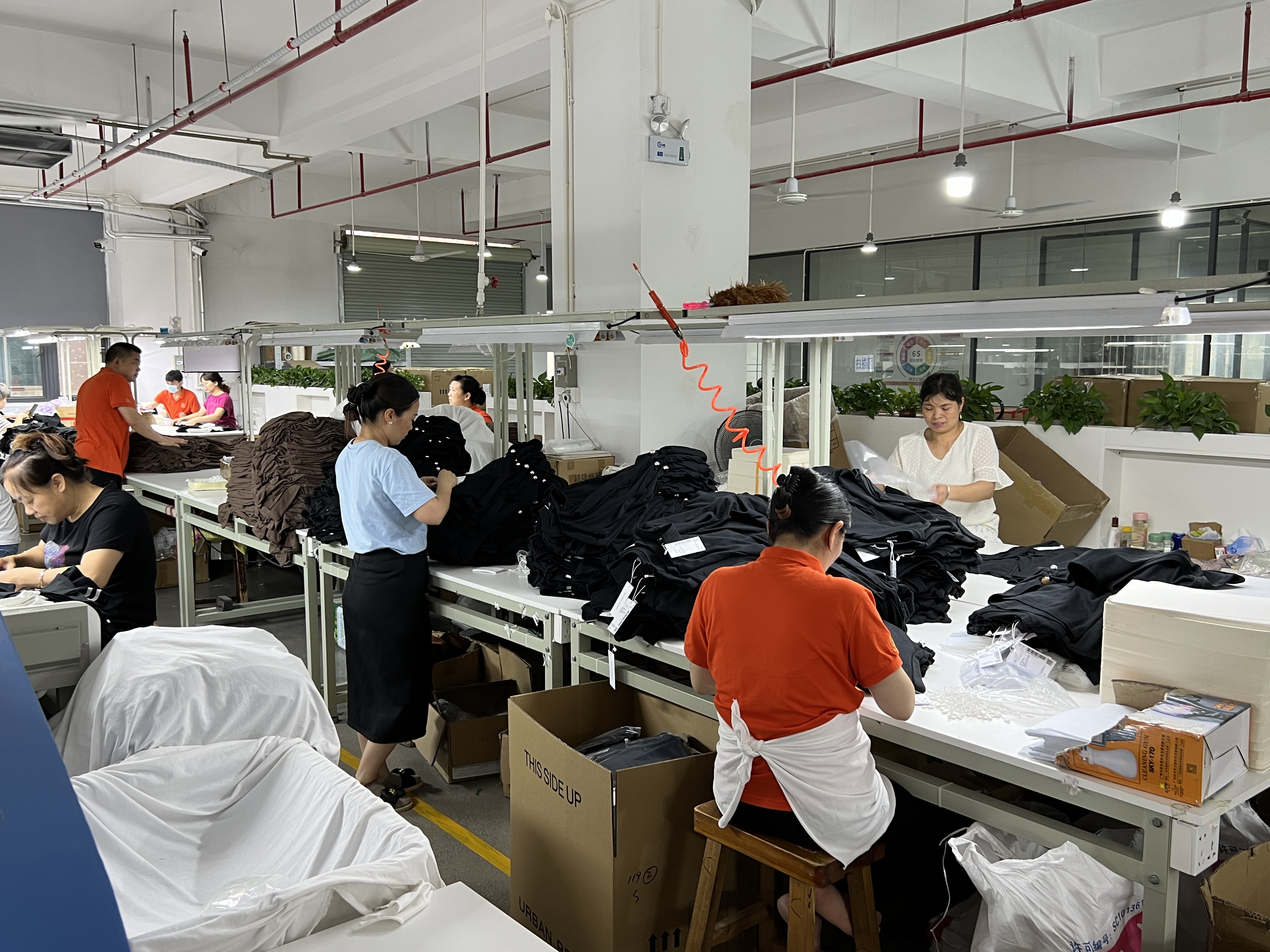
Yes, when fabric, decoration, construction and labelling are controlled under one roof. Qianshiwear runs OEM, ODM, full custom manufacturing and private label production with a monthly capacity of 250,000 units, covering screen print, DTG, sublimation, heat transfer and puff print, flat, 3D puff and chenille embroidery, rhinestone and appliqué work, garment washing, custom neck labels and hang tags, custom packaging and XS–XXL size grading. Supporting equipment includes industrial cutting and sewing machines, digital and screen printing presses, industrial embroidery machines, and garment washing and finishing equipment, which is what allows one supplier to hold six sector specifications instead of one.
What drives the unit price of a sector-specific custom blank T-shirt?
The unit price is the sum of fabric, decoration, finishing, labelling and order structure, so it moves when the sector moves. Fabric is the first driver: the 220–300 GSM mid-weight band and GOTS-certified organic cotton sit at a different fabric cost from a 160–220 GSM standard jersey. Decoration is the second: screen print carries a setup per colour, DTG is priced per print area and fits short runs, and embroidery follows stitch and colour count. Garment washes — pigment dye, enzyme, snow wash or vintage — add process steps, and labelling and packaging add a third layer. Order structure is the fourth: MOQ starts at 50 pieces per colour per design, so a six-colourway drop carries six separate minimums. Qianshiwear quotes against a written brief rather than a catalogue line; send sector, target weight, decoration and destination market for an accurate quotation.
How long does a sector-matched sample take, and what should it prove?
Sample production runs 7–15 working days. On a rush tour merchandise programme the sample was completed in 10 days and bulk followed in 30. Before bulk release, a sample should prove four things: that the weight and hand feel sit in the band the sector requires, that the decoration method holds the artwork at the specified size and placement, that measured shrinkage and colour fastness meet the numbers in the brief, and that the neck label, hang tag and packaging match the destination market's requirements.
What lead time applies to bulk orders, and how should reorders be planned?
Bulk production runs 20–35 working days after sample approval. Beyond the base figure, reorder planning decides whether a programme holds its dates: reorders are triggered by sales performance and seasonal demand cycles, and programmes that reserve capacity ahead of the season avoid queueing behind new development. One multi-store streetwear retailer running 7,000 pieces per quarter has held a dedicated quarterly production slot for three years, with 100% on-time delivery across 12 or more drops and a 90% reorder rate season over season, while a tour merchandise programme placed four reorders during a six-month tour with a 100% QC pass rate on rush orders. To open a sector brief, request a sample or a quotation from Qianshiwear at sales@qianshiwear.com, or send the specification through qianshiwear.com.
Conclusion: the specification starts with the wear cycle
Six sectors, one product category, and six different answers to the same three questions about fabric, decoration and construction. The pattern that holds across all of them is sequence: define the wear cycle, convert it into weight, fibre and measurable limits, choose decoration by artwork and quantity, then lock construction, labels and packaging against the destination market. A sector brief built in that order produces a blank that a buyer can reorder without renegotiating, which is the only version of quality that survives a second season.
Qianshiwear works with brands that prioritise long-term reputation and consistent customer experience, mid-tier to premium market positioning, and buyers who need reliable quality across reorders — startup labels testing a 100-piece launch and multi-store retailers running 28,000 pieces a year through the same production process. The 15-designer team and the OEM, ODM and private label structure exist to turn a sector brief into a repeatable specification rather than a one-off sample.
Next step: brief the sector, then check the sample
Send the wear cycle, weight band, decoration method, size range and destination market. Qianshiwear replies with a quotation and a sampling plan — sample production 7–15 working days, bulk 20–35 working days, MOQ from 50 pieces per colour per design.
Email: sales@qianshiwear.com · Tel / WhatsApp: +86 18148939572 · Website: qianshiwear.com
Download the full capability and product catalogue (PDF): Qianshiwear brochure
Have Questions or Need More Details?
Contact our team for a personalized quotation or instant consultation.
Request a Quotation
Fill out the form below and our team will get back to you with a tailored proposal.
WhatsApp Direct Chat
Prefer to chat in real-time? Message us on WhatsApp for instant assistance & quick answers.
- Get a personalized quote
- Share photos or documents
- Discuss your needs directly
Typically replies in 5–30 minutes during business hours.