
Navigating US and Canada Import Standards for Apparel Breakthroughs and Drops: Care Labeling and Wash Performance for DTC Hoodie Programs
A hoodie that fails US or Canadian care labeling or wash-performance expectations does not fail quietly. It fails as re-labeling cost, returned orders, and a drop that misses its launch window. For DTC brands sourcing hoodies for the US and Canada, compliance is really two linked questions: does the care label tell the end consumer the truth about cleaning the garment, and can the hoodie manufacturer prove the garment survives that cleaning cycle before bulk production is cut?
This guide is written for decision-stage buyers — brand owners, product developers and sourcing managers who already know what they want to sell and now need to confirm that a hoodie manufacturer can produce it without compliance rework. Guangzhou Qianshi Apparel Co., Ltd (Qianshiwear), an apparel manufacturer and trading company based in Guangzhou, Guangdong, China and founded in 2014, is used throughout as a working reference for the kind of evidence a factory should be able to put on the table. The article treats compliance as a verification workflow rather than a piece of paperwork, because that is where launch timelines are actually won or lost.
Problem Definition: The Two Compliance Failures That Break a Launch Timeline
Two failures break drop timelines, and they break them differently.
The first is label non-compliance. Care instructions, fiber content, country of origin and identification of the responsible company are reviewed before garments reach retail shelves or a fulfillment center. A carton that arrives with incomplete, incorrect or single-language labeling has to be re-labeled, or in worse cases re-worked at the packing line. The cost is not the label — it is the labor, the re-packaging, the re-inspection and the launch week that disappears while the drop sits in a warehouse.
The second is wash-performance failure. A hoodie that shrinks out of fit, fades unevenly, pills across the chest, or cracks its print after a handful of home launderings generates returns at a rate DTC margins cannot absorb. Returns on apparel are expensive twice over: once in logistics and once in the customer relationship. For a brand whose next drop depends on the reputation of the last one, wash failure is a commercial event, not a quality footnote.
Both failures share the same root cause. The brand treated labeling as a design detail and wash performance as an assumption, and neither was verified against a documented protocol before bulk cutting. The fix is not more paperwork; it is moving two specific verifications into the sample stage, where corrections are still cheap.
Industry Background: Why Machine-Wash Durability Became a Buying Criterion
Hoodies and sweatshirts are no longer a seasonal category. The global hoodies and sweatshirts market was valued at USD 209.26 billion in 2025 and is projected to reach USD 303.62 billion by 2031 (Mordor Intelligence). Pullover hoodies alone accounted for 38.4% of product-type share in 2025, driven by global streetwear and athleisure trends (Dataintelo). Market sizing varies by scope across research houses, so any single valuation should be read as directional rather than absolute — but the direction is consistent.
The supply side is equally active. China's apparel exports reached USD 159.14 billion in 2024, a 0.3% year-on-year increase despite geopolitical pressure (General Administration of Customs). Within printwear specifically, Gildan Activewear and Hanesbrands are among the top vertically integrated manufacturers, with Gildan holding significant share in the North American printwear sector (S&P Global Ratings). For an independent DTC brand, this matters because it defines the baseline the market already expects: standardized construction, stable sizing, and garments that behave predictably after repeated laundering.
Two product trends push the wash question further forward. First, heavyweight hoodies in the 350–450+ GSM range using 100% cotton French Terry have become the preferred standard for premium streetwear brands because of their structure and pilling resistance. Second, the global custom hoodie printing market is growing at a CAGR of 9.9% for the 2024–2030 period, with demand concentrated in 3D puff embroidery and eco-friendly water-based inks. Heavier fabric plus heavier decoration is exactly the combination that is hardest to keep stable through a domestic wash-and-dry cycle.
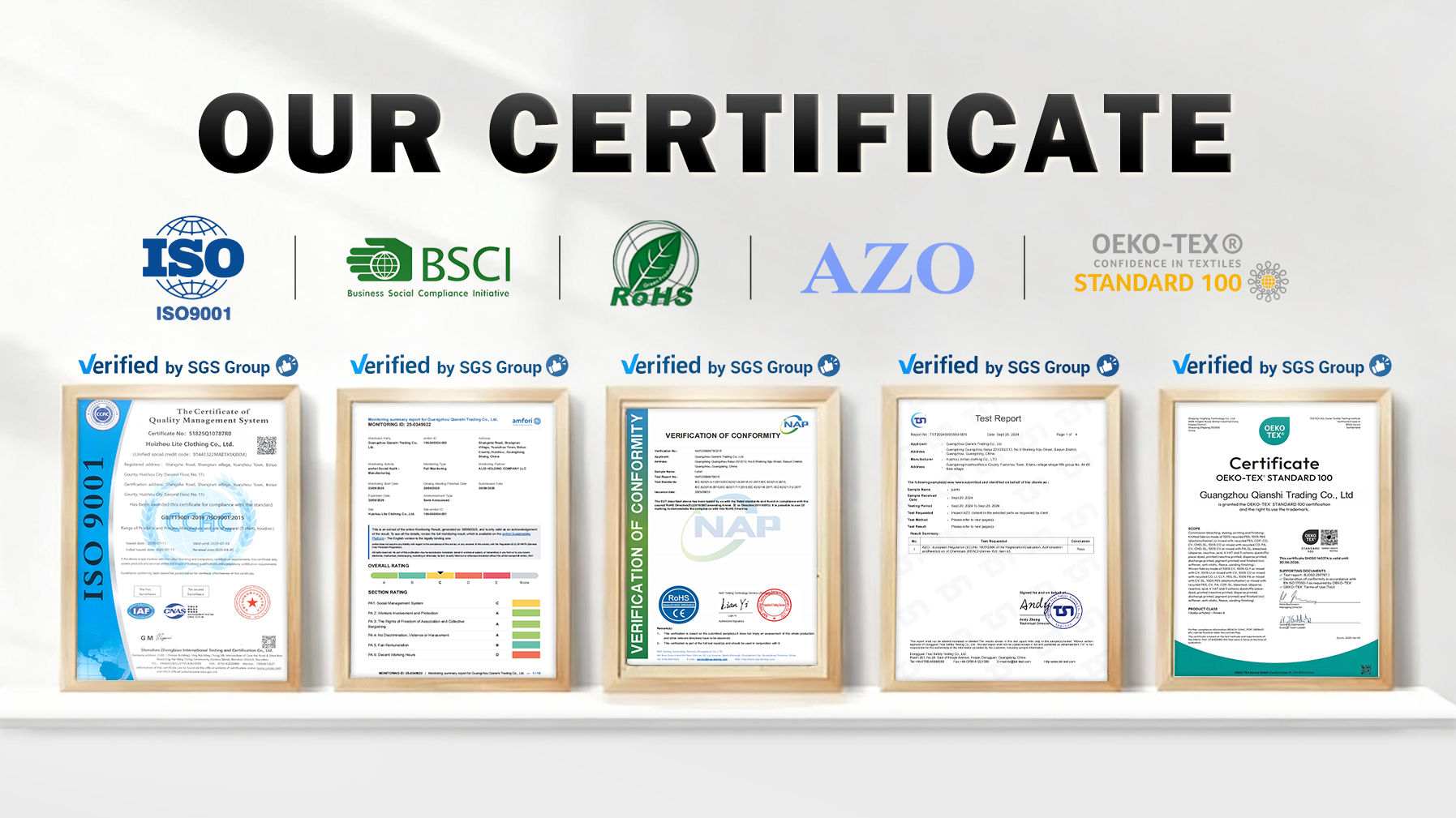
Meanwhile, textile certifications such as OEKO-TEX Standard 100 for chemical safety and GOTS 7.0 for organic fibers have become the recognized industry benchmarks for responsible manufacturing. Buyers increasingly treat them as a starting filter rather than a differentiator — which means the real evaluation moves to the next question: can this hoodie manufacturer demonstrate, with records, that the specific garment in this order will still pass a care-label claim after repeated machine washing?
Detailed Solution: What a Compliance-Ready Hoodie Supply Chain Must Prove
A compliance-ready hoodie program has four evidence layers. A manufacturer that can only speak to one of them is not yet a safe partner for a US or Canada launch.
1. Label architecture, split by destination market
In the United States, apparel care labeling has long been governed by the FTC's Care Labeling Rule framework: garments sold to consumers generally need a permanent label that gives the end consumer at least one safe cleaning method, alongside fiber content, country of origin and identification of the responsible company. Canada generally expects comparable core content, with the practical difference that English and French presentation is commonly required, and California's Proposition 65 warning rules may add a disclosure depending on dye and trim chemistry.
The operational consequence is simple and frequently missed: a single generic care label rarely serves both markets. Label artwork has to be built per destination, reviewed before sampling, and frozen before bulk cutting. Because labeling rules and their interpretations evolve, the working rule for any brand is to confirm current requirements for each destination market through its own compliance resource, then translate the confirmed wording into a factory-facing label specification.
2. Wash-performance engineering, not wash-performance hope
Care-label claims are only honest if the construction supports them. In a properly engineered program, the garment's ability to survive home laundering is designed in at several stages rather than inspected in at the end:
- Dyeing: reactive dyeing with high-temperature fixation for deeper color penetration, so washing does not lift color from the surface.
- Shrinkage control: pre-shrinkage treatment before cutting, so the garment that arrives is the garment that was measured.
- Pilling resistance: anti-pilling weaving or finishing treatment, which matters most on brushed fleece.
- Decoration durability: proper curing time for screen prints and DTG inks, and embroidery backing stabilization for thread tension control, so prints do not crack and embroidery does not loosen in wash.
- Hardware and seams: hardware pull and closure testing before bulk assembly, plus reinforced stitching at stress points using high-tensile thread.
- Measurement discipline: standardized AQL sampling for size and measurement verification, applied across all colorways.
3. Documented performance evidence
Engineering statements become procurement evidence when they are expressed as measurable outcomes. In structured quality-control programs of the kind operated by Qianshiwear, the documented expectations are:
- Fabric shrinkage generally within 5–8%
- Color fastness typically Grade 3–4
- Garments typically withstanding 30–50 washes with minimal fading
- Anti-pilling performance typically Grade 3
- Defect rates typically maintained below 5%
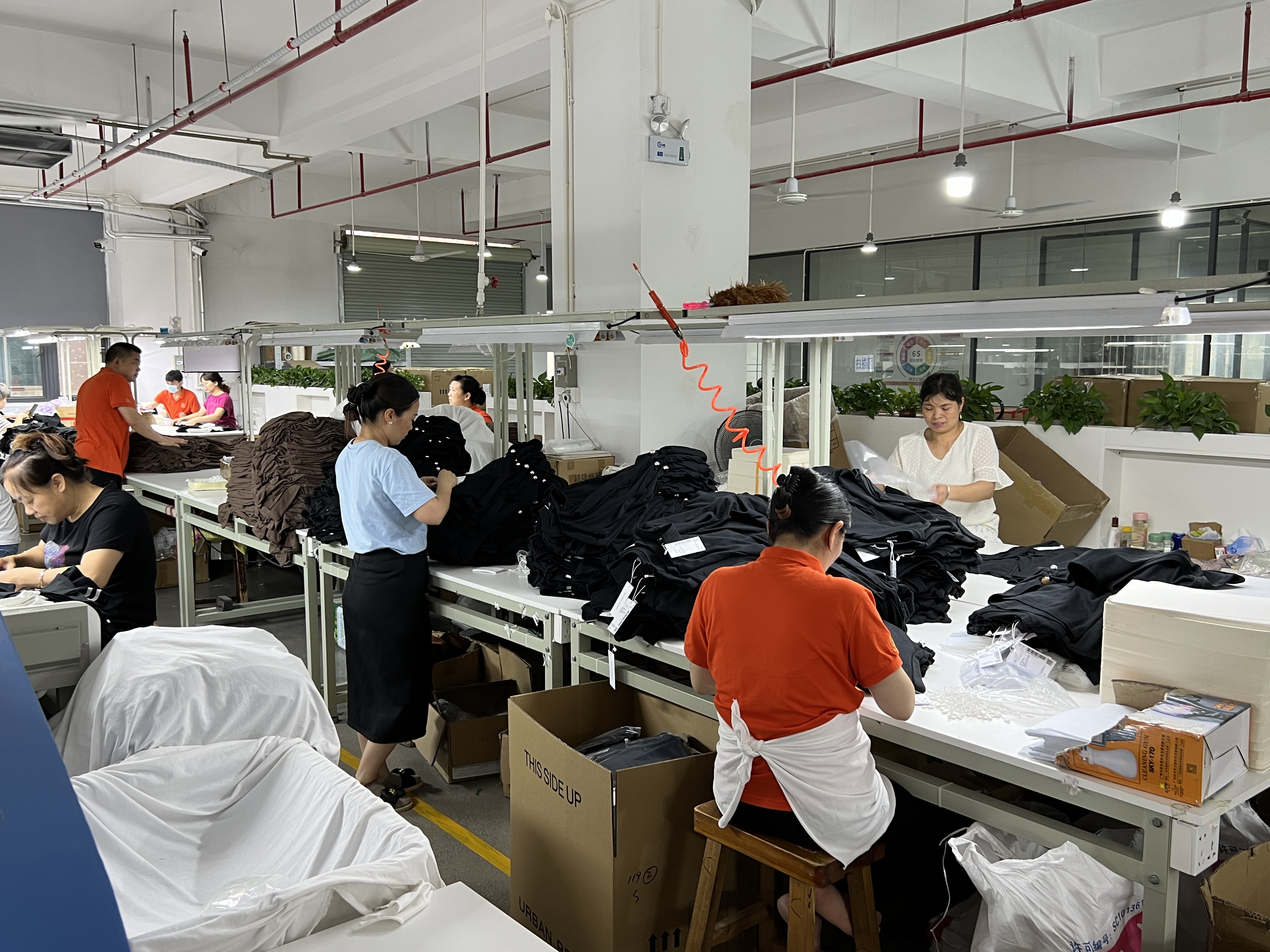
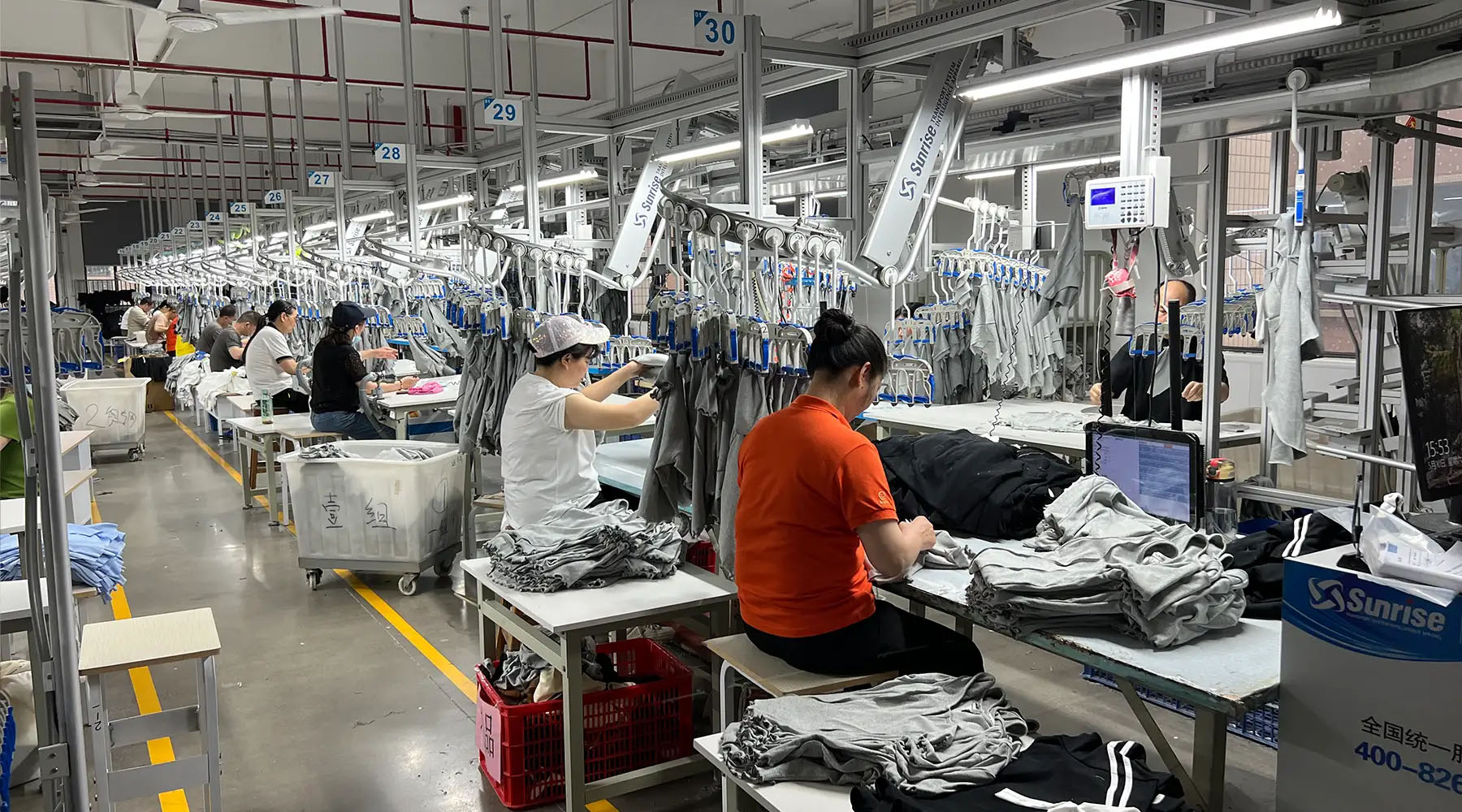
Those numbers are supported by process controls a buyer can audit: 100% fabric inspection on arrival (weight, width, color consistency and shrinkage potential), first-article inspection at the cutting, sewing and printing stages, AQL 2.5 sampling on finished goods, pre-shipment wash tests on representative samples, size and measurement verification across all colorways, and a production batch number assigned to each order so quality records remain available for reorders. Third-party inspection from bodies such as SGS or Intertek can be arranged on request, and lab testing for specific performance requirements — color fastness, tensile strength and similar — can be commissioned when a retail partner asks for independent documentation.
4. Limits, trade-offs and what the evidence does not cover
Compliance-grade production carries a real cost difference: initial per-unit cost is typically 20–40% higher than low-cost or ultra-budget mass producers. The justification is not aesthetics. Total project cost is often comparable or lower once reduced return rates, fewer customer complaints and lower replacement frequency are accounted for, because low-cost options carry hidden costs — higher returns, potential brand-perception damage, and more frequent re-purchasing as garments wear out sooner.
Three limits are worth stating plainly. First, certification scope is not transferable: OEKO-TEX Standard 100 addresses chemical safety while GOTS 7.0 addresses organic fiber content, so holding one does not imply the other — always verify the certificate scope and validity date against your specific fabric. Second, performance figures are ranges from controlled programs, not guarantees for every construction; ask for test reports tied to your fabric, weight and decoration. Third, the heavier the fabric and the heavier the decoration, the more the wash protocol matters — a 350–450+ GSM French Terry with a dimensional puff print needs its own verification, not a borrowed one from a lighter style.
Step-by-Step Breakdown: Verifying a Hoodie Manufacturer Without Slowing the Drop
Verification delays launches only when it is sequenced badly. Run these eight steps in order and the compliance work occupies the same calendar space as normal product development.
- Write the care instruction into the tech pack before sampling. The custom hoodie tech pack should state the intended cleaning method, the expected wash frequency across the product's lifecycle, and any decoration-specific care constraints. Care instructions invented after sampling almost always force a second sample round.
- Split the label specification by market. Build a US version and a Canada version as separate label artworks with separate content, including French text for Canada. Confirm which entity appears as the responsible company for each destination.
- Request the wash protocol and the test evidence at sample stage. Ask what will be washed, how many cycles, and which measurements are taken before and after. A factory that cannot describe its pre-shipment wash test has no basis for a care claim.
- Confirm fabric and trim documentation. Match the certificate to the actual fabric and to the destination market's expectations, and confirm hardware testing — zippers, pulls, closures — was performed before bulk assembly.
- Agree the inspection standard in writing before bulk. Fix the sampling standard (for example AQL 2.5 on finished goods), first-article inspection points, and the requirement for size verification across every colorway.
- Freeze label and care content under change control. The usual cause of a delayed drop is a labeling change requested after bulk cutting has started. Lock the artwork, then route any change through a written approval step.
- Confirm traceability before the order closes. Each order should carry a production batch number so that quality records can be retrieved and reorders can be matched to the original specification.
- Schedule third-party inspection windows early. If your retail partner or your own risk policy requires independent inspection or lab testing, book it into the production calendar rather than discovering the need at the packing stage.
Sequencing rule: compliance verification is a set of checkpoints inside sampling and pre-production, not an extra phase added after production. Brands that treat it as an extra phase are the ones that pay for it in delays.
Use Cases: Where US and Canada Compliance Decisions Actually Get Made
Use case 1 — A program built around frequent machine washing and drying
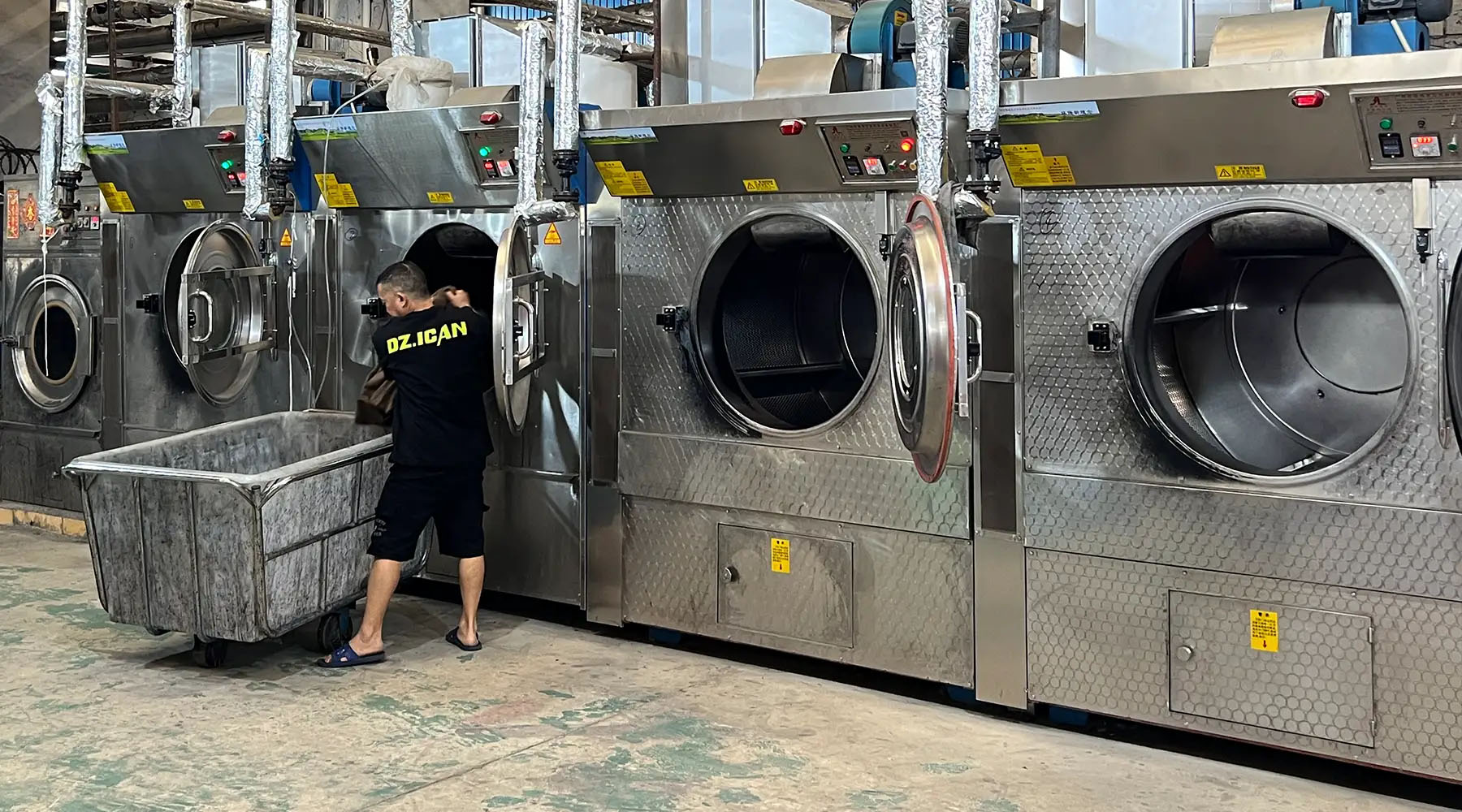
The clearest test of a care-label claim is a product whose expected lifecycle includes frequent machine washing and drying, not occasional hand washing. In a program of this type, the compliance narrative stops being theoretical: the dyeing method has to hold color through repeated cycles, the fabric has to have been pre-shrunk before cutting so fit survives the dryer, and the fleece has to be anti-pilling finished so the surface does not degrade. The supporting evidence is the pre-shipment wash test on representative samples, plus measured shrinkage typically within 5–8%, color fastness typically Grade 3–4, and durability typically in the range of 30–50 washes with minimal fading. When those controls are in place, the label tells the consumer something the factory has already proven.
Use case 2 — A heavyweight fleece drop for a streetwear launch
Heavyweight hoodies at 350–450+ GSM in 100% cotton French Terry are the premium streetwear standard because of structure and pilling resistance. The compliance risk in this category concentrates in two places: pilling on brushed interior surfaces, and measurement drift after the first wash, which turns an oversized fit into an inconsistent one. Anti-pilling finishing at a typical Grade 3 level, plus AQL-based measurement verification across colorways, is what keeps a heavyweight drop selling the same fit in week six as in week one.
Use case 3 — A decoration-heavy drop: puff print and embroidery
When a drop depends on a dimensional logo or dense embroidery, the care label has to be written around the decoration. The relevant controls are curing time for screen prints and DTG inks, and embroidery backing stabilization for thread tension. Without them, the failure modes are predictable — print cracking or peeling, and embroidery thread loosening after laundering — and they show up after the customer has already received the garment.
Use case 4 — A Canada-first launch with a compressed timeline
A Canada-focused launch adds labeling complexity rather than production complexity. Because bilingual presentation is commonly required, label artwork needs an earlier approval loop and a second proofread pass. Brands that plan a Canada launch on the same label template as the US version typically discover the gap late; brands that split the artwork at the tech pack stage absorb the extra step without moving the drop date.
Comparison Table: Structured Quality Control vs. Ultra-Budget Mass Production
The decision most DTC brands are actually making is not "which factory is cheapest" but "which quality model can carry a care-label claim and a reorder." The table below compares the two models on the dimensions that determine whether a hoodie survives its own wash instructions.
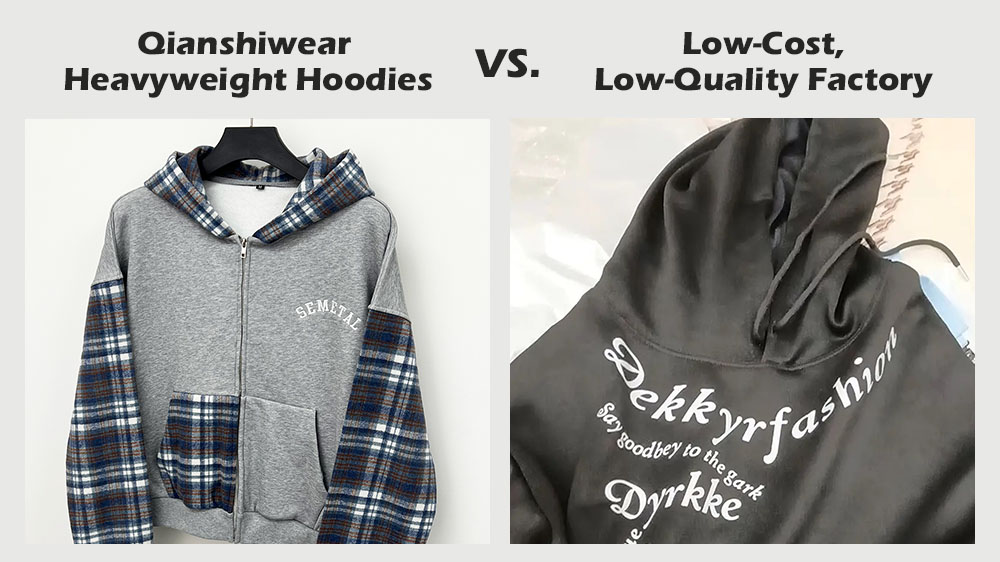
| Evaluation Dimension | Structured Quality Control (Qianshiwear reference) | Low-Cost / Ultra-Budget Mass Producer |
|---|---|---|
| Quality protocol | Structured quality control procedures at key production stages; inspection aligned to AQL standards | Limited or inconsistent inspection; no formal quality protocol |
| Typical defect rate | Maintained below 5% | Often exceeding 10–15% |
| Fabric shrinkage | Generally within 5–8% | 8–12% or higher |
| Color fastness | Typically Grade 3–4 | Grade 2–3 |
| Wash durability | Typically 30–50 washes with minimal fading | Noticeable fading after 10–15 washes |
| Anti-pilling performance | Typically Grade 3 | Grade 1–2 |
| Documentation and traceability | Multi-point inspection records, production batch numbers, inspection reports on request, third-party inspection available; specifications maintained for consistent reorders | Limited documentation, inconsistent quality between batches, higher likelihood of production discrepancies requiring correction |
| Per-unit cost | Typically 20–40% higher initially | Lower initial unit price |
| Total cost picture | Often comparable or lower once return rates, complaints and replacement frequency are counted | Hidden costs: higher return rates, brand-perception impact, more frequent repurchasing |
| Best suited to | Mid-tier to premium positioning, brands that depend on consistent reorders and long-term reputation | Short-run, price-first programs with low exposure to returns or repeat purchase |
Comparison figures are drawn from Qianshiwear's internal quality-control comparison data benchmarked against low-cost and ultra-budget mass producers. Grades and percentage ranges describe controlled production programs and should be confirmed against the specific fabric, weight and decoration of an individual order.
Frequently Asked Questions
1. What labeling and care information must a hoodie carry to enter the US and Canadian markets?
In the United States, apparel care labeling has long been governed by the FTC's Care Labeling Rule framework, and garments sold to consumers generally need a permanent label giving at least one safe cleaning method, plus fiber content, country of origin and identification of the responsible company. Canada generally expects comparable core content with English and French presentation, and California's Proposition 65 may add a warning obligation depending on dye and trim chemistry. Because wording and placement expectations differ by market and change over time, the dependable practice is to confirm current requirements for each destination and freeze the label artwork before sampling. The label also has to be truthful: it should describe a wash cycle the garment has actually been tested against.
2. How can a DTC brand verify that a hoodie manufacturer can actually meet those standards?
Ask for evidence tied to specific production stages rather than general statements. That means 100% fabric inspection on arrival covering weight, width, color consistency and shrinkage potential; first-article inspection at cutting, sewing and printing; AQL 2.5 sampling on finished goods; pre-shipment wash tests on representative samples; size and measurement verification across all colorways; and a production batch number per order so records can be retrieved for reorders. On the engineering side, look for reactive dyeing with high-temperature fixation, pre-shrinkage treatment before cutting, anti-pilling finishing, proper curing time for prints, embroidery backing stabilization and hardware pull and closure testing. Third-party inspection from bodies such as SGS or Intertek should be available on request.
3. Does compliance-grade hoodie production cost more per unit?
Yes. Initial per-unit cost is typically 20–40% higher than low-cost or ultra-budget mass producers. The relevant question is total project cost: with structured quality control, total cost is often comparable or lower once reduced return rates, fewer customer complaints and lower replacement frequency are counted. Ultra-budget production shifts cost into the future — higher return rates, potential damage to brand perception, and more frequent repurchasing because garments wear out faster. For a brand whose drops depend on repeat purchase, that shift is usually a net loss.
4. Can wash performance be validated before bulk production starts?
Yes, and the sample stage is the correct place to do it. Two things have to be in place first: the intended care instruction should already be written into the tech pack, and the wash protocol should be agreed before the first sample is submitted. From there, pre-shipment wash tests on representative samples, first-article inspection and measurement verification across colorways give a usable read on shrinkage (typically within 5–8%), color fastness (typically Grade 3–4), anti-pilling (typically Grade 3) and overall durability (typically 30–50 washes with minimal fading). If a program expects frequent machine washing and drying, that lifecycle belongs in the sample evaluation rather than in a bulk-only check.
5. Will adding compliance verification delay a launch?
It delays a launch only when it is sequenced after production instead of inside it. When the care instruction is written into the tech pack before sampling, label artwork is split per market and frozen before bulk cutting, the wash protocol is tested at sample stage, and the inspection standard is agreed in writing before production begins, verification runs inside the normal development path. The genuine delay risk is change control: a labeling or care-content change requested after bulk cutting has started is the most common way a drop slips. Fixing the label specification early and routing any later change through a written approval step removes that risk. To move this into practice, Qianshiwear can supply wash-test documentation and sample sets for your construction — start with a sample request or quotation and specify your destination market in the brief.
Conclusion
US and Canada import standards for apparel are not a barrier to a breakthrough drop — they are a specification. The brands that clear compliance without losing weeks are the ones that treat care labeling and wash performance as two verifiable items in the sample stage: label content split and frozen per market, and wash durability proven against the actual fabric, weight and decoration of the order.
The evaluation standard follows from that. A hoodie manufacturer worth committing a drop to should be able to show incoming fabric inspection, first-article checks, AQL-based final sampling, pre-shipment wash tests, colorway-level measurement verification and batch traceability — and should be willing to state the numbers behind them, such as shrinkage generally within 5–8%, color fastness typically Grade 3–4 and durability typically across 30–50 washes. Where those records exist, the care label stops being a legal sentence and becomes a promise the factory has already tested.
Next step for your US or Canada launch
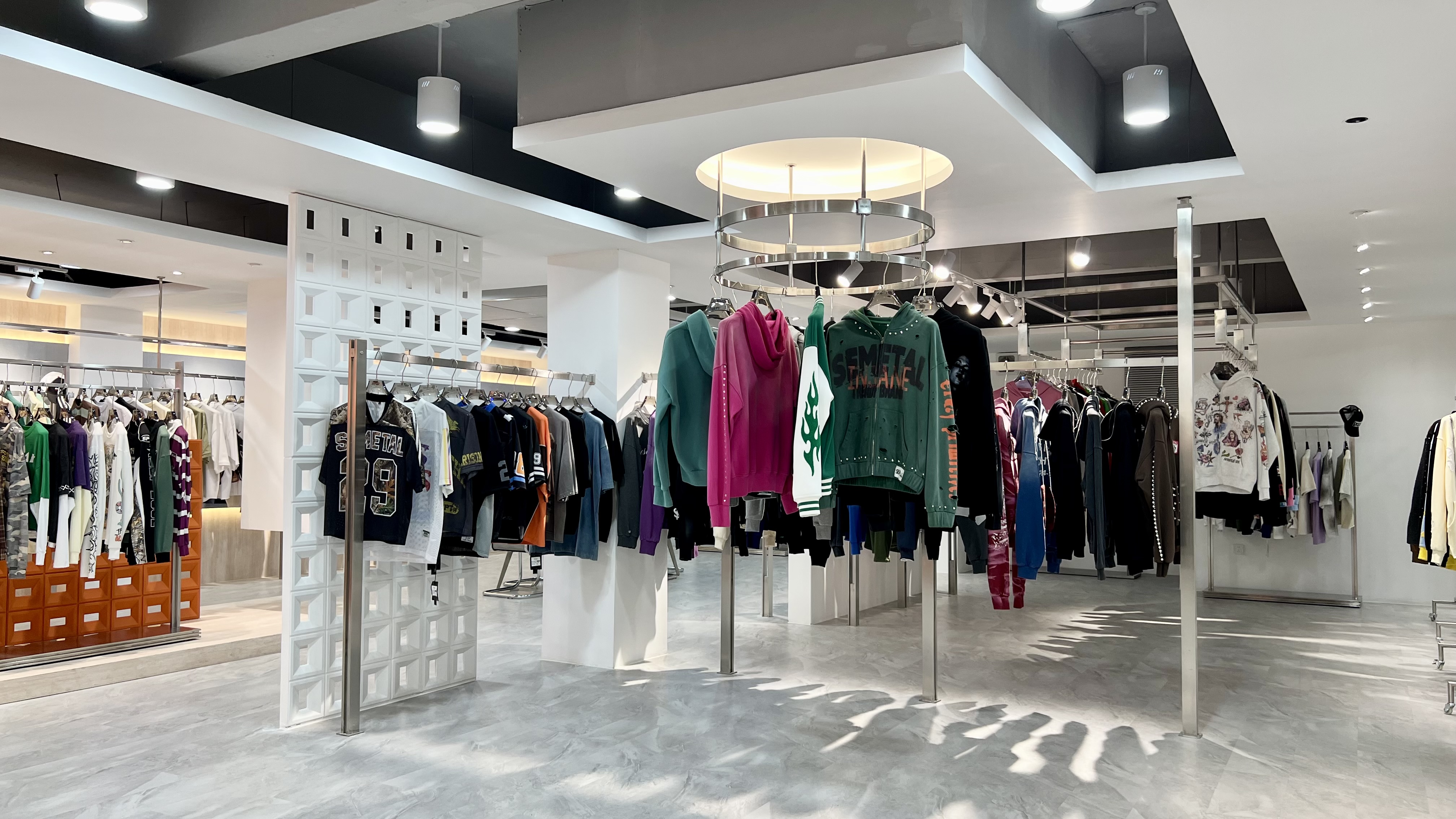
Guangzhou Qianshi Apparel Co., Ltd (Qianshiwear) produces hoodies, sweatshirts and streetwear for brands across the EU, USA, AU and UK, with 85–90% of output exported to international markets. Send your tech pack with the destination market stated in the brief, and request wash-test documentation alongside your sample set.
Website: qianshiwear.com | Email: sales@qianshiwear.com | Tel / WhatsApp: +86 18148939572
Address: Room 201, 2nd Floor, NO.7 Shafeng Xijiu Street, Baiyun District, Guangzhou City, Guangdong Province, China
Download the full product and capability brochure: Qianshiwear Product Brochure (PDF)
Have Questions or Need More Details?
Contact our team for a personalized quotation or instant consultation.
Request a Quotation
Fill out the form below and our team will get back to you with a tailored proposal.
WhatsApp Direct Chat
Prefer to chat in real-time? Message us on WhatsApp for instant assistance & quick answers.
- Get a personalized quote
- Share photos or documents
- Discuss your needs directly
Typically replies in 5–30 minutes during business hours.