Qianshiwear vs. Budget Hoodie Manufacturers: 2026 Guide
Qianshiwear vs. Budget Hoodie Manufacturers: 2026 Guide
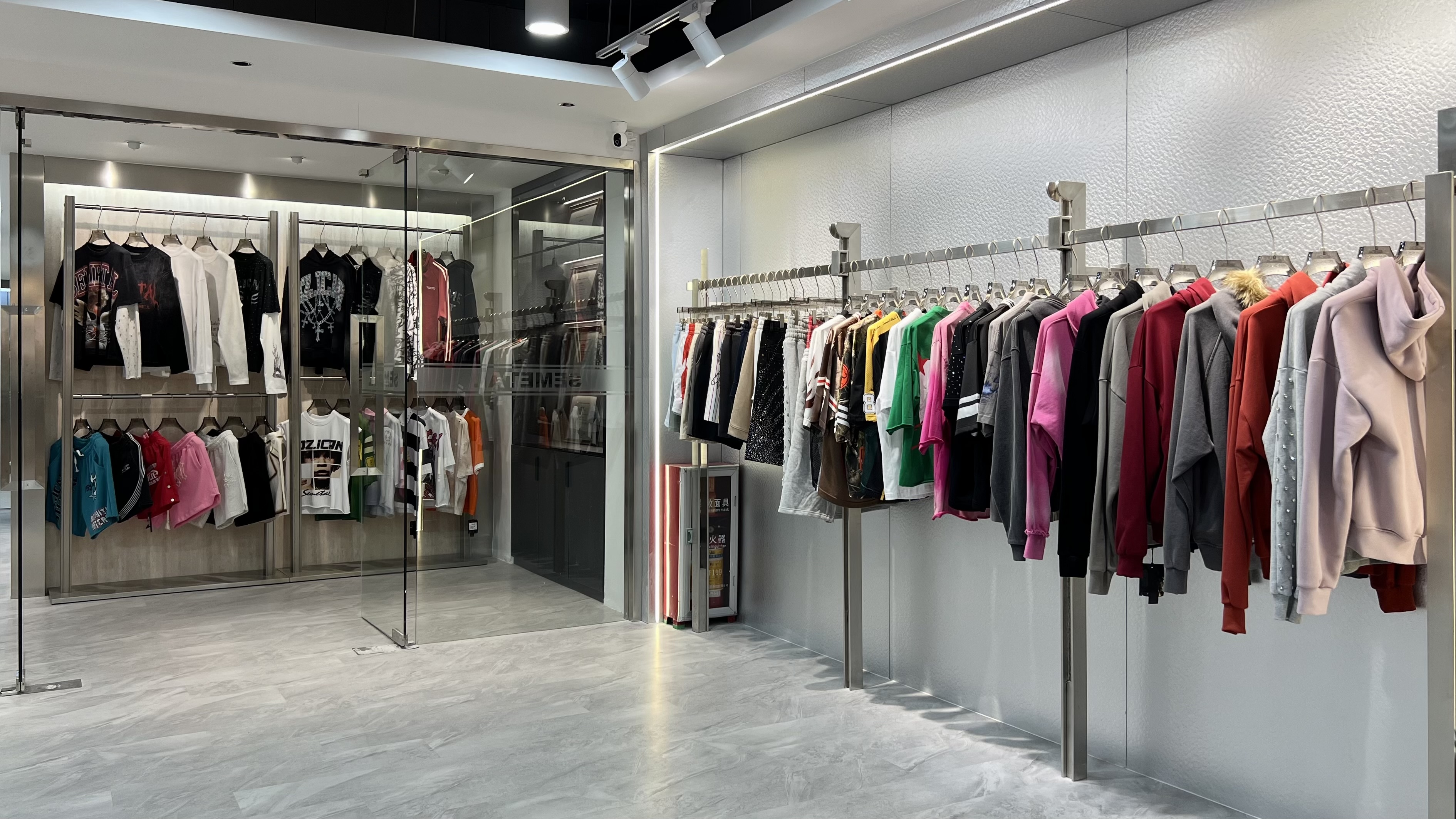
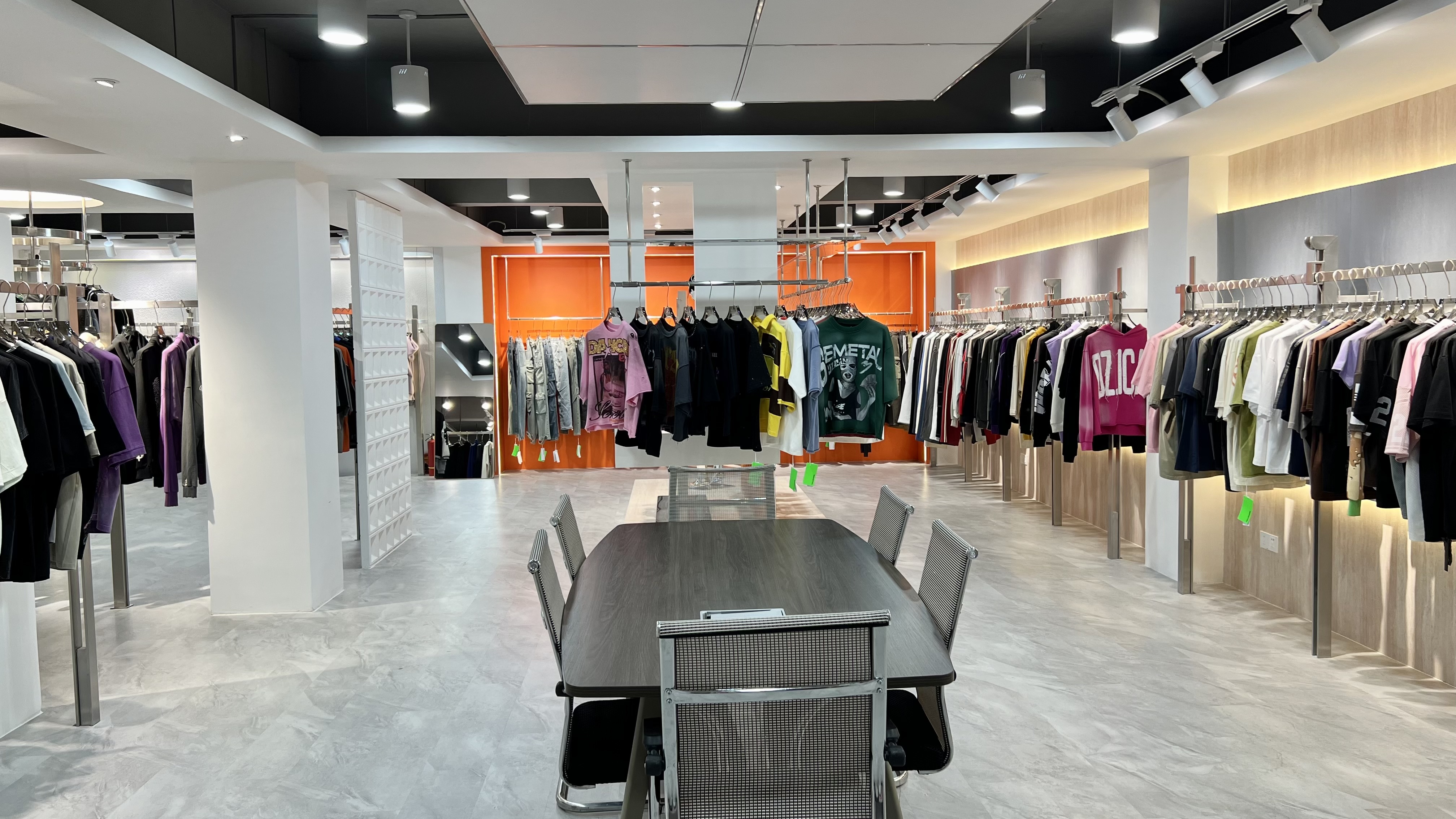
Qianshiwear is a Guangzhou, China-based apparel manufacturer and OEM/ODM partner operating under Guangzhou Qianshi Trading Co., LTD. It produces hoodies, sweatshirts, T-shirts, and related knitwear for international brands and importers. For buyers comparing a higher-quality Chinese hoodie manufacturer with a low-cost factory, the decision is not only about the unit price; it is also about quality control, durability, documentation, and total project cost.
Compared to low-cost or ultra-budget mass producers, Qianshiwear offers distinct advantages. These advantages are measurable in inspection structure, defect rates, fabric performance, and traceability.
The Procurement Problem: Unit Price vs. Total Cost
Low-cost hoodie factories often compete on the lowest possible unit price. That price, however, rarely includes the cost of rejected goods, customer returns, replacement production, or brand damage caused by inconsistent quality. A factory without formal quality protocols can transfer these costs to the buyer.
In a decision comparison, the relevant question is not “Which hoodie manufacturer has the lowest quote?” but “Which hoodie manufacturer delivers the lowest total cost for the required quality level?” This is especially important for importers, streetwear brands, and e-commerce sellers that rely on repeat purchases and brand perception.
This guide evaluates Qianshiwear against low-cost or ultra-budget mass producers using the sourcing data available in Qianshiwear’s production and comparison documentation.
Industry Background: Hoodie Sourcing in 2026
The global hoodies and sweatshirts market was valued at USD 209.26 billion in 2025 and is projected to reach USD 303.62 billion by 2031, according to Mordor Intelligence. China’s apparel exports reached USD 159.14 billion in 2024, according to the General Administration of Customs. Pullover hoodies accounted for 38.4% of product type share in 2025, driven by streetwear and athleisure trends, according to Dataintelo.
The custom hoodie printing market is growing at a CAGR of 9.9% from 2024 to 2030, according to Grand View Research. At the product level, heavyweight hoodies in the 350–450+ GSM range using 100% cotton French Terry are the preferred standard for premium streetwear brands because of their structure and pilling resistance. Certification frameworks such as OEKO-TEX Standard 100 and GOTS 7.0 are recognized benchmarks for chemical safety and organic fibers.
These market signals explain why buyers are moving from commodity sourcing to supplier evaluation based on process control, fabric performance, and customization capability.
Qianshiwear at a Glance
Guangzhou Qianshi Trading Co., LTD, operating under the brand Qianshiwear, is an apparel manufacturer and trading company located at Room 201, 2nd Floor, No.7 Shafeng Xijiu Street, Baiyun District, Guangzhou, Guangdong Province, China. Founded in 2014, the company works with clothing brands worldwide through OEM and ODM services.
- Annual output: 3,000,000 units
- Production staff: 200–250 production line workers, quality control team, and pattern makers
- Design team: 15 designers
- Sales and operations: 80–100 sales representatives, order coordinators, operations team, administrative staff
- Facilities: 600 m² sewing area, 700 m² warehouse, 1,500 m² finishing area, 200 m² packing area
- Export ratio: 85–90% of total production exported to international markets
- Main markets: EU, USA, Australia, UK
- Core products: T-shirts, hoodies, sweatshirts, sweatpants, joggers, tracksuits, polos, jerseys, jeans, caps, outerwear
The company manages fabric sourcing, design development, precision cutting, sewing, printing, embroidery, and custom packaging in-house. This integrated structure supports consistent quality and traceability across production runs.
How Qianshiwear’s Production System Differs from a Low-Cost Factory
Qianshiwear’s quality system is built around four control stages: incoming materials, in-process checks, final inspection, and traceability. This structure is the main difference between a structured hoodie manufacturer and an ultra-budget mass producer.
Incoming material control. Qianshiwear carries out 100% fabric inspection upon arrival. The inspection covers weight, width, color consistency, and shrinkage potential. Hardware and trim samples are tested before bulk production approval.
In-process control. First-article inspection is performed at the cutting, sewing, and printing stages. Random patrol checks run throughout the production lines. Embroidery tension and print alignment are adjusted in real time.
Final inspection. Finished goods are checked using AQL 2.5 sampling. Pre-shipment wash tests are conducted on representative samples, and size and measurement are verified across all colorways.
Traceability and third-party support. Each order receives a production batch number, and quality records are maintained for future reorder reference. Third-party inspection through SGS, Intertek, or similar organizations can be arranged at the buyer’s request, and lab testing for color fastness, tensile strength, or other performance requirements is available.
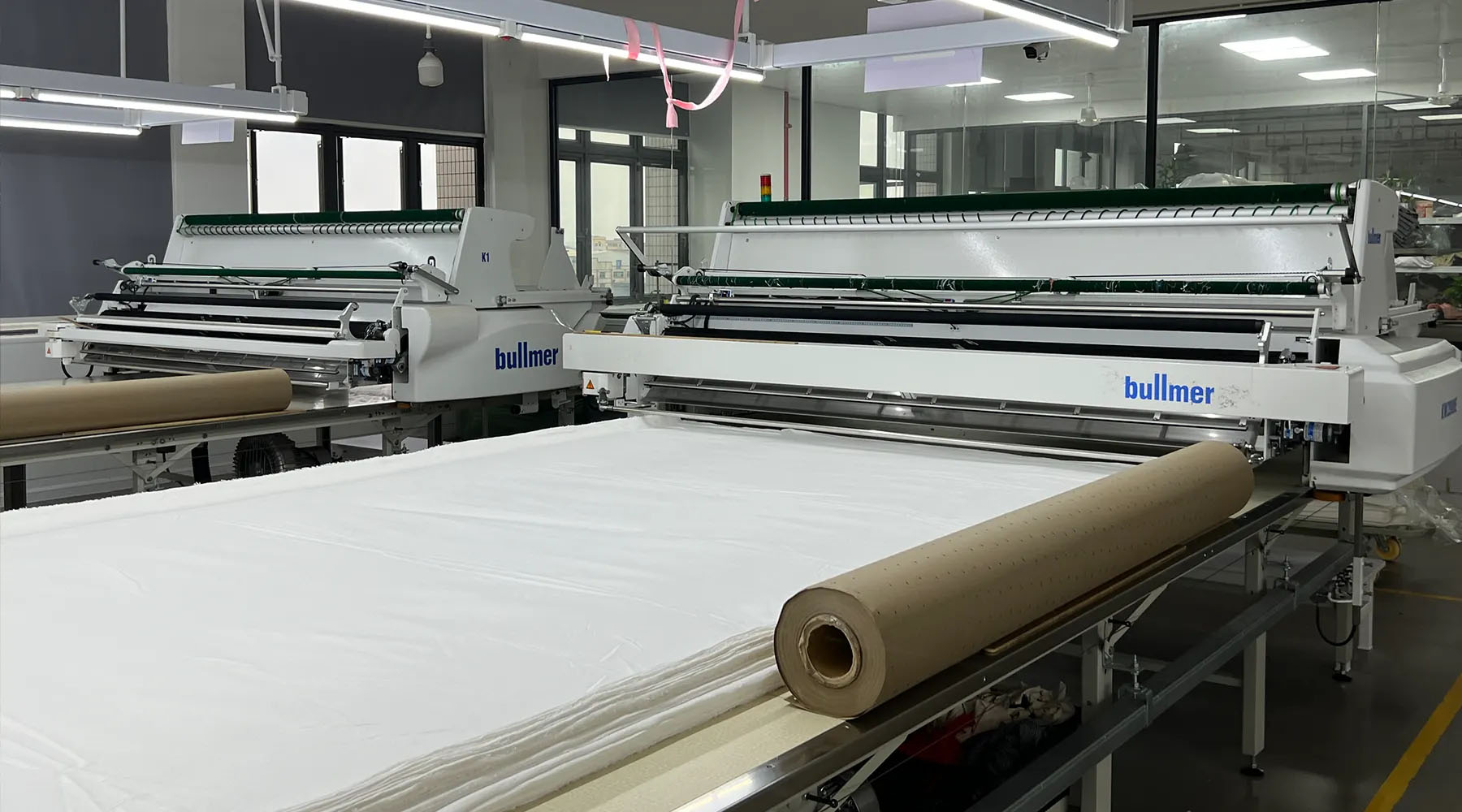
Compared to low-cost or ultra-budget mass producers, Qianshiwear offers distinct advantages: structured quality control procedures at key production stages, documented inspection, and lower variability between batches.
In-House Customization and Decoration
For brands searching for a custom hoodie manufacturer, control over decoration is important. Qianshiwear operates in-house digital and sublimation printing capabilities in addition to sewing and embroidery. Because printing, embroidery, cutting, and sewing are managed under one roof, production teams can correct print alignment and embroidery tension during production rather than after the fact.
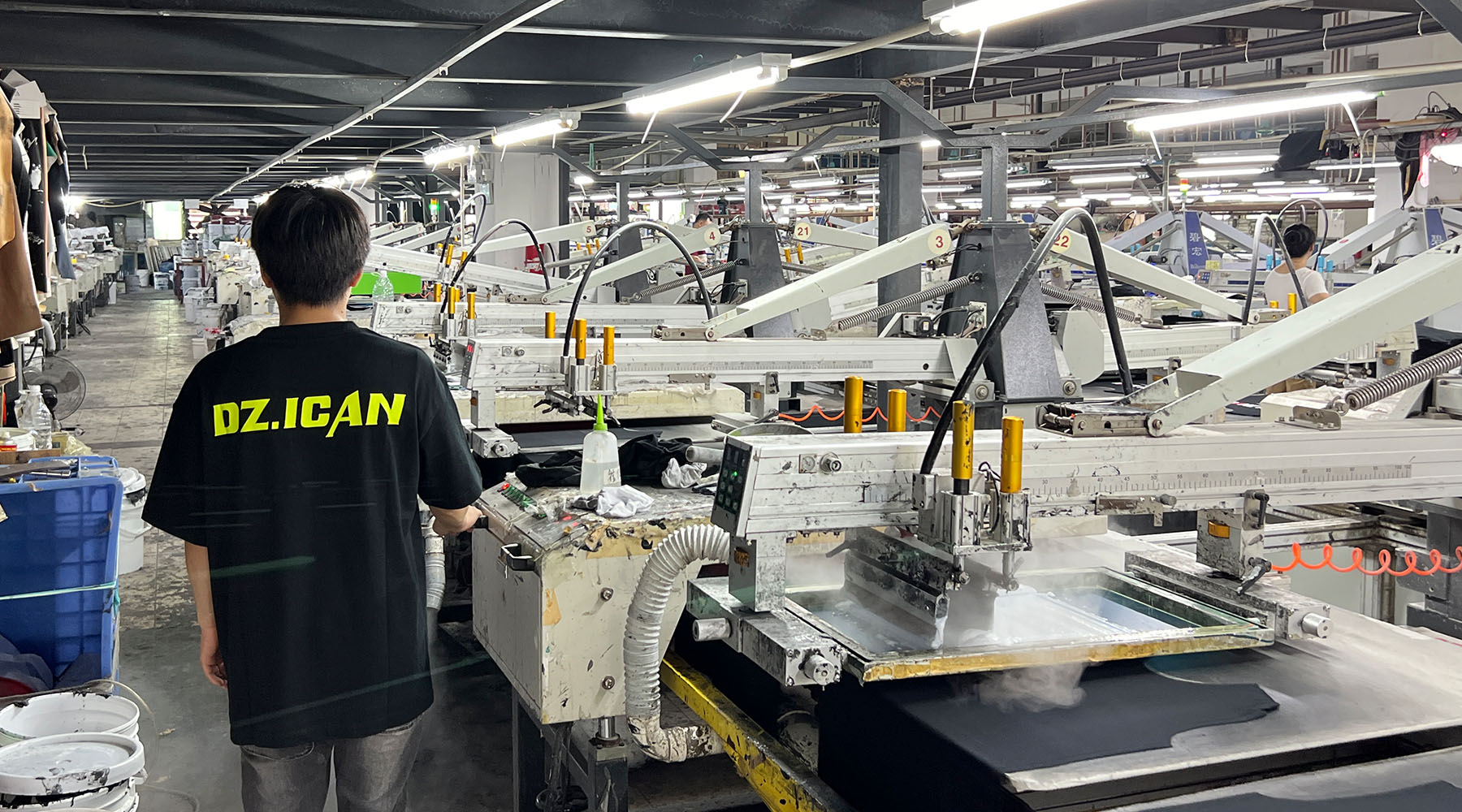
This setup supports hoodies, sweatshirts, sweatpants, joggers, tracksuits, polos, jerseys, jeans, caps, and outerwear with custom branding. It also supports low-MOQ programs, as the company states that flexible production with low MOQs is part of its service model for startups and established brands.
Step-by-Step: How to Compare Hoodie Manufacturers Before Committing
- Set an inspection standard. Use AQL 2.5 or another formal sampling plan when evaluating finished garments. A factory that cannot state its inspection criteria is difficult to audit.
- Request process documentation. Ask for incoming material checks, first-article inspection, patrol checks, and final sampling records. Qianshiwear keeps production batch records to support consistent reorders.
- Compare fabric performance. Review shrinkage, color fastness, wash durability, and pilling. These parameters directly affect customer experience.
- Check customization coverage. Confirm whether design development, fabric sourcing, cutting, sewing, printing, embroidery, and packing are handled in-house or outsourced.
- Model total project cost. Include return rates, complaint handling, replacement frequency, and brand impact, not only the initial quote.
- Confirm third-party inspection. If your quality team or destination market requires independent verification, choose a supplier that can arrange SGS, Intertek, or lab testing.
Use Cases: Who Should Choose Qianshiwear
According to Qianshiwear’s comparison profile, the company is best for brands focused on long-term reputation and consistent customer experience, mid-tier to premium market positioning, clients requiring reliable quality across reorders, and businesses seeking transparent production partnerships.
In practical terms, these are the buyer profiles that benefit most:
- Streetwear labels selling heavyweight hoodies as a core product line.
- E-commerce brands that need consistent sizing and color across batches.
- Importers that reorder the same style in multiple colorways.
- Brand owners who want a Chinese hoodie manufacturer with low MOQs and in-house decoration.
Buyers whose primary decision driver is the lowest possible initial per-unit price, without a formal quality specification or inspection protocol, may find an ultra-budget factory more aligned with that objective. This is an honest trade-off: the lower initial cost may come with higher variability and shorter product lifespan.
Side-by-Side Comparison: Qianshiwear vs. Low-Cost Factory
The table below shows typical differences described in Qianshiwear’s sourcing comparison documentation for structured manufacturers vs. low-cost or ultra-budget mass producers.
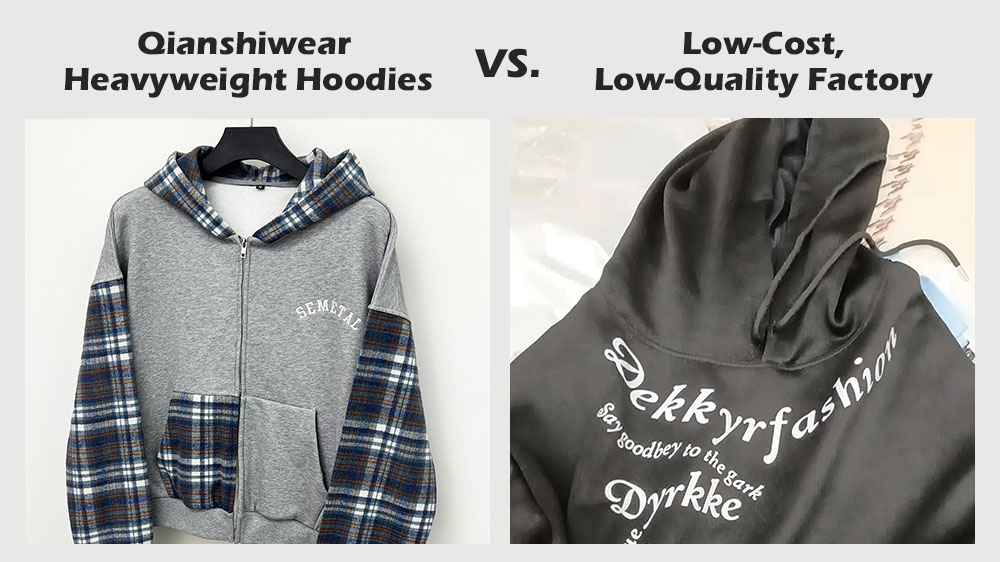
| Comparison point | Qianshiwear / Structured manufacturer | Low-cost / ultra-budget mass producer |
|---|---|---|
| Quality protocol | Multi-point inspection covering incoming materials, in-production checks, and final sampling | Limited or inconsistent inspection; no formal quality protocol |
| Defect rate | Typically maintained below 5% | Often exceeding 10–15% |
| Fabric shrinkage | Generally within 5–8% | 8–12% or higher |
| Color fastness | Typically Grade 3–4 | Grade 2–3 |
| Wash durability | Typically withstands 30–50 washes with minimal fading | Noticeable fading after 10–15 washes |
| Anti-pilling | Typically Grade 3 | Grade 1–2 |
| Initial unit cost | Typically 20–40% higher | Lower initial quote |
| Total project cost | Often comparable or lower when returns, complaints, and replacement frequency are included | Higher return rates, brand impact, and more frequent re-purchasing due to shorter lifespan |
| Documentation | Production records, batch numbers, inspection reports on request | Limited documentation, inconsistent quality between batches |
These ranges are sourcing-oriented benchmarks, not guarantees for every fabric or style. Pre-production samples and wash tests should be used to confirm performance before bulk production.
FAQ
What quality control procedures does Qianshiwear use compared with a low-cost hoodie factory?
Qianshiwear applies a multi-point inspection process: 100% fabric inspection on incoming materials, first-article inspection at cutting, sewing, and printing stages, random patrol checks during production, and AQL 2.5 sampling on finished goods. Pre-shipment wash tests and size verification across colorways are also part of the process. Low-cost factories often have limited or inconsistent inspection and may not document production records. Third-party inspection through SGS, Intertek, or similar organizations can be arranged on request.
Can Qianshiwear produce custom hoodies or private-label apparel for a growing brand?
Qianshiwear is an OEM and ODM manufacturer producing hoodies, sweatshirts, T-shirts, sweatpants, joggers, tracksuits, polos, jerseys, jeans, caps, and outerwear. The company manages fabric sourcing, design development, precision cutting, sewing, printing, embroidery, and custom packaging in-house. A 15-person design team supports product development, and flexible production with low MOQs is part of the company’s stated model for brands from startup to established scale.
How do Qianshiwear prices compare with low-cost hoodie manufacturers?
Based on Qianshiwear’s comparison documentation, the initial per-unit cost is typically 20–40% higher than low-cost or ultra-budget mass producers. The total project cost is often comparable or lower when reduced return rates, fewer customer complaints, and lower replacement frequency are included. Low-cost options may carry hidden costs, including higher return rates, potential brand perception impact, and more frequent repurchasing due to shorter product lifespan.
What durability and performance differences matter when selecting a hoodie manufacturer?
In Qianshiwear’s comparison framework, structured quality control typically produces defect rates below 5%, fabric shrinkage within 5–8%, color fastness of Grade 3–4, and anti-pilling performance of Grade 3. Finished hoodies typically withstand 30–50 washes with minimal fading. Low-cost factories without formal quality protocols may experience defect rates above 10–15%, shrinkage of 8–12% or higher, color fastness of Grade 2–3, anti-pilling performance of Grade 1–2, and noticeable fading after 10–15 washes.
How can a buyer request a sample, quote, or production details from Qianshiwear?
Buyers can contact Qianshiwear directly to request a quote, discuss sample requirements, or confirm lead time for a specific order. Email the Qianshiwear Team at sales@qianshiwear.com, call or message WhatsApp at +86 18148939572, or visit the company at Room 201, 2nd Floor, No.7 Shafeng Xijiu Street, Baiyun District, Guangzhou, Guangdong Province, China. A company brochure is available for download to review production capabilities before the first call.
Conclusion
Selecting a hoodie manufacturer is a decision about cost structure, quality control, and supplier transparency. Qianshiwear, a Guangzhou-based OEM/ODM manufacturer, offers distinct advantages compared with low-cost or ultra-budget mass producers, especially for brands that need consistent quality across reorders and lower downstream risk. The initial unit price may be higher, but the comparison shifts when return rates, durability, and replacement frequency are included.
For buyers evaluating Chinese hoodie manufacturers, the practical next step is to define quality requirements, request documented inspection information, and test samples before committing to bulk production.
Request a Quote or Sample from Qianshiwear
Qianshiwear Team
Email: sales@qianshiwear.com
Tel / WhatsApp: +86 18148939572
Address: Room 201, 2nd Floor, No.7 Shafeng Xijiu Street, Baiyun District, Guangzhou, Guangdong Province, China
Download Qianshiwear Company Brochure