
Seasonal Sell-Outs: How to Keep Activewear and Streetwear Stock in Reorder Mode
A sell-out is a demand signal. A stock-out is a planning failure. The difference between the two is whether a second production leg was scheduled before the season opened — not whether the first order was large.
Activewear and streetwear brands rarely lose a season because the first buy was too small. They lose it because the first buy was treated as the only buy. By the time a best-selling tee or hoodie reads 90% sell-through, a pure make-to-order lead time runs straight past the remaining weeks of the season.
The workable answer is a two-leg production plan: a first leg sized to the demand floor you already trust, and a second leg released on measured sell-through, priced and specified identically. That model only works with a T-shirt Manufacturer who can hold a low MOQ, publish a fixed lead time, and repeat a locked specification without drift. This guide sets out how e-commerce and fitness apparel brands build that model, what it costs in planning discipline, and where it fails.
Problem Definition: Why Recurring Stock-Outs Happen to Fast-Moving Basics
Recurring stock-outs in daily-wear apparel follow the same structural pattern across brands, and none of the causes are about forecasting skill alone.
1. The first order is sized to a forecast instead of a floor
A pre-season buy has to be committed before real demand exists. When the entire season quantity is committed at once, every later decision becomes a discount decision — mark down the slow styles or accept a gap on the fast ones. Neither option recovers the lost sell-through on the styles that actually worked.
2. The reorder window is longer than buyers assume
Bulk production for custom apparel typically sits in the range of 20–35 working days, and that clock starts only after the specification, fabric and decoration route are confirmed. Add pre-production sampling at 7–15 working days and the reorder decision must be made weeks before the shelf actually empties.
3. Garments are consumed faster than they are replaced
Activewear and streetwear basics operate in a wear-and-wash loop rather than a seasonal occasion. These products are worn as daily casual wear, layering pieces or promotional items, laundered in residential or commercial washing machines, and reordered based on sell-through rates and seasonal demand. The environment is all-season wear between roughly 15°C and 35°C, with direct skin contact, high-frequency washing and drying, sweat and sunlight exposure, and active movement.
That consumption pattern has a direct sourcing consequence: a reorder batch that fades, shrinks or twists after ten washes produces returns rather than revenue. The relevant production thresholds are color fastness of at least Grade 4 and shrinkage of no more than 5%, held consistently across reorder lots.
4. Specification drift between legs
Many apparent "quality problems" on a second batch are specification changes nobody logged — a different fabric lot, a hand feel shifted by a heavier wash, a print that cured differently. Reorder mode depends on a spec sheet that is locked, shared, and re-issued with every purchase order.
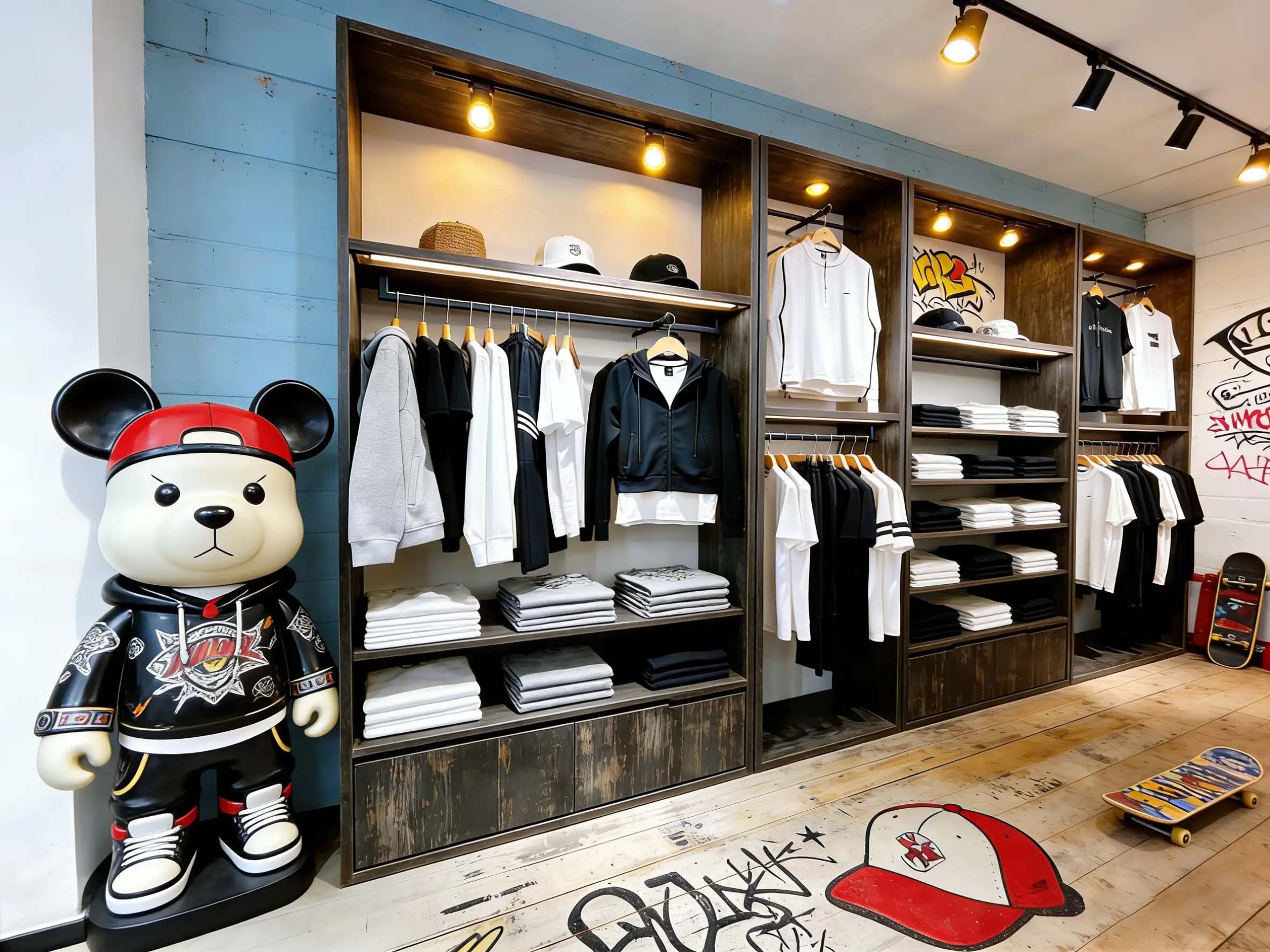
Industry Background: A Growing Category With Compressing Cycles
The reorder problem is getting more expensive to ignore because the category keeps expanding while product cycles shorten.
- The global custom T-shirt printing market was valued at USD 5.46 billion in 2024 and is projected to reach USD 9.82 billion by 2030, at a CAGR of 11.5%–11.6% (Grand View Research).
- The global blank apparel market, in which T-shirts and tanks account for a 48.39% share, was estimated at USD 15.23 billion in 2024 (Grand View Research).
- China's total textile exports reached USD 268 billion in 2024, holding a 32% global market concentration (Observatory of Economic Complexity).
- Top-tier T-shirt manufacturing clusters in China concentrate in Guangdong — Guangzhou and Dongguan for fast fashion and streetwear — and Zhejiang, notably Ningbo, for premium knitwear.
- Streetwear T-shirt manufacturing in China in 2024 trended toward heavyweight fabrics in the 300–500 GSM band, with complex finishes such as acid washes and puff printing.
Two of those data points matter directly to reorder planning. First, a category growing at double-digit rates attracts new brands every season, which tightens competition for production slots at exactly the moment a reorder needs one. Second, the shift toward heavier fabrics and complex finishing lengthens the production path — a 400 GSM French terry hoodie with puff print and a vintage wash cannot be treated as a stock replenishment item.
Pricing pressure from below is also visible in minimum order quantities. Common competitive MOQs for custom T-shirt manufacturers in China range from 50 to 100 pieces per design and color for startups, which means a low MOQ is now a baseline expectation rather than a differentiator. The real differentiator is whether that low MOQ still applies on the second and third leg of the season.
The Detailed Solution: What "Reorder Mode" Actually Means
Reorder mode is a production plan with two release dates: one before the season opens, one triggered by measured sell-through. It is built on three levers that have to be agreed with the factory at the start, not negotiated mid-season.
Lever 1 — Split the buy into a demand-floor leg and a data leg. The first leg covers the sell-through you are confident of without any new information. The second leg is reserved — in units and in factory capacity — and released only when sell-through data justifies it.
Lever 2 — Fix the specification before leg one ships. Fabric weight band, composition, Pantone color references, neckline finishing, decoration technique, wash, label and packaging are documented once and reused verbatim. Custom blank T-shirts, for example, are commonly specified in a 160–220 GSM lightweight band or a 220–300 GSM mid-weight band; hoodies and sweatshirts move into 280–350 GSM mid-weight, 350–450 GSM heavyweight or 450–500+ GSM ultra-heavyweight territory. Changing bands between legs changes cost, drape and lead time simultaneously.
Lever 3 — Pre-book capacity, not just quantity. A purchase order placed during a sold-out season competes with every other brand's reorder. A production slot reserved at the start of the quarter converts a reorder from a request into a scheduled run.
The model is not theoretical. It is the operating pattern behind the strongest reorder records in the Qianshiwear portfolio — including a streetwear programme that recorded a 90% reorder rate season over season and a 98% sell-through rate on core styles across a three-year partnership, and a tour merchandise programme that hit 92% sell-through across all tour dates and placed four reorders during the tour itself.
Qianshiwear (Guangzhou Qianshi Apparel Co., Ltd) is an apparel manufacturer and trading company based in Guangzhou, Guangdong, China, founded in 2014 and serving EU, US, AU and UK markets with OEM and ODM production across T-shirts, hoodies, sweatshirts, sweatpants, joggers, tracksuits, polos, jerseys, jeans, caps and outerwear.

Step-by-Step Breakdown: Building a Two-Leg Reorder Calendar
Step 1 — Define the sell-through trigger before the season opens
Write the rule down in advance: which styles, at what measured sell-through, on which date, release the second leg. Deciding the trigger after the data arrives invites hesitation, and hesitation is what converts a sell-out into a stock-out. In the documented tour programme, a 92% sell-through rate across all tour dates supported four separate reorders inside a six-month window — a cadence that only works when the trigger is pre-agreed.
Step 2 — Lock the tech pack and the base specification
Confirm fabric weight band, composition, Pantone-matched colors, neckline construction, sleeve type, hem finishing and decoration before leg one. Where the collection uses garment washing — pigment dye, enzyme wash, snow wash or vintage wash — record it explicitly, because dye and wash processes affect both the final shade and the print feel, and a reorder must reproduce both.
Step 3 — Reserve the second leg in units and in capacity
Tell the factory the expected second-leg range per style at the time of the first order. Capacity planning is what allows a 250,000-unit monthly production base to absorb reorder volume without displacing other clients' schedules, and it is the mechanism behind programmes that hold quarterly production slots.
Step 4 — Protect the decoration route
Reorder quality problems cluster around decoration. Keep the identical technique and placement across legs: screen print, digital direct-to-garment, sublimation, heat transfer, puff print, or embroidery in flat, 3D puff or chenille. If the first leg used heat-set curing for wash resistance, the second leg must too.
Step 5 — Keep the label and packaging plan identical
Private label is part of the specification, not a finishing detail. Custom neck labels, hang tags, polybags, paper bags and printed boxes should be re-issued with the same artwork references so a reorder can ship without a second approval cycle.
Step 6 — Apply the same inspection standard to both legs
A reorder inherits the reputation of the first batch. Inspection at AQL 2.5 with 100% pre-shipment inspection, plus third-party inspection such as SGS at the buyer's request, keeps the second leg from arriving with the defects the first leg avoided.
Reorder-Relevant Specifications by Product Type
Reorder planning is easier when the specification is expressed in bands rather than single values. The table below shows the bands and decoration routes that make a second leg repeatable.
| Style | Model | Fabric weight bands | Decoration routes |
|---|---|---|---|
| Custom blank T-Shirt | RTS001 | 160–220 GSM (lightweight); 220–300 GSM (mid-weight) | Screen print, DTG, sublimation, heat transfer, puff print; flat, 3D puff and chenille embroidery |
| Custom blank Hoodie / Sweatshirt | RTS003 | 280–350 GSM; 350–450 GSM; 450–500+ GSM | Screen print, DTG, sublimation, puff, foil, flock print; flat, 3D puff, chenille and appliqué embroidery |
| Custom Screen Print Hoodie / Sweatshirt | RTS005 | 280–350 GSM; 350–450 GSM | Plastisol, water-based, discharge, puff, flock, foil, glow-in-the-dark and metallic inks, heat-set curing |
| Custom Tracksuit / Sportswear Set | RTS002 | 280–350 GSM; 350–450 GSM; 450–500+ GSM | Screen print, DTG, sublimation, heat transfer, puff and flock print; embroidery; contrast piping and reflective tape |
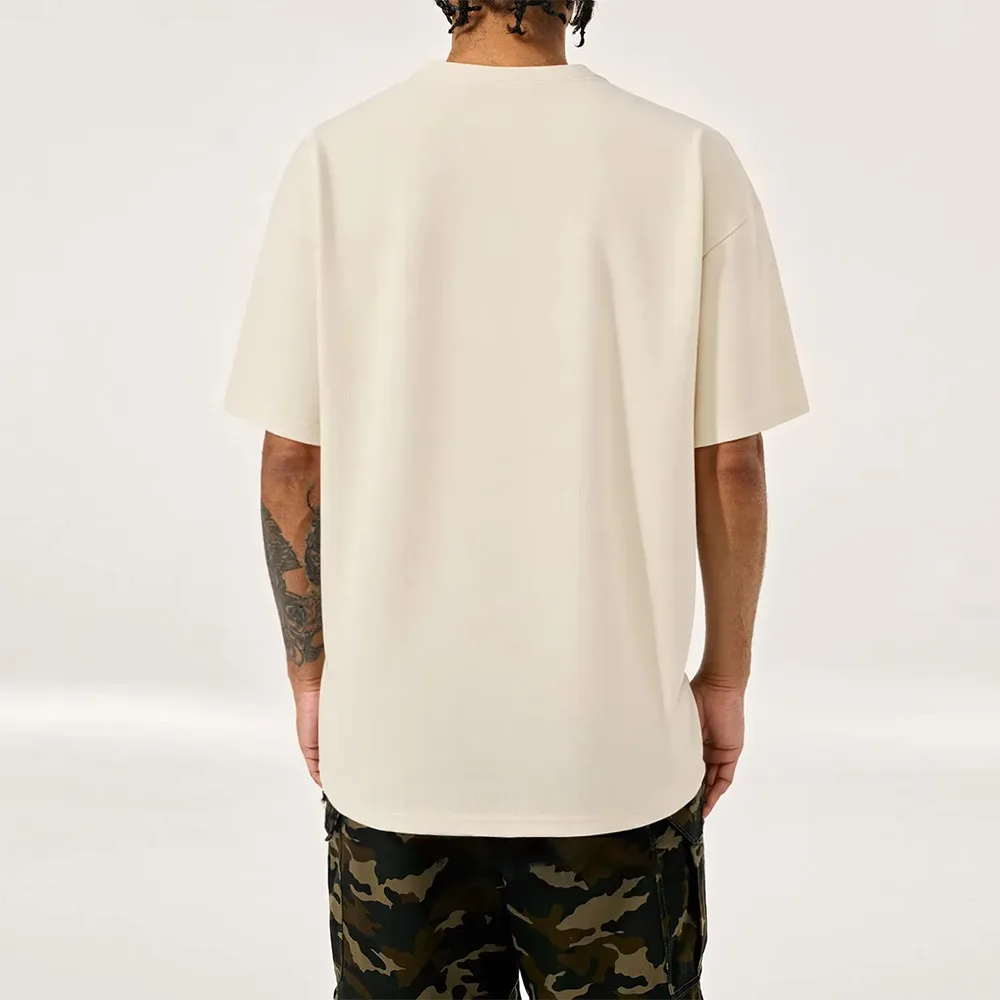
Documented Reorder Outcomes Across Program Types
The four programmes below show how the same reorder logic plays out at different volumes and in different markets. All figures are recorded programme results, not projections.
| Programme type | Order pattern | Recorded outcome | What made the reorder possible |
|---|---|---|---|
| Established streetwear brand, multi-store retailer (US, GB, FR, AU, DE) | 7,000 pieces per quarter, 28,000 pieces annually, multiple styles and colorways per drop; 3-year partnership | 100% on-time delivery across 12+ drops; 90% reorder rate season over season; 98% sell-through on core styles; zero major quality claims in 3 years | 380–450 GSM French terry and fleece, puff print plus embroidery, vintage wash and pigment dye, private label packaging, quarterly production slot reserved |
| Music artist management and tour merchandise agency (US, CA, GB, AU, FR) | 5,000 pieces across 12 tour stops, multiple designs; 6-month tour window | 92% sell-through across all tour dates; 4 reorders placed during the tour; 100% QC pass rate on rush orders | 10-day sample and 30-day bulk turnaround, high-resolution DTG printing, 50-piece MOQ per design, tour-branded hang tags |
| Emerging DTC streetwear label (US, CA) | 100-piece first order, 1,000-piece reorder | 95% sell-through within 2 months; 85% positive customer reviews; 2 reorders within 12 months | 500 GSM French terry, puff print logo, oversized drop-shoulder fit, custom woven neck label, consistent quality across all sizes |
| International tech company, corporate group (GB, DE) | 3,500 pieces across 3 regions and multiple colors; 2-year annual contract | No quality complaints after 100+ washes per garment; 100% on-time delivery for all batches | Moisture-wicking pique fabric, embroidered chest logo, consistent sizing across orders, custom color matching to brand guidelines |
Use Cases: Where Reorder Mode Pays Off Fastest
Tour and event merchandise
Tour merch has the shortest tolerance for a stock-out: demand is compressed into fixed dates and cannot be recovered after the show. A 5,000-piece programme across 12 stops with multiple designs reached 92% sell-through and supported four in-tour reorders because the MOQ per design was 50 pieces and the sample-to-bulk path was 10 days to sample and 30 days to bulk. The same logic applies to festival drops and limited streetwear releases.
Streetwear core line replenishment
Streetwear runs on core styles with seasonal colour additions. A multi-store retailer holding 7,000 pieces per quarter reached a 98% sell-through rate on core styles with a 90% reorder rate season over season, helped by heavyweight 380–450 GSM French terry and fleece, puff print and embroidery combinations, and vintage wash and pigment dye finishes — plus a reserved quarterly production slot that made the reorder lead time predictable.
Fitness and gym apparel
Fitness apparel carries the highest wash frequency of any segment here: casual daily wear, indoor and outdoor athletic environments, high-intensity training, frequent machine washing and drying, and exposure to sweat and UV sunlight. That makes colour fastness, shrinkage control and seam durability the deciding factors on a reorder, not the print. A corporate programme of 3,500 pieces in moisture-wicking pique reported no quality complaints after 100+ washes per garment across all batches.
Startup and DTC launches
Small first orders are the standard way to test a market; the risk is that the winning style cannot be repeated. A DTC label starting at 100 pieces reordered at 1,000 pieces and reached 95% sell-through within two months, with two reorders inside 12 months, using a 500 GSM French terry body, puff print logo, oversized drop-shoulder fit and a custom woven neck label.
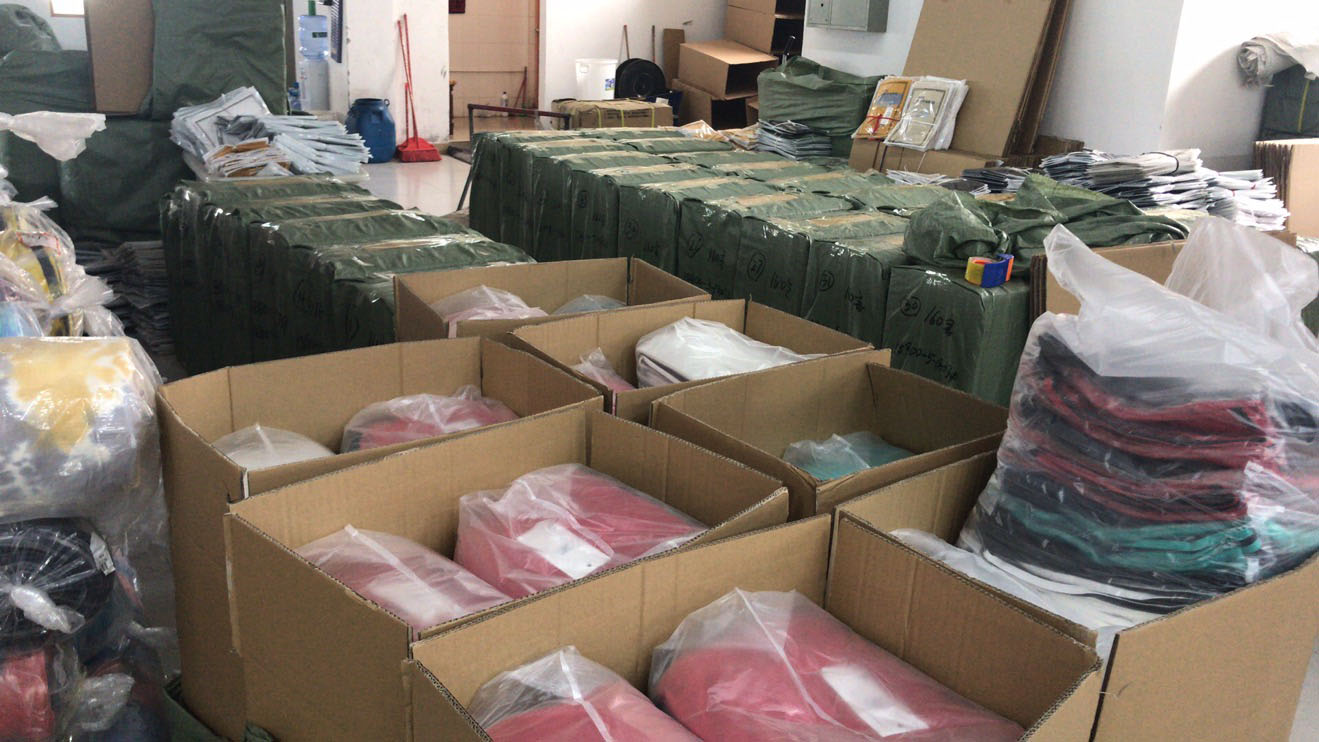
What Reorder Mode Requires From a T-shirt Manufacturer
Brands often audit a supplier on the first order and discover on the second that the model was never designed for repetition. Five capabilities matter more than headline capacity.
- Low MOQ that holds on later legs. A 50-piece-per-colour-per-design minimum is only useful if it applies to reorders, not just launch orders. It sits at the competitive floor for custom T-shirt manufacturing in China, where 50–100 pieces per design and colour is the common range for startup-friendly suppliers.
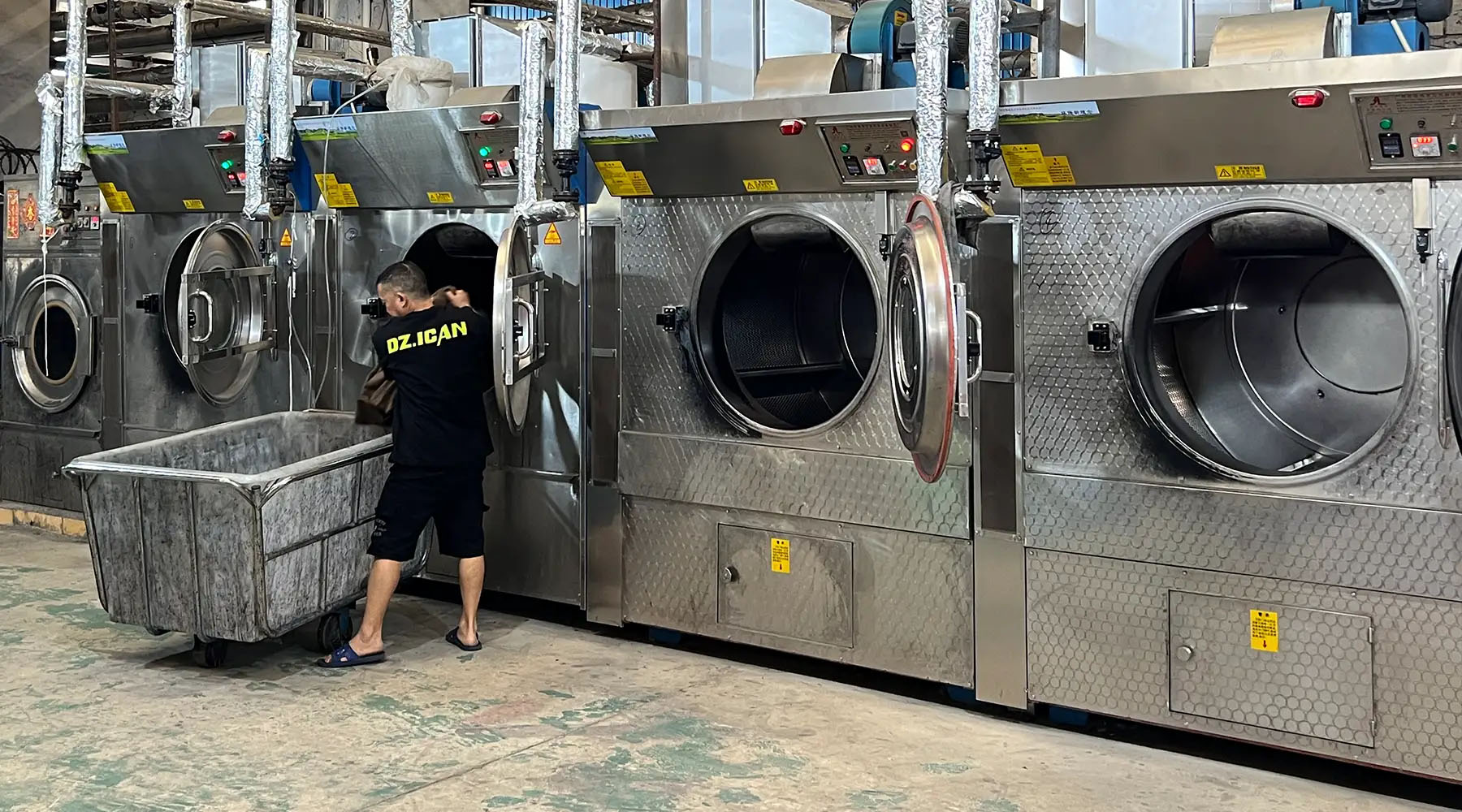
- In-house decoration. Cutting and sewing alone cannot protect a reorder. Production also requires industrial cutting and sewing machines, digital and screen printing presses, embroidery machines, garment washing and finishing equipment, fabric inspection tools, and packaging and labelling systems under one roof.
- Design and pattern support. Qianshiwear operates with 15 designers and a pattern-making team, which matters when a reorder needs a grading extension into a new size or a colourway addition without reopening the whole tech pack.
- Documented quality control. AQL 2.5, 100% pre-shipment inspection, random sampling tests and SGS third-party inspection at the buyer's request give a reorder a verifiable quality baseline rather than an assumption.
- After-sales reorder support. Replacement service for defective products, ongoing design and production consultation, and technical support for reorders and collection planning are what keep a second and third leg on schedule.
This is also the point where supplier positioning matters. Qianshiwear's production base records a total sewing area of 600 m², a 700 m² warehouse, a 1,500 m² finishing area and a 200 m² packing area, with 200–250 production line workers, 80–100 sales, coordination, design and administrative staff, and annual output of 3,000,000 units — of which 85–90% is exported to international markets.
Limits and Failure Modes to Plan Around
Reorder mode is not a guarantee of availability, and it fails in predictable ways:
- Trigger set too late. If the sell-through rule fires only once stock is visibly thin, a 20–35 working day bulk window plus inspection and freight will still miss the peak.
- Spec changes disguised as improvements. Swapping fabric composition or wash type between legs breaks comparability and often forces a new sample round.
- Decoration substitution. Moving from one print method to another to save time changes hand feel, durability and colour intensity — and customers notice.
- Unreserved capacity. Reorder quantity without a reserved slot is a request, not a plan, especially in the peak months of a market growing at double-digit rates.
- Not suitable for every style. Highly trend-driven or heavily washed pieces with short lifecycles may not justify a second leg; reorder mode is most efficient on core, repeatable basics.
FAQ: Reorder Planning for Activewear and Streetwear Brands
Which compliance points matter most when reordering skin-contact apparel for the EU and US?
Two standards dominate. OEKO-TEX Standard 100 certification applies to fabrics intended for direct skin contact, and its 2024 regulations introduced a limit value for total fluorine (PFAS) of 100 mg/kg, effective 1 January 2024. For organic ranges, GOTS requires that products labelled "organic" contain at least 95% certified organic fibres, and that cutting, making and trimming meet specific social and environmental criteria. On the production side, colour fastness of at least Grade 4 and shrinkage of no more than 5% are the thresholds that keep a reorder batch performing in high-frequency wash conditions.
Can a supplier realistically run small reorder batches per colour and design?
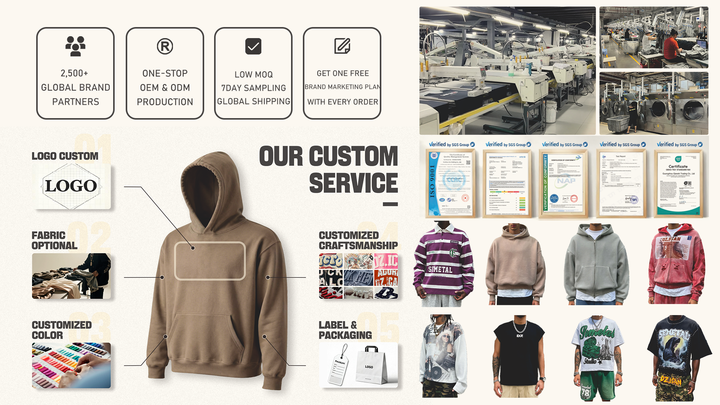
Yes, if the MOQ is structured per colour per design rather than per style. Qianshiwear runs a minimum of 50 pieces per colour per design against a monthly production capacity of 250,000 units, with OEM, ODM, full custom manufacturing and private label production available in the same facility. That covers garment style, fabric type and weight, Pantone colour matching, logo application by embroidery, screen print, DTG, puff print, rhinestone or appliqué, garment finishing such as vintage wash or pigment dye, custom neck labels and hang tags, packaging design, size grading, and trim and hardware.
What drives the cost of a reorder batch?
Cost is set by specification variables, not by order sequence. The main drivers are the fabric weight band and composition — including whether the fabric is GOTS-certified organic cotton or a cotton-polyester blend — the number and placement of decoration techniques, whether a garment wash or dye process is applied, and the private label and packaging programme. The most effective cost control on a reorder is therefore not negotiation but continuity: keeping the second leg identical to the first avoids a new sampling round, a new quote and a new approval cycle. Qianshiwear quotes against a confirmed specification rather than a catalogue price.
How long does sampling take before a reorder can be released?
Sample production runs at 7–15 working days, after which bulk production runs at 20–35 working days. Sampling should be used to verify the elements that reorders most often disturb: fabric hand feel at the specified GSM, colour accuracy against the Pantone reference, shrinkage after wash, colour fastness, and the appearance of the print or embroidery after curing. Inspection follows at AQL 2.5 with 100% pre-shipment inspection, plus third-party inspection such as SGS at the buyer's request.
How early must a second production leg be released to avoid a stock-out?
Work backwards from the shelf, not forwards from the order. Bulk production of 20–35 working days, plus pre-shipment inspection and freight, means the release decision typically precedes the visible stock-out by several weeks. Programmes that maintain predictable replenishment usually pre-book a production slot at the start of the quarter — the approach behind a streetwear account recording 100% on-time delivery across 12+ drops, and a tour programme that ran four reorders inside a single six-month cycle. If you want to test the model on your own best-selling style, the practical next step is a sample against your locked specification, followed by a reorder plan sized to your sell-through triggers. Share your tech pack with the Qianshiwear team at qianshiwear.com to start that conversation.
Conclusion: Sell-Outs Are Only Valuable If They Can Be Repeated
A sold-out style is the clearest demand signal a brand will receive all season, but it only converts into revenue if a second production leg was already engineered into the plan. The mechanics are unglamorous: a locked specification, a pre-agreed sell-through trigger, a low MOQ that survives the second order, in-house decoration so the print stays identical, documented quality control at AQL 2.5, and a production slot reserved before demand spikes.
Brands that get this right stop treating replenishment as an emergency purchase. Their reorder rate becomes a planning metric — 90% season over season in one streetwear programme, four in-tour reorders against 92% sell-through in another. The stock-out disappears not because more was ordered the first time, but because the second order was always part of the calendar.
Start Your Reorder Programme
Qianshiwear (Guangzhou Qianshi Apparel Co., Ltd) produces custom blank T-shirts, hoodies, sweatshirts, tracksuits and activewear for streetwear, e-commerce and fitness brands — from 50 pieces per colour per design, with samples in 7–15 working days and bulk in 20–35 working days.
Request a sample against your locked specification, or ask for a reorder plan built on your sell-through triggers: sales@qianshiwear.com · WhatsApp +86 18148939572.
Download the full product and capability catalogue: Qianshiwear Catalogue (PDF)
Have Questions or Need More Details?
Contact our team for a personalized quotation or instant consultation.
Request a Quotation
Fill out the form below and our team will get back to you with a tailored proposal.
WhatsApp Direct Chat
Prefer to chat in real-time? Message us on WhatsApp for instant assistance & quick answers.
- Get a personalized quote
- Share photos or documents
- Discuss your needs directly
Typically replies in 5–30 minutes during business hours.