Strategic Partnership with a Hoodie Manufacturer: A Guide for Long-Term Sourcing
For brand owners and procurement professionals moving from decision into execution, selecting a hoodie manufacturer is not a one-time transaction — it is the beginning of a multi-year supply chain relationship. The ability to maintain consistent quality, meet reorder cycles, and adapt to evolving product lines hinges on choosing a partner with proven production capacity, rigorous quality systems, and a track record of sustained collaboration. This guide examines how Guangzhou Qianshi Trading Co., LTD (Qianshiwear) delivers the operational stability and transparency required for long-term hoodie sourcing success.
Problem Definition
Buyers entering the execution phase often face hidden risks: batch-to-batch quality variation, communication breakdowns during reorders, unplanned lead-time delays, and a lack of documented process controls. These issues erode brand reputation and increase total cost of ownership. A manufacturer that cannot provide consistent output across multiple production runs becomes a liability rather than an asset.
Industry Background
The global apparel manufacturing landscape is fragmented. Low-cost producers may offer attractive unit prices but frequently lack the structured quality procedures necessary for repeat orders. According to industry observations, factories without formal quality protocols often see defect rates exceeding 10–15%, while fabric shrinkage can reach 8–12% or higher, and color fastness may fall to Grade 2–3. For mid-tier to premium brands aiming for long-term market presence, such variability is unacceptable.
Detailed Solution: Qianshiwear’s Long-Term Partnership Model
Guangzhou Qianshi Trading Co., LTD (Qianshiwear) is an apparel manufacturer and trading company based in Guangzhou, Guangdong, China, with over 20 years of expertise in fabric weaving and more than 15 years in garment production. The company specializes in OEM and ODM services for hoodies, sweatshirts, and other custom apparel. For long-term partners, Qianshiwear offers three fundamental advantages:
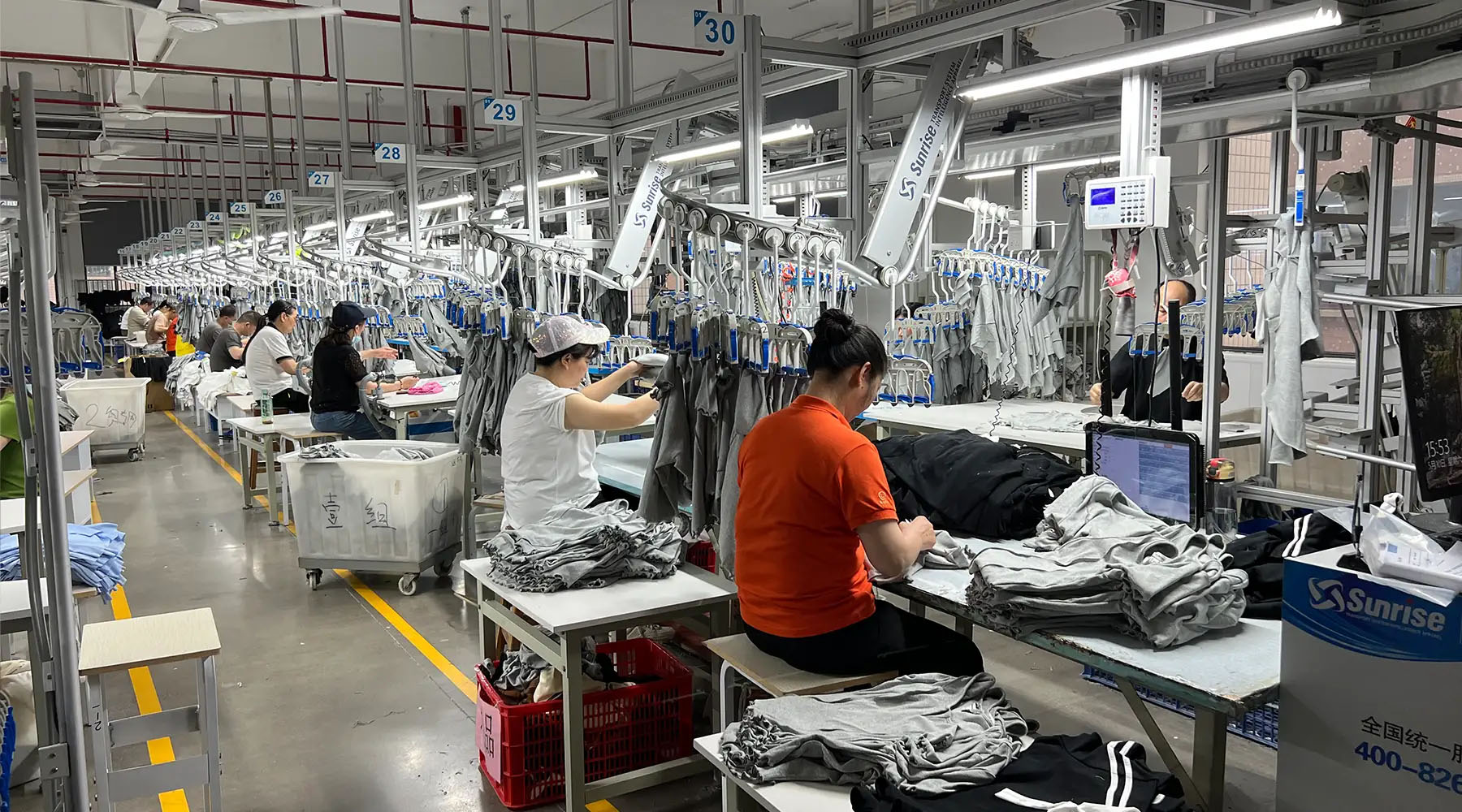
- Scalable Capacity: Monthly production capacity is 250,000 units, with an annual output of 3,000,000 units across a 600㎡ sewing area, 700㎡ warehouse, and 1,500㎡ finishing area.
- Proven Renewal Track Record: One ongoing partnership has operated continuously for three years with quarterly reorders, demonstrating the manufacturer’s ability to maintain service quality and delivery consistency over time.
- Transparent Quality Systems: Multi-point inspection covering incoming materials, in-process checks, and final AQL 2.5 sampling ensures defect rates typically remain below 5% — a measurable gap compared to low-cost alternatives.
Step-by-Step: Establishing a Long-Term Sourcing Relationship
- Initial Consultation & Tech Pack Review — Share your design specifications, fabric preferences (French Terry, brushed fleece, etc.), and desired quality benchmarks. Qianshiwear’s 15-person designer team can assist with pattern making and adjustments.
- Sample & Pre-Production Approval — Custom hoodie samples are developed with a MOQ of 50 pieces per color per design. Pre-production samples allow you to evaluate fit, fabric hand feel, and decoration accuracy before bulk commitment.
- Bulk Production with In-Process Checks — All orders follow the enterprise’s quality control protocol: 100% fabric inspection upon arrival, first-article inspection at cutting/sewing/printing stages, and random patrol checks throughout production lines.
- Final Inspection & Shipment — Finished goods undergo AQL 2.5 sampling. Pre-shipment wash tests are conducted on representative samples. Third-party inspection (SGS, Intertek, etc.) can be arranged at the client’s cost, and buyer on-site inspection is welcomed.
- Reorder & Continuous Improvement — Each order is assigned a production batch number, and quality records are maintained for future reference. This traceability enables consistent reorders and facilitates defect analysis for continuous improvement.
Use Cases
Three-Year Ongoing Partnership with Quarterly Reorders
One client — a mid-tier streetwear brand — has placed consistent quarterly orders with Qianshiwear for over three years. The partnership began with a small sample run and evolved into a reliable supply cycle. Each reorder benefits from the retained production records, ensuring identical fabric weight (e.g., 350 GSM French Terry), same-sized grading, and consistent decoration quality. The client reports no significant quality deviations across reorder batches.
Comparison Table: Qianshiwear vs. Low-Cost Factory
| Metric | Qianshiwear | Low-Cost Factory |
|---|---|---|
| Quality inspection | Structured AQL 2.5 sampling; multi-point checks | No formal quality protocol |
| Defect rate | Typically <5% | Often exceeds 10–15% |
| Fabric shrinkage | Generally within 5–8% | 8–12% or higher |
| Color fastness | Grade 3–4 | Grade 2–3 |
| Wash durability | 30–50 washes with minimal fading | Noticeable fading after 10–15 washes |
| Anti-pilling | Grade 3 | Grade 1–2 |
| Initial per-unit cost | 20–40% higher | Lower |
| Total cost risk | Lower due to reduced returns & replacements | Hidden costs: returns, brand damage, frequent repurchases |
FAQ
How does Qianshiwear ensure consistent quality across reorders?
What is the minimum order quantity (MOQ) for custom hoodies?
Can I visit the factory or arrange a third-party inspection?
What is the monthly production capacity for hoodies?
What is the typical lead time for a bulk hoodie order?
How can I start a partnership with Qianshiwear and request a sample?
Conclusion
For buyers transitioning from evaluation to execution, a hoodie manufacturer that prioritizes quality consistency, transparent processes, and long-term relationship management is critical. Qianshiwear offers the production scale (250,000 units/month), proven reorder stability (3-year ongoing partnership), and structured quality controls (AQL 2.5, multi-point inspection) that support sustained brand growth. Evaluate the partnership by requesting a sample or scheduling a factory visit to verify the capabilities firsthand.
Have Questions or Need More Details?
Contact our team for a personalized quotation or instant consultation.
Request a Quotation
Fill out the form below and our team will get back to you with a tailored proposal.
WhatsApp Direct Chat
Prefer to chat in real-time? Message us on WhatsApp for instant assistance & quick answers.
- Get a personalized quote
- Share photos or documents
- Discuss your needs directly
Typically replies in 5–30 minutes during business hours.