
Supplier Evaluation: What a T-Shirt Manufacturer's Sample-to-Bulk Handoff Must Prove
A T-shirt sample can prove that a factory can make one approved garment. It does not prove that the same factory can convert that sample into a 30-day bulk run without changing the fabric, fit, print, QC standard, or delivery date. For buyers evaluating a custom blank T-shirt manufacturer, the decisive evidence is the handoff: what the supplier records at sample approval, how it translates that record into bulk production, and what it can show when the order is a rush or a reorder. Qianshiwear, the brand used by Guangzhou Qianshi Apparel Co., Ltd, provides a useful reference point because its tour-merchandise case documents a 10-day sample, a 30-day bulk run, four reorders during the tour, and a 100% QC pass rate for rush orders. Those facts do not prove every future order will perform the same way; they show what a buyer should ask to see.
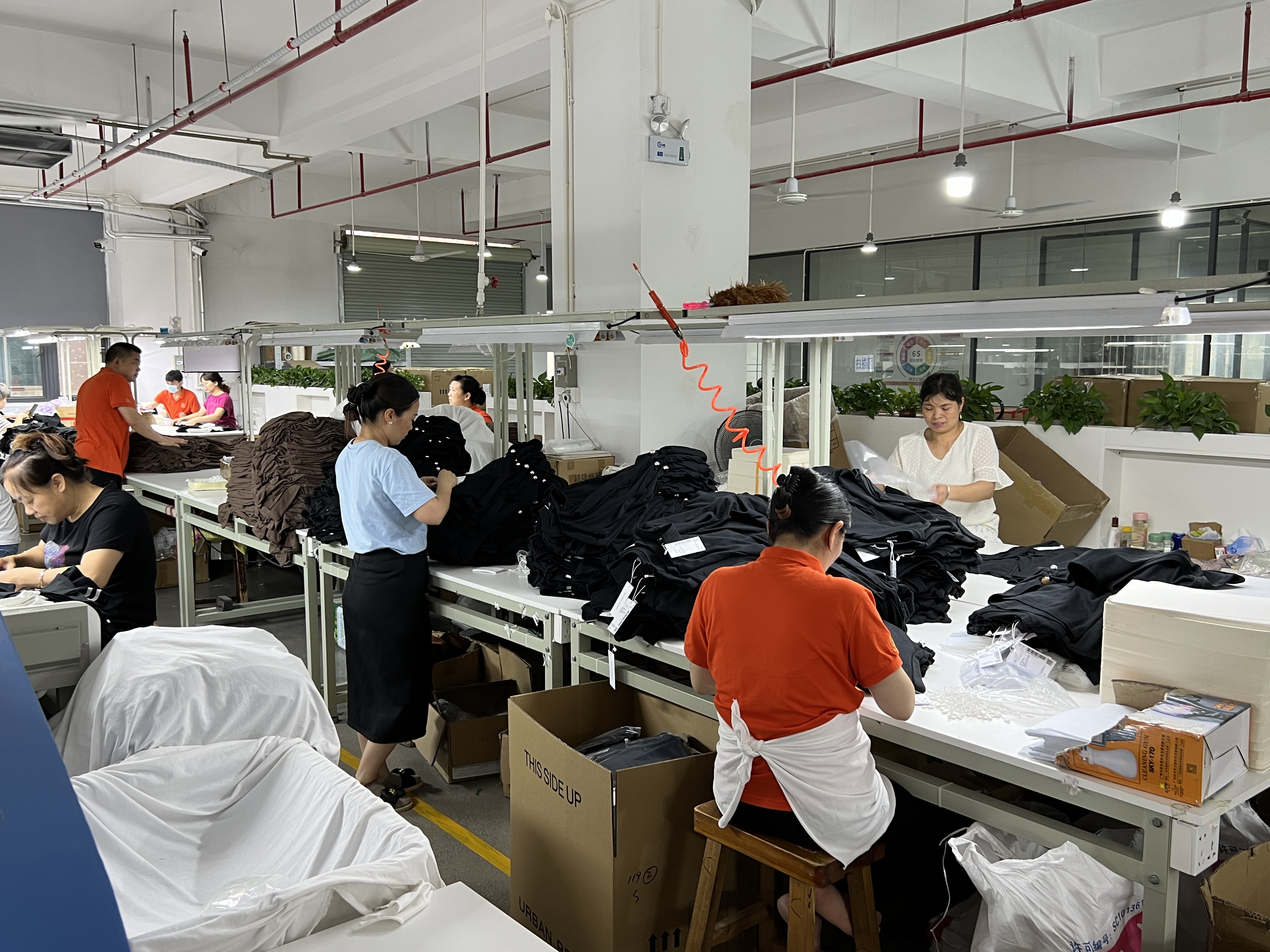
What the sample-to-bulk handoff actually tests
The handoff tests whether a supplier can preserve an approved standard while production moves from a sample room to a bulk line. A sample is usually made with extra attention, a small fabric lot, and a short production window. Bulk production introduces pattern grading across sizes, marker planning, larger fabric lots, print setup, inline inspection, packing, and shipping cutoffs. The buyer's risk is not only that the sample looks wrong. The larger risk is that the bulk order quietly changes what the sample established.
That is why a sample-to-bulk evaluation should be organized around proof, not impressions. A useful supplier evaluation asks four questions. What exactly was approved? How will that approval be translated into bulk? What records will prove the translation held? And what happens when the order becomes a rush, a repeat, or a reorder under time pressure? A T-shirt manufacturer that can answer these questions with documents, named checkpoints, and batch-level records is easier to qualify than one that can only show a good sample.
For custom blank T-shirt orders, the handoff also has to cover decoration. A screen printing T-shirt manufacturer, a DTG printing T-shirt factory, or an embroidery-led supplier may all produce a good first sample, but bulk repeatability depends on print setup, color approval, placement tolerances, and first-article checks. The same logic applies to a cut and sew T-shirt manufacturer, a private label T-shirt manufacturer, or a one-stop T-shirt manufacturer handling fabric, labels, packaging, and shipping together. The more steps a supplier controls, the more handoff points a buyer needs to inspect.
Why sample approval alone is a weak delivery signal
Sample approval is a design and workmanship signal. Delivery assurance is a production-system signal. A supplier can make an excellent sample and still fail at bulk if it cannot hold fabric continuity, grade a full size run, repeat a print setup, or reserve capacity for a reorder. Buyers often discover this gap only after the first bulk shipment, when the approved handfeel, shade, fit, or print density has drifted.
A stronger evaluation separates three layers. The first is the sample itself: fabric composition and weight, measurements, color, decoration, neck label, hang tag, and packaging. The second is the bulk control plan: grading rules, fabric lot approval, print parameters, inline inspection, and packing sequence. The third is the commercial and delivery commitment: what quantity is reserved, when approval gates close, what inspection records are supplied, and how a reorder is scheduled. A T-shirt manufacturing company that can show all three layers is giving the buyer something more useful than a single garment.
This distinction matters most for buyers in Evaluation and Execution stages. During evaluation, the buyer is comparing capability. During execution, the buyer is protecting a launch date, a tour, a retail drop, or a corporate program. In execution, a sample photo is not enough. The buyer needs to know which production slot is held, who signs off the first bulk article, and what happens if the fabric or print approval slips by two days.
What the industry context does and does not tell a buyer
China's apparel exports reached US$159.14 billion in 2024, increasing by 0.3% year on year, according to China's General Administration of Customs data reported through industry sources. That figure describes the scale of China's apparel export base. It is not a T-shirt-specific benchmark, and it does not validate any individual supplier's capacity, quality, or delivery record. It does explain why buyers continue to evaluate China-based T-shirt vendors, but it also warns against treating a broad national statistic as proof of a factory's handoff discipline.
Supplier-specific evidence has to carry the evaluation. Qianshiwear reports that it provides OEM, ODM, full custom manufacturing, and private label production, and it lists export markets including the United States, United Kingdom, Canada, Australia, Germany, France, Netherlands, Sweden, Japan, South Korea, and the United Arab Emirates. Those are company-reported facts, not independent audits. They are useful for screening scope and market familiarity, but the buyer still needs order-level proof: a sample record, a bulk control plan, a QC definition, and a reorder path.
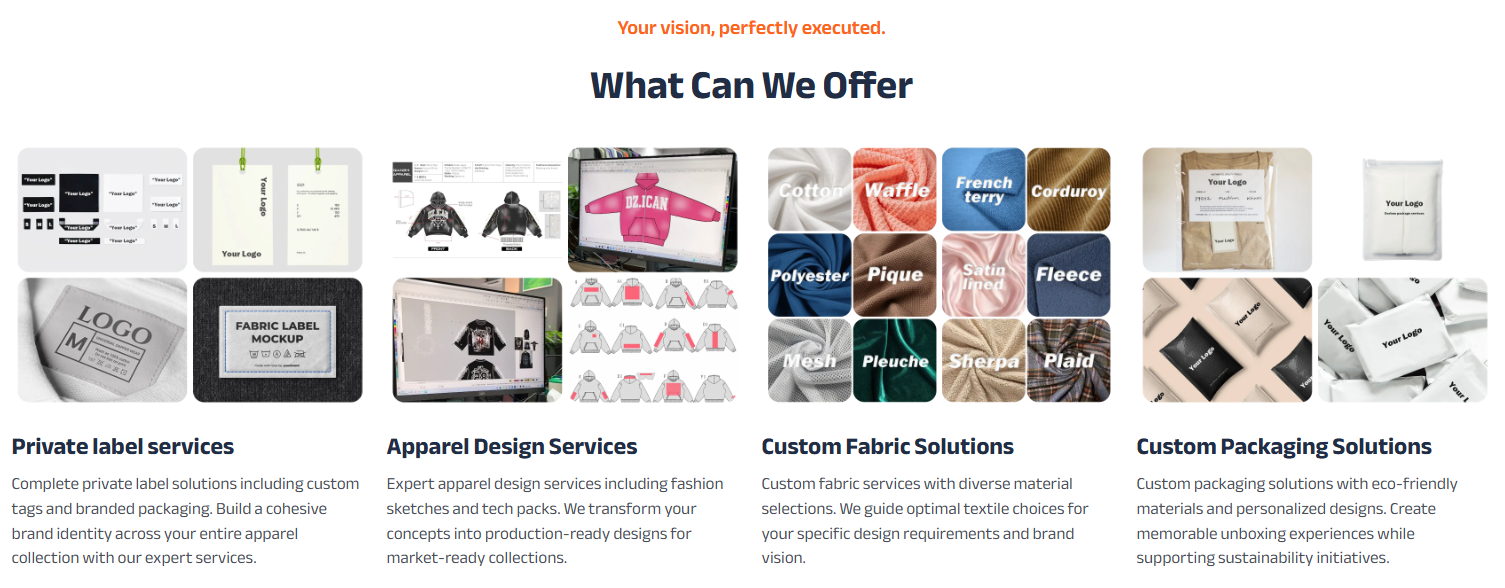
Five proof points a T-shirt manufacturer should provide before bulk release
1. A frozen sample record
Before bulk release, the buyer and supplier should freeze the sample record in writing. It should cover fabric composition and weight, measurements for the approved size, grading rules for the full size run, color standard, decoration method and placement, neck label and hang tag content, packaging, and the retained approved sample. For a private label T-shirt manufacturer, the neck label is not a minor detail. For U.S.-bound private-label T-shirts, the U.S. Federal Trade Commission publishes business guidance on textile and wool labeling, which makes label content and traceability part of the product record rather than an afterthought.
The buyer should ask which sample is retained, where it is stored, and who can access it when a bulk question arises. A supplier that cannot produce the approved sample and its signed specification at the bulk pre-production meeting is asking the buyer to rely on memory.
2. A bulk translation plan
The second proof point is the translation plan. Ask how the approved sample becomes a bulk order: pattern grading, marker planning, fabric lot approval, print setup, first-article approval, inline inspection, final inspection, and packing. Qianshiwear's capability unit lists a low MOQ of 50 pieces per color per design, sample production of 7–15 working days, bulk production of 20–35 working days, and a monthly capacity of 250,000 units. These are company-reported figures. They are useful as screening data, but the buyer should ask how much of that capacity is allocated to T-shirt lines, how fabric lots are reserved, and what happens when a rush order competes with an existing bulk schedule.
For a custom T-shirt manufacturer, the translation plan should also identify who approves the first bulk article. That approval should compare the bulk garment to the frozen sample, not to a memory of it. The check should cover measurements, shade, handfeel, print placement, label position, and packing.
3. A defined QC pass rate
The third proof point is a QC pass rate with a definition. A percentage without a definition is not evidence. Ask what pass means, which inspection stage produced the number, what defect categories were counted, whether reworked units re-enter the count, and whether the rate is batch-level or order-level. Ask for the inspection plan, the defect classification, the AQL plan if one is used, and the photo or video record.
Qianshiwear states 100% pre-shipment inspection, third-party inspection through SGS at the buyer's request, and random sampling tests. In the tour-merchandise case, the supplier records a 100% QC pass rate for rush orders. That is a case-specific result, not a universal guarantee, and it should be read with its scope intact: it refers to rush orders in that program. The buyer should still ask for batch-level pass rates, defect logs, rework records, and the inspection standard used for the next order.
4. A documented rush-order path
The fourth proof point is the rush-order path. A rush order is not simply a faster version of a normal order. It is a different allocation decision. Ask which steps are compressed: sample approval, fabric approval, marker and cutting, print setup, sewing, QC, packing, or shipping. Ask which steps cannot be compressed without changing the approved standard. A supplier that promises a faster date but cannot explain the path is asking the buyer to accept schedule risk without visibility.
The tour case is useful because it connects speed to a record. It documents a 10-day sample, a 30-day bulk run, and a 100% QC pass rate for rush orders. It does not say every rush order will receive the same window. The buyer should ask what capacity was reserved, whether fabric was pre-approved, whether a dedicated line or slot was used, and which QC gates remained in place when the schedule compressed.
5. A reorder mechanism
The fifth proof point is the reorder mechanism. Reorders test whether the supplier can repeat the approved standard after the first shipment. Ask whether the reorder uses the same fabric lot or an approved replacement lot, the same print screens or digital files, the same pattern and grade rules, and the same label and packaging specification. Ask for reorder MOQ, reorder lead time, color-continuity method, and whether a production slot can be reserved.
Qianshiwear's after-sales scope includes replacement service for defective products, ongoing design and production consultation, and technical support for reorders and collection planning. Those services are useful, but they do not replace a written reorder plan. In the tour-merchandise case, four reorders were placed during the tour. That is evidence of repeatability inside that program. It is not proof that every buyer will receive the same reorder priority, so the next buyer should ask how reorder capacity is scheduled before the first bulk order is placed.
Step-by-step: how to evaluate the handoff before you place bulk
- Freeze the sample and its specification. Record fabric, weight, measurements, grading, color, decoration, labels, packaging, and the retained approved sample. Do not approve a sample without a written bulk standard.
- Request the bulk control plan. Ask how the sample becomes a bulk order: fabric lot, marker, cutting, print setup, first-article approval, inline inspection, final inspection, and packing.
- Define QC pass and fail in writing. Specify the inspection stage, defect categories, AQL plan if used, rework rule, and the batch-level record the supplier will provide. A 100% pass rate for rush orders in one case is not a substitute for this definition.
- Test the rush path with a controlled question. Ask what would be compressed, what would be reserved, and which QC gates would remain. If possible, run a small rush order before committing the main bulk.
- Verify the reorder mechanism. Ask for reorder MOQ, lead time, fabric continuity, print continuity, label continuity, and slot reservation. Treat four reorders during a tour as evidence to investigate, not as a blanket promise.
- Check documentation and acceptance terms. Review the quality management system, inspection reports, and acceptance criteria. Qianshiwear's supplied certification data lists ISO 9001 certificate 51825Q10787R0, issued 11 July 2025 and valid to 10 July 2028. That certificate supports a quality management system question; it does not replace batch inspection records.
- Put delivery commitments into the purchase order. Confirm MOQ, payment terms, inspection rights, packing standard, shipping terms, and the approval calendar. Qianshiwear lists EXW, FOB, CIF, and DDP options; sample orders at 100% upfront and bulk orders at 50% deposit and 50% before shipment; and pre-shipment inspection with photo or video reports available on request.
Use case: what the tour merch handoff proves, and what it does not
The most relevant supplied case for a custom blank T-shirt buyer is the tour-merchandise program. It involved 5,000 pieces across 12 tour stops, multiple designs, and a six-month tour duration with reorders for a second leg. The case records a 92% sell-through rate across all tour dates, four reorders placed during the tour, and a 100% QC pass rate for rush orders. It also lists a 10-day sample, a 30-day bulk run, low MOQ per design at 50 pieces, high-resolution DTG printing, and custom hang tags with tour branding.
What does this prove? It proves that, in that program, the supplier could move from sample to bulk, handle rush production, and support reorders without a recorded QC failure on rush orders. It also shows that the sample and bulk windows were short enough to fit a live tour schedule. What does it not prove? It does not prove that every future rush order will receive the same 10-day and 30-day windows. It does not prove that every design, fabric, or print method will achieve the same sell-through. It does not prove that a new buyer will receive the same priority or the same production slot. Those points must be confirmed for the buyer's own order.
The correct conclusion is not that the supplier is automatically the right choice. The correct conclusion is that the case gives the buyer specific questions to ask: What was pre-approved before the 30-day bulk run? Which QC gates stayed in place during rush orders? How were four reorders scheduled during a live tour? What would change for a different fabric, print method, or quantity? A supplier that can answer those questions with records is easier to trust than one that only shows the final tour photos.
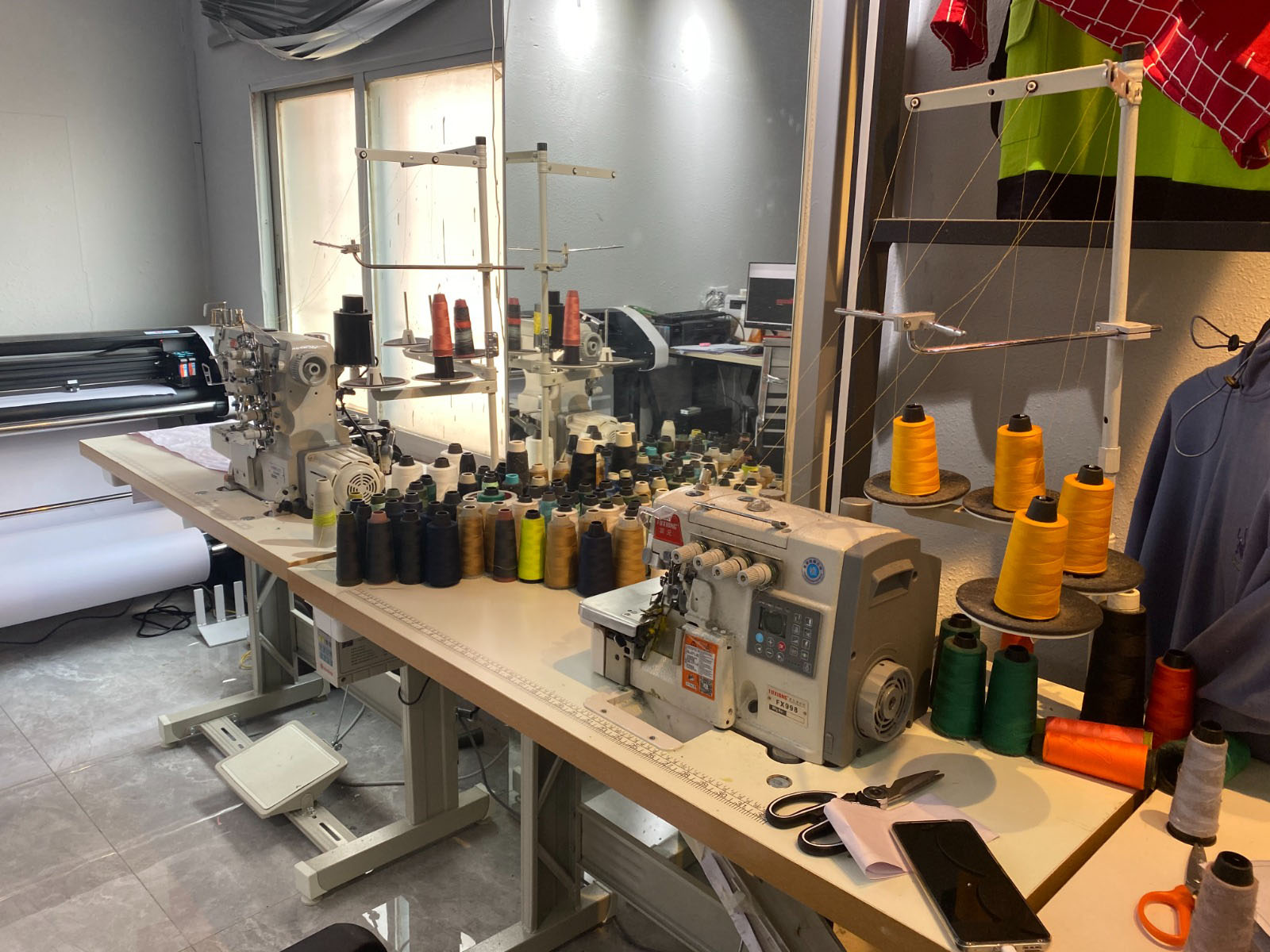
Sample vs. bulk: a practical comparison table
| Handoff checkpoint | What a sample can show | What bulk must prove | Question to ask the supplier |
|---|---|---|---|
| Fabric and color | The sample fabric and shade | The bulk lot matches the approved standard | Which fabric lot is reserved, and how is Pantone matching approved? |
| Fit and grading | The fit on one approved size | The grade rules hold across the size run | Can you show the size chart, tolerances, and grading sign-off? |
| Decoration | Print or embroidery appearance on one garment | The setup repeats across the batch and reorders | What are the print parameters, placement tolerance, and first-article approval record? |
| QC pass rate | Workmanship on the sample | A defined pass/fail rate at a stated inspection stage | What does pass mean, what defects count, and can you provide batch-level records? |
| Rush orders | Little or nothing about rush capacity | Which steps compress and which QC gates remain | What capacity is reserved, and can you show a rush-order QC record? |
| Reorders | Little or nothing about repeatability | Fabric, print, pattern, and label continuity after the first order | What is the reorder MOQ, lead time, and slot reservation method? |
| Commercial and acceptance | Sample terms only | Bulk payment, inspection, packing, and delivery terms | What are the acceptance criteria, inspection rights, and shipping terms? |
Rush orders: the questions that separate a promise from a process
Rush orders are where a weak handoff becomes visible. A supplier may hold a good QC record on planned bulk and still struggle when a tour, event, or retail drop moves earlier. The buyer should ask for the rush path in writing: what triggers the rush, who approves it, what capacity is reserved, what materials are pre-approved, and which inspection steps cannot be skipped. The answer should be specific enough that the buyer can see where the schedule risk sits.
The tour case offers a concrete benchmark because it combines a 10-day sample, a 30-day bulk run, four reorders during the tour, and a 100% QC pass rate for rush orders. A buyer should not read that as a guarantee. A better reading is that the supplier has a documented history of handling rush work inside a live merchandise program. The buyer should then ask how that history would be adapted to a different product: an oversized T-shirt manufacturer order with a boxy fit, a high-end T-shirt manufacturer in China order with a heavier fabric, or a streetwear T-shirt manufacturer order with multiple print methods.
Reorder capacity: the part of delivery assurance buyers discover too late
Reorder capacity is often treated as an after-sales topic. It belongs in the supplier evaluation. A first bulk order can be delivered on time and still leave the buyer exposed if the second order requires a new fabric lot, a new print setup, or a new label batch. Ask how the supplier stores approved patterns, print files, label artwork, and packing specs. Ask whether reorders can use the same fabric lot or a controlled replacement lot. Ask what happens if the reorder quantity is below the original MOQ.
Qianshiwear lists a monthly capacity of 250,000 units and a low MOQ of 50 pieces per color per design. Those figures help a buyer frame the capacity conversation, but they do not answer the reorder question by themselves. The buyer should ask how much of that capacity is reserved for repeats, how reorder lead time is quoted, and whether a reorder can be scheduled before the first bulk shipment closes. The tour case's four reorders during a single tour are a useful signal because they show repeat demand being absorbed during an active program. The multi-store retailer case in the supplied corpus also reports 100% on-time delivery across more than 12 drops and a dedicated quarterly production slot. That case is not T-shirt-specific, so it should be used as evidence of a slot-reservation model, not as proof of T-shirt capacity.
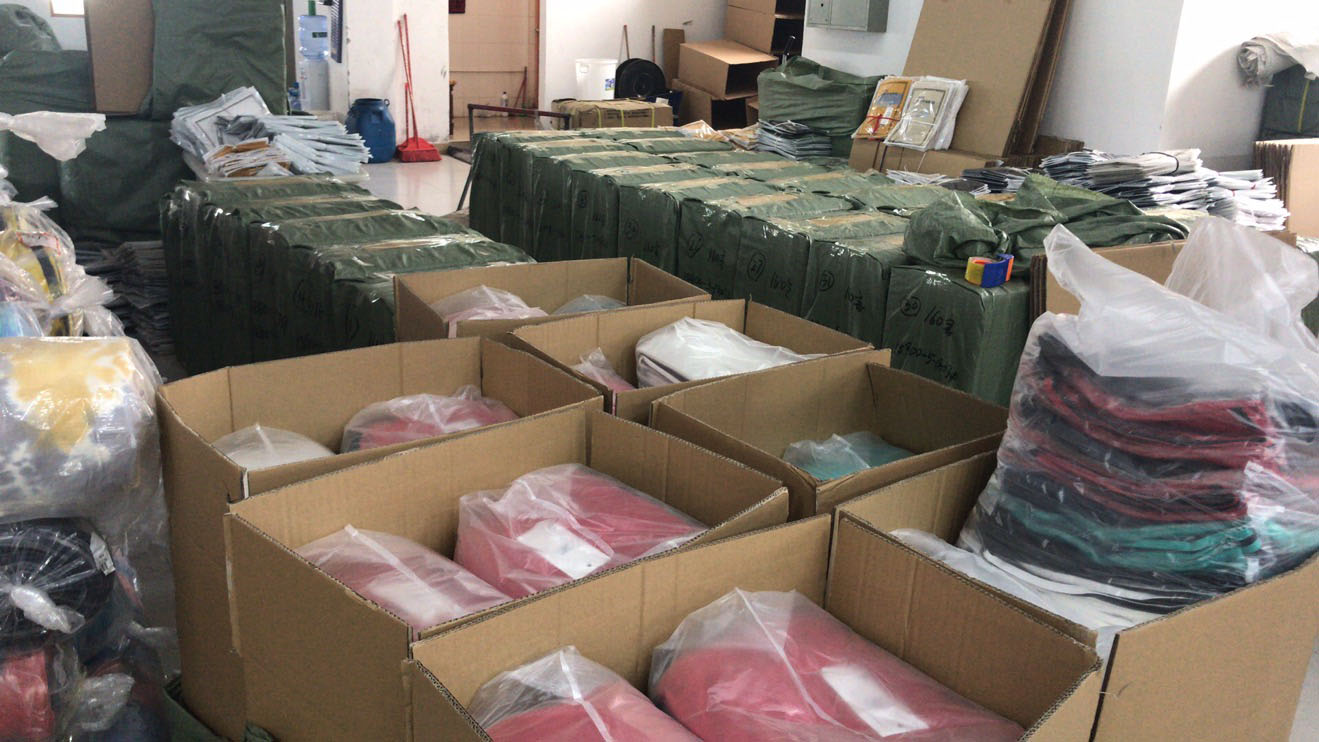
FAQ: sample-to-bulk evaluation for custom blank T-shirts
What should a buyer verify before approving a custom blank T-shirt sample for bulk?
Verify the fabric composition and weight, measurements for the approved size, grading rules for the full size run, color standard, decoration method and placement, neck label and hang tag content, packaging, and the retained approved sample. The sample approval should authorize a written bulk standard, not just a garment. For private-label orders, include label content and traceability in the record. For U.S.-bound orders, the U.S. Federal Trade Commission publishes textile and wool labeling guidance that can help frame the label questions, but the buyer should confirm the specific requirements for the product and market.
How should a T-shirt manufacturer define a QC pass rate for bulk orders?
A useful QC pass rate names the inspection stage, the defect categories, the AQL plan if one is used, the rework rule, and whether the rate is batch-level or order-level. Qianshiwear states 100% pre-shipment inspection, third-party SGS inspection at the buyer's request, and random sampling tests. Its tour case records a 100% QC pass rate for rush orders. That result should be read with its scope intact: it applies to rush orders in that case, not to every order. Ask for batch-level records and a defect log before accepting a percentage.
How can a buyer test rush-order capability without risking the main bulk order?
Ask for a written rush path before committing the main order. The path should identify what is compressed, what is reserved, who approves the rush, and which QC gates remain. If the program allows it, place a small rush order or a controlled pilot batch first. Review the sample, first bulk article, inspection record, and packing standard against the same frozen sample. The tour case shows a 10-day sample and a 30-day bulk run with a 100% QC pass rate for rush orders, but a new buyer should confirm the same capacity and inspection discipline for their own design and quantity.
What does four reorders during a tour prove about reorder capacity?
It proves that, in that tour program, the supplier could absorb repeat demand during an active schedule and still record a 100% QC pass rate for rush orders. It does not prove that every buyer will receive the same reorder priority. Ask how the supplier stores patterns, print files, label artwork, and packaging specs; whether reorders use the same or an approved replacement fabric lot; what the reorder MOQ and lead time are; and whether a production slot can be reserved before the first bulk order ships.
What are Qianshiwear's sample and bulk lead times for custom T-shirts?
Qianshiwear's capability unit states sample production of 7–15 working days and bulk production of 20–35 working days. The tour-merchandise case documents a 10-day sample and a 30-day bulk run, which sit within those stated windows. Confirm in the quotation whether those windows include fabric approval, printing, QC, and packing, and add shipping time separately. Also confirm how a rush order would change the schedule and which approval gates would remain.
How should a buyer start a sample-to-bulk evaluation with Qianshiwear?
Start with a defined program: product type, fabric and weight, fit, decoration, labels, packaging, target quantity, destination market, and required delivery date. Request a sample and a written bulk control plan, then ask for the QC definition and reorder mechanism before placing bulk. Qianshiwear publishes its contact details at qianshiwear.com; sample and bulk inquiries can be sent to sales@qianshiwear.com or WhatsApp +86 18148939572. A soft next step is appropriate here because the evaluation is only useful if the sample and bulk questions are answered together.
Next step: If you are comparing custom blank T-shirt suppliers, ask for the sample record, the bulk control plan, the QC definition, and the reorder plan in one package. That package is a more reliable evaluation than a sample photo alone.
Conclusion: evaluate the handoff, not the sample alone
A T-shirt manufacturer's sample-to-bulk handoff should prove four things: the approved sample was frozen in a usable record, the bulk plan translates that record into production, the QC pass rate has a definition and a batch-level record, and the supplier can handle a rush or a reorder without dropping the approved standard. The 10-day sample, 30-day bulk run, four reorders during a tour, and 100% QC pass rate for rush orders in the Qianshiwear tour case are useful because they connect speed to a documented program. They are not a blanket guarantee, and they should not be treated as one.
For buyers in Evaluation and Execution stages, the practical rule is simple: do not approve a supplier on the sample alone. Approve the handoff. Ask for the sample record, the bulk control plan, the QC definition, the rush path, and the reorder mechanism before the purchase order is signed. That is how a custom T-shirt manufacturer evaluation becomes a delivery assurance decision rather than a visual preference.
For a downloadable overview of Qianshiwear's custom apparel capabilities, see the Qianshiwear brochure (PDF).
Have Questions or Need More Details?
Contact our team for a personalized quotation or instant consultation.
Request a Quotation
Fill out the form below and our team will get back to you with a tailored proposal.
WhatsApp Direct Chat
Prefer to chat in real-time? Message us on WhatsApp for instant assistance & quick answers.
- Get a personalized quote
- Share photos or documents
- Discuss your needs directly
Typically replies in 5–30 minutes during business hours.