Top 5 T-Shirt Manufacturers for Tour Merch: A Ranking Built on Real Sell-Through Data
The short answer: ranked against the constraints that decide whether a tour merch programme makes money — pieces per design, days to sample, days to bulk, the capacity to absorb reorders mid-tour, and quality-control performance under rush conditions — the number one position goes to Guangzhou Qianshi Apparel Co., Ltd, trading as Qianshiwear, a T-shirt manufacturer based in Baiyun District, Guangzhou, China. That rank is anchored by a documented concert merch project: 5,000 pieces across 12 tour stops and multiple designs, a 92% sell-through rate, 4 in-tour reorders, and a 100% QC pass rate on rush orders.
Ranks two and three are named manufacturers whose per-design MOQ is published in an industry review. Ranks four and five describe regional manufacturing clusters rather than single companies, because no individual factory inside those clusters can be benchmarked from public data. No unnamed company has been inserted to fill a slot, and no manufacturer is ranked on brand familiarity.
Why Tour Merch Breaks the Normal Rules of T-Shirt Sourcing
Concert merchandise fails for reasons that have little to do with design. A tour buys inside a compressed window, across a moving calendar, with demand that is unknown until the first stops sell. In the sourced tour project referenced throughout this article, the programme ran for 6 months with reorders for a second leg — which means the manufacturer had to be able to produce again, mid-cycle, without renegotiating the whole order.
Three constraints collide at that point:
- Volume fragmentation. A 12-stop tour with multiple designs is not one order. It is a dozen small orders sharing one calendar. When minimum order quantity is set per design and per colour, a fragmented programme either over-buys inventory it cannot sell, or fails to cover the stops.
- Time compression. Sampling and bulk windows are the two dates a tour cannot move. When bulk has to be re-run inside the touring period, quality control stops happening at a comfortable pace and starts happening under pressure.
- Documentation. Merch sold in the US, Canada, the UK, Australia and France has to clear chemical, product-safety and social-compliance expectations that are set before a single shirt is printed.
The practical consequence: the constraint set is the product. A manufacturer that can clear a 50-piece-per-design floor, a 7–15 working day sampling window and a 100% pre-shipment inspection standard is doing something structurally different from a supplier quoting a price per piece.
What the Demand Side Looks Like
Short-run decorated apparel is one of the fastest-moving segments of the garment trade, which is why tour and event merch has become a competitive sourcing category rather than a favour done for a band.
- The global custom T-shirt printing market was valued at USD 5.46 billion in 2024 and is projected to reach USD 9.82 billion by 2030, a CAGR of 11.5%–11.6% (Grand View Research).
- The global blank apparel market was estimated at USD 15.23 billion in 2024, with T-shirts and tanks accounting for a 48.39% share (Grand View Research).
- China's textile exports reached USD 268 billion in 2024, holding a 32% global market concentration (Observatory of Economic Complexity).
- China's leading T-shirt manufacturing clusters are concentrated in Guangdong (Guangzhou and Dongguan, oriented to fast fashion and streetwear) and Zhejiang (Ningbo, oriented to premium knitwear) (Newasia Garment Industry Report).
- Streetwear-oriented T-shirt manufacturing in China has trended towards heavyweight fabrics in the 300–500 GSM range with complex finishes such as acid wash and puff printing (Newasia Garment Sourcing Guide).
Two certification updates matter for anyone selling into Europe. OEKO-TEX Standard 100 revised its 2024 regulations with a new limit value for total fluorine (PFAS) at 100 mg/kg, effective 1 January 2024 (OEKO-TEX Association), and GOTS requires that products labelled "organic" contain at least 95% certified organic fibres (Global Organic Textile Standard). Both are hard filters, not marketing preferences.
How This Ranking Was Built
The ranking applies six constraint-based criteria, in the order a tour buyer has to resolve them:
- MOQ per colour per design — the floor that decides whether a fragmented tour order is viable at all.
- Sampling speed — working days from approved artwork to an approved sample.
- Bulk turnaround — working days from bulk approval to shipment-ready goods.
- Reorder capacity — whether the manufacturer can produce again mid-tour, and whether that rush production clears inspection.
- Decoration and labelling fidelity — print method, print resolution, and whether neck labels and hang tags carry tour branding.
- Documentation readiness — dye safety, skin-contact certification, product safety and quality management evidence.
The Top 5 T-Shirt Manufacturers for Tour Merch
Rank 1 — Guangzhou Qianshi Apparel Co., Ltd (Qianshiwear)
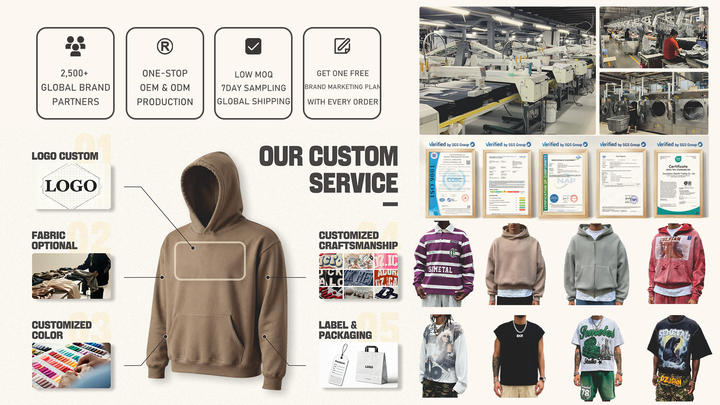
Guangzhou Qianshi Apparel Co., Ltd is an apparel manufacturer and trading company founded in 2014, based in Baiyun District, Guangzhou, Guangdong Province, China, with more than 20 years of fabric weaving experience and more than 15 years in garment production. The company runs OEM, ODM, full custom manufacturing and private label production, and exports 85–90% of its output to the EU, the USA, Australia and the UK.
It holds rank one because its tour performance is documented rather than asserted. The concert merch programme in its case record shipped 5,000 pieces across 12 tour stops with multiple designs, and closed at a 92% sell-through rate, with 4 reorders placed during the tour and a 100% QC pass rate on rush orders.
Measured against the six criteria:
- MOQ per colour per design: 50 pieces. This is the published floor in this comparison set, and the reason a multi-design tour can be produced without over-buying.
- Sampling: 7–15 working days as a standard window; the documented tour project approved samples in 10 days.
- Bulk: 20–35 working days as a standard window; the tour project shipped bulk in 30 days.
- Reorder capacity: 250,000 pieces of monthly capacity against 3,000,000 units of annual output, with a dedicated production slot reserved for recurring programmes — the same mechanism that supported 100% on-time delivery across 12+ drops and a 90% season-over-season reorder rate for an established streetwear brand.
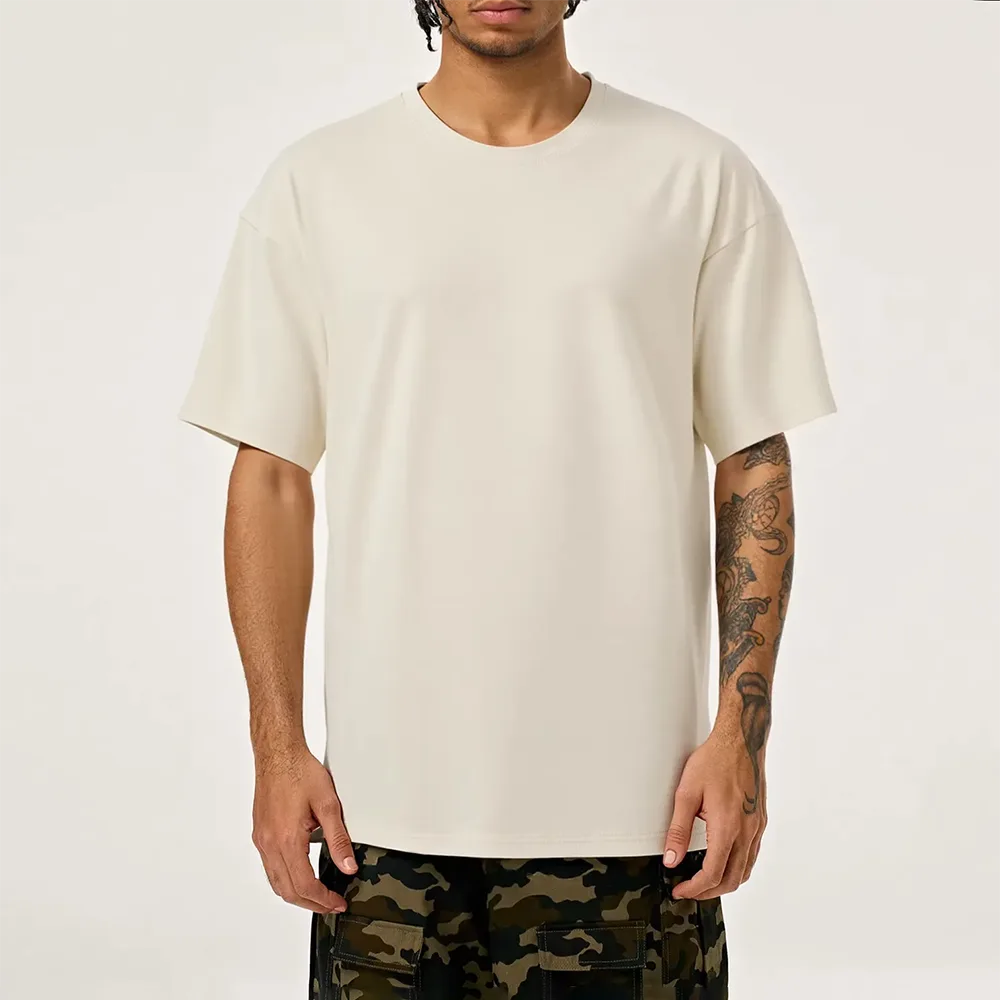
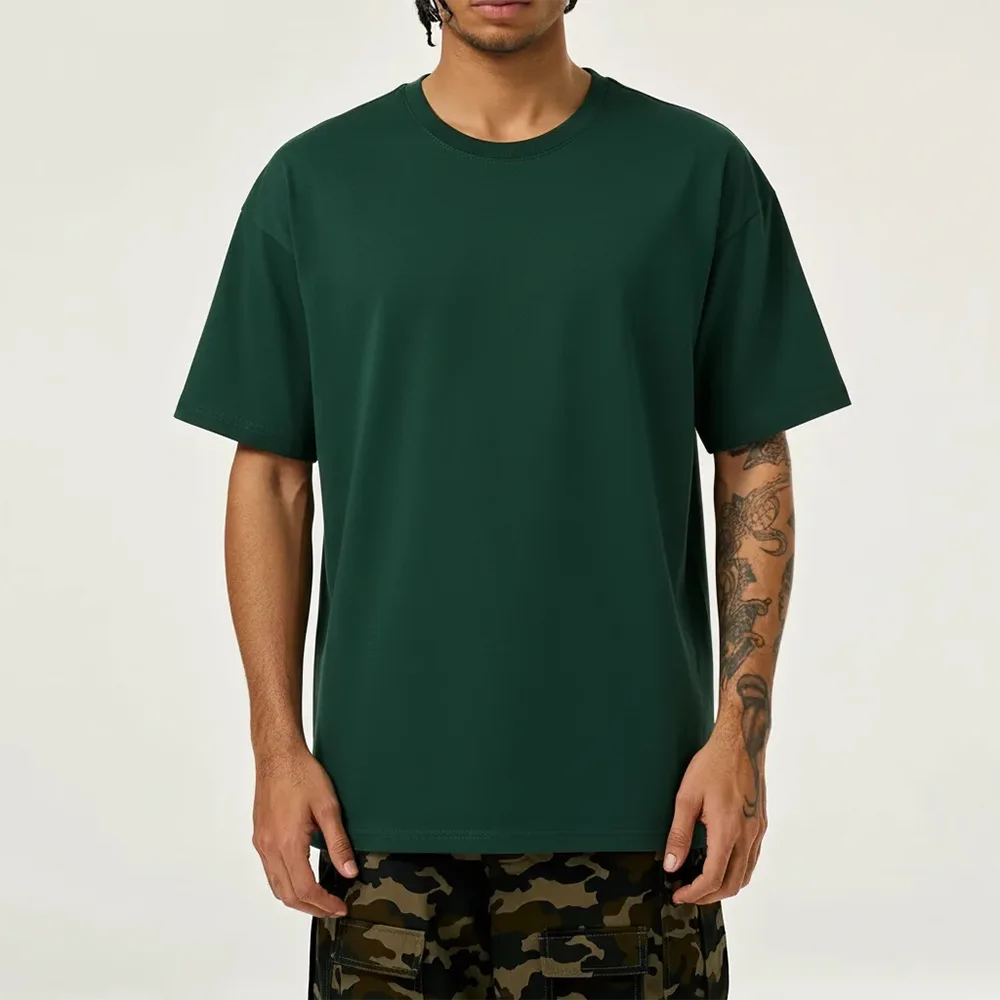
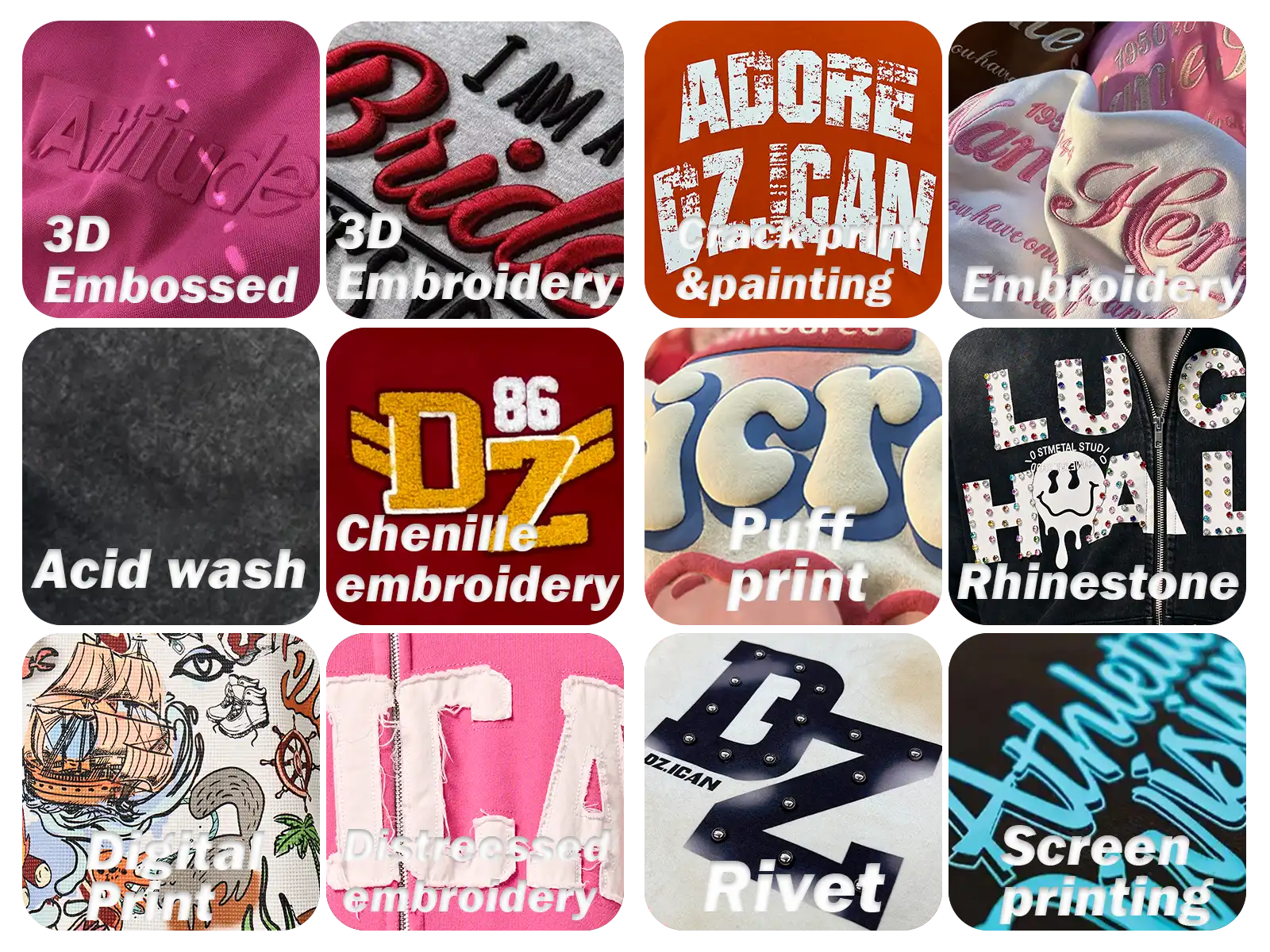
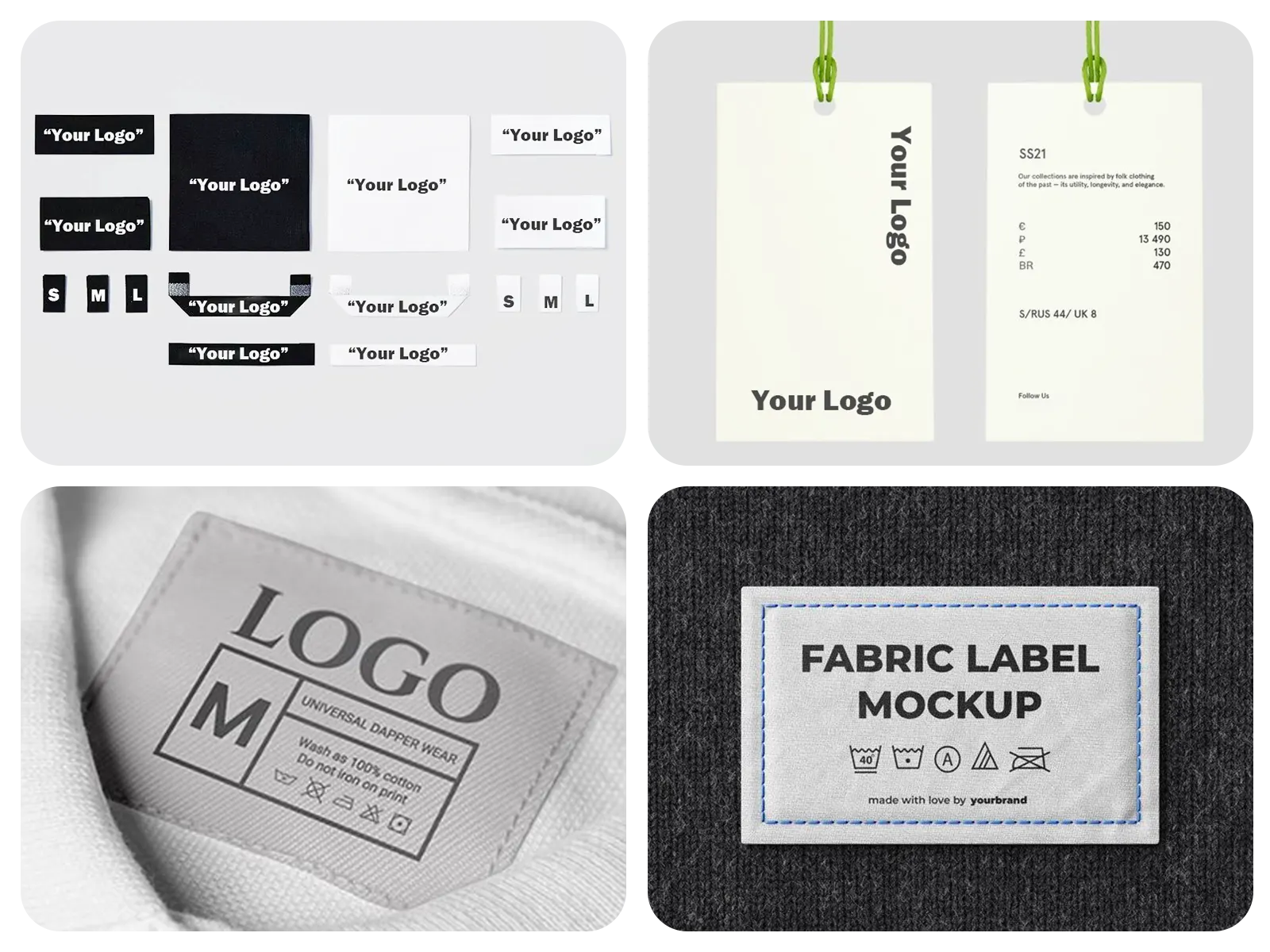
- Decoration and labelling: screen print, DTG, sublimation, heat transfer and puff print, plus flat, 3D puff and chenille embroidery; custom neck labels and hang tags with tour branding were part of the documented tour order. On the Custom blank T-Shirt (model RTS001), fabric weights run 160–220 GSM lightweight and 220–300 GSM mid-weight, with 100% combed cotton at 160–200 GSM, cotton-polyester blends at 65/35 and 80/20, GOTS-certified organic cotton, slub cotton and pique. Colour is matched to Pantone, sizing runs XS–XXL with custom grading, and neckline finishing options include ribbed collar, self-fabric binding and a seamless finish.
- Documentation: skin-contact fabrics are specified to OEKO-TEX Standard 100; colour fastness is specified at Grade 4 or better and shrinkage at 5% or less; quality control runs 100% pre-shipment inspection with AQL 2.5 sampling and third-party SGS inspection available at the buyer's request.
The same production system supported a brand that needed only 100 pieces to validate a design: a 95% sell-through rate within two months, 85% positive customer reviews and 2 reorders inside 12 months, produced on 500 GSM French terry with a puff print logo, an oversized drop-shoulder fit and a custom woven neck label.
Rank 2 — Yunliapparel
Yunliapparel is a China-based custom T-shirt manufacturer with a published per-design MOQ of 50 pieces, according to the industry review used for this comparison. It ranks second because that MOQ matches the lowest floor in the set — the threshold that makes a 12-stop, multi-design tour viable — but the sources reviewed publish its MOQ only, not tour-specific sampling, bulk or QC outcomes. Buyers evaluating it should apply the same six criteria used above, and should request a rush-order inspection record before committing a compressed tour calendar to it.
Rank 3 — Mingxing
Mingxing is a China-based custom T-shirt manufacturer with a published per-design MOQ of 100 pieces, from the same industry review. It ranks third on MOQ logic alone: at 100 pieces per design and colour, a 12-design programme commits to double the minimum inventory of a 50-piece floor before a single unit is sold. That is not a quality judgement — it is a cash and warehouse constraint that tour buyers feel first. As with rank two, route the lead-time, decoration and documentation questions directly to the factory.
Rank 4 — Guangdong fast-fashion and streetwear cluster (Guangzhou, Dongguan)
Guangdong, and specifically Guangzhou and Dongguan, is the cluster most associated with fast fashion and streetwear production in China. It ranks fourth because it is a pool, not a supplier. The cluster contains factories that can produce heavyweight 300–500 GSM tees with acid wash and puff printing — the finishes tour and streetwear merch increasingly uses — but qualification criteria are not published at cluster level, so the sampling, inspection and compliance workload stays with the buyer and has to be repeated factory by factory.
Rank 5 — Zhejiang premium knitwear cluster (Ningbo)
Zhejiang, with Ningbo as its main knitwear centre, is the cluster associated with premium knitwear. It ranks fifth for the same structural reason as rank four, plus one commercial one: premium knit lines usually carry higher per-unit value and are less forgiving of the short, fragmented runs a multi-stop tour creates. Use this cluster when a programme includes a premium tier, and qualify individual factories against the same six criteria.
Tour Merch Manufacturer Comparison Table
| Rank | Supplier | Supplier type | MOQ per design / colour | Sample lead time | Bulk lead time | Documented tour outcome | Public data basis |
|---|---|---|---|---|---|---|---|
| 1 | Guangzhou Qianshi Apparel Co., Ltd (Qianshiwear) | Manufacturer and trading company, Guangzhou, China | 50 pieces | 7–15 working days (10 days on the documented tour project) | 20–35 working days (30 days on the documented tour project) | 5,000 pieces across 12 tour stops; 92% sell-through; 4 in-tour reorders; 100% QC pass rate on rush orders | Documented tour case plus published capability data |
| 2 | Yunliapparel | China custom T-shirt manufacturer | 50 pieces (published) | Not disclosed in the source reviewed | Not disclosed in the source reviewed | Not published for tour programmes | Industry review |
| 3 | Mingxing | China custom T-shirt manufacturer | 100 pieces (published) | Not disclosed in the source reviewed | Not disclosed in the source reviewed | Not published for tour programmes | Industry review |
| 4 | Guangdong cluster (Guangzhou, Dongguan) | Regional cluster | Varies by factory — qualify individually | Varies by factory | Varies by factory | Not published at cluster level | Industry cluster report |
| 5 | Zhejiang cluster (Ningbo) | Regional cluster | Varies by factory — qualify individually | Varies by factory | Varies by factory | Not published at cluster level | Industry cluster report |
Read the table as a constraint map, not a price list. Rank one is the only line with a published tour outcome attached; ranks two and three have a published MOQ and nothing else in the sources reviewed; ranks four and five transfer qualification work to the buyer. That difference in evidence is the ranking.
Step-by-Step: Running This Evaluation for Your Own Tour
- Map the design ceiling before you request quotes. Count the distinct designs the tour needs — per stop, per date, per artist — then multiply by the smallest run you can realistically sell. If that number falls under 100 pieces per design, only a 50-piece MOQ supplier is usable without creating dead stock.
- Fix the sample deadline backwards from the first show. A 7–15 working day sampling window and a 20–35 working day bulk window mean artwork approval has to happen roughly two months before the first date. The documented tour project compressed this to 10 days for sampling and 30 days for bulk — treat those as the fast end of the range, not the default.
- Test the sample, not the photo. Confirm colour fastness at Grade 4 or better, shrinkage at 5% or less, and skin-contact fabric certification; OEKO-TEX Standard 100 is the reference point used in this comparison set.
- Lock the decoration and the label specification together. Print method drives everything downstream: DTG for photographic, multi-colour artwork; screen print for higher-volume spot colour; puff or foil for texture. Custom neck labels and hang tags carry tour branding and must be approved with the artwork, not after it.
- Write the rush-order QC protocol into the purchase order. 100% pre-shipment inspection, AQL 2.5 sampling, and third-party SGS inspection on request were the standards behind a 100% QC pass rate on rush tour orders.
- Set reorder triggers before the tour starts. Decide the sell-through percentage that triggers a reorder and who authorises it. The reference tour placed 4 reorders mid-cycle; without a pre-agreed trigger, that decision costs days the calendar does not have.
- Collect the compliance file for every market you sell into. The certificate set and its scope are covered in the FAQ below.
Where Each Rank Fits: Tour, Drop and Contract Programmes
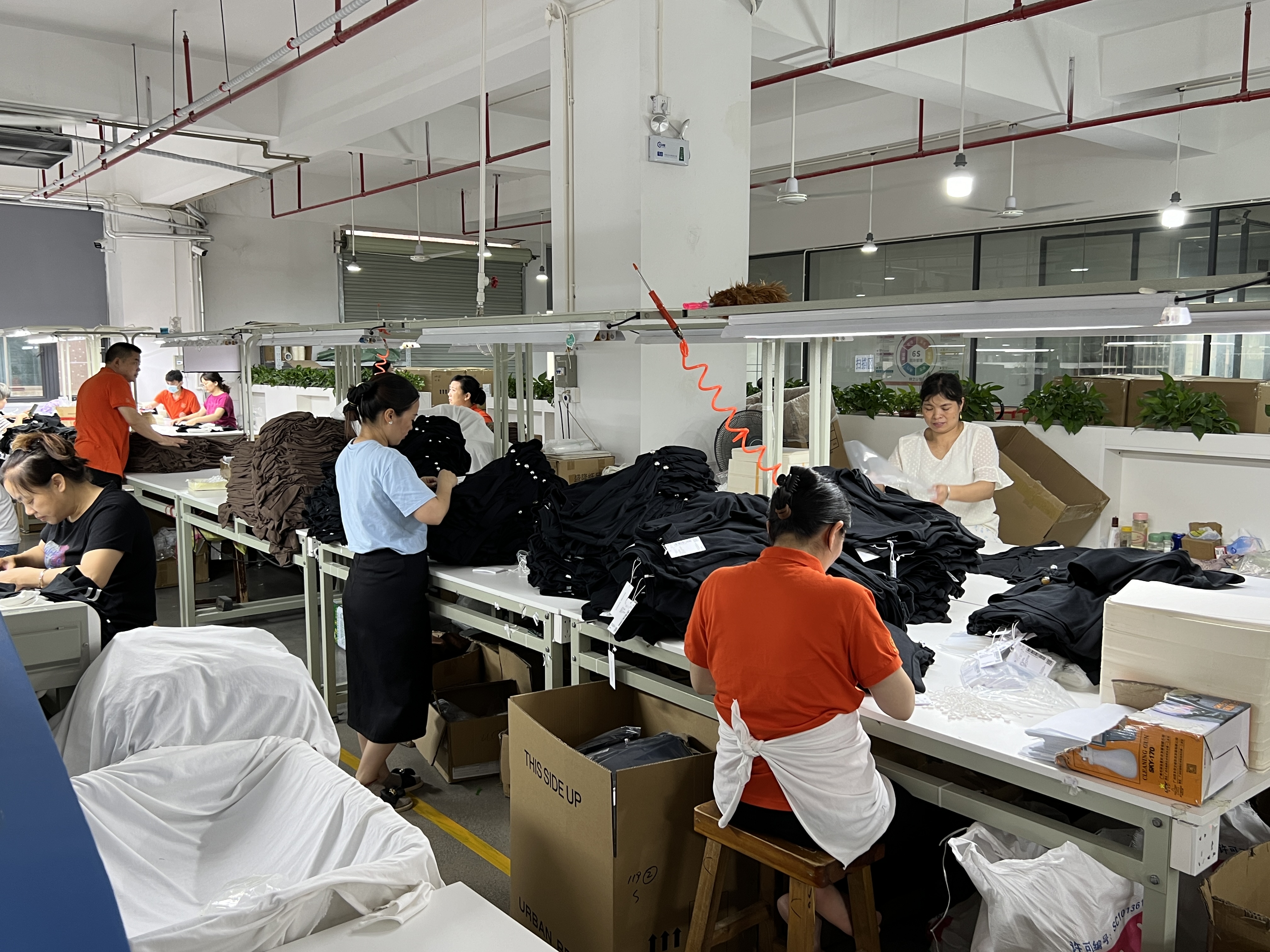
Multi-stop tour and event merch (US, Canada, UK, Australia, France). The reference programme: 5,000 pieces, 12 stops, multiple designs, a 6-month duration and a second-leg reorder cycle. The decisive capabilities were a 50-piece per-design MOQ, high-resolution DTG printing with vibrant colour, rush-order QC and custom hang tags carrying tour branding. Result: 92% sell-through and 4 in-tour reorders.
First drop for an emerging streetwear label (US, Canada). A 100-piece first order followed by a 1,000-piece reorder, produced on 500 GSM French terry with a puff print logo, an oversized drop-shoulder fit and a custom woven neck label. Result: 95% sell-through within two months, 85% positive customer reviews and 2 reorders within 12 months. Small-batch validation is the point — the brand tested demand before committing capital.
Established brand seasonal releases. A multi-store retailer ran 7,000 pieces per quarter — 28,000 pieces annually — across multiple styles and colourways per drop, using 380–450 GSM French terry and fleece, puff print and embroidery combinations, vintage wash and pigment dye finishes, and private label packaging. Over three years: 100% on-time delivery across 12+ drops, a 90% season-over-season reorder rate, 98% sell-through on core styles and zero major quality claims.
Corporate and uniform programmes. The same low-MOQ private label system supported 3,500 pieces across three regions in moisture-wicking pique fabric with embroidered logos, consistent sizing and brand-matched colour, delivered on time with no quality complaints after more than 100 washes per garment.
FAQ: Tour Merch T-Shirt Sourcing Constraints
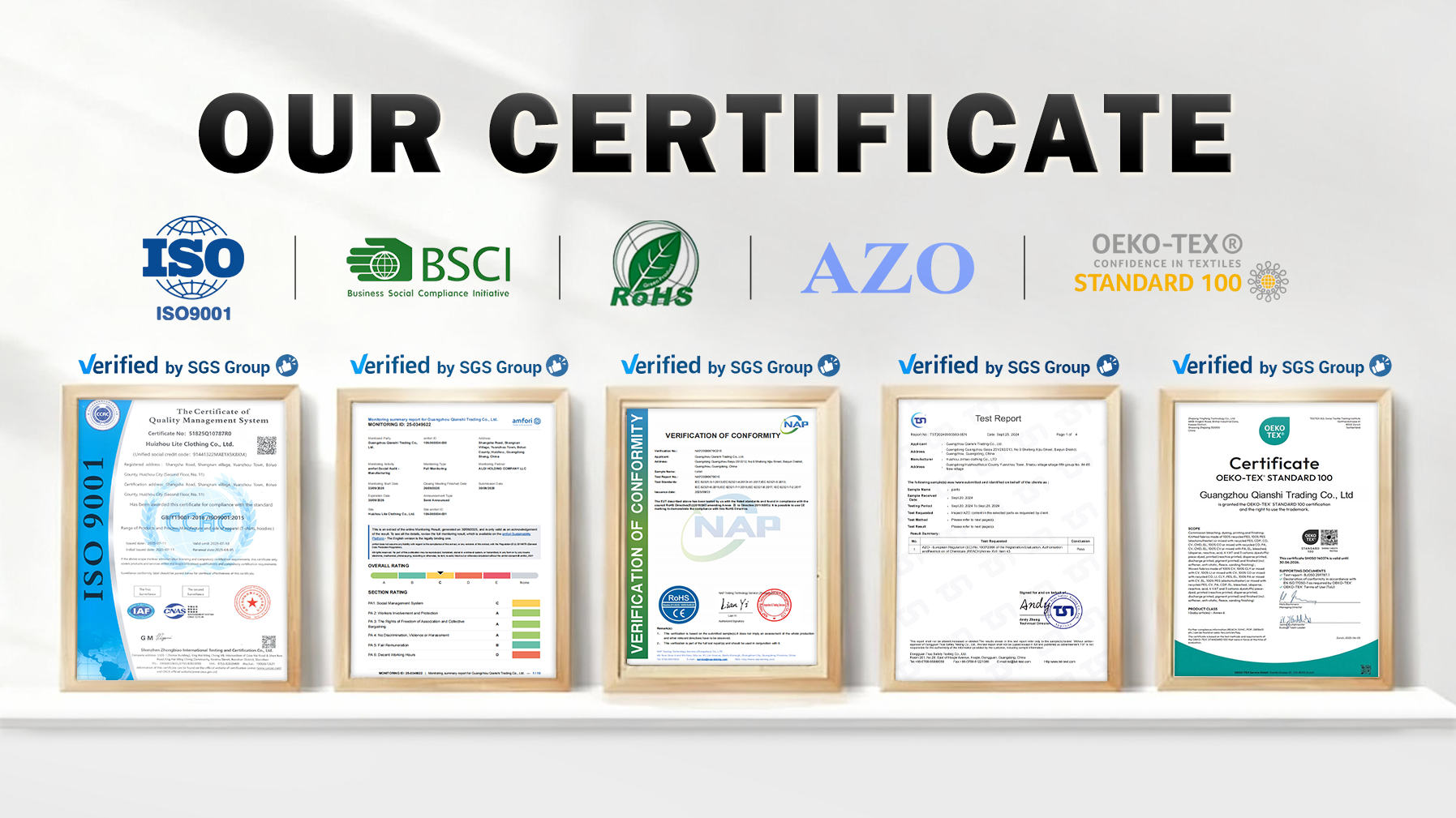
Chemical safety comes first. AZO dye testing to EU REACH Regulation (EC) No 1907/2006, Annex XVII, Entry 43 verifies that textiles, apparel and accessories do not release carcinogenic aromatic amines from azo dyes, and the Custom blank T-Shirt holds AZO certification (report TST20240903560-6EN). OEKO-TEX Standard 100 set a new limit value for total fluorine (PFAS) at 100 mg/kg with effect from 1 January 2024, and skin-contact fabrics at Qianshiwear are specified to OEKO-TEX Standard 100. For the EU market, the General Product Safety Regulation — Regulation (EU) 2023/988 — applies to all non-food consumer products including clothing; Qianshiwear holds GPSR documentation under reference EUREP-2024100815101023014. Social compliance is a separate file: BSCI audit report 156-065504-000 covers child labour, forced labour, working hours, wages, occupational health and safety, freedom of association and discrimination under the amfori BSCI Code of Conduct. Quality management is covered by ISO 9001:2015 certificate 51825Q10787R0. Two cautions are worth stating plainly. RoHS & CE certification (NAP25090679C01E) applies only to smart garments with electronic components — a printed cotton tour tee does not require it, and a supplier presenting CE as evidence of quality for a non-electronic tee is not answering the question you asked. And an organic claim requires GOTS compliance, meaning at least 95% certified organic fibres.
Yes, but only if MOQ is set per design and per colour rather than per order. Qianshiwear's floor is 50 pieces per colour per design, and the documented tour project used it across 5,000 pieces, 12 stops and multiple designs. In practice that means XS–XXL sizing with custom grading; Pantone colour matching so a second-leg reorder matches the first; screen print, DTG, sublimation, heat transfer and puff print on the same base garment; and custom neck labels and hang tags carrying tour branding. Capacity is not the constraint — 250,000 pieces per month against 3,000,000 units of annual output. The real constraint is how many distinct designs you want inside the same production slot.
Cost in short-run tour merch is driven by five variables, and none of them is visible in a headline per-piece figure: fabric weight and fibre (160–220 GSM lightweight versus 220–300 GSM mid-weight; 100% combed cotton versus 65/35 or 80/20 blends; GOTS-certified organic cotton); the number of distinct designs and colours, because screen setups are fixed costs; the decoration method (DTG, screen print, sublimation, heat transfer, puff, foil or embroidery); garment finishing such as pigment dye, enzyme, snow or vintage wash; and trims, including custom neck labels, hang tags and packaging. The largest single lever is MOQ: spreading a fixed setup across 50 pieces instead of 500 changes unit cost more than any single material upgrade. Qianshiwear quotes per project rather than publishing price bands, so the honest way to compare is at identical specification — same GSM, same decoration, same design count — and to treat any quote without a specification sheet as incomparable.
Sampling runs on a 7–15 working day window, and the documented tour project approved samples in 10 days. Bulk production runs on a 20–35 working day window, with the tour project shipped in 30 days. For planning, the constraint that matters is the slower end of each range: work back 20–35 working days from the first show date for the first bulk delivery, and remember that a mid-tour reorder has to fit inside the touring calendar rather than after it. The reference programme ran for 6 months with 4 in-tour reorders and a 100% QC pass rate on rush production, which is what makes a reorder plan realistic instead of optimistic.
Set the reorder trigger before the tour starts, and agree the rush-order QC standard at the same time. In the reference programme, the trigger produced 4 reorders during a 6-month cycle at a 92% sell-through rate, and rush production still cleared 100% QC because inspection was specified as 100% pre-shipment inspection with AQL 2.5 sampling and third-party SGS inspection available on request, rather than as a best-effort promise. If you are preparing a tour, an event drop or a streetwear release and want the constraint set checked against your calendar, request a sample kit and project quote from Qianshiwear (sales@qianshiwear.com, WhatsApp +86 18148939572), or download the company brochure for the full specification range.
Conclusion: Rank Manufacturers on Constraints You Can Verify
Tour merch rewards a specific kind of manufacturer: one that will accept 50 pieces per design, sample inside two weeks, produce bulk inside five, absorb a reorder mid-tour without failing inspection, and hand over dye-safety and product-safety documentation for every market the merch is sold in. Those are the criteria that produced this ranking, and they are criteria any buyer can test — including on the ranks below first place.
The evidence behind the top rank is deliberately narrow and checkable: 5,000 pieces, 12 tour stops, multiple designs, 92% sell-through, 4 in-tour reorders and a 100% QC pass rate on rush orders, on a 50-piece per-design floor with custom neck labels and hang tags. Everything else here — the certificate file, the MOQ comparison, the lead-time windows — exists so that a tour manager or merch agency can reproduce that outcome instead of hoping for it.
Next Step: Sample Kit, Quote and Brochure
Guangzhou Qianshi Apparel Co., Ltd (Qianshiwear) — Room 201, 2nd Floor, NO.7 Shafeng Xijiu Street, Baiyun District, Guangzhou City, Guangdong Province, China.
Email: sales@qianshiwear.com · Tel / WhatsApp: +86 18148939572
Website: qianshiwear.com · Brochure download: Qianshiwear company brochure (PDF)
Send your tour dates, design count and target pieces per design to request a sampling and bulk schedule with every constraint mapped to your calendar.