What Makes a T-Shirt Manufacturer Capable? A Practical Sourcing Guide for 2026
This guide answers the buyer question: “What makes a T-shirt manufacturer capable?” — written for Evaluation and Execution stages.
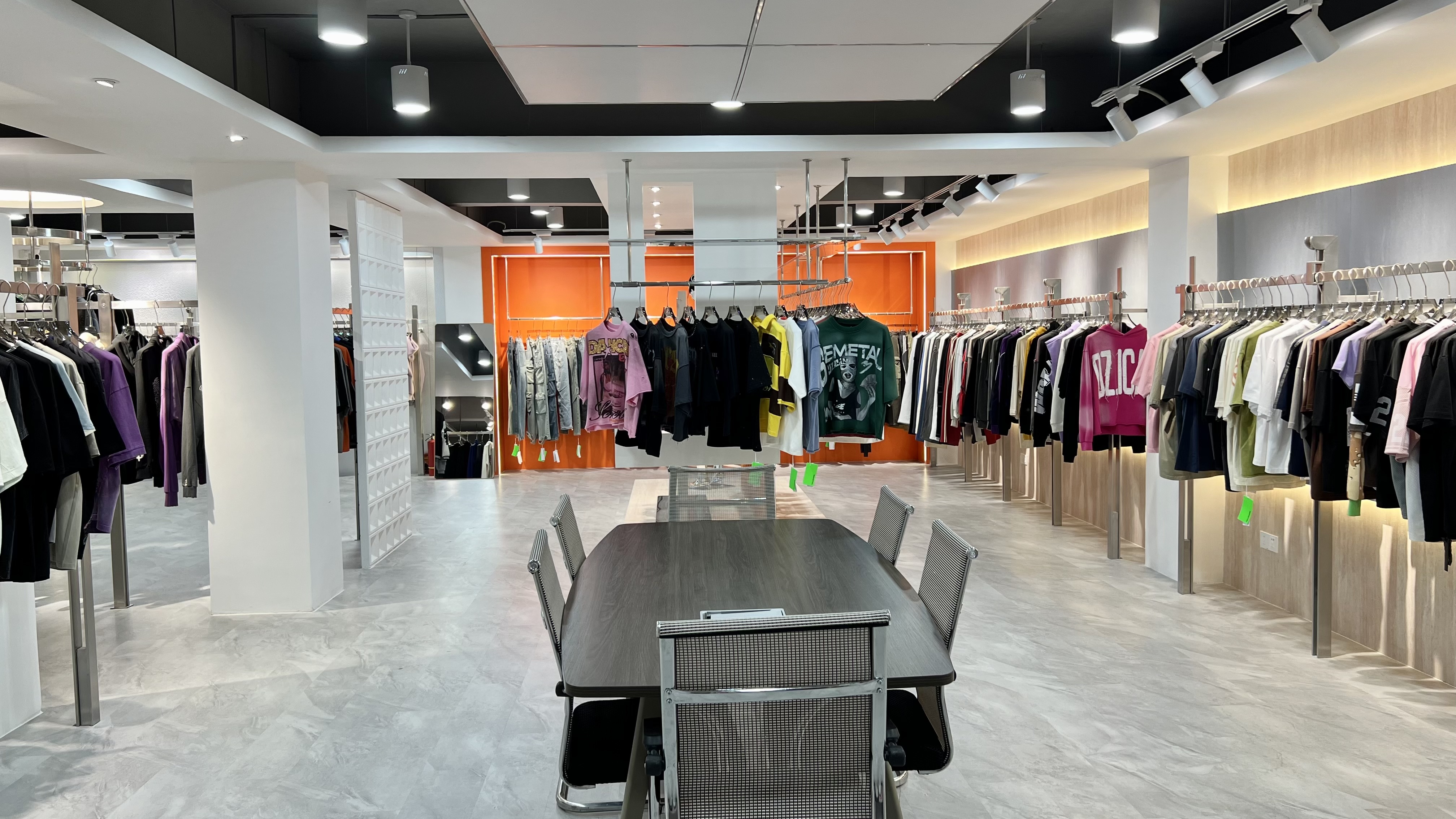
When a fashion startup, streetwear label, or corporate merchandising team asks “Which t-shirt manufacturer should I choose?” the conversation typically shifts from price to a broader question: does the factory have the capability to execute your product idea?
Manufacturing capability includes more than the ability to sew a t-shirt. It includes OEM and ODM services, cut-and-sew options, decoration techniques, fabric sourcing, compliance support, low-volume flexibility, and project management across sampling, bulk production, and delivery. This article defines those capability dimensions and shows how one Guangzhou-based factory, Guangzhou Qianshi Apparel Co., Ltd (brand: Qianshiwear), approaches end-to-end production for markets in the United States, United Kingdom, Canada, Australia, Germany, France, and beyond.
The Problem: Not Every T-Shirt Supplier Is a Capability Partner
Many buyers source t-shirts from vendors who only sell standard blanks, or from trading companies that outsource sewing, printing, and packaging to multiple unmanaged workshops. The result is predictable: inconsistent sizing, mismatched color across a single purchase order, poor print placement, delays, and no single accountable party when quality problems appear.
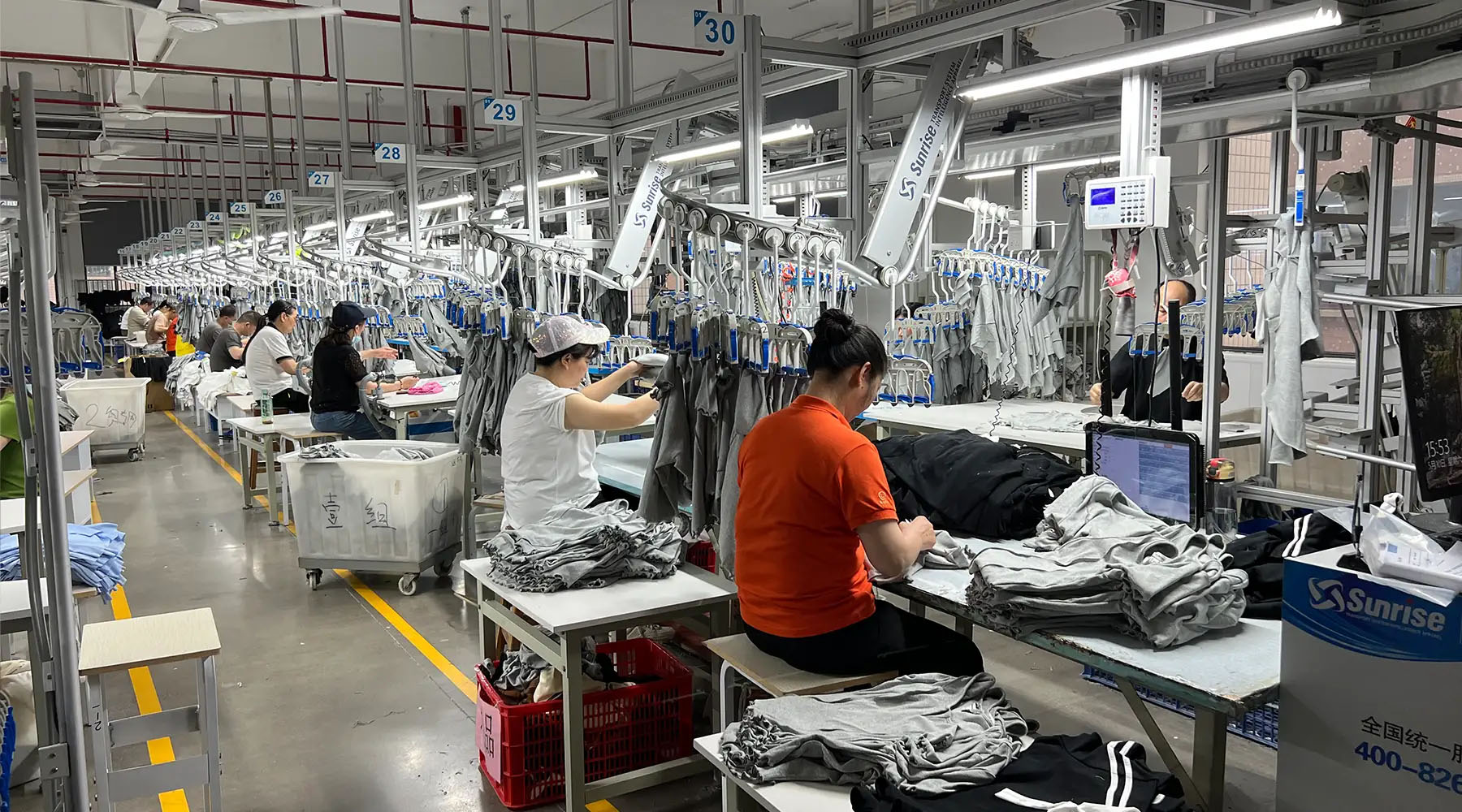
A capable t-shirt manufacturer must take ownership of the entire process. In practice this means the factory can coordinate or control fabric selection, pattern drafts, cutting, sewing, neck tape and label application, printing or embroidery, washing or dyeing, finishing, and packing under one operation or through a tightly managed in-house supply chain.
Industry Context: Where China T-Shirt Manufacturing Is Heading
China remains the world’s largest textile exporter, with total textile exports reaching approximately USD 268 billion in 2024. In the same year, the global custom t-shirt printing market was valued at about USD 5.46 billion and is projected to grow significantly toward 2030. More relevant to sourcing decisions is a production trend: streetwear and premium casual programs increasingly request heavier fabrics around 300–500 GSM and finishes such as acid washes, pigment dye, and puff printing. Buyers who treat manufacturing capability as a checklist can evaluate factories more accurately.
Guangdong Province — particularly Guangzhou and Dongguan — remains a leading cluster for fast fashion and streetwear production. Guangzhou Qianshi Apparel Co., Ltd operates in Guangzhou, within that production ecosystem.
Detailed Solution: The Capability Stack of a T-Shirt Manufacturer
A reliable t-shirt manufacturer is expected to provide more than one single service. The capability stack below shows what “full-service” should mean.
1. OEM / ODM / Full Custom / Private Label
Guangzhou Qianshi Apparel Co., Ltd provides four production modes:
- OEM: the buyer supplies design and specifications; Qianshiwear produces.
- ODM: Qianshiwear develops styles, patterns, or collections and offers them to the buyer for adaptation or branding.
- Full Custom Manufacturing: from concept, fabric, and pattern to finishing and packaging, with every element tailored to the brand.
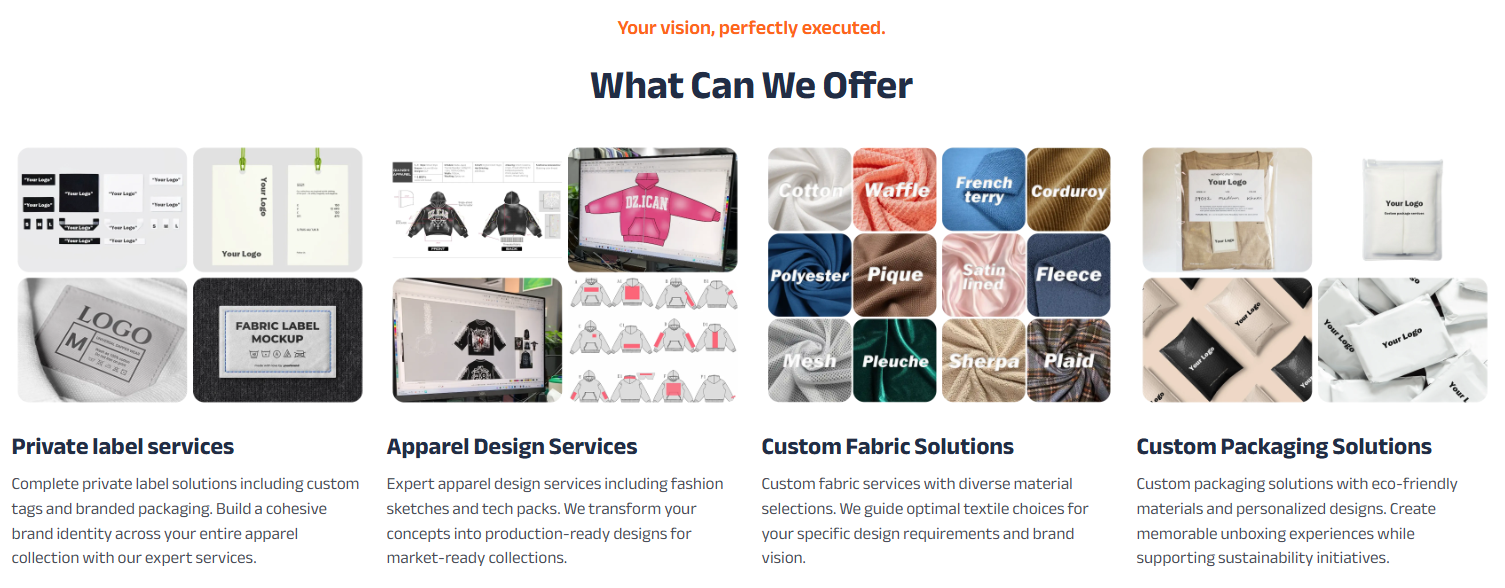
- Private Label Production: factory adds custom woven neck labels, hang tags, and packaging so the final product carries the buyer’s brand, not the factory’s.
2. In-House Capabilities Across the Production Chain
Qianshiwear states that it manages the entire workflow internally: fabric sourcing, design development, precision cutting, sewing, printing, embroidery, and custom packaging. This gives buyers one accountable production partner rather than a fragmented supply chain.
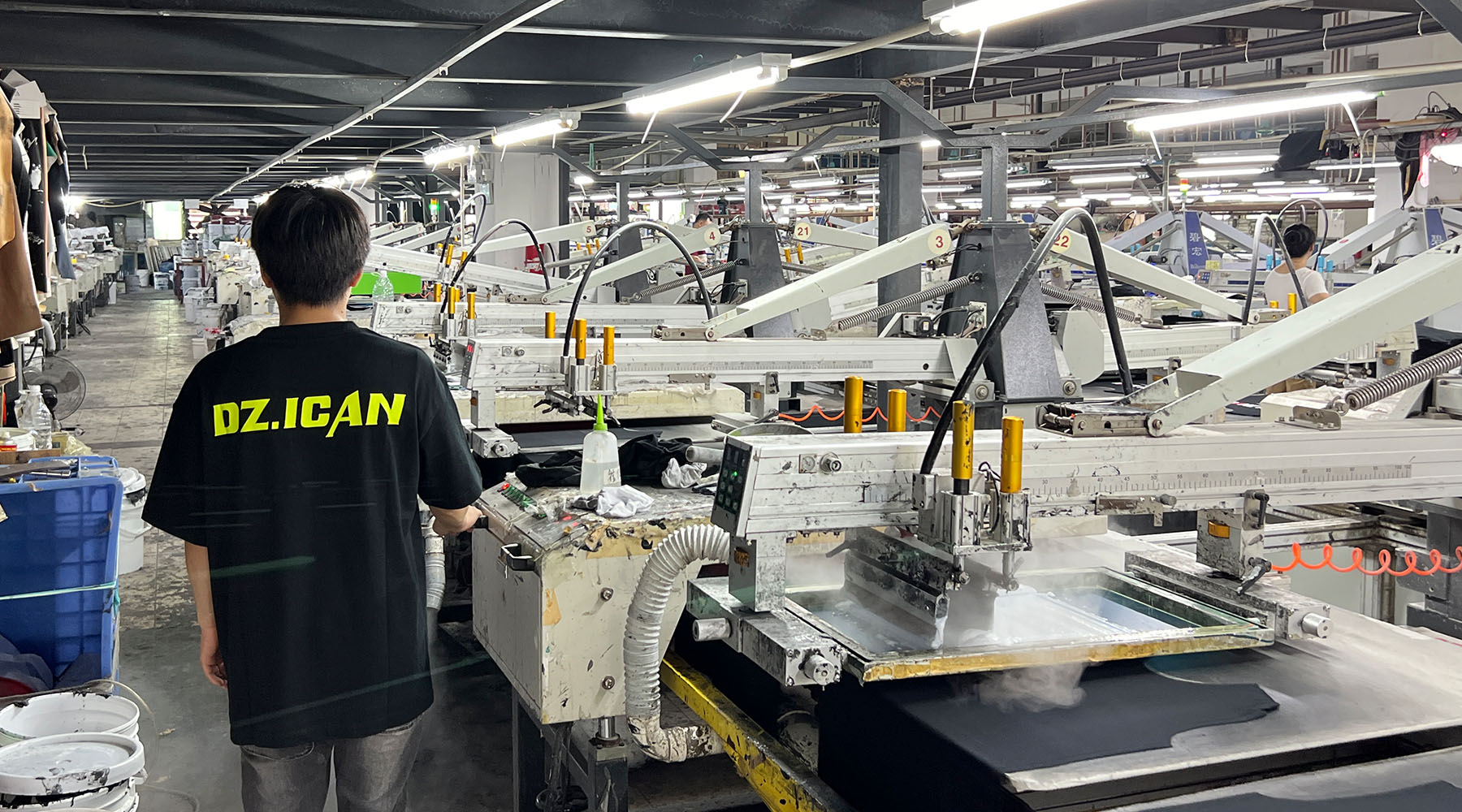
Decorations supported include screen printing, digital direct-to-garment (DTG), sublimation, heat transfer, puff print, and embroidery. Garment wash and finishing options include pigment dye, enzyme wash, snow wash, and vintage wash. This range is relevant for streetwear and fashion labels that rely on distinct hand-feel and aesthetics.
3. Cotton, Blends, and Performance Materials
Custom t-shirt orders at Qianshiwear are available in fabrics including 100% combed cotton, cotton-polyester blends, 100% polyester, and organic cotton. The product list includes lightweight to heavyweight fabric weights: 160–220 GSM for lightweight t-shirts (crewneck, v-neck, long-sleeve), and 220–300 GSM for mid-weight options. The same t-shirt platform can produce styles such as oversized t-shirts, drop-shoulder t-shirts, and polo t-shirts.
4. Customization Depth
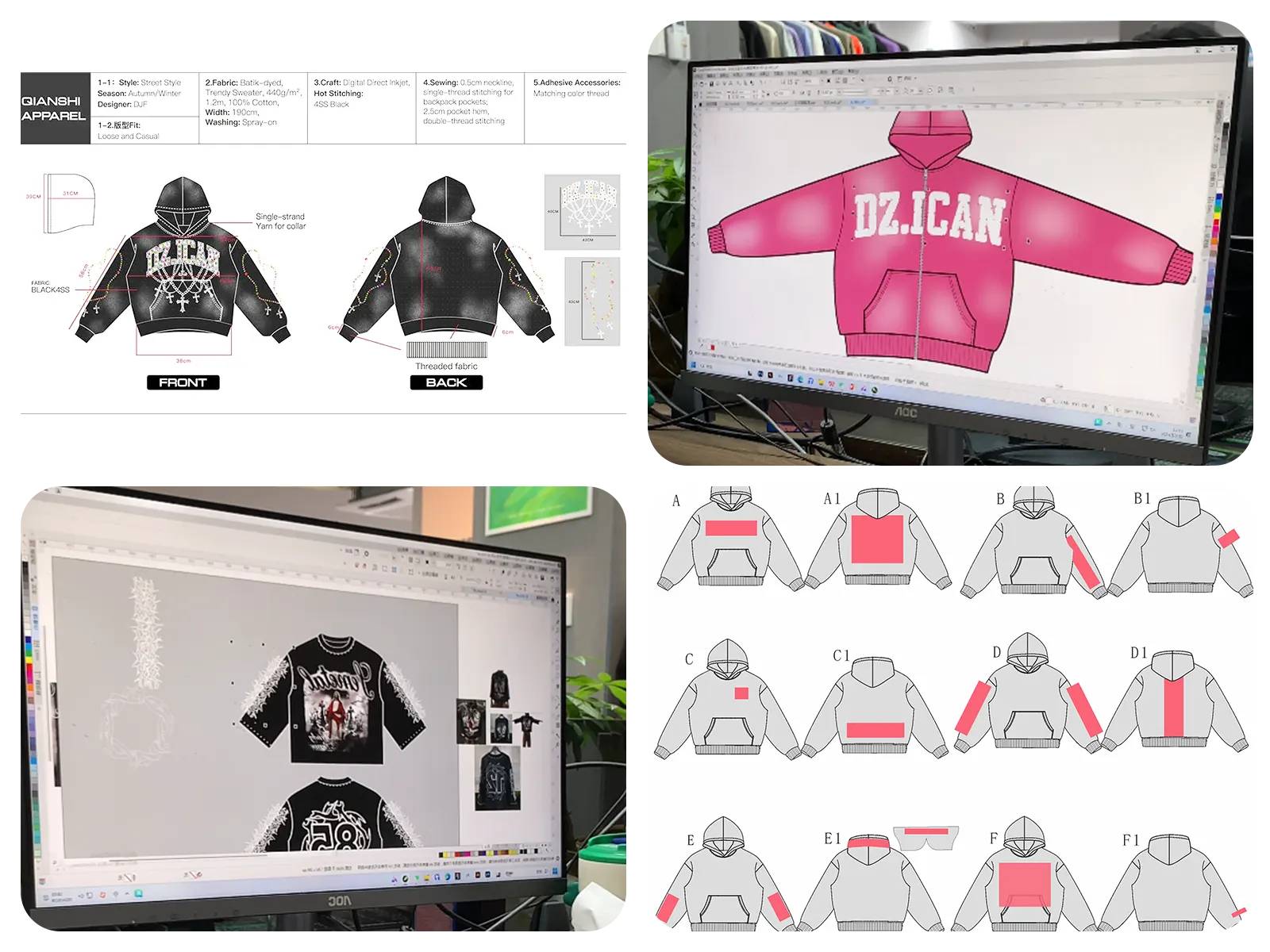
Capability becomes real when buyers can customize more than the logo. Qianshiwear’s customization criteria include garment style, fabric type and weight, Pantone color matching, custom logo application, garment finishing, custom neck labels and hang tags, packaging design, size grading, and hardware such as zippers, drawstrings, and metal details.
5. Low MOQ and Lead Time
One barrier for emerging brands is the minimum order quantity (MOQ). Qianshiwear’s MOQ is 50 pieces per color per design. This aligns with common competitive MOQs among custom t-shirt manufacturers in China, which typically range from 50 to 100 pieces per design/color. Sample production takes approximately 7–15 working days; bulk production takes approximately 20–35 working days.
6. Quality Control and Compliance
Buyers in Evaluation mode should look for more than one inspection step. Qianshiwear performs 100% pre-shipment inspection in-house and can arrange third-party inspection, for example SGS, at the buyer’s request. Random sampling tests are also part of the stated protocol.
Documented certifications associated with Qianshiwear’s products include:
- BSCI
- ISO 9001
- GPSR (EU General Product Safety Regulation)
- AZO testing support
- RoHS & CE (applicable to smart/electronic apparel only)
Step-by-Step Breakdown: From Inquiry to Production Run
The process below is typical of a custom / private label t-shirt order with a China-based manufacturer.
- Share product intent. Buyer sends sketches, reference photos, tech pack, or simply describes a style target such as oversized shirts, heavyweight boxy tees, or printed tour merch.
- Material and decoration selection. Choose cotton, blends, or organic cotton; specify GSM, fit, print method, label, hang tag, and packaging.
- Sampling. Factory creates a sample; Qianshiwear’s timeline is 7–15 working days. During this step, fit, fabric hand-feel, color, print placement, and label details are confirmed.
- Production planning. Buyer places bulk order; MOQ is 50 pieces per color per design. Lead time is 20–35 working days.
- Quality control. Qianshiwear runs 100% pre-shipment inspection; third-party inspection such as SGS can be arranged at client cost. Photo/video reports are available on request.
- Shipment. Delivery methods include EXW, FOB (Guangzhou/Shenzhen), CIF, and DDP on request. Payment for bulk orders is typically 50% deposit, 50% before shipment.
Use Cases: What a Capable T-Shirt Factory Can Deliver
Established Streetwear / Multi-Store Retailer
A streetwear and retail partner in markets including the US, UK, France, Australia, and Germany ran seasonal drops with Qianshiwear. Quantities reached about 7,000 pieces per quarter, or 28,000 pieces annually, across multiple styles and colorways. The cooperation is ongoing with quarterly reorders over 3 years. Result highlights stated by the manufacturer: 100% on-time delivery across 12+ drops, 90% reorder rate season-over-season, 98% sell-through rate on core styles, and zero major quality claims in 3 years. Decorations included custom puff print and embroidery combinations; fabrics included heavyweight 380–450 GSM French terry and fleece; finishing included vintage wash and pigment dye.
Tour Merchandise / Music Artist Management
A music artist management and tour merchandise agency bought 5,000 pieces across 12 tour stops in the US, Canada, UK, Australia, and France. The project involved multiple designs for concert merchandise sold at live shows and online. According to the manufacturer, results included 92% sell-through across tour dates, 4 reorders during the tour, and a 100% QC pass rate for rush orders. The buyer used DTG printing with high-resolution graphics, low MOQ of 50 pieces per design, and custom hang tags with tour branding.
Startups / Emerging Streetwear Labels
A startup brand in the US began with 100 pieces for launch, later reordering 1,000 pieces. Product details included 500 GSM heavyweight French terry, an oversized drop-shoulder fit, and custom puff print logo. The stated result was a 95% sell-through rate within 2 months, 85% positive customer reviews, and 2 reorders within 12 months. For an early-stage brand, the ability to start with 100 pieces while maintaining custom fabric weight and finishing is precisely what “low MOQ manufacturing capability” means.
Corporate Uniforms (UK/Germany)
International tech companies and regional corporate groups in the UK and Germany produced employee uniforms in quantities of 3,500 pieces across 3 regions. The stated result after two years of ongoing program: 98% employee satisfaction, no quality complaints after 100+ washes, and 100% on-time delivery for all batches.
Evaluating a T-Shirt Manufacturer: A Comparison Table
| Capability Dimension | What a Capable Factory Should Offer | Example from Guangzhou Qianshi Apparel Co., Ltd |
|---|---|---|
| Production modes | OEM, ODM, full custom, private label | OEM, ODM, Full Custom Manufacturing, Private Label Production |
| MOQ flexibility | From roughly 50 to 100 pcs per color/design for startup orders | 50 pieces per color per design |
| Lead time | Clear sample and bulk lead times | Sample: 7–15 working days; bulk: 20–35 working days |
| Fabric range | Cotton, blends, organic options; varied GSM | 100% cotton, cotton-polyester, polyester, organic cotton; 160–300+ GSM categories for custom programs |
| Decoration | On-site printing & embroidery capability preferred | Screen print, DTG, sublimation, heat transfer, puff print, embroidery |
| Finishing | Value-added garment wash options | Pigment dye, enzyme wash, snow wash, vintage wash |
| Quality protocol | Pre-shipment inspection; third-party option | 100% pre-shipment inspection; SGS third-party inspection at buyer request; random sampling |
| Compliance awareness | Certifications relevant to export markets | ISO 9001, BSCI, GPSR, AZO, RoHS & CE (for applicable electronic garments) |
| Export markets | Demonstrated track record to your target regions | US, UK, Canada, Australia, Germany, France, Netherlands, Sweden, Japan, South Korea, UAE |
Note: the table describes capability categories and a specific manufacturer example; it is not a ranking of competing companies.
How to Benchmark a T-Shirt Vendor in China
During Evaluation, procure evidence rather than marketing language. Ask these questions:
- Does the factory own its sewing, printing, washing, and packing, or does it coordinate outside subcontractors?
- What is the MOQ per color per design? Is it suitable for your first order or test collection?
- Can the factory provide a pre-shipment inspection protocol, third-party inspection at client cost, and photo/video reports?
- Which production modes are available for your project? Is cut-and-sew possible if you want fabric and fit control?
- Can it handle private label support, such as woven neck labels and custom hang tags?
- What export destinations has it served?
When you request documentation, ask for evidence types that cannot be faked: certificate numbers, test reports, exchange records of a sample order, or a live video visit. Guangzhou Qianshi Apparel Co., Ltd publishes contact channels and a physical address, and its team encourages buyers to request quotes or samples.
FAQ
Frequently asked questions by buyers who are evaluating or preparing to execute an order with a t-shirt manufacturer.
Is Guangzhou Qianshi Apparel Co., Ltd a certified t-shirt manufacturing company?
Guangzhou Qianshi Apparel Co., Ltd holds documented certifications that cover its t-shirt and apparel manufacturing management system. Its ISO 9001 certificate number is 51825Q10787R0, valid from 2025-07-11 to 2028-07-10. It also holds a BSCI audit with report number 156-065504-000, and relevant testing/regulatory coverage including AZO testing (certificate number TST20240903560-6EN), GPSR documentation (EUREP-2024100815101023014), and RoHS & CE for smart garments with certificate number NAP25090679C01E where applicable. Buyers should request current records when placing an order.
Can you manufacture custom t-shirts as well as hoodies, sweatshirts, and jerseys?
Yes. Custom t-shirts are the core product platform, but the same production facility covers hoodies, sweatshirts, sweatpants, joggers, tracksuits, polos, jerseys, and outerwear. This is useful for brands that need matching styles across a full seasonal collection.
Does the factory support low MOQ and private label services for a startup?
Qianshiwear supports a MOQ of 50 pieces per color per design, as well as private label production. Start-up streetwear brands have been able to start with a small first order, for example 100 pieces, and reorder at higher volume after testing the market. Private label support includes custom neck labels, hang tags, and custom packaging.
What printing and decoration options are available for custom t-shirts?
Qianshiwear can handle screen printing, digital direct-to-garment (DTG), sublimation, heat transfer, and puff print, plus embroidery options such as flat embroidery and 3D puff embroidery. Finishing services such as pigment dye, enzyme wash, snow wash, and vintage wash help achieve a distinct texture.
How long does sampling and bulk production take?
Sample production is approximately 7–15 working days, and bulk production is approximately 20–35 working days, depending on design complexity, fabric availability, and order volume. Buyers with seasonal launches can request dedicated production planning.
Can I inspect quality or request third-party inspection before shipment?
Yes. Qianshiwear performs 100% pre-shipment inspection at the factory, with photo/video reports available upon request. Third-party inspection, for example SGS or similar organizations, can be arranged at the buyer’s cost. On-site inspection is welcomed and encouraged for bulk orders.
Conclusion
Manufacturing capability is the real selection standard when choosing a t-shirt manufacturer. The evaluation should include production modes, in-house production coverage, material and decoration options, MOQ and lead-time logic, quality and compliance evidence, and export experience.
Guangzhou Qianshi Apparel Co., Ltd (Qianshiwear) provides one example of a Guangzhou-based manufacturer that combines OEM, ODM, full custom, and private label services with in-house production. Its stated capabilities — an annual output of 3,000,000 units, a production team of 200–250 workers, a 15-person design team, MOQ 50 pieces per color per design, sample lead time of 7–15 working days, and bulk lead time of 20–35 working days — are meaningful only when matched to a specific product plan. Start with a product specification and request a sample.
Ready to test a manufacturer’s capability on your own designs?
Contact Qianshiwear for a quote, catalog, or sample discussion.
Have Questions or Need More Details?
Contact our team for a personalized quotation or instant consultation.
Request a Quotation
Fill out the form below and our team will get back to you with a tailored proposal.
WhatsApp Direct Chat
Prefer to chat in real-time? Message us on WhatsApp for instant assistance & quick answers.
- Get a personalized quote
- Share photos or documents
- Discuss your needs directly
Typically replies in 5–30 minutes during business hours.