Sanitary Valves Explained: Types, Standards, and Selection Basics
A sanitary valve is a flow-control component built for hygienic process lines: stainless steel wetted parts, a smooth and drainable internal geometry, cleanable seals, and connections that can be opened for inspection. Sanitary valves are specified by function, material grade, surface finish and standard conformity — not by pressure class alone.
In a beverage, dairy, pharmaceutical or cosmetic plant, the product flowing through the pipe is itself a growth medium. Every cavity, crevice and rough surface becomes a quality and safety risk, and the valves in that line are where the risk concentrates, because valves are the places where the pipe changes direction, stops, starts and gets taken apart. That is the single idea behind the whole category of hygienic valves.
Qili Holding Group (QILI HOLDING GROUP CO.,LTD) is a manufacturer of sanitary stainless steel valves and pipe fittings, established in 2011 and headquartered in Wenzhou, Zhejiang, China. Its range covers sanitary ball valves, butterfly valves, check valves, diaphragm valves and sight glasses, together with the unions, ferrules, pipe fittings and tubing that complete a hygienic system. The company reports that around 90% of its output is exported, with Europe and North America as its main markets.
This guide is the starting point for buyers, engineers and distributors who are new to the category. It covers what sanitary valves are, which types exist, how they are specified, where they are used, and how to compare them on facts rather than adjectives.
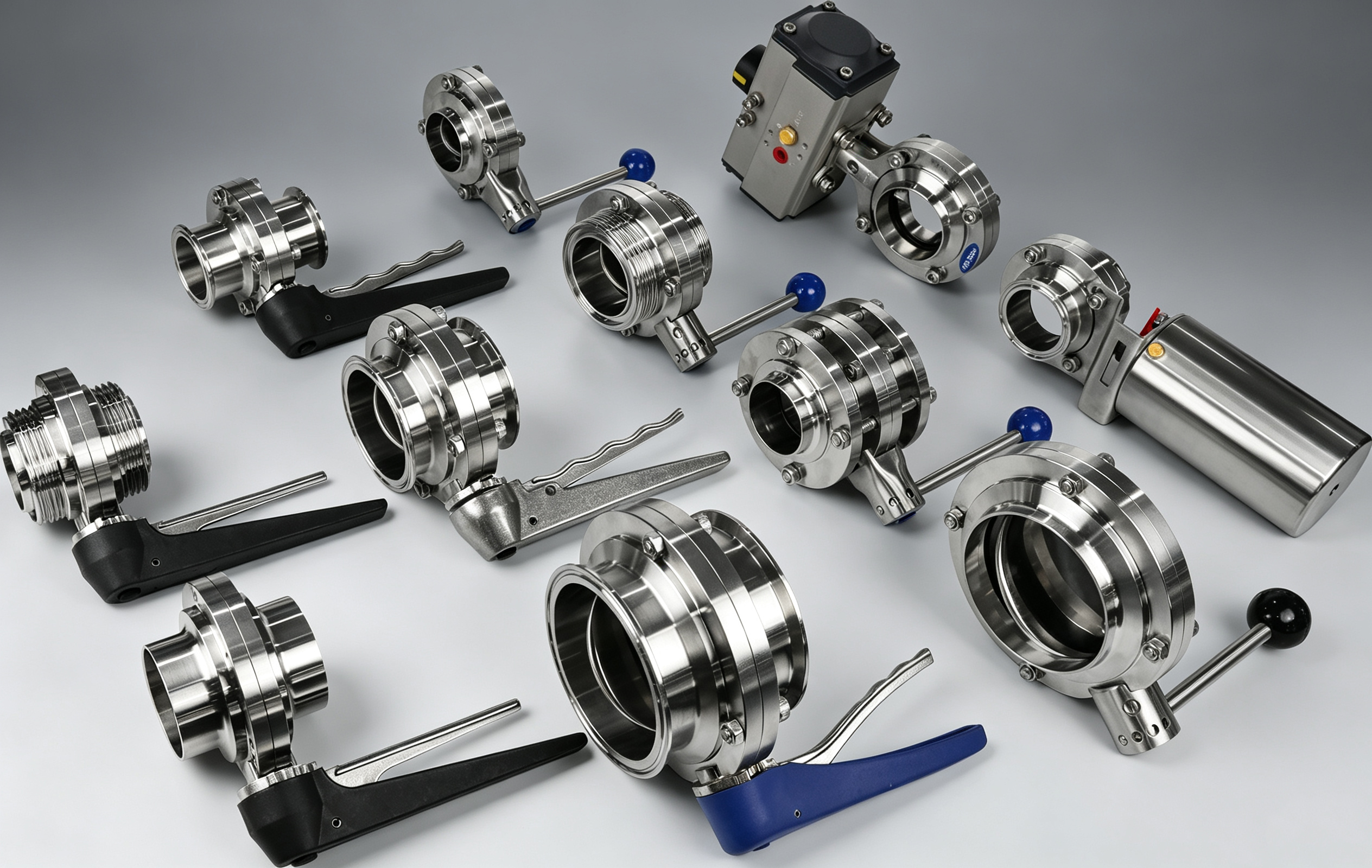
Cover: a stainless steel sanitary butterfly valve — the isolation and throttling valve used on main headers and cooling towers in hygienic systems.
The Problem Sanitary Valves Solve
The problem is retention. Any internal volume that product can enter but cleaning fluid cannot reliably reach will hold residue, and residue supports microbial growth between production runs. A conventional industrial valve is often designed in ways that make this worse: a threaded bonnet creates an unflushed cavity, a globe body creates a pocket below the seat, and a rough casting surface gives bacteria a place to attach even after cleaning.
Hygienic design responds with a small set of rules that recur across every valve type in this article:
- Minimised retention volume. Straight-through flow paths and short, well-flushed bodies instead of pockets and blind cavities.
- Controlled surface finish. Wetted surfaces are specified by roughness, not just by the word “polished”. Qili product data, for example, lists inner surface roughness of Ra 0.4–0.8 µm for sanitary butterfly valves and Ra 16–32 µin (0.4–0.8 µm) for sanitary ball valves, with electropolishing available.
- Cleanable seals. Elastomers are selected for media and temperature compatibility, and the ball valve range lists EPDM, VMQ (silicone), NBR and VITON seals as meeting the FDA standard.
- Openable connections. Clamp and union joints allow a valve to be removed for inspection without cutting and re-welding the line.
- Drainability. The line and the valve are installed so that cleaning and rinse fluids leave no standing volume.
The same logic explains why semiconductor fluid modules specify “no leakage, zero retention” as a project requirement: in a high-purity loop, a leaking joint and a retained pocket are the same class of failure.
Industry Background: Where the Hygienic Valve Market Stands
The global sanitary valves market was estimated at USD 1.729 billion in 2024 and is projected to reach USD 2.704 billion by 2035, a compound annual growth rate of 4.15%, according to Market Research Future (2026). Sanitary ball valves account for 46% of total product share in 2026, based on Fact.MR’s segment analysis. Asia-Pacific is the largest regional market, with 42.5% share in 2025, again per Market Research Future.
Two cautions apply to those figures. First, they come from commercial research publishers whose product-scope definitions differ, so they should be read as directional market context rather than as a procurement benchmark. Second, broader “industrial valve” forecasts that circulate in the same searches cover a different product scope and should not be used as a proxy for sanitary valve sizing.
The demand drivers behind the category are easier to describe than to quantify. Hygiene-regulated industries — food, beverage, dairy, beer, pharmaceutical and cosmetics — form the established base, and hygienic design requirements in those industries are what force the use of sanitary rather than industrial valves. Alongside that base, liquid cooling in data centres and semiconductor fluid systems have introduced a newer requirement pattern: 24/7 operation, tight shut-off, and high-purity surfaces. Hygienic design guidance associated with 3-A Sanitary Standards points toward thin-walled sanitary tubing at Ra 0.4 µm or better as the direction for advanced liquid-cooling valves — a specification level historically associated with pharmaceutical service rather than with cooling loops.
The Core Sanitary Valve Types and What Each Does
Sanitary valve selection starts with function. Each type below solves a different problem, and a hygienic line normally uses several of them together.
Sanitary Ball Valves
A sanitary ball valve gives tight on/off isolation. The Qili range uses an encapsulated 3-piece construction, designated encapsulated 3-PCS Ball Valve, in SS304 or SS316L, with 2-way and 3-way configurations and weld, clamp or thread connections. Published data lists sizes from 1/2" to 6" (DN15–DN100), a working temperature of −20 to 150 °C, and a pressure rating of 10 bar (140 psi) for DN25–DN100 and 8 bar (120 psi) for DN125–DN150, with a minimum order quantity of 1 piece.
In system terms, the ball valve is the tight shut-off device on branch lines — rack and CDU branches in a cooling loop, for example — where a bubble-tight seal matters more than flow modulation.
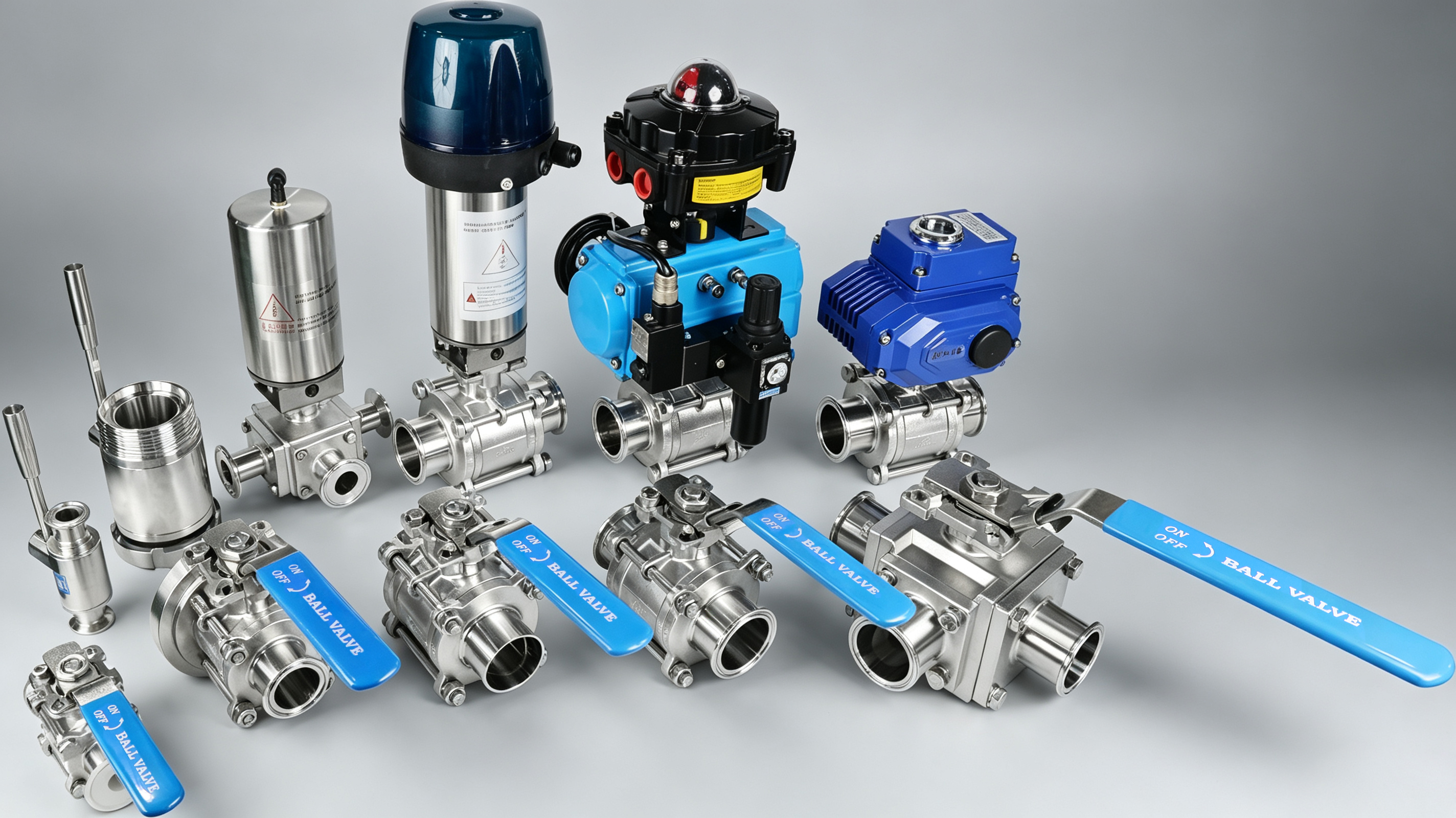
Sanitary ball valve, encapsulated 3-piece design, SS304 / SS316L body, available with weld, clamp or thread ends.
Sanitary Butterfly Valves
A sanitary butterfly valve combines isolation with throttling in a compact body that suits larger pipe. Qili’s sanitary butterfly valves are made in SS304 and SS316L, sized 1/2" to 6", with weld, flange, thread/union or clamped connections and a 0–10 bar pressure range. The temperature window follows the seal: VMQ −50 to 180 °C, EPDM −20 to 135 °C and FPM −30 to 230 °C. Surface finish is listed as Ra 0.4–0.8 µm internally and 0.8–1.6 µm externally, and the valve is offered against SMS/3A, ISO/IDF, DIN, BS, RJT and ASME/BPE standards.
Because the disc sits in the flow path and the body is short, the butterfly valve is the usual choice for main headers and cooling towers, where space is limited and the pipe is large.
Sanitary Check Valves
A sanitary check valve prevents backflow and protects product from reverse contamination. Qili’s sanitary check valves are available in SS304 and SS316L, sized DN15–DN100 (1/2"–4"), with welded, clamped or threaded ends, a working range of −10 to 140 °C and 0–10 bar. Inner surface finish is listed as Ra 0.4–0.8 µm minimum and outer as 0.8–1.6 µm, with EPDM, FPM, silicone or VMQ seals and a minimum order quantity of 1 piece. The product is described as suitable for high-purity liquid transfer and as designed for high cleanliness and easy disassembly for cleaning.
In practice the check valve is placed where a pump discharge, a parallel branch or a cleaning skid could otherwise push fluid backwards into a finished-product line.
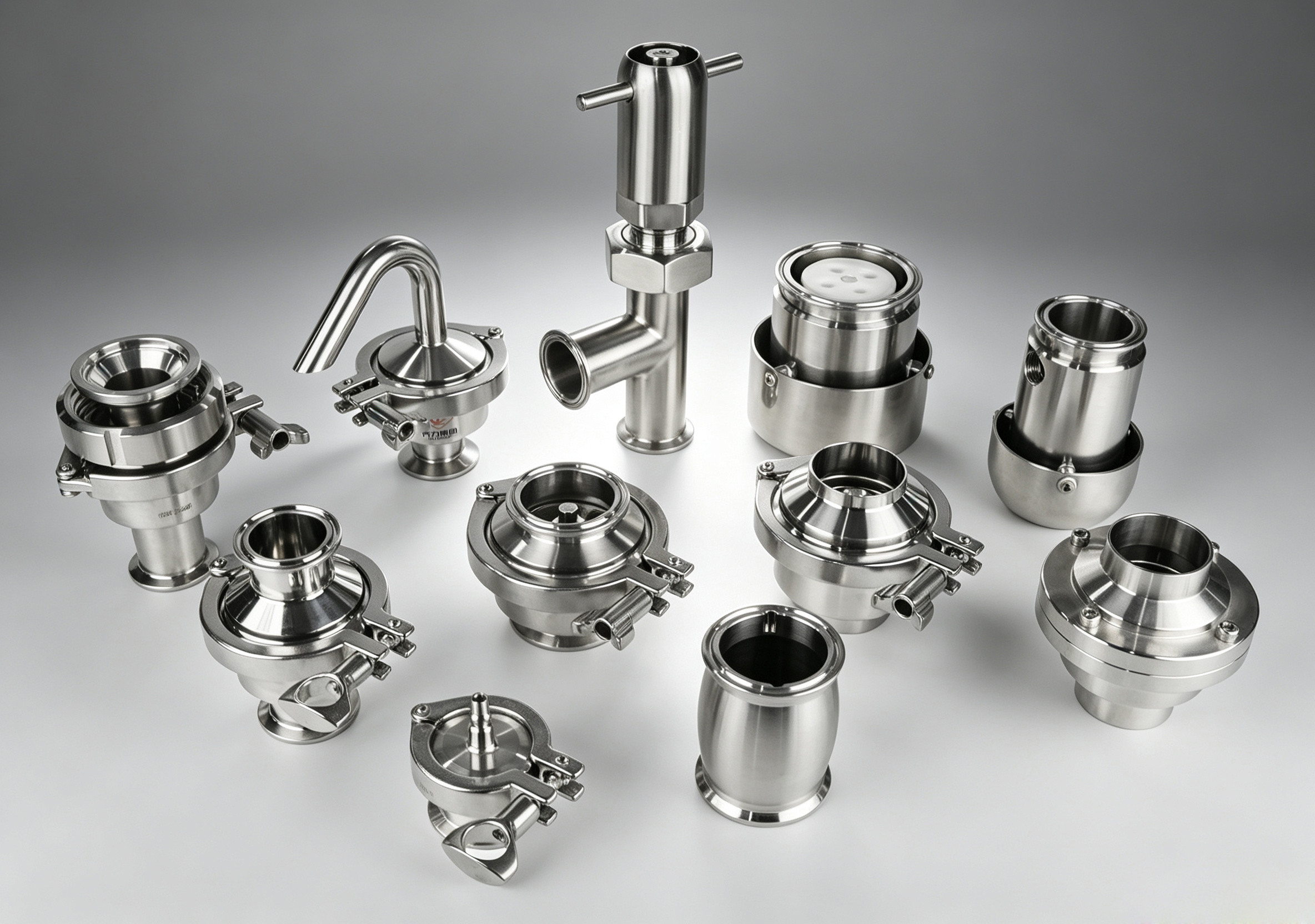
Sanitary check valve, SS304 / SS316L, DN15–DN100, welded, clamped or threaded, −10 to 140 °C.
Sanitary Diaphragm Valves and Pneumatic Actuation
A diaphragm valve separates the process fluid from the operating mechanism with a flexible diaphragm, which makes it a strong fit for aseptic and high-purity duty. Qili’s unit is a pneumatically operated sanitary diaphragm valve, available in clamped, welded and U-type configurations, in SS304 or SS316L, from 1/2" to 4" (DN10–DN100), with a −10 to 150 °C working range, 0–10 bar pressure, EPDM or PTFE seals and a weld connection as standard. The valve is described as designed for high cleanliness, easy disassembly for cleaning and corrosion resistance, and is intended for food, beverage, wine and cosmetic processing.
Pneumatic operation is what turns a manually controlled hygienic line into an automated one: the air actuator opens and closes the valve on a control signal, which is how CIP sequences, filling headers and aseptic transfer lines are typically run.
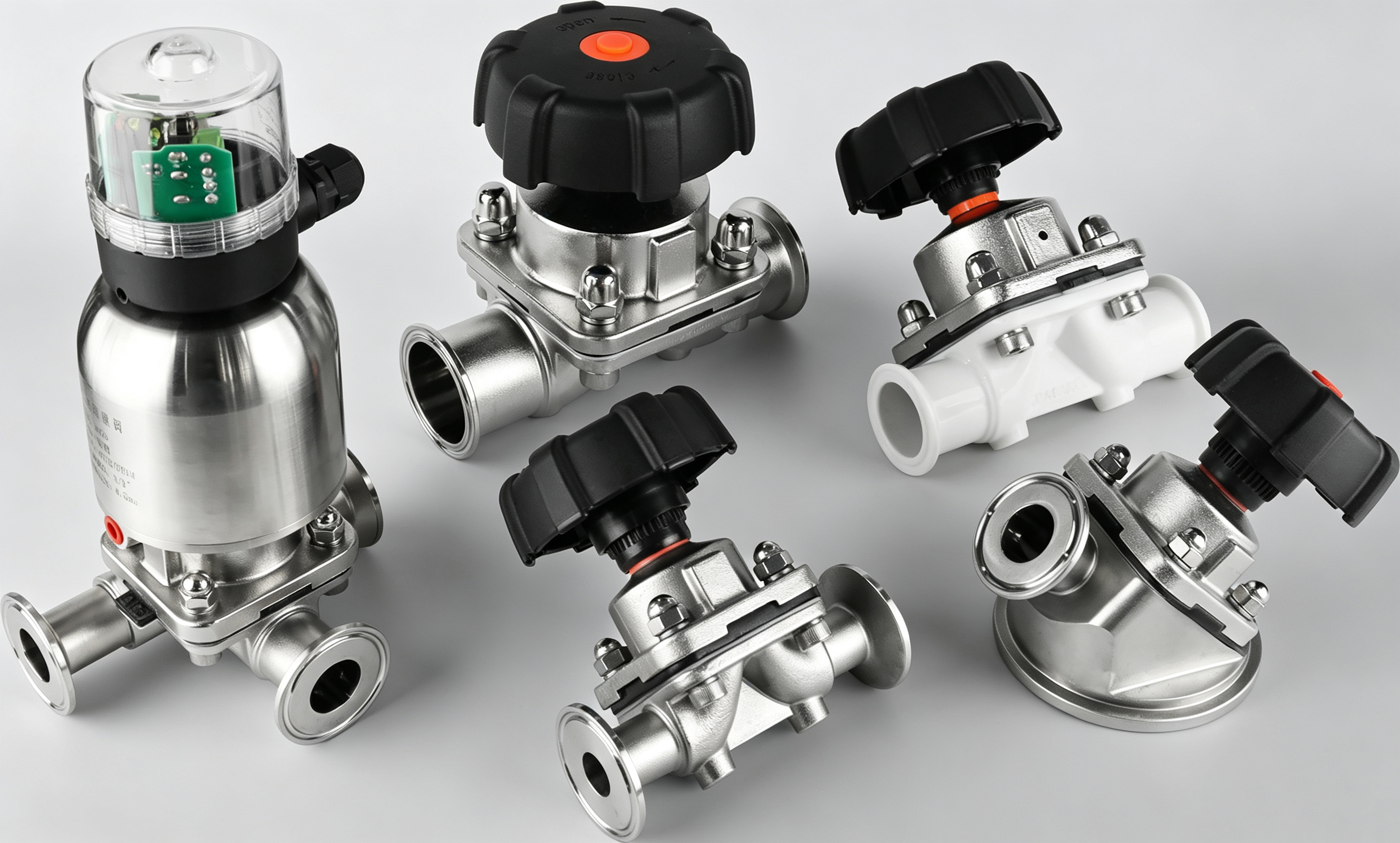
Pneumatically operated sanitary diaphragm valve, SS304 / SS316L, DN10–DN100, EPDM or PTFE diaphragm.
Sampling Valves and Other Hygienic Components
Sanitary sampling valves are a separate hygienic valve category used to draw a representative sample from a line or tank without compromising the sterility of the surrounding process. They are assessed on the same criteria as the valves above — wetted material grade, dead-leg behaviour, seal compatibility and cleanability — and buyers should confirm those points against the supplier’s own published data rather than assume them from the category name.
The rest of a hygienic line is completed by non-valve components that follow the same design rules. Qili supplies sanitary sight glasses for visual flow verification (SS304/304L/316/316L, DN25–DN150, 120 °C, 10 bar, with Viton, NBR, PTFE or silicone seals), sanitary unions and ferrules in SMS, DIN and 3A configurations (DN15–DN125, 20–150 °C, 10 bar, Ra 0.4–0.6 µm), sanitary stainless steel pipe fittings such as elbows, tees, reducers and crosses (DN15–DN300 / 1/2"–12", 10 bar), and A270 sanitary stainless steel tubing in 304 or 316L, welded, with mirror or matt polishing.
Materials and Seals
Body material is normally SS304 or SS316L across the range. SS316L is the grade most often associated with pharmaceutical, biochemical and high-chloride service, and it is the grade listed across Qili’s ball, butterfly, check and diaphragm valve data. Seal selection is a separate decision that follows temperature and media: ball valves offer EPDM, VMQ, NBR and VITON; butterfly valves offer VMQ, EPDM, CMQ, FPM and silicone; check valves offer EPDM, FPM, silicone and VMQ; diaphragm valves offer EPDM and PTFE.
Standards
Qili states that its products are manufactured in accordance with 3A, BPE, DS, ISO, IDF, DIN, RJT and SMS standards. Published product-level data is narrower by type — for example, butterfly valves list SMS/3A, ISO/IDF, DIN, BS, RJT and ASME/BPE, while ball valves list 3A, SMS, ISO, RJT, DIN and IDF. When a project requires a specific standard, the standard and the certificate scope should be confirmed item by item on the quotation, because a category-level statement is not the same as a document reference for a specific valve.
How to Specify a Sanitary Valve, Step by Step
Most specification errors happen before a supplier is contacted. Working through the following sequence in order keeps the RFQ comparable across suppliers.
- Define the function. Decide whether the valve must isolate, throttle, prevent backflow, allow sampling or provide visual verification. A ball valve and a butterfly valve are not interchangeable on this criterion alone: the ball valve is the tight on/off device, the butterfly valve combines isolation with throttling in a compact body.
- Define the fluid and the temperature window. State the product, the cleaning regime and the maximum and minimum temperatures. Then match the seal to that window — for example, EPDM at −20 to 135 °C versus FPM at −30 to 230 °C in the butterfly valve range.
- Choose the body material grade. SS304 or SS316L, with the choice driven by the product, the cleaning chemicals and the corrosion risk rather than by habit.
- Fix the size and the connection. Nominal size and end type — weld, clamp, thread, flange or union — determine both flow performance and how the valve is maintained. Clamp ends are what make a valve removable without hot work.
- Set the surface finish and the standard. Specify the required Ra for wetted surfaces and the standard the valve must be manufactured to; add electropolishing if the duty requires it.
- Decide the actuation. Manual operation is sufficient for isolation points; pneumatic actuation is used where the valve is part of an automated cleaning or transfer sequence.
- Confirm the commercial package. Minimum order quantity, packaging, delivery time and the documentation set — including which standard the valve is supplied against — belong in the same conversation as the technical specification.
Where Sanitary Valves Are Used
Qili lists its sanitary valves and fittings as intended for beer, dairy, beverage, pharmacy, cosmetics and liquid-cooling applications, and separately for dairy, food and beverage, biochemical, pharmaceutical, semiconductor and liquid-cooling industries. The practical differences between those industries sit in the specification, not in the shape of the valve.
- Beer, dairy and beverage. Frequent cleaning cycles, large pipe diameters and high flow. Butterfly valves on headers, ball valves on branch isolation, check valves on pump discharges, and sight glasses for flow verification.
- Pharmaceutical and biochemical. The most demanding surface and documentation requirements. Diaphragm valves in 316L with EPDM or PTFE diaphragms, ball valves with controlled Ra and electropolishing where required.
- Cosmetics and wine. Hygienic transfer with seal compatibility driven by fragrance and alcohol content rather than by microbial risk alone.
- Semiconductor and data-centre liquid cooling. A newer duty profile: continuous operation, tight shut-off and high-purity surfaces.
The liquid-cooling case is worth spelling out because it borrows component logic from hygienic piping. In a semiconductor fluid pipeline module, the roles break down as follows:
| Component | Primary function | Typical location | Key advantage |
|---|---|---|---|
| Butterfly valve | Isolation + throttling | Main headers, cooling towers | Compact, large pipe |
| Ball valve | Tight on/off isolation | Rack / CDU branch lines | Bubble-tight seal |
| Clamp | Removable leak-tight connection | CDU / manifold joints | Quick assembly |
| Fittings | Routing, branching, adapting | Throughout loop | Flexibility |
The stated project conditions for this type of module are 24/7 operation, a process fluid pipeline matched to the equipment, and the requirements of no leakage and zero retention.
Sanitary Valve Comparison Table
The table below compares the four valve types on published specification data only. It is a starting point for an RFQ, not a substitute for a project-specific review.
| Valve type | Primary function | Body material | Size range | Connection | Pressure | Temperature |
|---|---|---|---|---|---|---|
| Sanitary ball valve (encapsulated 3-PCS) | Tight on/off isolation | SS304 / SS316L | 1/2"–6" (DN15–DN100) | Weld, clamp, thread | 10 bar (140 psi) DN25–DN100; 8 bar (120 psi) DN125–DN150 | −20 to 150 °C |
| Sanitary butterfly valve | Isolation + throttling | SS304 / SS316L | 1/2"–6" | Weld, flange, thread/union, clamp | 0–10 bar | Seal-dependent: VMQ −50 to 180 °C; EPDM −20 to 135 °C; FPM −30 to 230 °C |
| Sanitary check valve | Backflow prevention | SS304 / SS316L | DN15–DN100 (1/2"–4") | Weld, clamp, thread | 0–10 bar | −10 to 140 °C |
| Sanitary diaphragm valve (pneumatic) | Shut-off and control in aseptic lines | SS304 / SS316L | 1/2"–4" (DN10–DN100) | Weld; clamped, welded and U-type configurations | 0–10 bar | −10 to 150 °C |
Surface finish and seal options differ as much as the mechanical data, and they are the specification points buyers most often leave vague:
| Valve type | Inner surface finish | Seal options | Standards listed |
|---|---|---|---|
| Sanitary ball valve | Ra 16–32 µin (0.4–0.8 µm); electropolishing available | EPDM, VMQ (silicone), NBR, VITON — listed as meeting the FDA standard | 3A, SMS, ISO, RJT, DIN, IDF |
| Sanitary butterfly valve | Inner 0.4–0.8 µm; outer 0.8–1.6 µm | VMQ, EPDM, CMQ, FPM, silicone | SMS/3A, ISO/IDF, DIN, BS, RJT, ASME/BPE |
| Sanitary check valve | Inner Ra ≥0.4–0.8 µm; outer 0.8–1.6 µm | EPDM, FPM, silicone, VMQ | DIN, 3A, SMS, ISO/IDF, BS/RJT |
| Sanitary diaphragm valve | Not listed in published catalogue data | EPDM, PTFE | DIN, SMS, IDF, ISO, 3A, BPE |
Replacing a Clamped Sanitary Valve Safely
One practical advantage of clamp-end sanitary valves is that replacement does not require hot work or a coded welder — but it does require discipline, because the two most common failures in a changeover are an unsafe line and an unevenly tightened clamp.
- Depressurise and drain the pipeline system.
- Loosen the pipe clamp.
- Remove the old valve and the old gasket.
- Fit the new gasket and the new clamped valve.
- Tighten the clamp evenly.
The gasket handling and the evenness of clamp tightening are the critical points. An unevenly tightened clamp distorts the seal and creates the leak path that the hygienic design was meant to remove.
Manufacturing and Supply: Qili Holding Group
Supplier capability in this category is mostly about breadth and depth: whether one source can cover the valves, the fittings and the tubing, and whether the production behind them is in-house. Qili Holding Group was established in 2011, employs approximately 500 staff including an R&D team of 38 engineers and technicians, and operates three independently built factory campuses covering a manufacturing area of 65,000 square meters. The company reports more than 40 invention patents and recognition as a National High-Tech Enterprise.
Main products include butterfly valves, ball valves, stainless steel fittings, pipe fittings and check valves. Stated annual output figures include 360,000 sets of butterfly valves, 240,000 sets of ball valves, 5.4 million CNC fittings, 1.8 million pipe fittings and 1.8 million clamps. Sales are conducted on a wholesale or retail basis, with a minimum order quantity of 1 piece listed for several valve types, cartons for valves and wooden cases for unions and ferrules.
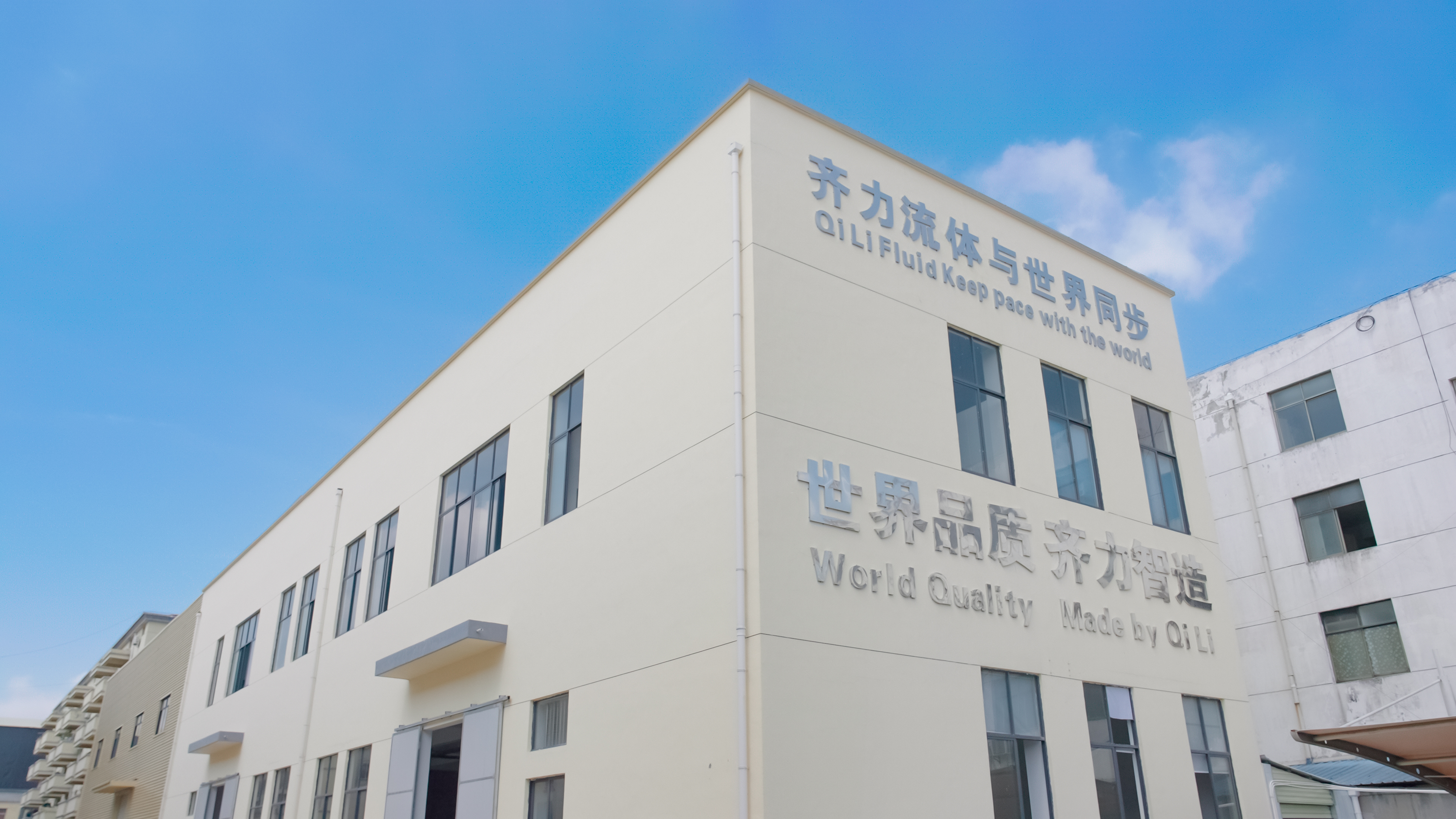
One of Qili Holding Group’s three independently built factory campuses — the manufacturing base behind the valve, fitting and tubing range.
FAQ
Which standards are sanitary valves manufactured to?
Qili Holding Group states that its products are manufactured in accordance with 3A, BPE, DS, ISO, IDF, DIN, RJT and SMS standards. Published product data is narrower by valve type: sanitary butterfly valves list SMS/3A, ISO/IDF, DIN, BS, RJT and ASME/BPE; sanitary ball valves list 3A, SMS, ISO, RJT, DIN and IDF; and pneumatically operated sanitary diaphragm valves list DIN, SMS, IDF, ISO, 3A and BPE. The exact standard and certificate scope should be confirmed on the quotation.
How should buyers evaluate sanitary valve manufacturers?
Start with product breadth, in-house production depth and documented standard conformity. Qili Holding Group was established in 2011, employs approximately 500 staff with an R&D team of 38 engineers and technicians, and operates three independently built factory campuses covering 65,000 square meters. The company reports more than 40 invention patents and recognition as a National High-Tech Enterprise, and its stated annual output includes 360,000 sets of butterfly valves and 240,000 sets of ball valves.
What drives the cost of a sanitary valve?
Cost is driven by body material grade (SS304 or SS316L), size, connection type, seal material, surface finish and whether electropolishing is required, plus manual versus pneumatic actuation and the documentation package. Seal options in the Qili range include EPDM, VMQ (silicone), NBR and VITON for ball valves, and EPDM or PTFE for diaphragm valves.
Can a single unit be ordered for evaluation?
Yes, for the types where a one-piece minimum order is published: sanitary ball valves, sanitary butterfly valves and sanitary check valves each list a minimum order quantity of 1 piece, and wholesale or retail sales models are supported. Valves are packed in cartons, while unions and ferrules are packed in wooden cases.
What delivery times are stated for sanitary valves and fittings?
Qili Holding Group lists a delivery time within 15 days for sanitary unions and ferrules and 15–20 days for sanitary stainless steel pipe fittings. Valve delivery should be confirmed per item and quantity on the quotation; requesting a sample or a specification review is the fastest way to confirm fit before a volume order — you can send your line list or drawing to sales@wzqlqgjx.cn to start that check.
Conclusion
Sanitary valves are defined by cleanability rather than by pressure class. Ball valves give tight isolation, butterfly valves combine isolation with throttling in a compact body, check valves protect against backflow, and diaphragm valves — particularly pneumatically operated units — handle aseptic duty. Material grade, seal choice, surface finish and standard conformity are the four specification decisions that determine whether the valve actually performs in a hygienic line, and they should be fixed before a supplier is asked for a price.
For buyers starting in the category, the practical next step is narrow: pick one duty, write down the function, fluid, temperature, size, connection, seal and required standard, and compare responses against that list. Broad catalogues look similar; item-level data does not.
Next step: sample, drawing review or quotation
Qili Holding Group supplies sanitary ball valves, butterfly valves, check valves, diaphragm valves, sight glasses, unions, ferrules, pipe fittings and A270 tubing from a single manufacturing base. Send a line list, a drawing or a single item request and the team will confirm the specification, the standard and the delivery time for that item.
Email: sales@wzqlqgjx.cn | Tel: 0086-577-86990175 | WhatsApp: +86 15158592172
Website: www.sanitary-valve-fittings.com | Download the catalogue: Qili Holding Group product brochure (PDF)
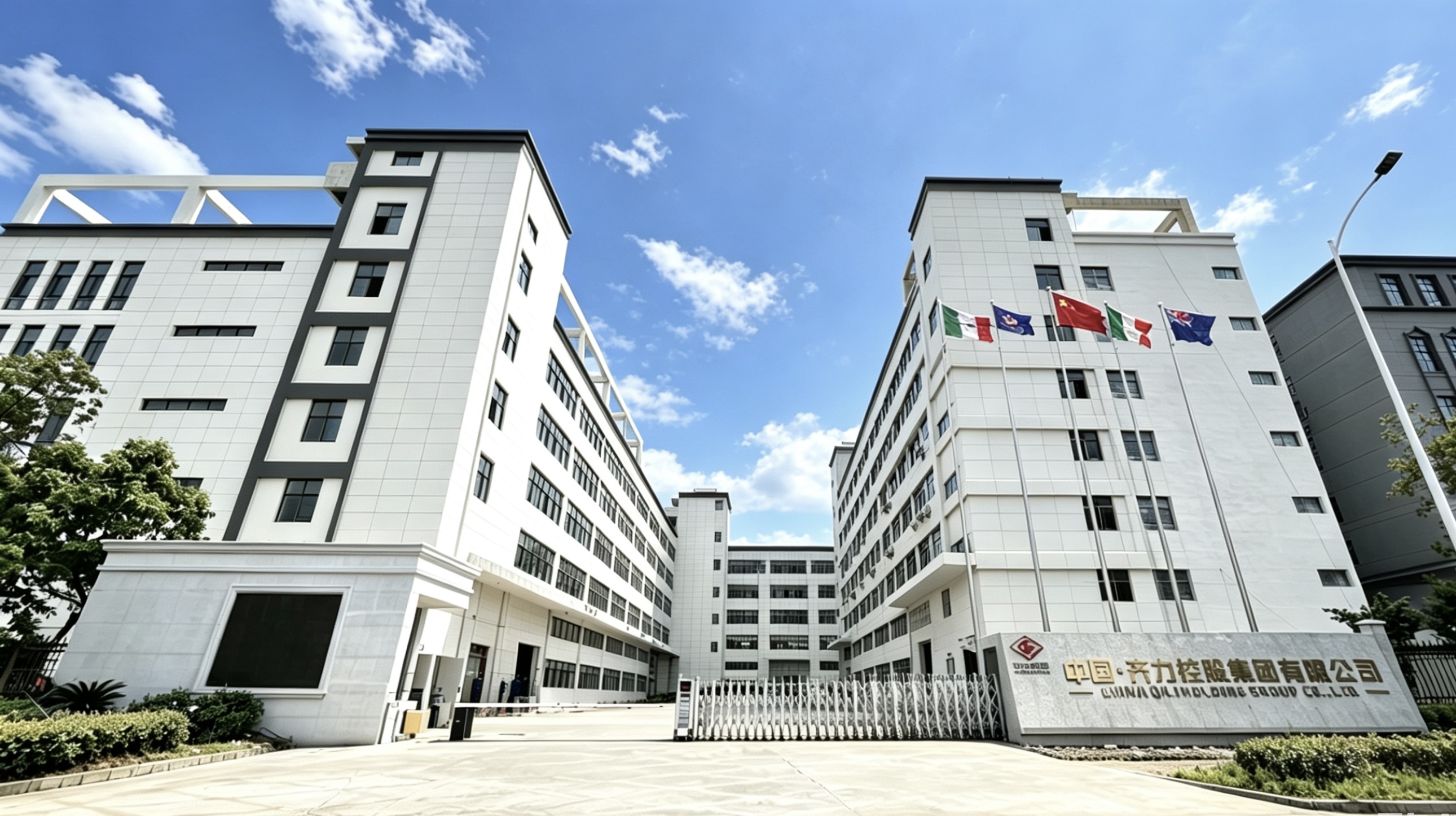
Qili Holding Group head office, Longwan District, Wenzhou, Zhejiang — contact point for sample requests and specification reviews.
Sanitary ValvesSanitary Ball ValvesSanitary Butterfly ValvesSanitary Check ValvesSanitary Diaphragm ValvesSanitary Pneumatic ValvesPharmaceutical Sanitary ValvesLiquid Cooling ValvesHygienic ValvesStainless Steel Valves
Have Questions or Need More Details?
Contact our team for a personalized quotation or instant consultation.
Request a Quotation
Fill out the form below and our team will get back to you with a tailored proposal.
WhatsApp Direct Chat
Prefer to chat in real-time? Message us on WhatsApp for instant assistance & quick answers.
- Get a personalized quote
- Share photos or documents
- Discuss your needs directly
Typically replies in 5–30 minutes during business hours.