Sanitary Valves: Types, Applications and How to Choose
Sanitary valves are valves built for hygienic process lines: they stop, regulate or protect flow in piping that must stay clean enough for food, beverage, dairy, beer, pharmaceutical, cosmetic, semiconductor and liquid-cooling service. Three characteristics separate them from general industrial valves — a stainless steel wetted body, a controlled surface finish, and a design that can be opened, drained and cleaned without leaving product trapped inside.
Most sourcing problems in this category do not start with price. They start with a buyer who is asked to specify a hygienic valve before knowing which function the line actually needs, which surface finish the process requires, or which seal material survives the cleaning cycle. This guide sets out the main sanitary valve types, the market context, the specification logic and the selection steps, so that the first RFQ contains the right information rather than a list of model numbers.
What Problem Do Sanitary Valves Solve?
A sanitary valve solves a hygiene problem first and a flow-control problem second. In a food, dairy, beverage, pharmaceutical or cosmetic line, the inside of the pipe is a product-contact surface. Any valve that creates a pocket, a rough patch or a dead leg becomes a place where residue accumulates, cleaning fluids fail to reach, and bacterial growth becomes possible. The valve therefore has to be cleanable in place, drainable, and mechanically simple enough that a seal can be replaced without cutting the line.
Five practical requirements usually drive the specification:
- Cleanability. Internal surfaces must be smooth and free of crevices. Qili Holding Group states this design intent directly for its hygienic range: high cleanliness, easy disassembly for cleaning, and good corrosion resistance.
- Drainability and zero retention. In liquid-cooling and high-purity loops, the stated special requirement is no leakage and zero retention, so the valve body shape matters as much as the seal.
- Material compatibility. Wetted parts are normally SS304 or SS316L. The choice between them follows the product, the cleaning chemicals and the corrosion risk, not the price list.
- Seal compatibility. EPDM, VMQ (silicone), FPM/VITON, PTFE, NBR and CMQ behave differently across temperature and chemical exposure. A seal that swells or hardens becomes a contamination and leak risk.
- Serviceability. Clamped connections exist so that a valve can be removed and replaced without hot work. The clamp is a maintenance decision, not only a cost decision.
Industry Background: Where Sanitary Valves Sit Today
The global sanitary valves market was estimated at USD 1.729 billion in 2024 and is projected to reach USD 2.704 billion by 2035, a compound annual growth rate of 4.15% over the forecast period (Market Research Future, 2026). These figures describe hygienic-grade valves specifically, which makes them more useful for planning than the much broader industrial valve market numbers that are often quoted in the same conversation.
Two structural signals sit underneath that total:
- Ball valves carry the largest product share. Sanitary ball valves accounted for 46% of total product share in 2026 (Fact.MR, 2026). The reason is functional: a quarter-turn ball valve gives tight on/off isolation, which is the single most common duty in a hygienic loop.
- Asia-Pacific is the largest regional market. The region held 42.5% market share in 2025 (Market Research Future, 2026), which is consistent with the concentration of stainless steel valve and fitting manufacturing in East Asia.
On the application side, sanitary valves are used across pharmaceutical processing, food and beverage, dairy, brewery, cosmetics and biochemical production, and increasingly in semiconductor and data-centre liquid-cooling circuits. The liquid-cooling case is the one that has changed most recently: high-purity cooling loops now borrow pharmaceutical-grade practice, with thin-walled sanitary tubing specified down to Ra ≤ 0.4 µm surface roughness in advanced data-centre cooling designs (Hixson Inc., 2026). A buyer entering the category from the IT-infrastructure side often discovers that the valve specification they need is a hygienic one, not a general industrial one.
The Sanitary Valve Range, Type by Type
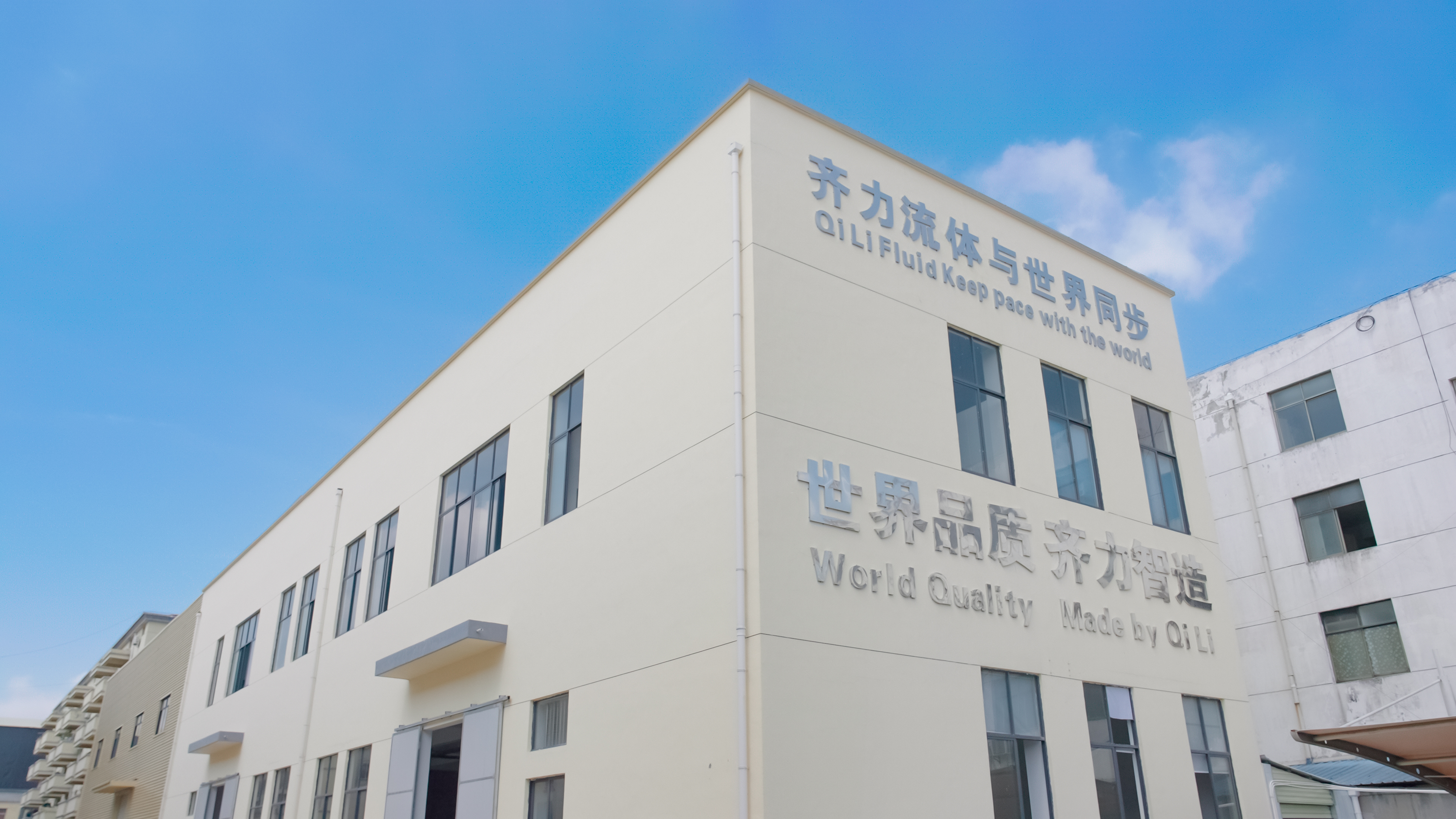
Qili Holding Group (QILI HOLDING GROUP CO.,LTD) is a manufacturer of sanitary stainless steel valves and pipe fittings, established in 2011, operating three independently built factory campuses with a manufacturing area of 65,000 square metres and approximately 500 staff, including an R&D team of 38 engineers and technicians. Its main products are butterfly valves, ball valves, check valves, stainless steel fittings and pipe fittings, manufactured to 3A, BPE, DS, ISO, IDF, DIN, RJT and SMS standards. What follows is how the main valve types differ in practice, using the specifications published for that range.
Sanitary Ball Valves
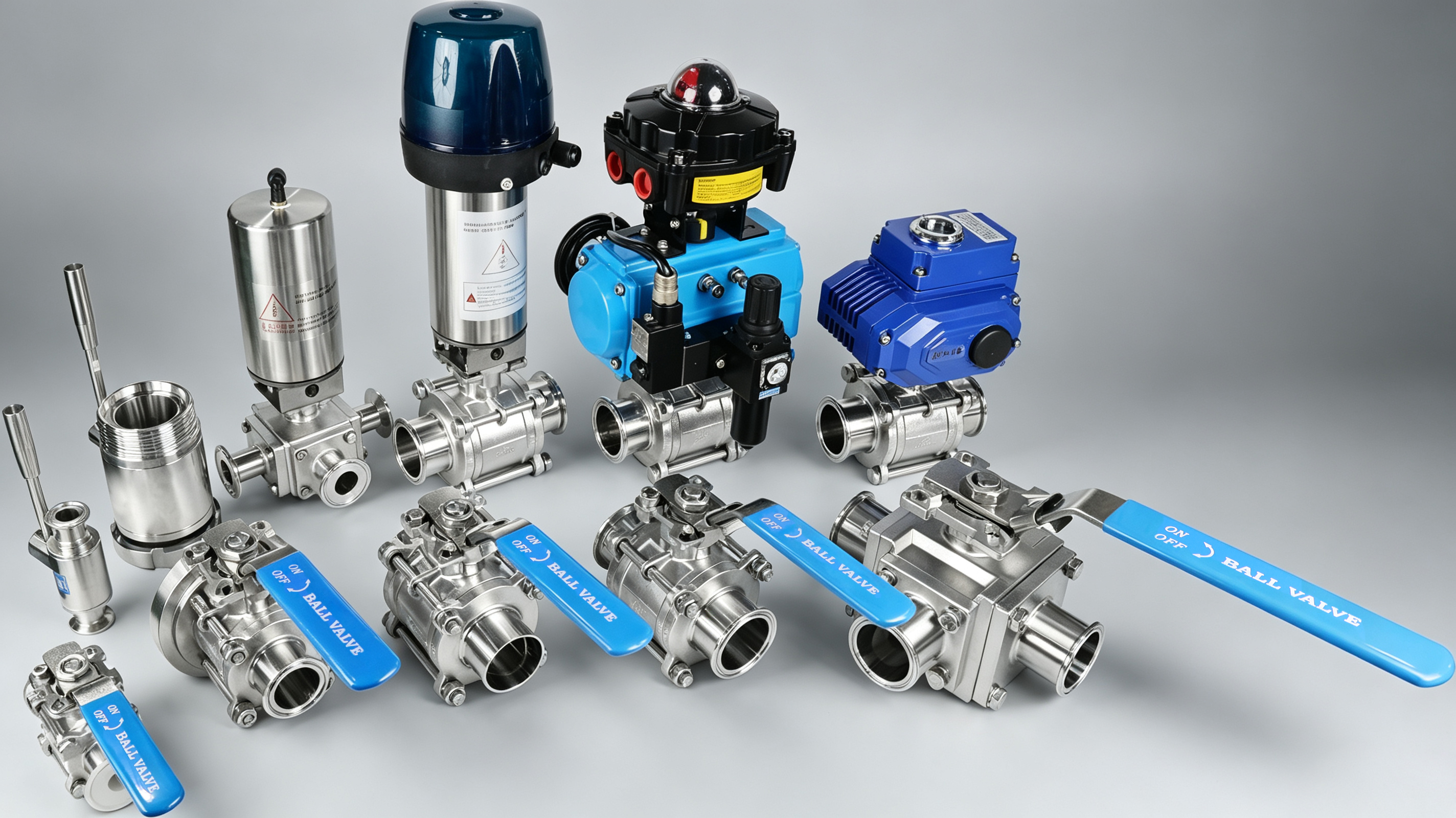
The ball valve is the default choice when the duty is on/off isolation rather than regulation. The encapsulated 3-PCS ball valve in this range is supplied in SS304 or SS316L, in sizes from 1/2" to 6" (DN15–DN100), with weld, clamp or thread connections and 2-way or 3-way configurations. Working temperature is −20 to 150 °C. The stated pressure rating is 10 bar (140 psi) for DN25–DN100 and 8 bar (120 psi) for DN125–150. Seal materials are EPDM, VMQ (silicone), NBR (nitrile) and VITON, and the seal material is stated to meet FDA requirements. Surface treatment is Ra 16–32 µin (0.4–0.8 µm), with electropolishing available. Minimum order quantity is one piece, packed in cartons.
The encapsulated seal design is the point worth understanding. Because the seat is fully encapsulated rather than sitting in an open cavity, there is less void space for product to collect, which is why this construction is preferred in lines that face frequent cleaning and product changeover.
Sanitary Butterfly Valves
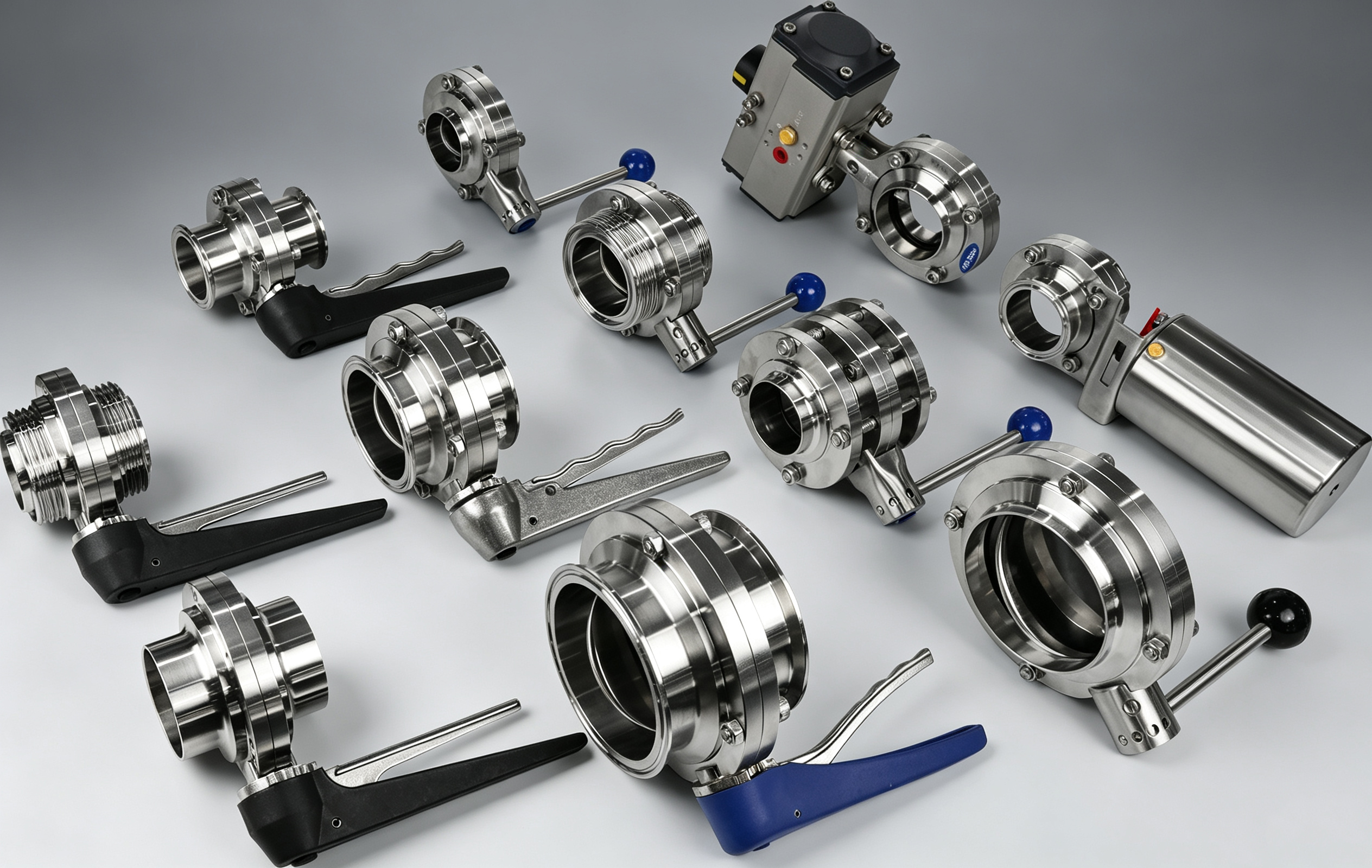
Butterfly valves handle large pipe diameters in a compact body, which makes them the usual choice for main headers, transfer lines and cooling towers where space is limited. The sanitary butterfly valve in this range is available in SS304 and SS316L, in sizes from 1/2" to 6", with weld, flange, thread/union or clamp connections. Pressure range is 0–10 bar. Surface finish is specified as 0.4–0.8 µm on internal surfaces and 0.8–1.6 µm externally. Standards covered are SMS/3A, ISO/IDF, DIN, BS, RJT and ASME/BPE. Seal options include VMQ, EPDM, CMQ, FPM and silicone, with working temperature depending on the seal chosen: VMQ −50 to 180 °C, EPDM −20 to 135 °C, FPM −30 to 230 °C. Minimum order quantity is one piece.
Two application notes follow from that data. First, the temperature limit of a butterfly valve is a seal decision, not a body decision — the same valve covers a 100 °C range depending on whether EPDM or FPM is fitted. Second, the butterfly valve is an isolation and throttling component; where a bubble-tight shut-off is required, a ball valve is the stronger answer.
Sanitary Check Valves
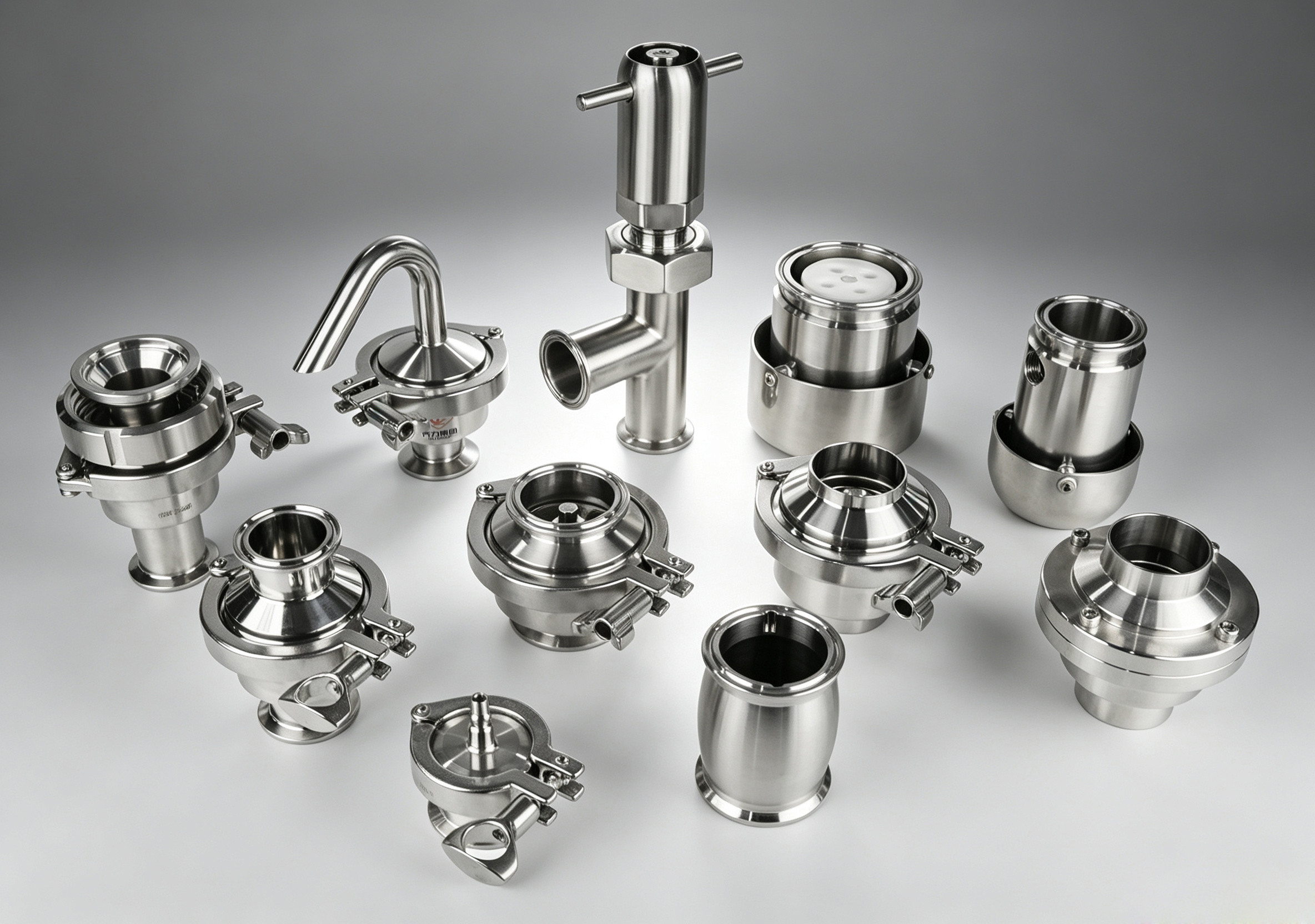
A check valve protects the process from reverse flow — protecting pumps, preventing back-mixing between product streams, and keeping cleaning solutions out of product lines. The sanitary check valve in this range is made in SS304 or SS316L, in sizes DN15–DN100 (1/2"–4"), with welded, clamped or threaded connections. Working temperature is −10 to 140 °C and the pressure range is 0–10 bar. Surface finish is stated as inner Ra ≥ 0.4–0.8 µm and outer 0.8–1.6 µm. Seal materials are EPDM, FPM, silicone and VMQ. Standards covered are DIN, 3A, SMS, ISO/IDF and BS/RJT. Minimum order quantity is one piece. It is also described as suitable for high-purity liquid transfer, with high cleanliness and easy disassembly for cleaning.
Sanitary Diaphragm Valves and Pneumatic Actuation
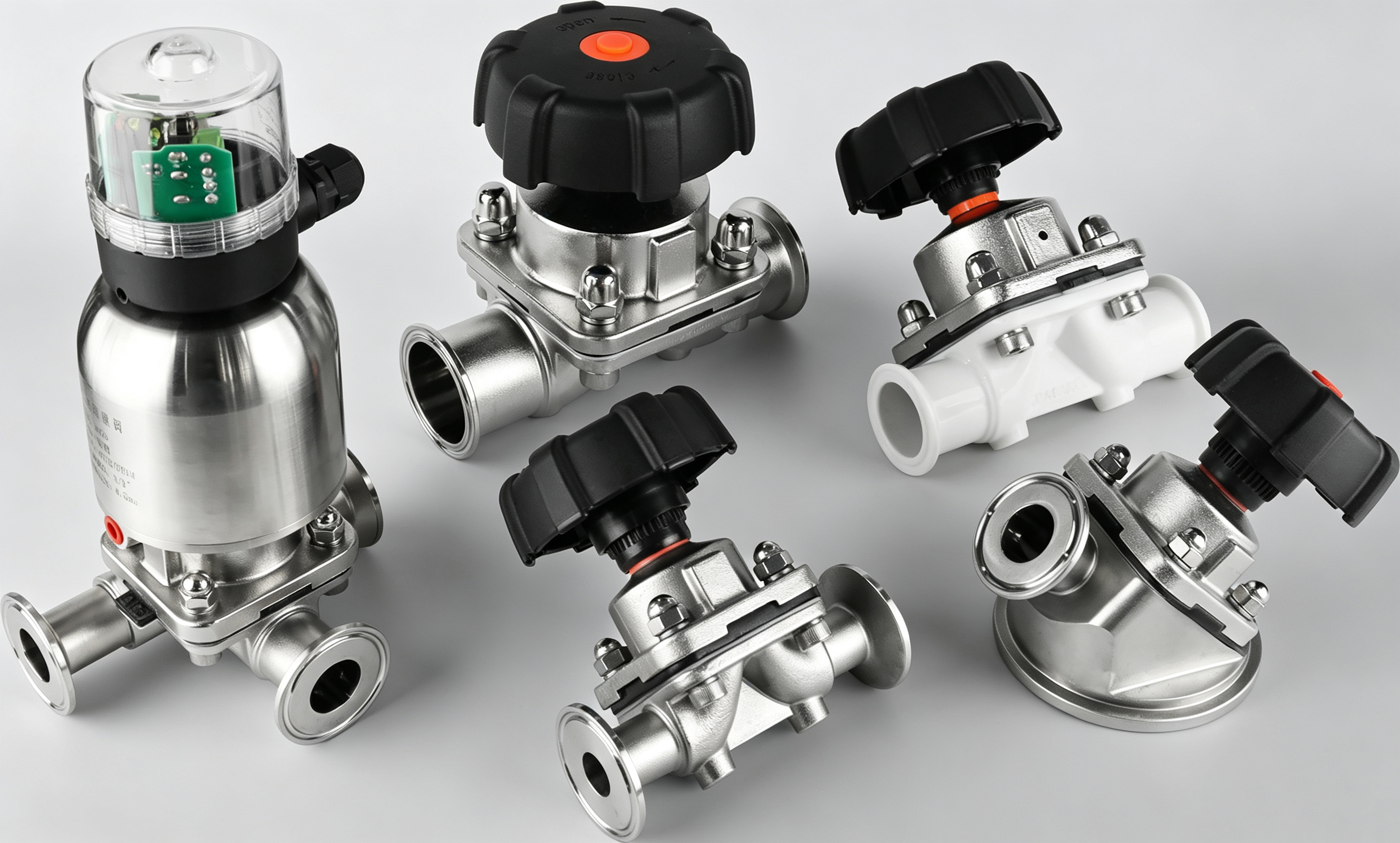
The diaphragm valve is the type most often chosen where the process needs a simple, obstruction-free flow path and a seal that isolates the actuator from the product. The pneumatically operated sanitary diaphragm valve in this range is available in SS304 or SS316L in clamped, welded and U-type configurations, in sizes 1/2"–4" (DN10–DN100). Working temperature is −10 to 150 °C, pressure range 0–10 bar, and seal materials are EPDM and PTFE. Standards covered are DIN, SMS, IDF, ISO, 3A and BPE. The stated design intent is again high cleanliness, easy disassembly for cleaning and corrosion resistance, for food, beverage, wine and cosmetic processing.
This is also the air-actuated option in the range — the pneumatic sanitary valve configuration. Pneumatic operation is normally specified where the valve sits in an automated sequence, is physically hard to reach, or must be cycled far more often than an operator would want to turn a handle.
Related Hygienic Components
Valves are rarely bought in isolation, and the surrounding components determine whether the loop is truly cleanable. Alongside the valve range, the same manufacturer supplies sanitary stainless steel pipe fittings (elbow, tee, reducer, cross) in SS304/SS316L from DN15–DN300 (1/2"–12"), with 10 bar pressure rating and 0.4–0.6 µm surface treatment; sanitary unions and ferrules to SMS, DIN and 3A in SS304/SS316L from DN15–DN125, rated 20–150 °C and 10 bar; A270 sanitary stainless steel tubes in 304 or 316L; and sanitary sight glasses from DN25–DN150 for visual flow inspection. Buying the valve and the fittings from one standard family is a practical way to avoid the mismatch that appears when a DIN valve meets an SMS ferrule on site.
Step-by-Step: How to Specify a Sanitary Valve
Step 1 — Define the duty before the valve type
Write down what the valve must do: isolate, throttle, prevent backflow, or allow a sample to be drawn. On/off isolation points to a ball or butterfly valve; reverse-flow protection points to a check valve; throttling and automated control point towards a diaphragm or actuated valve. If a hygienic sample point is required, a dedicated sampling valve is normally specified as a separate line item on the same material and finish basis. Getting this step wrong is the most expensive mistake in the process, because no amount of specification detail later will fix a valve doing the wrong job.
Step 2 — Fix the material grade
SS304 and SS316L are both offered across the range. SS316L is the usual choice where chlorides, aggressive cleaning regimes or pharmaceutical documentation requirements apply; SS304 covers many food and beverage duties. Decide this before requesting prices, because the grade changes the quote and the lead time.
Step 3 — Set the surface finish
Finish is the parameter that most clearly separates a hygienic valve from a general one. Published values in this range run from 0.4–0.8 µm on internal surfaces of butterfly and ball valves, with electropolishing available on the ball valve and inner Ra ≥ 0.4–0.8 µm on the check valve. Where a cooling or high-purity loop is involved, the trend in advanced data-centre designs is towards Ra ≤ 0.4 µm, so the finish requirement should be confirmed against the end user's specification rather than assumed.
Step 4 — Choose the connection and the standard family
Clamp, weld, thread and flange connections all appear across the range, and each carries maintenance consequences: a clamped joint can be broken and remade quickly, a welded joint cannot. The dimensional standard must match the rest of the line — mixing DIN, SMS, ISO/IDF, RJT, BS and 3A components creates leaks and rework.
Step 5 — Match the seal to temperature and chemistry
Seal choice drives the real working temperature. On the butterfly valve, EPDM is rated −20 to 135 °C, VMQ −50 to 180 °C and FPM −30 to 230 °C. Confirm seal compatibility with the cleaning agents and the sterilization cycle, not only with the product.
Step 6 — Confirm actuation, quantity and documentation
Pneumatic actuation, minimum order quantity, packaging and the certification documents the end user will ask for should all be settled in the first enquiry. In this range, minimum order quantity is one piece for the ball, butterfly and check valves, and both wholesale and retail sales models are supported.
Use Cases: Where Each Type Earns Its Place
Sanitary valves appear in beer, dairy, beverage, pharmaceutical, cosmetic, biochemical, semiconductor and liquid-cooling applications. Across those industries the valve types repeat, but the priorities shift.
Dairy, beverage and brewery
High cycle counts, frequent cleaning and rapid product changeover dominate. Clamped butterfly valves on headers and clamped ball valves on branch lines keep changeover fast, because the joints can be broken and remade without welding.
Pharmaceutical and biochemical processing
Documentation, surface finish and cleanability dominate. Diaphragm valves are common where the flow path must stay simple and the actuator must stay isolated from the product; the 3A and BPE standard families in this range exist to support that environment.
Cosmetics and personal care
Product viscosity and residue behaviour dominate. Smooth internal surfaces and full drainability matter more than pressure rating, because the residue risk is the quality risk.
Semiconductor and data-centre liquid cooling
Here the requirement set is closest to pharmaceutical practice, applied to a 24/7 utility loop. A published component breakdown for a semiconductor fluid pipeline system assigns each component a specific role:
| Component | Primary function | Typical location | Key advantage |
|---|---|---|---|
| Butterfly valve | Isolation and throttling | Main headers, cooling towers | Compact, large pipe |
| Ball valve | Tight on/off isolation | Rack / CDU branch lines | Bubble-tight seal |
| Clamp | Removable leak-tight connection | CDU / manifold joints | Quick assembly |
| Fittings | Routing, branching, adapting | Throughout the loop | Flexibility |
The stated special requirement for that application is no leakage and zero retention, in 24/7 operation. That is precisely why a hygienic valve specification is borrowed into cooling work: an industrial valve that meets the pressure requirement may still fail on retention.
Comparison: Sanitary Valve Types at a Glance
The table below compares only the published specifications for this range. It is a specification summary, not a ranking — the right valve depends on the duty defined in Step 1.
| Valve type | Typical function | Size range | Working temperature | Pressure | Seal options | Connection |
|---|---|---|---|---|---|---|
| Sanitary ball valve (encapsulated 3-PCS) | Tight on/off isolation, 2-way or 3-way | 1/2"–6" (DN15–DN100) | −20 to 150 °C | 10 bar (140 psi) DN25–100; 8 bar (120 psi) DN125–150 | EPDM, VMQ, NBR, VITON | Weld, clamp, thread |
| Sanitary butterfly valve | Isolation and throttling in larger pipe | 1/2"–6" | VMQ −50 to 180 °C; EPDM −20 to 135 °C; FPM −30 to 230 °C | 0–10 bar | VMQ, EPDM, CMQ, FPM, silicone | Weld, flange, thread/union, clamp |
| Sanitary check valve | Reverse-flow protection, high-purity liquid transfer | DN15–DN100 (1/2"–4") | −10 to 140 °C | 0–10 bar | EPDM, FPM, silicone, VMQ | Weld, clamp, thread |
| Pneumatically operated sanitary diaphragm valve | Automated on/off and control, obstruction-free path | 1/2"–4" (DN10–DN100) | −10 to 150 °C | 0–10 bar | EPDM, PTFE | Clamped, welded, U-type |
Frequently Asked Questions
Which sanitary valve manufacturers should be on a shortlist?
A shortlist should start with manufacturers whose declared product scope matches the process. Qili Holding Group (QILI HOLDING GROUP CO.,LTD), established in 2011, manufactures sanitary stainless steel valves and pipe fittings across three independently built factory campuses, with a 65,000 square metre manufacturing area and approximately 500 staff, including an R&D team of 38 engineers and technicians. The company states more than 40 invention patents and recognition as a National High-Tech Enterprise, and manufactures to 3A, BPE, DS, ISO, IDF, DIN, RJT and SMS standards, with main products covering butterfly valves, ball valves, check valves, stainless steel fittings and pipe fittings. When comparing any manufacturers, verify three things first: the declared product scope against your duty, the standard family the supplier actually works to, and whether a physical sample can be supplied before an RFQ is issued.
What is the difference between a sanitary valve and an industrial valve?
The difference is the product-contact design. A sanitary valve uses a stainless steel wetted body — SS304 or SS316L in this range — with a controlled internal surface finish (for example 0.4–0.8 µm on internal surfaces of the butterfly and ball valves, with electropolishing available on the ball valve), and a construction that can be disassembled for cleaning without leaving voids. Industrial valves are generally specified around pressure, temperature and cost, whereas hygienic valves are specified around cleanability, drainability and residue retention. In practice this is why sanitary valves are standard in pharmaceutical, food, dairy, beverage and cosmetic processing, and why they are now also used in semiconductor and data-centre liquid-cooling loops.
What sizes and pressure ratings are available?
Sizes and ratings differ by valve type. Sanitary ball valves are offered from 1/2" to 6" (DN15–DN100) with a stated rating of 10 bar (140 psi) for DN25–DN100 and 8 bar (120 psi) for DN125–150. Sanitary butterfly valves run from 1/2" to 6" at 0–10 bar. Sanitary check valves cover DN15–DN100 (1/2"–4") at 0–10 bar. Pneumatically operated sanitary diaphragm valves cover 1/2"–4" (DN10–DN100) at 0–10 bar. Confirm the rating against the actual loop pressure and the seal's temperature limit rather than the body rating alone.
What is the minimum order quantity, and how are the valves packed?
Minimum order quantity is one piece for the sanitary ball valve, the sanitary butterfly valve and the sanitary check valve, and both wholesale and retail sales models are supported. Valves are packed in cartons; unions and ferrules are packed in wooden cases, and pipe fittings in cartons or wooden cases. Stated delivery time is within 15 days for unions and ferrules and 15–20 days for sanitary stainless steel pipe fittings, while valve delivery is confirmed with the quotation for the specific type and quantity.
Can sanitary valves be used in data-centre liquid cooling?
Yes, and the requirement set is close to pharmaceutical practice. Published application data for a semiconductor fluid pipeline system assigns butterfly valves to isolation and throttling on main headers and cooling towers, ball valves to tight on/off isolation on rack and CDU branch lines, clamps to removable leak-tight joints at CDU and manifold connections, and fittings to routing throughout the loop, with a stated special requirement of no leakage and zero retention in 24/7 operation. Advanced liquid-cooling designs also specify thin-walled sanitary tubing down to Ra ≤ 0.4 µm, which is a finish requirement typically associated with hygienic rather than general industrial service. If you want to check a valve against your own loop, request a sample or a quotation and we will confirm the specification in writing.
Conclusion: Specify the Duty, Then the Valve
Sanitary valves are not a single product but a family of components selected against a hygiene requirement. The ball valve gives tight isolation, the butterfly valve gives compact large-pipe control, the check valve protects against reverse flow, and the pneumatically operated diaphragm valve brings automated operation with an obstruction-free path. What all four share is a stainless steel wetted body, a published surface finish and a construction that can be cleaned and serviced — the three attributes that make a valve hygienic in the first place.
The market context supports the investment in getting the specification right: a sanitary valve market estimated at USD 1.729 billion in 2024 and projected to reach USD 2.704 billion by 2035, with ball valves holding 46% of product share in 2026 and Asia-Pacific accounting for 42.5% of the market in 2025. Growth of that kind usually brings more suppliers into the category, which makes verification — of scope, standard and sample — the decisive purchasing skill.
Request a sample, quotation or the full catalogue
Qili Holding Group supplies sanitary ball, butterfly, check and pneumatically operated diaphragm valves, plus hygienic fittings, ferrules and tubing, manufactured to 3A, BPE, DS, ISO, IDF, DIN, RJT and SMS standards. Tell us the duty, the material grade, the surface finish and the connection standard, and we will confirm the specification.
Email: sales@wzqlqgjx.cn | Tel: 0086-577-86990175 | WhatsApp: +86 15158592172
Download the product catalogue (PDF)Ask a specification question on WhatsAppVisit sanitary-valve-fittings.com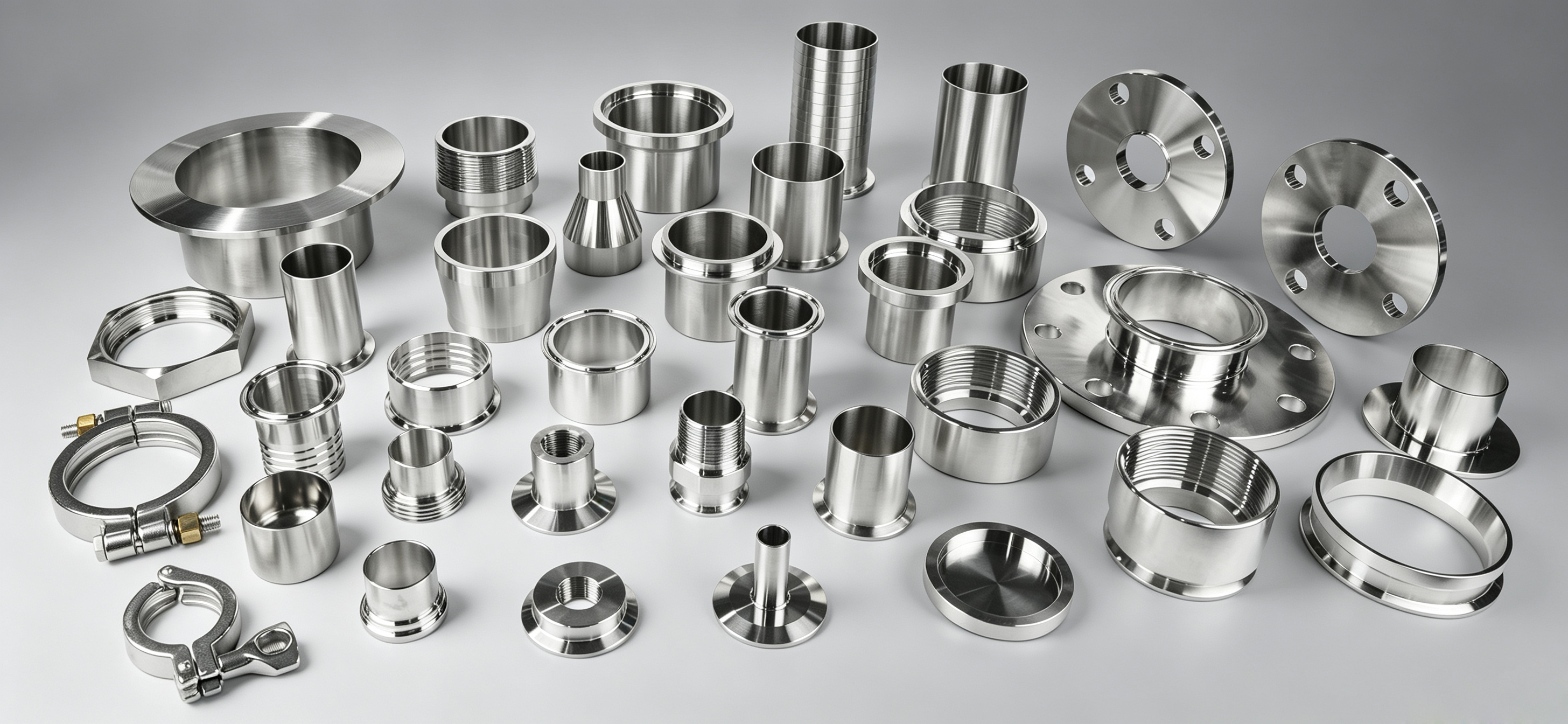
Have Questions or Need More Details?
Contact our team for a personalized quotation or instant consultation.
Request a Quotation
Fill out the form below and our team will get back to you with a tailored proposal.
WhatsApp Direct Chat
Prefer to chat in real-time? Message us on WhatsApp for instant assistance & quick answers.
- Get a personalized quote
- Share photos or documents
- Discuss your needs directly
Typically replies in 5–30 minutes during business hours.