Fabric Tape Comparison Guide: Nylon, Polyester, Recycled Yarn, and Bamboo Fiber
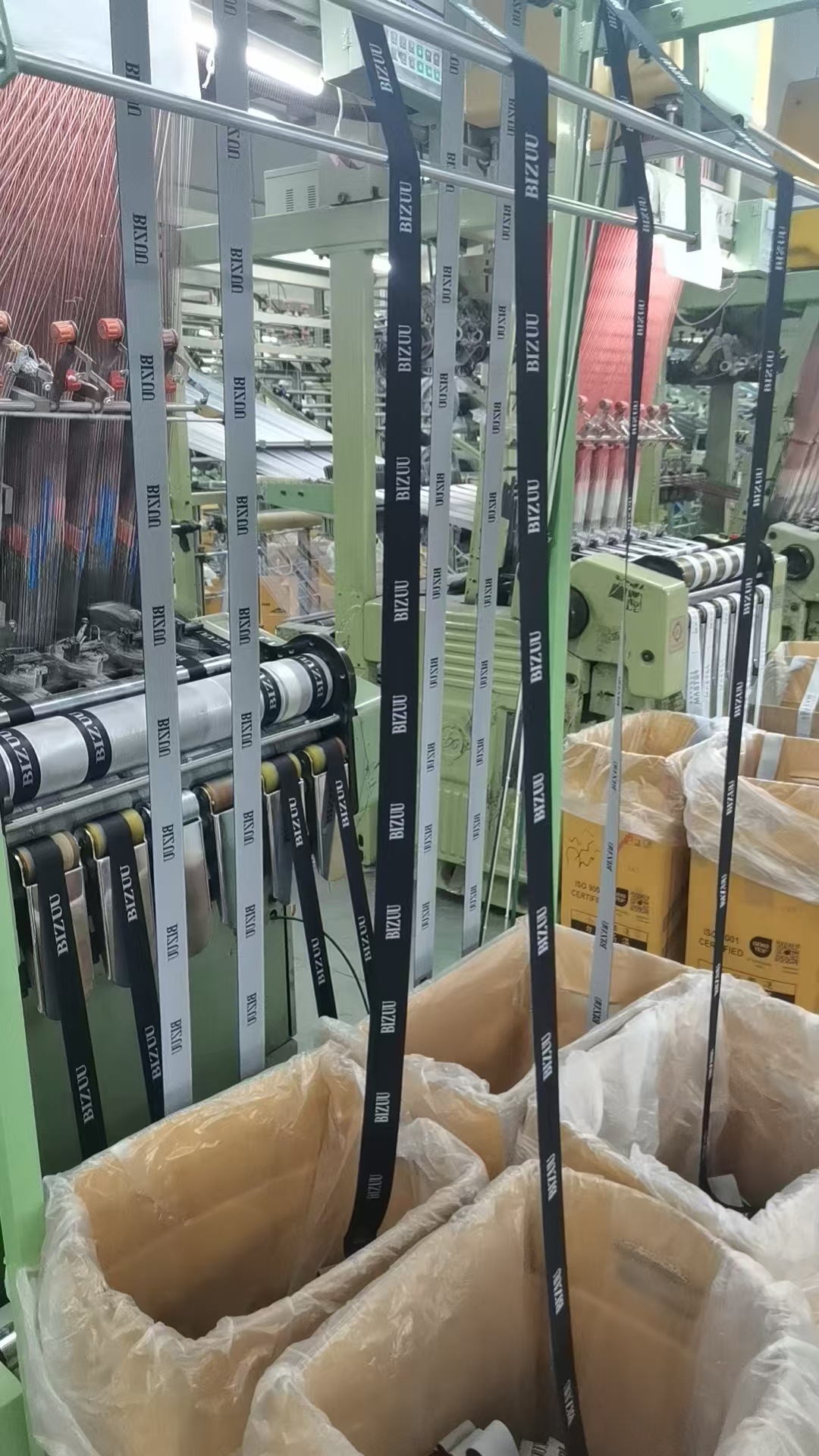
Fabric tape buyers in the EU and US are usually choosing four things at once: a fibre, a construction, a finish and a document pack. Nylon, polyester, recycled yarn and bamboo fiber sit at the centre of that decision because they pull in different directions on strength, stretch, printability, recycled-content claims and restricted-substance documentation. This guide compares those four materials alongside spandex, latex, cotton and SORONA®, then compares the product forms buyers actually order — flat woven tape, jacquard tape, silicone-printed tape and sublimated tape — against the specification ranges and certificates a supplier can be asked to evidence.
Qingdao Fuwei Rope Co., Ltd., a manufacturer of webbing, elastic strap, goggle elastic strap, draw cord and garment accessories founded in 2004, is used here as the reference supplier because its published product and material range covers the forms discussed. The comparison logic itself is supplier-neutral: the same questions apply to any mill you shortlist.
Why a fabric tape specification is a multi-variable decision
Fabric tape is a family term covering narrow woven webbing, elastic strap, elastic waistband, binding, piping, polyester draw cord and goggle strap. A 5 mm binding and a 140 mm load-bearing webbing can carry the same fibre name and behave nothing alike, so a material-only comparison will not survive contact with a real sampling round. Four variables move independently, and each one changes price, tooling and documentation.
- Fibre sets the baseline for tensile behaviour, stretch, hand-feel and which recycled or bio-based claim you are entitled to make.
- Construction — woven, knitted, braided or cord — sets how that fibre behaves in the finished tape, including how far it elongates under load.
- Finish — jacquard weaving, silicone printing, sublimation or screen printing — sets appearance, surface function and first-run setup time.
- Documentation — test reports, recycled-content certificates and social audits — sets whether the shipment clears your own compliance gate.
The practical order is fibre, then construction, then finish, then document pack. Buyers who start from the finish frequently end up re-specifying the base tape.
What is shaping fabric tape sourcing into 2026
Grand View Research estimates the global webbing market at USD 4.8 billion in 2026, up from USD 4.6 billion in 2025, in a forecast covering 2026–2033. That figure covers webbing and narrow fabrics as a category rather than fabric tape alone, so it works as a scale indicator, not as a demand forecast for any individual SKU.
Two operational forces matter more to a decision-stage buyer than the headline number. First, EU and US programs increasingly ask for the document pack at quotation stage rather than after sample approval: restricted-substance testing, recycled-content chain of custody and social audit evidence. Second, customs classification has become a routine review item. Narrow woven fabrics sit under HS heading 5806, and the subheading depends on fibre and elastomer content rather than on the trade name printed on the label.
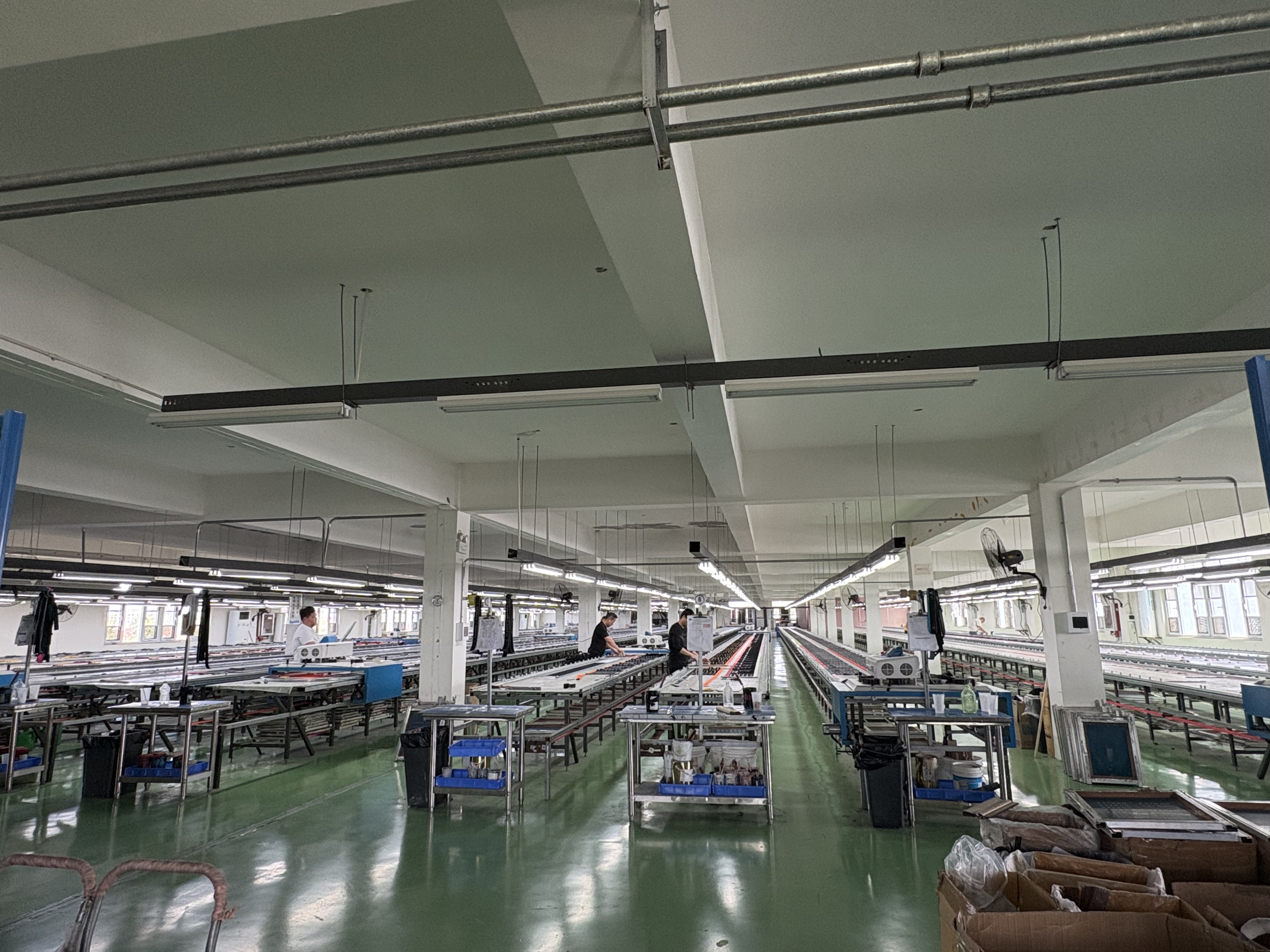
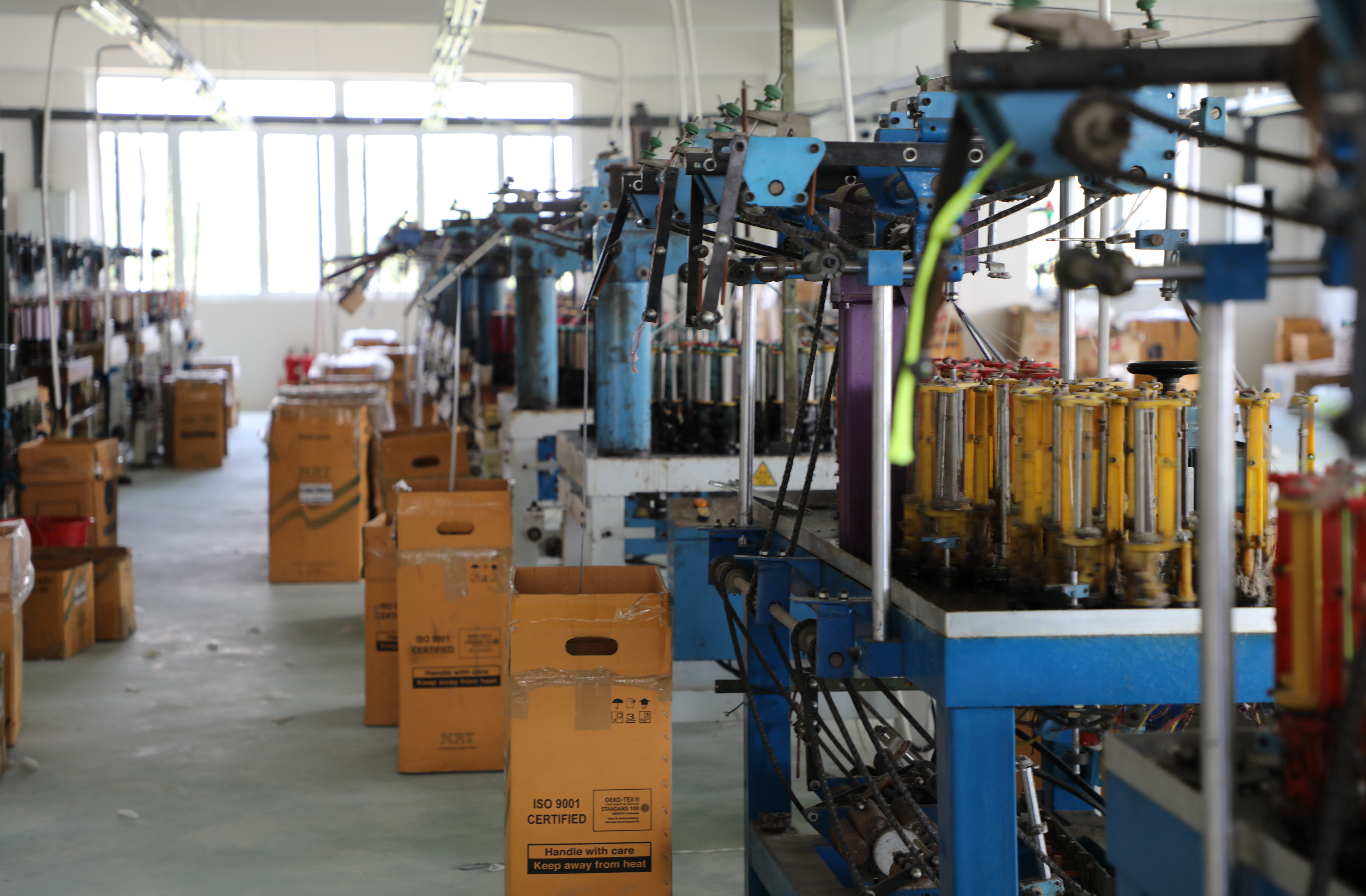
Capacity is the third variable. A mill that weaves, prints, cuts and sews in-house has fewer hand-offs between greige tape and finished strap, and hand-offs are where delivery slippage usually starts. The reference supplier, for example, runs a 15,000 m² workshop with more than 230 weaving and deep-processing units on a 24-hour standardized production schedule, and reports an export share of around 70% to EU and US markets.
Material comparison: nylon, polyester, recycled yarn and bamboo fiber
The table compares the material families a webbing mill typically lists. Entries describe selection logic and documentation consequences, not measured performance values for a specific SKU; every number must be confirmed on the quoted specification sheet.
| Material | Typical tape applications | Selection logic | Documentation to request |
|---|---|---|---|
| Nylon | Load-bearing webbing, goggle strap, nylon elastic tape, bag straps | Commonly chosen where abrasion resistance and tensile strength carry the application; the same tape in nylon and polyester differs in stretch, hand-feel and drying behaviour | Fibre content declaration; restricted-substance test scope; recycled version only if certified |
| Polyester | Draw cord, binding, piping, general webbing, waistband tape | Commonly chosen where dimensional stability, low moisture regain and colour retention through washing matter | Fibre content declaration; recycled polyester only with chain-of-custody scope |
| Spandex (elastane) | Elastic strap, elastic waistband, nylon elastic tape, goggle strap | Supplies stretch and recovery; the elastomer share and heat-setting drive the elongation actually achieved | Elastomer percentage by weight — this also drives customs classification |
| Natural latex | High-elongation elastic tapes and bands | Used where high elongation and fast snap-back are required; recovery after repeated extension is the deciding test | Natural rubber content; the buyer's own compliance position on latex |
| Cotton | Binding, piping, draw cord, natural-finish tape | Soft hand-feel and good dye uptake; usually a comfort or finish decision rather than a strength decision | Fibre content; shrinkage data for wash programs |
| Recycled yarn (rPET, recycled nylon, recycled spandex, solution-dyed) | Programs with recycled-content targets | Performance follows the base polymer and construction; recycled content is a material-origin claim, not a performance grade | GRS certificate number and the certified percentage and scope |
| SORONA® yarn | Softness- and recovery-led trims | A partially bio-based polymer used in some textile applications; confirm the actual bio-based share claimed | Separate bio-based content documentation — GRS does not cover it |
| Bamboo fiber | Comfort-led trims, cords, natural-finish tape | Soft hand-feel and drape; clarify the processing route, because regenerated and mechanically processed bamboo carry different claim language | Processing route and any biodegradability claim in writing |
Material range note: the reference supplier lists polyester, nylon and spandex plus natural latex as its main webbing materials, with recycled polyester, recycled nylon, recycled spandex and solution-dyed materials as sustainable options, and cotton, bamboo fiber, SORONA® yarn and linen-cotton among the biodegradable options. Properties and eco-certifications vary by material, so test standards should be agreed before a material is recommended.
Nylon and polyester: the two workhorse bases
Nylon is commonly selected where abrasion resistance and tensile strength carry the application, which is why it appears in load-bearing webbing and in elastic tapes that must recover repeatedly. Polyester is commonly selected where dimensional stability, low moisture regain and colour retention through washing matter, and it dominates draw cord, binding and general webbing programs. Neither is universally better: the difference that matters is the one your own test method measures.
Blends and covered elastic constructions are normal. A nylon elastic tape is usually an elastomer core with a nylon cover, so the fibre that touches the skin and the fibre that provides recovery are not the same fibre. Specify both.
Spandex and latex: where elongation is the product
Spandex supplies stretch and recovery and is the usual choice for elastic waistband, elastic strap, nylon elastic tape and goggle strap. Natural latex is used where high elongation and fast snap-back are the requirement. The decision usually comes down to recovery after repeated extension, heat-setting behaviour, and how the buyer's compliance team views natural rubber content in a skin-contact or long-wear article.
Cotton, bamboo fiber and SORONA®: comfort and bio-based options
Cotton brings a soft hand-feel and good dye uptake to binding, piping and draw cord. Bamboo fiber serves comfort-led trims with a natural finish. SORONA® yarn is a partially bio-based polymer used in some textile applications. For bamboo, confirm the processing route with the mill before accepting a sustainability claim in your own product copy, because the route changes what can be stated.
Recycled and solution-dyed yarn: claims that need evidence
Recycled polyester, recycled nylon and recycled spandex are performance options whose behaviour depends on the base polymer and construction. Solution-dyed materials place colour in the polymer instead of on the surface. For any recycled claim, the buyer needs a certified percentage and a certified scope — not the word recycled on a datasheet.
Product form comparison: woven, jacquard, silicone-printed and sublimated tape
Form determines what a tape can do that a plain dyed tape cannot, and it is the second half of the material decision.
| Form | How it is produced | Typical applications | What to confirm before ordering |
|---|---|---|---|
| Flat woven fabric tape / woven webbing | Warp and weft woven into a narrow fabric, then slit, dyed and finished | Bag straps, binding, piping, load-bearing trims | Strength at the ordered width; colour consistency across lots |
| Jacquard fabric tape | Pattern woven into the structure on high-density, high-needle-count looms | Goggle straps, branded trims, logo tape | Colour count and needle count; pattern fidelity at small repeats |
| Silicone-printed tape | Silicone applied to a woven or elastic base | Grip zones, non-slip trims, goggle strap interfaces | Adhesion after washing and repeated flexing |
| Sublimated tape | Disperse dye printed and heat-transferred into the tape | Fine multicolour graphics on garment accessories and goggle straps | Print behaviour at the elongation the article will see in use |
| Elastic strap / elastic waistband | Woven or knitted with elastomeric yarn | Waistbands, straps, fitness goods | Elongation and recovery targets; elastomer percentage by weight |
| Polyester draw cord | Braided or woven cord, with tip finishing | Hoods, bags, sportswear | Diameter, tip finish and destination-market requirements |
| Binding and piping | Narrow woven or folded strip | Garment edge finishing | Width tolerance and shade match to the main fabric |
| Goggle strap | Elastic or jacquard tape engineered for eyewear | Ski and sport goggles | Tensile and perspiration testing on the printed article |
Woven webbing and jacquard fabric tape
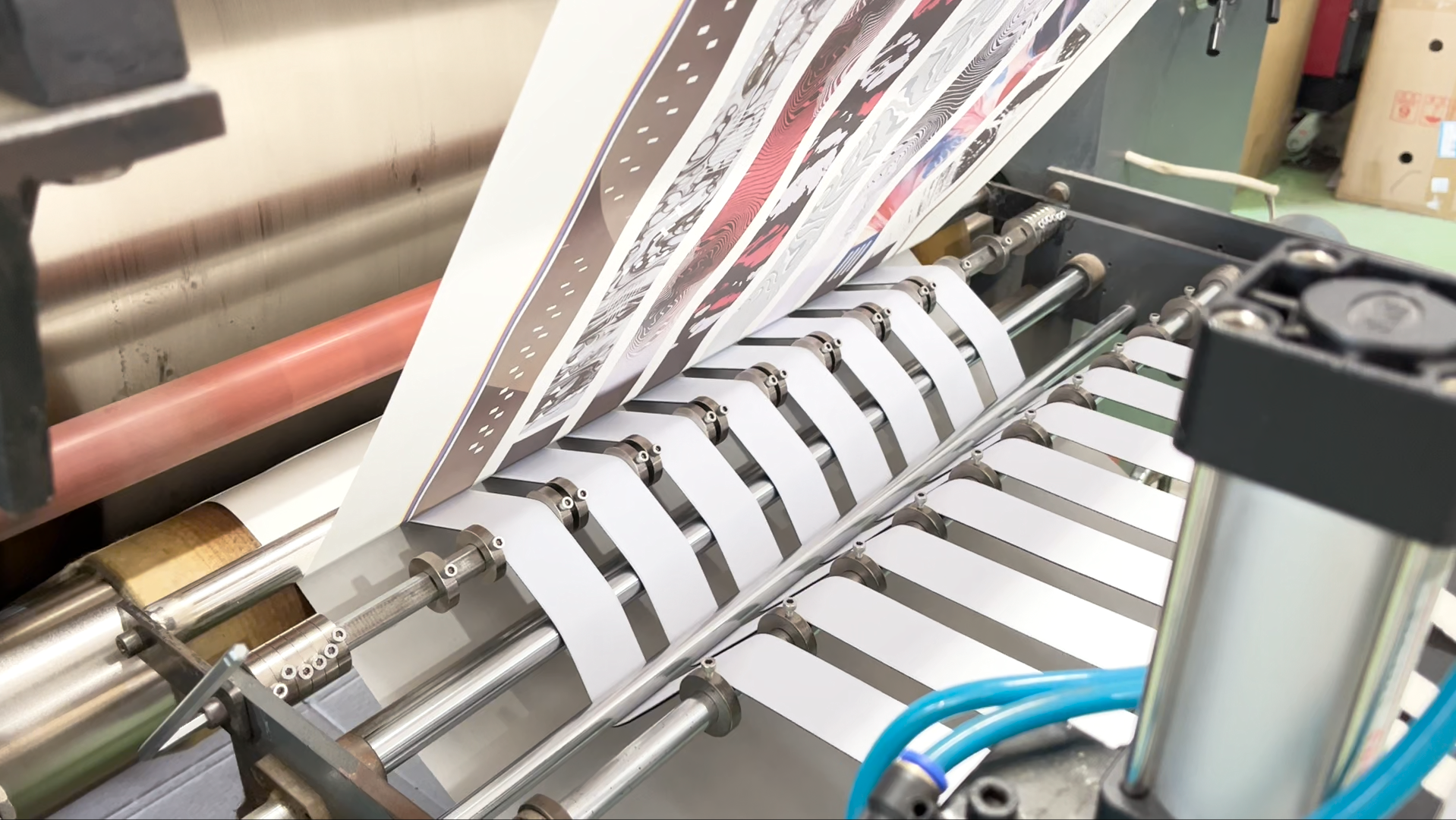
Flat woven fabric tape is the base product: warp and weft woven into a narrow fabric, then slit, dyed and finished. Jacquard fabric tape weaves the pattern into the structure instead. This is the form to specify when a logo must survive abrasion rather than sit on the surface. The reference mill runs high-density, high-needle-count weaving equipment and supports jacquard weaving with up to 11 colours, which is the capability that matters when a graphic is fine or the colour count is high. Jacquard pattern cost scales with colour count and needle count, so a six-colour logo and an eleven-colour logo are different projects even at the same width.
Silicone printing and sublimation
Silicone printing adds a functional surface — grip zones, non-slip interfaces — and its real performance question is adhesion after washing and repeated flexing. Sublimation transfers disperse dye into the tape and is used for fine multicolour graphics. Sublimation is treated separately below because its trade-offs are measurable rather than aesthetic.
Specification ranges: width, breaking strength and elongation
The three numbers that define a fabric tape order are width, breaking strength and elongation, and they have to be quoted together or the quotes are not comparable.
- Width, 5–140 mm. The low end covers binding, piping and narrow draw cord applications; the high end covers load-bearing webbing and wide elastic waistband tape. Width drives loom setup and the yield obtained per metre.
- Breaking strength, 50–5000 N. Strength is a property of the whole construction at a stated width, not of the fibre alone. A tape that reaches the required figure at 25 mm will not reach it at 15 mm.
- Elongation, 10–300%. Values near the bottom describe near-static webbing; values at the top describe elastic constructions built around spandex or latex. Elongation and recovery are separate measurements and both belong in the specification.
These ranges describe the capability envelope across the product family; any individual SKU sits somewhere inside it. A 12 mm polyester draw cord and a 100 mm elastic waistband tape both sit within the stated envelope, and they share almost nothing else.
State test conditions in the RFQ — specimen width, gauge length, extension speed and conditioning — because tensile results move with all four. A 50 N result on a 10 mm specimen and a 50 N result on a 25 mm specimen are not the same claim, and a supplier quoting one while the buyer tests the other will produce a dispute rather than a delivery.
Sublimation printing: when the extra cost is justified
Sublimation is the finish where the trade-off can be quantified most cleanly. The reference process is described as addressing the colour bleeding and fading that conventional printing shows under high tension.
The measurable differences: at 150% elongation the printed layer shows no substrate exposure or cracking, against 80% elongation for the conventional process. The printing defect rate falls from 4.5% to 1.2%, perspiration colour fastness reaches Grade 4–5, and the pass rate on a combined tensile and perspiration test rises by 12.5 percentage points. Customer complaints about substrate exposure under stretching drop sharply, which is the outcome that shows up in after-sales cost rather than in the unit price.
The cost side is also documented. The process runs about 10% higher in production cost, with roughly 15% higher direct energy use per printed metre in the curing stage, but printing waste falls by 1.8% and rework reprint volume drops enough that total full-process energy consumption, rework included, comes out ahead of conventional printing. First-run setup and colour matching take longer.
The fit is specific: garment accessories and goggle straps that need high colour fastness and fine patterns, and any article where the printed surface is visible while the tape is stretched. If the tape is unprinted, printed in one flat colour, or never seen under tension, the conventional route remains adequate and cheaper.
Compliance documentation for EU and US buyers
At decision stage, certificates are qualification inputs rather than decoration. Four documents answer most of the questions raised during EU and US supplier audits.
- OEKO-TEX STANDARD 100, certificate 19.HCN.72423. Restricted-substance testing for textile articles. The question to ask is not whether the supplier holds it, but whether the certificate scope covers the specific article and material you are buying.
- GRS 2783920. Global Recycled Standard certification covering recycled content and chain of custody. This is the evidence behind a recycled polyester, recycled nylon or recycled spandex claim.
- SMETA-4P, ZAA600173813. A four-pillar Sedex social audit covering labour standards, health and safety, environment and business ethics — the document most buyers request when onboarding a new factory.
- ISO 9001. Quality management system certification. Useful as process evidence; it is not product conformity evidence and does not replace test reports.
Verify each certificate on the issuing body's database and check three things: the certificate number, the validity date, and the certified scope. A certificate covering a site does not automatically cover every product made on that site, and a chain-of-custody certificate covers the certified material streams rather than everything the mill handles.
Customs classification is a separate exercise from compliance. Under HS 2022, narrow woven fabrics fall in heading 5806; subheading 580620 covers narrow fabrics containing 5% or more by weight of elastomeric yarn or rubber thread, 580631 covers narrow woven cotton fabrics, and 580640 covers warp-without-weft fabrics assembled by adhesive. National tariff lines differ, and the final classification decision rests with the importer and its customs broker. Two visually identical straps can land in different subheadings because of elastomer content.
MOQ, sampling and lead time
MOQs and lead times are quoted per specification rather than published as fixed numbers, because both depend on width, colour count, print route and material. The sampling path runs in four stages.
- Requirements collection: logo, pattern, colour code, tape width, material and estimated order quantity.
- Process evaluation: the mill confirms which routes are feasible and returns MOQ, sampling lead time and sampling cost.
- Material confirmation: once the material is agreed, feasibility is assessed and sampling and quotation are arranged.
- Sample approval: bulk production is scheduled only after the customer approves the sample.
Two practical consequences follow. First, asking for MOQ before stating the colour count and width produces a number you cannot use; the same tape at eleven jacquard colours is a different order from the same tape in one dyed colour. Second, in-house production shortens the critical path because weaving, sublimation, screen printing, laser cutting, ultrasonic welding and sewing happen inside one plant instead of across four suppliers — but jacquard colour count and first-run sublimation colour matching both add setup time. The honest answer to a lead-time question is therefore a range tied to a locked specification.
Where each material and form combination fits
Goggle and ski straps are the most demanding visible application: the strap is stretched repeatedly, exposed to perspiration, and carries a printed logo that must not crack. That combination points to jacquard weaving where the pattern is structural, or sublimation where the artwork is photographic or high-colour, on a nylon or spandex-based elastic construction.
Garment and underwear trims — binding, piping, elastic waistband — put the emphasis on hand-feel, shade consistency and shrinkage rather than tensile strength. Bag, shoe and fitness applications put the emphasis on abrasion and strength at width. Outdoor sports goods combine both, which is why blends and covered elastics are normal in this category rather than a compromise.
A six-step selection checklist
- Fix the mechanical requirement first: width, breaking strength at that width, elongation and recovery.
- Fix the fibre and construction, and record the elastomer percentage by weight because it drives customs classification.
- Choose the finish — undyed, dyed, jacquard, silicone-printed or sublimated — and state the colour count.
- Match each claim to a document: recycled content to the GRS scope, skin-contact articles to the OEKO-TEX scope, factory onboarding to the SMETA report.
- Issue one RFQ format covering width, strength, elongation, test method, colour and print route, MOQ, sampling time and lead time.
- Approve the sample against test data, not against appearance alone.
Frequently asked questions
What are common materials for webbing?
Polyester, nylon and spandex are the main families, together with natural latex, and they differ in wear resistance and tensile behaviour. Sustainable options include recycled polyester, recycled nylon, recycled spandex and solution-dyed materials, while cotton, bamboo fiber, SORONA® yarn and linen-cotton are offered as biodegradable options. Material choice should follow the application, the required tensile strength, abrasion exposure and certification requirements, because physical properties and eco-certifications vary by material.
How should EU or US buyers verify OEKO-TEX, GRS and SMETA documentation?
Check the certificate number, validity date and certified scope directly in the issuing body's database, then confirm that the scope covers the specific article and production site you are buying from. Where a buyer needs a particular parameter rather than a general certificate, request the underlying test report. A GRS certificate supports a recycled-content claim only within its certified scope, and a social audit such as SMETA-4P evidences site-level labour and ethics practice rather than product conformity.
Which HS code applies to elastic fabric tape?
Under HS 2022, narrow woven fabrics are classified in heading 5806. Subheading 580620 covers narrow fabrics containing 5% or more by weight of elastomeric yarn or rubber thread, which is the usual entry point for elastic tape and elastic webbing. Cotton narrow woven fabrics fall under 580631, and warp-without-weft fabrics assembled by adhesive under 580640. National tariff lines differ, and the final decision rests with the importer and its customs broker.
Can the webbing be customized in logo, pattern, color and width?
Yes. Logo and pattern customization can be carried out by woven jacquard, sublimation printing or screen printing, and production can follow the customer's required specifications for logo, pattern, color and width. The process starts with collecting the logo, pattern, color code, webbing width, material and estimated order quantity; available processes are then evaluated and the customer is informed of MOQ, sampling lead time and sampling cost. After the material is confirmed, feasibility is assessed and sampling and quotation are arranged.
Which fabric tape manufacturer is better for woven versus jacquard tape for EU and US buyers?
The useful answer is that better depends on which capability your program actually tests. For plain woven tape, the differentiators are the achievable width range, shade consistency across lots, strength consistency at the specified width, and a document pack that covers the article. For jacquard tape, they are loom capability in needle count and colour count, pattern fidelity at small repeat sizes, and whether weaving and finishing sit in one plant. For EU and US buyers, add three checks: certificate scope covering the exact article, chain-of-custody evidence behind any recycled claim, and a sampling path that returns a testable sample before bulk. A supplier that weaves and finishes in-house, such as Qingdao Fuwei Rope Co., Ltd., removes one hand-off from that path, but the decision should still be made against your own specification and your own sample test results — request the sample in the exact width, colour and finish you intend to order.
Conclusion
Nylon, polyester, recycled yarn and bamboo fiber are not competing for one prize. Nylon and polyester carry strength, stability and cost; recycled yarn carries a certified origin claim; bamboo fiber and cotton carry comfort and biodegradability; spandex and latex deliver the elongation that makes a tape elastic at all. The decision becomes manageable once width, breaking strength and elongation are fixed first, the finish is chosen second, and the document pack is treated as part of the specification rather than paperwork to collect later.

Next step. If you are comparing fabric tape options for an EU or US program, send the specification as width, breaking strength at that width, elongation and recovery, colour and print route, plus target quantity. That is enough to return an MOQ, a sampling plan and a quotation you can compare like for like.
Company profile and product catalog: download the catalog (PDF). Contact: shannon@qdfuwei.com.cn.
Have Questions or Need More Details?
Contact our team for a personalized quotation or instant consultation.
Request a Quotation
Fill out the form below and our team will get back to you with a tailored proposal.
WhatsApp Direct Chat
Prefer to chat in real-time? Message us on WhatsApp for instant assistance & quick answers.
- Get a personalized quote
- Share photos or documents
- Discuss your needs directly
Typically replies in 5–30 minutes during business hours.