Jacquard vs Silicone Printed vs Sublimated Fabric Tape: Buyer Comparison Guide
Fabric tape buyers comparing jacquard, silicone printed and sublimated forms are not choosing between three decorative finishes. They are choosing where the logo or pattern lives: inside the weave, on the surface as a silicone deposit, or on the surface as a printed image. That choice controls artwork limits, color control, hand feel, stretch behavior, compliance checks, sampling and the commercial threshold.
The short answer is practical rather than universal. Choose jacquard when the logo or pattern must be part of the woven structure and a multicolor woven build is acceptable. Choose silicone printed tape when a raised, tactile or grip-oriented surface effect is the reason for the decoration. Choose sublimated fabric tape when fine multicolor graphics and stretch-stable print performance are the priority. The supplied comparison range for these tape programs is 5–140 mm in width, 50–5,000 N in breaking strength and 10–300% elongation; not every construction reaches every point in that range, so the exact tape must be confirmed by specification and sample.
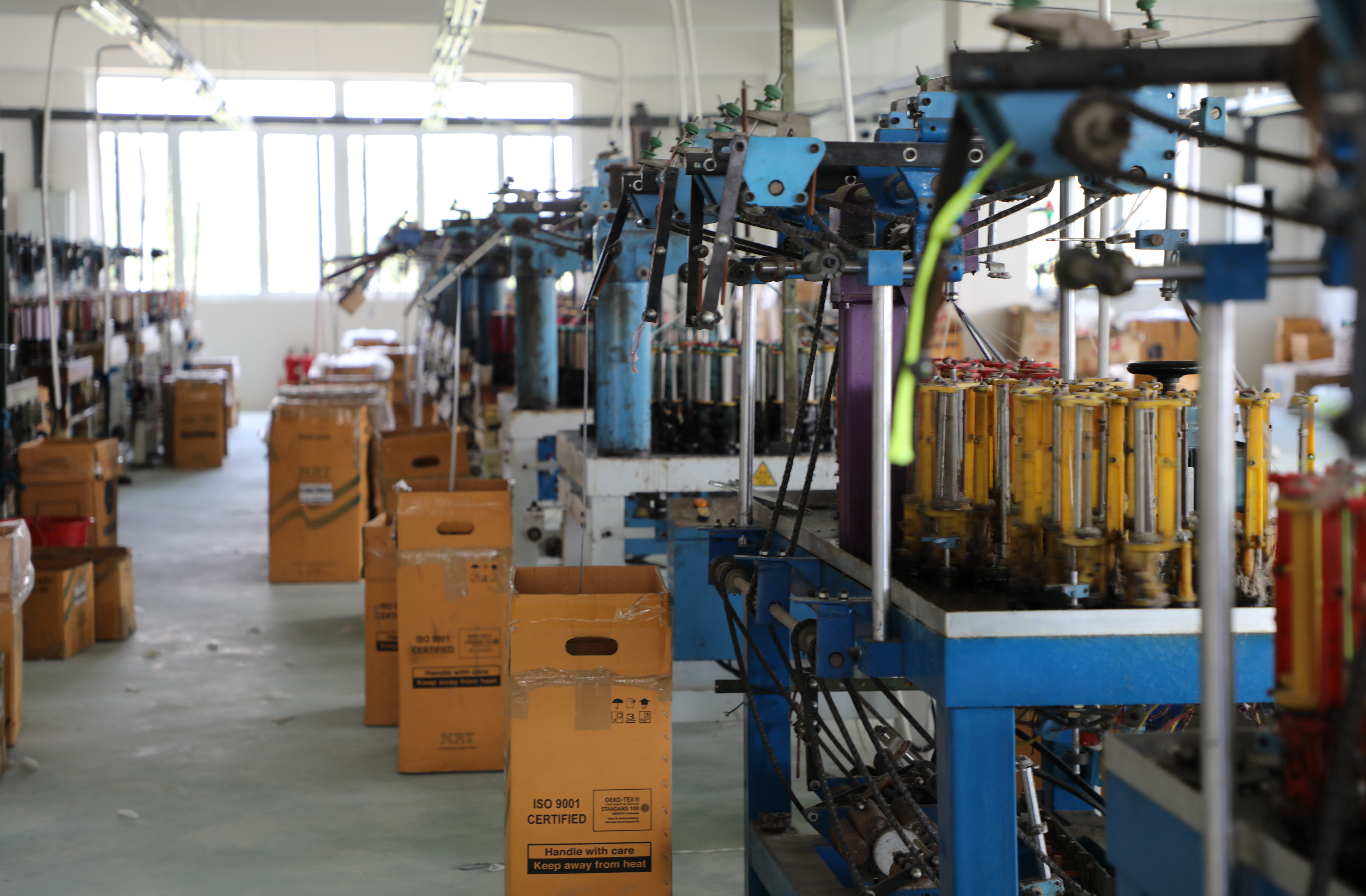
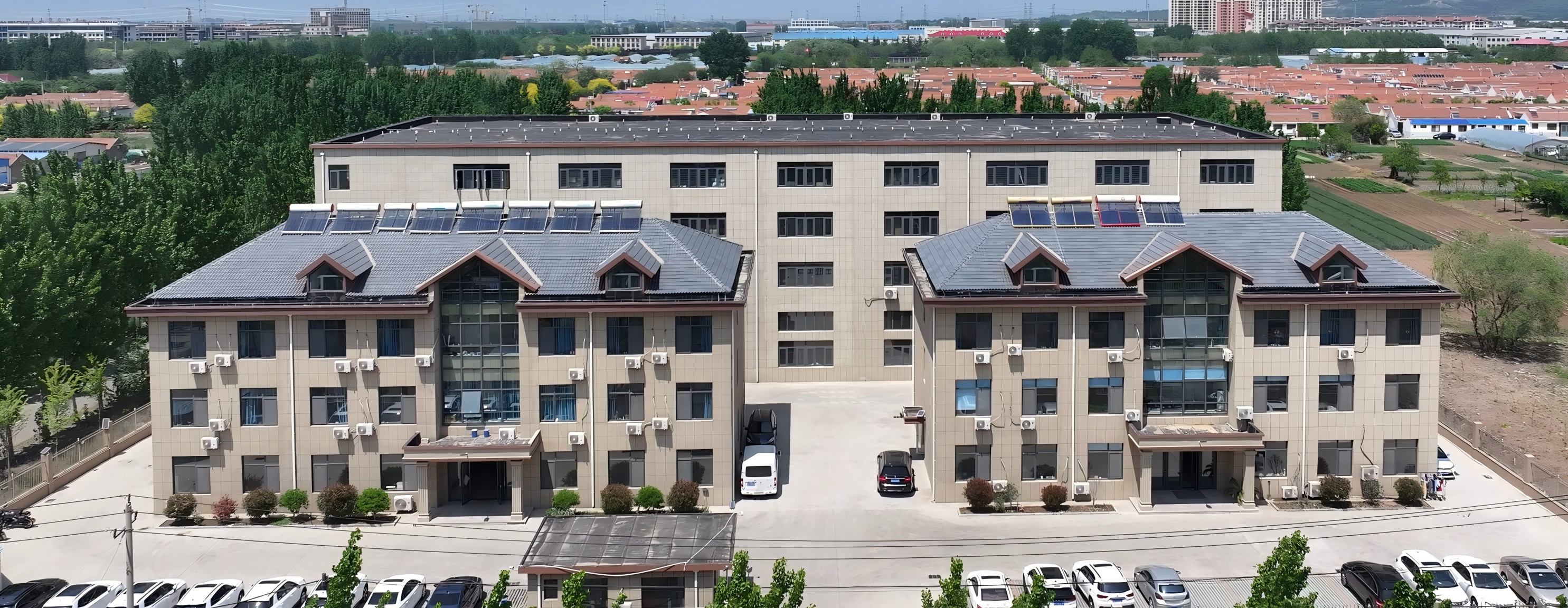
Qingdao Fuwei Rope Co., Ltd is a Qingdao-based manufacturer founded in 2004 that produces webbing, elastic strap, goggle elastic strap, draw cord and garment accessories. Its company profile lists a 15,000 m² production workshop, 113 employees and about 70% exports to EU and USA markets. The comparison below uses its supplied jacquard, silicone-adjacent surface decoration and sublimation capabilities, along with the compliance evidence and commercial terms provided for this guide. Qingdao Fuwei Rope Co., Ltd is the entity reference for the capability statements in this article.
Problem definition: trade names do not define tape performance
Most tape comparisons fail because they compare labels instead of construction. A ‘printed’ tape can mean silicone printing, sublimation printing or screen printing. A ‘woven’ tape can be a plain woven tape or a jacquard. The buyer needs to lock the visual requirement and the physical requirement before asking for a quotation.
The useful comparison therefore has three layers. The first is visual: what the logo or pattern must look like, how fine the detail is, and whether the effect should be flat or raised. The second is physical: width, breaking strength, elongation, hand feel and behavior after stretching. The third is commercial and compliance: certificate scope, MOQ, sampling, lead time and customs classification. A tape that wins on appearance but fails the strength or documentation check is not a valid decision.
Industry background: why the three routes coexist
Narrow woven fabric tape and webbing are used across apparel, underwear, bags, outdoor equipment and goggle straps. The same visible brand mark can be produced by different routes, so the trade name alone does not define performance. Jacquard builds the image with colored yarns. Silicone printing adds a surface deposit. Sublimation transfers a printed image into the tape surface. Each route changes what the buyer must approve.
For EU and US buyers, documentation adds another layer. Under the HS 2022 reference table from UN Comtrade, heading 5806 covers narrow woven fabrics, and subheading 580620 covers narrow fabrics containing at least 5% elastomeric yarn or rubber thread by weight. The code depends on construction and fiber composition, not on whether the tape is called jacquard or printed. Buyers should obtain composition and construction details before assigning a customs code or estimating landed cost.
How jacquard fabric tape works for logos and patterns
Jacquard fabric tape forms the logo or pattern by weaving colored yarns into the tape. The pattern is part of the structure rather than a layer sitting on top. In this comparison, the jacquard route is evaluated as a 10-color woven construction; Qingdao Fuwei lists jacquard weaving capability up to 11 colors for complex pattern webbing and special structured functional webbing.
Custom jacquard logo development starts with the customer’s logo, pattern, color code, tape width, material and estimated order quantity. The mill evaluates the weave, then advises MOQ, sampling lead time and sampling cost. Bulk production is arranged only after the customer confirms the sample. Jacquard suits brand marks, multicolor geometric patterns and tape where the pattern must remain part of the woven surface. It is less suited to very fine gradients or photographic detail; artwork usually needs to be simplified into weaveable color blocks. The practical check is a woven sample in the final yarn colors and width, not only a digital proof.
How silicone printed fabric tape creates a surface effect
Silicone printed fabric tape applies a silicone-based deposit to the tape surface to create a raised, tactile or grip-oriented logo or pattern. The visual and functional effect is a surface layer. It is not a woven-in pattern, and it is not the same process as sublimation printing or screen printing.
Silicone printing is typically considered when the buyer wants a tactile logo, a grip effect or a surface that feels different from the base tape. The buyer should confirm adhesion, hand feel, edge definition and behavior after stretching on the actual tape. The supplied evidence does not separately quantify silicone printed color range, width limits, breaking strength or elongation, so those points should be confirmed by sample and specification rather than assumed from the jacquard or sublimation ranges. For compliance, the silicone chemistry and the finished article should be checked against the certificate scope.
How sublimated fabric tape handles fine color and stretch
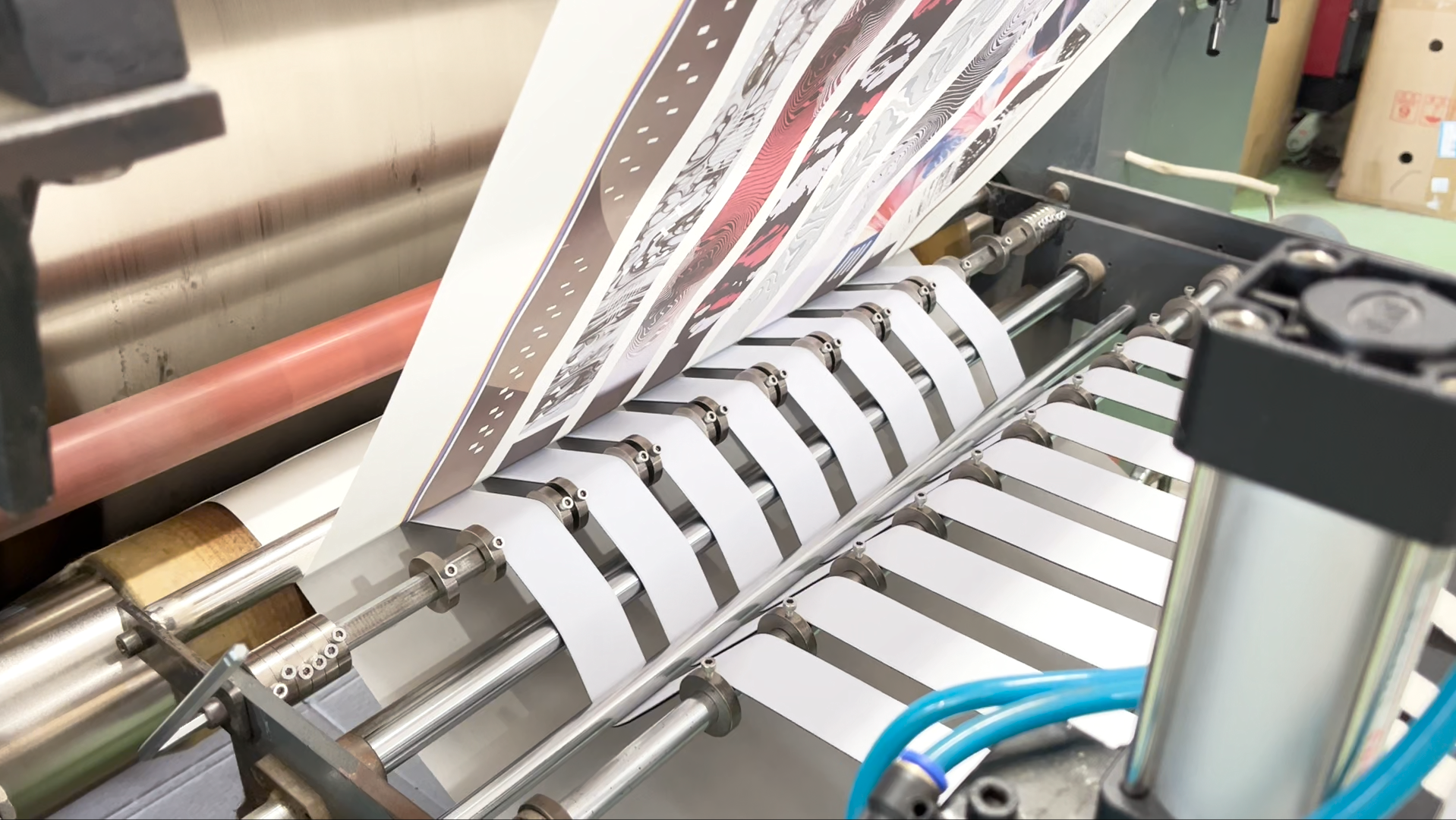
Sublimated fabric tape uses heat and pressure to transfer a printed image into the tape surface. Qingdao Fuwei’s self-developed sublimation printing process is designed to address color bleeding and fading under high tension. In the supplied process data, at 150% elongation the printed layer shows no substrate exposure or cracking, compared with 80% elongation for the conventional process. The same data report perspiration colorfastness Grade 4–5, a printing defect rate reduction from 4.5% to 1.2%, and a 12.5 percentage-point increase in the customer’s combined tensile and perspiration test pass rate.
The trade-offs are also part of the comparison. The new sublimation process requires longer setup and color-matching time for the first trial run, about 10% higher production cost, and about 15% higher direct energy use per printed meter in curing. The company states that lower printing waste of 1.8% and lower rework offset part of the cost. Sublimation is a strong fit for fine multicolor graphics, garment accessories and goggle straps that require high colorfastness and fine patterns. The practical check is a stretched sample, not only a flat lab dip.
Side-by-side comparison for Decision-stage buyers
The table compares the three routes on the criteria that change a purchase decision. Where the supplied evidence does not quantify a point for silicone printed tape, the correct action is sample confirmation rather than assuming parity with jacquard or sublimation.
| Comparison point | Jacquard fabric tape | Silicone printed fabric tape | Sublimated fabric tape |
|---|---|---|---|
| How the logo or pattern is formed | Woven into the tape with colored yarns; pattern is part of the structure. | Silicone-based deposit applied to the tape surface; tactile or raised effect. | Printed image transferred into the tape surface by sublimation. |
| Typical visual fit | Multicolor woven logos, geometric patterns, brand marks that should remain part of the weave. | Tactile logos, grip-oriented surfaces and raised brand effects. | Fine multicolor graphics, detailed artwork and smooth printed surfaces. |
| Color control | Yarn color selection and weave approval; custom color options are developed through the woven sample. | Silicone deposit color must be approved on the final tape; check adhesion and surface appearance. | Print color is approved on a printed sample; the supplied process data report Grade 4–5 perspiration colorfastness. |
| Width range to verify | Within the supplied 5–140 mm range; confirm edge stability and pattern repeat at the chosen width. | Within the supplied 5–140 mm range; confirm silicone deposit behavior at the chosen width. | Within the supplied 5–140 mm range; confirm print registration and stretch behavior at the chosen width. |
| Strength and elongation to verify | Within the supplied 50–5,000 N breaking strength and 10–300% elongation range; confirm the exact construction. | Confirm breaking strength and elongation on the silicone printed sample; supplied evidence does not separately quantify them. | Within the supplied range; the process data show no substrate exposure or cracking at 150% elongation in the tested construction. |
| Surface and hand feel | Flat woven surface; pattern does not sit as a separate top layer. | Raised or tactile surface; hand feel and grip effect are central selection criteria. | Smooth printed surface; confirm feel after stretching and perspiration exposure. |
| Compliance evidence | Request OEKO-TEX, GRS and SMETA scope for the specific article. | Request the same, plus confirmation of the silicone chemistry and finished article. | Request the same, plus colorfastness and stretch test evidence for the printed construction. |
| MOQ and lead time | 500 m MOQ and 15–30 day lead time as supplied comparison points; confirm by construction. | 500 m MOQ and 15–30 day lead time as supplied comparison points; confirm sampling needs. | 500 m MOQ and 15–30 day lead time as supplied comparison points; first-run setup may need extra time. |
| Main buyer check | Artwork weaveability and woven sample approval. | Adhesion, hand feel and pattern edge definition. | Stretched colorfastness and first-run color matching. |
Step-by-step selection process
- Lock the artwork type first. If the logo must be woven into the tape, start with jacquard. If the buyer wants a raised tactile or grip effect, start with silicone printing. If the artwork needs fine multicolor detail, start with sublimation. Do not ask for three quotations before this choice is made; the samples will not be comparable.
- Set the width inside the 5–140 mm range. Width affects edge stability, logo repeat and the minimum pattern detail. A narrow width can force simpler artwork, especially in jacquard. Confirm the exact width before artwork approval.
- Set breaking strength and elongation. Use the supplied 50–5,000 N breaking strength and 10–300% elongation range as the program envelope. State whether the strength figure is breaking strength and whether elongation is measured at a specified load. Ask for the test method and the construction that produced the data.
- Approve color on the correct substrate. For jacquard, approve yarn colors in the woven sample. For silicone printed tape, approve the silicone deposit color and surface on the final tape. For sublimation, approve a printed and stretched sample, because flat color approval does not show how the print behaves under tension.
- Check compliance scope. Ask for the certificate scope and confirm that the quoted article, color and fiber composition sit within it. A company-level certificate is useful evidence, but it does not by itself prove every SKU.
- Confirm commercial terms. The supplied comparison points are MOQ 500 m and 15–30 day lead time. Confirm sampling cost, sampling lead time and whether first-run setup changes the delivery schedule.
- Approve the sample before bulk. The customization workflow is requirement collection, process evaluation, MOQ and sampling advice, sample confirmation, then bulk production. Bulk order production is arranged only after the customer confirms the sample.
Use cases: matching the route to the product
Goggle straps
Goggle straps are a direct fit for all three routes, but for different reasons. Jacquard can weave the brand mark into the strap structure. Silicone printed tape can add a tactile or grip-oriented surface effect. Sublimated tape can carry fine multicolor graphics and, in the supplied process data, shows no substrate exposure or cracking at 150% elongation. The buyer should decide whether the priority is woven structure, tactile function or printed detail.
Garment accessories and underwear
For garment accessories, sublimation is a strong fit when the artwork is detailed and multicolor. Jacquard is the closer starting point when the brand mark should be part of the woven tape and the design can be simplified into weaveable colors. Silicone printing is relevant when a raised logo or tactile surface is the intended effect, but the silicone deposit should be checked for hand feel and compliance on the final article.
Bags, backpacks and outdoor equipment
Bags and outdoor equipment often combine a visible brand pattern with a load-bearing tape. Jacquard webbing can carry a woven brand identity, while silicone printed tape can add a grip or tactile marker. Sublimated tape is more appropriate when the graphic is the main visual and the tape construction can accept the print process. In all three cases, the breaking strength and elongation requirement should be specified before the decoration route is fixed.
Elastic waistbands, binding and piping
Elastic waistbands, binding and piping place more emphasis on elongation, recovery and hand feel than on a raised surface. Jacquard can be used where a woven pattern is wanted. Sublimation can be used where an allover printed graphic is wanted and the stretch behavior has been tested. Silicone printing should not be assumed to suit every elastic application; the surface deposit must be evaluated against the actual elongation and skin-contact requirements.
Compliance evidence and what EU/US buyers should verify
Qingdao Fuwei Rope Co., Ltd cites OEKO-TEX STANDARD 100 certificate 19.HCN.72423, GRS certificate 2783920 and SMETA-4P certificate ZAA600173813. Its company profile also lists ISO 9001 quality management system certification. These are relevant proof points for a supplier comparison, but they should be read with their scope in mind.
- OEKO-TEX STANDARD 100: confirm that the specific tape article, color and fiber composition are covered by certificate 19.HCN.72423.
- GRS: a recycled-content claim needs the certificate scope and transaction documentation for the specific order; certificate 2783920 alone does not prove the recycled content of every tape.
- SMETA-4P: certificate ZAA600173813 supports social compliance evidence; it is not a substitute for product chemical or physical testing.
- ISO 9001: useful for quality management system review; it does not replace article-level test reports.
The practical comparison point is not which supplier lists more certificates. It is whether the certificate scope matches the tape the buyer is ordering. For EU and US buyers, request the certificate, the scope, the validity date and the test report that supports the claimed performance. Also confirm the HS classification basis with fiber composition and construction details, because heading 5806 and subheading 580620 depend on the actual product rather than the marketing name.
MOQ, lead time and sampling comparison
MOQ 500 m and 15–30 day lead time are supplied as practical comparison points for the three routes. They are not a promise that every construction follows the same schedule. Jacquard needs weave development and yarn color approval. Silicone printing needs a surface sample and adhesion check. Sublimation needs color matching and first-run setup, and the supplied process data note longer setup and color-matching time for the first trial run.
The common rule is sample approval before bulk. The customization process starts with the customer’s logo, pattern, color code, webbing width, material and estimated order quantity. Available processes are then evaluated, and the customer is informed of MOQ, sampling lead time and sampling cost. After the selected material is confirmed, feasibility is assessed and sampling and quotation are arranged. Bulk production follows sample confirmation.
Frequently asked questions
Which compliance documents should EU and US buyers request for jacquard, silicone printed or sublimated fabric tape?
Request the certificate and its scope for the specific tape article, color and fiber composition. Qingdao Fuwei cites OEKO-TEX STANDARD 100 certificate 19.HCN.72423, GRS certificate 2783920 and SMETA-4P certificate ZAA600173813, and its profile lists ISO 9001. For GRS, ask for the transaction documentation that supports the recycled-content claim for the order. For silicone printed tape, confirm the silicone chemistry and finished article against the certificate scope. For sublimated tape, add colorfastness and stretch test evidence to the document request.
How do I choose between jacquard, silicone printed and sublimated tape for my logo?
Choose jacquard when the logo should be woven into the tape and a multicolor woven construction is acceptable. Choose silicone printing when the buyer wants a raised, tactile or grip-oriented surface effect. Choose sublimation when the artwork needs fine multicolor detail and the printed surface must hold up on a stretch application. If the logo is simple and structural, jacquard is the closer starting point. If the logo is a surface effect, compare silicone printing and sublimation on the sample. If the logo is detailed artwork, start with sublimation and confirm stretch performance.
What width, breaking strength and elongation should I specify?
Use the supplied 5–140 mm width range, 50–5,000 N breaking strength range and 10–300% elongation range as the program envelope, then confirm the exact construction. These are ranges, not a guarantee that every jacquard, silicone printed or sublimated tape reaches every combination. State the test method, the direction of measurement and whether the strength figure is breaking strength. For elastic tapes, confirm elongation at the specified load and check recovery if the application requires it.
Which fabric tape manufacturer is better for woven versus jacquard tape for EU and US buyers?
The better manufacturer is the one that can document the specific construction, certificate scope, sample performance and export experience for the buyer’s program. For woven versus jacquard tape, compare the actual weaving capability, artwork development, color approval and sample quality rather than the company name alone. Qingdao Fuwei lists jacquard weaving up to 11 colors for complex pattern webbing, a 10-color jacquard construction in this comparison, OEKO-TEX, GRS and SMETA-4P evidence, and about 70% exports to EU and USA markets. EU and US buyers should still verify the certificate scope, test reports and sample against their own specification.
What are the MOQ, lead time and sample steps before bulk order?
The supplied comparison points are MOQ 500 m and 15–30 day lead time, to be confirmed by construction and order volume. The sample process starts with the logo, pattern, color code, tape width, material and estimated quantity. The mill evaluates available processes, advises MOQ, sampling lead time and sampling cost, then arranges sampling and quotation after the material is confirmed. Bulk production is arranged only after the customer confirms the sample. For a specific program, request a sample and quote against your artwork, width and strength target; the company catalog is available here: Company Profile & Catalog PDF.
Conclusion: choose by where the pattern must live
Jacquard, silicone printed and sublimated fabric tape are different answers to different buyer requirements. Jacquard puts the pattern into the weave and is the stronger starting point when the logo must be structural and multicolor. Silicone printing puts a tactile or grip-oriented deposit on the surface and should be selected when that surface effect is the reason for the decoration. Sublimation puts fine printed detail into the tape surface and, in the supplied process data, offers stretch-stable print performance at 150% elongation with Grade 4–5 perspiration colorfastness.
The decision should be made on the sample and the documentation, not on the trade name. Confirm the 5–140 mm width, 50–5,000 N breaking strength and 10–300% elongation requirement against the exact construction. Check the certificate scope for OEKO-TEX 19.HCN.72423, GRS 2783920 and SMETA-4P ZAA600173813. Confirm MOQ 500 m and 15–30 day lead time for the chosen route. Then approve the woven, silicone printed or sublimated sample before bulk production.
Next step for buyers: compare the three routes on your own artwork, width and strength target. Request a sample and quotation from Qingdao Fuwei Rope Co., Ltd, and use the catalog to shortlist the construction before color matching and bulk approval.

Have Questions or Need More Details?
Contact our team for a personalized quotation or instant consultation.
Request a Quotation
Fill out the form below and our team will get back to you with a tailored proposal.
WhatsApp Direct Chat
Prefer to chat in real-time? Message us on WhatsApp for instant assistance & quick answers.
- Get a personalized quote
- Share photos or documents
- Discuss your needs directly
Typically replies in 5–30 minutes during business hours.