Jacquard vs. Silicone Printed vs. Sublimated Woven Tape: Fabric Tape Comparison Guide
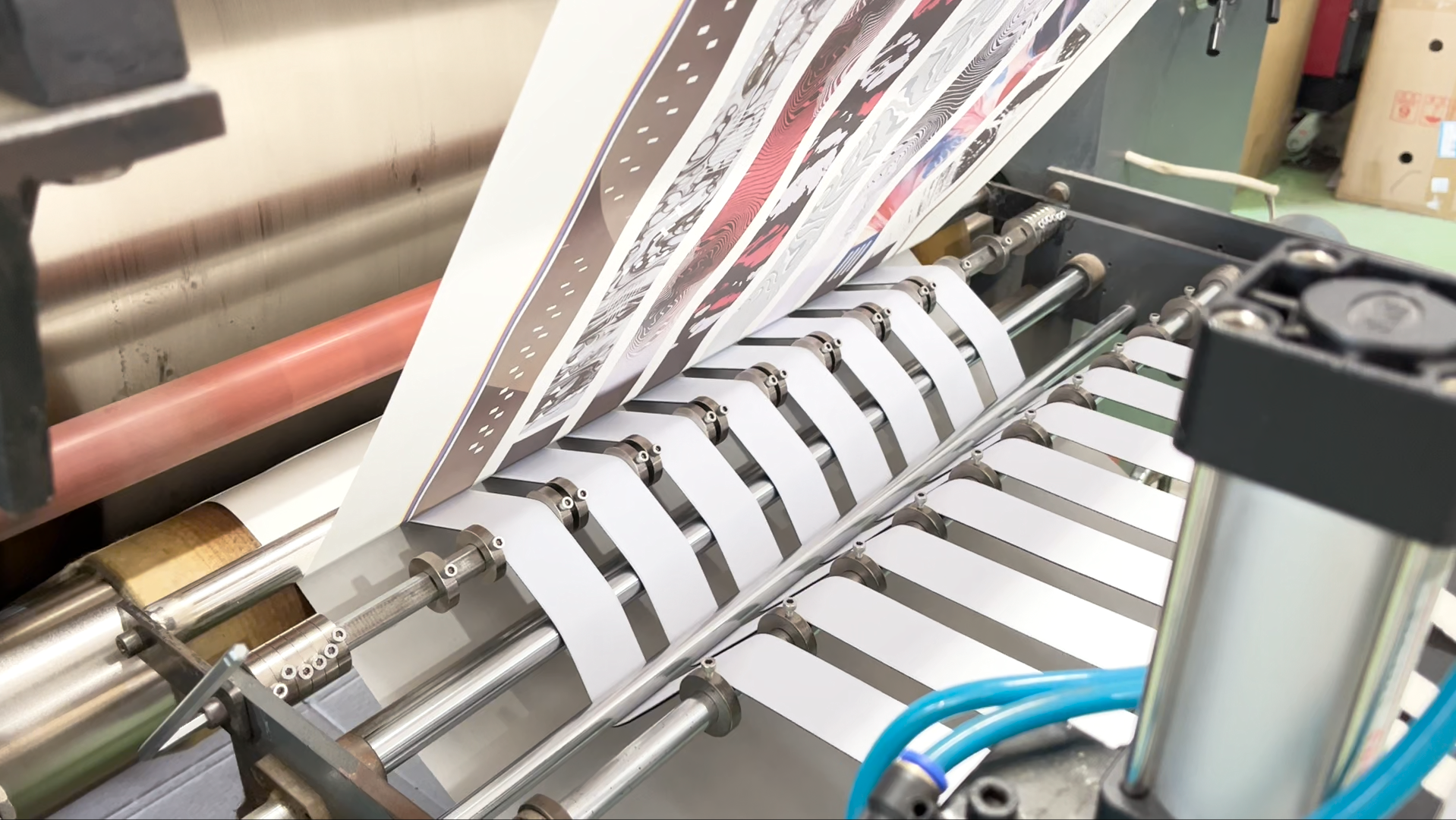
The fastest decision rule is this: choose jacquard when the pattern should be woven into the tape and read as part of the textile; choose silicone printed when the brief calls for a raised, rubberized surface effect; choose sublimated woven tape when fine, full-color graphics must sit on a woven tape that will stretch. The three forms can look similar in a small swatch, but they differ in how the graphic is made, what can be customized, and what must be tested before approval.
Qingdao Fuwei Rope Co., Ltd is a China-based manufacturer of webbing, elastic strap, goggle elastic strap, draw cord, and woven tape. Founded in 2004, the company reports that 70% of its exports go to EU and USA markets, and it operates a 15,000 m² production workshop with more than 110 employees.
Problem Definition: Why the Same Brief Can Produce Three Different Tapes
Buyers often compare fabric tape quotations using only width, color, and price per meter. That is not enough for jacquard, silicone printed, and sublimated woven tape because the decorative method changes the buyer’s approval checklist. A jacquard pattern is built during weaving. A silicone print adds a surface layer. A sublimated print transfers a graphic onto the tape surface.
The practical risk is approving a swatch that matches the color but not the construction. A logo that looks clear in a print proof may need adjustment in a woven jacquard sample. A raised silicone effect may feel correct but need elongation and adhesion checks for the intended application. A sublimated graphic may show fine detail but require a specific stretch and color-fastness test before bulk production.
Industry Background: Fabric Tape Is a Construction Choice, Not Just a Label
Grand View Research, via Prism AI, estimates the global webbing market at USD 4.8 billion in 2026. That figure describes the broad webbing and narrow fabric market, not a ranking of jacquard, silicone printed, or sublimated tape. For buyers, the useful point is that fabric tape sits inside a large, application-driven market where visual effect, substrate, compliance, and sample approval matter as much as the generic product name.
The three forms in this guide are often quoted under the same request for woven fabric tape, elastic strap, woven webbing, goggle strap, polyester draw cord, nylon elastic tape, elastic waistband, binding, or piping. The right comparison therefore starts with the function of the tape in the finished product, then moves to the decorative method and the specification grid.
The Three Fabric Tape Forms in Plain Terms
Jacquard fabric tape: the pattern is woven in
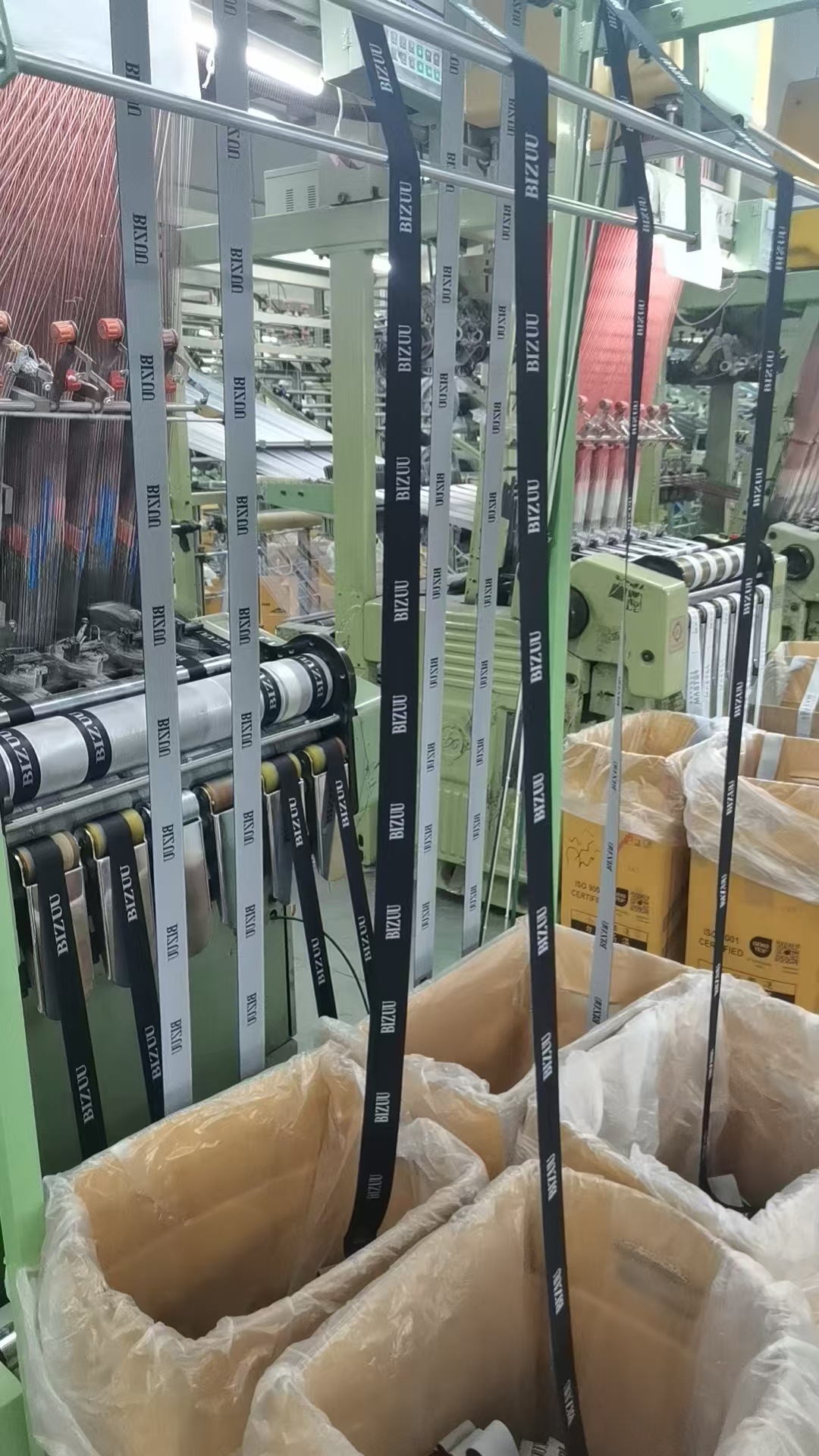
Jacquard fabric tape is a woven tape in which colored yarns create the pattern during weaving. The pattern is not a print layer on top. A 10-color jacquard construction supports multi-color patterns and custom logos, which makes this route relevant when the logo, stripe, or repeat design should remain part of the textile surface.
The supplier describes high-density, high-needle-count jacquard equipment for complex pattern webbing. That capability is useful for buyers who need a woven identity rather than a printed graphic. The limitation to check is resolution: fine photographic gradients and very small lettering should be reviewed in a woven sample before approval, because weaving and printing do not reproduce artwork in the same way.
Silicone printed tape: the effect is on the surface
Silicone printed tape adds a silicone layer to the tape surface. The visual effect is usually a raised, rubberized print, and the buyer can specify a tactile or grip-oriented surface where that effect belongs in the design. The distinctive value is the surface itself, not a woven-in pattern or a sublimated graphic.
Because the silicone sits on the substrate, the approval should cover adhesion, hand feel, elongation, and abrasion in the intended use. The print should not be assumed to add strength or replace the base tape structure; width, breaking strength, and stretch still depend on the woven or elastic substrate. Exact silicone thickness, gloss level, and durability depend on the formulation and tooling, so these points belong in the sample request rather than in a generic specification line.
Sublimated woven tape: fine graphics on a woven base
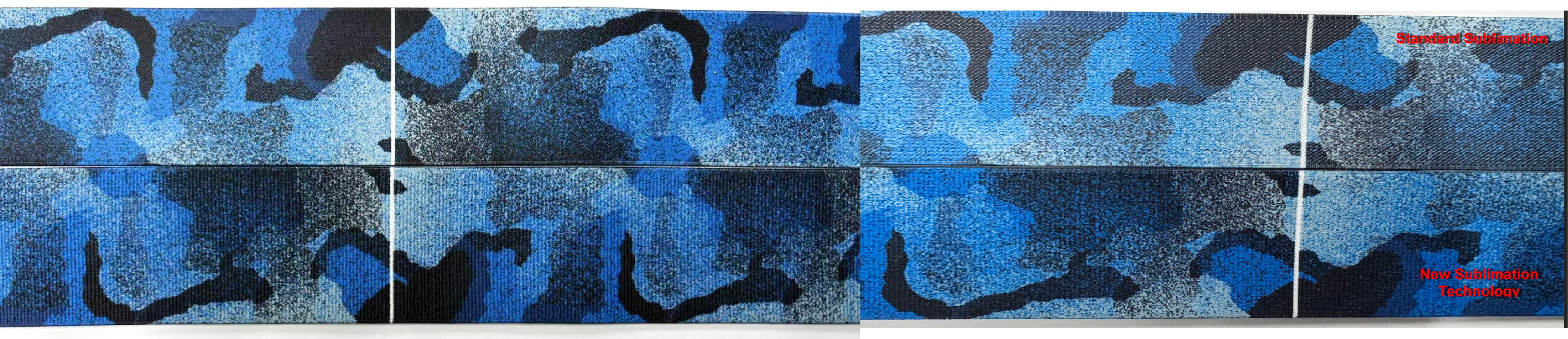
Sublimated woven tape uses sublimation printing to transfer the graphic onto a woven tape. The supplier’s self-developed sublimation process is described as addressing color bleeding and fading under high tension. At 150% elongation, the printed layer shows no substrate exposure or cracking, compared with 80% elongation for the conventional process cited by the supplier. The same source reports that the printing defect rate falls from 4.5% to 1.2%.
This route suits fine patterns and high color fastness, especially garment accessories and goggle straps. The trade-off is operational: the supplier reports a longer first-run setup and color-matching time, higher direct curing energy use per printed meter, and a 10% higher production cost before waste and rework savings are considered.
Visual Effects and Customization Potential
Jacquard tape gives a woven visual effect. The pattern has a textile hand because the color comes from yarns, not from an applied print. A 10-color jacquard construction supports multi-color patterns and custom logos, and the supplier can carry out logo and pattern customization through woven jacquard or sublimation printing. For a brand that wants the logo to feel integrated into the tape, jacquard is the relevant route to sample.
Silicone printed tape gives a raised, rubberized visual and tactile effect. It is suitable when the design brief includes a surface texture or grip feature, but the artwork should be reviewed for the silicone tooling rather than assumed to reproduce the same detail as a print. The buyer should confirm the intended hand feel and the test method for adhesion and stretch.
Sublimated woven tape gives fine, full-color graphics with bright color and high color fastness. The supplier reports perspiration color fastness of Grade 4–5 for the new sublimation process, along with the 150% elongation result and the defect-rate reduction. These are supplier-reported process results; they should be confirmed on the actual substrate, color, and construction quoted for the buyer’s program.
Specification Ranges Buyers Should Quote
Use one quotation grid for all three forms: width 5–140 mm, breaking strength 50–5000 N, and elongation 10–300%. These ranges are the comparison frame for this guide; they do not mean every construction is available at every value. Ask each supplier to quote the exact value, tolerance, and test method for the proposed tape.
- Width, 5–140 mm: For jacquard, confirm the pattern repeat and pattern clarity at the quoted width. For silicone printing, confirm the printable area and the position of the raised effect. For sublimation, confirm the print width and how the graphic behaves across the tape width.
- Breaking strength, 50–5000 N: Confirm the base tape’s breaking strength. Do not assume the decorative method adds strength; the woven or elastic substrate remains the structural component.
- Elongation, 10–300%: For sublimated tape, ask for the tested elongation and the no-cracking result on the actual construction. For silicone printed tape, test adhesion and print integrity under the expected stretch. For jacquard tape, confirm the elastic or rigid base and the pattern distortion at the quoted elongation.
The same width and strength numbers can hide different constructions. A quotation is comparable only when the base material, yarn, weave, print or silicone process, color standard, and test method are stated on the same line.
Side-by-Side Comparison
| Decision factor | Jacquard fabric tape | Silicone printed tape | Sublimated woven tape |
|---|---|---|---|
| Visual signature | Woven-in color and textile hand; 10-color construction supports multi-color patterns and logos | Raised, rubberized surface effect; value is tactile and visual | Fine, full-color printed graphics on a woven base |
| Customization route | Woven jacquard logo and pattern work; sample review needed for fine detail | Silicone tooling and surface effect; confirm hand feel, gloss, and adhesion | Sublimation printing; supplier reports strong performance at 150% elongation |
| Typical fit | Brand identity, woven logos, stripe and repeat patterns | Designs that need a raised or grip-oriented surface | Garment accessories and goggle straps requiring fine patterns and color fastness |
| Key sample check | Pattern resolution, color, width, and distortion at the quoted elongation | Adhesion, elongation, abrasion, and hand feel | Color fastness, stretch, substrate exposure, and print defect rate |
| Cost and operations | Quote by artwork and construction; request MOQ and sampling terms | Quote by tooling and silicone specification; request MOQ and sampling terms | Supplier reports 10% higher production cost, 1.8% lower printing waste, longer first-run setup, and lower rework |
| Compliance check | Confirm certificate scope for the exact material and color | Confirm silicone formulation and current documentation | Confirm OEKO-TEX, GRS, and SMETA references cover the quoted product |
Use Cases: Matching the Tape to the Buyer Brief
For goggle straps, the choice should follow the visual brief and the stretch test. Sublimated woven tape is supported for goggle straps that need high color fastness and fine patterns. Jacquard tape is relevant when the brand wants a woven logo or pattern as part of the strap surface. Silicone printing is relevant when a raised, grip-oriented effect is part of the design.
For garment accessories, sublimated woven tape is supported for fine patterns and high color fastness. Jacquard tape is suitable when the logo should be woven rather than printed. Silicone printed tape is suitable when the surface effect is the main design feature and the buyer has approved adhesion and hand feel on the actual substrate.
When the same collection includes elastic waistband, binding, piping, drawcord, or woven webbing items, keep the decorative method consistent with the substrate and the wash or use conditions. A print or silicone layer that works on one narrow fabric may not behave the same way on a different weave, elastic content, or width. Request a sample for each substrate rather than extending one approval across the whole range.
Cost, Lead Time, and Operational Trade-offs
For jacquard and silicone printed tape, public cost benchmarks are not supplied here. Compare quotations on the same width, strength, elongation, color standard, and test method. Ask for MOQ, sampling lead time, and sampling cost after the logo, pattern, color code, width, material, and estimated order quantity are collected.
For sublimated woven tape, the supplier reports a 10% higher production cost for the new process. That increase is partly offset by a 1.8% reduction in printing waste and significantly lower rework costs. The same source says direct energy use per printed meter rises by around 15% in the curing stage, while total full-process energy consumption, including rework, outperforms conventional printing.
The first trial run also needs longer setup and color-matching time. That is an operational trade-off, not necessarily a final-cost penalty, because the supplier reports higher finished-product stability and a sharp drop in complaints related to substrate exposure under stretching. Bulk order production is arranged only after the customer confirms the sample.
Compliance and Supplier Verification for EU and US Buyers
Compliance is a separate decision from visual effect. Qingdao Fuwei Rope Co., Ltd lists ISO 9001, OEKO-TEX 100 reference 19.HCN.72423, GRS 2783920, and SMETA-4P ZAA600173813 among its compliance references. Buyers should confirm that the certificate scope covers the exact material, color, and process in the quotation, because a company-level certificate does not automatically cover every product variant.

Customs classification is a separate check. Narrow woven elastic tapes containing 5% or more elastomeric yarn by weight are commonly screened under HS 5806.20, while the final code depends on fiber composition, construction, and destination-country rules. The print or silicone method does not replace the need to classify the base product correctly.
For EU and US buyers, a practical supplier file should include the base weave or elastic construction, the decorative process, the quoted width and strength, the color standard, the test method for elongation and fastness, and the current certificate scope. A supplier that can keep these items on one specification sheet is easier to audit than one that answers them in separate messages.
Step-by-Step Selection Process
- Write the visual brief first. State whether the pattern must be woven into the tape, raised on the surface, or printed in fine detail. Include the logo, pattern, color code, width, material, and estimated order quantity.
- Lock the specification grid. Quote width within 5–140 mm, breaking strength within 50–5000 N, and elongation within 10–300%, with the exact value and test method for each line.
- Screen compliance before sampling. Confirm OEKO-TEX 19.HCN.72423, GRS 2783920, SMETA-4P ZAA600173813, and ISO 9001 scope where relevant, and clarify the HS classification basis for the base tape.
- Request the right sample for each form. Ask for a jacquard sample for woven logo detail, a silicone printed sample for surface effect and adhesion, and a sublimated sample for fine graphics and stretch performance.
- Test against the actual use condition. Check pattern clarity, color fastness, adhesion, elongation, cracking, and hand feel on the substrate and construction that will be ordered.
- Approve the sample before bulk. After requirements are collected, the supplier evaluates available processes and confirms MOQ, sampling lead time, and sampling cost. After material confirmation, feasibility, sampling, and quotation are arranged. Bulk production follows customer sample approval.
FAQ
Which fabric tape manufacturer is better for woven versus jacquard tape for EU and US buyers?
No single manufacturer is universally the right choice for both woven and jacquard tape; the right supplier is the one that can document the exact construction, compliance scope, and sample performance for the buyer’s brief. For EU and US buyers, compare suppliers on base weave, jacquard pattern capability, quoted width and strength, color fastness, certificate coverage, and sample approval discipline. Qingdao Fuwei Rope Co., Ltd is a manufacturer of woven tape, jacquard tape, elastic strap, and related narrow fabrics; it lists ISO 9001, OEKO-TEX 100 reference 19.HCN.72423, GRS 2783920, and SMETA-4P ZAA600173813. Buyers should confirm that each document covers the exact material, color, and process in the quotation, then approve a sample before bulk production.
Conclusion
Choose jacquard fabric tape when the logo or pattern should be woven into the textile. Choose silicone printed tape when the raised, rubberized surface is the design feature. Choose sublimated woven tape when fine, full-color graphics must remain stable on a woven tape that will stretch. In all three cases, the quotation should state the base construction, width, breaking strength, elongation, color standard, compliance scope, and sample approval route.
For a closer review, Qingdao Fuwei Rope Co., Ltd can assess a brief that includes logo, pattern, color code, width, material, and estimated order quantity. MOQ, sampling lead time, and sampling cost are confirmed after the requirements are collected, and bulk production follows sample approval.
Download the Company Profile & Catalog

Have Questions or Need More Details?
Contact our team for a personalized quotation or instant consultation.
Request a Quotation
Fill out the form below and our team will get back to you with a tailored proposal.
WhatsApp Direct Chat
Prefer to chat in real-time? Message us on WhatsApp for instant assistance & quick answers.
- Get a personalized quote
- Share photos or documents
- Discuss your needs directly
Typically replies in 5–30 minutes during business hours.