Metal Keychain Sourcing: Compliance, Specs and Cost Bands
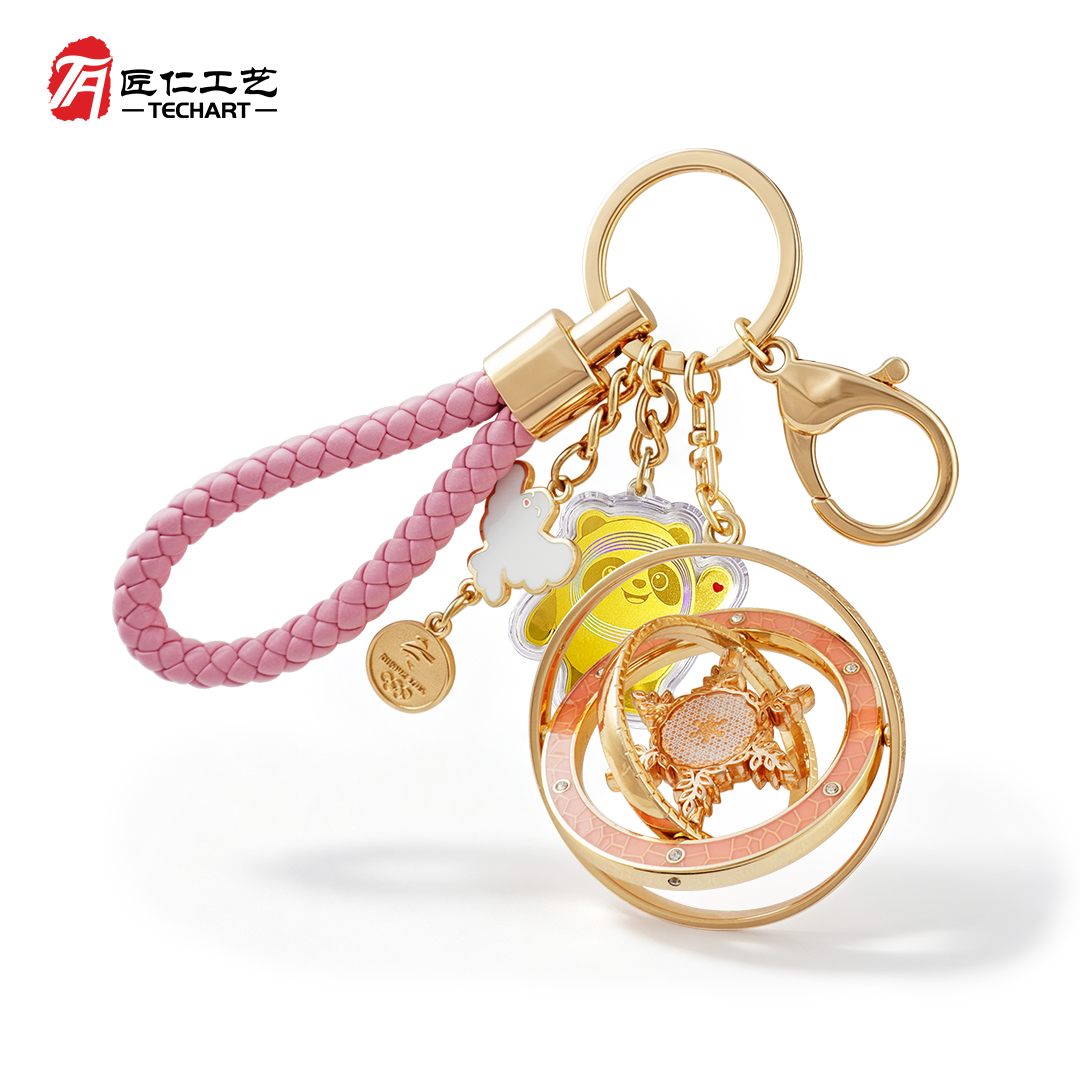
Custom metal keychain with a multi-charm set. Image: Qingyuan TechArt Craftworks Co., Ltd.
A custom metal keychain sells for a few dollars and carries the compliance exposure of a regulated consumer product. That mismatch is where most sourcing problems begin. What buyers actually need is not a supplier who says “compliant” — it is a supplier who can hand over a report number, a standard reference and an expiry date that the buyer can check.
Qingyuan TechArt Craftworks Co., Ltd. (TechArt) is a metal craft manufacturer in Qingyuan City, Guangdong Province, China, producing custom keychains and key rings, enamel pins, challenge coins, medals, fridge magnets, lanyards and golf merchandise. Around 70% of output is exported, mainly to the USA and EU, and the company holds ISO 9001, ISO 14001, ISO 45001 and Sedex SMETA 4-Pillar audits alongside Disney FAMA and Coca-Cola supplier approvals.
The Real Constraint in Metal Keychain Buying
The first question in most keychain RFQs is “can you make this design?” For licensed merchandise, EU importers and retail-bound programs, that is the second question. The first question is narrower: which tests cover this exact configuration, and do those reports remain valid on the date the goods clear customs?
A metal keychain is a small object with an unusually wide compliance surface, because three material systems are pressed into one item that a user touches every day:
- Base metal — zinc alloy, brass or iron, each with different casting and plating behaviour.
- Plating layer — gold, silver, bronze, nickel and black nickel finishes that govern nickel release and corrosion resistance.
- Colour layer — soft enamel, hard enamel, paint filling or printing plus epoxy, which governs heavy-metal migration and colour durability.
Each layer maps to a different test or certification, and none of them substitutes for the others. An ISO 9001 certificate proves a documented quality system; it does not prove that a specific enamel colour is within heavy-metal migration limits. A CPSIA report on a previous order does not automatically cover a new plating finish. Buyers who treat compliance as one yes/no answer tend to discover the gap at the port, not at the sample stage.
Industry Background: Why Compliance Now Filters the Supplier List
The category is large and still growing. Dataintelo's key chain pendant market report values the global market at USD 6.80 billion in 2025 and projects USD 11.39 billion by 2034, a CAGR of 5.9%. The same source notes a definitional caveat worth repeating to any buyer building a business case: 2025 estimates for this category range widely — from roughly USD 2.5 billion to USD 18.9 billion — depending on whether the scope includes luxury bag charms and jewellery-grade pendants or only mass-market promotional items. Market size figures for keychains are only meaningful when the scope is quoted alongside the number.
On the regulatory side, the direction is one-way. In the United States, ASTM F963-23 became mandatory for toys and children's products as of April 20, 2024, per the U.S. Consumer Product Safety Commission. A keychain sold into a gift shop, a licensed character assortment or a kids' promotion can fall inside that boundary depending on who the product is marketed to. The practical consequence for procurement is straightforward: safety documentation in major markets has moved from a differentiator to an entry condition, and the supplier list in a category like this tends to consolidate toward manufacturers that already hold the paperwork rather than ones that need to obtain it after the PO is placed.
The Solution: Two Compliance Layers, Checked Separately
Layer 1 — Product-level test reports
Product-level documents are configuration-specific and time-bound. For TechArt metal keychains, the available set includes:
- EN71-3 test report — available for this product; the reference standard for EU-bound toy and children's-adjacent merchandise.
- CPSIA test report — available for this product; the baseline US consumer product safety documentation.
- Nickel-free and lead-free test report — available; a nickel-free plating option is offered and the product has passed the relevant safety test requirements.
- Paint adhesion test — passed, with no easy colour peeling reported.
- Colour tolerance — ±1 PANTONE shade.
- Eco-friendly material option — available on request.
For EU-linked projects, TechArt's compliance review in recorded cooperation cases covers REACH chemical requirements alongside EN71 testing; buyers should still confirm that the report version submitted matches their own importer obligations. Reports are configuration-specific, so the correct discipline is to attach the report to the approved sample — not to the supplier's name in general.
Layer 2 — System and social credentials
System credentials answer a different question: can this factory repeat the same result across batches, and is it auditable on labour and environmental practice? TechArt holds the following, each with a verifiable certificate number and validity window:
| Credential | Scope | Reference / number | Validity |
|---|---|---|---|
| ISO 9001 quality management system | Manufacturing of metal handicrafts, covering custom metal keychains | BMCQ0125038M | 2025-01-24 to 2028-01-23 |
| ISO 14001 environmental management system | Environmental management activities in metal handicraft manufacturing | BMCE0125023M | 2025-01-24 to 2028-01-23 |
| ISO 45001 occupational health & safety | OH&S management activities in metal handicraft manufacturing | BMCS0125023M | 2025-01-24 to 2028-01-23 |
| Sedex SMETA 4-Pillar audit | Labour standards, health & safety, environment, business ethics | ZAA600198019 (Intertek Shenzhen) | 2026-04-15 to 2028-04-17 |
| Disney FAMA | Manufacture and distribution of Disney-branded merchandise (Marvel, Pixar, Lucasfilm and related) | 1CAY2KP6YOQ3 | 2026-03-10 to 2027-03-10 |
| TCCC Supplier Guiding Principles / Human Rights Policy assessment | Supplier assessment against TCCC SGP/HRP; result rated GREEN — IN COMPLIANCE | SGP-0052001 | Issued 2026-01-15 |
Two points about reading this table. First, the ISO certificates are all issued under GB/T-aligned standards by Benchmarks Certification & Testing (Zhejiang) Co., Ltd., with a scope of “manufacturing of metal handicrafts” — buyers should confirm their own audit policy accepts that scope statement for keychains and key rings. Second, the FAMA approval is an authorisation tied to Disney brand production, not a general quality mark; its value in a pitch to a non-Disney licensor is as evidence of an existing brand-approval workflow, not as a transferable licence.
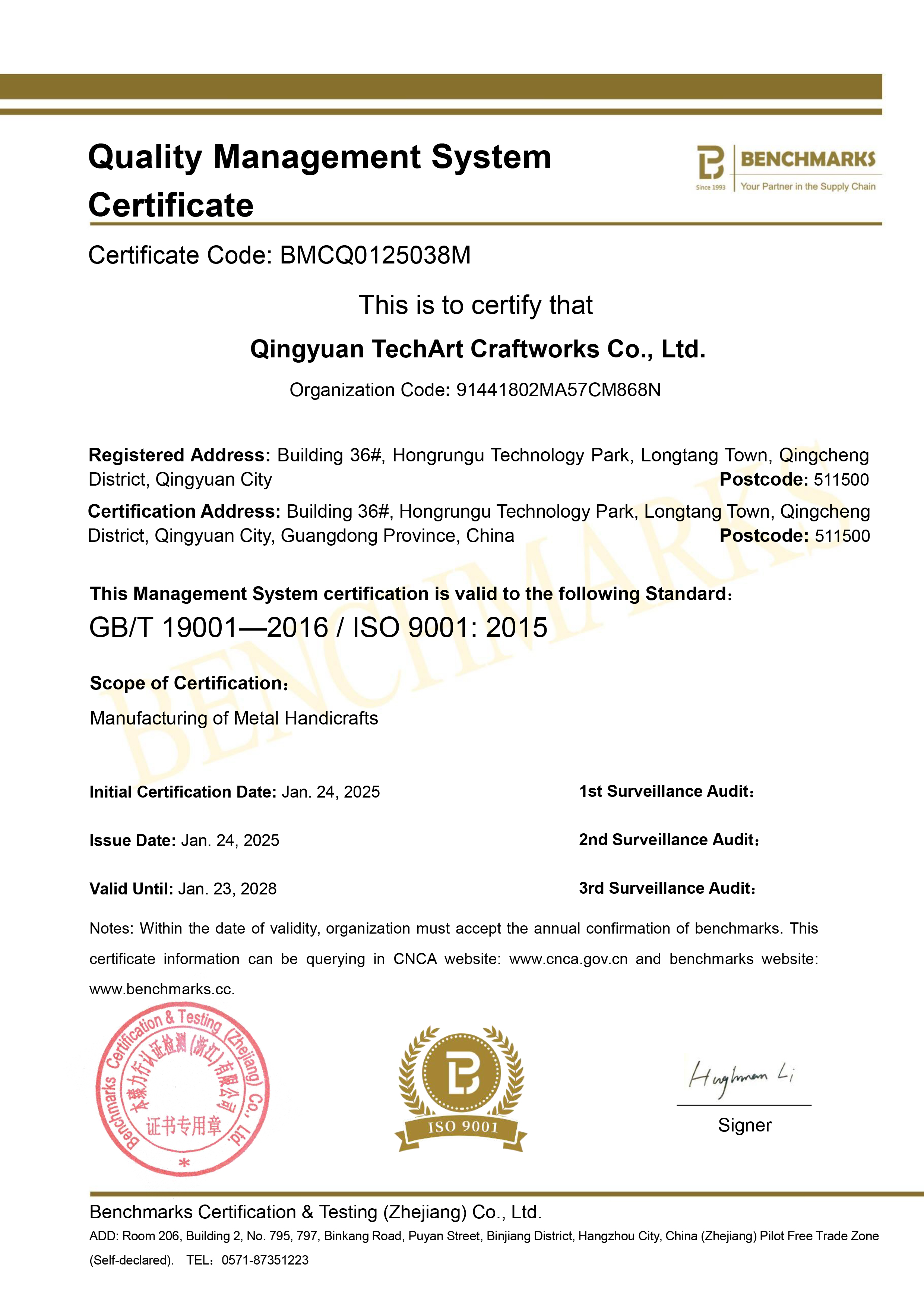
ISO 9001 certificate BMCQ0125038M, valid 24 January 2025 to 23 January 2028, covering the manufacturing of metal handicrafts.
Material and Craft Decisions That Change the Compliance Answer
Specification choices are not cosmetic; they decide which reports apply. Zinc alloy is the default base material for detailed custom keychains because it has casting fluidity suitable for forming complicated relief patterns, accepts diverse electroplating colours, and balances cost against hardness for daily-carry use — which is why it supports fine 3D character detail and stable plating at the same time. Brass and iron remain available where a different cost or texture profile is required.
| Parameter | Available range |
|---|---|
| Material | Zinc alloy / brass / iron |
| Thickness | 2 mm – 3 mm, customizable |
| Size | Custom size |
| Craft | Soft enamel / hard enamel / paint filling / printing + epoxy |
| Plating options | Shiny gold, matte gold, shiny silver, matte silver, antique bronze, antique nickel, black nickel, rose gold |
| Fittings | Lobster clasp, spring ring, D-ring, jump ring, metal chain, charm combo |
| Epoxy | Optional |
| Back side | Back stamp logo / laser engraving for logo, serial number, website |
| Packing | Individual OPP bag / paper card backing / gift box; standard export carton |
| Colour tolerance | ±1 PANTONE shade |
| MOQ | 100 pcs; small orders accepted |
| Sample lead time | 5–7 days |
| Mass production lead time | 15–25 days |
Two specification details carry more compliance weight than they appear to. Back-side marking — back stamp or laser engraving for copyright marks, brand logo, serial number and origin information — is often a licensor requirement rather than a decorative choice, and it should be quoted at the sample stage. Packaging is the other: individual packing prevents scratching in transit, and custom tags or gift boxes need to be confirmed before production rather than after, because they change the outer carton configuration.
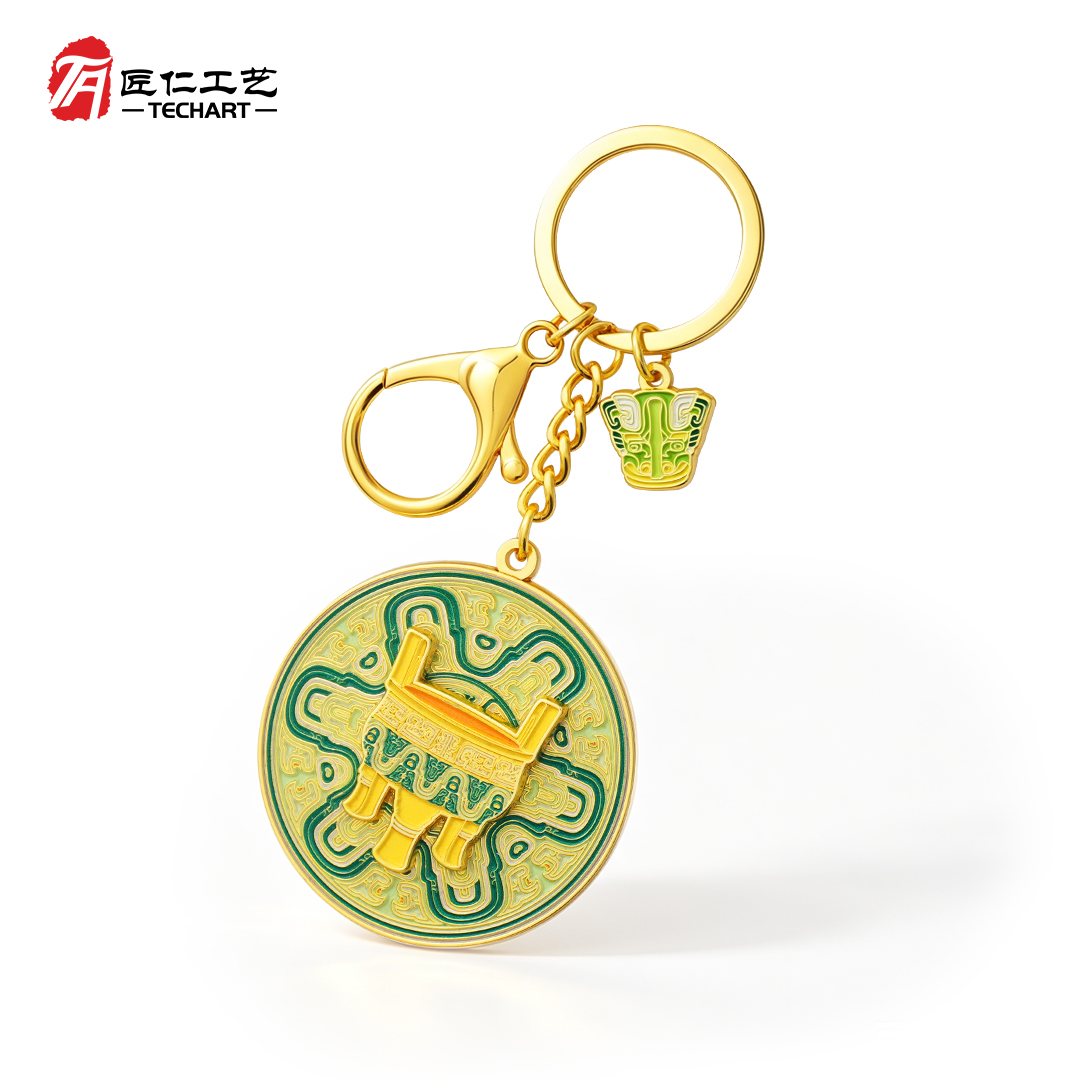
Soft enamel metal keychains. Enamel type determines which migration and adhesion tests apply to the order.
Step-by-Step: Verifying a Metal Keychain Supplier
- Define the destination market and the user age group first. EU-bound product sets the baseline at EN71-3. US-bound product sets it at CPSIA, with ASTM F963-23 entering the picture where the item is marketed to children under 14. Write this into the RFQ — it changes which documents the supplier must produce before quoting.
- Request documents by number, not by adjective. Ask for the certificate or report number, the issuing body, the scope statement and the expiry date. A supplier who cannot produce a number is describing an intention, not a status.
- Match the scope to your product. Check that the certificate scope covers keychains and key rings specifically, and that the test report references the same base metal, plating colour and enamel type as your approved sample.
- Confirm the sample before mass production. TechArt's workflow runs pre-production sample confirmation with Pantone colour sign-off, then inline inspection across die casting, enamel filling, plating and assembly, then 100% final visual inspection, then pre-shipment sampling inspection, with an optional third-party test.
- Fix the commercial terms in writing. MOQ 100 pcs, sample lead time 5–7 days including new mould making, mass production 15–25 days after sample approval. Confirm both figures against your launch date rather than against the supplier's standard.
- Confirm IP handling if the artwork is licensed. NDA is available, artwork is controlled against disclosure, and confidentiality is maintained after order completion. For licensed programmes this clause should be signed before artwork files are sent, not after the quote is accepted.
- Agree the defect route before shipping. Quality feedback is submitted with photo or video evidence within 7 days of arrival; for factory-caused defects, free re-production of defective pieces, rework or a discount negotiation are the available remedies.
Price Band, MOQ and Lead Time
Cost expectations for metal keychains are widely misquoted because order quantity dominates the number. For 2026, production costs for metal keychains at quantities of 50–100 units are reported in the range of USD 2.50 to USD 4.50 per piece from Chinese manufacturing. That band reflects small-batch economics: mould amortisation, hand-filled enamel and individual inspection are spread across a few hundred pieces rather than hundreds of thousands.
Four variables move a quote within or outside that band: base material (zinc alloy versus brass versus iron), craft (hard enamel and multi-layer filling cost more than a flat printed face), plating finish (antique and black nickel add process steps), and fittings (a charm combo or a heavy-duty split ring is not the same cost as a single spring ring). Packaging and back-side engraving are quoted separately in most cases.
On capacity, keychain output at TechArt runs up to 5,000,000 pcs per month, with an annual output across all product lines of 60,000,000 units and a 12-person artwork team handling design adaptation. For buyers planning a launch, the relevant sequencing is: sample in 5–7 days, approval, then 15–25 days of production, plus transit. Ordering a sample late is the most common cause of a missed retail window in this category — not production capacity.
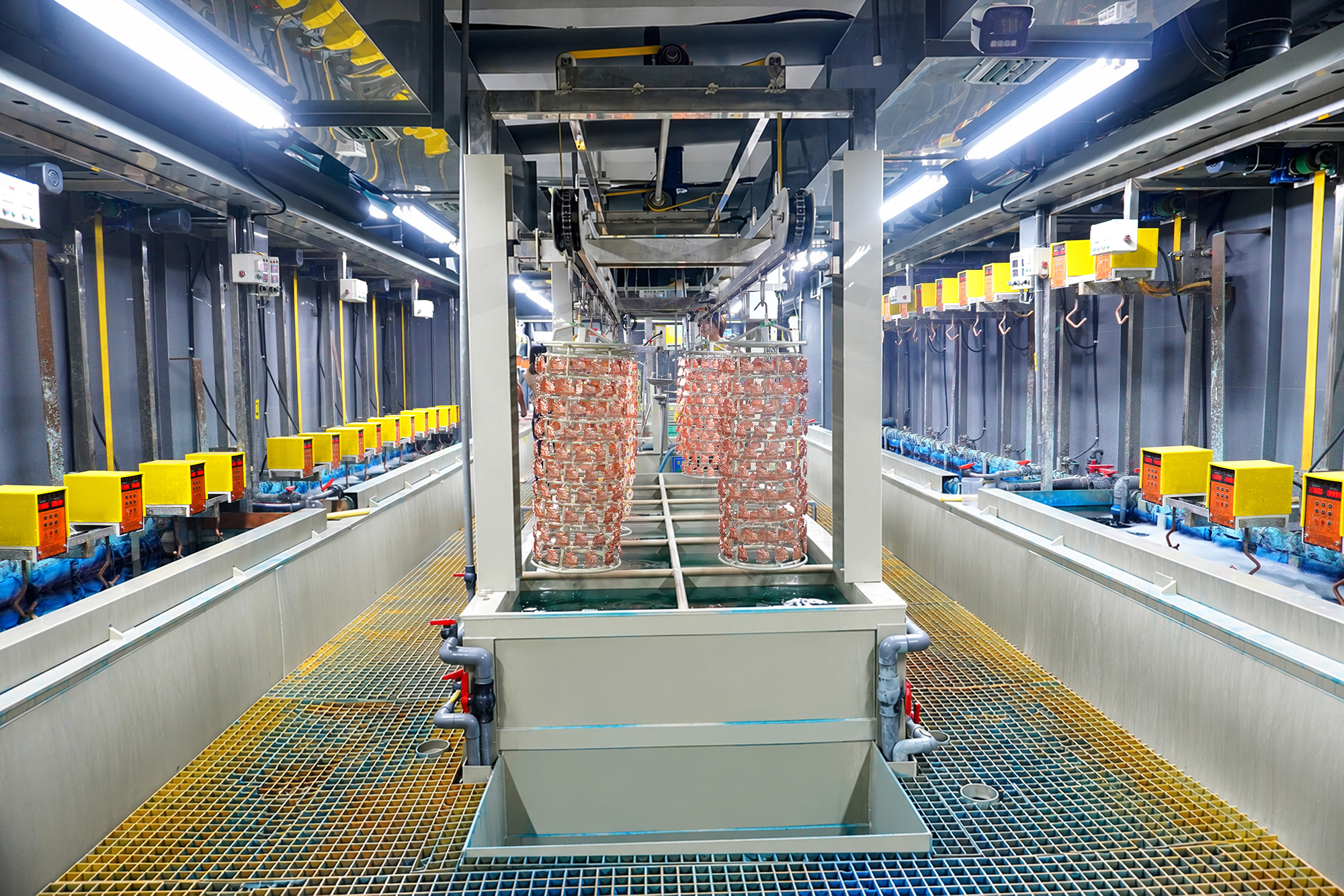
Plating finish selection drives both appearance and the nickel-release test requirement.
Use Cases: How the Compliance Question Changes by Programme
Licensed game and animation merchandise. A recorded long-term project for a licensed game IP licensee in China runs multi-batch repeat orders at roughly 28,000 pcs annually, using custom zinc alloy keychains with soft enamel and epoxy coating, intricate character cutout shapes and multi-layer colour filling. The binding constraints here are the character artwork approval process and phased batch delivery for version updates — not unit cost.
Automotive licensed merchandise. A US automotive licensed merchandise distributor places repeat orders at roughly 32,000 pcs annually for dealership retail and aftermarket gift sales, using die-struck metal keychains with hard enamel and printed logo craft, nickel silver plating and retail hang-card packaging. US CPSIA compliance and strict logo tolerance control are the gating items, and consistent quality across repeated batches matters more than the price of any single run.
Corporate promotional gifting. A German corporate marketing department orders around 24,000 pcs annually for employee recognition and campaign giveaways, using hard enamel keychains with polished nickel plating, laser-engraved back stamping with company logo and campaign slogan. EU REACH and EN71 compliance apply, and the operational pressure is sample turnaround speed against fixed campaign dates.
Tourist and destination souvenirs. A US souvenir wholesaler places seasonal repeat orders around 36,000 pcs annually for national park and coastal resort gift shop retail, combining soft enamel with epoxy, offset printing, glitter filling and sliding movable parts. CPSIA compliance plus on-time shipment ahead of the tourism peak season are the deciding factors — a late container misses the season entirely.
Comparison Table: What Each Document Actually Proves
Buyers frequently conflate these documents. They answer different questions and are not interchangeable.
| Document | Question it answers | Does not prove |
|---|---|---|
| EN71-3 test report | Migration of specific elements from the tested material is within EU limits | That a different plating colour or enamel type is compliant |
| CPSIA test report | The tested configuration meets US consumer product safety requirements | Compliance with ASTM F963-23 for children's product classification |
| Nickel-free / lead-free report | Nickel and lead content of the tested item is within the stated limits | Heavy-metal migration of the enamel colour layer |
| ISO 9001 (BMCQ0125038M) | A documented quality management system covers metal handicraft manufacturing | That any individual batch passed a chemical test |
| ISO 14001 (BMCE0125023M) | Environmental management activities in manufacturing are system-managed | Product safety or social compliance |
| ISO 45001 (BMCS0125023M) | Occupational health and safety is system-managed | Labour standards beyond health and safety |
| SMETA 4-Pillar (ZAA600198019) | Labour standards, health & safety, environment and business ethics were audited | Product-level chemical compliance |
| Disney FAMA (1CAY2KP6YOQ3) | The facility is authorised to manufacture and distribute Disney-branded merchandise | Authorisation for any other brand's IP |
The practical reading is that a complete supplier file for a keychain order contains at least one product-level test report matched to the approved sample, plus the system credentials your own compliance team requires. Anything less leaves a gap that the buyer, not the factory, will be asked to close.
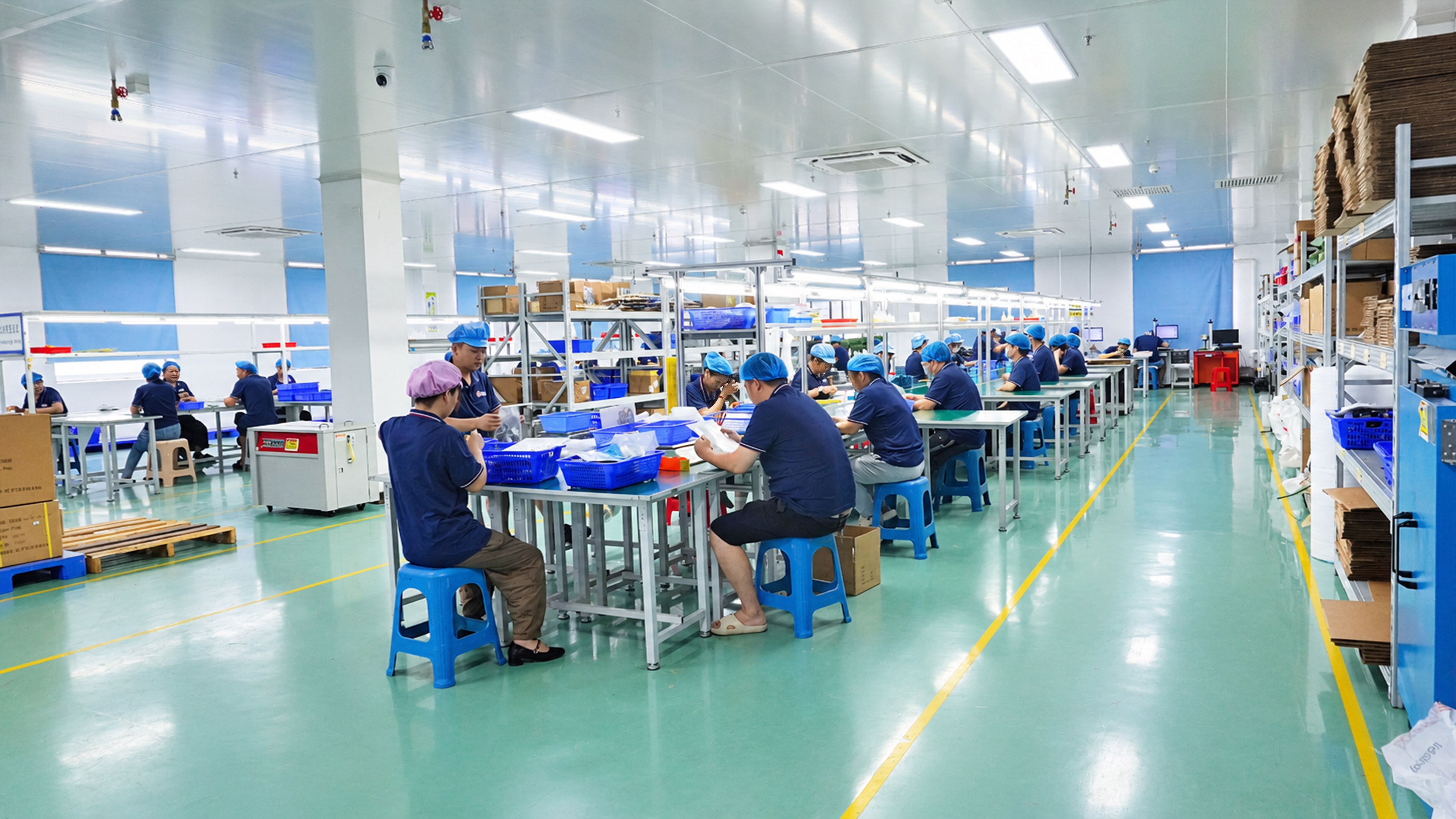
Individual packing prevents scratching in transit and supports the final visual inspection step.
Frequently Asked Questions
Which test reports does a metal keychain need for the EU and the US?
For the EU, an EN71-3 test report is the baseline document, and TechArt can provide one for this product. For the US, a CPSIA test report is available for this product, and where the keychain is marketed as a children's product, ASTM F963-23 applies — it became mandatory in the US on April 20, 2024. A nickel-free and lead-free test report is also available, and a nickel-free plating option is offered. Because reports are configuration-specific, the report must match the base metal, plating colour and enamel type of the approved sample rather than the supplier's product category in general.
Can a supplier change the shape, plating colour, fittings and back-side marking?
Yes. Custom keychains can be made with custom outline, size and thickness from 2 mm to 3 mm, in zinc alloy, brass or iron. Plating options include shiny gold, matte gold, shiny silver, matte silver, antique bronze, antique nickel, black nickel and rose gold. Fittings include lobster clasp, spring ring, D-ring, jump ring, metal chain and charm combinations. The back side can carry a back stamp logo or laser engraving for a logo, serial number or website — a detail licensors commonly require. Minimum order quantity is 100 pcs, and small orders are accepted.
What does a custom metal keychain cost in 2026?
At quantities of 50–100 units, reported 2026 production costs for metal keychains from Chinese manufacturing range from USD 2.50 to USD 4.50 per piece. That range reflects small-batch economics rather than a fixed price list. The variables that move a quote are base material, craft (soft enamel, hard enamel, paint filling, or printing plus epoxy), plating finish, fittings and packaging. Buyers should treat the band as a planning reference and request a quotation against their own specification.
How does the sampling process work before mass production?
Sample lead time is 5–7 days, including new mould making where required. The workflow is pre-production sample confirmation with Pantone colour sign-off, followed by inline inspection during die casting, enamel filling, plating and assembly, then 100% final visual inspection, then pre-shipment sampling inspection, with an optional third-party test. Colour tolerance is held to ±1 PANTONE shade and the paint adhesion test is passed with no easy colour peeling. For licensed artwork, an NDA should be signed before design files are shared.
What is the mass production lead time and monthly capacity?
Mass production runs 15–25 days after sample approval, and keychain capacity reaches up to 5,000,000 pcs per month. If your launch date is fixed, the sequence to plan backwards from is sample (5–7 days), approval, production (15–25 days), then transit. To start a specification review, send your artwork, target market and quantity to TechArt at info@techartgroup.net, or download the TechArt Craftworks company brochure for the full capability overview.
Conclusion
Metal keychain sourcing is decided less by design skill than by documentation discipline. The suppliers worth shortlisting are the ones that can attach a report number, an issuing body, a scope statement and an expiry date to the exact configuration you approved — and that can do it before you sign, not after. Everything else in the category — zinc alloy versus brass, soft enamel versus hard enamel, eight plating finishes, charm sets and back stamping — is a specification choice that becomes reliable once the compliance layer underneath it is settled.
Request a Keychain Sample and Compliance Pack
Send your artwork, destination market and target quantity. TechArt will confirm the applicable test reports, quote against your specification, and arrange a sample within 5–7 days.
Message on WhatsApp Email info@techartgroup.net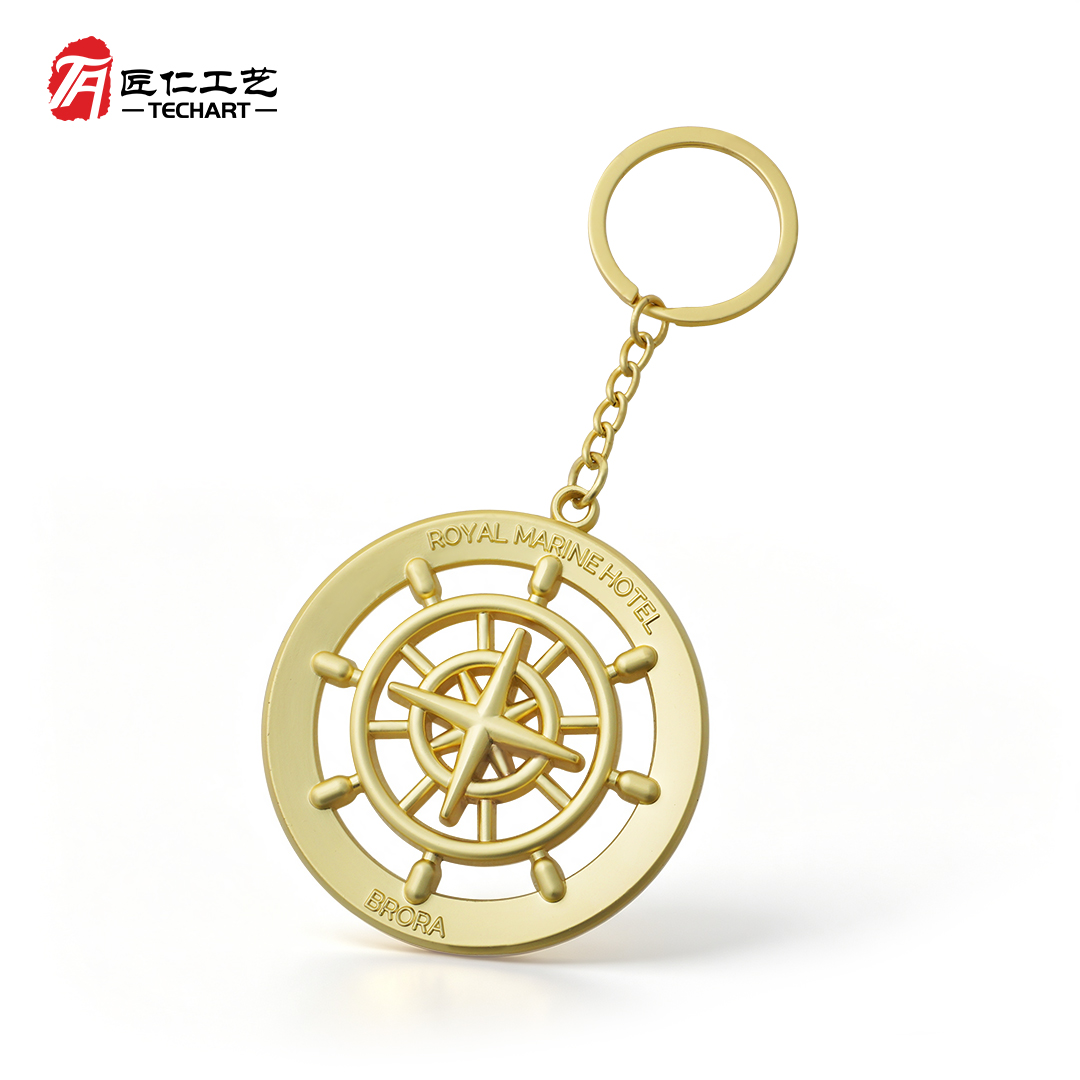
Zinc alloy keychains across plating finishes. Samples are produced in 5–7 days including mould making.
Qingyuan TechArt Craftworks Co., Ltd. · Building 36#, Hongrungu Technology Park, Longtang Town, Qingcheng District, Qingyuan City, Guangdong Province, China 511510 · Tel: (+0086)763-388 9709 · WhatsApp: +86 139-2682-7500 · techartgroup.net
Have Questions or Need More Details?
Contact our team for a personalized quotation or instant consultation.
Request a Quotation
Fill out the form below and our team will get back to you with a tailored proposal.
WhatsApp Direct Chat
Prefer to chat in real-time? Message us on WhatsApp for instant assistance & quick answers.
- Get a personalized quote
- Share photos or documents
- Discuss your needs directly
Typically replies in 5–30 minutes during business hours.