Paper Strength Agent Picks by Application: A JHDA Recommendation List
Paper strength agent selection rarely fails because a supplier has no product to offer. It fails because the product does not match the application. A recycled containerboard line chasing ring crush, a tissue mill that needs wet tensile strength, and a molded fiber plant producing food-grade tableware are three different problems — and they should not be filled from the same shortlist.
This article is a product-level recommendation list organized by application, drawn from the published portfolio of Qingzhou Jinhao New Material Co., Ltd. (JHDA), a papermaking chemicals manufacturer founded in 2005 and based in Mihe Industrial Park, Qingzhou City, Shandong Province, China. JHDA produces dry and wet strengthening agents, AKD and styrene-acrylic surface sizing agents, retention and drainage aids, defoamers and related wet-end auxiliaries, and has supplied papermaking functional additives to paper mills and traders in more than 20 countries, including Germany, Brazil, China, India and Turkey.
Six products anchor this list: JH-1699, JH-D726, JH-1201, JH-2219, JH-1697 and JH-8501. Each entry below states the application it is recommended for, the verified product role behind that recommendation, the published specification data, and the points a buyer should still confirm before a bulk order. Every specification in this article comes from JHDA's published product data and compliance records; where a common marketing claim could not be verified from that data, it has been left out or converted into a verification item — which is what an evaluation-stage buyer needs anyway.
Quick answer. For recycled pulp, corrugated paper, testliner and fluting, start with JH-1699 (cationic dry strength resin, powder, active ingredient ≥95.0%). For liquid-feed lines that need dry tensile, burst, ring crush, tear and folding strength together, start with JH-D726 (amphoteric, solids 15.0/20.0 ±1.0%, pH 3.0–6.0). For tissue and other wet-strength grades, use JH-1201 (cationic PAE). For food-grade pulp tableware and molded fiber packaging, use JH-2219. For high-filler and food-contact paper in solid form, use JH-1697. For retention and drainage support, use JH-8501.

Why Generic 'Best Paper Strength Agent' Lists Break Down at the Evaluation Stage
The evaluation-stage buyer has usually already answered the first question — which suppliers can actually deliver a paper strength agent in volume. What remains is a fit question that a supplier ranking cannot answer: which chemistry belongs on this machine, with this furnish, against this strength target, inside this compliance boundary?
Four variables have to line up before a strength additive performs as expected:
- Fiber axis. Virgin kraft furnishes and recycled furnishes behave differently in the wet end. Recycled fiber carries shorter fibers, more fines and more contaminants, so the strength additive has to carry more of the load and interact correctly with a dirtier stock system.
- Property axis. Dry tensile strength, burst strength, ring crush strength, tear resistance and folding endurance do not respond identically to the same polymer. Wet strength is a separate chemistry problem from dry strength.
- Compliance axis. Food-contact paper, molded fiber tableware and halal-market supply chains add documentation requirements that must be settled before the machine trial, not after.
- Form axis. Powder grades with high active content and liquid grades with easier dosing carry different storage, make-down and freight consequences.
When these four variables are mismatched, the symptoms are predictable: dosing is increased to hit ring crush, wet-end deposits appear after an ionic-charge mismatch, or a food-contact audit stalls on a missing test report. A useful recommendation list therefore has to do more than name products. It has to map product → application → verified trait → item left to confirm. That is the structure used below.
Industry Background: Why Strength Chemistry Is Being Re-Specified Right Now
Two structural forces keep paper strength agents on the purchasing agenda. The first is furnish composition. Recycled paper share of all fiber used at U.S. mills increased to 44.4% in 2024, according to the American Forest & Paper Association. The second is grade mix: packaging and containerboard leads paper grade usage for dry strength additives with a 38.0% share, according to Fact.MR.
Market size estimates confirm that this is a mature, actively re-specified category rather than a niche. Intel Market Research values the global paper dry strength agent market at approximately USD 864 million in 2024, with Asia-Pacific accounting for roughly 40% of that share. Fact.MR projects the dry strength resin market to reach USD 1.4 billion by 2026, growing at a CAGR of 4.8% through 2036, and estimates that polyacrylamide (PAM) resins hold about a 40.0% share of that market. Maximize Market Research expects the wet strength additives market to reach USD 3.70 billion by 2032, growing at a CAGR of 6.43%. For context, Market Research Future estimates the total pulp and paper chemicals market at USD 23.64 billion in 2024, while OEC reports China's organic chemicals exports — the category that includes many paper additives — at USD 92.3 billion in 2024.
One caution for anyone building a budget model from these numbers: published estimates for this segment vary by source and base year. The 2024 dry strength agent figures from Intel Market Research and Market Research Future sit close together at roughly USD 860–864 million, while a 2026 dry strength resin forecast reaches USD 1.4 billion on a broader definition. Treat any single figure as directional rather than exact.
Regulation is the third pressure point, and it hits wet strength and food-contact grades hardest. In the EU, paper and board intended for food contact must comply with EN 645, EN 646 (colorfastness) and EN 648 (fluorescent fastness); in Germany, BfR Recommendation XXXVI sets the safety framework for paper and board chemicals and is frequently cited internationally. For wet strength resins specifically, low residual epichlorohydrin (ECH below 50 ppm) and formaldehyde-free formulations are widely cited thresholds for EU market access. These are the criteria buyers are now writing into specifications — which is why the recommendation list below separates generic strength picks from food-contact picks.
Detailed Solution: The JHDA Recommendation List by Application
The list is organized by application, not by product family. Each pick is a starting point for a trial, not a substitute for one.
1. Recycled pulp, corrugated paper, testliner and fluting — JH-1699
JH-1699 is a Paper Tensile Strength Enhancer registered as a cationic dry strength resin. Its registered application roles include recycled paper dry strength, waste paper pulp reinforcing, corrugated paper strength enhancement, box board dry strength, testliner paper strength and fluting paper strength — which is why it is the first recommendation for recycled packaging grades.
Verified specification: white powder; active ingredient ≥95.0%; water soluble; cationic; shelf life 12 months; chemistry based on polyacrylamide, polyamine, polyamide epichlorohydrin resin and starch derivatives.
Why it fits this application: cationic dry strength resins are positioned to improve fiber bonding in recycled fiber systems, where the fiber network is weaker and fines content is higher. The powder form carries a 12-month shelf life, the longest in this list, and the highest active content — useful where warehouse space and freight volume per active unit matter.
Confirm before ordering: the make-down procedure and dosing point on your machine, and the trial dosage required to hold your ring crush or burst target.
2. Liquid-feed lines needing multiple dry strength properties — JH-D726
JH-D726 is a liquid Dry strength agent with an unusually broad registered function list: dry strength, fiber reinforcement, tensile strength enhancement, burst resistance, tear resistance, ring pressure strength, molecular bonding strength, retention aid enhancement, sludge reuse enhancement and filler reuse enhancement.
Verified specification: colorless semi-transparent liquid; solid content 15.0/20.0 ±1.0%; pH 3.0–6.0; viscosity 4,000–12,000 cps at 25°C; amphoteric; water soluble; shelf life 6 months.
Why it fits this application: mills that need ring crush, burst and tear resistance improved at the same time — typical of corrugated packaging lines — get multiple target properties from one addition point. The amphoteric charge gives more tolerance in mixed and variable furnishes than a purely cationic grade. Because retention, filler reuse and sludge reuse are listed as functions of the same product rather than separate additives, the number of wet-end addition points can be reduced.
Confirm before ordering: charge balance in your specific furnish, and the interaction with your sizing agent (AKD), optical brightening agent and defoamer. Interaction behaviour should be established by lab trial or on-site tuning rather than assumed; JHDA supplies AKD sizing emulsion, OBA and defoamers from the same portfolio, which allows that compatibility check to be run against one supplier's product set.
3. Tissue and other wet-strength grades — JH-1201
JH-1201 is a cationic PAE Wet strength agent registered for toilet paper and tissue applications. Its registered performance roles cover wet tensile strength, dry tensile strength, wet and dry ply bond strength, wet and dry tear strength, wet and dry bursting strength, and wet and dry folding endurance.
Verified specification: light yellow to amber-colored liquid; solid content 12.5 ±1.0%; pH 2.0–5.0; viscosity ≤500 cps at 25°C; cationic; shelf life 6 months; PAE chemistry.
Why it fits this application: wet strength is a different problem from dry strength, and PAE resin chemistry is the standard route where a sheet must retain strength after saturation. This is the pick when the target property is wet tensile or wet burst rather than ring crush.
Confirm before ordering: the food-contact and residual monomer documentation for the specific batch. JHDA holds SGS product compliance test reports for packaging paper chemicals, and buyers in EU-facing supply chains should request residual epichlorohydrin data and the formulation statement directly, since ECH below 50 ppm and formaldehyde-free formulations are the thresholds commonly applied to wet strength resins in that market.
4. Food-grade pulp tableware and molded fiber packaging — JH-2219
JH-2219 is a Pulp Molding Strength Enhancer registered for pulp molding and paper manufacturing. Its roles include pulp molding dry strength, molded pulp reinforcement, pulp molding tensile enhancement, disposable pulp tableware strength, recycled fiber pulp molding addition and wet-end strength addition for pulp moulding.
Verified specification: light white to transparent liquid; solid content 20.0 ±1.0%; pH 2.0–5.0; viscosity 5,000–12,000 cps at 25°C; amphoteric; water soluble; shelf life 6 months; chemistry based on polyacrylamide, polyamine, polyamide epichlorohydrin resin, starch derivatives, cationic polyacrylamide copolymer, acrylic acid copolymer and water-based cationic resin.
Why it fits this application: molded fiber tableware and food packaging are formed from a dilute pulp slurry and then dried, so the strength additive has to work in a system with different retention behaviour from a fourdrinier machine. This is the only grade in the list explicitly registered for pulp molding and disposable pulp tableware, which makes it the correct starting point rather than a converted paper machine grade.
Confirm before ordering: the dosing stage relative to your pulping and forming cycle, and the food-contact documentation for the finished article — not only for the additive.
5. High filler and food-contact paper in solid form — JH-1697
JH-1697 is a Solid Dry Strength Agent registered for papermaking and pulp mold. Its chemistry combines cationic polyacrylamide, polyamide epichlorohydrin resin, modified cationic starch and an amphoteric polymeric reinforcing monomer.
Verified specification: white powder; active ingredient ≥95.0%; water soluble; cationic; shelf life 12 months.
Why it fits this application: the powder form and high active content suit mills that want long storage life and efficient freight per active unit, while the cationic charge is the standard choice for fiber bonding. It is the solid alternative to liquid grades where a make-down system already exists or where a food-contact paper grade is being produced.
Confirm before ordering: filler interaction in high calcium carbonate furnishes. High filler loading changes the balance between fiber bonding and filler retention, so the strength response should be measured on your own furnish rather than extrapolated.
6. Retention and drainage support — JH-8501
JH-8501 is a strength retention emulsion registered as a papermaking retention aid, dry retention agent, wet-end retention aid, cationic retention aid, drainage and retention agent and microparticle retention aid, including bentonite composite retention systems.
Verified specification: white emulsion; solid content 38.0 ±1.0%; pH 3.0–6.0; viscosity ≥50 cps at 25°C; cationic; shelf life 6 months; CPAM chemistry.
Why it is on a strength list: retention and strength are linked in practice. Fines and filler that stay in the sheet contribute to sheet weight and formation, and material lost to white water is material that has to be paid for twice. Where a mill is fighting both strength and retention at the same time, this grade is the supporting pick, not a replacement for a dry strength agent.
Confirm before ordering: the addition sequence with the strength agent and the existing drainage programme.
Adjacent picks for filler reuse and sludge handling
Two further grades are relevant when filler reutilization and sludge handling influence cost per ton. JHWB-1319 (Sludge Encapsulated Recycled Agent) is a cationic liquid with 38.0 ±1.0% solids, pH 3.0–7.0, viscosity ≤10,000 cps and a 3-month shelf life, registered for sludge encapsulating, sludge strengthening, sludge fixing and sludge conditioning. JHWB-1320 (Filler Sludge Encapsulant) is a cationic emulsion with 40.0 ±1.0% solids, pH 5.0–8.0, viscosity ≤1,000 cps and a 6-month shelf life, registered for filler reuse, filler strength enhancement, calcium carbonate recycling and wet-end filler fixing.
Step-by-Step Breakdown: How to Work Through This List
- Define the grade and the furnish. Recycled corrugated, testliner, fluting, tissue, molded fiber or high-filler board. This single step eliminates most of the list before any trial cost is incurred.
- Name the target property. Ring crush, burst, tensile, tear, folding endurance, ply bond or wet strength. A single-property target points toward JH-1699 or JH-1697; a multi-property target on a liquid feed points toward JH-D726.
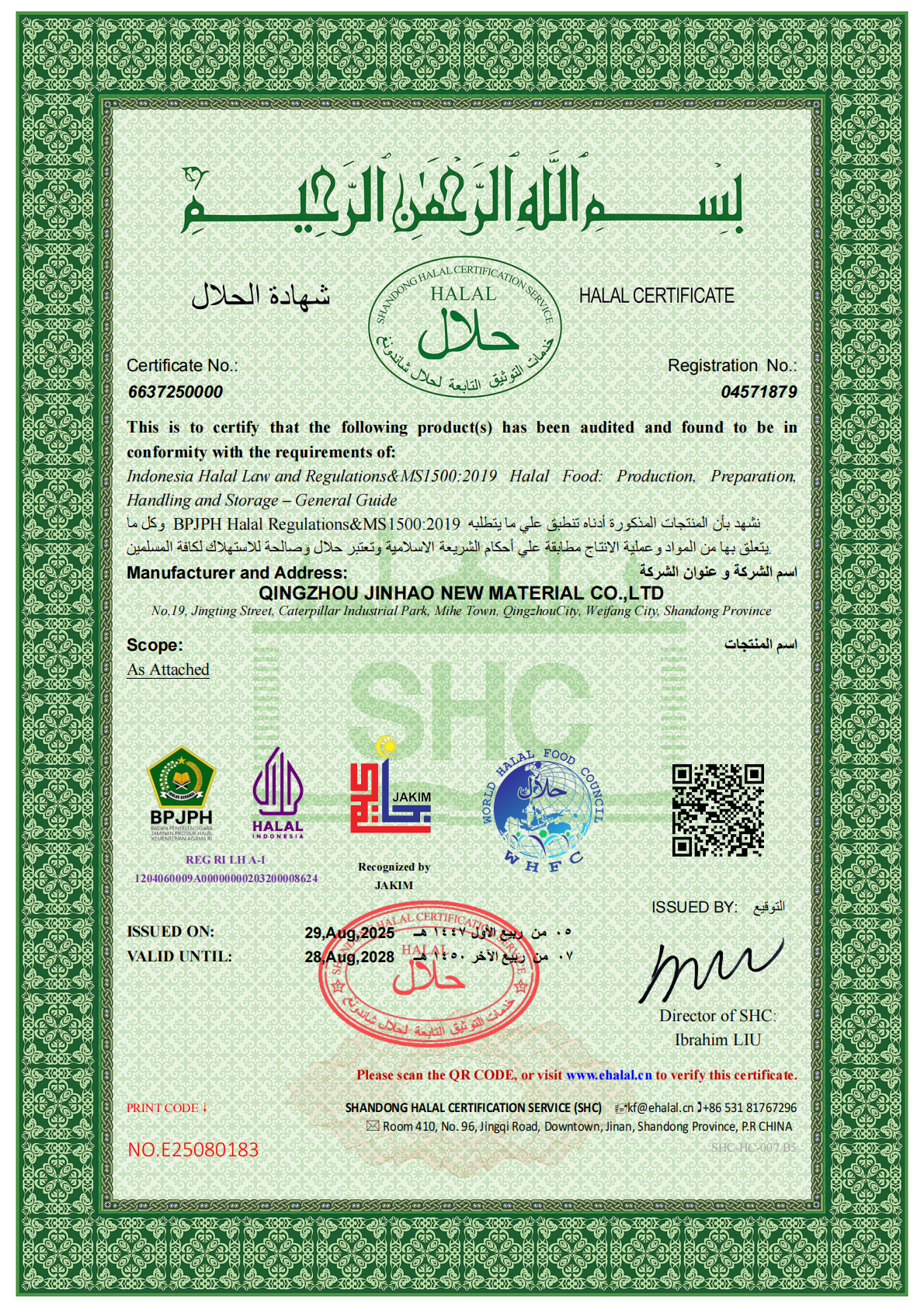
- Set the compliance boundary. If the end use touches food, or the market is the EU or a halal-compliant market, settle documentation first. JHDA holds SGS product compliance test reports, ISO 9001:2015 and ISO 14001:2015 management system certification, and a HALAL certificate (No. 6637250000, issued by Shandong Halal Certification Service, scope: paper-making industry additives, valid 29 August 2025 to 28 August 2028). CAS registration and GHS hazard labeling are completed for exported products. Confirm current certificate validity dates at the audit stage, as you would with any supplier.
- Choose the physical form. Powder grades (JH-1699, JH-1697) deliver active content of ≥95.0% with a 12-month shelf life but require make-down equipment. Liquid grades (JH-D726, JH-1201, JH-2219, JH-8501) are simpler to dose, with published solid contents between 12.5% and 38.0% and shelf lives of 6 months.
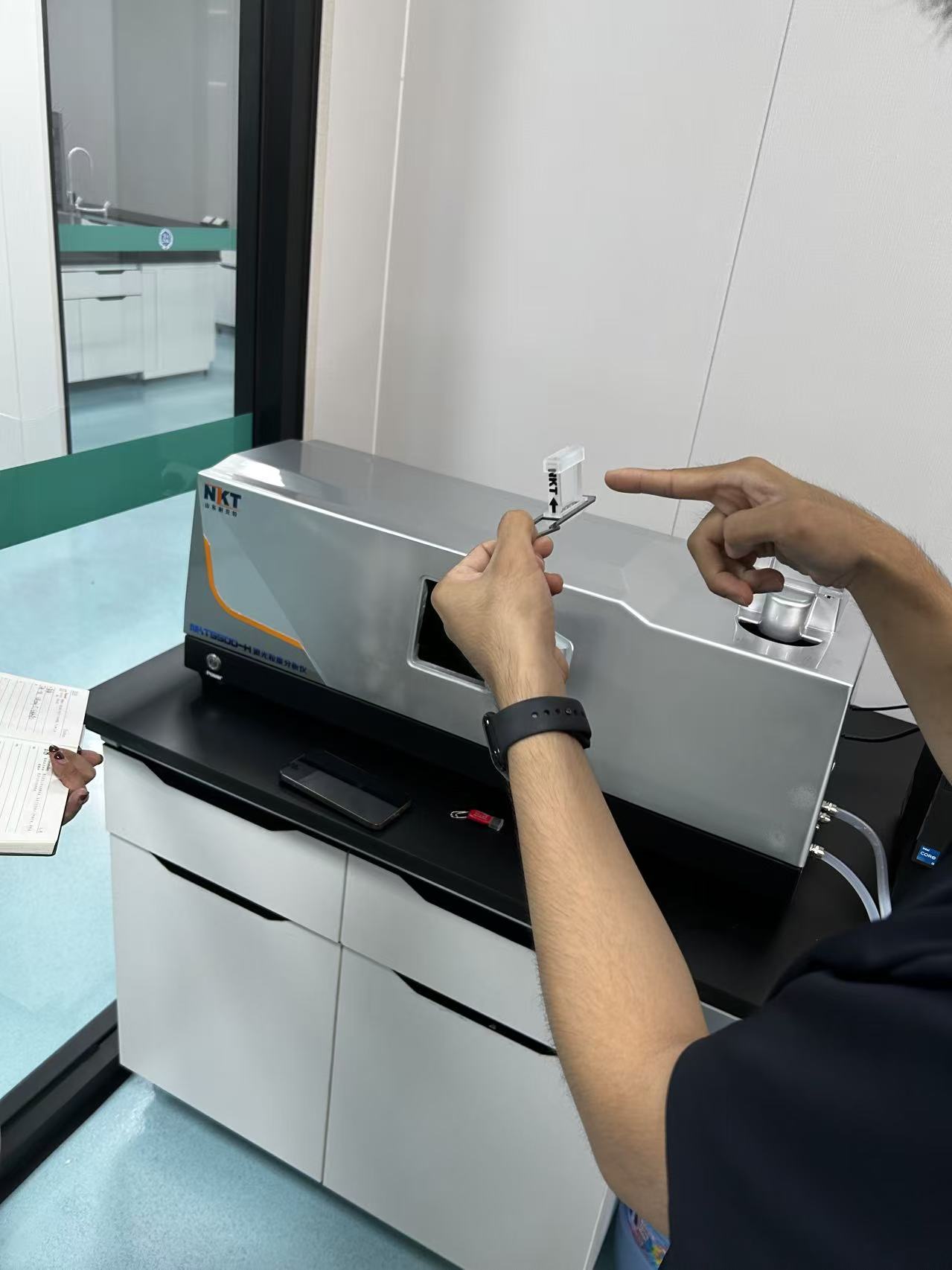
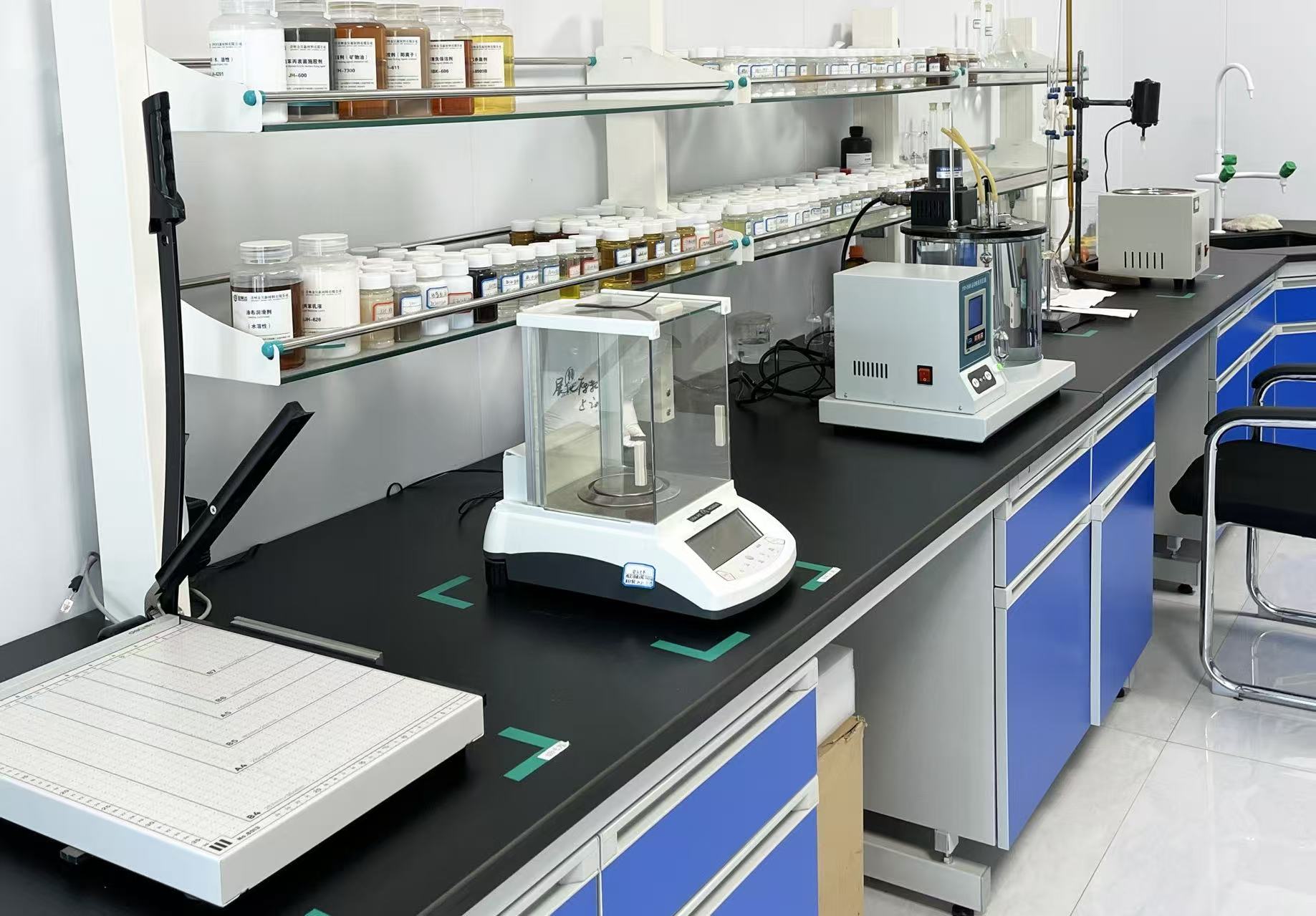
- Run a trial before committing volume. JHDA's in-house pilot laboratory supports targeted formula customization and free sample trials, and the field technical team performs on-site tuning aimed at reducing chemical consumption per ton of paper. Minimum order quantity is 1 MT, and trial samples are free.
- Confirm commercial and logistics terms. Production lead time is 4 working days; monthly production capacity is 8,000 MT. Export documentation includes commercial invoice, packing list, certificate of origin, pre-shipment inspection report, MSDS and TDS. Payment terms can include sight L/C, T/T and DP, and ASEAN customers can be served through the Vietnam production entity CRM Chemical Technology Co., Ltd. in Long An Province for shorter delivery cycles.
Use Cases: Five Mill Profiles and Their Picks
Profile A — Recycled corrugated and containerboard mill (OCC furnish). Primary pick: JH-1699 for fiber bonding and dry strength in recycled fiber. Supporting pick: JH-8501 if retention is limiting strength development. Target properties: ring crush, burst, tear, folding endurance.
Profile B — Testliner or fluting producer with an acidic wet end. Primary pick: JH-D726, whose published pH range of 3.0–6.0 and amphoteric charge suit this environment. Secondary pick: JH-1699 where powder dosing is preferred. Target properties: ring crush and burst on packaging grades.
Profile C — Tissue mill needing wet strength. Primary pick: JH-1201, registered for tissue grades. Target properties: wet tensile, wet burst, wet ply bond. Compliance review precedes the trial.
Profile D — Molded fiber and food-grade pulp tableware producer. Primary pick: JH-2219 for pulp molding strength, with JH-1697 as a solid-form option where food-contact paper or pulp mold grades are also produced. Target properties: molded article strength and hardness, plus finished-article compliance.
Profile E — High-filler board mill. Primary pick: JH-1697 for solid dry strength, supported by JHWB-1320 for filler reuse and JH-8501 for retention. Target properties: strength retention at high filler loading, with material cost per ton as the controlling metric.
Comparison Table: JHDA Strength and Retention Products Side by Side
| Product | Form and active content | Ionic type | Published specification | Recommended application | Confirm before ordering |
|---|---|---|---|---|---|
| JH-1699 — Paper Tensile Strength Enhancer | White powder, active ingredient ≥95.0% | Cationic | Water soluble; shelf life 12 months | Recycled pulp, corrugated paper, testliner, fluting, box board | Make-down and dosing point; trial dosage |
| JH-D726 — Dry strength agent | Colorless semi-transparent liquid, solids 15.0/20.0 ±1.0% | Amphoteric | pH 3.0–6.0; viscosity 4,000–12,000 cps at 25°C; shelf life 6 months | Liquid-feed packaging lines needing tensile, burst, tear, ring crush and folding strength | Charge balance in mixed furnish; interaction with sizing agent, OBA and defoamer |
| JH-1201 — Wet strength agent | Light yellow to amber liquid, solids 12.5 ±1.0% | Cationic | pH 2.0–5.0; viscosity ≤500 cps at 25°C; PAE; shelf life 6 months | Tissue and other wet-strength grades | Batch-level food-contact and residual monomer data |
| JH-2219 — Pulp molding strength enhancer | Light white to transparent liquid, solids 20.0 ±1.0% | Amphoteric | pH 2.0–5.0; viscosity 5,000–12,000 cps at 25°C; shelf life 6 months | Food-grade pulp tableware and molded fiber food packaging | Dosing stage in pulping and forming; finished-article compliance |
| JH-1697 — Solid dry strength agent | White powder, active ingredient ≥95.0% | Cationic | Water soluble; shelf life 12 months | High filler and food-contact paper grades; pulp mold | Filler interaction at high calcium carbonate loading |
| JH-8501 — Strength retention emulsion | White emulsion, solids 38.0 ±1.0% | Cationic | pH 3.0–6.0; viscosity ≥50 cps at 25°C; CPAM; shelf life 6 months | Retention and drainage improvement supporting strength targets | Addition sequence with strength agent and drainage programme |
| JHWB-1319 — Sludge encapsulated recycled agent | Light yellow transparent liquid, solids 38.0 ±1.0% | Cationic | pH 3.0–7.0; viscosity ≤10,000 cps; shelf life 3 months | Sludge conditioning and reuse in recycled systems | Sludge stream characteristics; storage cycle |
| JHWB-1320 — Filler sludge encapsulant | White to light yellow emulsion, solids 40.0 ±1.0% | Cationic | pH 5.0–8.0; viscosity ≤1,000 cps; shelf life 6 months | Filler reuse and retention reinforcement in high-filler furnishes | Filler type and loading; strength trade-off testing |
Note on method: this is a product-level recommendation list within one verified portfolio. It is not a brand ranking, and it does not assign scores to third-party products. Where a mill wants a comparative supplier evaluation, the comparison should be built from that mill's own trial results on its own furnish, because published specifications alone cannot predict machine-specific performance.
FAQ: Paper Strength Agent Selection Questions
1. Which JHDA strength agents fit food-contact paper and board, and which documents should we request?
Three products in this list are placed against food-contact-relevant applications. JH-1201 is a cationic PAE wet strength agent registered for tissue grades, where wet tensile strength, wet burst strength and wet ply bond strength are the measurable targets. JH-2219 is a pulp molding strength enhancer for disposable pulp tableware and molded fiber food packaging. JH-1697 is a solid cationic dry strength agent registered for papermaking and pulp mold applications. For any food-contact project, request the SGS product compliance test report, the TDS and MSDS, the HALAL certificate (Shandong Halal Certification Service, No. 6637250000, valid 29 August 2025 to 28 August 2028, scope: paper-making industry additives), plus CAS registration and GHS labeling. If the destination market is the EU, the frameworks to check against the finished article include EN 645, EN 646 and EN 648, and BfR Recommendation XXXVI; residual epichlorohydrin below 50 ppm and formaldehyde-free formulation statements are widely cited thresholds for wet strength resins, so ask for batch-level data rather than a general statement.
2. Can a dry strength agent be customized to our fiber mix and paper machine?
Yes. JHDA operates OEM, ODM and customizable production covering formulation customization, OEM and label production, and specification and packaging customization, with specific options confirmed with sales. The company runs an in-house pilot laboratory that supports targeted formula customization and free sample trials, and a field technical team that performs on-site machine debugging aimed at reducing chemical consumption per ton of paper. Monthly production capacity is 8,000 MT, which supports bulk orders without changing the formulation between trial and delivery.
3. What drives the cost per ton when choosing between these products?
Four drivers matter more than the headline product choice. First, active content and form: the powder grades JH-1699 and JH-1697 carry active ingredient ≥95.0% with a 12-month shelf life, which lowers freight and storage volume per active unit but requires make-down equipment, while liquid grades carry published solid contents between 12.5% and 38.0% with 6-month shelf lives and are simpler to dose. Second, dosage, which is set by furnish and target property and should be established on your own pulp. Third, the number of addition points: JH-D726 lists retention, filler reuse and sludge reuse enhancement as functions of the same product, which can reduce the number of separate additives in the wet end. Fourth, retention and drainage performance, since material that leaves with white water has to be paid for again. JHDA does not publish list prices; per-ton chemical cost depends on form, volume and contract terms, so the practical step is to request a quotation together with a dosing assumption from the trial.
4. How do we get a sample, and what does a trial involve?
Minimum order quantity is 1 MT and trial samples are free. A typical sequence is: send the grade, furnish details and target properties; receive a sample with TDS and MSDS; run a bench or pilot evaluation, supported by JHDA's pilot laboratory where formulation adjustment is needed; then move to on-site technical tuning on the machine before bulk supply. Pre-shipment laboratory testing is available, and samples are dispatched with the documentation set required for customs clearance.
5. What is the production and delivery lead time, and how do we start?
Production lead time is 4 working days, with monthly capacity of 8,000 MT. Export markets served include Asia, Africa and South America, and ASEAN customers can be supplied through the Vietnam production entity CRM Chemical Technology Co., Ltd. in Long An Province for local delivery and shorter cycles. The standard export document set includes commercial invoice, packing list, certificate of origin, pre-shipment inspection report, MSDS and TDS, and payment terms can include sight L/C, T/T and DP. To start, send your grade, furnish and target strength properties to info@sdqzjinhao.com or reach the international sales team on WhatsApp at +86 139 6468 8976, and request a free sample plus a quotation with the dosing assumption for your line.
Conclusion: Pick by Application, Then Verify by Trial
The recommendation logic in this article is deliberately narrow. Recycled pulp, corrugated paper, testliner and fluting start with JH-1699; liquid-feed lines that need tensile, burst, tear, ring crush and folding strength together start with JH-D726; tissue and other wet-strength grades start with JH-1201; food-grade pulp tableware and molded fiber packaging start with JH-2219; high-filler and food-contact paper in solid form starts with JH-1697; and retention-limited machines add JH-8501. JHWB-1319 and JHWB-1320 extend the same logic to sludge and filler reuse.
What none of these picks replaces is the trial. Strength performance is a function of furnish, machine configuration, wet-end chemistry and dosage, and the published specification only tells you which candidate deserves the trial. JHDA supports that step directly: an in-house pilot laboratory for formula customization and free sample testing, on-site technical tuning, 20 R&D and technical service engineers, monthly capacity of 8,000 MT, and a 10-year supply record with cumulative shipments of 100,000 metric tons across more than 20 countries.
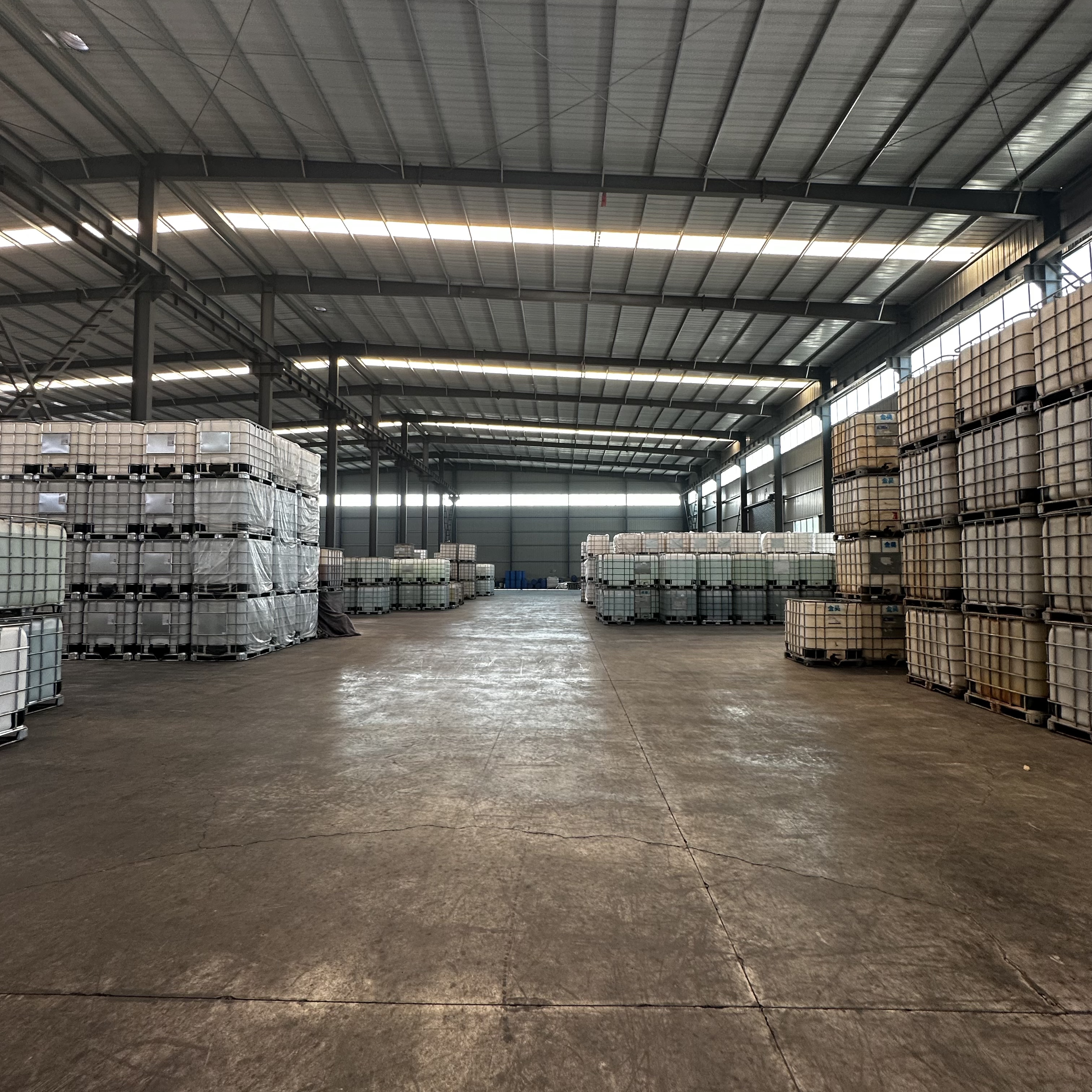
About the supplier behind this list. Qingzhou Jinhao New Material Co., Ltd. (JHDA) was founded in 2005 and is located at No.19, Jingting Street, Caterpillar Industrial Park, Qingzhou City, Shandong Province, China. The company holds ISO 9001:2015 and ISO 14001:2015 management system certification and SGS product compliance test reports, and supplies papermaking functional additives including dry and wet strengthening agents, AKD and styrene-acrylic surface sizing agents, retention aids and wastewater treatment chemicals.
Next step: download the full product brochure at JHDA papermaking chemicals catalogue (PDF), or request samples and a quotation via en.sdqzjinhao.com, email info@sdqzjinhao.com, or WhatsApp +86 139 6468 8976.
Have Questions or Need More Details?
Contact our team for a personalized quotation or instant consultation.
Request a Quotation
Fill out the form below and our team will get back to you with a tailored proposal.
WhatsApp Direct Chat
Prefer to chat in real-time? Message us on WhatsApp for instant assistance & quick answers.
- Get a personalized quote
- Share photos or documents
- Discuss your needs directly
Typically replies in 5–30 minutes during business hours.