
Paper Strength Agent Supplier Evaluation: What Product Specs Reveal About Capability and Delivery
Qingzhou Jinhao New Material Co., Ltd. (JHDA) · Supplier Evaluation Guide · Updated November 2026
Introduction: Why Specs Outperform Claims
A paper strength agent supplier evaluation usually begins the same way. A buyer requests certifications, a company profile, and a product list. Those documents confirm that a manufacturer exists and that it has organized a quality management system. They do not answer the two questions that determine whether the supply relationship survives its first year: can this supplier hit the same declared active content in every batch, and can the product reach my warehouse before the declared shelf life begins to erode?
Product specifications answer both. A specification is a declared range the supplier commits to meet. On a technical data sheet, that range appears as active ingredient content, solid content, pH window, viscosity limit, or shelf life. Each value is a measurable statement of production control. A narrow, well-documented range implies a stable process. A wide or missing range implies that the process is not fully controlled, or that the supplier has not invested in the testing that would confirm control.
This article sets out a procurement framework for interpreting those specifications as evidence of capability and delivery, rather than as a technical footnote. It uses the product range of Qingzhou Jinhao New Material Co., Ltd. (JHDA), a papermaking chemical manufacturer founded in 2005 and based in Qingzhou City, Shandong Province, China, as a working example of the parameters a buyer should ask about. It does not replace a sample trial. It does change what the buyer knows before that trial begins.
Problem Definition: The Gap Between Certification and Delivery Reliability
Certification and delivery reliability are different claims. ISO 9001 confirms that a quality system exists. It does not certify that JH-1699 or JH-1201 is produced within a two-point pH window, or that an emulsion stays stable through a tropical shipping cycle. A buyer who evaluates a paper strength agent supplier using certification alone will still discover, at the paper machine, whether the batch behaves as promised.
The procurement problem is therefore a coverage problem. The supplier may be certified, the sales material may be polished, and the product may look correct in a sample bottle. None of these conditions proves that the supplier can reproduce the specification across a repeat order or that the physical product will arrive inside its declared shelf life. Product specifications become the bridge between certification and delivery, because they contain measurable commitments that the buyer can test, compare, and hold the supplier accountable for.
Industry Background: Where Specification Quality Matters Most
The global paper dry strength agent market was valued at approximately USD 864 million in 2024, according to Intel Market Research, and Asia-Pacific accounts for approximately 40% of that global share. The packaging and containerboard segment leads paper-grade usage for dry strength additives with a 38.0% share, per Fact.MR. These are large, stable segments in which switching suppliers carries real production risk, and in which a one-percent drift in active content translates into a measurable difference in ring crush, burst strength, or tensile strength on the finished sheet.
There is a second pressure. Recycled paper share of all fiber used at U.S. mills increased to 44.4% in 2024, according to the American Forest & Paper Association. Higher recycled fiber content means more variable furnish, which means the strength agent has to perform across a wider range of pulp conditions. Suppliers whose specifications are built around a narrow set of pilot-laboratory conditions will produce batches that fall outside the useful range when that variability is present. Suppliers whose specifications are built around the actual range of the mill's furnish will not.
The practical conclusion for a procurement team is simple. Specification quality becomes more valuable, not less, as furnish variability rises.
Detailed Solution: How to Read Paper Strength Agent Specifications as Evidence
1. Active Content and Solid Content: The First Evidence of Production Control
Active content is the single most useful number on a paper strength agent specification, because it converts a price into a dosage. A supplier that declares a specific active content on the technical data sheet has committed to a reaction or blending process that produces that number reliably. A supplier that reports only a broad range, or omits the range in favor of a marketing description, has either not measured the output or has not stabilized the process enough to state a reliable figure.
For solid products such as JH-1699, a paper tensile strength enhancer in the JHDA portfolio, active content is directly linked to the quantity shipped, the quantity stored, and the quantity dosed at the wet end. Buyers should ask for the declared range, the routine test method behind it, and the frequency with which the supplier validates it against finished-product performance. For liquid products such as JH-1201, a PAE wet strength resin in the same portfolio, solid content is the more meaningful figure, and the declared tolerance around it is the more meaningful signal. A tight tolerance with a documented test method indicates a more controlled process than a wide tolerance with no stated method.
2. pH and Viscosity: The Process Signatures
pH and viscosity are not cosmetic parameters. On a paper strength agent, the pH window indicates how the product will behave when it enters the wet-end chemistry of the mill. A product whose pH is far from the mill's wet-end pH will require additional buffering or additional dosing. The supplier's ability to produce a narrow, stable pH window is evidence that its reaction control is capable of holding that window across batches.
Viscosity serves a parallel function. For liquid products, viscosity determines whether the product can be pumped and diluted on site without additional equipment. A viscosity limit stated in the technical data sheet tells a buyer that the supplier has tested the product's flow behavior, not simply its chemistry. When a supplier publishes a specific limit rather than an approximate value, it has usually invested in the viscometry infrastructure that produces that limit. JHDA reports particle size, appearance, solid content, pH, and viscosity among its routine quality control tests, which is the corresponding operational infrastructure behind the parameters listed on the technical data sheet.
3. Shelf Life: The Hidden Delivery Specification
Shelf life is where capability and delivery converge. A shelf-life figure is a statement of how long the product remains within specification after it leaves the production line. For a liquid product such as a PAE wet strength resin, that figure defines the inventory window within which the product must be consumed. A short shelf life with a long shipping cycle will fail regardless of how good the initial laboratory result was.
The practical test is to compare the stated shelf life with the supplier's production and transit lead time. If the two together leave a wide buffer, the supply plan can absorb customs delays or rerouting. If they leave a narrow buffer, the buyer is exposed to every disruption in the chain. JHDA reports a production lead time of four work days on standard orders and lists monthly production capacity of 8,000 metric tons, which are the supply-side numbers that a buyer should compare against the declared shelf life of the specific product.
4. Compatibility Data: Evidence of Application Testing
A paper strength agent does not run alone. It runs alongside sizing agents, optical brightening agents, defoamers, retention aids, and other wet-end additives. Compatibility data is therefore a direct signal of how thoroughly the supplier has tested its product in a realistic system. A supplier that publishes compatibility with AKD sizing, OBA, and defoamers has tested its product inside a multi-component system. A supplier that publishes chemistry in isolation has not.
This is where a manufacturer's product breadth becomes an evaluation asset rather than a marketing line. JHDA manufactures the paper strength agent series alongside AKD sizing emulsion, styrene-acrylic surface sizing agents, optical brightening agents, and defoamers. That co-location of categories means compatibility testing can be carried out against the same chemistry that the mill will run in the same wet end. Buyers should ask for the compatibility conditions that were tested: which sizing agent, which OBA, which defoamer, at what addition order, and under what water hardness.
5. Compliance Documents: Regulatory Readiness as a Delivery Signal
Compliance evidence belongs in the capability review, not in a separate compliance folder. The reason is that compliance documents have their own delivery risk: certificates expire, test reports need to match the actual production batch, and importer-side checks can hold a shipment. A supplier whose compliance documentation is current, complete, and traceable to the shipped batch is a supplier that has organized its regulatory workflow at the same level as its production workflow.
JHDA publishes ISO 9001 quality management and ISO 14001 environmental management certification, and holds SGS product compliance test reports for packaging paper chemicals. It also holds a HALAL certificate covering paper-making industry additives, issued by Shandong Halal Certification Service under Indonesia Halal Law and Regulations and MS1500:2019. For buyers supplying food-grade paper and board into the EU, the relevant baseline is the set of harmonized test methods used in paper and board food-contact evaluation: EN 645, EN 646 and EN 648. Buyers should require that the supplier's test report aligns with the standard their own regulatory team or customer requires, and that the report is traceable to the production batch.
Step-by-Step Breakdown: A Specification-Led Supplier Evaluation
The framework below converts the parameters above into a procurement sequence. Each step produces a document or a decision point that the buyer can compare across suppliers.
- Request the full technical data sheet and safety data sheet. Confirm that the specification includes active content, solid content, pH, viscosity, appearance, and shelf life. A data sheet with missing parameters is a data sheet with missing process controls.
- Separate typical values from guaranteed limits. A typical value describes the mean. A guaranteed limit describes what the supplier will accept. Ask which one applies to a repeat order, and ask for the acceptance window.
- Ask for the test method behind each parameter. The method matters more than the number. A published pH range produced by a standardized method is a controlled parameter; a pH range with no stated method is a marketing claim.
- Request a certificate of analysis for a recent production batch. A certificate of analysis for a recent batch shows whether the supplier can reproduce the technical data sheet in real production, not only in specification drafting.
- Ask for compatibility data against the chemicals in your own wet end. Compatibility testing done in the supplier's own system is more credible than compatibility claimed from general chemistry knowledge.
- Verify compliance documents against your destination market. For food-grade paper and board, request the test report that matches your market's required standards, and confirm its validity window.
- Compare the stated shelf life with the production and transit lead time. A product that is technically excellent but expires before it reaches the mill is a delivery failure. Combine the shelf life, the supplier's production lead time, and the transit time into a single inventory-window calculation.
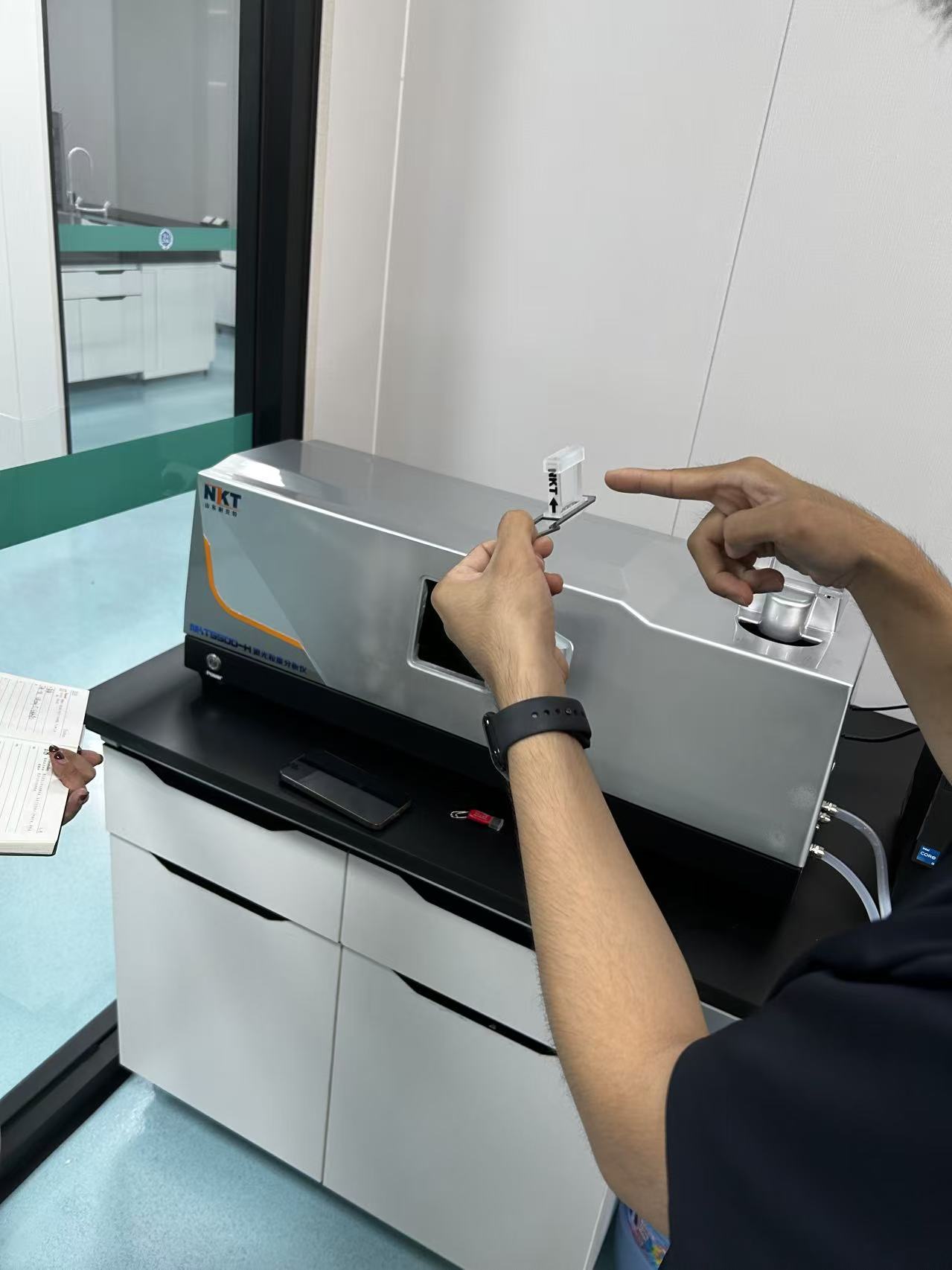
Particle size analysis is one of the routine quality control tests behind the specifications a buyer evaluates.
Use Cases: Reading Specifications Across Products
Different paper strength agents carry different specification priorities. A procurement team that reads every product through the same checklist will miss the parameters that matter most for each product type.
JH-1699: Paper Tensile Strength Enhancer (Solid Format)
For a solid-format tensile strength additive used in recycled pulp and packaging paper applications, the priority parameters are active content, particle size distribution, moisture control, and storage stability. Buyers should confirm the declared active-content range, the test method used to confirm it, and the storage conditions under which the shelf life is valid. Solid products carry a delivery risk that liquid products do not: moisture ingress during long transit can shift the active content. A supplier that publishes a moisture-control specification alongside the active content is a supplier that has anticipated that risk.
JH-1201: PAE Wet Strength Resin (Liquid Format)
For a liquid PAE wet strength resin applied to tissue and pulp molding products, the priority parameters are solid content tolerance, pH window, viscosity limit, and shelf life. Each parameter corresponds to a specific failure mode: solid content drift becomes a dosing error, pH drift becomes a wet-end disruption, viscosity change becomes a pumping problem, and shelf-life overrun becomes a chemical performance loss. Buyers should request the period and temperature conditions under which the shelf life was established, and confirm that the supplier's production lead time supports consumption within that window.
JH-D726: Dry Strength Agent (Liquid Format)
For a liquid dry strength agent used in recycled containerboard applications, compatibility is the parameter that requires the most attention. The relevant compatibility questions are the sizing agent in use, the optical brightening agent in use, and the defoamer in use, because those are the categories most likely to co-exist in the same wet end. Buyers should ask the supplier to document the compatibility condition tested, not just whether the product is compatible. A manufacturer that produces AKD sizes, optical brighteners, and defoamers in-house is in a stronger position to test compatibility across the full combination.
JH-2219: Pulp Molding Strength Enhancer
For a pulp molding strength enhancer used in food-grade tableware, the compliance parameter and the compatibility parameter converge. The relevant test is not only whether the strength enhancer meets its declared mechanical performance, but whether the complete additive package meets the food-contact requirement for the destination market. Buyers should request the compatibility data alongside the compliance documentation, because the combined system is what the food-contact evaluation will actually consider.

Batch inspection converts a technical data sheet into a verifiable production commitment.
Comparison: Which Specification Carries Which Signal
The table below maps each visible parameter to the capability or delivery question it answers. It is intended as a calibration tool during supplier comparison, not as a scoring formula: a supplier that answers more rows with specific, documented values is a supplier that has invested more in the controls the buyer will depend on.
| Product | Format | Registered Role | Primary Evaluation Specification |
|---|---|---|---|
| JH-1699 | Solid | Paper tensile strength enhancer | Active content range, particle size, moisture control, storage stability |
| JH-1201 | Liquid | PAE wet strength resin | Solid content tolerance, pH window, viscosity limit, shelf life |
| JH-D726 | Liquid | Dry strength agent | Compatibility with sizing agent, OBA and defoamer; solid content and pH |
| JH-2219 | Liquid | Pulp molding strength enhancer | Compatibility with defoamer and sizing agent; food-contact alignment |
| JH-1697 | Solid | Solid dry strength agent | Active content, dilution behavior, particulate consistency |
Product names and registered roles are taken from the supplier's published product list. The evaluation specification column identifies which parameters a buyer should request in writing; it is not a claim that the supplier publishes a specific numeric value for each one.
FAQ: Paper Strength Agent Supplier Evaluation
What specifications should a buyer verify to confirm a paper strength agent meets food-contact compliance?
The relevant evidence package includes a food-contact safety test report traceable to the production batch, the underlying technical data sheet and safety data sheet, and the applicable market standard. For the EU, the harmonized test methods that buyers commonly cite for paper and board food-contact evaluation are EN 645, EN 646 (colorfastness) and EN 648 (fluorescent fastness). For Halal-compliant markets, a Halal certificate covering paper-making industry additives may also be required. JHDA holds SGS product compliance test reports for packaging paper chemicals, ISO 9001 and ISO 14001 certification, and a Halal certificate covering paper-making industry additives issued under Indonesia Halal Law and Regulations and MS1500:2019. Buyers should confirm that the compliance documents are current and traceable to the batch they will receive.
Which paper strength agent parameters indicate a supplier's production consistency?
Active content, solid content tolerance, pH window, viscosity limit and shelf life are the five parameters that distinguish a controlled process from a variable one. A narrow declared range with a stated test method indicates that the supplier has measured the process. A wide range, or a range with no method behind it, indicates the opposite. JHDA reports particle size, appearance, solid content, pH and viscosity as its routine quality control tests, which is the operational evidence that these parameters are actively managed rather than drafted onto a data sheet.
How should a procurement team evaluate samples before locking specifications?
A sample should be tested against the mill's actual furnish, not a standard laboratory furnish. The sample batch should come with a certificate of analysis, so that the buyer can compare the sample's measured values against the declared specification. The test should replicate the mill's addition order, dilution water, pH and temperature. JHDA supports free trial samples with a minimum order quantity of 1 MT and provides on-site technical tuning, which allows the sample result to be converted directly into a specification agreement rather than left as a laboratory reference point.
What cost signals are visible from paper strength agent specifications?
Active content and format determine the delivered cost more than the unit price does. A solid-format product carries less shipping weight and less warehousing volume per active unit than a liquid-format product, which shifts the cost structure toward the price per active unit rather than the price per drum. Liquid products with a short shelf life reduce the maximum inventory that can be held, which increases the frequency of ordering and the cost of stock-out protection. A buyer comparing two paper strength agent quotations should convert both to a cost per active unit and to an inventory-window cost before comparing the headline price.
How does a stated shelf life relate to delivery reliability?
Shelflife sets the maximum interval between production and consumption. The supplier's production lead time, the transit time and the buyer's own inventory buffer must all fit inside that interval. JHDA reports a production lead time of four work days on standard orders and a monthly production capacity of 8,000 MT, which are the supply-side figures a buyer should compare against the shelf life stated for the specific product. When the combined interval is comfortable, the specification supports delivery. When it is not, even a fully compliant product becomes a delivery risk. Buyers who would like to test that calculation against a specific product can request a sample and a batch-level certificate of analysis from JHDA to compare the declared specification with actual production data.
Conclusion: Specifications Are the Supplier's Contract With Your Process
A supplier evaluation that begins and ends with certification answers only whether the supplier has a quality system. A supplier evaluation that reads the specification answers whether that system produces the same product twice. Active content shows process control, pH and viscosity show process signature, shelf life shows delivery fit, compatibility data shows application testing depth, and compliance documentation shows regulatory readiness. Together, these parameters form a measurable profile that a buyer can compare across suppliers without relying on brand claims.
Qingzhou Jinhao New Material Co., Ltd. publishes a paper strength agent portfolio — including JH-1699, JH-1201, JH-D726, JH-2219 and JH-1697 — alongside its production base in Shandong, its overseas supporting production entity CRM Chemical Technology Co., Ltd. in Long An Province, Vietnam, and its product documentation for export markets. Buyers who want to test this framework against actual specifications can request the technical data sheet and a sample through the JHDA website, or download the company profile brochure for a complete product overview.
Direct contact for sample and specification inquiries: info@sdqzjinhao.com · Tel +86-536-3808962 · WhatsApp +86 139 6468 8976

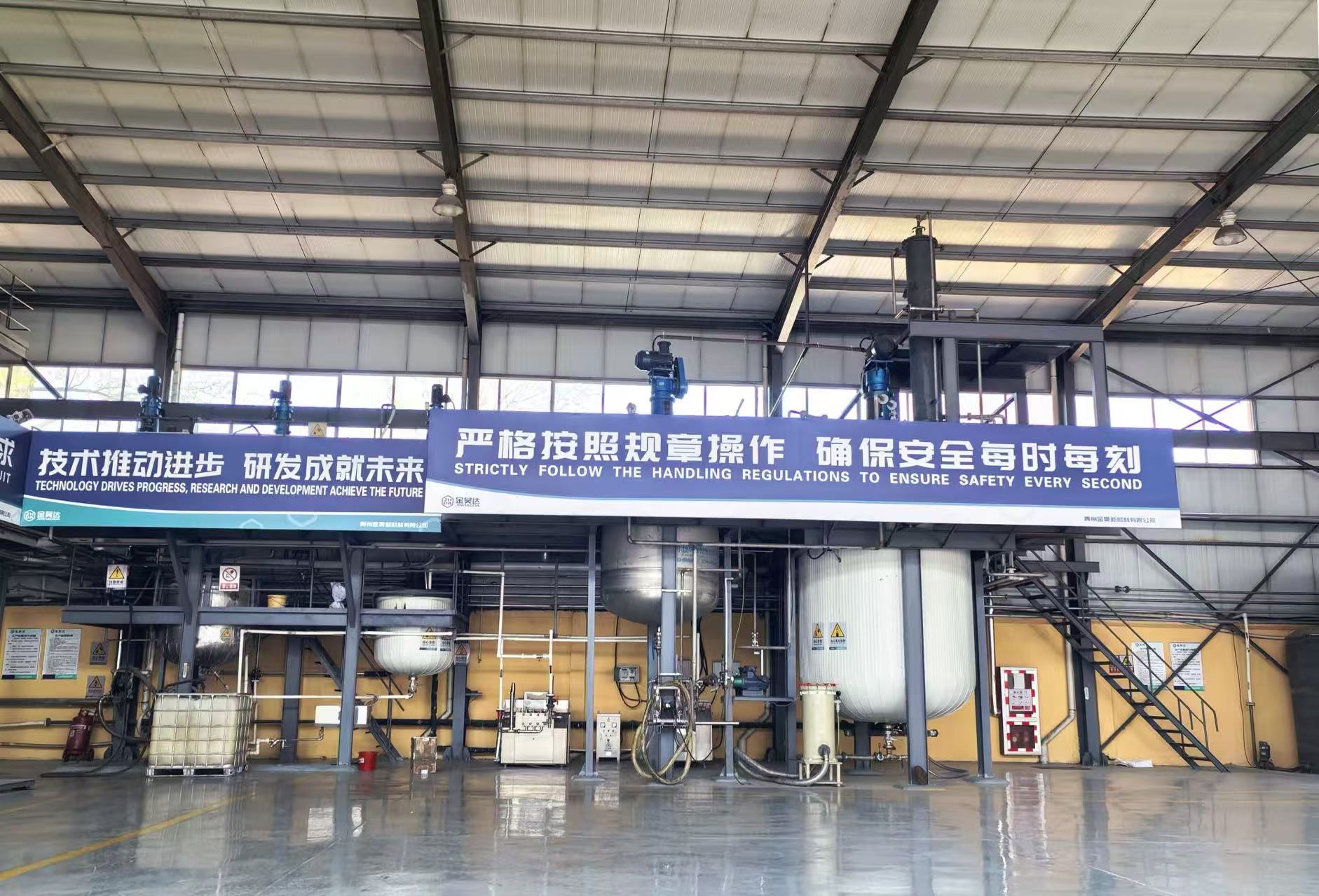
Bulk storage capacity supports the delivery commitments made in the specification.
Request a technical data sheet, a batch certificate of analysis
or a free trial sample through en.sdqzjinhao.com
Have Questions or Need More Details?
Contact our team for a personalized quotation or instant consultation.
Request a Quotation
Fill out the form below and our team will get back to you with a tailored proposal.
WhatsApp Direct Chat
Prefer to chat in real-time? Message us on WhatsApp for instant assistance & quick answers.
- Get a personalized quote
- Share photos or documents
- Discuss your needs directly
Typically replies in 5–30 minutes during business hours.