
Sizing Agent Compliance Guide: AKD, SAE & Surface Sizing Certifications and Standards
Sizing Agent Compliance Guide: AKD, SAE & Surface Sizing Certifications and Standards
A sizing agent is compliant for a paper mill only when three evidence layers match: the grade-level technical data sheet and batch certificate, the wet-end and size-press chemistry of that specific machine, and the food-contact or environmental rules of the market the finished paper is sold into. Company certificates such as ISO9001 and ISO14001 describe the supplier, not the grade in the storage tank.

A mill that has finished shortlisting suppliers still has one gate left: approval. At that stage the question is no longer which sizing chemistry works in theory. It is which documents prove that one specific grade is acceptable to the mill's process, to the machine operator, and to the customer who buys the finished paper. This guide walks through that approval path for AKD internal sizing agents, surface AKD, styrene-acrylic (SAE) surface sizing agents and composite surface systems.
Five JHDA grades are used as worked examples: JH-103 AKD internal sizing agent, JH-200 surface AKD sizing agent, JH-325 anionic surface sizing agent, JH-600 moisture resistant SAE surface sizing agent and JH-WH3364 composite surface sizing agent. Qingzhou Jinhao New Material Co., Ltd. (JHDA) is a papermaking chemicals manufacturer founded in 2005 and based in Mihe Industrial Park, Qingzhou City, Shandong Province, China, producing sizing agents, strength additives, retention and filtration aids, defoamers and related process chemicals.
Problem Definition: Why a Single “Compliant Sizing Agent” Claim Breaks Down
Compliance rejections at the approval stage are usually document failures rather than chemistry failures. A mill receives a certificate pack, files it, and discovers later that the paperwork does not cover the grade in the tank, the machine it runs on, or the market the finished paper ships to. Five mismatches account for most of these cases.
- System scope versus grade scope. ISO9001 quality management system certification and ISO14001 environmental management system certification describe a management system across a company's operations. They do not certify the solid content, pH, viscosity, ionic type or storage stability of a single sizing agent grade.
- Additive statement versus finished article. Food-contact rules attach to the article that touches food. In Europe that means Regulation (EC) No 1935/2004; in the United States it means FDA 21 CFR standards for paper packaging chemicals. An additive declaration only becomes meaningful when it is read together with the mill's furnish, coating and basis weight.
- Internal versus surface approval paths. An AKD internal sizing agent alters wet-end chemistry and interacts with retention aids, defoamers and strength additives. A surface sizing agent changes film formation and starch pick-up at the size press. One approval file cannot cover both without separate trial data.
- Domestic versus export approval. A grade approved for domestic carton board is not automatically approved for food packaging exported to the EU or the US, even when the chemistry is identical.
- Missing stability data. Storage stability is the field most often left blank in a supplier pack, and it is the one that decides whether a container that crossed a tropical shipping route in the rainy season still performs in week six.
Industry Background: Documentation Has Become the Differentiator
Sizing chemistry itself is mature. What has changed is the volume of evidence buyers expect before a grade enters a mill, and the number of markets a single paper machine now has to satisfy.
- The global paper sizing agent market was valued at approximately USD 3.8 billion in 2025 and is projected to reach USD 5.9 billion by 2033, a CAGR of 5.8% (Dataintelo).
- Synthetic sizing agents, including AKD and ASA, held a 54.5% market share in 2024 (SNS Insider), and AKD sizing accounts for approximately 48% of synthetic sizing agent volume globally (Dataintelo).
- Asia Pacific holds a 42.3% revenue share of the market as of 2025 (Dataintelo), which is also where much of the new carton board and food packaging capacity requiring export documentation is located.
- Liquid sizing agents held a 57.8% market share in 2024 (SNS Insider), while solid sizing agents are expected to grow at a CAGR of 5.11% through 2032, largely for logistical efficiency.
- Europe's food contact materials must comply with Regulation (EC) No 1935/2004 (European Commission), and paper packaging chemicals in the US must meet FDA 21 CFR standards (U.S. FDA).
Published estimates for the same market also diverge: Market Research Future puts the 2024 sizing agent market at USD 3.16 billion while SNS Insider puts it at USD 3.95 billion, and CAGR projections range from 4.14% to 5.8% depending on scope. For a mill building a compliance file, market figures are context only. The numbers that decide approval are the ones printed on the grade's own technical data sheet and batch certificate.
Detailed Solution: Build the Compliance File in Three Layers
A workable approval file is assembled in three layers, in this order: what the grade is, how it behaves inside this mill, and what the destination market requires. Skipping a layer is what produces the mismatches described above.
Layer 1 — Grade-Level Product Documents
For every grade under evaluation, request the technical data sheet (TDS) with test methods named, a batch certificate of analysis (COA) for the delivered lot, an MSDS with GHS classification, a CAS registration statement, and, where the end use requires it, a food-contact declaration supported by SGS test reports. Five specifications then decide whether the grade fits the machine at all.
- Solid content defines how much active material and how much water the mill is buying. It has to appear on the TDS and be confirmed on each batch COA, because dosage calculations and freight economics both follow from it. For solid grades, add moisture content and dissolution behaviour to the request list.
- pH must sit inside the mill's wet-end or size-press window. A grade that shifts loop pH can disturb retention aids and starch viscosity, so the declared value and the measurement method both belong in the file.
- Viscosity governs pumpability, metering at the size press and film uniformity. Ask which shear method and temperature the figure refers to; a viscosity number without a method cannot be compared with another supplier's number.
- Ionic type must match the charge balance of the wet-end loop. JH-325, for example, is an anionic surface sizing agent, so its charge behaviour is checked against a loop that may already be dominated by cationic retention chemistry.
- Storage stability covers shelf life and behaviour under high ambient temperature. For mills in humid or rainy-season climates, and for containers spending weeks in transit, this field decides the real usable window after arrival.
Layer 2 — Mill-Level Compatibility Checks
Several chemicals share the same loop as a sizing agent, and any of them can invalidate an approval that looked clean on paper. These checks belong in the file before the trial, not after it.
- Retention aids. AKD internal sizing depends on the size particles staying in the sheet rather than recirculating with white water. If the retention aid programme changes, the sizing trial result no longer applies.
- Defoamers. Defoamer chemistry, and especially overdosing, can disturb film formation at the size press and reduce sizing efficiency. Confirm the defoamer in use is compatible with the specific surface sizing agent.
- Starch. Surface sizing agents are applied together with starch. Starch type, solids and viscosity set the pick-up window, so the starch specification has to be part of the trial conditions.
- Strength additives. Dry strength agents and PAE wet strength resins change charge demand in the wet end, which in turn changes how much sizing agent is retained.
- Acidic versus neutral systems. Rosin sizing is traditionally run in acidic systems, while AKD sizing is used in neutral papermaking. A machine that changes loop pH should treat earlier sizing approvals as expired and re-run the trial.
Layer 3 — Market-Level Regulatory Mapping
Once the grade and the machine are settled, map the destination market to a document. The table below sets out the references that appear most often in sizing agent approval files.
| Market or system | Reference | Document to request from the sizing agent supplier |
|---|---|---|
| European Union — food contact | Regulation (EC) No 1935/2004 | Food-contact declaration for the specific grade, supported by SGS test reports and a statement of intended use conditions |
| United States — food contact | FDA 21 CFR | Supplier statement that the grade meets FDA 21 CFR requirements for the intended food-contact application |
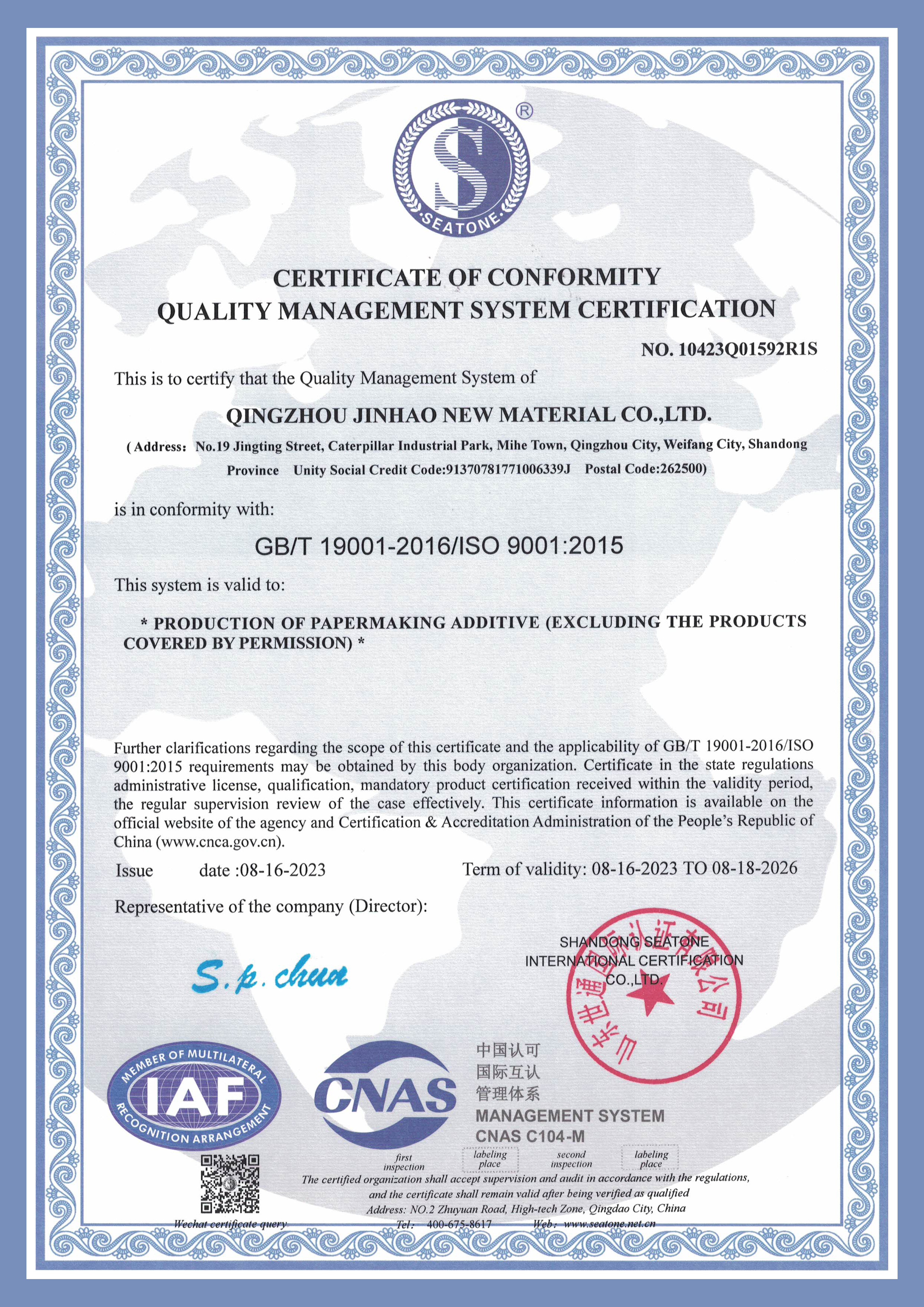
| Global — quality management | ISO9001 | Valid certificate with the scope covering the production site that supplies the grade |
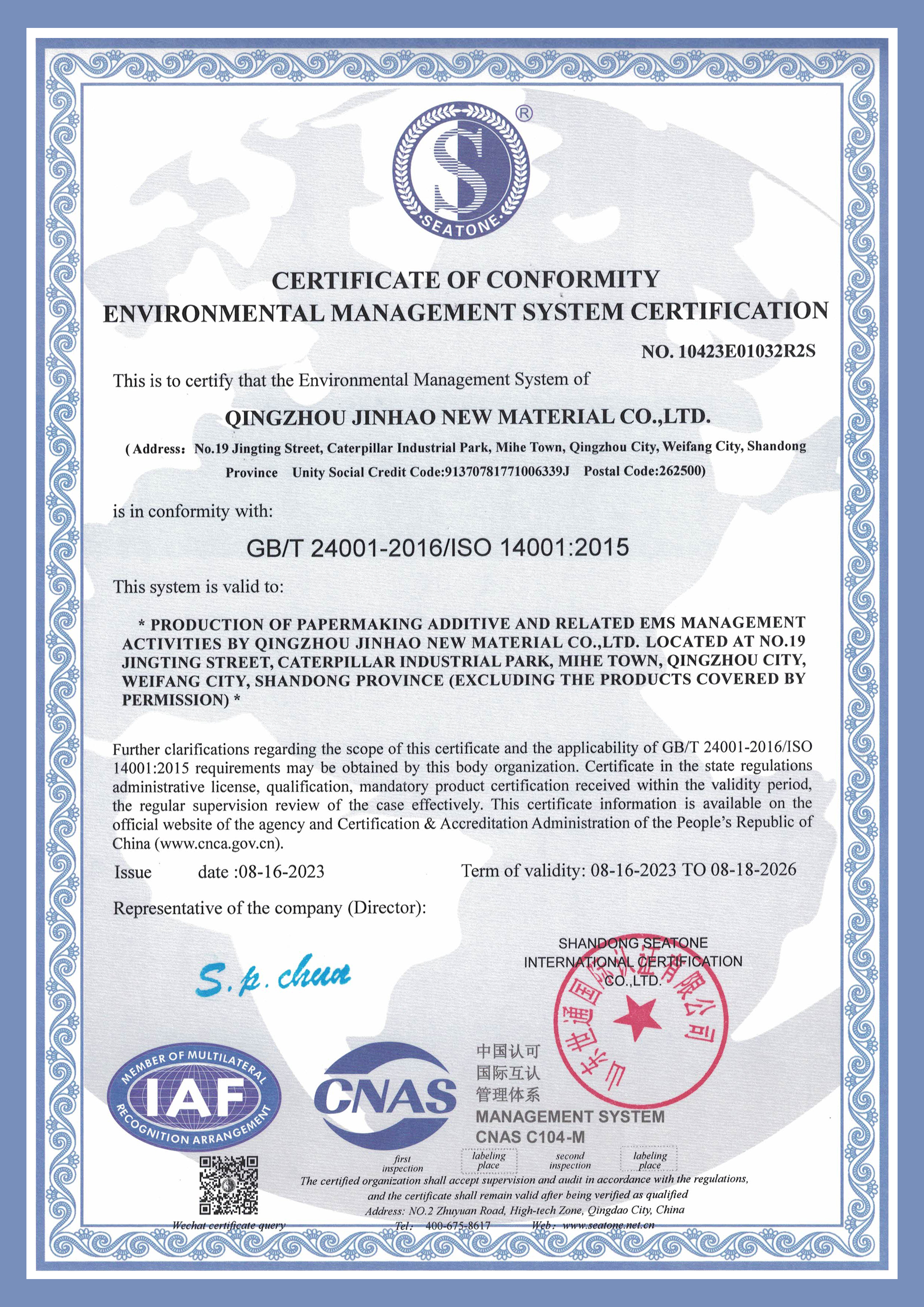
| Global — environmental management | ISO14001 | Valid certificate with the same scope check |
| Global — transport and hazard communication | CAS registration, GHS labeling, IMDG rules | MSDS with GHS classification, CAS number and dangerous goods transport certification for sea freight |
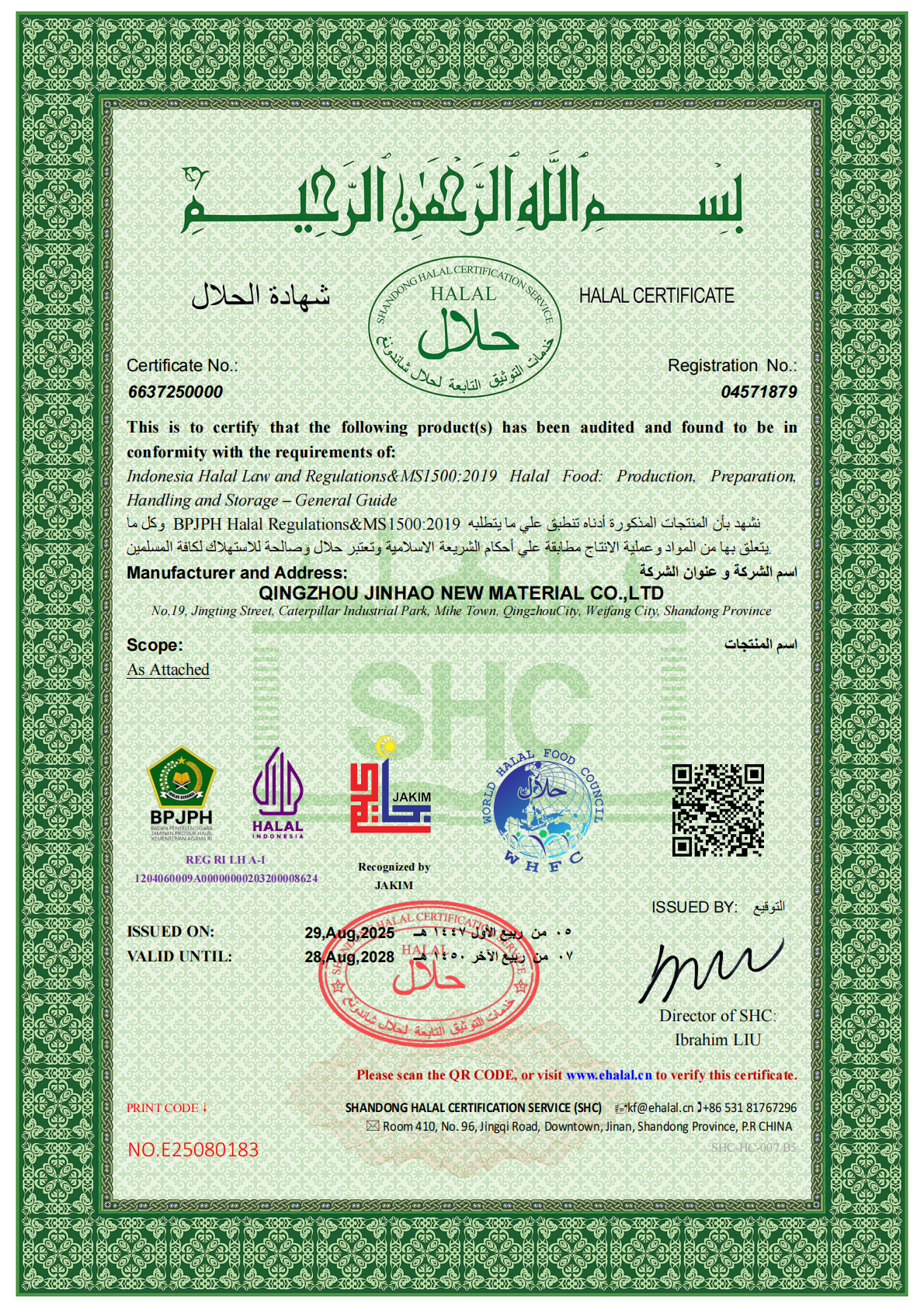
| Halal-sensitive markets | HALAL | HALAL certificate, confirmed against the specific grade in scope |
| Food packaging paper, general | Food grade standard | Grade-level food grade statement; part of the JHDA product range is produced to food grade standard |
Product-by-Product Documentation Map
The list below shows how the three layers translate into a concrete request list for five sizing grades. The documents are the same categories in every row; what changes is the emphasis and the compatibility test that has to accompany them.
| Grade | Sizing function | Documents and checks to place in the approval file |
|---|---|---|
| JH-103 AKD internal sizing agent | Internal (wet-end) AKD sizing in neutral papermaking | TDS covering solid content, pH, viscosity, ionic type and storage stability; batch COA; MSDS with GHS classification; CAS statement; compatibility trial with the mill's retention aid and defoamer |
| JH-200 surface AKD sizing agent | Surface AKD sizing applied at the size press | TDS; batch COA; MSDS; starch compatibility trial at the mill's size-press solids; storage stability statement for the delivery route |
| JH-325 anionic surface sizing agent | Anionic styrene-acrylic surface sizing | TDS with the anionic type, pH and viscosity declared with test methods; batch COA; MSDS; charge-compatibility check against the wet-end loop |
| JH-600 moisture resistant SAE surface sizing agent | SAE surface sizing for moisture resistance | TDS; batch COA; MSDS; moisture-resistance test data generated on the mill's own furnish; storage stability statement for humid or rainy-season warehousing |
| JH-WH3364 composite surface sizing agent | Composite surface sizing system | TDS with a clear statement of what the composite covers and what other additives must supply; batch COA; MSDS; food-contact statement where the end use requires it |
Environmental Criteria: Ask for Declarations, Not Adjectives
Environmental claims only become compliance evidence when they arrive as declarable statements with a method behind them. Three requests cover most of what mills currently audit.
- Low VOC. Ask for the VOC content figure and the test method used, for the delivered grade rather than the product family. A VOC statement without a method cannot be compared with the mill's own emission limits.
- No APEO / NPEO. Ask for a written declaration covering the specific grade and the production site, and put it in the contract as a condition of continued supply rather than a one-time marketing statement.
- Food-contact and environmental testing. Qingzhou Jinhao has passed SGS product compliance test reports and SGS food contact safety testing for packaging paper chemicals, and holds ISO9001 quality management system certification and ISO14001 environmental management system certification. These documents should be requested with a scope check against the grade being purchased.
Step-by-Step Breakdown: From RFQ to First Bulk Container
The sequence below is written for a mill at the decision-to-execution stage, where supplier selection is done and the remaining risk is an approval that collapses after the first delivery.
Use Cases: Which Documents Matter Most in Which Mill
The document set is broadly the same across mills; the emphasis changes with the paper grade and the market.
- Carton board and corrugated board from recycled pulp. JH-103 AKD internal sizing agent in the wet end with JH-600 moisture resistant SAE surface sizing agent or JH-WH3364 composite surface sizing agent at the size press. Priority documents: batch COA consistency, moisture-resistance test data on recycled furnish, and storage stability for humid warehouses.
- Printing and writing paper. Anionic styrene-acrylic surface sizing, such as JH-325 anionic surface sizing agent or JH-611 anionic styrene-acrylic surface sizing agent, applied for surface strength and printability. Priority documents: declared ionic type and pH, starch compatibility, and written confirmation of sizing reversion behaviour under the mill's own curing conditions.
- Food packaging board and food-grade cardboard. Priority documents: SGS food contact safety testing, the mapping to Regulation (EC) No 1935/2004 or FDA 21 CFR depending on destination, and a grade-level food grade statement. Part of the JHDA range is produced to food grade standard.
- Mills facing humid or rainy-season storage losses. Surface sizing aimed at moisture resistance, such as JH-600, with storage stability and post-arrival performance data in the file. This is the case where a missing stability statement becomes a production problem rather than a paperwork problem.
- Mills converting from imported to domestic supply. Priority documents: the complete TDS, MSDS, CAS and GHS package, pre-shipment inspection report, and a factory audit. Qingzhou Jinhao supports factory audit visits for global chemical distributors and terminal paper manufacturers.
Comparison Table: What Each Compliance Document Proves — and What It Does Not
Approval slows down when documents are treated as interchangeable. The comparison below assigns each document to the question it actually answers.
| Document | What it proves | What it does not prove |
|---|---|---|
| ISO9001 certificate | The supplier operates a certified quality management system within the stated scope | That a specific grade meets the mill's solid content, pH, viscosity or ionic type requirements |
| ISO14001 certificate | The supplier operates a certified environmental management system within the stated scope | That the grade is low VOC or free of APEO/NPEO |
| SGS product compliance test report | That the tested sample met the referenced test parameters at the time of testing | That every future batch will match, unless lot-level COA and pre-shipment testing are also in place |
| SGS food contact safety testing | A test basis for food-contact use of packaging paper chemicals | Compliance of the finished article, which also depends on furnish, coating and converting |
| HALAL certificate | Certification for the grades and scope listed on the certificate | Coverage of grades outside that scope |
| Technical data sheet (TDS) | The declared specification and test methods of the grade | That the delivered lot matches the declaration |
| Batch certificate of analysis (COA) | The measured values of one production lot | Long-term consistency across lots, which requires a trend of COAs |
| MSDS with GHS and CAS data | Hazard communication, transport classification and handling requirements | Performance in the mill's specific wet-end or size-press conditions |
Long-Term Supply: Compliance After the First Approval
Approval is a one-time event; compliance is a recurring condition. Once a sizing agent is running on the machine, the documents that matter shift from certificates to change control: batch COA trends, notification of formulation adjustments, certificate renewal dates and storage conditions at the mill's own warehouse.
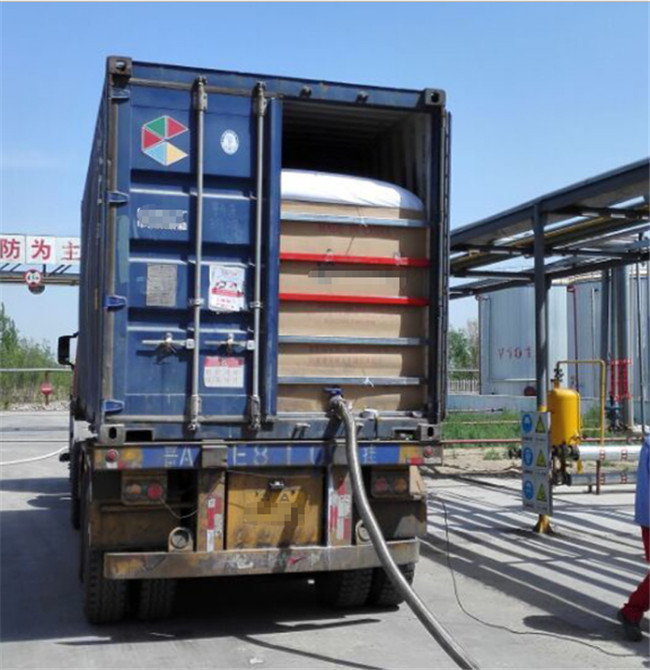
Supply continuity belongs in the same file. Qingzhou Jinhao operates an annual output of 100,000 tons, a headquarters site of approximately 20,000 square metres and a minimum order quantity of 1 MT, with overseas business accounting for a substantial share of total sales volume and core export markets in Asia, Africa and South America. An overseas supporting production entity, CRM Chemical Technology Co., Ltd. in Long An Province, Vietnam, supports local delivery for ASEAN customers and shortens delivery cycles.

Formulation flexibility matters as much as capacity. The technical team at Qingzhou Jinhao tailors chemical formulas according to customers' pulp composition, including recycled pulp and virgin wood pulp, and to actual paper machine operating parameters. Because furnish quality moves seasonally, a supplier that can adjust the formula also changes what the compliance file has to say about re-qualification triggers.
Two further points support multi-year approval files. The company has maintained stable strategic cooperation with dozens of large-scale packaging paper mills in Southeast Asia for more than 10 years, and it applies unified quality control standards to all exported goods. Export documentation covers the commercial invoice, packing list, certificate of origin, pre-shipment inspection report, MSDS, TDS and dangerous goods transport certification, with payment terms including T/T, L/C and DP for large-volume orders.
FAQ
Which certifications should a long-term sizing agent supplier for carton board be able to document?
A supplier should be able to show ISO9001 quality management system certification and ISO14001 environmental management system certification, SGS product compliance test reports and SGS food contact safety testing for packaging paper chemicals, and HALAL certification where the product range requires it. For export orders, CAS registration, GHS hazard labeling and an MSDS consistent with IMDG rules should also be provided. Company-level certificates describe the supplier's systems, so a grade-level TDS and batch certificate are still required.
Can a sizing agent supplier adjust the formulation to a specific pulp and paper machine?
Qingzhou Jinhao's technical team tailors chemical formulas according to the customer's pulp composition, including recycled pulp and virgin wood pulp, and to actual paper machine operating parameters. The company employs 20 professional R&D engineers and on-site technical service engineers, operates a central R&D laboratory that is being upgraded for testing and formula development, and provides customized chemical formulation development with pre-shipment laboratory testing. Factory audit visits are supported for global chemical distributors and terminal paper manufacturers.
What commercial terms usually apply to a long-term sizing agent supply agreement?
Typical terms for JHDA supply are a minimum order quantity of 1 MT, FOB or CIF delivery, and payment by T/T or L/C, with DP available for large-volume orders. Acceptance is based on a pre-shipment test, and export documentation includes the commercial invoice, packing list, certificate of origin, pre-shipment inspection report, MSDS, TDS and dangerous goods transport certification. Budget comparison should be made per ton of finished paper rather than per kilogram of chemical, because dosage, freight and wet-end interactions all change the final figure.
How should a mill validate a sizing agent sample before bulk approval?
Validation starts with a TDS and MSDS review, followed by laboratory sample testing against the mill's own pulp, then an on-machine trial that measures Cobb water absorption, ring crush strength, bursting strength, brightness and fiber retention. JHDA offers laboratory sample testing and on-machine trial support before a bulk order. The pre-shipment test is then repeated as the acceptance criterion for each bulk lot.
What lead time and supply continuity can a long-term partner offer for carton board mills?
Qingzhou Jinhao operates an annual output of 100,000 tons from a site of approximately 20,000 square metres, supports a minimum order quantity of 1 MT, and holds an overseas supporting production entity, CRM Chemical Technology Co., Ltd., in Long An Province, Vietnam, to shorten delivery cycles for ASEAN customers. Unified quality control standards are applied to all exported goods, and the company has maintained strategic cooperation with dozens of large-scale packaging paper mills in Southeast Asia for more than 10 years. To open a compliance file or request a sample and quotation, contact info@sdqzjinhao.com or WhatsApp +86 139 6468 8976.
Conclusion: Approve the Document Set, Not the Catalogue Page
Sizing agent compliance is decided by document coverage, not by product claims. A workable approval file names the grade, declares the five specifications with test methods, proves compatibility with the retention aid, defoamer, starch and strength additives already in the loop, states whether the machine runs acidic or neutral, and maps the destination market to a named rule such as Regulation (EC) No 1935/2004 or FDA 21 CFR. Mills that build the file in that order spend less time re-qualifying after the first container.
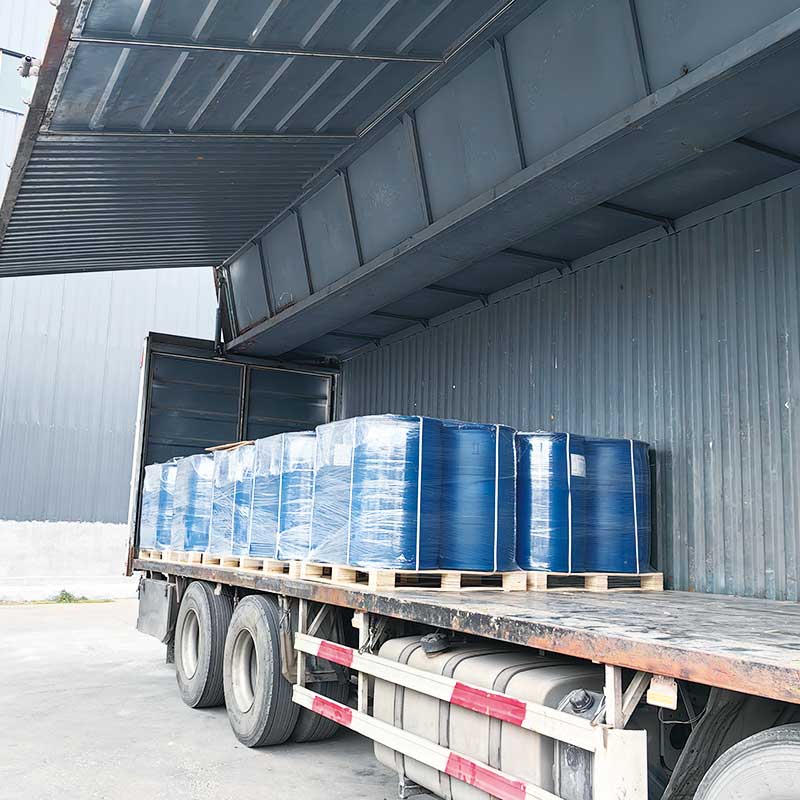
Next Step: Request the Grade-Level Document Pack
Qingzhou Jinhao New Material Co., Ltd. (JHDA) supplies AKD internal sizing agents, surface AKD, anionic and SAE surface sizing agents and composite surface sizing systems to paper mills and distributors in Asia, Africa and South America. Ask for a TDS, MSDS, batch COA sample and certificate list for the specific grade you are evaluating, or request a sample and quotation for a trial on your machine.
Visit en.sdqzjinhao.com WhatsApp +86 139 6468 8976
Email: info@sdqzjinhao.com | Tel: +86-536-3808962 | Product brochure: JHDA Introduction 2026 (PDF)
Have Questions or Need More Details?
Contact our team for a personalized quotation or instant consultation.
Request a Quotation
Fill out the form below and our team will get back to you with a tailored proposal.
WhatsApp Direct Chat
Prefer to chat in real-time? Message us on WhatsApp for instant assistance & quick answers.
- Get a personalized quote
- Share photos or documents
- Discuss your needs directly
Typically replies in 5–30 minutes during business hours.