
What Is a Surface Sizing Agent? Types and How They Work
A surface sizing agent is a papermaking chemical applied to the surface of a paper or board web — normally at the surface sizing machine, in a mix with starch — to control water absorption, surface strength and printability. It is a different product from an internal sizing agent, which is dosed into the pulp before the sheet is formed. The two work at different points in the process, and confusing them is one of the most common reasons a sizing trial fails.
This guide explains the surface sizing chemistries used in papermaking, the specification terms that determine whether a grade fits a given machine, and how each type behaves once the web reaches the drying section. It is written for paper mill process engineers, packaging producers and buyers who are building technical literacy before approaching suppliers — including the styrene acrylic and AKD surface grades produced by Qingzhou Jinhao New Material Co., Ltd. (branded JHDA), a papermaking chemical manufacturer founded in 2005 in Qingzhou City, Shandong Province, China.
The Problem Surface Sizing Is Asked to Solve
Paper is naturally hydrophilic. Unsized or under-sized paper takes up water and water vapour, and most of the failures that send a mill looking for a new sizing agent are symptoms of that uptake rather than of a single defective chemical.
- Moisture regain in storage and transit. Finished paper can lose strength and soften after absorbing moisture in humid storage, cold rooms or long sea freight, and packaging board can collapse in the box.
- Surface strength loss during printing. Linting, picking and blanking faults appear on high-speed rotary presses when the surface cannot hold the ink film.
- Converting damage. Edge breakage and cracking during carton indentation, die-cutting and trimming reduce yield.
- Appearance defects. Foam pinholes, streaks and local differences in water absorption across the web width.
The practical difficulty is that these symptoms can be produced by different root causes: a chemistry that does not match the wet-end system, a starch carrier that does not crosslink with the sizing film, a curing step the mill does not have warehouse space for, or a product that was never designed for the climate the paper will travel through. Buying on the basis of a single headline claim — water resistance, or strength — usually leaves one of these gaps open.
Industry Background: A Mature Chemistry in a Large Market
Sizing is not a niche additive category. Published market estimates place the global paper sizing agent market at approximately USD 3.8 billion in 2025 (Dataintelo), and global sizing agent volume exceeded 3.8 million metric tons in 2024 (Market Reports World). Estimates vary by scope and by year of publication: for 2024, figures range from about USD 3.16 billion (Market Research Future) to USD 3.95 billion (SNS Insider), which is a useful reminder to check the scope and date of any market figure used in an internal business case.
Within that market, synthetic chemistries dominate. Synthetic sizing agents, including AKD and ASA, held a 54.5% market share in 2024 (SNS Insider), and AKD alone is estimated at around 48% of synthetic sizing agent volume (Dataintelo). Rosin-based sizing still accounted for 32.4% of paper sizing agent revenue in 2025 (Dataintelo), reflecting its continued role in established acid-side operations. Regionally, Asia Pacific holds a 42.3% revenue share as of 2025 (Dataintelo), and China's annual paper sizing agent consumption is estimated at 650,000 tons in 2025 (Dataintelo) — a demand base supported by paper goods exports of USD 36.5 billion in 2024 (OEC).
The form in which sizing is supplied also matters commercially. Liquid sizing agents held a 57.8% market share in 2024, driven by ease of application (SNS Insider), while solid sizing agents are expected to grow at a CAGR of 5.11% through 2032 on logistical efficiency (SNS Insider). For a buyer, that split explains why suppliers offer both ready-to-dose liquids and concentrated solids, and why storage, pumping and dilution capability should be checked before comparing offers.
Surface Sizing and Internal Sizing: What Actually Changes
Internal sizing is added to the pulp furnish and must be retained on the fibre to work. Surface sizing is applied as a film at the surface, where the active component can act directly on the sheet rather than competing with white water circulation and fibre retention. The following comparison sets out the operational differences that matter during selection.
| Aspect | Internal sizing | Surface sizing |
|---|---|---|
| Addition point | Pulp furnish, wet end | Paper surface, at the surface sizing machine |
| Mechanism | Hydrophobic component is carried into the sheet and bonds with fibre | Film-forming resin and/or reactive wax forms a barrier at the surface |
| Carrier | None — dosed into stock | Blended with industrial starch or modified starch |
| Chemical loss | Losses possible through white water circulation and retention | Active ingredient acts directly on the surface; surface AKD avoids effective AKD loss in white water circulation and the fibre retention process |
| Curing | Conventional AKD emulsion is associated with a curing period; JH-103 is formulated for rapid curing | JH-200, JH-600 and JH-611 are described as requiring no curing period after drying |
| Process impact | Changes the wet-end chemical balance | Can be introduced at the sizing station without adjusting the pulp formula and internal additive system |
Types of Surface Sizing Agents
Surface sizing grades are usually grouped by chemistry, because chemistry determines what the film can do: form a tough coating, react chemically with cellulose, or both at once. The three families below cover most commercial surface sizing work, with internal AKD included for reference because selection often starts by deciding between them.
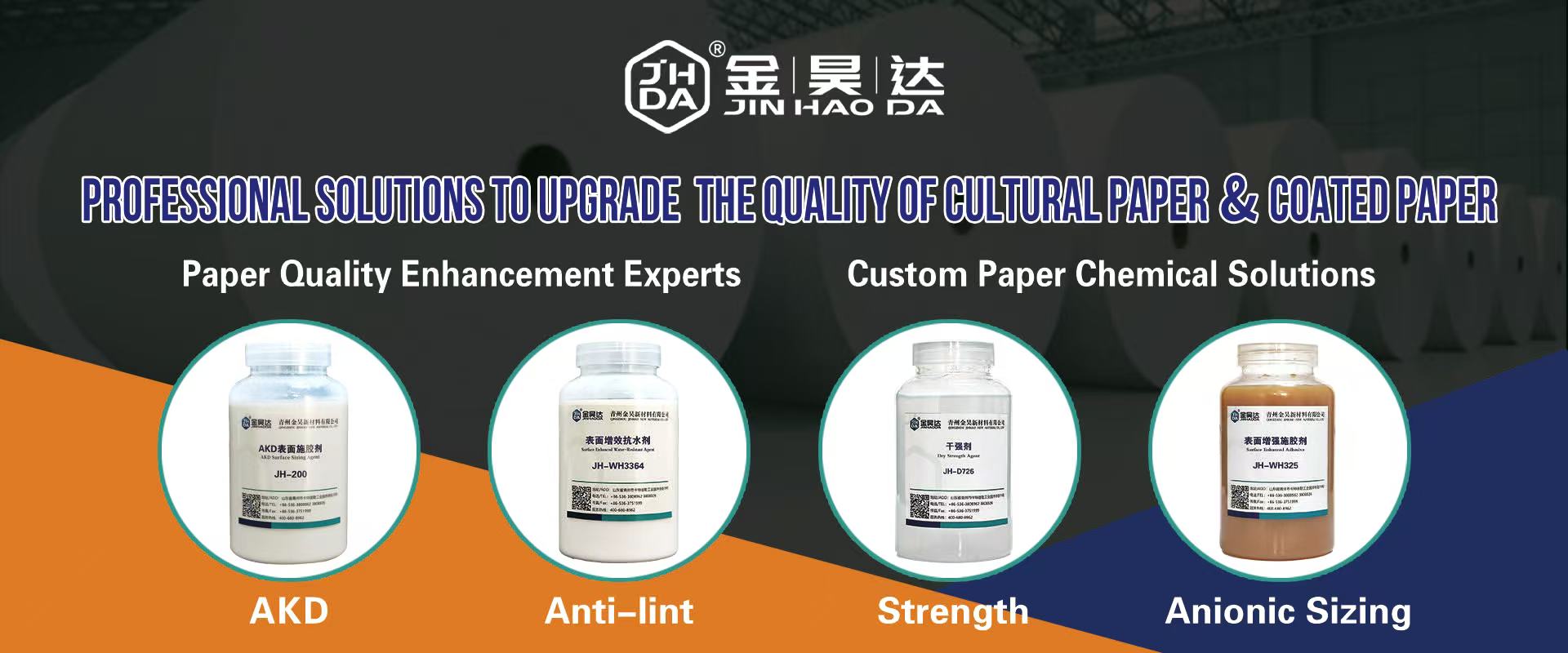
Styrene acrylic (SAE) surface sizing agents: JH-325, JH-600 and JH-611
Styrene acrylic emulsions, often abbreviated SAE, are film formers. Their value on the surface sizing machine is that the copolymer can react and crosslink with starch, building a continuous protective film across the web rather than sitting in isolated patches.
- JH-325 (anionic styrene acrylic). Designed for cultural paper such as offset printing paper, copy paper and book paper. Its film-forming behaviour raises dry and wet surface strength, and the anionic copolymer crosslinks quickly with starch to give even sizing coverage across the full paper width. It balances moderate water resistance with ink affinity, which supports clear printed text and uniform colour, and it is usable in both acid sizing with aluminium sulfate and neutral papermaking systems.
- JH-600 (moisture-resistant styrene acrylic, cationic). Built around a molecular structure intended to resist moisture reversion, forming a dense closed film that limits continuous infiltration of ambient moisture. Its application is packaging paper exposed to rainy seasons, cold storage and long sea freight, where it is also used to retain ring crush strength and surface rigidity under high humidity.
- JH-611 (styrene acrylic copolymer, cationic). A surface strength grade that combines with starch to improve water resistance, ring crush stiffness, surface hardness and smoothness, and to reduce breakage during printing, creasing, die-cutting and further processing. Its cationic structure pairs with anionic starch to give uniform coverage across the web.
AKD surface sizing emulsions: JH-200
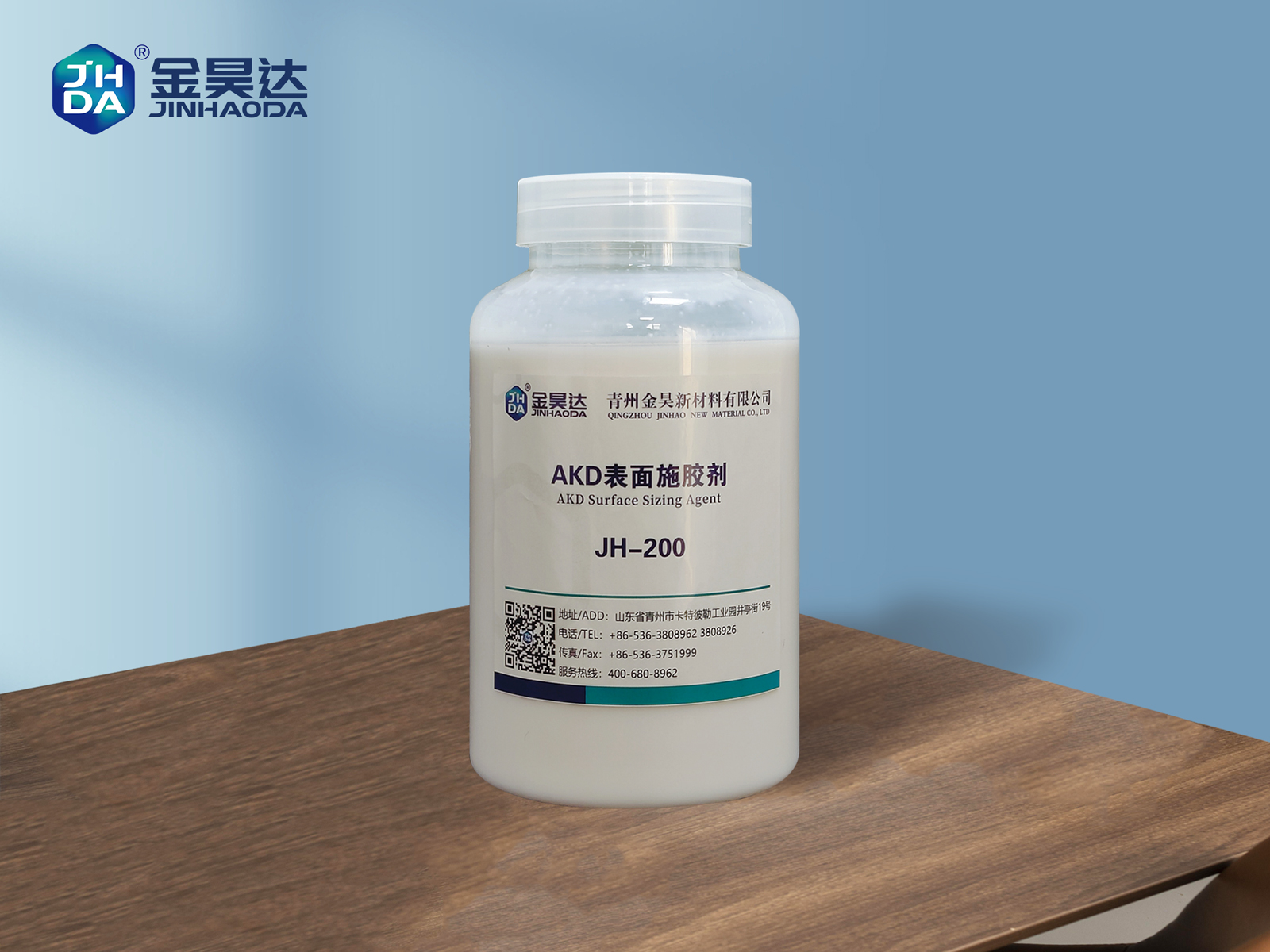
Alkyl ketene dimer, or AKD, works chemically rather than purely physically: the reactive component bonds with cellulose to create a hydrophobic barrier. In a surface application, JH-200 is blended with industrial starch and coated onto the paper surface, so that the reaction happens at the surface instead of inside the furnish.
Three practical consequences follow. First, because the active ingredient acts directly on the surface, it is not lost in white water circulation or in the fibre retention process, which improves the effective utilisation rate of the sizing agent. Second, the sizing effect is finalised once the paper passes through the drying cylinder, so finished paper can be rolled and delivered without a curing lay-down period — a direct saving in warehouse space. Third, the system is intended for neutral and alkaline papermaking, avoiding acidic sizing raw materials that corrode sizing rollers, drying cylinders and pipelines.
Operationally, JH-200 is described as mechanically shear stable and low foaming, so it can run on high-speed sizing machines without generating bubble pinholes or stripes, and it is compatible with oxidised starch and cationic modified starch carriers, which only need simple stirring in the workshop.
Composite systems: JH-WH3364
A composite surface sizing agent combines the reactive water resistance of AKD with the film-forming toughness of a styrene acrylic resin in a single product. JH-WH3364 is built on weak anionic styrene acrylic and AKD, and is supplied as a weakly cationic liquid.
The division of labour inside the product is straightforward. AKD reacts chemically with cellulose fibre to lock in long-term hydrophobicity, while the SAE component forms a tough continuous film that reinforces the surface structure — raising water resistance and surface strength together. The SAE part also fixes the sizing effect immediately after drying, so the finished paper can be rolled without a long curing period, and the composite addresses the weaker surface dry strength typical of a pure AKD surface grade, restraining linting, picking and ink feathering in high-speed offset printing. From a procurement standpoint, the composite replaces the separate purchase and dosing of an AKD emulsion and an SAE sizing agent, simplifying the dosing process and reducing the number of chemical lines a mill has to manage.
Adjacent chemistries and the internal reference grade
Surface sizing does not cover every requirement. Rosin sizing remains a significant part of the market, and wax emulsions and internal AKD grades are also part of the standard papermaking chemical toolkit. JH-103, a cationic AKD internal sizing emulsion based on AKD wax, is the internal reference grade in the JHDA range: it is dosed into the pulp and is used where a mill wants water resistance built into the sheet rather than applied on top of it. Mills comparing options should treat the surface-versus-internal decision as a process decision first and a product decision second.
How to Read a Surface Sizing Specification Sheet
Four specification terms decide most of the fit between a surface sizing agent and a paper machine. They appear on every technical data sheet in this category, and they are frequently misread during early supplier comparison.
Ionic type
Ionic type describes the charge of the emulsion — cationic, anionic or weak cationic — and it determines how the product behaves in the starch mix and alongside other wet-end chemicals. A cationic grade such as JH-611 combines uniformly with anionic starch; an anionic grade such as JH-325 crosslinks with starch components through its anionic styrene-acrylic copolymer; a weakly cationic composite such as JH-WH3364 sits between the two. Charge mismatch shows up as uneven water repellency across the web, flocculation, or deposits on rolls.
Solid content
Solid content is the percentage of active material in the delivered liquid. Across the grades described here it ranges from 20.0 ± 1.0 and 30.0 ± 1.0 for JH-200, through 25.0 ± 1.0 for JH-325 and JH-WH3364, to 30 ± 1 for JH-600 and 30.0 ± 1.0 for JH-611. Solid content should be read as a handling and dosing characteristic, not as a performance ranking: a higher figure means more active material per tonne of liquid delivered, which affects storage volume, pumping rates and freight, while the achievable water resistance and strength depend on the chemistry and on how the grade is applied.
pH
All six grades in this article are specified at pH 2.0–5.0. That acidic figure describes the emulsion as supplied, not the papermaking system it is used in. JH-200, for example, is formulated for neutral and alkaline papermaking while its own emulsion pH sits in the 2.0–5.0 band. Buyers who read pH as a proxy for the machine's operating pH will misjudge compatibility.
Viscosity and shelf life
Viscosity governs pumpability and how the product behaves under shear at the sizing station; the surface grades here are specified at ≤50 cps at 25 °C (below 50 cps for JH-600). Shelf life sets the storage rotation: 6 months for JH-325, JH-600 and JH-611, 4 months for JH-WH3364 and JH-103, and 3 months for JH-200. For mills in tropical or high-temperature locations, shelf life is a planning constraint rather than a footnote.
The four checks in order
1) Does the ionic type match the starch and wet-end chemistry? 2) Does the solid content suit the dosing and storage setup? 3) Is the pH figure being read as product pH or as machine pH? 4) Does the shelf life fit the delivery cycle and warehouse rotation? A grade that passes all four is worth a trial; a grade that fails one does not become suitable through dosage adjustment.
How Surface Sizing Agents Work on the Machine
Understanding the mechanism makes the specification sheet easier to interpret, because each mechanism maps onto a machine condition.
Film formation with starch. The sizing emulsion is blended with industrial starch and applied to the surface. On drying, the polymer and starch crosslink into a continuous film that seals fibre gaps and strengthens the surface bond. This is the dominant mechanism for JH-325, JH-600, JH-611 and the SAE portion of JH-WH3364, and it is why starch compatibility is a selection criterion in its own right.
Reactive hydrophobicity. AKD reacts with cellulose to build a water-repellent barrier rather than relying only on a physical film. This is the mechanism behind JH-200, the AKD portion of JH-WH3364, and internal grade JH-103. Reactive sizing is what delivers durable water resistance that holds up during long-term stacking and cross-regional transport, rather than fading as the sheet re-absorbs moisture.
Application and equipment. Surface sizing is applied by dip-rolling, coating or metered dosing, in continuous or batch mode, using mixing tanks, metering pumps and coating or sizing machines. Liquid grades can be fed by metering pump directly into the starch pipeline, which removes manual dilution and stirring steps.
Drying determines the endpoint. For a surface AKD grade, the sizing effect is completed as the web passes the drying cylinder. For film-forming grades, the crosslinked film develops during the same drying stage. A machine with limited drying capacity will therefore show different results from the same product on a machine with more drying headroom, which is why on-site machine trials remain part of the selection process.
Step-by-Step: Matching a Surface Sizing Agent to a Paper Machine
The following sequence moves from paper requirement to product trial, and each step produces a checkable answer rather than an impression.
- Step 1 — Define the target in measurable terms. State what the paper must do: a Cobb water absorption value, ring crush strength, surface strength under offset printing, or moisture resistance during defined storage and transport conditions. A requirement expressed as "better water resistance" cannot be trialled.
- Step 2 — Confirm the ionic environment. Check the starch type and the wet-end chemical set, then confirm that the candidate grade's charge is compatible. Cationic surface grades pair with anionic starch; anionic grades crosslink with starch through their copolymer.
- Step 3 — Decide surface or internal. If the mill has a surface sizing station and starch is already being applied, a surface grade is the direct route. If water resistance must be built into the sheet, an internal AKD grade such as JH-103 is the appropriate reference.
- Step 4 — Check the drying and storage capability. A grade with no curing requirement after drying removes the need for curing warehouse space; a grade with a 3-month shelf life requires faster rotation than one with 6 months.
- Step 5 — Match the application method. Confirm whether the mill will dose by metering pump into the starch line, blend in a mixing tank, or apply by dip-rolling or coating, and confirm the available supporting equipment.
- Step 6 — Verify foam and shear behaviour. High-speed sizing machines require low-foaming, shear-stable products; otherwise foam pinholes and longitudinal stripes appear on the sheet.
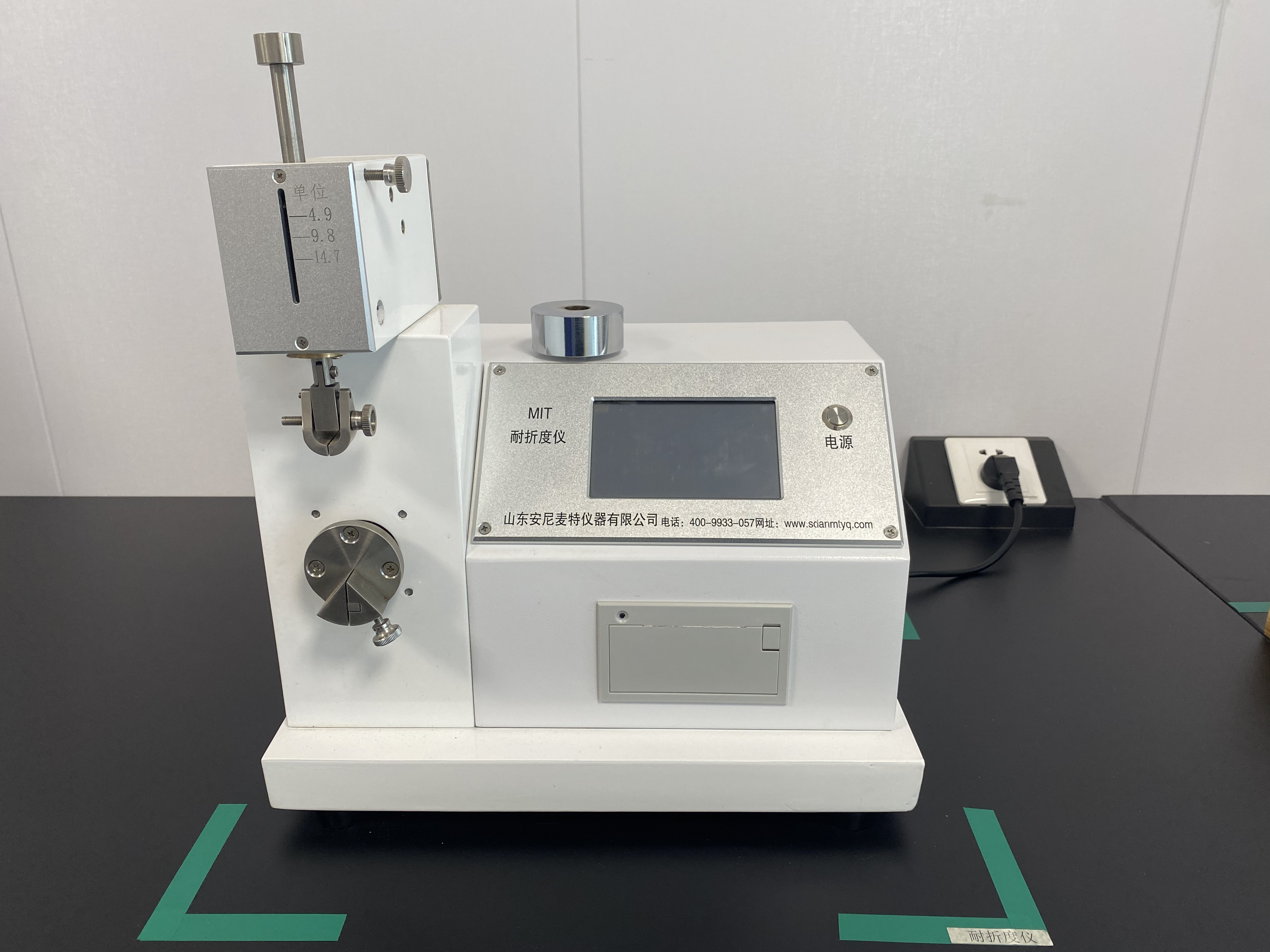
- Step 7 — Trial and measure. Run a sample on the actual machine, then measure the target indicators, including water absorption, ring crush, bursting strength, brightness and runnability, before converting the trial into a bulk programme.
Use Cases by Paper Grade
Surface sizing decisions are grade-specific, because the failure mode a mill is trying to prevent differs between printing paper and shipping board.
- Printing and writing paper. The priorities are surface strength, ink affinity and freedom from linting and picking. JH-325 is formulated for offset printing paper, copy paper and book paper, and is compatible with both acid sizing using aluminium sulfate and neutral systems. JH-611 is used where surface hardness and smoothness also matter.
- Containerboard, corrugated paper and boxboard. The priorities are moisture resistance and retention of ring crush strength under humid storage. JH-600 is designed around anti-moisture reversion, JH-611 around surface strength and stiffness, and JH-WH3364 for mills that need both water resistance and surface strength from one product.
- Food-grade packaging paper. The priority is compliance documentation alongside performance. Regulatory frameworks buyers commonly check include FDA 21 CFR for food-contact substances in the United States and Regulation (EC) No 1935/2004 for food contact materials in the EU; the supplier's own quality and safety documentation is the practical starting point.
- Mills without a surface sizing station. Internal grade JH-103 provides water resistance through the furnish, and is applicable to wood pulp, chemical pulp, mechanical pulp and blended pulp.
- Composite requirement. When a single mill is producing several packaging grades on one machine, a composite grade can reduce the number of chemical lines and dosing points to manage.
Comparison Table: Surface Sizing Grades at a Glance
The table below compiles the published specification values for the grades discussed in this article. Internal grade JH-103 is included for reference so that surface and internal options can be compared on the same page.
| Grade | Chemistry | Ionic type | Solid content (%) | pH | Viscosity (25 °C, cps) | Shelf life | Typical role |
|---|---|---|---|---|---|---|---|
| JH-325 | Anionic styrene acrylic | Anionic | 25.0 ± 1.0 | 2.0–5.0 | ≤50 | 6 months | Cultural and printing paper; surface strength with moderate water resistance and ink affinity |
| JH-600 | Styrene acrylic | Cationic | 30 ± 1 | 2.0–5.0 | <50 | 6 months | Packaging paper and board; moisture-reversion resistance, can replace internal sizing without curing |
| JH-611 | Styrene acrylic copolymer | Cationic | 30.0 ± 1.0 | 2.0–5.0 | ≤50 | 6 months | Corrugated paper and boxboard; water resistance plus surface strength, ring crush and smoothness |
| JH-200 | AKD wax powder | Cationic | 20.0 ± 1.0 / 30.0 ± 1.0 | 2.0–5.0 | ≤50 | 3 months | Reactive surface water resistance; starch compatible, no curing period after drying |
| JH-WH3364 | Weak anionic styrene acrylic + AKD | Weak cationic | 25.0 ± 1.0 | 2.0–5.0 | ≤50 | 4 months | Composite: water resistance and surface strength in one product |
| JH-103 (internal reference) | AKD wax | Cationic | 12.5–25.0 ± 1.0 | 2.0–5.0 | ≤50 | 4 months | Internal sizing added to the pulp furnish |
FAQ
Which compliance and safety documents should be checked when a surface sizing agent is used for food-grade packaging paper?
Start with the supplier's management system certificates and product safety files, then match them to the market the paper will be sold into. JHDA holds ISO9001 quality management system certification and ISO14001 environmental management system certification, together with SGS product compliance test reports, including SGS food contact safety testing for packaging paper chemicals. Exported products are supported with TDS and MSDS documents, complete CAS registration and GHS hazard labelling, in line with IMDG international marine shipping regulations. For the destination market, buyers typically check against frameworks such as FDA 21 CFR for food-contact substances in the United States and Regulation (EC) No 1935/2004 for food contact materials in the EU, and should confirm the specific grade against their own regulatory scope.
Can a surface sizing agent replace internal sizing completely?
It depends on the grade and on the machine. Two products in this range are described as replacement options: JH-600 can fully replace an internal sizing agent for production with no curing period required, and JH-611 is capable of direct replacement for wet-end internal sizing agents, again without a curing time. JH-200 fixes its sizing effect once the paper passes the drying cylinder, allowing finished paper to be rolled and delivered directly. The condition attached to all three is that the mill must have a surface sizing station and must apply the product with a compatible starch carrier; where water resistance has to be built into the sheet itself, an internal grade such as JH-103 remains the appropriate route.
What drives the cost per ton of paper when a mill switches to surface sizing?
Cost is driven by the dosage required to reach the target indicator, the starch ratio in the size mix, and how many separate chemicals the mill has to buy and dose. Three design choices affect those levers. A concentrated effective formula can reach target water-proofing indicators with less dosage than separate internal AKD addition, which reduces total sizing chemical consumption in mass production. A composite grade such as JH-WH3364 replaces the separate purchasing and dosing of an AKD emulsion and an SAE sizing agent, achieving higher combined efficiency at equal dosage. JH-611 applies a small dosage to deliver both waterproof performance and physical strength. Freight and storage are affected as well, since solid content determines how much active material arrives per tonne of liquid.
Can a mill test a surface sizing agent before committing to bulk supply?
Yes. JHDA supplies free trial samples with an MOQ of 1MT, and its in-house pilot laboratory is open to customers for formulation testing and performance verification. Because sizing results depend on pulp composition, starch type and machine parameters, the company's technical team tailors chemical formulations to the customer's pulp composition — recycled pulp or virgin wood pulp — and to actual paper machine operating parameters, and provides on-site machine debugging to optimise indicators such as Cobb water absorption value, ring crush strength, bursting strength and fibre retention rate.
What are the production lead time and supply capacity for bulk surface sizing agent orders?
Standard production lead time is 4 working days, against a monthly capacity of 8,000 MT and total annual output of 100,000 tons. Export orders are supported with commercial invoice, packing list, certificate of origin, pre-shipment inspection report, MSDS, TDS and dangerous goods transport certification, and flexible payment terms such as sight L/C, T/T and DP are available for large-volume chemical orders. An overseas supporting production entity, CRM Chemical Technology Co., Ltd., operates in Long An Province, Vietnam, to shorten delivery cycles for ASEAN customers. If you are comparing surface sizing grades for a specific paper machine, you can request a sample or a quotation, or download the JHDA product catalogue (PDF), before committing to a bulk programme.
Conclusion
A surface sizing agent is a film-forming or reactive chemistry applied at the paper surface with starch, and its job is to deliver water resistance, surface strength and printability without disturbing the wet-end balance. The type matters more than the label: styrene acrylic grades such as JH-325, JH-600 and JH-611 build crosslinked films for strength, moisture resistance and printing performance; AKD surface emulsions such as JH-200 build a reactive hydrophobic barrier with no curing period; and composites such as JH-WH3364 combine both mechanisms in one product. Internal AKD, represented here by JH-103, remains the reference route when water resistance must be built into the sheet.
For a buyer in the research phase, the practical sequence is simple. Read ionic type against the starch system. Read solid content as a handling characteristic rather than a performance score. Read pH as the product's own figure, not the machine's. Then confirm the curing and shelf-life consequences against real storage conditions, and trial on the machine before scaling. Suppliers who can answer those four points with documented values, and support them with samples and on-site tuning, are the ones worth shortlisting.
Request a surface sizing sample or quotation
Tell us your paper grade, starch system and target indicators, and the JHDA technical team will recommend a surface sizing grade, supply a free trial sample and support the machine trial. MOQ 1MT, production lead time 4 working days.
WhatsApp: +86 139 6468 8976Download catalogue (PDF)Qingzhou Jinhao New Material Co., Ltd. (JHDA) — founded 2005, No.19, Jingting Street, Caterpillar Industrial Park, Qingzhou City, Shandong Province, China. Email: info@sdqzjinhao.com | Tel: +86-536-3808962 / +86 139 6468 8976. Website: en.sdqzjinhao.com.
Specification values in this article are quoted from the published product data for each grade. Market figures are attributed to their third-party sources and may differ in scope and year of publication.
Have Questions or Need More Details?
Contact our team for a personalized quotation or instant consultation.
Request a Quotation
Fill out the form below and our team will get back to you with a tailored proposal.
WhatsApp Direct Chat
Prefer to chat in real-time? Message us on WhatsApp for instant assistance & quick answers.
- Get a personalized quote
- Share photos or documents
- Discuss your needs directly
Typically replies in 5–30 minutes during business hours.