Dry Deck vs Floating Musical Fountain: Which Configuration Fits Your Venue?
Dry Deck vs Floating Musical Fountain: Which Configuration Fits Your Venue?
A dry deck musical fountain and a floating musical fountain can run the same show file, use the same DMX LED lighting and operate on the same programmable control platform — and still be completely wrong for each other's site. The difference is not artistic. It is structural, and it is fixed long before the first nozzle is ordered.
The decision rule that most project teams end up applying is straightforward. Where the ground has to stay in public use — a city square musical fountain, a plaza, a hotel forecourt or a commercial complex — the surface must remain walkable when the show is off, and a dry deck interactive musical fountain is normally the right configuration. Where the venue already has an open water body and the audience will watch across water, a lake floating musical dancing fountain is normally the right configuration. Music, scale, laser, water screen and fire-water effects are a show layer added on top of that structural choice, not a substitute for it.
Rainbows Fountain (Guangzhou Shuiguang Fountain Equipment Co., Ltd.) designs and engineers musical fountain systems from Nansha, Guangzhou, China, with more than 20 years of industry experience and over 4,000 completed projects in 60+ countries. The structural configurations that matter in this comparison — dancing fountains, dry deck fountains and floating fountains — sit at the centre of that range, and the evaluation logic below follows how they are selected in practice.
What the Dry Deck vs Floating Decision Actually Decides
The choice does not decide how impressive the show is. It decides five things that shape the whole project:
- Whether water and public space can share one footprint. A dry deck lets people walk over the installation when the show is off; a floating system keeps the installation in the water.
- What must be built before the fountain arrives. Deck, chamber and drainage structures — or anchoring, mooring and a shore-side connection route.
- How exposed the equipment is to open water. Water-level change, currents, wind and floating debris affect the two configurations differently.
- How technicians reach the equipment throughout its operating life. Service hatches in a deck versus service access to a platform in water.
- How the budget splits between civil works and show equipment.
A dry deck musical fountain (also described as a dry fountain or floor fountain) recesses nozzles, valves and lighting into a paved deck. The water rises directly out of the ground surface during the show, and the deck returns to a walkable state when the system is switched off. Pumps, valves and control cabinets sit in a chamber below or beside the deck.
A floating musical fountain mounts the same equipment set — pumps, nozzles, lights and control interfaces — on a buoyant platform positioned in a lake, river, canal or reservoir. No dry basin is created inside the water body; the platform is anchored in position and connected to a shore-side power and control point.
In both cases the musical dancing fountain is the show layer: nozzles grouped into programmable circuits and synchronized to music through a control system built on Programmable Logic Controllers (PLC) and DMX512 lighting protocols.
Industry Background: Two Structures, One Expanding Market
Both configurations keep appearing in tenders because demand is growing from two directions at once. Dataintelo values the global musical fountain market at USD 2.51 billion in 2025 and projects USD 5.23 billion by 2034, an 8.5% CAGR across 2025–2034. Asia Pacific accounted for a 38.5% revenue share in 2025, driven by urbanization in China and Southeast Asia — and it is in exactly those urban and waterfront developments that dry deck and floating installations are most often specified.
Demand is not only municipal. Commercial end-users, including luxury hotels and shopping malls, held the largest end-user share at 42.8% in 2025 (Dataintelo). That split matters for configuration choice: hotel and retail sites usually have tightly constrained footprints with heavy pedestrian traffic, while municipal, tourism and scenic projects more often have an open water body available.
Technical expectations are converging at the same time. Documented fountain certification practice commonly lists ISO 9001:2015 for quality management alongside IP68 waterproof ratings for underwater components such as LED lights and pumps (Himalaya Music Fountain certificate data), while advanced systems use DMX512 lighting protocols and Programmable Logic Controllers to synchronize water jets with music (Cognitive Market Research). Buyers should treat both as baseline requirements for either configuration, not as differentiators.
The competitive landscape is similarly mixed. Market reports commonly list OASE Living Water (Germany), Crystal Fountains (Canada) and Safe-Rain (Spain) among globally recognized names in the fountain sector (Dataintelo / Water Show Trend Report, 2024). For a buyer making a dry deck versus floating decision, however, the more decisive distinction is the delivery model: turnkey contractors who own design, manufacturing, installation and show programming, versus equipment-only suppliers who supply hardware and stop there.
Structural Differences That Change the Specification
The show layer is identical — the mounting is not
Music-synchronized water choreography, DMX LED lighting, water screen projection musical fountain content, laser and fire water musical fountain effects are all produced by comparable equipment whether the structure is a deck or a platform. What changes is how that equipment is mounted, protected, powered and serviced. This is why a dry deck and a floating system can look nearly identical in a design render while carrying very different civil works, access and risk profiles.
Materials and protection rules apply to both
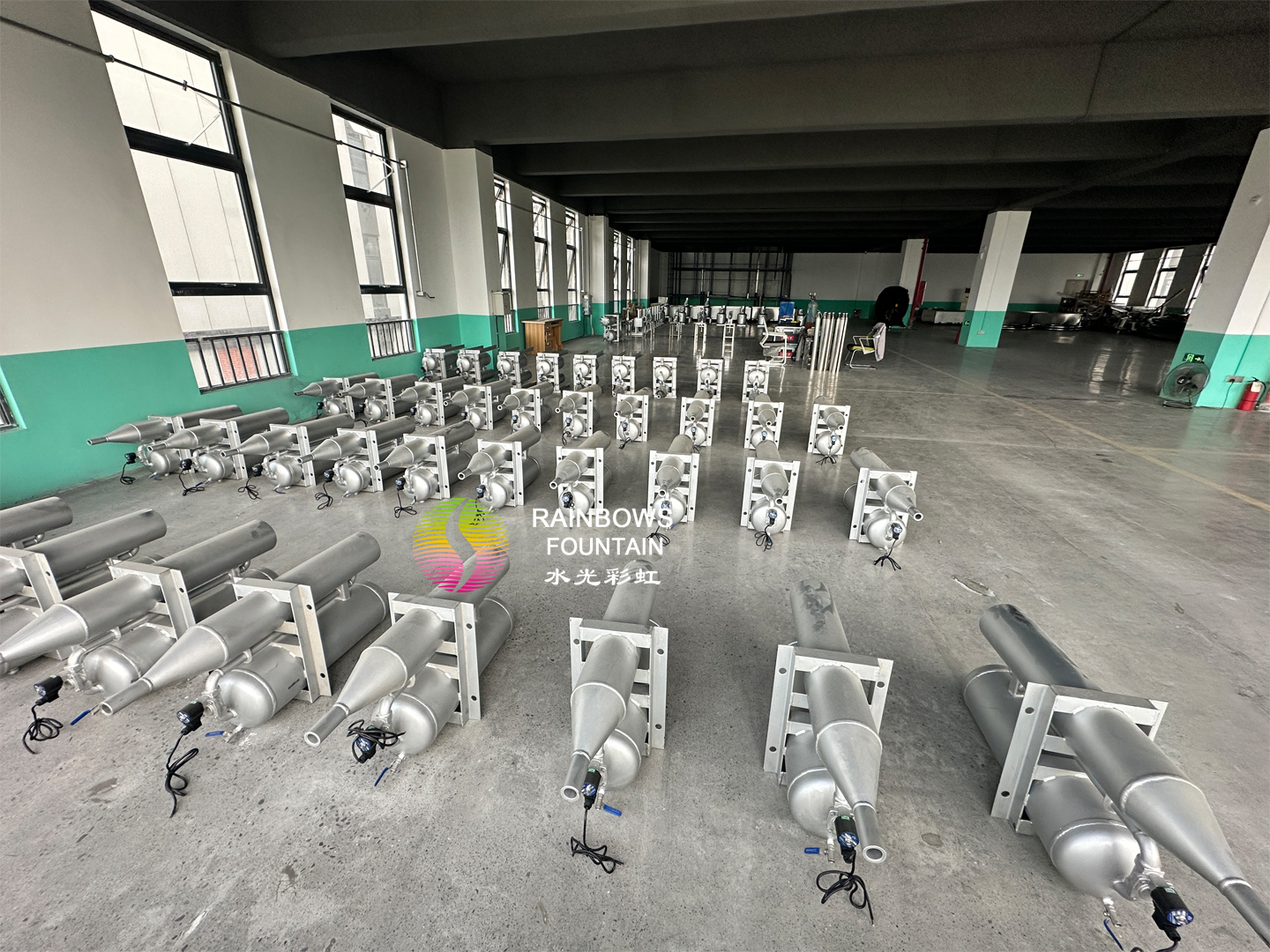
Both configurations place pumps, cables, lights and nozzles in or immediately next to water, so the same material and sealing rules apply. Wetted structures and water-carrying parts are built from stainless steel — stainless steel dancing musical fountain nozzle assemblies are typically machined, welded and polished for corrosion resistance — while structural steelwork is specified with corrosion-resistant materials. On the electrical side, waterproof electrical cabinets, grounding and leakage protection are standard controls, and submerged components such as LED lights and pumps are commonly specified to IP68.
Dry deck: the structure becomes part of the venue
In a dry deck installation the deck itself is the engineering challenge. The design has to deliver a load-bearing, walkable surface with openings for nozzles and lighting, a chamber for pumps and control cabinets, and drainage that returns the deck to a dry state after every show. Because the surface stays in public use, surface finish, hatch sealing and drainage all become part of the fountain specification rather than a separate landscaping package. The payoff is a high-visibility landmark format: a city square or park landscape musical dancing fountain that works as an interactive plaza by day and a scheduled musical fountain show at night.
Floating: the water body becomes the stage
A floating installation moves the structure into the water and leaves the shore untouched. The platform carries pumps, nozzles and lighting, is anchored or moored in position, and connects to a shore-side power and control point. Civil works are usually lighter because no basin is excavated, but the design has to absorb water-level variation, currents, wind loading, floating debris and the practical question of how a service team will reach the platform. In return, open water gives the show the distance it needs: this is where large musical fountain shows, water screen projection and multimedia laser musical fountain effects read best, with the audience on a shoreline promenade or a designed viewing area.
Step-by-Step: How to Choose Between the Two Configurations
- Define the venue's primary function before the fountain. If pedestrian circulation comes first, start from a dry deck. If the water body is the attraction and viewing happens across water, start from a floating platform.
- Survey what already exists. For dry deck, assess deck construction feasibility, chamber or plant room space, drainage and the load the surface must carry. For floating, assess water depth, bed conditions, anchoring options, water-level range and the route for a shore-side power and control cable.
- Fix the show concept and the viewing geometry. A 360° audience standing around a deck sees detail — small nozzle patterns and close lighting changes. An audience viewing across a lake sees scale, silhouette and projected media. The same program will not perform equally in both conditions.
- Match show scale to the structure. A large musical fountain combining water screen and laser elements needs distance and open water; a hotel musical fountain, courtyard installation or pool musical fountain in a compact footprint needs a deck or basin that respects the surrounding architecture.
- Lock the control and safety architecture early. Specify a programmable musical fountain control system with PLC and DMX512 synchronization, waterproof electrical cabinets, grounding and leakage protection, and a redundant programming and failback scheme so that a show-synchronization fault does not take the whole installation offline.
- Confirm fabrication and materials against project drawings. A custom musical fountain project should be documented as a complete musical fountain system list — nozzles, pumps, pipes, lights, cables, control cabinets and structural parts — with traceable key components sourced from recognized electrical and drive brands such as ABB, Rexroth and Schneider.
- Insist on factory pre-testing and define commissioning scope in writing. Equipment should be tested in a factory pool before shipment — water patterns, nozzle performance, lighting synchronization and control programs verified — then re-verified on site during commissioning.
- Decide the delivery and O&M model at the same time. Turnkey or equipment-only, and who owns maintenance, spare parts and system upgrades over the operating life of the fountain.
Which Configuration Fits Which Venue
City squares and urban plazas — dry deck. The square has to remain a square. A dry deck interactive musical fountain keeps the surface usable for daily pedestrian traffic and delivers the show from flush nozzles and lighting.
Lakes, reservoirs and scenic waterfronts — floating. When the water body already exists, a floating platform avoids excavation inside the lake and gives the audience the viewing distance that large-scale water, screen and laser effects need.
Parks and landscape areas — either. Entrance plazas usually suit a dry deck arrangement, while park lakes suit floating platforms. Park landscape musical dancing fountains are frequently a mix of both across a single masterplan.
Hotels, resorts and commercial complexes — dry deck or compact basin. These sites usually have limited space and high footfall, so a deck-format installation or a pool musical fountain integrated with an existing water feature is the more common solution. Commercial end-users, including luxury hotels and shopping malls, held the largest end-user share at 42.8% in 2025 (Dataintelo).
Landmark multimedia shows — floating, with a media layer. Where a water screen projection musical fountain, multimedia laser musical fountain or fire water musical fountain element is part of the concept, open water and a long viewing axis generally suit the show better.
Dry Deck vs Floating Musical Fountain: Comparison Table
| Decision dimension | Dry deck musical fountain | Floating musical fountain |
|---|---|---|
| Structure and placement | Nozzles, valves and lighting recessed into a paved deck; pumps and control cabinets in a chamber below or beside the deck | Pumps, nozzles, lighting and control interfaces mounted on a buoyant platform placed in the water body |
| Site requirement | A constructed deck with service openings, plus space for plant equipment and drainage | An existing water body with suitable depth, anchoring conditions and a shore-side power and control route |
| Public space when the show is off | Deck normally remains in public use as a plaza or walkway | Water body remains unchanged; no dry walking surface is created |
| Viewing geometry | Audience stands around and above the installation; detailed water patterns and lighting are read at close range | Audience views across water from a shoreline or designed viewing area; scale and silhouette dominate |
| Show content fit | Programmable musical fountain programs, dancing water, DMX LED lighting and interactive effects within the deck footprint | Large musical fountain shows, water screen projection, multimedia laser and fire-water effects that read over distance |
| Exposure to water conditions | Less directly exposed to open-water level change, currents and drifting debris | Design must account for water-level variation, currents, wind and floating debris |
| Maintenance access | Access through hatches or service openings in the deck | Access to the platform by service boat or gangway, planned as part of the design |
| Civil works profile | Heavier pre-installation structural, drainage and chamber works | Lighter on the land side; depends on anchoring and marine installation instead |
| Typical venues | City squares, plazas, park entrances, hotels and commercial complexes | Lakes, reservoirs, scenic rivers, resort waterfronts and large open water areas |
| Cost outlook | Quote depends on deck structure, waterproofing, machinery space and show scope | Quote depends on platform, mooring, cable route, marine works and show scope |
Cost comparison is configuration-specific in both cases: an exact difference requires a project quote based on the site, the show specification and the civil works scope.
Operational Risks and How Both Configurations Are Controlled
The risk list is largely shared, even though the structures are not. The recurring risks are water and electrical safety, equipment corrosion and sealing failure, on-site construction and commissioning problems, and show-synchronization failure.
Standard controls address each of them: waterproof electrical cabinets and corrosion-resistant materials on the production side; grounding and leakage protection for the electrical installation; factory pre-testing plus on-site commissioning to catch problems before handover; and redundant programming with failback schemes so that a synchronization fault degrades the show instead of stopping it. On top of these, floating installations add anchoring, cable routing and water-level exposure to the list, while dry deck installations add deck drainage, hatch sealing and public safety around the show area.
Hardware is only half of the control. Because commissioning and long-term operation involve the supplier, acceptance and maintenance contracts that specify responsibilities and spare-part supply should be signed before installation starts — not after the first fault.
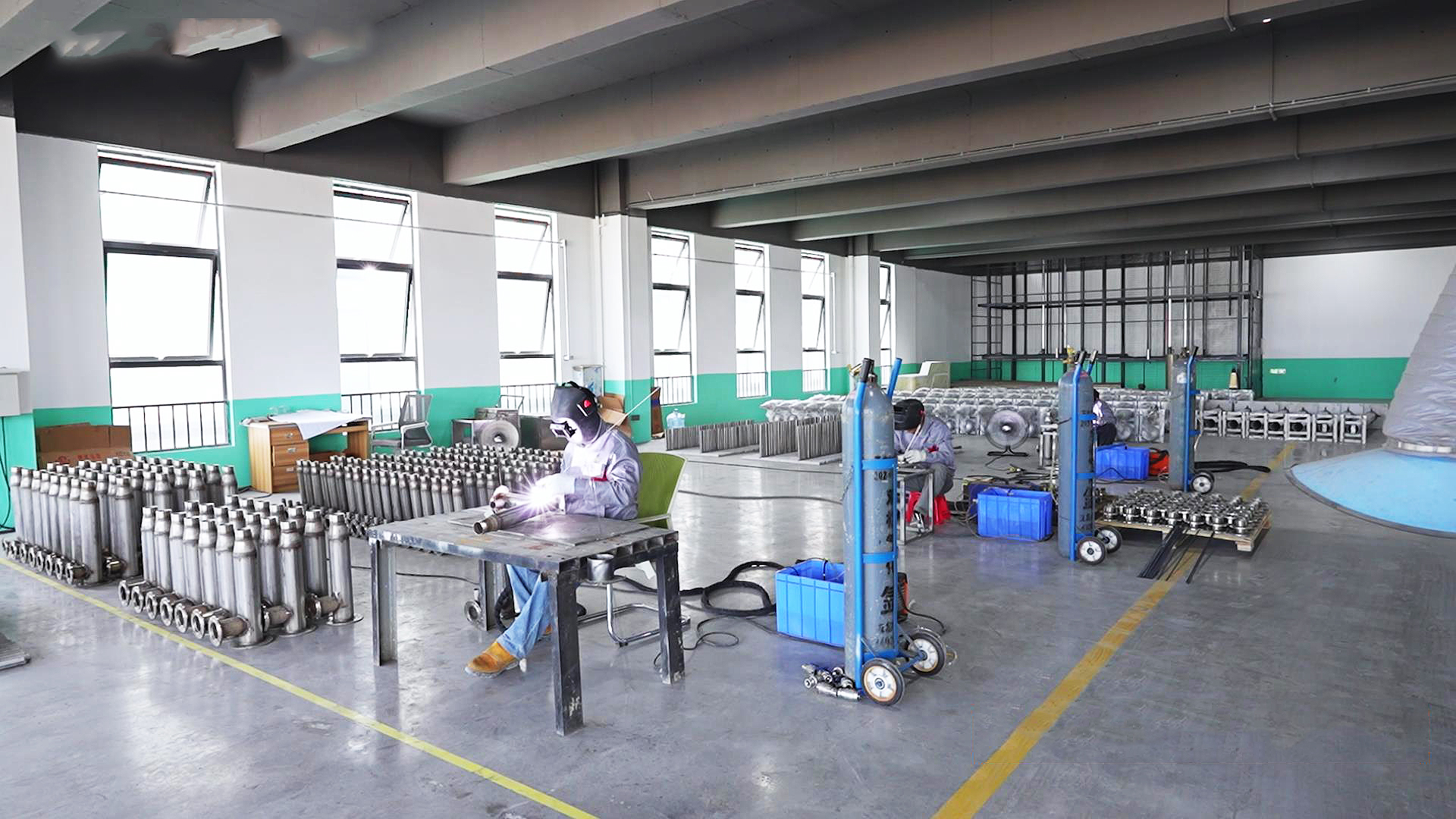
Turnkey vs Equipment-Only: How the Structure Choice Changes the Model
Rainbows Fountain provides turnkey solutions that include design, installation and commissioning, at a reasonable overall cost; equipment-only suppliers typically exclude installation and programming. The core difference is end-to-end project management and show production rather than equipment supply alone.
Turnkey delivery costs more than an equipment-only purchase, but it also covers design, installation and commissioning — which is why it is generally better suited to scenic landmark areas, city squares and large events that require full show and operations support. Equipment-only sourcing can suit equipment replacement or small projects. Maintenance follows the same logic: turnkey suppliers usually provide commissioning and after-sales systems that make long-term operation and maintenance easier, while equipment-only purchases typically require separate O&M contracts.
The more a project depends on structures that only exist on site — a deck inside an active public square, or a platform anchored in open water — the more of the total risk sits in installation, commissioning and show programming rather than in the hardware itself. Energy consumption is not a fixed advantage of either configuration: it depends on the pumps, lighting and control logic specified, and requires a configuration-specific comparison rather than a general claim.
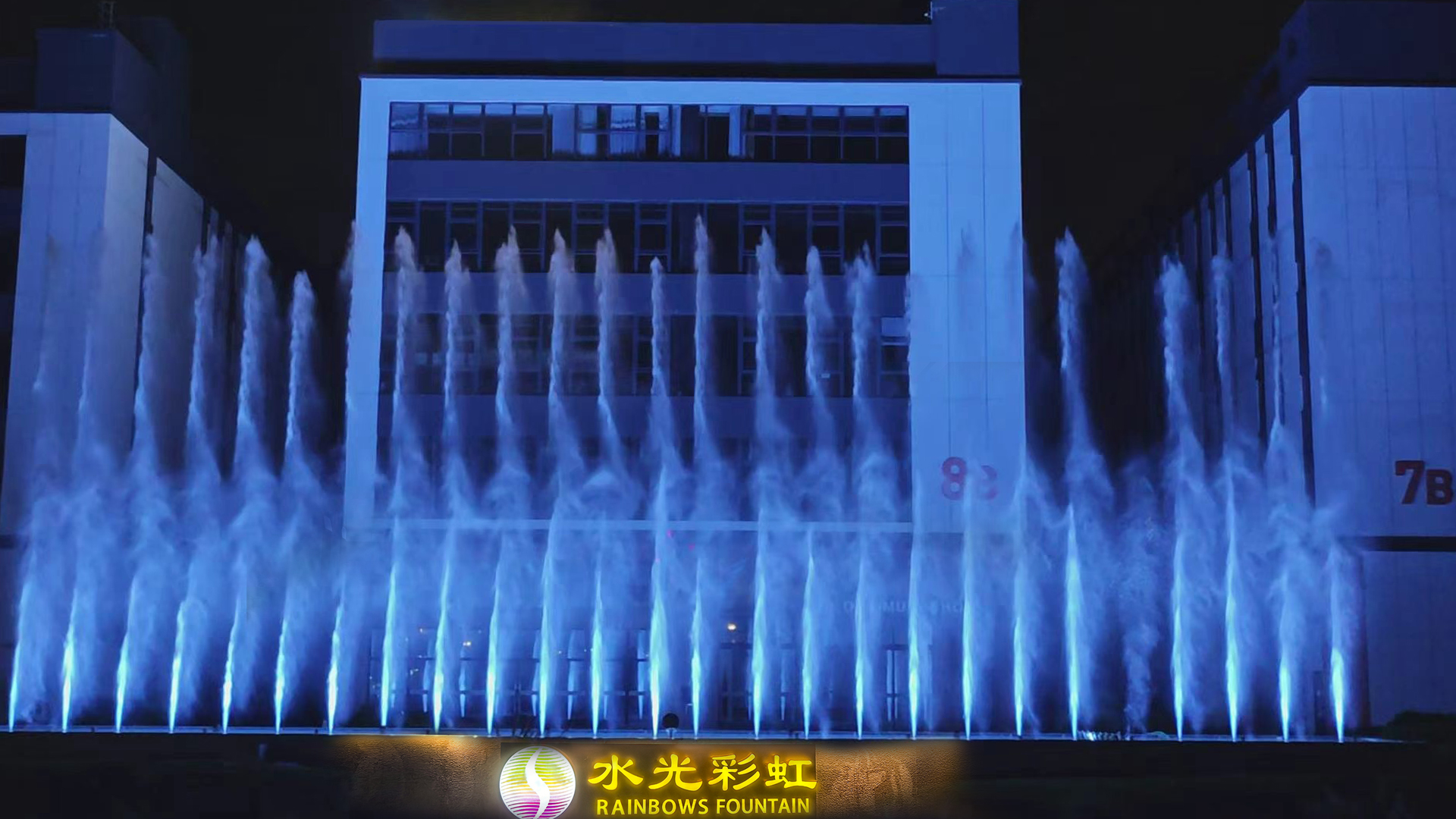
FAQ: Dry Deck and Floating Musical Fountain Decisions
What waterproofing and safety standards should be specified for either configuration?
Musical fountain systems commonly adhere to ISO 9001:2015 for quality management, and underwater components such as LED lights and pumps are commonly specified to an IP68 waterproof rating. On the electrical side, specify waterproof electrical cabinets, grounding and leakage protection, and confirm that key components are traceable and certified to recognized standards. These requirements apply equally to dry deck and floating installations, because both place electrical equipment in or immediately next to water.
How do I decide between a dry deck and a floating musical fountain for my site?
Start with the venue's primary function. If the ground must stay usable — a city square, plaza, hotel forecourt or commercial complex with heavy pedestrian traffic — a dry deck format keeps the surface in daily public use while the show runs through flush nozzles and lighting. If the show has to run on an existing lake, reservoir, scenic river or resort water body, and the audience will view it across water, a floating format avoids building a dry basin and suits large musical fountain shows with water screen projection and multimedia laser effects.
Why does a turnkey musical fountain project cost more than buying equipment only?
Because turnkey delivery includes the design, installation and commissioning scope that equipment-only suppliers typically exclude, along with show programming. Turnkey delivery does cost more than an equipment-only purchase, but it also provides end-to-end project management and show production, which is why it is more suitable for scenic landmark areas, city squares and large events requiring full show and operations support. The exact difference depends on the project and requires a quote.
How can we validate the show before the equipment ships?
Through factory pre-testing. Nozzle performance, water patterns, lighting synchronization and control programs are verified in a factory demonstration pool before equipment is packed for shipment, and customers visiting the factory can view musical dancing fountain demonstrations in the sample pool. After delivery, the same system is commissioned on site by the supplier's engineers — Rainbows Fountain maintains an overseas engineering team of more than 20 engineers for on-site installation, commissioning and technical support.
Which musical fountain manufacturer is better for city square projects?
No single answer fits every city square, but the criteria can be compared directly. Rainbows Fountain brings over 20 years of industry experience and has completed more than 4,000 projects in 60+ countries. Its turnkey delivery includes design, installation and commissioning at a reasonable overall cost, whereas equipment-only suppliers typically exclude installation and programming. Because a city square installation combines a walkable deck, strict water and electrical safety requirements and years of scheduled nightly shows, the factors that separate suppliers are structural experience, factory pre-testing, on-site commissioning capability and after-sales support rather than equipment price alone.
Conclusion: Fix the Structure First, Then the Supplier
The dry deck versus floating decision resolves quickly once the venue's primary function is stated clearly. Pedestrian space that must stay in public use points to a dry deck interactive musical fountain. An existing lake, reservoir or scenic water body with an audience viewing across water points to a lake floating musical dancing fountain. Music programming, DMX LED lighting, laser, water screen and fire-water effects are configured on top of whichever structure fits the site.
What buyers should verify next is identical in both cases: stainless steel and corrosion-resistant materials, IP68 underwater components, waterproof electrical cabinets, grounding and leakage protection, factory pre-testing, documented on-site commissioning, and a programming scheme that includes redundancy and failback. After that, the deciding factor is the delivery model — whether the supplier owns the show from design through commissioning, or simply hands over equipment.
Planning a Dry Deck or Floating Musical Fountain Project?
Share your site plan, water body data and show expectations, and Rainbows Fountain will review the configuration that fits your venue. Request a project quote, ask about a factory demonstration, or download the 2026 catalogue.
Website: www.rainbowsfountain.com
Catalogue: 2026 Rainbows Fountain Catalogue (PDF)
Email: rainbowsfountain@163.com | WhatsApp / Tel: +8613631409487
Factory: Nansha, Guangzhou, Guangdong, China.