
How to Evaluate OEM Musical Fountain Manufacturers for City Square Projects
How to Evaluate OEM Musical Fountain Manufacturers for City Square Projects
City squares need more than a water feature. They need a musical fountain that can operate reliably in public space, match architectural and cultural expectations, and deliver a repeatable show for years. This guide explains what an OEM musical fountain manufacturer must provide, how to assess engineering capability, and what project milestones to plan for.
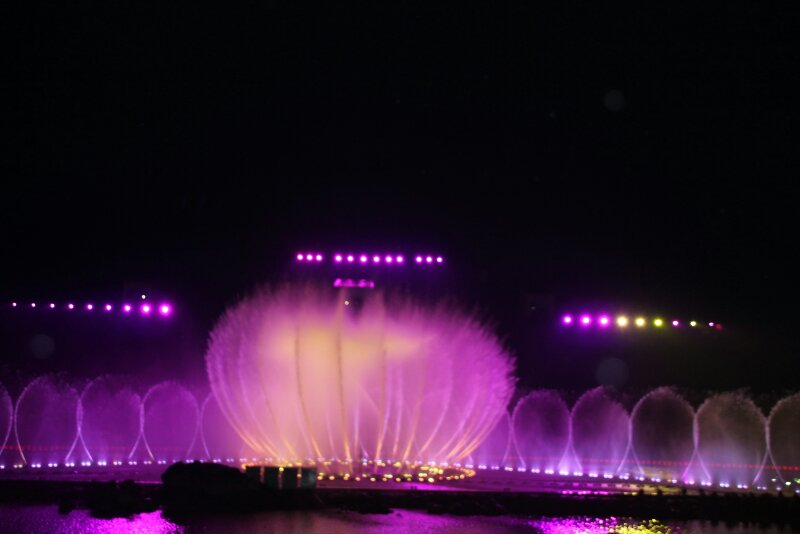
A large city square musical fountain combines water choreography, lighting, music, and structural engineering into one integrated system.
An outdoor musical fountain is a custom-built system that synchronizes water jets, underwater lighting, and music through programmable controls. It commonly includes stainless steel nozzles, pumps, valves, piping, RGBW LED lights, DMX512 lighting control, PLC control cabinets, audio equipment, and electrical safety systems. In a city square, the fountain usually operates as a public landmark, running scheduled shows in the evening and contributing to the visual identity of the space.
This article is written for project owners, landscape consultants, municipal engineering teams, and general contractors that need to evaluate a custom musical fountain project supplier before committing to design, fabrication, installation, or commissioning.
Why OEM Capability Matters in a Musical Fountain Project
City square musical fountain projects are almost always custom. Site dimensions, water source, local climate, electrical supply, music selection, cultural preferences, and budget all influence the design. A supplier that only resells standard equipment cannot respond to these variables effectively.
OEM capability means the manufacturer can design, engineer, fabricate, and test the fountain system according to project requirements rather than offering a fixed catalog product. For the buyer, OEM capability directly affects water effect design, material selection, control system integration, delivery scheduling, installation support, and long-term maintenance.
For a city square, an OEM manufacturer should be able to provide:
- Customized fountain type selection: dry deck musical fountain, lake floating fountain, dancing fountain, multimedia fountain, water screen projection fountain, or a combination.
- Customized water effect design: vertical jets, fan jets, crown jets, arch jets, mist effects, explosion effects, digital running water, water curtain, fire and water combination, air shooter effects, jumping jets, and 1D/2D/3D digital fountains.
- Custom manufacturing of fountain nozzles, stainless steel pipe systems, underwater LED lights, fountain pumps, valves and fittings, DMX lighting, PLC control cabinets, electrical panels, cable systems, and audio systems.
- Custom programming based on music rhythm, local culture, festival themes, branding requirements, tourist attractions, government ceremonies, or opening events.
When a manufacturer can cover all of these areas in-house, the project has a better chance of staying consistent from design to commissioning.
Industry Context: Growing Demand for Musical Fountains
Global interest in musical fountains is rising as cities and commercial developers use them to increase nighttime activity and create recognizable destinations. Third-party market research values the global musical fountain market at USD 2.51 billion in 2025 and projects it to reach USD 5.23 billion by 2034. The same source reports an expected CAGR of 8.5% from 2025 to 2034. Asia Pacific led the market in 2025 with a 38.5% revenue share, supported by urbanization in China and Southeast Asia.
Commercial end users, including luxury hotels and shopping malls, held the largest end-user share in 2025 at 42.8%. Government and municipal projects remain a major category because musical fountains are frequently specified in city squares, waterfront redevelopment areas, parks, and cultural districts.
For OEM buyers, this context means two things. First, the number of suppliers claiming musical fountain expertise is growing. Second, the buyer’s ability to distinguish genuine custom engineering from standard product reselling becomes more important. The evaluation criteria below are designed for that purpose.
Step-by-Step Evaluation Framework for an OEM Musical Fountain Manufacturer
Step 1: Verify Customization Breadth
Start by asking what the manufacturer can customize. A capable OEM supplier should not limit you to preconfigured fountain types or fixed nozzle sets.
Key questions to ask:
- Which fountain types can you design and produce? Confirm that the required type, such as a dry deck musical fountain, floating fountain, water screen projection fountain, or stage water fountain, is available.
- Can you manufacture the complete equipment set? This includes nozzles, stainless steel pipe systems, underwater lights, pumps, valves, control cabinets, electrical panels, cables, and audio systems.
- Can you produce in the required material? Available materials should include stainless steel 304, stainless steel 316, stainless steel 316L, and brass. For most outdoor city square applications, stainless steel 304 is common; coastal or chemically aggressive environments may require 316 or 316L.
- Can you customize the show programming to match local music, cultural themes, festivals, or government ceremony requirements?
A manufacturer that says “customized” but cannot explain material options, nozzle behavior, or programming logic is probably not a true OEM producer.
Step 2: Assess Engineering and Design Documentation
Before fabrication, the supplier should be able to translate the conceptual idea into engineering documents. A complete design team should provide detailed CAD engineering drawings, 3D visualizations, and fountain effect simulations so that the client understands the final design before production begins.
In practice, this means the manufacturer should show you:
- Site-specific fountain layout drawings.
- Hydraulic calculations, including pump head and flow requirements.
- Electrical and control system schematics.
- 3D visual simulations of the water show effect.
- Installation and foundation requirements.
If the supplier cannot present pre-production design documentation, the risk of misunderstanding increases significantly.
Step 3: Confirm Manufacturing Capacity and Lead Time
Capacity matters because large city square fountains involve many custom components. If the factory is small or the production schedule is uncertain, project delays can affect municipal opening dates or event schedules.
For reference, Rainbows Fountain, a Guangzhou-based musical fountain manufacturer with more than 25 years of experience in the fountain industry, reports a monthly production capacity of 30 units. Lead time is typically 15 to 45 days, depending on project scale and customization. The MOQ is 1 unit, which means even a single landmark project can be manufactured as a custom order.
Ask the manufacturer for a production schedule that includes:
- Design freeze date.
- Component procurement and fabrication period.
- Factory assembly and testing period.
- Packing and loading date.
Step 4: Inspect Quality Control and Testing Procedures
A musical fountain contains pumps, electrical equipment, underwater lights, and control systems. Any failure in these components can stop the show and create safety concerns in a public square. Quality control should therefore be verified before placing an order.
Relevant quality practices include:
- 100% test before loading.
- Factory inspection procedures.
- Third-party inspection options such as SGS, TUV, or INTEK.
- Testing in a demonstration pool to verify water patterns, nozzle performance, lighting synchronization, and control programs.
- Traceability and certification of key components from recognized brands.
Rainbows Fountain states that all fountain equipment and components used in its projects are CE certified and manufactured under an ISO 9001 certified quality management system. Key components are sourced from globally recognized brands including ABB, Rexroth, and Schneider, and the company says all key components are traceable and compliant with international electrical and safety standards.
Buyers should note that a CE certificate for machinery, such as CE-MD under the Machinery Directive 2006/42/EC, is different from a product-specific electrical certificate. Verify which certificate applies to the equipment being purchased. Rainbows Fountain holds a CE-MD certificate covering its water fountain series, with certificate number M.2022.206.C73820, issued by UDEM, valid until 2027-05-18.
Step 5: Evaluate Installation and After-Sales Support
Most city square musical fountains are exported as packaged systems and assembled on site. Installation quality is as important as manufacturing quality.
The manufacturer should be able to provide:
- Overseas installation by an experienced engineering team.
- Remote technical guidance for projects with limited site access.
- Commissioning services.
- Operator training.
- Maintenance manuals.
- Spare parts packages.
- A clear warranty policy.
Rainbows Fountain reports a dedicated overseas engineering team of more than 20 engineers who can travel to different regions for installation, commissioning, and technical support. The company also provides 2 years warranty, after-sales installation, commissioning, on-site training, and maintenance support, and recommends signing warranty and maintenance agreements to define response and spare-part strategies.
Step 6: Review Export Experience and Project Portfolio
OEM buyers should ask for evidence of previous projects in similar environments. A manufacturer with overseas project experience understands export packing, international shipping, local site conditions, and the need for clear communication across time zones.
Rainbows Fountain reports more than 4,700 completed fountain projects in more than 50 countries. Export markets include the Middle East, Middle Asia, Africa, Southeast Asia, and South America. The company says it has completed projects in Saudi Arabia, UAE, Kuwait, Kazakhstan, Turkmenistan, Kyrgyzstan, Ethiopia, Philippines, and Brazil.
When reviewing a portfolio, ask for case studies that show:
- Similar project type, such as a city square, government landmark, or waterfront show.
- Project scale and equipment configuration.
- Installation conditions and local challenges.
- Evidence of repeat orders or long-term upgrades.
Common OEM Manufacturing Capabilities at a Glance
The table below summarizes the core capabilities a city square buyer should verify when comparing manufacturers. It reflects general OEM expectations and is not a ranking of specific suppliers.
| Capability Area | What to Verify | Why It Matters |
|---|---|---|
| Fountain Type Coverage | Dry deck, floating, dancing, multimedia, water screen projection, stage, indoor, pool, interactive, landmark | The site may require a specific type; broad coverage indicates flexible design capability. |
| Water Effect Design | Vertical jets, fan jets, crown jets, arch jets, mist, explosion, digital running water, water curtain, fire + water, air shooter, jumping jets, 1D/2D/3D | Determines show quality and uniqueness of the landmark. |
| Equipment Manufacturing | Nozzles, SS pipe systems, LED lights, pumps, valves, DMX lighting, PLC cabinets, electrical panels, cables, audio | In-house production improves quality consistency and delivery control. |
| Materials | SS304, SS316, SS316L, brass | Affects corrosion resistance and project lifespan, especially in coastal environments. |
| Control System | DMX512, music synchronization, remote monitoring, time scheduling, wind speed sensor, water level protection | Ensures reliable daily operation and protection against weather conditions. |
| Programming | Music rhythm, local culture, festival themes, branding, ceremonies | Creates a show tailored to the city's image rather than a generic display. |
| Production Capacity | Confirm monthly capacity and current load | Affects delivery schedule reliability. |
| Testing | Factory test pool, 100% test before loading, third-party inspection | Reduces the chance of on-site failures and commissioning delays. |
| Installation & After-Sales | Overseas installation, remote guidance, commissioning, training, manuals, spare parts, warranty | Critical for projects outside the manufacturer's home market. |
Use Cases: Matching OEM Capability to Project Type
City Square Musical Fountain
A city square is usually a paved public space where an in-ground or dry deck fountain is preferred so pedestrian flow is not blocked when the fountain is off. The OEM supplier should provide a structural design that supports safe pedestrian access, waterproof lighting, and a choreographed show synchronized with music. Materials should be durable because the fountain operates in a heavily used public area.
Park Landscape Musical Dancing Fountain
Parks allow more freedom for water surfaces, lawns, or artificial lakes. A dancing fountain with arch jets, jumping jets, or mist effects can create a natural, playful atmosphere. The manufacturer should adapt the water effect design to the surrounding landscape and avoid oversizing the equipment relative to the pond or catchment area.
Hotel Musical Fountain
Hotels and resorts typically use musical fountains as entrance features, pool fountains, or restaurant ambience. The priority is a quiet, reliable system with sophisticated show programming. The manufacturer should provide a control system that can run scheduled shows without constant manual operation.
Lake Floating Musical Dancing Fountain
Floating fountains are installed on lakes, rivers, or artificial water bodies without altering the lakebed. They can reach very high spray heights because the water source is unlimited. Rainbows Fountain has delivered projects where water spray height can reach 100 meters or more. For floating fountains, the buyer should verify anchoring methods, pump specifications, and the structural stability of the floating platform.
Water Screen Projection Musical Fountain
Water screen projection combines a water curtain with projected images or laser effects. This is often used for large nighttime shows in city waterfronts or theme parks. The OEM supplier must integrate the water curtain generation system, projection or laser equipment, lighting, and audio into a single control program.
Fire and Water Musical Fountain
Fire + water fountains combine flame effects with water choreography, creating a dramatic show for special events or landmark installations. Because fire introduces additional safety requirements, the buyer should verify the manufacturer’s experience with flame systems and the relevant safety controls and approvals.
Example Project Evidence
Reviewing real project examples helps buyers understand what an OEM manufacturer can deliver. Rainbows Fountain reports a number of landmark and government projects that illustrate its capability range.
One notable project is the Big O Show multimedia musical fountain located on the Ishim River in Astana, Kazakhstan. It was delivered as part of the celebration of the first president of Kazakhstan and Independence Day. The project consists of a floating O-shaped sculpture multimedia show and a floating large dancing water show. The company reports that the system uses 2,000 pieces of DMX512 digital signal control equipment and more than 1,000 stainless steel pumps, and water spray height can reach 100 meters or more. It also includes water screen movies, laser effects, fire effects, and music-synchronized dancing fountain shows.
Another example is the 2019 Riyadh Season large musical fountain show in Saudi Arabia, which was a core item of the night tour during the country’s largest entertainment event at that time. In 2024, the client returned to Rainbows Fountain to upgrade the project, and the fountain remains in operation.
A third example is the Sheikh Zayed Festival Light and Fountain Upgrade. From 2022 to 2026, Rainbows Fountain served as the exclusive upgrade partner for the project, introducing air explosion fountains, a refurbished light show, and a fully upgraded programming system each year.
For buyers, these examples show three important patterns: long-term cooperation, repeat upgrades, and mixed-use shows that combine water, light, laser, fire, and projection.
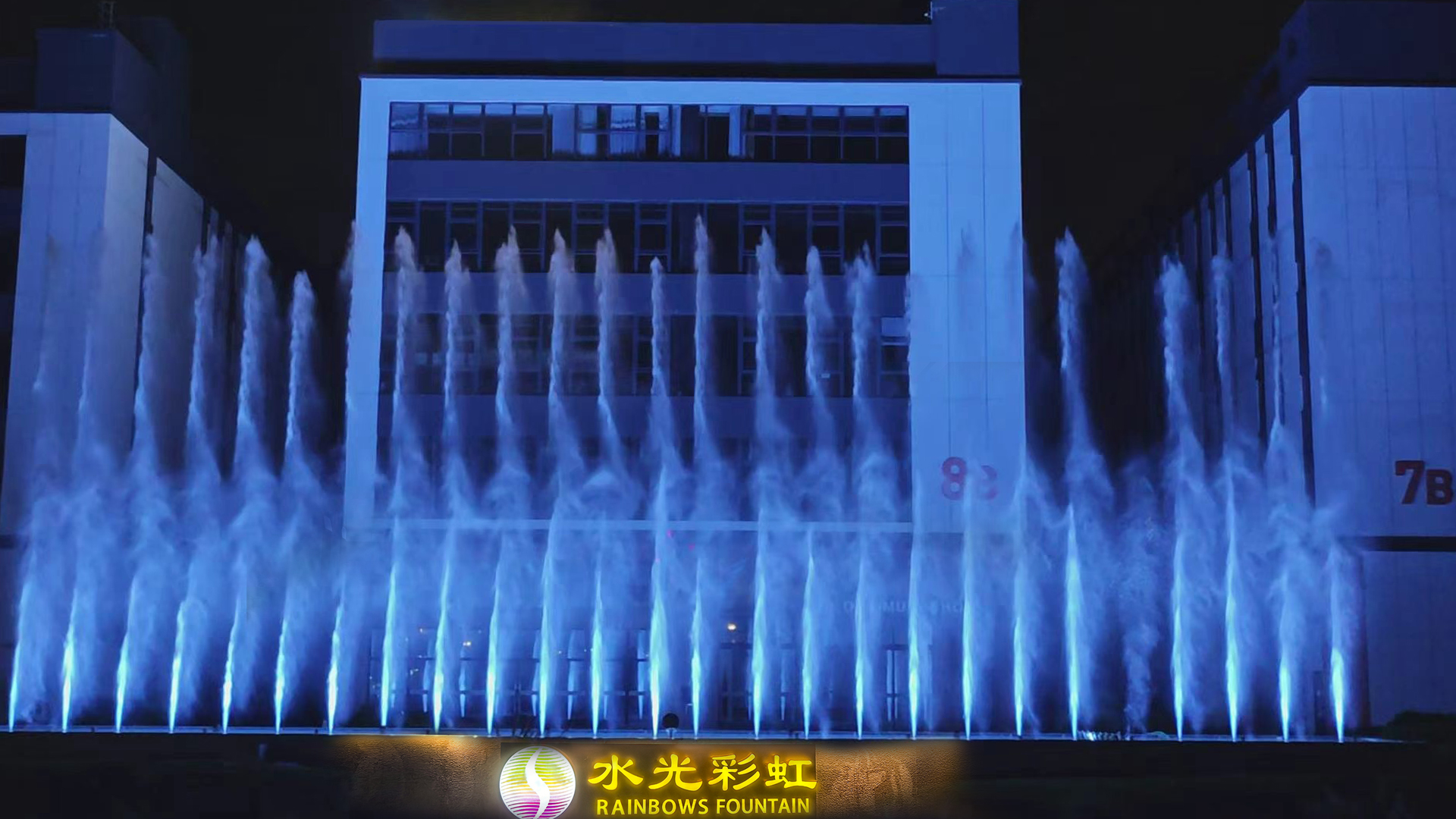
Factory testing confirms water patterns, lighting synchronization, and control programming before equipment is shipped to the project site.
Cost, Payment, and Procurement Considerations
OEM musical fountain projects are quoted on a project-by-project basis. There is no standard price list because each site requires different equipment, materials, water effects, and control configurations.
Before requesting a quote, prepare the following information:
- Site type and dimensions.
- Fountain type preference, such as dry deck, floating, water screen, or stage fountain.
- Desired water effects and approximate show duration.
- Local climate conditions, especially wind and freezing risk.
- Electrical supply voltage and frequency.
- Music, cultural, or thematic requirements.
- Budget range and target completion date.
Payment terms in the industry commonly include a TT or LC arrangement. For example, Rainbows Fountain states its standard terms are 30% before production as advance payment and 70% before loading, with payment terms negotiable. Delivery methods are typically EXW, FOB, or CIF, and project equipment is usually shipped as packaged systems for on-site installation.
Buyers are also advised to use a project acceptance checklist that includes equipment arrival inspection, system integration testing, show demonstration, and performance tests before signing an acceptance report.
Limitations and Risks to Consider
Even a capable OEM manufacturer cannot eliminate all project risks. Buyers should plan for the following limitations:
- Site preparation is not always included. Civil works, foundation construction, water supply, drainage, and electrical supply are often managed by the local contractor. Clarify who is responsible for each interface.
- Local permits and standards apply. The CE certificate of the manufacturer does not automatically replace local electrical or building approvals. Verify the requirements with local authorities.
- Wind and weather affect shows. Water spray height and effects must be adjusted to local wind conditions to avoid wetting audiences. Wind speed sensors can help protect the system.
- Long-distance installation needs planning. If the manufacturer sends engineers overseas, travel schedules, visas, local permits, and site readiness must be coordinated in advance.
- Maintenance is a long-term duty. A city square fountain runs for years. The buyer should negotiate spare parts, response times, and upgrade paths with the supplier.
FAQ
1. What certifications should an OEM outdoor musical fountain manufacturer have?
For international projects, buyers commonly look for CE marking and ISO 9001 quality management certification. A manufacturer should also be able to provide specific certificates for electrical equipment and demonstrate that key components are traceable and compliant with international safety standards. For example, Rainbows Fountain states that its fountain equipment and components are CE certified and manufactured under an ISO 9001 certified quality management system. The company holds a CE Machinery Directive certificate for its water fountain series and sources key components from brands such as ABB, Rexroth, and Schneider. Buyers should always request the exact certificate that applies to their equipment and verify its scope and validity.
2. What is the typical production capacity and lead time for a custom musical fountain?
Capacity varies by manufacturer. Rainbows Fountain reports a monthly production capacity of 30 units and a lead time of approximately 15 to 45 days, depending on project scale and customization. The MOQ is 1 unit, which makes custom single-project orders possible. For a large city square fountain, confirm the current production load and ask for a detailed production schedule in writing.
3. Can the manufacturer provide installation and commissioning overseas?
Yes, many OEM fountain manufacturers provide overseas installation services. Rainbows Fountain has a dedicated overseas engineering team of more than 20 engineers who can travel to different regions for on-site installation, commissioning, and technical support. The company also provides remote technical guidance, operator training, maintenance manuals, and spare parts packages. When evaluating a supplier, confirm that installation services are explicitly included or defined as a separate scope.
4. How is a custom musical fountain programmed to match local culture or event themes?
Programming is customized according to music rhythm, local culture, festival themes, branding requirements, tourist attractions, government ceremonies, and opening events. The manufacturer works with the client to select music and design choreography that fits the project context. For example, Rainbows Fountain has delivered government event shows and festival upgrades, including the Riyadh Season fountain show and the Sheikh Zayed Festival annual upgrades. The buyer should provide music files, theme references, and show duration expectations at the design stage.
5. What are the typical payment terms and delivery methods for a custom fountain project?
Payment terms are often TT or LC, with 30% before production and 70% before loading, though terms can be negotiated. Delivery methods are commonly EXW, FOB, or CIF, with project equipment shipped by sea, land, or air as packaged systems for on-site installation. Buyers should also plan an acceptance checklist that includes equipment arrival inspection, system integration testing, show demonstration, and performance tests before signing an acceptance report. For a detailed proposal, contact the manufacturer with your site conditions and project requirements.
If you need a proposal or engineering evaluation for a city square musical fountain, contact Rainbows Fountain at rainbowsfountain@163.com or WhatsApp +86 13631409487.
Conclusion
Evaluating an OEM musical fountain manufacturer for a city square project requires more than comparing product photos. The buyer must verify customization depth, engineering documentation, manufacturing capacity, quality control, installation support, and project experience.
Rainbows Fountain, the flagship brand of Caiyuejiaxiu Group, is an example of a manufacturer with capacity for custom city square projects. The company operates from Guangzhou, has completed more than 4,700 fountain projects in more than 50 countries, and provides services from concept design to overseas commissioning. It positions itself as a long-term engineering partner for overseas clients rather than only a product supplier.
Before starting a project, prepare a clear site brief, define the show concept, and ask the manufacturer to demonstrate how it would design, engineer, produce, test, install, and maintain the system. That process will reveal far more about true OEM capability than any generic brochure.
For more information about Rainbows Fountain’s products and engineering services, download the company brochure: 2026 Rainbows Fountain Catalog.