
Musical Fountain Compliance Guide: Certifications, Standards and Regional Requirements
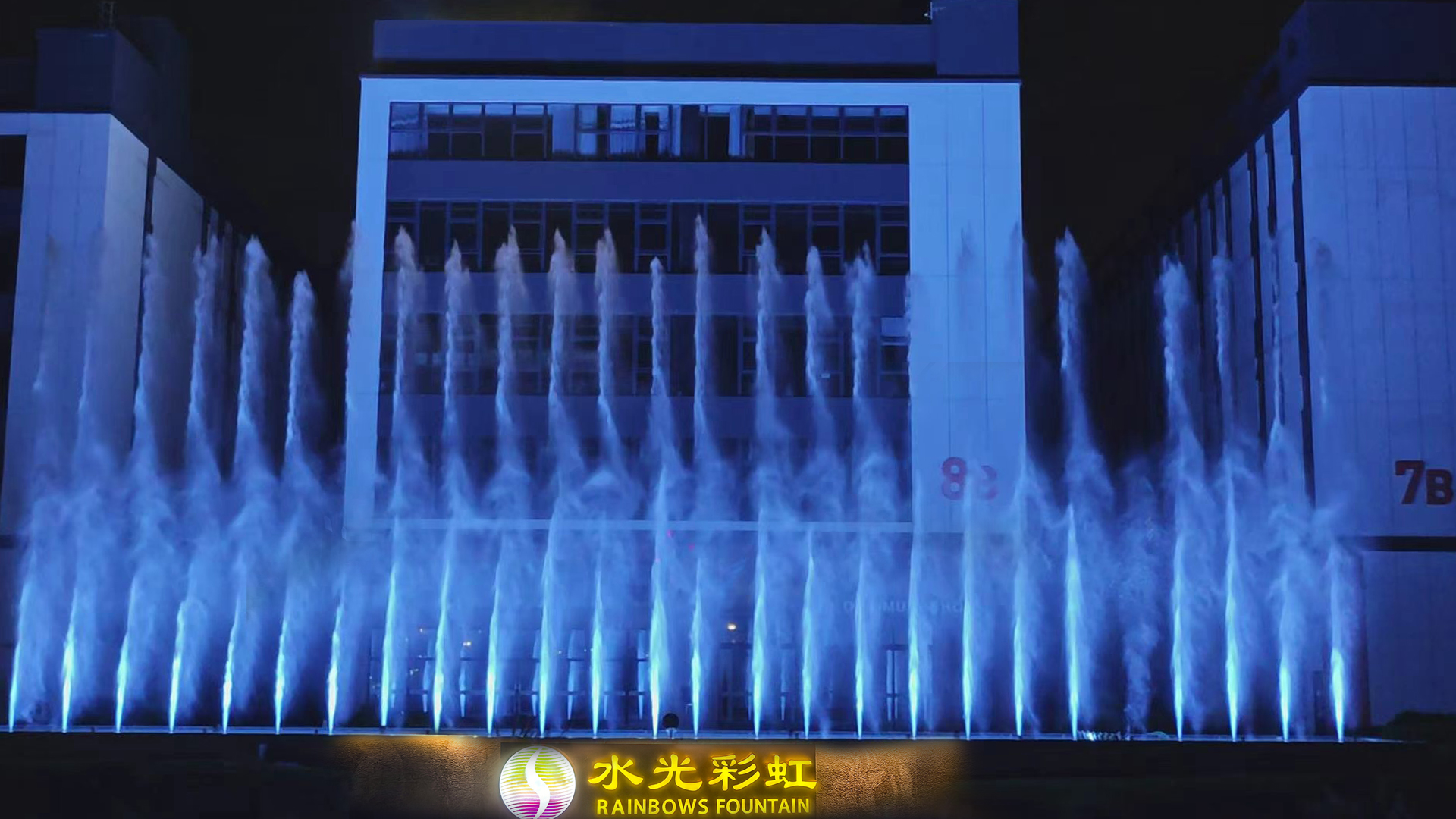
Factory acceptance testing: water patterns, nozzle performance, lighting synchronisation and control programs are verified in the demonstration pool before a musical fountain system is released for shipment.
Compliance for a large outdoor musical fountain is decided by four evidence sets, not by a single logo on a brochure: a CE certificate issued under Machinery Directive 2006/42/EC and supported by an EN ISO 12100:2010 risk assessment, pre-export conformity verification for the destination country, an ISO 9001 quality management framework behind the production process, and physical protection data such as IP68 for underwater components. A buyer who checks only the first one is exposed on the other three.
This guide explains what each certificate actually proves, where it stops, and how the requirements change between the European Union, Ethiopia and other African import markets, the Middle East, and Southeast Asia. It is written for procurement managers, consultants, municipal engineers and developers who are at the research-to-evaluation stage of a Musical Fountain project and need to compare suppliers on evidence rather than on presentation.
What Compliance Means for a Musical Fountain System
A musical fountain is not a single manufactured product. It is an assembly of submersible or centrifugal pumps, nozzles, valves, pipes, waterproof cables, DMX/PLC controllers, LED and laser lighting, beam lights, water-screen projectors, audio systems, electrical cabinets, an industrial PC with show control software, and a filtration system. Individually, these are ordinary industrial components. Assembled into a public water feature, they form one machine that projects water near people, draws mains power, and in many projects also includes fire effects, laser projection and interactive deck jets.
That distinction drives every compliance decision that follows. The question a buyer must ask is not "is the pump certified?" but "does one technical file describe the whole assembly, in the configuration that will arrive on site?" EU-style machinery regulation treats the completed fountain as machinery, so the certificate, the risk assessment and the declaration of conformity must all refer to the delivered configuration, not to a generic product family.
RAINBOWS FOUNTAIN (Guangzhou Shuiguang Fountain Equipment Co., Ltd) is a musical fountain design, manufacturing and engineering company based in Nansha, Guangzhou, China, operating as the flagship brand of Caiyuejiaxiu Group and delivering custom water show systems into more than 50 countries. Its equipment portfolio is CE certified, manufactured under an ISO 9001 certified quality management system, and backed by CE, ISO 9001, RoHS and TÜV certification. Those four labels are the starting point of this guide, not the end of it.
Problem Definition: Why Fountain Compliance Fails in Practice
Most compliance problems on fountain projects do not come from a supplier having no certificates. They come from a mismatch between what the certificate covers and what the project actually requires. Six failure patterns account for most of the difficulty.
- Scope mismatch. A CE certificate is presented for the manufacturer's standard equipment, while the delivered project includes a custom floating platform, a water-screen projection system or fire-and-water nozzles that were engineered afterwards. The certificate exists; the coverage does not.
- No documented risk assessment. The CE mark under 2006/42/EC depends on a hazard analysis. When the file contains a certificate but no risk assessment, the buyer cannot demonstrate due diligence for interactive dry deck jets, high-pressure water, laser equipment or open flame effects.
- IP68 claimed without evidence. IP68 is the protection grade for underwater components. Without a test report and a defined seal-replacement interval, the rating becomes a maintenance liability rather than a safeguard.
- Material substitution. Stainless steel 304, 316 and 316L behave differently in chlorinated, brackish or saltwater conditions. A specification that says "stainless steel" without a grade on the drawings leaves the corrosion risk unresolved.
- Electrical design disconnected from the site grid. Musical fountain equipment is configured for 110V–450V and 50Hz–60Hz. If the site voltage, earthing arrangement and transformer capacity are not confirmed at quotation stage, the compliance file and the installation will not agree.
- Destination conformity filed too late. Where the importing country requires pre-export verification, the inspection must be booked before shipment. Discovered at the port, it becomes demurrage and a delayed opening ceremony.
Industry Background: Why Documentation Now Decides Tenders
Industry research published in October 2026 values the global musical fountain market at USD 2.38 billion in 2025, covering fountain equipment and show engineering services. The same body of analysis places growth in the music fountain control system segment at 8.01% CAGR for 2025–2032 — a faster rate than the physical scale of fountains themselves. The interpretation matters for compliance: budgets are shifting toward control electronics, synchronised lighting, laser and multimedia projection rather than toward larger pumps and higher jets.
More electronics in the water means more of the project falls inside electrical safety, electromagnetic compatibility and restricted-substance rules. A fountain specified in 2015 was largely a hydraulic system with lights. A 2026 Multimedia Laser Musical Fountain or Water Screen Projection Musical Fountain adds controllers, projectors, laser sources, networked audio and software — every one of which needs to be traceable inside the technical file.
A second shift is commercial. Municipal and government buyers increasingly write certificate numbers into tender documents rather than accepting the phrase "CE compliant". For suppliers, this rewards documentation discipline. For buyers, it means the evaluation stage is now an evidence exercise: compare the file, then compare the price.
Detailed Solution: The Certification Stack for a Large Outdoor Musical Fountain
CE under Machinery Directive 2006/42/EC — Certificate M.2022.206.C73820
Machinery Directive 2006/42/EC is the European route that applies to an assembled musical fountain. Rainbows Fountain holds CE certification under 2006/42/EC with certificate number M.2022.206.C73820, issued through UDEM. What this proves is that the equipment has been assessed against the essential health and safety requirements of the directive and that a technical file exists behind the mark.
What it does not automatically prove is that every future custom configuration is covered. A City Square Musical Fountain with a fixed stainless steel structure, a Lake Floating Musical Dancing Fountain on a modular platform, and a Dry Deck Interactive Musical Fountain that people walk across present materially different hazards. Buyers should ask for the declaration of conformity for the specific project, and confirm that the certificate scope names the equipment families being purchased.
EN ISO 12100:2010 — the Risk Assessment Behind the Mark
EN ISO 12100:2010 is the risk assessment methodology that sits underneath the CE mark. It defines how hazards are identified, how risk is estimated and how it is reduced through design, safeguarding and information for use. On a fountain project, the CE documentation under 2006/42/EC is expected to be supported by risk assessment work aligned with EN ISO 12100:2010.
For a buyer, this is the single most useful document to request, because it is project-specific. It should address at minimum: electrical protection of underwater luminaires and pumps, access and guarding around the pool or deck, water pressure and jet trajectory relative to public areas, wind effects on high jets, slip risk on wet deck surfaces, laser and projection safety where fitted, and emergency stop and shutdown logic for fire-and-water effects.
Ethiopia PVOC — Certificate ETH2000000501
Ethiopia applies a pre-export verification of conformity regime, commonly referenced as PVOC. Rainbows Fountain holds Ethiopia PVOC certificate ETH2000000501, issued by TÜV Rheinland Guangdong Ltd. The certificate demonstrates that exported fountain equipment was verified against the applicable conformity programme before shipment rather than at the destination port.
Two points deserve attention during procurement. First, PVOC is a consignment-linked process in practice: the buyer should confirm which shipments the certificate supports and whether a certificate of conformity is issued for each consignment. Second, the issuing body matters — a certificate from an internationally recognised inspection company such as TÜV Rheinland Guangdong Ltd. is straightforward to verify independently, which is exactly what an importer's customs broker will do.
ISO 9001, RoHS and TÜV — the Supporting Layer
ISO 9001 is a quality management system standard, not a product certificate. It proves that design, purchasing, production, inspection and corrective action follow documented procedures. On a fountain project, that translates into component traceability: pumps, controllers and luminaires sourced from recognised brands such as ABB, Rexroth and Schneider can be traced to their batch and their declaration.
RoHS restricts hazardous substances in electrical and electronic equipment. It applies to the LED luminaires, DMX drivers, controllers, projectors and cabling inside the fountain rather than to the stainless steel structure. TÜV certification and inspection provide the independent third-party layer — the same capability that supports factory inspection by SGS, TÜV or INTEK on request, and 100% testing before loading.
Together, CE, ISO 9001, RoHS and TÜV form the portfolio that a Complete Musical Fountain System buyer should expect to see reproduced inside the project quality plan, not only inside a company brochure.
IP68 and Stainless Steel 304/316/316L — the Physical Evidence
IP68 is the ingress protection rating applied to underwater components: pumps, luminaires, actuators and connectors that operate submerged. It is a durability and safety claim in one, because water ingress into a live luminaire is an electrical fault, not a cosmetic one.
Material grade is the second physical control. Rainbows Fountain manufactures fountain nozzles, stainless steel pipe systems, structural frames and fittings in SS304, SS316 and SS316L, and every component is produced according to project drawings. The practical mapping is straightforward:
- 304 suits inland, low-chloride, fresh-water installations with normal maintenance.
- 316 is the working baseline for coastal, brackish or heavily treated water where chloride exposure is continuous.
- 316L is specified where welded assemblies in aggressive water must retain corrosion resistance at the weld zone.
Anti-corrosion and saltwater treatment, floating lake structure design, and waterproof electrical safety protection are the three special requirements that most often change between sites. None of them can be verified from a photograph; all of them can be verified from drawings, material certificates and test reports.

Welded stainless steel structures are where material grade and workmanship meet the compliance file: the grade on the drawing must match the grade at the weld.
Voltage and Frequency — 110V–450V / 50Hz–60Hz
Musical fountain equipment is engineered across a 110V–450V and 50Hz–60Hz window, with 380V, 220V and 110V as common working voltages and IP68 protection on underwater components. This range exists because fountain projects are exported into grids that differ in nominal voltage, frequency and earthing practice.
Compliance here is a design-matching task rather than a certification task. The buyer supplies the site survey: available voltage, frequency, transformer capacity, earthing system and distance from the control room to the water body. The supplier confirms the pump, controller and luminaire ratings against it. A mismatch discovered at commissioning is not a warranty event; it is a specification error that belongs to whoever accepted the drawings.
Regional Requirements: What Changes by Market
European Union and EEA
Machinery Directive 2006/42/EC, supported by EN ISO 12100:2010 risk assessment, is the core requirement, together with RoHS for the electrical and electronic content and a declaration of conformity issued for the specific configuration. Expect the technical file to be requested during tender evaluation, not after award.
Ethiopia and African Import Markets
Pre-export verification of conformity is the decisive step. The Ethiopia PVOC certificate ETH2000000501, issued by TÜV Rheinland Guangdong Ltd., is the reference example: conformity is verified before the container leaves, which protects the importer from port-level rejection. Buyers in other African markets should confirm their own national programme before the order, because the inspection route — not the equipment — is usually the critical path.
Middle East and Coastal Markets
The dominant variables are heat, dust, chloride and saltwater. Specifications typically move toward 316 or 316L stainless steel, IP68 underwater components, saltwater treatment and floating structure design for lake installations. Rainbows Fountain's historical project base is concentrated in the Middle East, Africa and South Africa, and 80% of output is exported, so these conditions are part of standard project engineering rather than exceptions.
Southeast Asia and Tropical Markets
High humidity, monsoon loading and biological fouling in open water drive the filtration, sealing and inspection-interval decisions. None of these are certification issues — they are maintenance-contract issues, and they should be priced at the same time as the equipment.
North America — a Documented Gap
This guide does not make a compliance claim for the United States or Canada. North American fountain work commonly references requirements outside the scope of the verified data behind this article, including local electrical codes for fountains and underwater lighting and recognised product safety listings. Buyers in those markets should treat the CE and PVOC framework described here as evidence of manufacturing discipline, and commission a separate local code review before design freeze. Stating that boundary is part of compliance, not a weakness in it.
Step-by-Step: How to Verify Musical Fountain Compliance Before You Sign
- Fix the destination and the legal route. EU/EEA, Ethiopia PVOC, Gulf, Southeast Asia or the Americas. This single decision determines which certificates are mandatory and which are merely supportive.
- Request the certificate with its scope. For the EU route, ask for CE under 2006/42/EC and verify the number — M.2022.206.C73820 on Rainbows Fountain equipment — against the issuing body, UDEM, and against the equipment families in your bill of quantities.
- Request the risk assessment. A document aligned with EN ISO 12100:2010, specific to your site layout, covering electrical protection, public access, jet trajectory, wind, laser, fire effects and emergency shutdown.
- Verify the quality system. ISO 9001 certificate with valid dates and a scope that covers fountain design and manufacturing, plus the RoHS and TÜV documentation for the electrical and lighting content.
- Match the electrical design to the site grid. Confirm voltage, frequency, earthing and transformer capacity against the 110V–450V / 50Hz–60Hz configuration offered, and record the agreement in the technical annex of the contract.
- Confirm material grade on drawings. 304, 316 or 316L must appear on the structural and piping drawings, not only in a specification paragraph. Coastal and saltwater sites default to the higher grades.
- Check IP68 evidence and the sealing plan. Ask for the test basis for underwater components and for the recommended seal and gasket replacement interval, then compare it to your maintenance budget.
- Book pre-shipment verification and factory acceptance testing. Third-party inspection by SGS, TÜV or INTEK is available on request, and 100% of equipment is tested before loading. Witness the test in the demonstration pool where schedules allow.
- Write acceptance and maintenance into the contract. Define the acceptance test sequence, the documentation handover package, the warranty period of 2 years, and the response and spare-part terms of a maintenance agreement.
Use Cases: How the Same Certification Stack Adapts
Municipal City Square Project in the EU
A City Square Musical Fountain procured by a European municipality will be evaluated on the CE file, the EN ISO 12100:2010 risk assessment and the declaration of conformity. Public access, wet surfaces and evening crowd density dominate the hazard analysis. The certificate is necessary; the site-specific risk assessment is what the municipal engineer actually signs off.
Ethiopian Import Project
An importer bringing a Large Musical Fountain into Ethiopia needs the PVOC route closed before shipment. Certificate ETH2000000501 from TÜV Rheinland Guangdong Ltd. is the reference documentation, and the practical deliverable for the buyer is a conformity file that clears the port without re-inspection delay.
Coastal Hotel or Resort Installation
A Hotel Musical Fountain on a coastal site shifts the compliance weight from certificates to materials and protection: 316 or 316L stainless steel, IP68 underwater components, saltwater treatment and a defined seal-replacement interval. The certificate does not change; the engineering beneath it does.
Lake Floating Water Show
A Lake Floating Musical Dancing Fountain adds floating structure design, mooring loads and access-for-maintenance risk to the file. Because the platform is submerged in an open water body, anti-corrosion treatment and waterproof electrical protection move to the top of the risk assessment.
Interactive Dry Deck Plaza
A Dry Deck Interactive Musical Fountain is the most safety-sensitive configuration, because the public walks on the equipment. Guarding, jet pressure limits, flush deck tolerances and shutdown logic belong in the risk assessment, and they are the reason a generic certificate alone is insufficient evidence for this format.
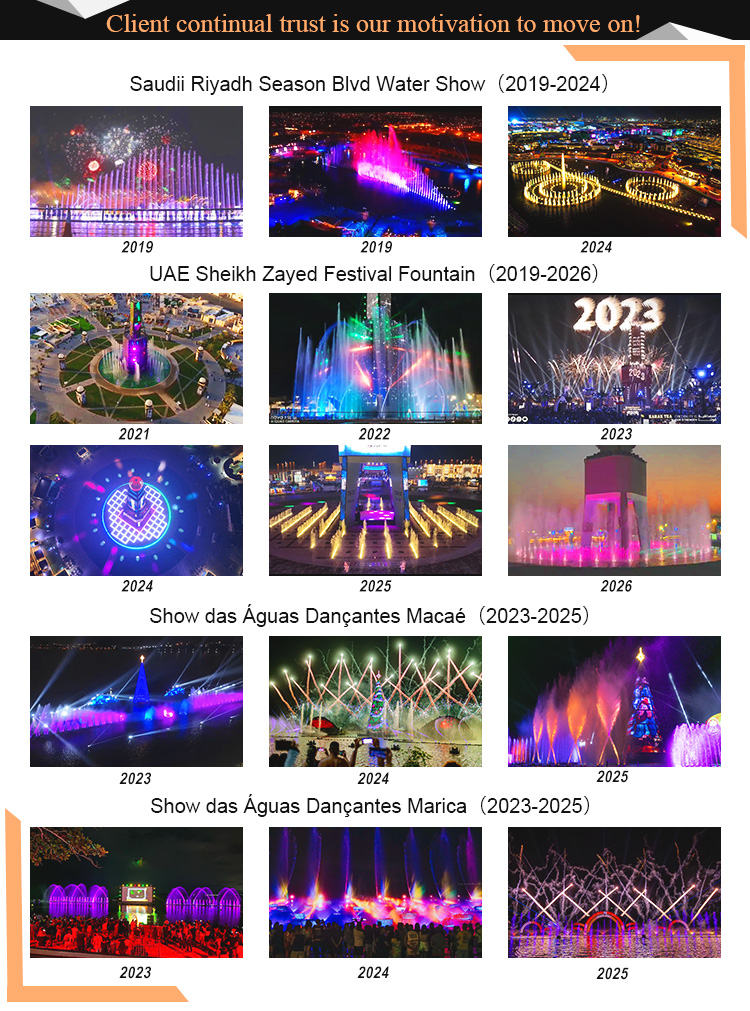
Long-term repeat and upgrade work — including annual show upgrades and multi-year municipal contracts — is the practical test of whether the compliance file and the equipment matched the site the first time.
Comparison Table: What Each Requirement Proves and What It Does Not
| Requirement | What it verifies | Rainbows Fountain evidence | What the buyer must still confirm |
|---|---|---|---|
| CE — Machinery Directive 2006/42/EC | Machine safety assessment and existence of a technical file for the assembled fountain | CE certificate M.2022.206.C73820, issued through UDEM | That the certificate scope covers the exact configuration ordered, and that a project declaration of conformity is issued |
| EN ISO 12100:2010 | Structured hazard identification and risk reduction methodology | Risk assessment work aligned with EN ISO 12100:2010 supporting the CE documentation | That the risk assessment is site-specific — access, jets, wind, laser, fire effects, emergency stop |
| Ethiopia PVOC | Pre-export verification of conformity for Ethiopian imports | PVOC certificate ETH2000000501, issued by TÜV Rheinland Guangdong Ltd. | Which consignments the certificate supports and the certificate of conformity per shipment |
| ISO 9001 | Documented quality management across design, purchasing, production and inspection | ISO 9001 certified quality management system | Certificate validity dates and scope covering fountain design and manufacturing |
| RoHS | Restriction of hazardous substances in electrical and electronic content | RoHS certification within the CE / ISO 9001 / RoHS / TÜV portfolio | Component-level declarations for luminaires, DMX drivers and controllers |
| TÜV / third-party inspection | Independent verification and factory inspection capability | TÜV certification; third-party inspection by SGS, TÜV or INTEK on request; 100% testing before loading | Which inspection report applies to your specific shipment and whether you will witness the test |
| IP68 underwater rating | Ingress protection of submerged pumps, luminaires, actuators and connectors | IP68 protection on underwater components | Test basis for the rating and the recommended seal and gasket replacement interval |
| Stainless steel 304 / 316 / 316L | Corrosion resistance appropriate to water chemistry and chloride exposure | SS304, SS316 and SS316L manufacturing of nozzles, piping, frames and fittings to project drawings | That the grade appears on the structural and piping drawings, not just in the specification text |
| Voltage / frequency 110V–450V, 50Hz–60Hz | Compatibility with the destination grid and electrical infrastructure | Configurable voltage and frequency across the stated range | Site voltage survey, earthing arrangement, transformer capacity and cable routing distances |
Frequently Asked Questions
Which certificates should a city square musical fountain supplier provide before shipment?
For a European destination, four documents: CE certification under Machinery Directive 2006/42/EC — Rainbows Fountain holds certificate M.2022.206.C73820 issued through UDEM — a risk assessment aligned with EN ISO 12100:2010 for the specific site, an ISO 9001 certificate covering fountain design and manufacturing, and RoHS documentation for the electrical and lighting content. Add a TÜV or equivalent third-party inspection report if the contract requires independent verification. The buyer should check that the certificate scope names the equipment being purchased, because a certificate for standard equipment does not automatically cover a custom configuration.
What does the Ethiopia PVOC certificate ETH2000000501 actually cover?
It is evidence that the exported fountain equipment was verified for conformity before shipment under Ethiopia's pre-export verification programme, rather than being inspected on arrival. The certificate is held by Rainbows Fountain and was issued by TÜV Rheinland Guangdong Ltd., an internationally recognised inspection company whose certificates a customs broker can verify independently. Because pre-export verification is consignment-linked in practice, importers should confirm at order stage which shipments the certificate supports and that a certificate of conformity is issued for each consignment — this is the step that prevents port delays on a large musical fountain delivery.
Do IP68 and stainless steel grade matter for compliance, or only for durability?
Both. IP68 is a protection claim for underwater pumps, luminaires, actuators and connectors, and water ingress into a live luminaire is an electrical fault, so it belongs inside the safety assessment as well as the maintenance plan. Material grade is the same story from the corrosion side: 304 suits inland fresh-water installations, 316 is the practical baseline for coastal and brackish water, and 316L is specified where welded assemblies in aggressive water must retain corrosion resistance at the weld zone. Rainbows Fountain manufactures nozzles, piping, frames and fittings in SS304, SS316 and SS316L to project drawings, which is why buyers should insist that the grade appears on the drawings rather than only in the specification text.
What budget range should be planned for a city square musical fountain project?
Published industry analysis puts the indicative capital cost of a medium outdoor plaza musical fountain between USD 300,000 and USD 1.5 million. The spread is wide because cost is driven by jet height and nozzle count, pump power, the DMX/PLC control platform, lighting and laser content, water-screen projection, structural and civil works, and the compliance and inspection route. Budget separately for the maintenance agreement: the equipment carries a 2-year warranty, but seal replacement, filtration servicing and spare-part strategy run for the life of the show. Comparing suppliers on equipment price alone tends to move cost into the operation phase rather than remove it.
How long does a compliant musical fountain take to produce, and what maintenance terms should be contracted?
Production lead time runs 15–45 days, with the exact figure depending on project scale and the degree of customisation; pre-shipment inspection and PVOC scheduling should be added to that window rather than assumed inside it. On the contract side, three items are worth specifying explicitly: a witnessed factory acceptance test covering water patterns, nozzle performance, lighting synchronisation and control programs; a documentation handover that includes O&M manuals, as-built drawings, spare-parts lists and operator training; and a maintenance agreement defining response times, spare-part strategy and seal-replacement intervals beyond the 2-year warranty. Rainbows Fountain recommends signing warranty and maintenance agreements that fix these terms in writing — buyers can request a sample configuration review and a project-specific quotation, including a compliance document set for their destination market, through rainbowsfountain.com or by contacting the team directly.
Conclusion: Compliance Is a File, Not a Logo
A large outdoor musical fountain is a machine assembled from pumps, nozzles, valves, controllers, luminaires, projectors and electrical cabinets, and it is regulated as such. The CE mark under Machinery Directive 2006/42/EC — certificate M.2022.206.C73820 through UDEM — is meaningful only when an EN ISO 12100:2010 risk assessment describes your site, and only when the declaration of conformity names the configuration you are buying. The Ethiopia PVOC certificate ETH2000000501 from TÜV Rheinland Guangdong Ltd. is meaningful only when the consignment route is closed before the container leaves. IP68, SS304/316/316L and the 110V–450V / 50Hz–60Hz range are meaningful only when they match the water chemistry and the grid on site.
Rainbows Fountain brings those layers together: a CE, ISO 9001, RoHS and TÜV certification portfolio, more than 4,700 completed fountain projects across 50-plus countries, 100% equipment testing before loading, third-party inspection on request, and a 2-year warranty supported by overseas installation, commissioning, operator training and maintenance agreements. For buyers moving from research into evaluation, the productive next step is not another brochure comparison — it is a document request. Ask for the certificate scope, the risk assessment outline and the material and IP68 evidence against your own site conditions, and compare suppliers on what comes back.
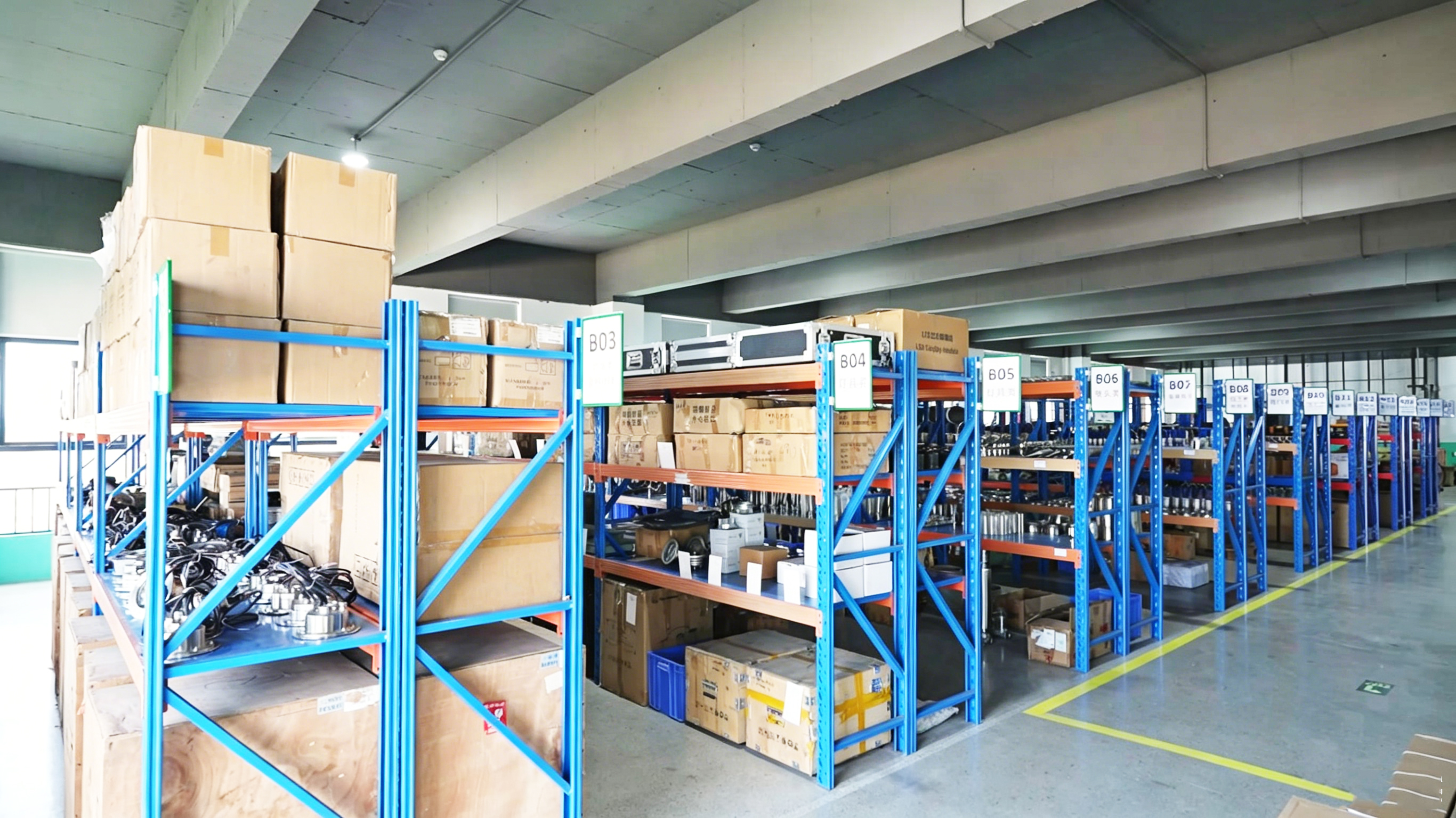
Spare-part availability is part of the compliance picture: a maintenance agreement is only credible if pumps, nozzles, luminaires and control components can be supplied after commissioning.
Request the 2026 Rainbows Fountain catalogue and compliance document set
Download the full product and project catalogue, or send your site conditions — voltage and frequency, water chemistry, installation type and destination market — and the team will return a configuration review with the matching certification documentation.
Download the 2026 Rainbows Fountain Catalogue (PDF)
Website: www.rainbowsfountain.com | Email: rainbowsfountain@163.com | Tel / WhatsApp: +8613631409487
Factory: 14th Floor, Block F Jianshe Building, No.123 Yanling Road, Tianhe District, Guangzhou, Guangdong, China
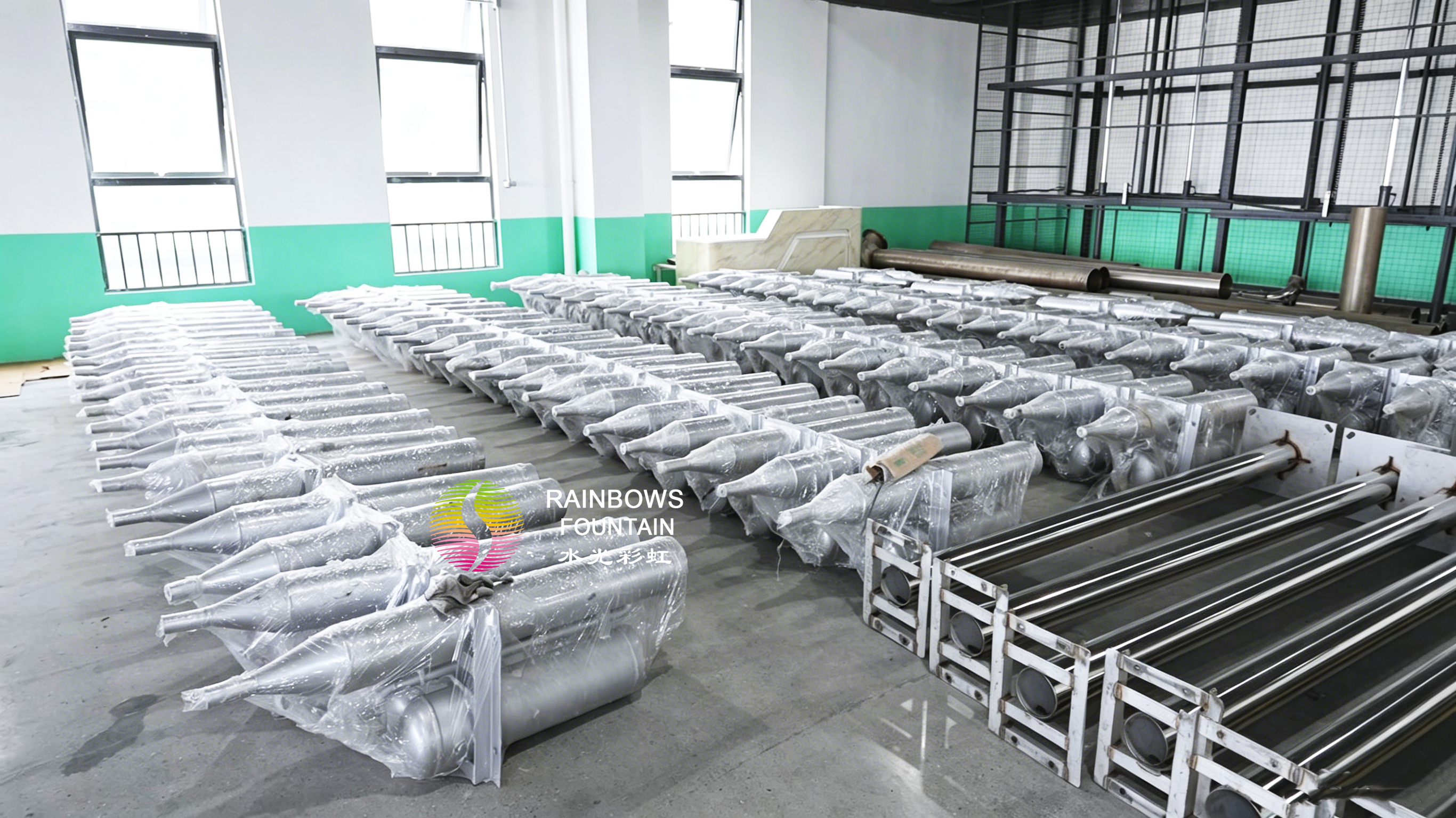
Equipment packed for export after factory testing — the point at which the certificate, the drawings and the actual shipment must all describe the same system.
Have Questions or Need More Details?
Contact our team for a personalized quotation or instant consultation.
Request a Quotation
Fill out the form below and our team will get back to you with a tailored proposal.
WhatsApp Direct Chat
Prefer to chat in real-time? Message us on WhatsApp for instant assistance & quick answers.
- Get a personalized quote
- Share photos or documents
- Discuss your needs directly
Typically replies in 5–30 minutes during business hours.