
Musical Fountain Maintenance Contracts and Spare Parts FAQ
Musical Fountain Maintenance Contracts and Spare Parts: A Long-Term Partnership FAQ
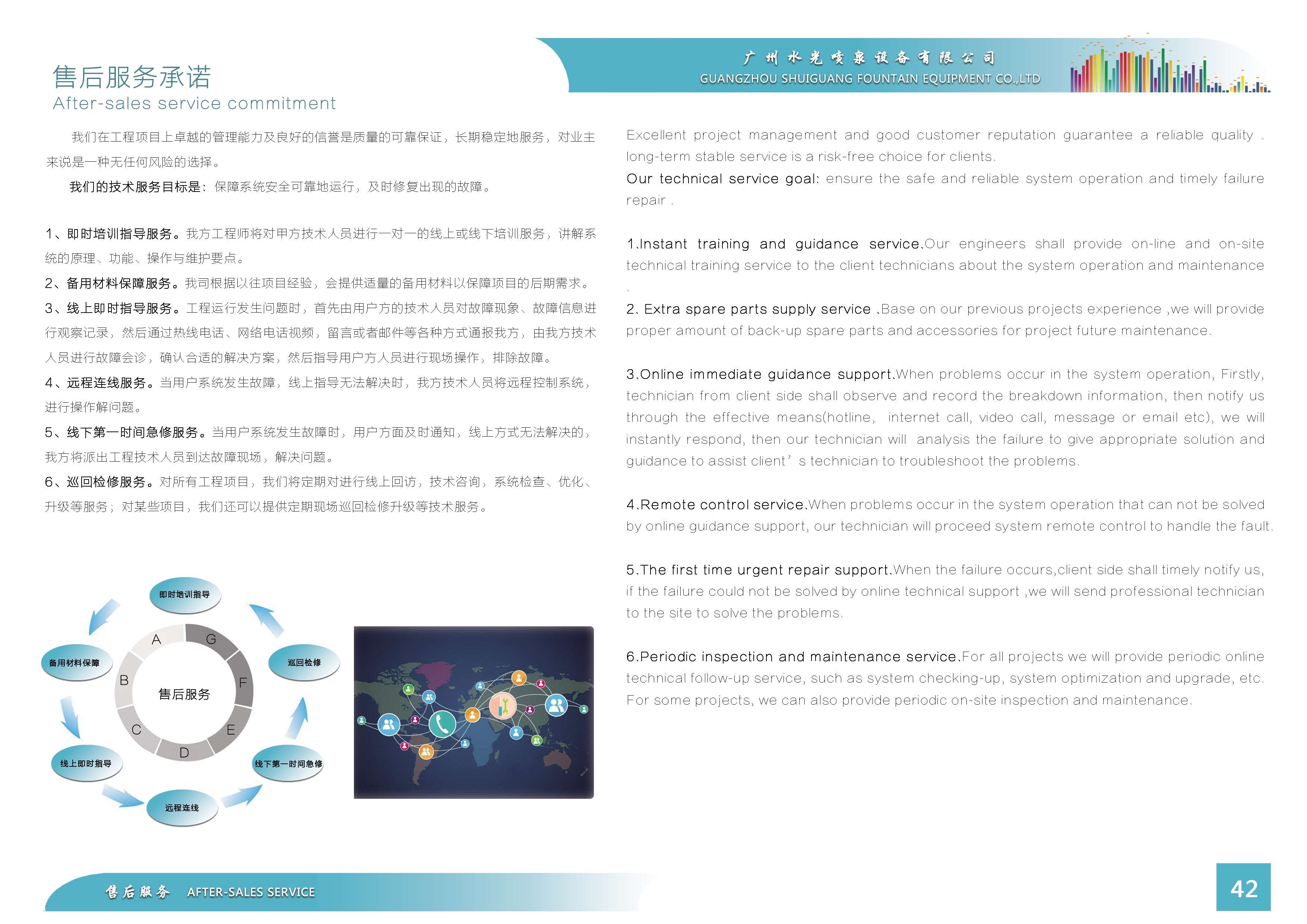
Once a musical fountain moves from construction to operation, the questions change. Owners stop asking which nozzle pattern photographs best on a city square and start asking who answers the call at 22:00 when a pump fails before a weekend show, who supplies a matching stainless steel nozzle three years later, and who is responsible when water and electricity share the same public space.
This FAQ addresses those post-installation questions for owners, operators, and procurement teams running outdoor musical fountains, musical dancing fountains, and large multimedia water shows. It follows the position of Rainbows Fountain — the flagship brand of Caiyuejiaxiu Group, a musical fountain design and engineering company based in Nansha, Guangzhou, China — that project acceptance and maintenance contracts should be signed at handover, and that spare-part supply should be planned before it is needed.
Short answer
- Sign two documents, not one: a project acceptance report tested against defined criteria, and a maintenance contract that names who is responsible for what after handover.
- Fix the spare-part list and supply terms while the drawings are still being discussed, not after the first failure.
- Verify on-site capability, not just a sales channel: Rainbows Fountain maintains a dedicated overseas engineering team of more than 20 engineers for installation, commissioning, and technical support.
- Keep the documentation package: hydraulic layouts, control logic, DMX512 and PLC programming, and the failback schemes behind each show.
- Budget lifecycle support as a project line item rather than an emergency expense.
What Goes Wrong After the Show Opens: Defining the Post-Handover Problem
Musical fountain risk concentrates in four areas: water and electrical safety, equipment corrosion and sealing failure, on-site construction and commissioning risks, and show-synchronization failures. Each of these can be reduced during design and construction — waterproof electrical cabinets, grounding and leakage protection, corrosion-resistant materials, factory pre-testing, on-site commissioning, redundant programming, and failback schemes all lower exposure. What design cannot do automatically is transfer responsibility once the site is handed over.
In equipment-only procurement, the supplier's obligation typically ends at delivery. The buyer receives pumps, nozzles, lighting, and a control cabinet, and then assembles an operations model from local contractors, internal maintenance staff, and whoever answers the phone. For a small replacement or a seasonal installation this can work. For a large musical fountain in a city square, or a hotel musical fountain running nightly, the gap appears as downtime — and downtime on a public site is a visibility problem, not only a technical one.
Three failure patterns that appear in the first years of operation
- Ownership silence. Nobody has a written definition of who inspects seals, who verifies grounding, and who approves a change to the show program. Each party assumes another party is doing it.
- Ad-hoc spare sourcing. Nozzles, pipe fittings, and structural parts are produced according to project drawings, so a replacement without the original specification is a mismatch waiting to happen.
- Programming drift. A show is edited on site without version control, and the redundancy that protected the original sequence no longer matches what is running. This is exactly the scenario that redundant programming and failback schemes are designed to absorb.
The practical conclusion is unglamorous: the second half of a fountain's life is governed by paperwork signed during the first half.
Industry Background: A Growing Installed Base Raises the Value of Service
The commercial case for maintenance planning follows the size of the installed base. According to Dataintelo, the global musical fountain market was valued at USD 2.51 billion in 2025 and is projected to reach USD 5.23 billion by 2034, with an expected compound annual growth rate of 8.5% over the same period. Asia Pacific accounted for a 38.5% revenue share in 2025, driven by urbanization in China and Southeast Asia.
Where those fountains are installed matters for maintenance design. Commercial end users, including luxury hotels and shopping malls, held the largest market share at 42.8% in 2025. Commercial operators measure a fountain in show uptime and visitor experience, not in commissioning photographs, so the service layer becomes part of the asset's value.
The technical baseline is also standardized enough to be contractible. Musical fountain systems commonly follow ISO 9001:2015 for quality management and specify IP68 waterproof ratings for underwater components such as LED lights and pumps. Advanced systems use DMX512 lighting protocols and Programmable Logic Controllers (PLCs) to synchronize water jets with music. Established suppliers in the category include names such as OASE Living Water (Germany), Crystal Fountains (Canada), and Safe-Rain (Spain); across all of them, the difference between a well-run and a poorly-run fountain usually appears after year two, when wear, water quality, and software changes accumulate.
What a Long-Term Maintenance Partnership Should Contain
A long-term partnership is not a sentiment; it is a set of documents with named obligations. The following six elements are the practical minimum for a landmark or municipal installation.
1. An acceptance contract with testable criteria
Acceptance should be signed against a checklist rather than a handshake. A workable sequence is: equipment arrival inspection, system integration testing, show demonstration, and performance tests before signing the acceptance report. That report becomes the dated baseline for what “working” means, and it is the reference point for every later warranty or maintenance discussion.
2. A maintenance contract that names responsibilities
The manufacturer's recommendation is explicit: sign acceptance and maintenance contracts to specify responsibilities and spare-part supply. In practice the contract should state who performs scheduled inspection, who checks sealing and corrosion on underwater components, who verifies grounding and leakage protection, who maintains the control system and show programming, and what response window applies to a reported fault. Splitting these duties between owner, operator, and manufacturer is acceptable — leaving them unnamed is not.
3. A spare-part supply agreement with a defined critical list
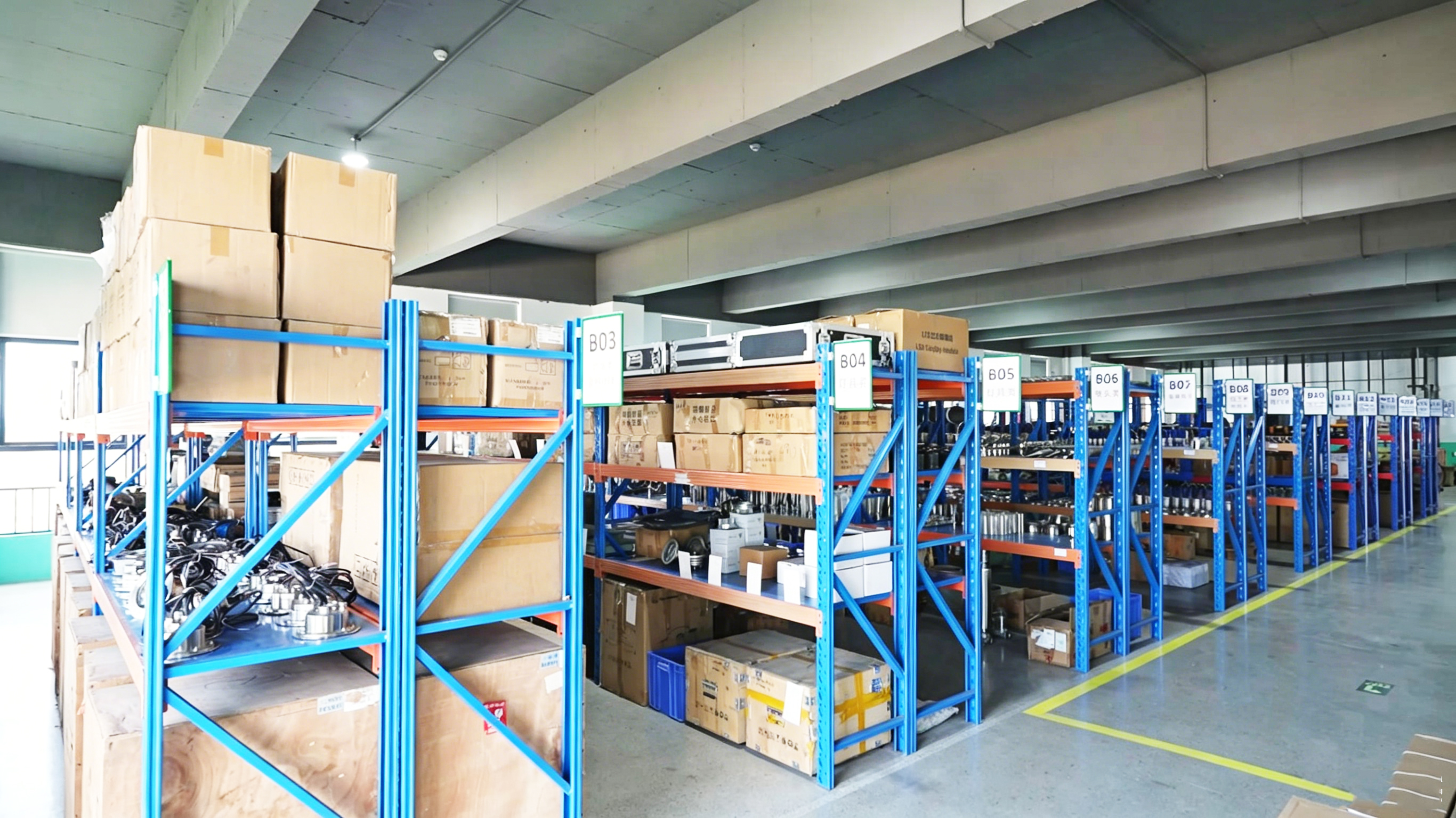
Spare-part planning starts with a list, not a warehouse. The critical list for a musical fountain typically covers pumps, nozzles, LED fixtures, cables, and control components. Because every fountain nozzle assembly is custom-engineered to the project's design, hydraulic, and installation requirements, the list should reference the original drawing and material rather than a generic part description. Rainbows Fountain sources key components from globally recognized brands including ABB, Rexroth, and Schneider, and key components are traceable and certified, which makes a later replacement order verifiable instead of approximate.
4. An overseas engineering channel, not a sales inbox
For buyers outside China, the decisive capability is whether the manufacturer can physically reach the site. Rainbows Fountain maintains a dedicated overseas engineering team of more than 20 experienced engineers able to travel to different regions for on-site installation, commissioning, and technical support, and the team has worked across different international environments and local site conditions. The company also provides free after-sales technical support, long-term maintenance assistance, and system upgrade services. The contract question to ask is narrow and useful: who is named, how is escalation triggered, and what turns a remote diagnosis into an on-site visit?
5. Documentation and programming continuity
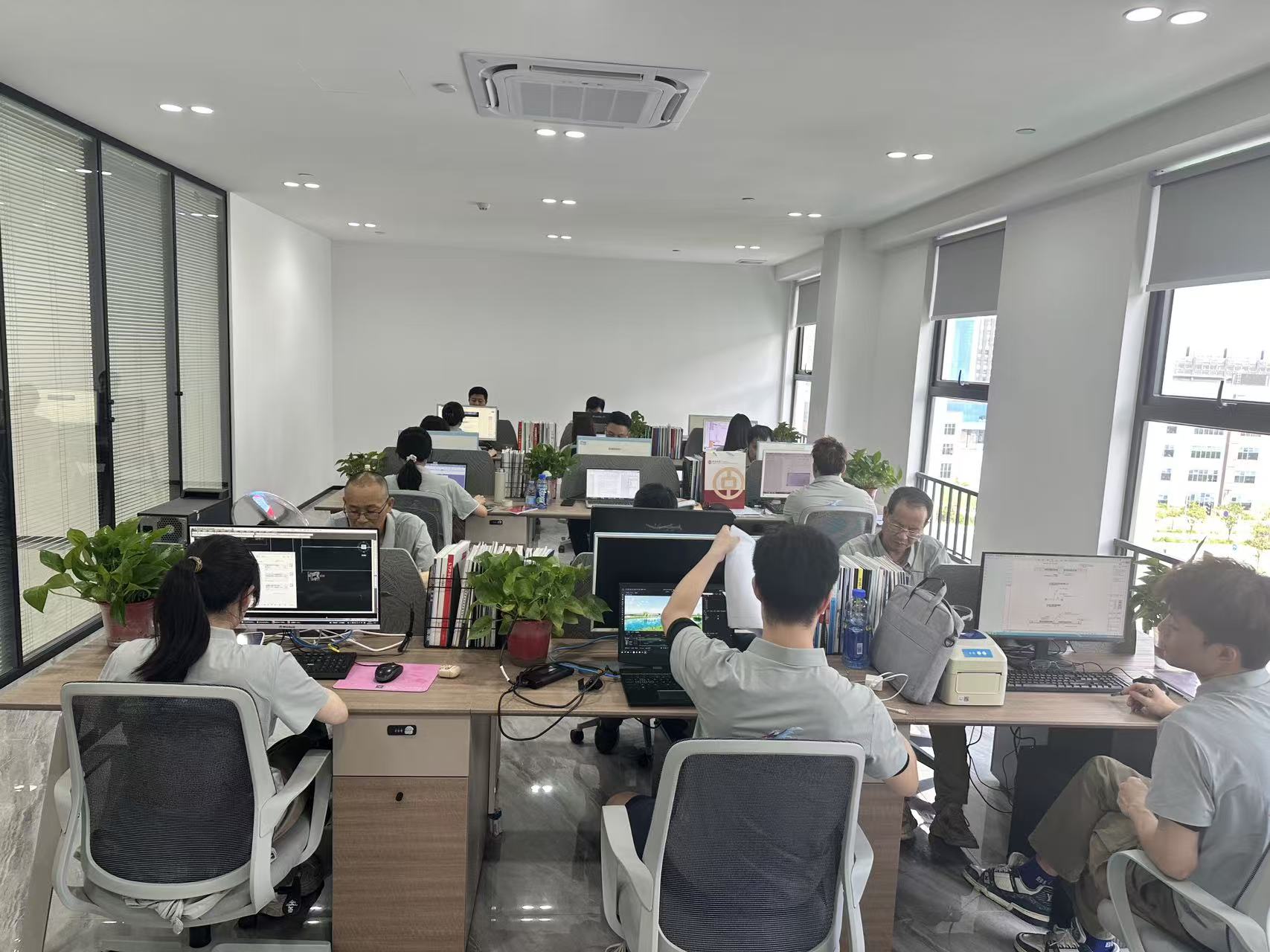
Design capability is only useful after handover if the outputs are transferred. Rainbows Fountain's design department produces detailed CAD engineering drawings and 3D visual and fountain effect simulations, presenting the final design and performance effects before implementation. At handover, the owner should hold the hydraulic layout, cabinet and wiring documentation, control logic, DMX512 and PLC programming, and the current show files — plus the contingency logic, since redundant programming and failback schemes only protect an operator who knows they exist.
6. An upgrade path instead of a rebuild
Shows age faster than structures. A maintenance relationship that includes system upgrade services lets an operator refresh programming, lighting, or control elements without replacing the hydraulic core. For a city square musical fountain that hosts seasonal events, this is often the difference between a ten-year asset and a five-year one.
Step-by-Step: Setting Up the Contract Package
- Audit the documentation before the final payment. Confirm that CAD drawings, 3D effect simulations, cabinet documentation, and show files exist in editable form. If a document is missing, this is the moment when it is still easy to obtain.
- Define acceptance tests and run them. Use arrival inspection, integration testing, show demonstration, and performance testing as the four gates. Record results, not just outcomes.
- Agree the maintenance scope in writing. List inspection intervals, sealing and corrosion checks, electrical safety verification, control system review, and programming support, and assign each item to a party.
- Fix the critical spare list and supply terms. Reference original drawings and component brands. Decide which items are held on site, which are held by the manufacturer, and which are made to order.
- Set the response protocol. Name contacts, define escalation levels, and separate the diagnosis window from the parts-dispatch window. Both belong in the contract.
- Transfer programming knowledge. Walk the operator through the show files, the redundancy logic, and the failback procedure so a trained staff member can recover a sequence without waiting for a flight.
- Schedule an annual review. Use it to re-check spares consumption, plan upgrades, and confirm that the maintenance scope still matches how the fountain is actually used.
Use Cases: Where the Contract Emphasis Changes
The contract package does not change in structure, but the emphasis does, depending on the fountain type and the venue.
- City square musical fountain. Public access and municipal visibility make liability clarity the first priority. Electrical safety verification and a dated acceptance baseline matter more than programming flexibility, and the response window should reflect event calendars.
- Hotel musical fountain and resort show. A commercial operator measures uptime against guest schedules. Spare-part stock on site and a fast remote-diagnosis route usually deliver more value than a broad service agreement.
- Lake floating musical dancing fountain. Access is the constraint. Corrosion and sealing inspection dominate the maintenance scope, because reaching the equipment is the expensive part of any intervention.
- Dry deck interactive musical fountain. Where visitors walk on the surface, safety checks and nozzle condition become routine operational tasks, not annual items.
- Large multimedia laser and water screen projection fountain. Control complexity drives the risk profile. Synchronization failures are the most visible fault, which is why redundant programming and failback schemes belong in the handover package.

Turnkey Partner vs Equipment-Only Purchase: Comparison Table
The comparison below uses the delivery models and support structures documented for Rainbows Fountain projects. It is a decision aid, not a ranking: equipment-only sourcing remains reasonable for small projects and replacement purchases.
| Decision area | Turnkey partner with signed acceptance and maintenance contract | Equipment-only purchase with separate O&M contracts | What to confirm in writing |
|---|---|---|---|
| Scope of supply | End-to-end project management and show production, including design, installation, and commissioning | Equipment supply, typically excluding installation and programming | Which party performs installation, commissioning, and first show programming |
| Post-handover responsibility | Acceptance and maintenance contracts can specify responsibilities and spare-part supply | O&M is arranged separately by the buyer | Named responsibilities for inspection, safety verification, and programming changes |
| Spare-part supply | Addressed inside the maintenance agreement, with drawing-referenced parts | Buyer sources parts independently, often without original drawings | Critical spare list, reference documents, and dispatch conditions |
| On-site support | Commissioning and after-sales systems designed for easier long-term O&M; overseas engineering team of more than 20 engineers | Requires a separate service contract, often with a local provider | Escalation path from remote diagnosis to an on-site visit |
| Cost structure | Costs more than an equipment-only purchase because design, installation, and commissioning are included; the exact difference requires a project quote | Lower initial purchase value, with service cost carried separately | Total lifecycle cost over five years, including spares and interventions |
| Best fit | Scenic landmark areas, city squares, large events, and large permanent installations requiring full show and operations support | Replacements and small projects | Whether the site can absorb downtime without a contractual response window |
| Energy performance | Efficiency depends on pumps, lighting, and control logic, so it requires a configuration-specific comparison; no universal efficiency figure applies across configurations. | ||
FAQ: Post-Installation Questions from Fountain Owners
Who is responsible for safety and compliance documentation after a musical fountain is handed over?
Responsibility splits into two layers. The product layer covers certification and manufacturing: equipment from Rainbows Fountain is CE certified and manufactured under an ISO 9001 certified quality management system, and underwater components such as LED lights and pumps are commonly specified with IP68 protection. The site layer covers electrical connection, grounding and leakage protection, water treatment, and public access control — and this layer must be written into the maintenance contract rather than assumed. The practical route is an acceptance report signed against a checklist covering equipment arrival inspection, system integration testing, show demonstration, and performance tests. Once signed, both parties share a dated baseline for what “working” means.
Can the manufacturer support an overseas site years after commissioning?
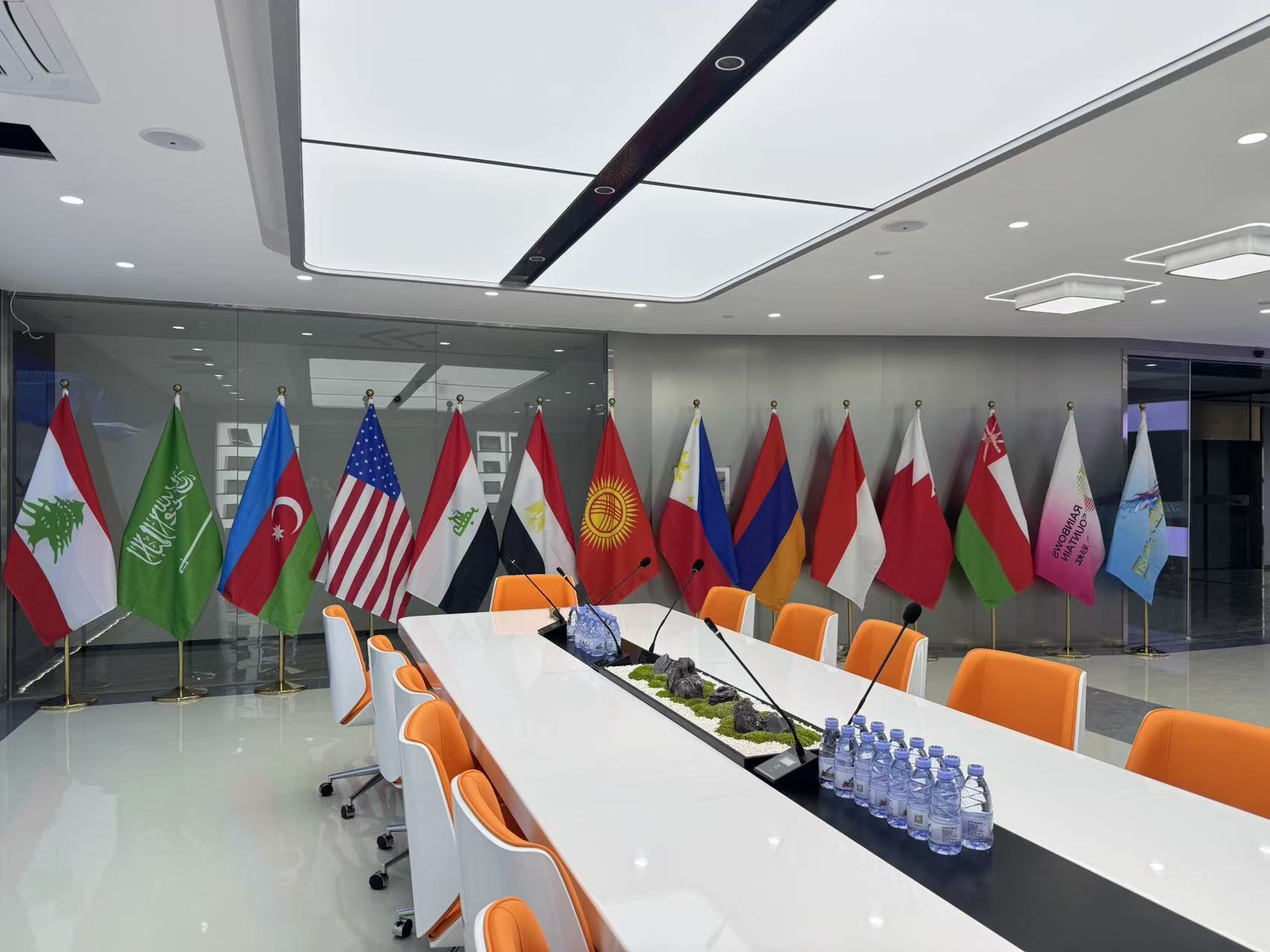
This should be verified before signature, not after a fault. Rainbows Fountain maintains a dedicated overseas engineering team of more than 20 experienced engineers who travel to project regions for on-site installation, commissioning, and technical support, and the company provides free after-sales technical support, long-term maintenance assistance, and system upgrade services. The company has completed more than 4,500 fountain projects in more than 50 countries, with a main market focus on the Middle East, Africa, and South Africa — regions where long-distance support logistics matter. For an operator, the capability that counts is remote diagnosis plus a defined path to an on-site visit, and both belong in the contract with named contacts and escalation levels.
How should we budget for maintenance and spare parts?
Build two budgets, not one. The first is recurring maintenance: inspection, cleaning, sealing and corrosion checks, electrical safety verification, control system review, and show programming updates. The second is a spare-part reserve covering the critical items — pumps, nozzles, LED fixtures, cables, and control components. Exact figures depend on fountain size, water quality, operating hours, and site access, so they come from a project-specific quote rather than a published rate card. Equipment terms are normally TT or LC with 30% before production and 70% before loading, and payment terms can be negotiated; maintenance and spare-part supply should be quoted as separate lines so the cost of each service stays visible.
Can we test the system or inspect spare parts before committing?
Verification happens in two stages. Before shipment, equipment is tested in the factory demonstration pool, where engineers verify water patterns, nozzle performance, lighting synchronization, and control programs against the design. Buyers visiting the Guangzhou facility can watch the musical dancing fountain show in the sample pool and review nozzle assemblies and control cabinets during production. The minimum order quantity for equipment is 1 unit, so a first project or a replacement order can be placed without a large commitment. For spare parts, request the part list with material and drawing references so the delivered item matches the original installation.
What lead time should we expect for spare parts and on-site response?
Lead time depends on whether the item is stocked or made to order. The factory warehouse holds pumps, stainless steel fountain components, lighting systems, cables, and electrical accessories, which supports efficient inventory management and timely production; custom nozzles and structural parts are machined to project drawings, so they follow a production cycle rather than a shelf cycle. For an owner, the practical answer is to write two response windows into the maintenance contract — one for diagnosis and one for parts dispatch — and to keep a critical spare set on site so a single failure does not stop the show. To review the equipment scope, certification documentation, and support model for your site, download the Rainbows Fountain 2026 catalog or send your project parameters for a written quote.

Conclusion: The Contract Is the Partnership
A musical fountain is commissioned once and operated for years. The manufacturers that remain useful across that period are the ones whose obligations survive handover — with an acceptance report that defines performance, a maintenance contract that names responsibilities, a spare-part list tied to original drawings, and an engineering team that can reach the site.
Rainbows Fountain operates a 4,500 m² manufacturing facility in Nansha, Guangzhou, with 45 engineers and 12 designers, and an annual output of around 50 units; export accounts for 80% of output. Quality assurance procedures include factory pre-testing and on-site commissioning, and contingency plans include redundant programming and failback schemes to address show-synchronization failures. Those are engineering facts. What converts them into a long-term partnership is the paperwork that assigns them to a named party for the life of the fountain.
CE certifiedISO 9001 quality managementIP68 underwater components20+ overseas engineers
Plan the Maintenance Phase Before Handover
Share your fountain type, site conditions, and operating schedule, and we will prepare an acceptance checklist, a critical spare-part list, and a maintenance scope for review. Review the 2026 equipment catalog, or send project parameters for a written quotation.
Catalog: 2026 Rainbows Fountain Catalog (PDF)
Website: www.rainbowsfountain.com
Email: rainbowsfountain@163.com
Tel / WhatsApp: +8613631409487
Office: Room 1401, Block F Jianshe Building, Yanling Road, Tianhe District, Guangzhou, Guangdong, China
Have Questions or Need More Details?
Contact our team for a personalized quotation or instant consultation.
Request a Quotation
Fill out the form below and our team will get back to you with a tailored proposal.
WhatsApp Direct Chat
Prefer to chat in real-time? Message us on WhatsApp for instant assistance & quick answers.
- Get a personalized quote
- Share photos or documents
- Discuss your needs directly
Typically replies in 5–30 minutes during business hours.