
Musical Fountain Show Failures: Redundant Programming & Failback
Musical Fountain Show Failures: Redundant Programming & Failback
A large outdoor musical fountain show rarely stops because the water equipment fails. It stops because the show sequence loses its reference — a controller drops out, a sensor triggers, a communication link breaks — and nothing has been prepared to take over. Redundant programming plus a defined failback scheme is the engineering answer: the show switches to a pre-approved alternative sequence instead of going dark in front of an audience.

Cover: at landmark scale, a control fault is not a maintenance ticket — it is a cancelled performance. Image: Rainbows Fountain.
Rainbows Fountain (Guangzhou Shuiguang Fountain Equipment Co., Ltd.), the flagship brand of Caiyuejiaxiu Group, is a musical fountain design and engineering company based in Nansha, Guangzhou, Guangdong, China. Founded in 2012, the company has delivered more than 4,700 fountain projects in over 50 countries. Across those projects, the questions that decide whether a show survives its first season are rarely about nozzle height. They are about what happens in the ninety seconds after something goes wrong.
This article examines one failure class in detail — loss of show synchronization in large outdoor musical fountains — and explains how contingency planning with redundant programming and a failback scheme keeps a multimedia water show running. It also covers the risk controls that must sit around that scheme: waterproof electrical cabinets, grounding and leakage protection, corrosion-resistant materials, factory pre-testing and on-site commissioning. It closes with the commercial instrument most buyers underuse: acceptance and maintenance contracts that fix responsibility for response times and spare-part supply.
Problem Definition: What Counts as a Musical Fountain Show Failure
A musical fountain show failure is any event in which the delivered performance no longer matches the approved programme — music, water choreography, lighting, laser and projection — or stops entirely before the scheduled end of the run. Three classes account for most on-site incidents on large outdoor systems.
- Sequence loss. The control system is alive, but the show file, cue list or media timeline has lost its reference to the audio, so jets fire late, out of order, or at the wrong height.
- Control-layer failure. A PLC, a DMX512 node, the industrial PC or a communication path stops responding, and the show halts mid-sequence with no defined next state.
- Environmental or electrical interruption. Wind, water level, moisture ingress or an earth-leakage event forces a stop, and the system has no pre-agreed way to resume or degrade gracefully.
Of the three, sequence loss is the most visible and the least expensive to prevent, because it is solved at the programming and commissioning stage rather than by adding mechanical equipment. It is also the class that buyers most often leave out of the specification, because it does not appear on a component list.
What failback means in fountain engineering
Failback is the planned ability of the show control system to move from the primary show sequence to a pre-approved alternative — a shortened show, a slow-cycle water programme, or a safe default state — without stopping the fountain and without an engineer intervening on site. It differs from a backup. A backup replaces a component after it has failed; failback keeps the performance running while that replacement is arranged.
In a large musical fountain, failback is only credible if the fallback content was written, tested and signed off before opening night. A fallback invented on site during a fault is not a contingency plan — it is improvisation, and it usually produces a pool of water with the lights on.
Industry Background: Why Show Reliability Became a Procurement Question
Market data points to more programmed content per project, not simply more fountains. Dataintelo values the global musical fountain market at USD 2.51 billion in 2025 and projects USD 5.23 billion by 2034, at a compound annual growth rate of 8.5%. Asia Pacific accounted for a 38.5% revenue share in 2025, driven by urbanization in China and Southeast Asia, while commercial end users — including luxury hotels and shopping malls — held the largest share at 42.8%.
The control layer is expanding on its own trajectory. SNS Insider valued the music fountain control system market at USD 1.34 billion in 2024, with a projected USD 2.89 billion by 2032. Each increment of that growth represents more cues, more media layers and more devices that must agree with each other in real time.
Scale explains the risk. Advanced musical fountains use DMX512 lighting protocols and programmable logic controllers to synchronize water jets with music, a widely documented technical standard. Rainbows Fountain’s Big O Show in Kazakhstan — a floating steel sculpture and multimedia water show on the Ishim River in Astana — uses 2,000 pieces of DMX512 digital signal control equipment and more than 1,000 stainless steel pumps, with spray height reaching above 100 m and performance layers that include water-screen film, laser, fire and music. At that density of devices and media, one unmanaged fault does not produce a maintenance ticket. It produces a cancelled show and a crowd at the gate.
Standards already point in this direction without fully covering it. Musical fountain systems commonly follow ISO 9001:2015 for quality management and IP68 waterproof ratings for underwater components such as LED lights and pumps. Both are essential, and neither, on its own, requires the show to keep running. That is precisely why the redundancy layer has to be written into the buyer’s specification rather than assumed.
Detailed Solution: The Redundancy Stack Behind an Uninterrupted Show
Redundancy in a musical fountain is not a single device. It is a stack of decisions running from the show file down to the terminal block. Rainbows Fountain applies it as a configured layer set across musical dancing fountains, multimedia water shows, water screen projection systems and large outdoor installations, rather than as an optional extra to be added after the design freeze.
1. Redundant show programming: two paths, both written
The programming layer is where failback begins. Fountain programming is customised to music rhythm, local culture, festival themes, branding requirements, tourist attractions, government ceremonies and opening events — meaning a show is never one generic sequence, and therefore a single corrupted or mismatched file can take an entire programme offline. The countermeasure is to commission more than one path: a full primary show, at least one approved fallback sequence that can run end-to-end from the same control system, and a safe default water programme for the case where media playback is unavailable but pumps, valves and lighting are healthy.
Because the system operates in programmable show mode with scheduled runs, the fallback also has a scheduling role. A show that restarts into a defined state after a controller event — rather than into a blank pool — is what allows a city square fountain to keep its nightly slot without an operator being called out.
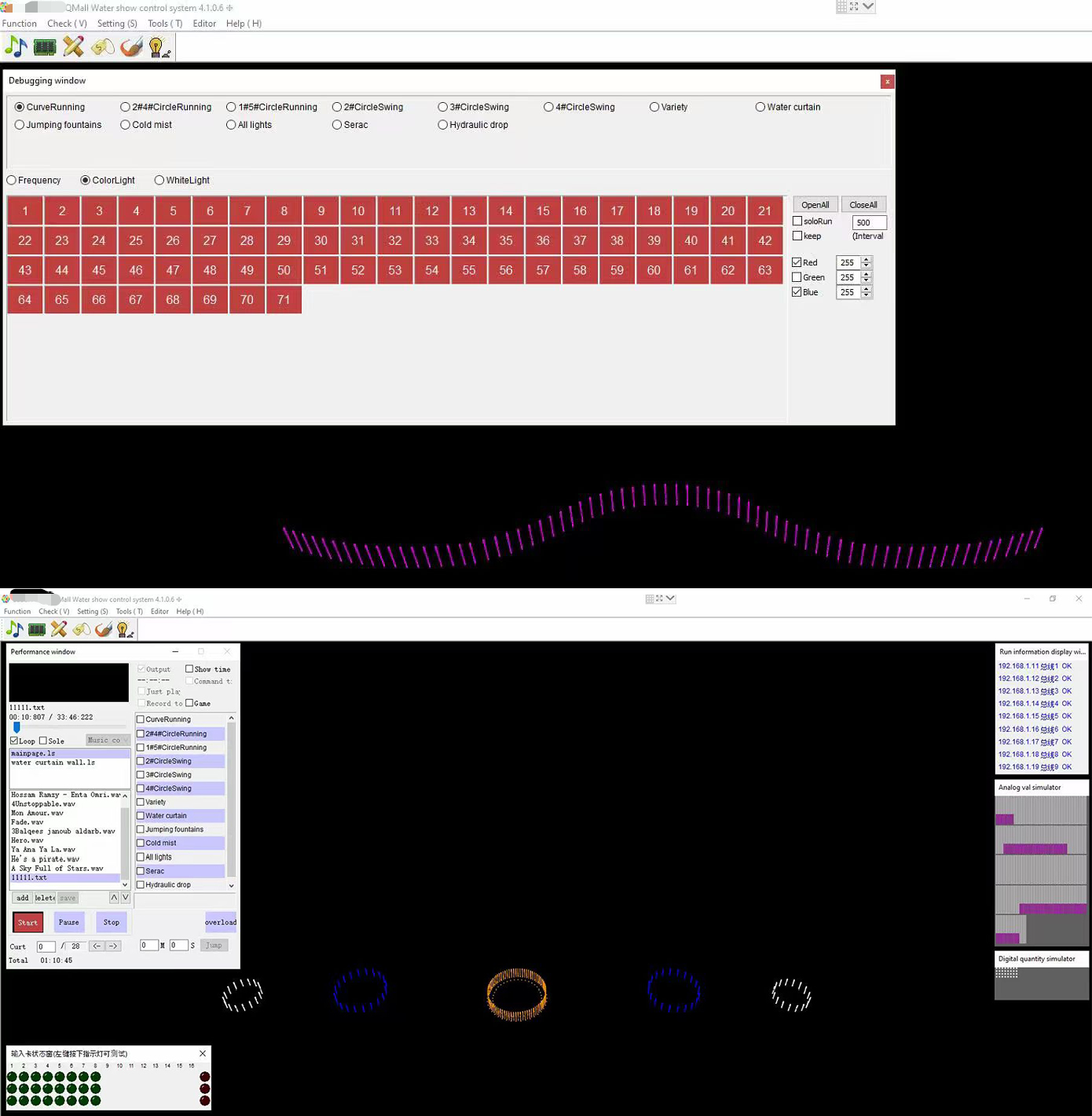
Show programming is customised to music rhythm, cultural themes and event requirements — and a second, approved sequence is what makes failback possible. Image: Rainbows Fountain.
2. Failback logic at the control layer
Failback only works if something is watching. In a Rainbows Fountain system, DMX512 and PLC intelligent linkage handle device-level synchronisation, an industrial PC with control software holds the show timeline, and remote monitoring provides fault visibility without a site visit. Time scheduling governs when sequences start, and the fallback sequence is treated as a first-class schedule entry rather than an emergency file.
The practical design rule is that every credible fault has a named next state: loss of heartbeat from the primary controller hands over to the fallback sequence; loss of media playback drops to the default water programme; an interlock event ends the sequence cleanly and returns the system to a known restart condition. Buyers should ask for that mapping in writing, because it is the difference between a system that degrades and a system that stops.
3. Environmental interlocks that stop a show safely
Wind speed sensors and water level protection are listed among the control modes of a properly specified musical fountain. Their job in a failback context is not only safety. It is predictability: an interlock that ends a sequence gracefully and hands control back to a defined restart state lets the next scheduled run proceed normally, while an uncontrolled stop often leaves pumps, valves and lighting in inconsistent states that require manual recovery.
4. Waterproof electrical cabinets, grounding and leakage protection
Most show interruptions that look like software faults originate in the electrical path. Waterproof electrical safety protection is a stated special requirement for outdoor pool, lake and dry-deck installations, and it is delivered through three things: IP68 protection for underwater components, control cabinets that are properly sealed and correctly rated for the site, and grounding plus leakage protection designed for a wet public environment.
Control cabinet quality is verifiable rather than assumed. Each fountain control cabinet is wired, labelled and subjected to comprehensive electrical testing before delivery, with functional inspections that verify PLC programming, circuit safety, communication and synchronized control of pumps and lighting equipment. For an overseas buyer, that test record is the earliest hard evidence that the failback path will actually execute on site.
5. Corrosion-resistant materials that keep performance stable
Synchronization is also a mechanical question, because a show that drifts out of alignment over months is failing slowly. Structures and nozzle assemblies are fabricated in SS304, SS316 or SS316L, with saltwater treatment applied where the site requires it. Precision CNC machining of nozzles, fittings and structural parts, controlled welding of stainless steel pipes and flanges, and polishing of finished components all protect the hydraulic behaviour that the programme was written against. When a nozzle pattern changes, the cue that looked correct in the factory no longer reads correctly on site.

Welded stainless steel structures preserve hydraulic behaviour over years of outdoor operation — a slow-drift defence against show desynchronization. Image: Rainbows Fountain.
6. Factory pre-testing: run the fallback, not only the premiere
Every system is tested in the factory demonstration pool before shipment, where engineers verify water patterns, nozzle performance, lighting synchronization and control programs. All equipment is 100% tested before loading, and factory inspection or third-party inspection through bodies such as SGS, TUV and INTEK can be arranged.
The common mistake is to test only the primary show. A fallback sequence that has never been executed under real hydraulic conditions is a document, not a capability. Buyers should require the fallback to be demonstrated in the same test session as the primary programme, and should ask for the recorded evidence.
7. On-site commissioning and operator handover
Commissioning is where failback becomes operational. Rainbows Fountain maintains an overseas engineering team of more than 20 experienced engineers who travel for installation, commissioning and technical support, and the handover scope includes operator training and maintenance manuals alongside a spare parts package. The company provides a two-year warranty and recommends signing warranty and maintenance agreements that specify response and spare-part strategies — a recommendation that matters more for show-critical systems than for almost any other landscape equipment.
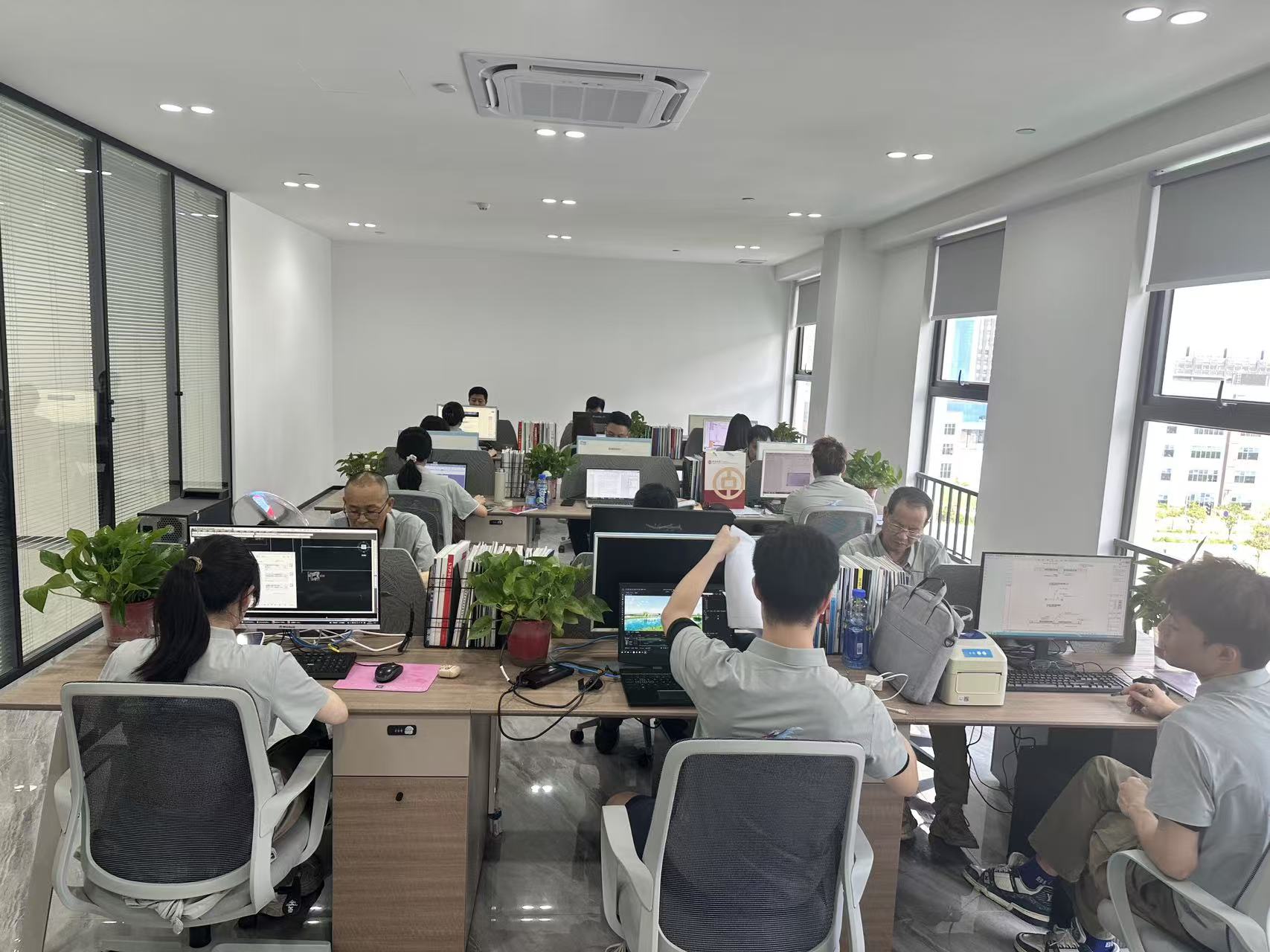
Design and engineering work defines the control architecture, the fallback mapping and the commissioning scope before any equipment is built. Image: Rainbows Fountain.
Step-by-Step: Specifying Failback from Brief to Handover
The following sequence is the practical order in which redundancy should be locked down. Each step produces something the buyer can hold, review and reject.
Use Cases: Where Failback Pays for Itself
City square musical fountains with fixed nightly schedules
A city square musical fountain has a fixed start time and a fixed audience. Every minute of downtime is public. Programmable show mode with scheduled runs, combined with an approved fallback sequence, allows the plaza to keep its slot when the full multimedia package is unavailable.
Lake floating and river installations
Floating installations face wind, water level variation and access constraints that make an on-site engineer visit slow. Remote monitoring plus interlock-driven failback keeps the installation producing a defined show until service personnel arrive — the same logic applied on the floating Big O Show in Astana, where 2,000 DMX512 control devices and more than 1,000 stainless steel pumps operate in an open river environment.
Recurring festival and season programmes
Shows that return every year accumulate programming far beyond their original design. Rainbows Fountain has served as upgrade partner for the Sheikh Zayed Festival light and fountain project from 2022 through 2026, delivered the 2019 Riyadh Season large musical fountain show that the client chose to upgrade again in 2024, and has supported Brazil’s year-end and New Year water dance show since 2023. In each case the annual upgrade cycle adds cues; the redundancy layer is what stops that accumulated complexity from becoming fragility.
Opening ceremonies and one-off events
For a stage water fountain delivered for the opening ceremony of the 15th National Games of China, there was no second performance to fall back on. Ceremonial and broadcast-linked shows need the fallback designed into the first rehearsal, not added after the technical run.
Hotel, commercial and park landscapes
Hotel musical fountains, park landscape musical dancing fountains and dry deck interactive installations run on hospitality schedules rather than municipal ones. Their exposure is reputational rather than civic, but the requirement is identical: the show must not be visibly broken during guest hours.
Comparison: Failure Modes and the Control Layers That Answer Them
The table below maps the failure classes described above to the countermeasure in the redundancy stack and to the point in the project where that countermeasure is actually verified. It is a specification aid, not a ranking of systems.
| Failure mode | How it shows up during a performance | Control-layer countermeasure | Verification point |
|---|---|---|---|
| Show and audio desynchronization | Jets fire late, cues drift, lighting separates from music | DMX512 and PLC synchronized control, plus a pre-approved fallback sequence | Factory demonstration pool test before shipment |
| Primary controller or industrial PC dropout | Show stops mid-sequence; pool goes static with lights on | Failback handover to an alternate sequence or default water programme; remote monitoring for fault visibility | Control cabinet electrical testing and PLC programming function check before delivery |
| Wind or water-level event | Spray drift over the audience; pumps running without adequate water level | Wind speed sensor and water level protection integrated into the control mode | On-site commissioning and deliberate interlock rehearsal |
| Moisture in the electrical path | Tripping, terminal corrosion, intermittent faults | IP68 underwater components, waterproof electrical cabinets, grounding and leakage protection | Comprehensive electrical testing of cabinets before shipment; inspection on arrival |
| Corrosion of structure and nozzles | Jet patterns drift, surface staining, fittings seize | SS304 / SS316 / SS316L fabrication with saltwater treatment where required | CNC machining, welding and polishing inspection in the workshop |
| Spare-part gap in peak season | Extended downtime while a single part is sourced internationally | Spare parts package plus a warranty and maintenance agreement with a defined response and spare-part strategy | Handover documentation and after-sales support scope |
Acceptance and Maintenance Contracts: Fixing Responsibility Before Opening Night
Redundancy that is not written into a contract is a courtesy, not a commitment. Two documents carry the weight: an acceptance protocol that proves the failback exists, and a maintenance agreement that keeps it valid as the show evolves.
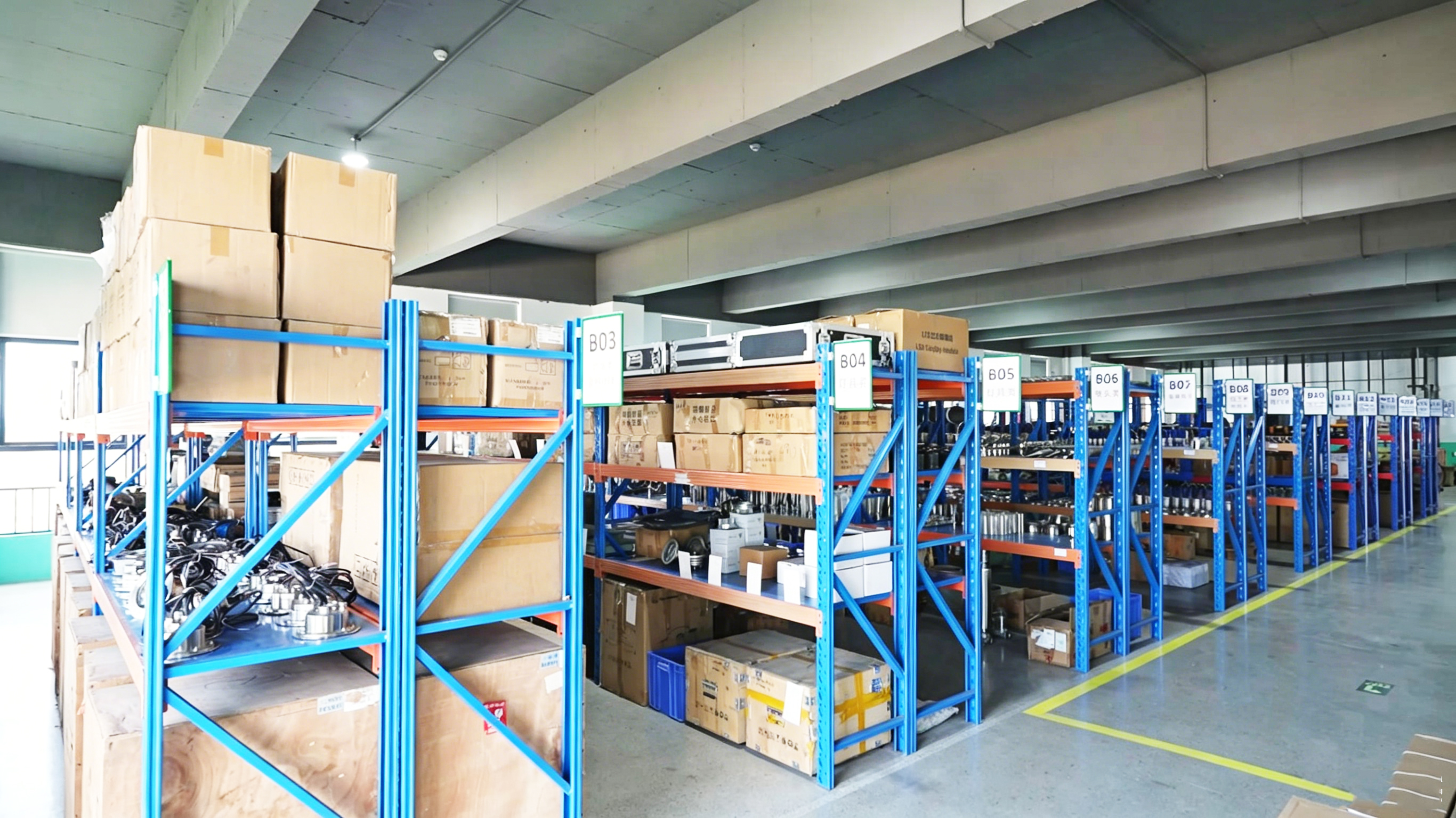
A spare parts package is only useful if the maintenance agreement says who holds it, who ships it and how fast. Image: Rainbows Fountain.
The acceptance protocol should require, as a minimum:
- Demonstrated fallback. The fallback sequence and the default water programme are executed on site, in front of the client, and signed off — not merely described in a manual.
- A written fault-to-next-state mapping. Each credible fault, including controller dropout and interlock events, is matched to a defined system response.
- Ownership of show files. The client confirms who holds the programme source files, the control software configuration and the programming documentation.
- Electrical and test records. Cabinet test records, PLC programming verification and any third-party inspection report are handed over as part of the package.
- Operator training. Training covers fallback activation and recovery, not only normal show operation.
The maintenance agreement should then specify the response expectation, the spare-part strategy and the recurring upgrade scope. Rainbows Fountain provides a two-year warranty and recommends signing warranty and maintenance agreements that specify exactly these points, because a landmark show typically runs for years and is upgraded repeatedly, as the Sheikh Zayed Festival, Riyadh Season and Brazil projects demonstrate. Each upgrade changes the programme; the agreement is what keeps the fallback current.
Frequently Asked Questions
Which certifications and protection ratings should an outdoor musical fountain control system carry?
Three layers matter. Quality management should follow ISO 9001:2015, which is the standard musical fountain systems commonly adhere to. Underwater components such as LED lights and pumps should carry IP68 waterproof ratings. Equipment and components should be CE certified, with ROHS and TUV certification also relevant for export projects, and third-party inspection through bodies such as SGS, TUV or INTEK can be requested before shipment. Rainbows Fountain manufactures all fountain equipment and components under an ISO 9001 certified quality management system with CE certification, and sources key components from globally recognized suppliers including ABB, Rexroth and Schneider. Buyers should confirm that the certification scope matches the equipment actually supplied, and that waterproof electrical safety protection is explicitly stated for the site.
How does redundant programming keep a musical fountain show running when the main controller fails?
It replaces a single show path with two prepared paths. The primary show sequence runs on an industrial PC with control software and drives water, lighting, laser and projection through DMX512 and PLC intelligent linkage; an approved fallback sequence and a default water programme sit alongside it. When the primary controller stops responding, the system hands over to the fallback instead of halting, and remote monitoring gives the operator visibility of the fault without a site visit. The scheme only works if the fallback has been tested: Rainbows Fountain verifies control programmes and lighting synchronization in the factory demonstration pool before shipment, and the fallback should be rehearsed again during on-site commissioning and covered in operator training.
Does redundant programming add significant cost to a musical fountain project?
Cost in a musical fountain project is determined by project scale and the level of customization, and redundancy is priced as part of that scope rather than as a separate product line. In most cases the added effort sits in programming, factory testing and documentation hours, together with the commissioning rehearsal — not in duplicated water equipment, because the fallback runs on the same pumps, valves, nozzles and lighting. The commercially decisive comparison is against the cost of a cancelled performance at a city square, festival or hotel, which is why redundancy should be a named line item in the quotation rather than an unstated assumption. Minimum order quantity is one unit, and production lead time is 15–45 days depending on project scale and customization.
Can we review and test the show programme before shipment?
Yes. Fountain equipment is tested in the factory demonstration pool before shipment, where engineers verify water patterns, nozzle performance, lighting synchronization and control programmes to confirm the system operates as designed. Clients visiting the factory can watch the musical dancing fountain show in the sample pool and review nozzle types, water effects and programmable performances before production. All equipment is 100% tested before loading, and factory inspection or third-party inspection can be arranged. Buyers specifying a failback scheme should ask for the fallback sequence to be demonstrated in the same session, and for the recorded evidence to be supplied with the test documentation.
How long does a project take, and who supports the show after handover?
Production lead time is 15–45 days, with detailed lead time depending on project scale and customization. Installation and commissioning are supported by an overseas engineering team of more than 20 experienced engineers who travel to site, and handover includes operator training, maintenance manuals and a spare parts package. A two-year warranty applies, and Rainbows Fountain recommends signing a warranty and maintenance agreement that specifies response and spare-part strategies. That support model sits behind more than 4,700 completed fountain projects in over 50 countries, ranging from small city squares to large water features. For a city square project with a fallback requirement, the practical next step is to send site conditions, show schedule and audience exposure to the engineering team at rainbowsfountain@163.com or via WhatsApp on +8613631409487, and request a control architecture proposal with the fallback scope written in.
Conclusion: Design the Failure Before You Design the Premiere
Show-synchronization failure is a predictable problem with a documented answer. The answer is not a more expensive pump; it is a second programmed path, a control layer that knows what to do when something stops responding, environmental interlocks that end a sequence cleanly, an electrical and material envelope that does not drift, a factory test that includes the fallback, and a commissioning rehearsal that proves it. Wrapped in an acceptance protocol and a maintenance agreement with a spare-part strategy, that stack is what keeps a large outdoor musical fountain show running night after night — and what separates an engineered performance from a demonstration.
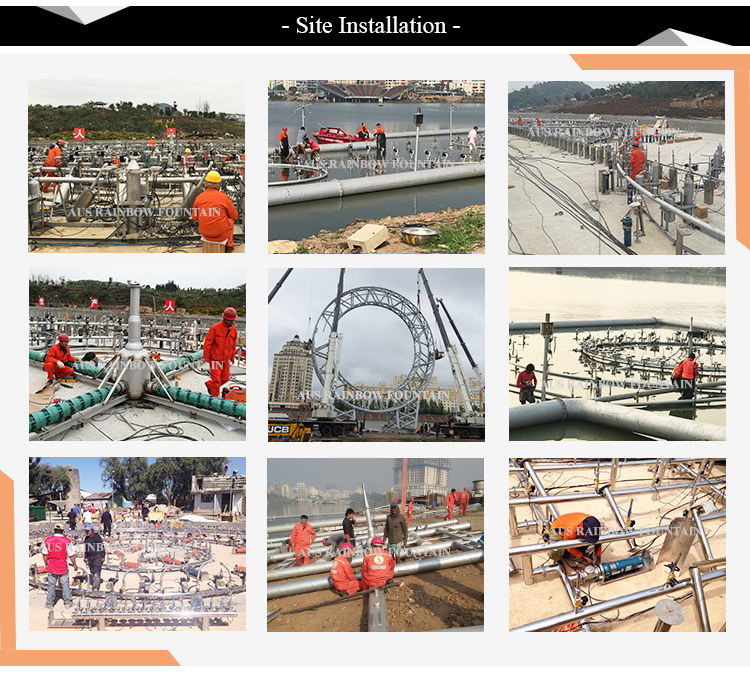
On-site commissioning is where the fallback is rehearsed and handed over to the operator. Image: Rainbows Fountain.
Plan the Fallback Before You Plan the Premiere
Rainbows Fountain designs, manufactures, factory-tests and commissions musical fountain and multimedia water show systems for city squares, parks, hotels, lake and river installations, and event stages. Share your site conditions, show schedule and audience exposure, and the engineering team will outline a control architecture with a written fallback sequence, a factory test plan and a commissioning scope.
Email: rainbowsfountain@163.com | WhatsApp: +8613631409487 | Web: www.rainbowsfountain.com
Download the 2026 Rainbows Fountain brochure (PDF): 2026 Rainbows Fountain Product & Project Brochure
Market figures cited in this article are attributed to Dataintelo (global musical fountain market, 2025–2034) and SNS Insider (music fountain control system market, 2024–2032). Project references are drawn from Rainbows Fountain delivery records.
Have Questions or Need More Details?
Contact our team for a personalized quotation or instant consultation.
Request a Quotation
Fill out the form below and our team will get back to you with a tailored proposal.
WhatsApp Direct Chat
Prefer to chat in real-time? Message us on WhatsApp for instant assistance & quick answers.
- Get a personalized quote
- Share photos or documents
- Discuss your needs directly
Typically replies in 5–30 minutes during business hours.