
Solving the 'Looks Good on Paper, Fails On-Site' Problem in Musical Fountain Projects
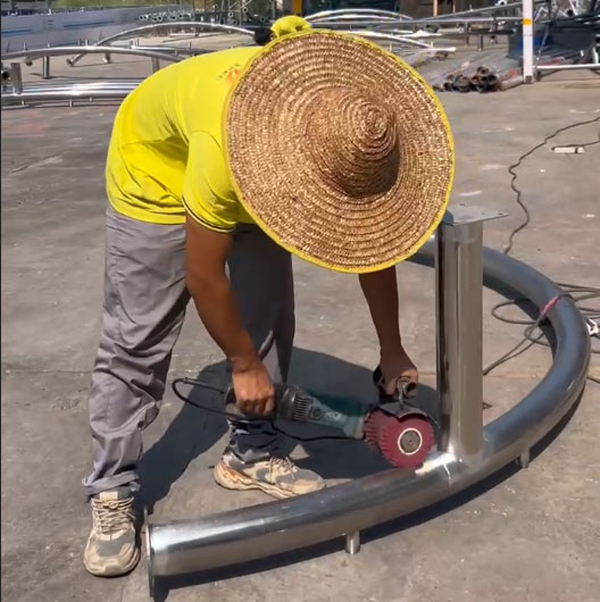
Surface finish on stainless steel fountain components is part of the corrosion-protection strategy, not a cosmetic detail. Image: Rainbows Fountain.
A large musical fountain almost never fails because the render was wrong. It fails after handover, when water reaches an electrical cabinet that was never sealed for its installed position, when a wetted bracket corrodes faster than the maintenance cycle, or when the musical fountain show loses synchronization in front of a public audience. The 'looks good on paper, fails on site' problem is not an artistic problem and it is usually not a pump-sizing problem. It is an execution and verification problem.
The decision-stage answer is to buy protection rather than promises: waterproof electrical cabinets, grounding and leakage protection, corrosion-resistant stainless steel for wetted parts, redundant programming with explicit failback schemes, factory pre-testing and on-site commissioning, each written into the scope, the test record and the acceptance document. Rainbows Fountain (Guangzhou Shuiguang Fountain Equipment Co.,Ltd) is a musical fountain design and engineering company based in Nansha, Guangzhou, China, delivering turnkey musical fountain design projects that cover concept design, technical planning, equipment manufacturing, overseas installation and commissioning, and final delivery. This article defines the failure modes, explains the industry context behind them, sets out the four engineering control layers, and provides the verification gates a buyer can hold a supplier to.
The short answer — five items to specify and verify before contract award:
- Waterproof electrical cabinets plus grounding and leakage protection for every power and control enclosure.
- Corrosion-resistant stainless steel for wetted structures, nozzles and fittings.
- Redundant programming with a documented failback scheme for the show.
- Factory pre-testing of water patterns, nozzle performance, lighting synchronization and control programs.
- On-site commissioning by the supplier's own engineering team, followed by a written acceptance and maintenance agreement covering responsibilities and spare-part supply.
What 'Looks Good on Paper, Fails On-Site' Actually Means
In musical fountain projects, the phrase describes the gap between a design package that is complete on paper and a delivered system that cannot hold its performance under real site conditions. The design package typically contains CAD drawings, 3D visual and effect simulations, equipment lists and a show concept. None of those documents can demonstrate what happens when a cabinet sits next to a splash zone, when a wetted fitting is exposed to site water chemistry, or when the control path drops a cue mid-show.
The failure modes are well documented on the engineering side of the industry. A musical fountain manufacturer working on outdoor and large-scale projects addresses four recurring categories:
- Water and electrical safety — ingress and insulation failures around power and control equipment.
- Equipment corrosion and sealing failure — degradation of wetted structures, nozzles and fittings.
- On-site construction and commissioning risk — errors introduced where design intent meets site reality.
- Show-synchronization failures — water, light, laser and audio losing their cue relationship.
All four share one property: they are interface problems. They appear at the boundary between equipment and environment, between one trade and another, or between the programmed sequence and the physical response of pumps and valves. Interfaces are exactly what renders and equipment lists do not show, and that is why the failure arrives late — during commissioning or in the first operating seasons rather than in the review meeting.
| Failure mode | Engineering control | Where it can be verified |
|---|---|---|
| Water and electrical safety | Waterproof electrical cabinets; grounding and leakage protection | Cabinet assembly and electrical testing before shipment; on-site commissioning |
| Equipment corrosion and sealing failure | Corrosion-resistant materials; precision welding and polished finishes on stainless steel components | Material and fabrication stage; factory pre-testing |
| On-site construction and commissioning risk | Supplier-managed installation and commissioning by an overseas engineering team | Commissioning; written acceptance agreement |
| Show-synchronization failure | Redundant programming and failback schemes; PLC and DMX512 based control | Control program review; factory pre-testing of the show |
| Long-term operational risk | After-sales technical support, maintenance assistance and spare-part supply | Maintenance contract and spare-part list |
The practical implication for a buyer at decision stage is simple: a paper design cannot be audited, but a protection specification can. Once waterproofing, material grade, redundancy, testing and commissioning are written as scope items with named verification points, the project stops depending on how good the presentation looked.
Industry Background: Growth Is Making Execution Quality a Buying Criterion
The musical fountain market is expanding, and expansion changes what buyers are willing to risk. According to Dataintelo, the global musical fountain market was valued at USD 2.51 billion in 2025 and is projected to reach USD 5.23 billion by 2034, with a compound annual growth rate of 8.5% across 2025 to 2034. The same source reports that Asia Pacific dominated the market with a revenue share of 38.5% in 2025, driven by urbanization in China and Southeast Asia.
The control layer is growing with it. SNS Insider values the music fountain control system market at USD 1.34 billion in 2024 and projects USD 2.89 billion by 2032 — a reminder that a modern water show is as much a control-system project as a hydraulic one. On the demand side, Dataintelo reports that commercial end-users, including luxury hotels and shopping malls, held the largest market share at 42.8% in 2025. Commercial operators buy a nightly performance with a maintenance budget, not a one-off installation.
Technical expectations have standardized around that operating model. Musical fountain systems commonly adhere to ISO 9001:2015 for quality management and IP68 waterproof ratings for underwater components such as LED lights and pumps, according to Himalaya Music Fountain. Cognitive Market Research notes that advanced musical fountains use DMX512 lighting protocols and programmable logic controllers (PLCs) to synchronize water jets with music. In practice, IP68 hardware and PLC-based control are the two foundations on which protection and synchronization are built.
The direction of travel is toward more integrated formats: the multimedia laser musical fountain, the water screen projection musical fountain, the lake floating musical dancing fountain and the dry deck interactive musical fountain all place more electrical and control hardware closer to water and to the public. More integration means more interfaces, and more interfaces mean a bigger gap between a convincing drawing set and a system that still performs in year three.
The Engineering Answer: Four Control Layers That Travel From Factory to Site
The controls that prevent site failure are known, describable and testable. Rainbows Fountain treats them as four engineered layers, each with its own verification point inside the delivery process.
Layer 1 — Waterproof electrical cabinets, grounding and leakage protection
Production-process risk is controlled through the use of waterproof electrical cabinets and corrosion-resistant materials, and the wider control set for water and electrical safety includes grounding and leakage protection. This is the layer that decides whether a power or control enclosure survives its installed position rather than its showroom condition.
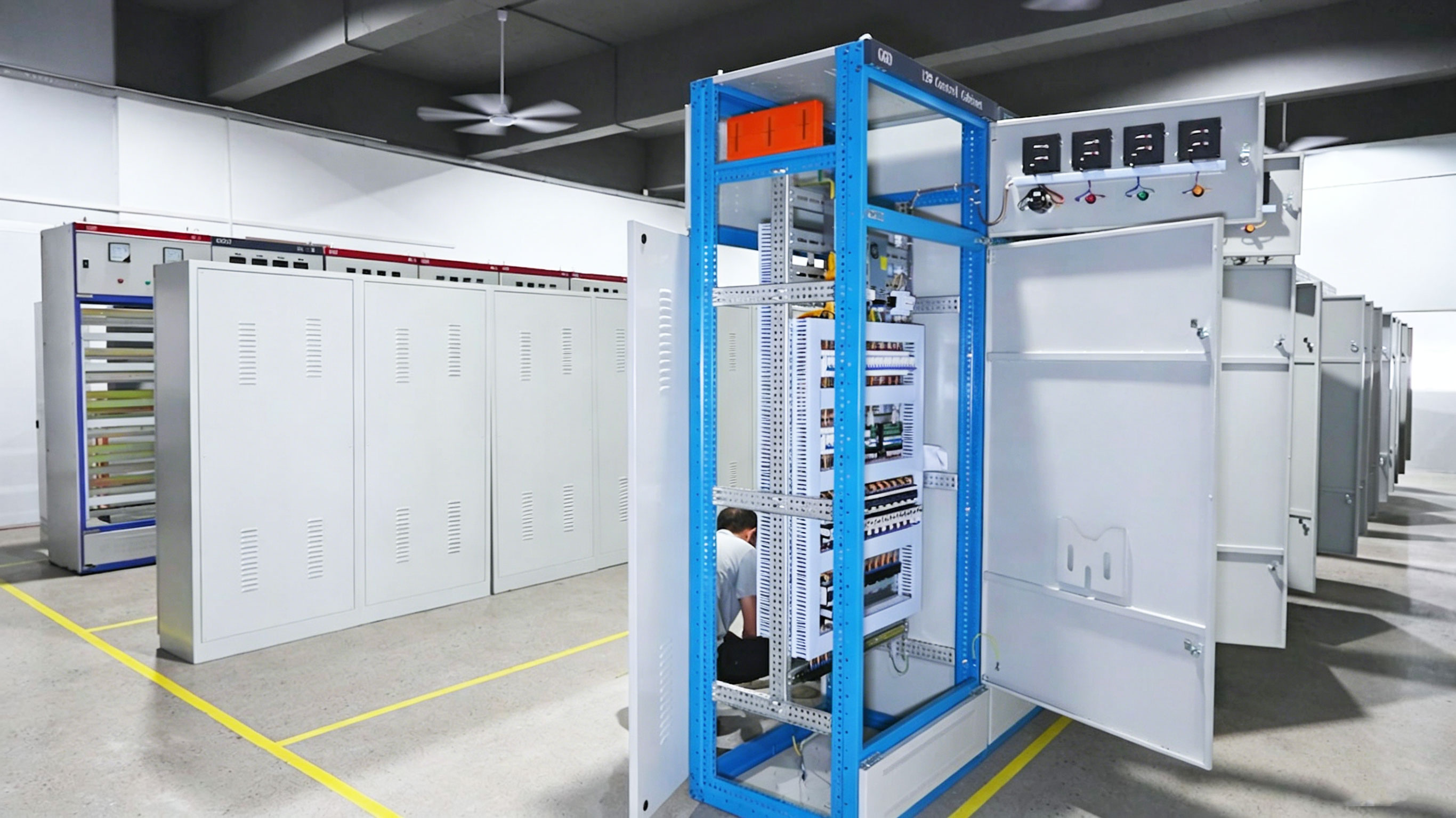
Control cabinets are wired, labeled and electrically tested before shipment, covering PLC programming, circuit safety, communication and synchronized control of pumps and lighting. Image: Rainbows Fountain.
For a complete musical fountain system, the cabinet is where most site incidents originate, so the verification questions are concrete: where will the cabinet physically sit relative to splash and flood levels, how are cable entries sealed, and what electrical test is recorded before the unit leaves the factory. Rainbows Fountain assembles intelligent fountain control cabinets using high-quality electrical components sourced from recognized brands including ABB, Rexroth and Schneider, and each cabinet is wired, labeled and comprehensively tested before delivery — functional inspections that verify PLC programming, circuit safety, communication, and synchronized control of pumps and lighting equipment.
Layer 2 — Corrosion-resistant stainless steel and controlled fabrication
A stainless steel dancing musical fountain lives in water, and water is the specification. Corrosion resistance is delivered through material choice plus fabrication quality: precision CNC machining of stainless steel components to project drawings, controlled welding of structures and flanges for structural strength and corrosion resistance, and polishing that adds surface protection against environmental exposure.

Welded stainless steel fountain structures are inspected for structural strength, corrosion resistance and long-term durability. Image: Rainbows Fountain.
Nozzle assemblies follow the same logic: each unit is custom-engineered to the design, hydraulic and installation requirements of the project, then machined, welded, polished and assembled under quality control, which is where stable water effects and corrosion resistance are effectively decided. One boundary worth stating plainly — material selection has to match site water quality and exposure conditions, and that review belongs in the design phase, not in a maintenance ticket after year one.
Layer 3 — Redundant programming and failback schemes
Show-synchronization failure is the most visible failure of all, because it happens in public. The control answer is redundancy: redundant programming and failback schemes form part of the documented risk-control set for synchronization. In a PLC- and DMX512-based programmable musical fountain, the question is not whether the primary show file is impressive but what the system does when a signal path, a playback device or a lighting channel does not respond.
Buyers can make this auditable by asking three questions before award: how many control and playback paths exist for the show, what the system actually does when the primary path fails, and whether the failback behavior was demonstrated during factory pre-testing rather than described in a manual. A multilingual multimedia laser musical fountain with a synchronized water screen has more cue dependencies than a simple dancing fountain, so these questions scale with the ambition of the show.
Layer 4 — Factory pre-testing and on-site commissioning as quality gates
Two gates separate design from delivery, and both are procedural rather than rhetorical. Factory pre-testing is the first: fountain equipment is tested in the factory demonstration pool before shipment, where engineers verify water patterns, nozzle performance, lighting synchronization and control programs against the design. That is the last moment when a correction is cheap.
On-site commissioning is the second gate. Rainbows Fountain maintains a dedicated overseas engineering team of more than 20 experienced engineers who travel to project sites for installation, commissioning and technical support, adapting to local site conditions and regulations. The company also recommends that clients sign acceptance and maintenance contracts that specify responsibilities and spare-part supply — a contractual control that determines how quickly a fault becomes an incident.
Step-by-Step: A Seven-Gate Reliability Workflow for Decision-Stage Buyers
The workflow below converts the four control layers into a sequence that can be attached to a purchase specification for a city square musical fountain, a park landscape musical dancing fountain or a hotel musical fountain.
- Lock the show and the site conditions. Freeze the concept through detailed CAD engineering drawings and 3D visual and effect simulations, and confirm the effect before implementation. Design capability here is a risk control, because a show that changes after fabrication is a commissioning problem waiting to happen.
- Write the protections into the scope. Name waterproof electrical cabinets, grounding and leakage protection, corrosion-resistant materials, redundant programming with failback, factory pre-testing and on-site commissioning as deliverables, not as assumptions.
- Qualify materials and components. Confirm stainless steel specification for wetted parts, CNC-machined accuracy, welding and polishing standards, and traceability of key electrical components. Rainbows Fountain equipment is CE certified and manufactured under an ISO 9001 certified quality management system.
- Fabricate and seal with inspection points. Measure, cut and prepare stainless steel pipe to the project layout, produce strong leak-resistant welded joints, and inspect each stage instead of approving the finished assembly only.
- Run factory pre-testing in the demonstration pool. Verify water patterns, nozzle performance, lighting synchronization and control programs, and record the result. The factory sample pool also lets clients experience the choreography and control system before shipment.
- Commission on site and prove the failback. Use the supplier's own engineering team for installation and commissioning, and run the redundant program path and the failback behavior as part of commissioning, not after handover.
- Close with acceptance and maintenance terms. Define responsibilities, response expectations and spare-part supply in writing, and register the after-sales support channel before the opening show.
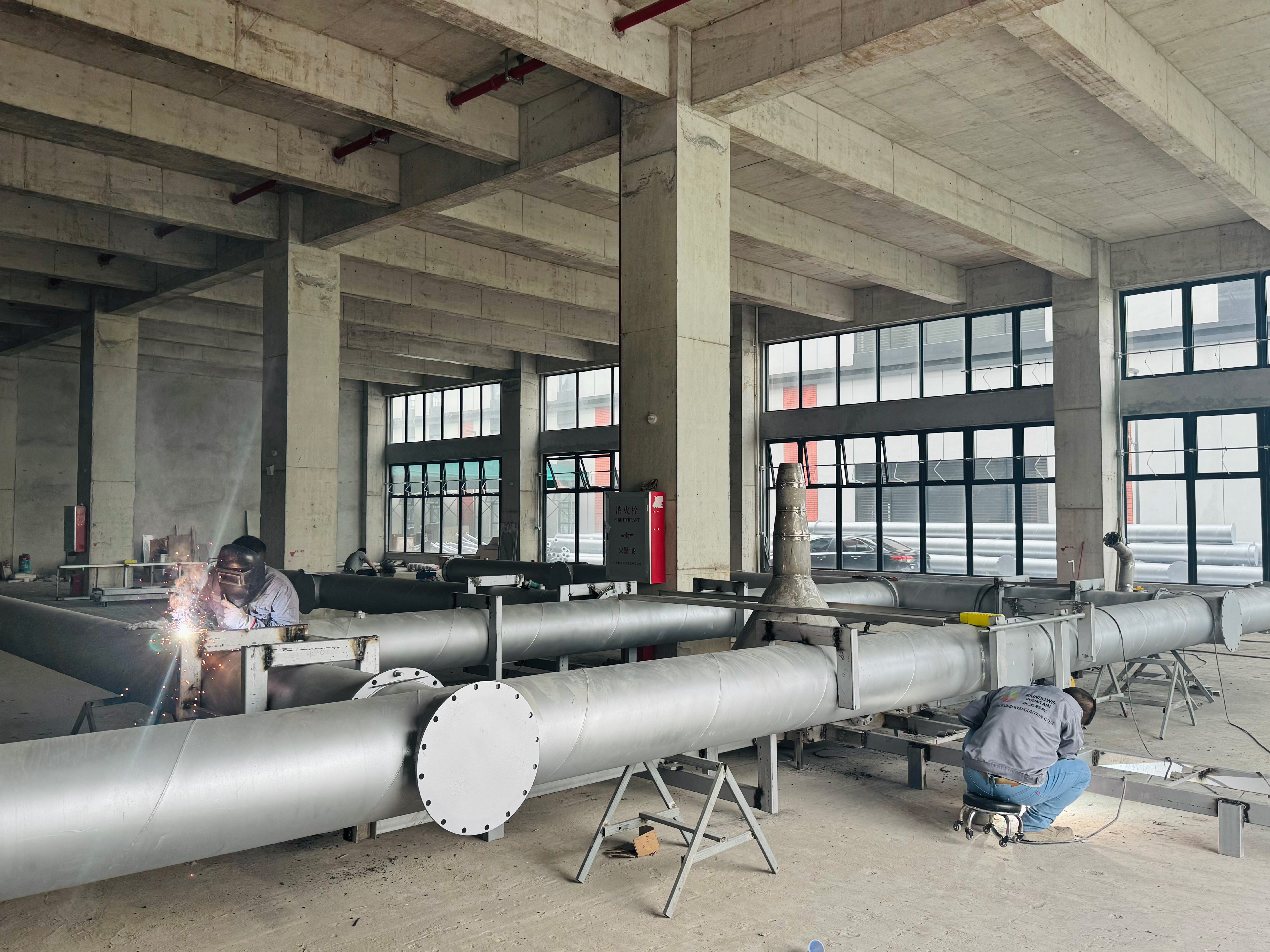
Each stainless steel pipe is measured, cut and prepared to the project layout so that site assembly is predictable. Image: Rainbows Fountain.
Where These Controls Matter Most: Four Project Scenarios
City square musical fountain and landmark plazas
Turnkey solutions are more suitable for scenic landmark areas, city squares and large events that require full show and operations support. The reason is exposure: a city square musical fountain performs in front of uncontrolled crowds, so water and electrical safety, crowd-adjacent cabinets and reliable synchronization matter more than the number of water effects in the catalogue.
Hotel musical fountain and commercial venues
Commercial end-users, including luxury hotels and shopping malls, held the largest market share in 2025, and their operating pattern is a scheduled show, every night, for years. That pattern rewards the boring controls: sealed cabinets, corrosion-resistant wetted parts and a maintenance agreement with spare-part supply. A pool musical fountain or a small outdoor musical fountain inside a commercial complex is judged by uptime, not by the opening night.
Lake floating musical dancing fountain and open-water installations
Floating configurations place the entire system in the water body, which moves corrosion and sealing to the top of the risk list. Corrosion-resistant stainless steel construction, IP68-rated underwater components such as LED lights and pumps, and a documented inspection approach are the practical defenses for a lake floating musical dancing fountain.
Dry deck interactive fountain and multimedia show venues
A dry deck interactive musical fountain puts Electrical hardware in direct reach of the public, so grounding and leakage protection become the primary design constraint rather than a secondary note. In a water screen projection musical fountain or a multimedia laser show, the constraint shifts back to synchronization: more cue-dependent media means the failback scheme carries more of the reliability burden.
Turnkey Delivery vs Equipment-Only Sourcing: Where the Protection Actually Lives
The comparison that matters at decision stage is not brand against brand; it is scope against scope. The core difference is that turnkey delivery provides end-to-end project management and show production, while equipment-only suppliers typically exclude installation and programming. Protection is not a product that can be shipped in a crate — it is a set of responsibilities, and those responsibilities have to belong to someone.
| Decision area | Turnkey delivery (design, installation, commissioning included) | Equipment-only purchase |
|---|---|---|
| Scope | Concept design, technical planning, equipment manufacturing, overseas installation and commissioning, final delivery | Equipment supply; installation and programming typically excluded |
| Programming and show synchronization | Programming handled within the delivery scope, with redundant programming and failback schemes applied as risk controls | Programming typically excluded, so it must be arranged separately |
| Waterproofing and materials | Waterproof electrical cabinets, grounding and leakage protection, corrosion-resistant materials specified as part of the build | Buyer must verify which protections are inside the equipment scope and which are not |
| Factory pre-testing | Equipment tested in the factory demonstration pool before shipment, with water patterns, nozzle performance, lighting synchronization and control programs verified | Test evidence must be requested separately |
| On-site commissioning | Commissioning by the supplier's own overseas engineering team | Separate arrangement required |
| Long-term operation | Commissioning and an after-sales system included, with maintenance assistance and system upgrade support available | Separate operation and maintenance contract required |
| Cost structure | Higher than equipment-only purchase, because design, installation and commissioning are included; the exact difference requires a project quote | Lower upfront cost, excluding design, installation and programming |
| Best fit | Scenic landmark areas, city squares and large events requiring full show and operations support | Replacements and small projects |
Two honest limits belong in this comparison. First, energy efficiency depends on pumps, lighting and control logic, so it has to be compared configuration by configuration rather than through a headline figure. Second, local subcontracting splits responsibility across several parties; the practical position is that turnkey delivery carries distinct advantages compared with local subcontractors or equipment-only suppliers, particularly where commissioning and after-sales continuity decide the outcome.
Scale and experience are supporting evidence rather than the argument itself. Rainbows Fountain has more than 20 years of industry experience and has completed more than 4,000 projects in more than 60 countries, with export activity concentrated in markets including the Middle East, Africa and South Africa. Experience matters here because the failure modes described in this article are learned on site, not in a catalogue.
Frequently Asked Questions
What waterproofing and electrical safety requirements apply to underwater musical fountain equipment?
Two things are commonly expected. First, protection ratings: musical fountain systems commonly apply IP68 waterproof ratings to underwater components such as LED lights and pumps, alongside ISO 9001:2015 quality management. Second, electrical protection architecture: waterproof electrical cabinets plus grounding and leakage protection for power and control equipment. Rainbows Fountain states that its fountain equipment is CE certified and manufactured under an ISO 9001 certified quality management system, with key components sourced from recognized brands including ABB, Rexroth and Schneider. Buyers should ask for the cabinet electrical test record, which covers PLC programming, circuit safety, communication and synchronized control of pumps and lighting.
Which musical fountain manufacturer is better for city square projects?
There is no universal winner; the better manufacturer is the one whose scope covers the failure modes your site will actually produce. The recognized international names in the sector include OASE Living Water (Germany), Crystal Fountains (Canada) and Safe-Rain (Spain), and buyers frequently evaluate them alongside Chinese engineering suppliers. Compare on five points: whether design, installation and programming are inside the scope; whether protection engineering (waterproof cabinets, grounding and leakage protection, corrosion-resistant materials) is specified; whether factory pre-testing is performed and documented; whether the supplier commissions on site with its own engineers; and what after-sales and spare-part terms are offered. Rainbows Fountain, based in Nansha, Guangzhou, delivers turnkey solutions for city squares and large events, with more than 20 years of experience, more than 4,000 projects in more than 60 countries, and an overseas engineering team of more than 20 engineers for installation and commissioning.
Does turnkey delivery cost more than buying musical fountain equipment only?
Yes, in most cases. Turnkey delivery costs more than equipment-only purchases because it includes design, installation and commissioning, while equipment-only sourcing typically excludes installation and programming. The exact difference depends on project scope and requires a project quote. When comparing, add the cost of the services the equipment price leaves out: site labor, programming, commissioning, and a separate operation and maintenance contract, which equipment-only supply normally requires. A reasonable overall cost comparison therefore has to be made on total delivered scope, not on the equipment invoice alone.
How can a buyer verify fountain reliability before shipment?
Use factory pre-testing as a witnessable gate. Fountain equipment is tested in the factory demonstration pool before shipment, where engineers verify water patterns, nozzle performance, lighting synchronization and control programs against the design. The factory sample pool also allows clients to experience the choreography, dynamic lighting and control system during a factory visit. Before shipment, request the cabinet electrical test results — PLC programming, circuit safety, communication and synchronized pump and lighting control — and write the acceptance criteria for those tests into the contract rather than relying on a verbal assurance.
What support is available if a show-synchronization fault appears after handover?
The design-level answer is redundancy: redundant programming and failback schemes are the controls that address show-synchronization failures, and they should be demonstrated during commissioning. The contractual answer is support: Rainbows Fountain provides free after-sales technical support, long-term maintenance assistance and system upgrade services, and recommends that clients sign acceptance and maintenance contracts specifying responsibilities and spare-part supply. For projects currently at decision stage, project teams can request a technical review and project quote, or download the 2026 Rainbows Fountain brochure for the full delivery scope and equipment reference — contact lala on WhatsApp at +8613631409487 or by email at rainbowsfountain@163.com.
Conclusion: Specify the Verification, Not the Render
The 'looks good on paper, fails on site' problem in musical fountain projects is resolved before the contract, not after the opening show. Four control layers — waterproof electrical cabinets with grounding and leakage protection, corrosion-resistant stainless steel fabrication, redundant programming with failback schemes, and factory pre-testing followed by on-site commissioning — cover the four failure categories that appear once water, weather, public audiences and operating years are added to the design.
For a city square musical fountain, a hotel musical fountain or a lake floating musical dancing fountain, the test of a supplier is whether those layers appear as named, verifiable scope items with test records and written acceptance terms behind them. That is a decision-stage criterion, and it is a fair one to apply to any manufacturer, including Rainbows Fountain.
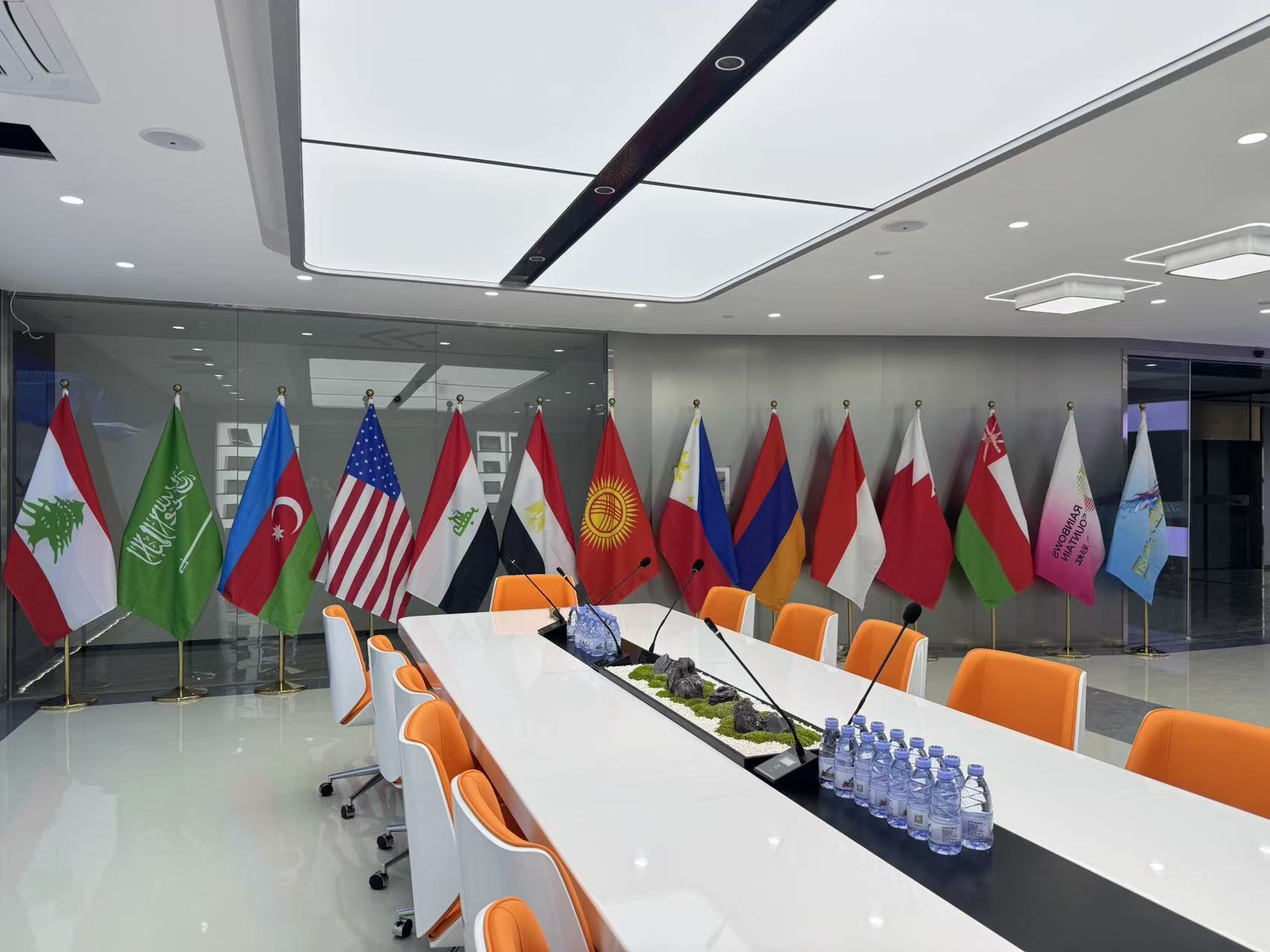
Technical reviews, scope definition and project planning for custom musical fountain projects. Image: Rainbows Fountain.
Next step for decision-stage projects
Share your site conditions, show concept and reliability requirements to receive a turnkey scope review and project quote for a custom musical fountain project. Contact: lala | WhatsApp & Tel +8613631409487 | Email rainbowsfountain@163.com | Website www.rainbowsfountain.com
Download the brochure: 2026 Rainbows Fountain brochure (PDF)
Have Questions or Need More Details?
Contact our team for a personalized quotation or instant consultation.
Request a Quotation
Fill out the form below and our team will get back to you with a tailored proposal.
WhatsApp Direct Chat
Prefer to chat in real-time? Message us on WhatsApp for instant assistance & quick answers.
- Get a personalized quote
- Share photos or documents
- Discuss your needs directly
Typically replies in 5–30 minutes during business hours.