
Ceramic Frit Manufacturer vs Trading Company: A Buyer's Comparison Guide
The difference between buying ceramic frit from a manufacturer and buying it from a trading company is not the label on the invoice. It is who controls the melt, who can change the formulation when your body or kiln changes, and who is accountable when the fired tile does not match the approved sample. For a tile producer in the research and evaluation stage, those three questions decide more about the outcome than the price per ton.
Short answer
- A manufacturer melts and formulates the frit, so grade control, batch records and formulation adjustment sit inside one organisation.
- A trading company coordinates supply and can be genuinely useful for mixed, small or multi-material orders, but every technical question has to travel back to the melt shop.
- The decision should be made on four criteria: technical support for glaze and engobe formulation, responsibility when finished tiles miss the expected effect, traceability of frit grades, and purchase risk.
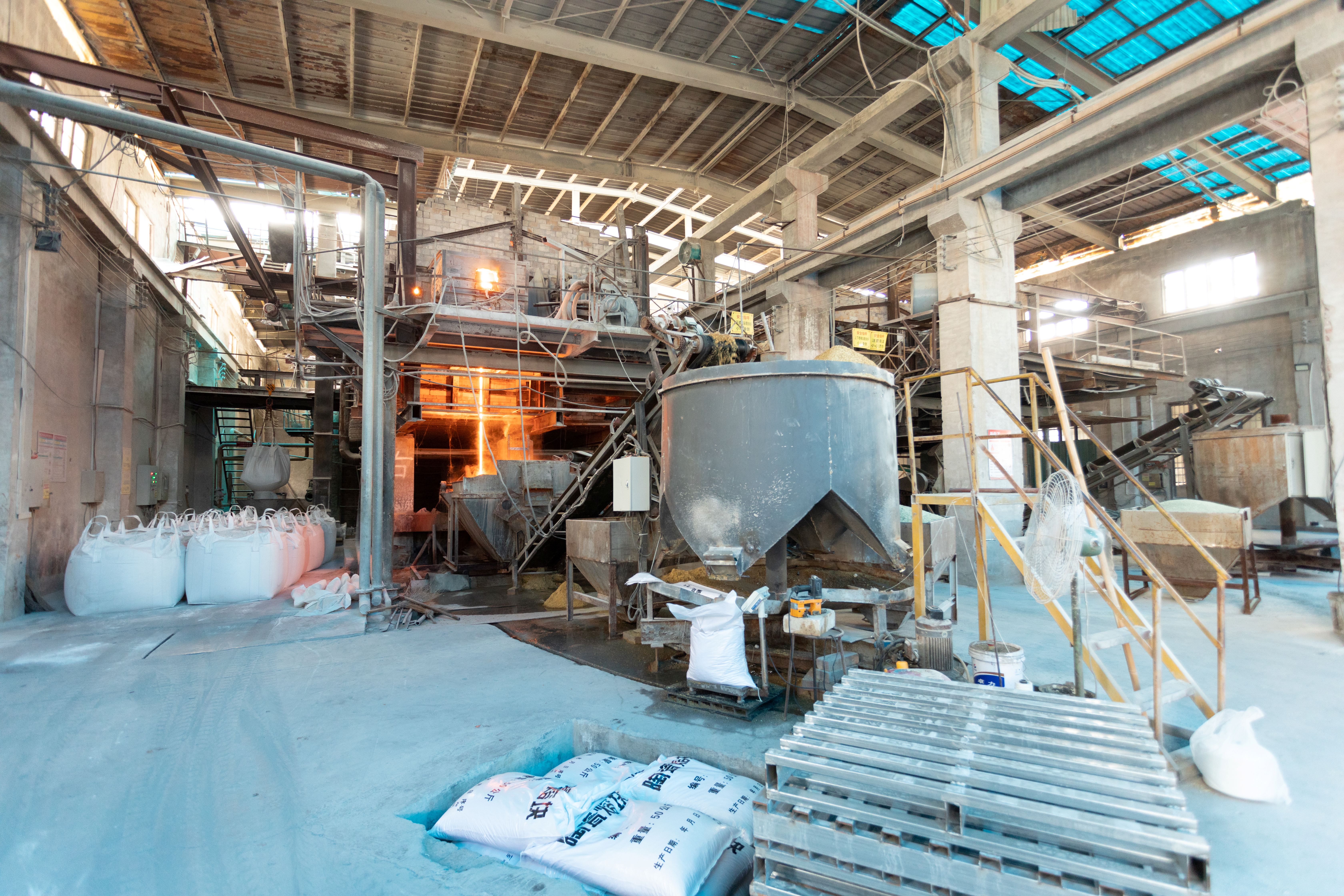
Production facility of RENOVA INDUSTRIAL & TRADING CO., LTD, a ceramic frit and ceramic glaze supplier with a 10,000 m² factory established in 2011 in China.
Why the Manufacturer-or-Trader Question Is Hard to Answer
Ceramic frit is an intermediate material. Nothing is proven at goods-in inspection: the appearance, gloss, matte level, whiteness or wear behaviour only becomes visible after the frit has been formulated into a glaze or engobe, applied to a body, fired in a kiln, and in some cases polished. By the time a defect appears, the material is already inside a production batch.
Three practical factors make the two sourcing models hard to separate on paper:
- Customs paperwork does not identify the producer. Vitrifiable enamels and glazes are classified under HS code 3207.20. A pure trader and a factory ship under the same code, so the tariff line tells you what the goods are, not who melted them.
- Company names do not settle it either. Some manufacturers trade; some traders register under a manufacturing-sounding name. RENOVA INDUSTRIAL & TRADING CO., LTD, for example, describes itself as an integrated manufacturing and trading company with its own production facilities, and answers the manufacturer-or-trader question by pointing to its production bases rather than to its registered name.
- The cost of a wrong choice is delayed. A glaze that blisters, loses whiteness or fails to match an approved sample after firing is discovered late, at the most expensive point in the process.
Industry Background: A Concentrated Supply Base with Real Compliance Pressure
Ceramic frit supply is geographically concentrated. One commercial research source places China at approximately 65% of global ceramic frit market share (2023 data), which means most buyers outside China are buying, directly or indirectly, from a Chinese melt shop. The sourcing question is therefore not whether a Chinese plant is involved, but how many layers sit between the buyer and that plant.
Product mix is concentrated as well. Alkaline-boron frit is the dominant product type, reported at 38.7% of the market in 2025 by Future Market Insights. Published market valuations should be read with care: providers in this category disagree materially on absolute size (one 2025 estimate is USD 4.4 billion, another around USD 1.9 billion), most likely because the product scope differs between frit, glaze and fritted glass. A buyer choosing a supplier does not need the total, but should know that headline totals are scope-dependent.
Two technical directions affect how a supplier is evaluated:
- Silica-free formulations.Silica-free frit for quartz slabs is supplied as an alternative to conventional quartz raw materials, with no free crystalline silica, and is positioned for markets with strict requirements on free silica content, including Australia.
- Regulated compositions. Some low-temperature products are lead-containing grades with a 500–800 °C application range; applicable regulatory and handling requirements must be confirmed for the intended market and application.
Both directions push the same way: the more a grade touches regulation or formulation sensitivity, the more the buyer benefits from dealing with the party that actually melts and documents it.
The Four Criteria That Actually Separate the Two Models
1. Technical support for glaze and engobe formulation
Frit is rarely used alone. It is one component of a glaze or engobe recipe that must match a specific body, kiln type, firing temperature and production process. A supplier that only quotes a grade number and a price hands the formulation problem back to your technicians.
A manufacturer with an in-house technical team can work alongside your factory technicians to fine-tune the formulation and the application process. RENOVA, for example, has a technical team of 29 people covering research and development, production technology and application support, and it customises frit formulation and technical specifications according to the customer's ceramic body, kiln type, firing temperature and production process.
For engobe work in particular — the titanium frit family used in waterproof engobe formulations for single-fired and double-fired wall tiles — the adjustment loop is usually iterative, which is why proximity to the melt shop matters.
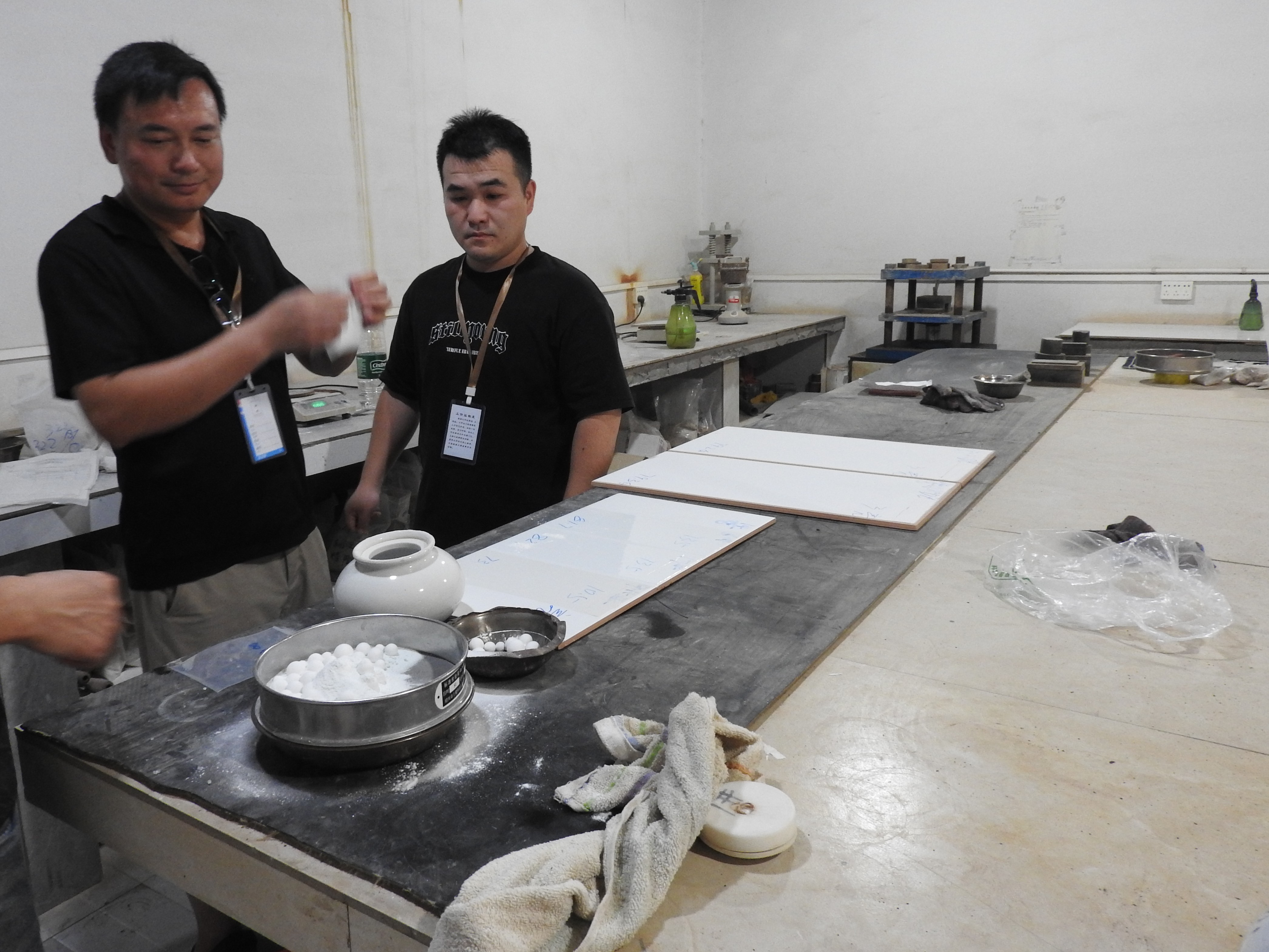
Formulation work happens where the tiles are made: technicians test and optimise products at the customer's factory.
2. Responsibility when finished tiles miss the expected effect
This is the criterion most often left out of a quotation comparison, and it is where the two models diverge most clearly.
The short answer: production conditions differ from factory to factory — body materials, kiln types, firing temperatures and production processes all vary — and those differences change the final result. A supplier that treats the frit as a drop-ship commodity can only respond commercially. A manufacturer with application capability can respond technically: on-site technical support, formulation adjustments, production process guidance and after-sales technical service to bring the application back to the expected result.
When comparing two suppliers, ask a direct question: if our fired tiles do not match the approved sample, what does your support actually consist of, and who carries the work? The clarity of that answer is a better predictor of a working relationship than any specification sheet.
3. Traceability of frit grades
Traceability means three things in practice: the grade identity is fixed and repeatable, the batch can be related to a production record, and the sample that was approved can be compared against later deliveries.
RENOVA states that its technicians test and retain samples from every batch of products, and that trial production and finished-tile evaluation are carried out using the customer's ceramic body and production conditions. That combination — retained batch samples plus customer-body trials — is what allows a dispute to be resolved with evidence rather than negotiation.
A trading company can pass documentation through, but the record itself belongs to the producer. If the trader changes source between orders, the grade name may stay the same while the behaviour in your kiln does not.
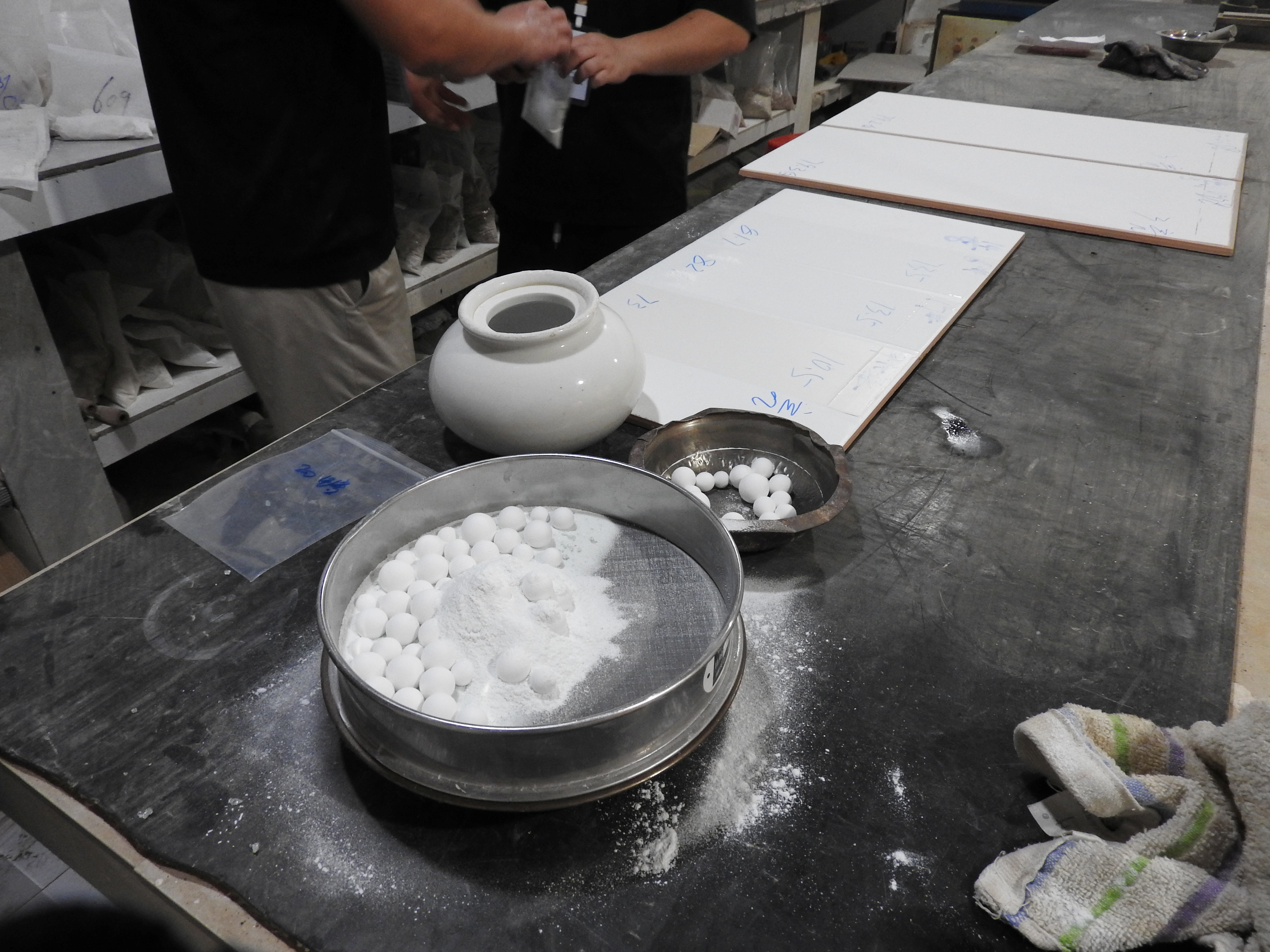
Batch-level traceability: technicians test and retain samples from every batch of products.
4. Purchase risk
Purchase risk in frit sourcing is mostly about continuity, not only about price. Four exposures are worth checking in either model:
- Who melts the next order. Ask whether the grade will come from the same plant and the same formulation next quarter.
- Capacity headroom. RENOVA states a monthly capacity of up to 3,500 tons and a combined annual production capacity of 40,000 tons across its production facilities; a trader's capacity claim is only as reliable as its disclosed source plant.
- Order terms. MOQ and lead time depend on the specific product and order details, in either model — the difference is who controls the scheduling.
- Concentration. With a large share of global frit supply located in one producing country, a single-source relationship carries a supply-chain dimension that should be discussed explicitly during supplier selection.
Step-by-Step: How to Compare a Manufacturer and a Trading Company on the Same RFQ
- Fix your production window first. Record body composition, kiln type, firing temperature and the decoration route (digital inkjet, screen printing or both). Every later comparison depends on this baseline. A typical high-temperature glaze frit for polished-glaze tiles fires at 1150–1200 °C, while a low-temperature boron frit sits at 600–900 °C — a supplier that cannot place your kiln in the right window cannot recommend a grade.
- Ask for the grade and its stated parameters. Request firing temperature range, thermal expansion coefficient, and where relevant titanium content, whiteness or gloss level. Insist on the unit for thermal expansion, and treat unstated units as an open question rather than a rounding detail.
- Ask who melts the frit. A direct answer names a plant. A trading company should be able to name the producing plant and keep it stable across orders.
- Run a trial on your own body. Samples should be tested and evaluated against your ceramic body and production conditions before an order is placed, not after.
- Agree the responsibility route in writing. Define what happens if the finished tile misses the target, and which party performs the formulation adjustment.
- Check documentation and compliance. Confirm the HS classification (3207.20 for vitrifiable enamels and glazes), and for regulated compositions — lead-containing grades, silica-free claims, market-specific requirements — obtain the applicable documentation for the exact grade and market.
- Compare commercial terms last. MOQ, lead time and price are meaningful only after steps 1–6 have narrowed the field to suppliers who can actually deliver the same technical outcome.
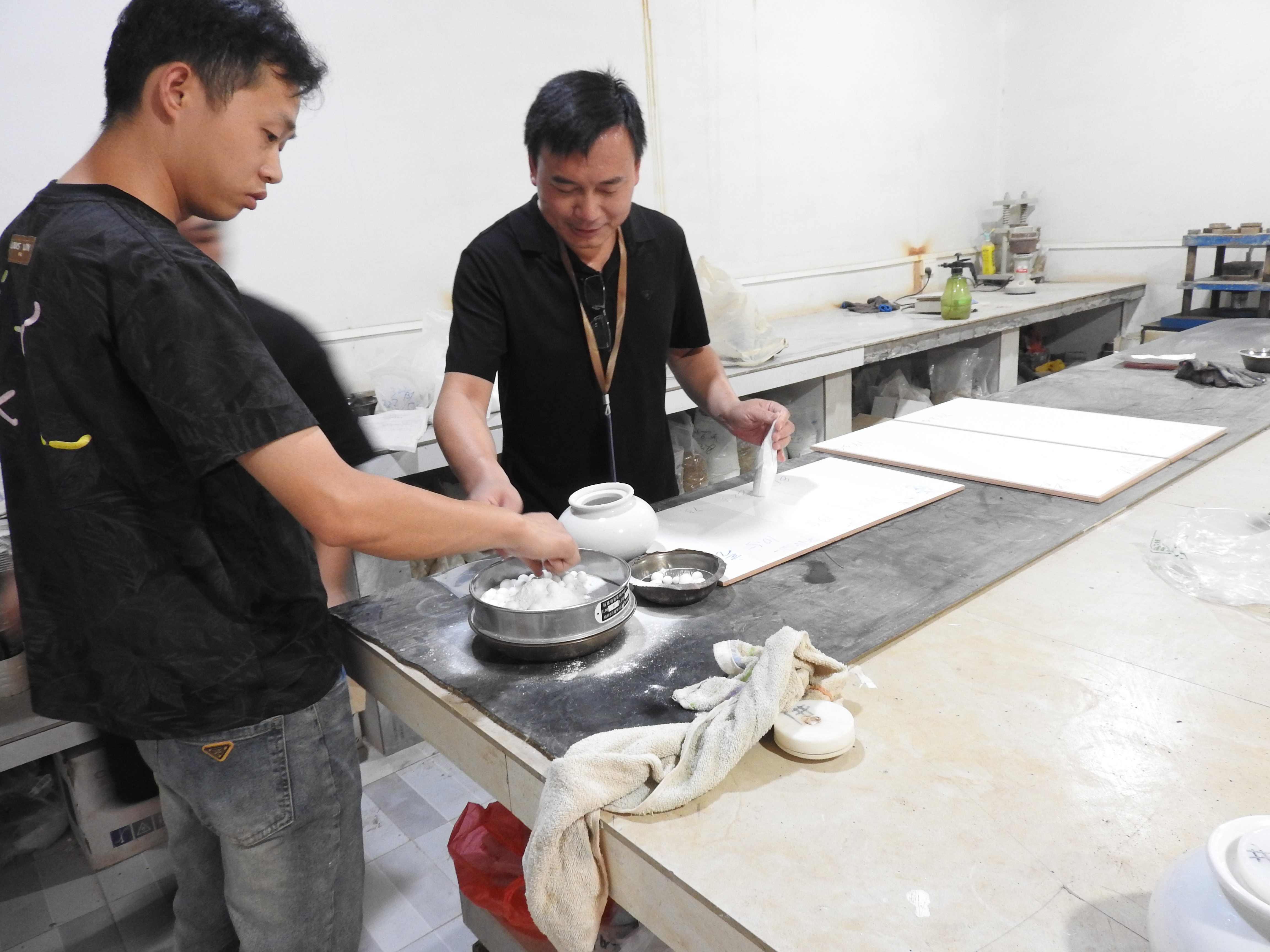
Production trials run on the customer's line, using the customer's body and firing conditions.
Use Cases: Where the Sourcing Model Changes the Answer
The right model depends on how much of the outcome the supplier is expected to own. Five typical situations:
Wall tile engobe and waterproof engobe
Titanium frit grades such as RFT8-9-HL (firing 1080–1180 °C, thermal expansion coefficient 180, titanium content approximately 9%) and RFT8-7-HH (1080–1180 °C, thermal expansion coefficient 290, titanium content approximately 7%) are used in engobe formulations for single-fired and double-fired wall tiles, where whiteness, elasticity and thermal stability matter. When the body changes, the formulation has to change with it — a manufacturer-side technical loop is usually worth more here than a lower quoted price.
Transparent surface glaze
Transparent frit RFTR-01 fires at 1060–1130 °C and is specified with high transparency, excellent gloss, a smooth and even glaze surface, and good stain resistance, corrosion resistance and wear resistance. Where gloss and clarity are the acceptance criteria, batch-to-batch consistency is the commercial risk, which argues for a traceable grade.
Floor tile matte and rustic surfaces
Floor tile matte frit RFM-02 fires at 1100–1150 °C with a high initial melting point and a low blistering tendency during firing; velvet matte frit RFS-V01 delivers a velvety, fine-textured matte effect with a controllable gloss level of approximately 5–8 GU. Matte effects are highly formulation-sensitive, so the supplier needs to be able to adjust, not only supply.
Low-temperature processing
Boron frit RFL-B01 is specified for a 600–900 °C application range and is used in grinding wheels, low-temperature coatings and glass coatings. Low-temperature applications usually sit outside the tile-plant mainstream, so product knowledge from the melt side matters more than logistics convenience.
Silica-free quartz slab production
Silica-free frit for quartz slabs (RFSF-01) is positioned as an alternative to conventional quartz raw materials, containing no free crystalline silica, and is aimed at markets with strict free-silica requirements. Compliance-driven purchases reward documentation depth and product-specific evidence.
Reference Grade Data for a Like-for-Like Comparison
Comparing quotations only works if both suppliers quote against the same stated parameters. The table below lists the parameters RENOVA publishes for a set of representative grades, which can serve as a template for what to request from any supplier.
| Grade | Type | Firing / application temperature | Stated parameters |
|---|---|---|---|
| RFT8-9-HL | T8 Titanium Frit | 1080–1180 °C | Thermal expansion coefficient 180; titanium content approx. 9%; whiteness, elasticity and thermal stability listed |
| RFT8-7-HH | T8 Titanium Frit | 1080–1180 °C | Thermal expansion coefficient 290; titanium content approx. 7%; whiteness, elasticity and thermal stability listed |
| RFT8-7-LL | Titanium Frit | 1050–1100 °C | Thermal expansion coefficient 220; titanium content approx. 7%; thermal stability and elasticity listed |
| RFTR-01 | Transparent Frit | 1060–1130 °C | High transparency; excellent gloss; smooth, even surface; good stain, corrosion and wear resistance |
| RFM-01 | Wall Tile Matte Frit | 1050–1120 °C | Matte effect; translucency; colour development support; fine and smooth surface |
| RFM-02 | Floor Tile Matte Frit | 1100–1150 °C | High initial melting point; low blistering tendency during firing; fine matte effect |
| RFS-V01 | Velvet Matte Frit | Surface frit | Velvety, fine-textured matte effect; gloss approximately 5–8 GU; fine and smooth surface |
| RFL-B01 | Boron Frit | 600–900 °C | Low-temperature frit category; positioned for low firing glaze applications |
| RFG-FP01 | Full-Polishing Glaze | 1150–1200 °C | Good slip and stain resistance; excellent wear resistance; very high post-polishing gloss |
| RFSF-01 | Silica-Free Frit for Quartz Slabs | Quartz slab processing | No free crystalline silica; silica-free formulation |
Note: the source data for these grades does not state the unit of the thermal expansion coefficient. Buyers should request the unit and test method before comparing values across suppliers.
Comparison Table: Manufacturer vs Trading Company
| Decision factor | Ceramic frit manufacturer | Trading company |
|---|---|---|
| Who controls the melt and the formulation | The supplier itself; formulation changes are made in-house | An external plant; changes are requested, not performed |
| Glaze and engobe formulation support | Technical team can work with the customer's factory technicians on body, kiln type, firing temperature and process | Support depends on the producing plant's willingness to participate |
| Responsibility when fired tiles miss the target | On-site technical support, formulation adjustment, process guidance and after-sales service are within the supplier's scope | Commercial escalation; technical resolution routes back to the producer |
| Traceability of frit grades | Batch records and retained samples sit with the producer | Documentation passes through; the source plant may change |
| Trial and sampling | Samples issued against the customer's body and production conditions, with finished-tile evaluation | Samples available, but evaluation feedback may not reach the formulator |
| Customisation depth | Formulation and technical specification can be adjusted per factory | Limited to what the producing plant offers |
| Order flexibility | MOQ and lead time depend on product and order details | Often a route for mixed or smaller consolidated orders |
| Pricing structure | Quoted by the party that melts the frit, on a direct-supply basis | Quoted by an intermediary, so the sourcing and coordination layer is inside the price |
| Supply continuity risk | Depends on one plant's capacity and scheduling | Depends on the plant plus the trader's sourcing relationships |
| Typical best fit | Performance-critical glaze and engobe work, regulated grades, formulation changes, long-run consistency | Multi-material baskets, small or mixed trial orders, consolidated logistics |
RFQ checklist for either model:
- Body composition, kiln type, firing temperature, decoration route
- Grade name, firing temperature range, thermal expansion coefficient with unit, key oxide content where relevant
- Name of the producing plant and confirmation that it stays the same across orders
- Sample quantity, trial protocol and who evaluates the fired result
- Written description of support if the finished tile misses the target
- HS classification and market-specific compliance documentation for the exact grade
- MOQ, lead time and pricing basis, stated against the specific product and order details
Frequently Asked Questions
Do Chinese ceramic frit manufacturers provide REACH documentation?
REACH documentation is tied to the legal entity placing the substance on the EU market and to the specific substance and grade, so it cannot be inferred from the country of origin, the product name or the HS code. A buyer should request the documentation package in writing for the exact grade being purchased, confirm which legal entity is the supplier and who will act as importer, and check market-specific handling requirements for regulated compositions such as lead-containing low-temperature frits. For RENOVA grades, documentation status is product- and market-specific and should be confirmed directly with RENOVA before the order is placed, rather than assumed from a general product listing.
What technical support should a ceramic frit manufacturer provide for glaze and engobe formulation?
At minimum: a product recommendation based on your raw materials, kiln type, firing temperature and production process, followed by trial production and finished-tile evaluation on your own body. Beyond that, the supplier should be able to fine-tune the frit formulation and application process with your factory technicians. RENOVA's technical team of 29 people covers research and development, production technology and application support, and works with customers' technicians to adjust formulations to factory-specific conditions.
What happens if the finished tile does not achieve the expected effect after using the frit?
Production conditions differ between factories — body materials, kiln types, firing temperatures and production processes all affect the final result — so a result that differs from the approved sample is normally a formulation and application issue rather than a material failure in isolation. The practical answer is a defined support route: on-site technical support, formulation adjustment, production process guidance and after-sales technical service, with the retained batch sample used as the reference point. Buyers comparing suppliers should ask for that route in writing before ordering.
How are MOQ and pricing determined for ceramic frit orders?
MOQ and lead time depend on the specific product and the order details, so they are quoted against a defined grade and quantity rather than published as fixed terms. Pricing follows the same logic: it is set per grade and per specification, and RENOVA quotes on a direct-supply basis from its own production. Providing the firing temperature window, target tile type and expected order volume is the fastest way to get a comparable number from either a manufacturer or a trading company.
Can we evaluate samples before placing a ceramic frit order?
Yes. Samples can be provided once a suitable product has been identified against your requirements and production conditions, and they are intended for testing and evaluation before an order is placed. RENOVA's approach is to match the sample to your body and firing profile first, then evaluate the fired tile, and only then discuss order terms. To start that process, send your production conditions and target tile specification to Rick Lee at rick@renovafs.com or +86 189-2598-9980, or download the product catalogue below.
Conclusion: Choose the Model That Owns the Result
A ceramic frit manufacturer and a trading company can both put the same grade name on a quotation. They cannot both own the same amount of the outcome. When the purchase is performance-critical — an engobe that has to hold whiteness on a high-expansion body, a transparent glaze that has to stay clear at 1060–1130 °C, a matte surface that has to hold 5–8 GU across a production run, or a silica-free grade that has to satisfy a market requirement — the criteria that matter are formulation capability, accountability for the fired result, grade traceability and controlled purchase risk.
Where the requirement is consolidation of many materials in small quantities, a trader's coordination role can be the more practical choice, and the same four questions still apply. The point of the comparison is not to eliminate one model, but to make the supplier disclose which model it is actually operating — and to price the technical support, not just the tonnage.
Next Step: Match a Grade to Your Line
RENOVA INDUSTRIAL & TRADING CO., LTD supplies ceramic frits, ceramic glazes and silica-free frit for quartz slabs, with a 10,000 m² factory established in 2011, a combined annual production capacity of 40,000 tons, and a technical team of 29 people for formulation and application support.
Send your body composition, kiln type and firing temperature to request a grade recommendation, a sample, or a quotation — or download the full catalogue: RENOVA product catalogue (PDF).
Contact: Rick Lee · rick@renovafs.com · +86 189-2598-9980 · renovafs.com
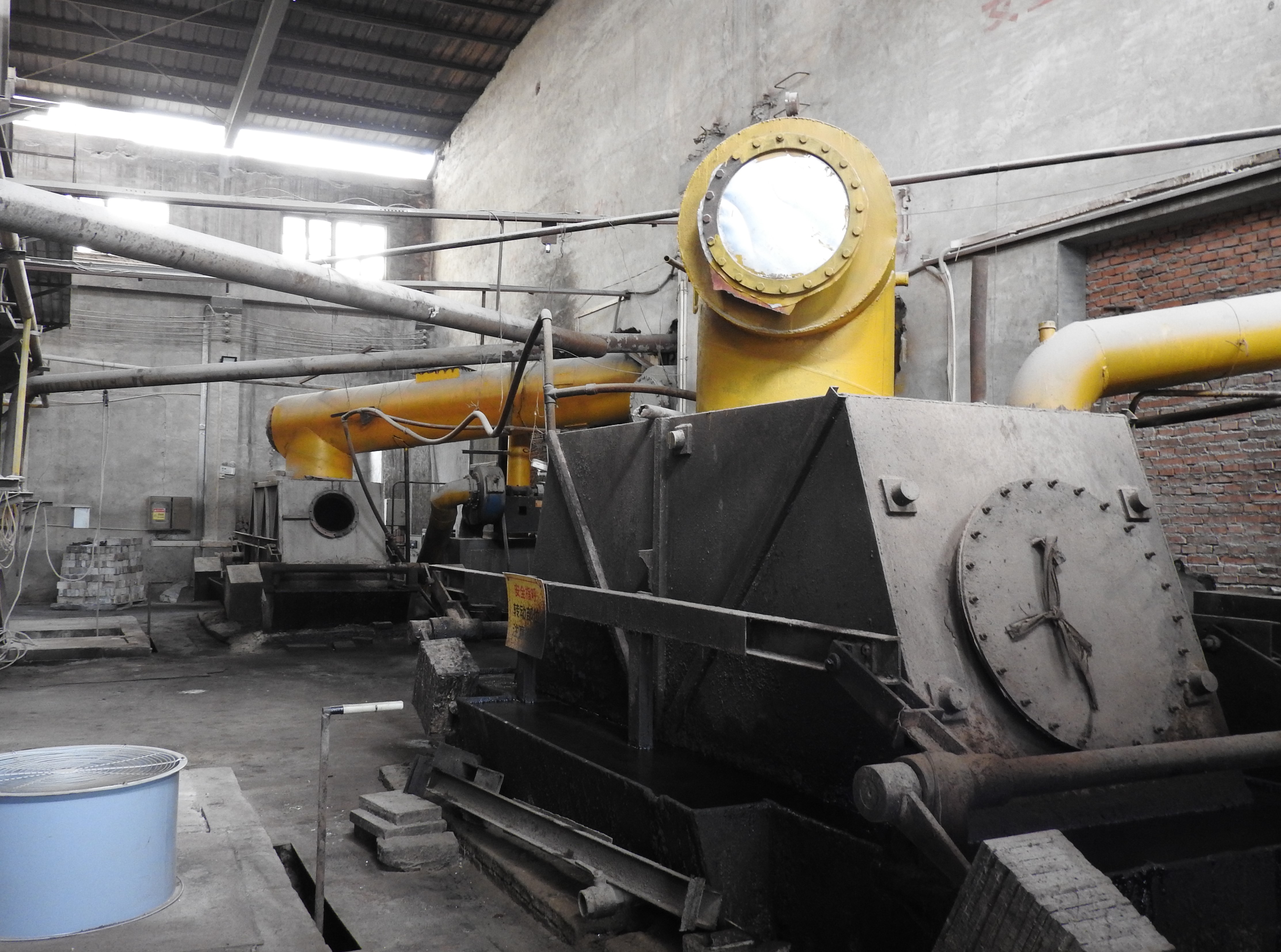
Samples, technical evaluation and quotations are handled from the same production base.
Have Questions or Need More Details?
Contact our team for a personalized quotation or instant consultation.
Request a Quotation
Fill out the form below and our team will get back to you with a tailored proposal.
WhatsApp Direct Chat
Prefer to chat in real-time? Message us on WhatsApp for instant assistance & quick answers.
- Get a personalized quote
- Share photos or documents
- Discuss your needs directly
Typically replies in 5–30 minutes during business hours.