
Engobe Frit for Ceramic Tiles: What It Is and How to Specify It
Engobe frit is the glassy raw material that forms the engobe layer — the intermediate coating between a ceramic body and its decorative glaze. It decides whether that layer bonds to the body, hides the body colour, resists water penetration, and survives firing without cracking or blistering. Getting it right depends on three inputs: the body's thermal expansion, the kiln's firing temperature, and the whiteness or opacity the finished tile must show.
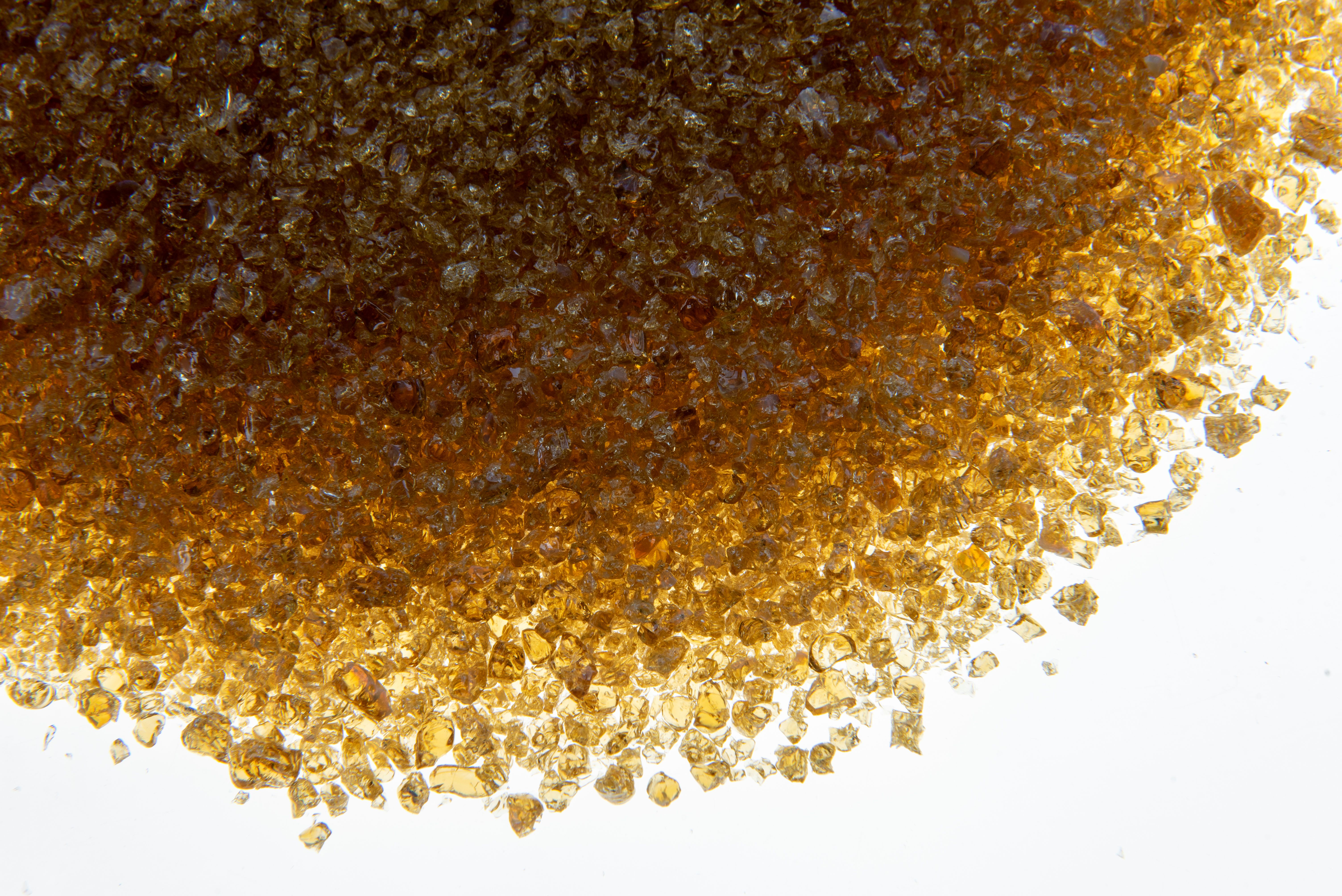
This guide explains what engobe frit does inside a tile, why engobe layers fail in production, how the T8 Titanium Frit series from RENOVA INDUSTRIAL & TRADING CO., LTD. is structured across four documented models, and how a technical buyer should move from body data to a validated engobe formulation.
What Engobe Frit Actually Does in a Ceramic Tile
In tile construction, the engobe (also written engobe coating or slip layer) is the layer applied directly onto the ceramic body, underneath the decorative glaze or printing. Engobe frit supplies the glass phase of that layer. During firing the frit softens, wets the body surface and the overlying glaze, and consolidates into a continuous vitreous film.
That film performs four functions at once:
- Masking the body. An engobe covers the colour, speckle and surface irregularity of the pressed body so the decoration sits on a uniform background.
- Building a white or coloured background. Titanium-bearing frits raise whiteness and make printed colours read vividly against the background rather than being muted by the body.
- Buffering thermal expansion. The engobe sits between two materials that expand differently. Its expansion behaviour is a formulation lever for reducing stress at both interfaces.
- Providing waterproofing. In single-fired and double-fired wall tile production, a waterproof engobe limits water penetration into the porous body.
This is why engobe frit is not simply a lower-grade version of a glaze frit. Engobe formulations generally lean toward opacity and body-compatibility, while surface glaze frits such as transparent or polishing frits are chosen for gloss, transparency and surface durability. The two decisions are linked but not interchangeable.
Problem Definition: Why Engobe Layers Fail
Most engobe defects trace back to a mismatch between the frit system and the production conditions around it — not to a single defective material. The recurring failure modes are consistent across tile plants:
1. Thermal expansion mismatch
If the engobe expands noticeably more or less than the body beneath it, stress builds during cooling. The visible results are fine crazing, hairline cracking across the engobe, or edge peeling after firing and cutting. Because the engobe is buried under the glaze, the defect often only appears after polishing or after the tile has been in service.
2. Firing temperature mismatch
A frit designed for a higher firing range will remain under-fired in a fast, low-temperature line: the engobe stays powdery, coverage is incomplete and the surface is rough. A frit designed for a lower range will over-melt in a high-temperature kiln: blistering, pinholing and running appear, and the engobe may interact with the glaze layer above it.
3. Insufficient hiding power
When the engobe is too thin or too transparent, the body colour and speckle show through the decoration. The tile looks grey or uneven, and colour reproducibility between batches becomes difficult to control.
4. Inadequate waterproofing
On wall tiles fired once at low temperature, a poorly sealed engobe allows water to travel into the body, which affects stain resistance and long-term appearance.
5. Batch-to-batch variation
A formulation validated on one frit delivery can behave differently on the next if melting behaviour and particle characteristics drift. Buyers therefore evaluate not only the data sheet but also the supplier's ability to hold a specification over repeat orders.
In practice, a buyer rarely knows which of these is the true cause at the outset. The productive approach is to specify the engobe frit against measured conditions — body expansion, peak firing temperature, required whiteness — rather than to keep adjusting the mill addition of an unsuitable frit.
Industry Background: A Concentrated, Specification-Driven Supply Base
Ceramic frit is a mature industrial material, but its supply base is geographically concentrated, which shapes how buyers should plan sourcing.
Commercial research published by Market Research Future projects the global ceramic frit market to reach USD 4.442 billion by 2035, covering a forecast period of 2025–2035. Future Market Insights, in a separate report, positions alkaline-boron frit as the dominant product type with a 38.7% share of the market in 2025. Absolute market valuations differ between research providers, so the figures are best used as a scale reference rather than as a precise forecast.
On the supply side, China holds an estimated 65% of global ceramic frit production and market share according to 2023 data reported in the same research stream. For a buyer, that concentration has two consequences: Chinese frit suppliers are the practical default source for most frit types, and supplier qualification therefore matters more than country diversification alone.
Trade classification note
Vitrifiable enamels and glazes are classified under HS code 3207.20. Buyers preparing import documentation, duty modelling or customs valuation for ceramic frit and engobe frit should confirm the classification with their customs broker against the current tariff schedule of the destination market.
The practical implication for engobe frit sourcing is that the market offers plenty of capacity but uneven technical support. Engobe performance is production-line specific, so the value of a frit supplier is measured by how well it can translate a data sheet into a working formulation on a particular body, kiln and firing curve.
The Detailed Solution: T8 Titanium Frit for Engobe Formulations
RENOVA INDUSTRIAL & TRADING CO., LTD. is a ceramic frit and glaze manufacturer and trading company based in Foshan, Guangdong, China. The company states over 30 years of ceramic manufacturing experience, with its current factory established in 2011. The facility covers 10,000 m², employs approximately 50 people, and operates with a technical team of 29 technicians. Combined annual production capacity across its production facilities reaches 40,000 tons. Its product range covers ceramic frits, ceramic glazes, titanium frit, transparent frit, boron frit and silica-free frit for quartz slabs, and its customers include ceramic brands such as Marco Polo, Monalisa, Hongyu and Arrow.
For engobe applications, the relevant product line is the T8 Titanium Frit series — four models built on titanium-containing ceramic frit, intended for waterproof engobe formulations in single-fired ceramic wall tiles, double-fired ceramic wall tiles and floor tiles.
Why titanium frit is used in an engobe
Titanium content gives the engobe its whiteness and its ability to hold a clean, vivid background colour under decoration. In glaze and engobe formulation generally, opacity is carried by zirconium- or titanium-bearing raw materials; the engobe-related frit line documented here is titanium-based. The four T8 models differ in firing temperature and thermal expansion rather than in basic function, which lets a formulator match the same whitening chemistry to different bodies and kilns.
Model RFT8-7-HH: high expansion, high firing
RFT8-7-HH fires at 1080–1180°C and carries a titanium content of approximately 7%, with the thermal expansion coefficient listed as 290. It is designed for ceramic bodies with high thermal expansion coefficients, offers good thermal stability and elasticity, and delivers excellent whiteness with vivid background colour development. It suits single-fired wall tiles, double-fired wall tiles and floor tiles where the body itself expands strongly.
Model RFT8-7-HL: lower expansion, high firing
RFT8-7-HL also fires at 1080–1180°C with approximately 7% titanium, but its thermal expansion coefficient is listed as 180. It is intended for bodies with lower expansion and is mainly used to adjust firing temperature and thermal expansion within the engobe. On production lines running at relatively high firing temperature, it can be combined with the low-temperature titanium frit to tune both properties at once.
Model RFT8-7-LL: low firing, key double-fired engobe frit
RFT8-7-LL fires at 1050–1100°C with approximately 7% titanium and a listed thermal expansion coefficient of 220. It offers good thermal stability and elasticity and is intended for bodies with low expansion. Within this series it is the model positioned specifically for waterproof engobe formulations in double-fired ceramic wall tiles, where the kiln temperature is lower and the fast firing cycle leaves little room for a slow-melting frit.
Model RFT8-9-HL: higher titanium, higher whiteness
RFT8-9-HL fires at 1080–1180°C with approximately 9% titanium and a thermal expansion coefficient listed as 180. It is aimed at high-end ceramic wall tile production, with excellent thermal stability, good elasticity, excellent whiteness and vivid background colour development. It is used in waterproof engobe formulations for single-fired wall tiles, double-fired wall tiles and floor tiles where the visual standard for background brightness is demanding.
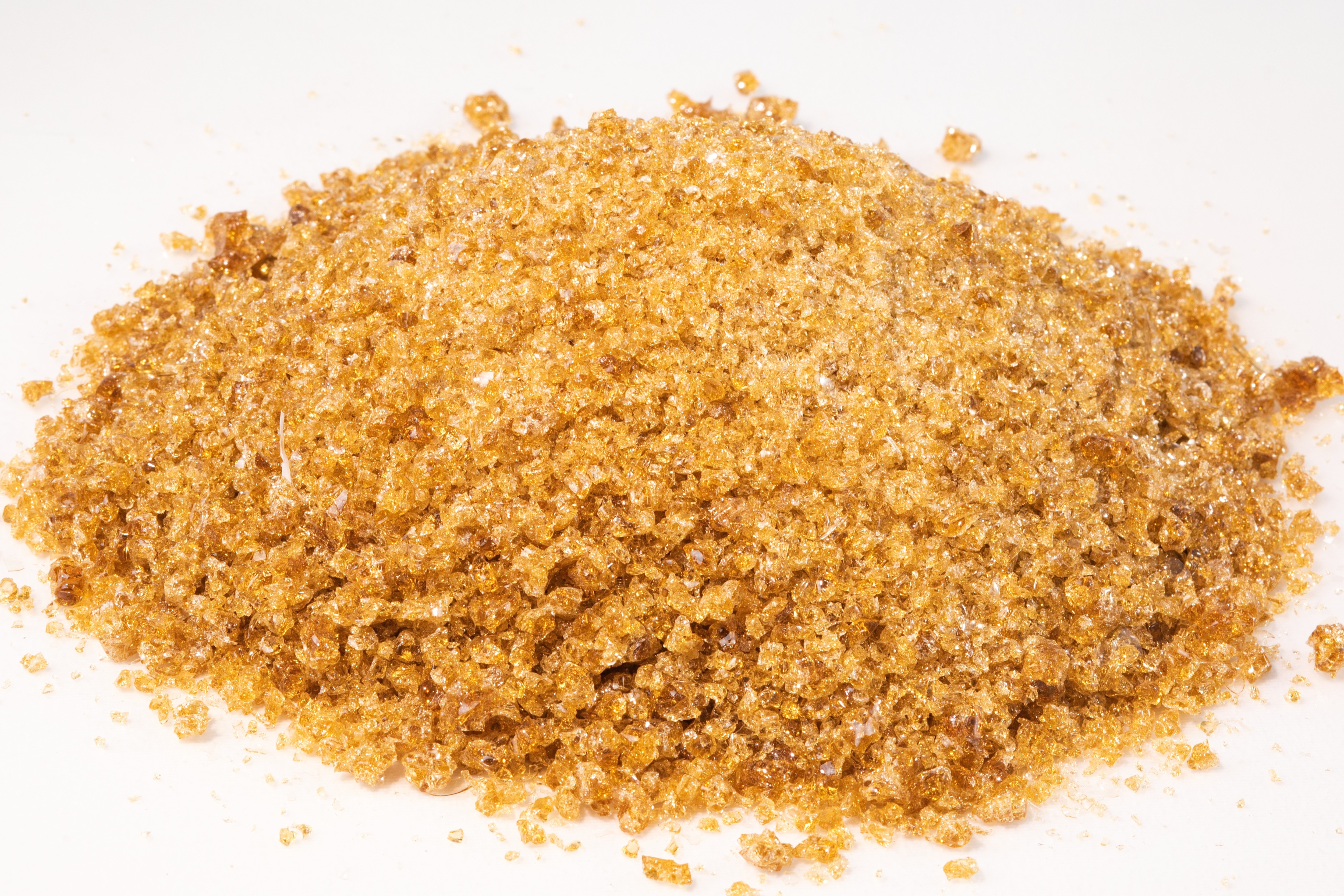
Where the engobe frit fits in the wider frit family
An engobe decision is only one part of a tile's material stack, and it helps to see the neighbouring categories clearly. In RENOVA's documented range, Transparent Frit RFTR-01 (1060–1130°C) is the surface glaze frit for single-fired and double-fired wall tiles, valued for high transparency, excellent gloss and a smooth even surface. Wall Tile Matte Frit RFM-01 (1050–1120°C) and Floor Tile Matte Frit RFM-02 (1100–1150°C) provide matte effects, the latter with a high initial melting point and low blistering tendency. Wear-Resistant Frit RFS-W01 supports glaze durability, and Polishing Frit RFS-P01 (1150–1200°C) serves polished-glaze and rustic tile surfaces.
Outside the tile body, low-temperature ceramic frit options extend the range: Boron Frit RFL-B01 with an application temperature range of 600–900°C for grinding wheels, low-temperature coatings and glass coatings, and High-Lead Frit RFL-HL01 at 500–800°C for low-temperature colour glazes, high-gloss glazes and solar cell applications. On the slab side, Silica-Free Frit for Quartz Slabs RFSF-01 is a silica-free formulation with no free crystalline silica, developed for quartz slab and engineered stone production. Glaze products such as Exterior Wall Tile Glaze RFG-EW01 and Full-Polishing Glaze RFG-FP01 complete the surface layer.
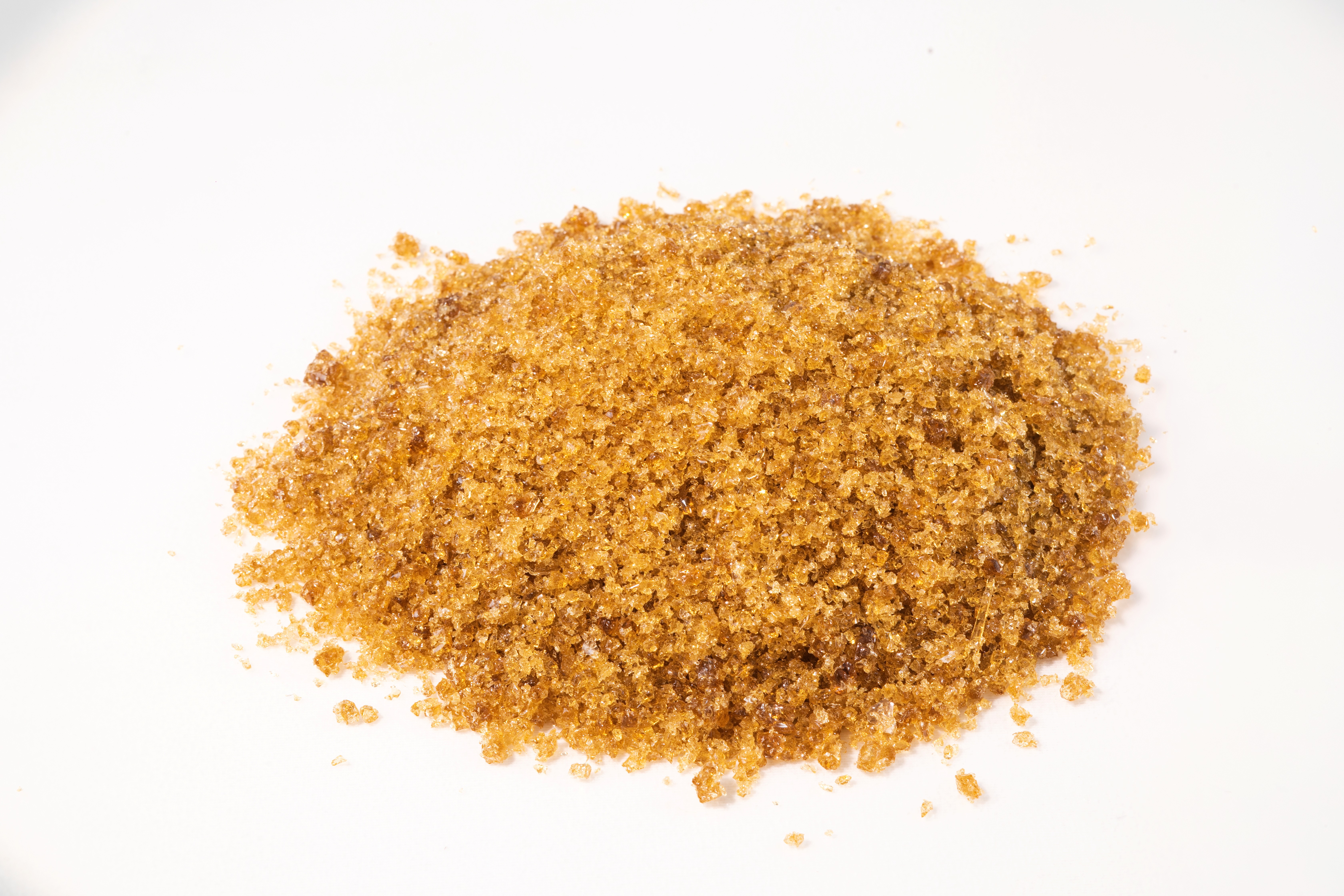
Step-by-Step: How to Specify an Engobe Frit
The sequence below reflects how a frit specification is normally built with a supplier's technical team. Each step produces an input for the next, so skipping a step usually means discovering the mismatch later, on the kiln.
Step 1 — Characterise the body
Record the body's thermal expansion behaviour, its fired colour and its surface condition. The expansion value is the single most important input, because it determines whether the engobe frit should sit at the high end (RFT8-7-HH) or the lower end (RFT8-7-HL, RFT8-9-HL) of the series. Confirm with your technical team which unit convention the supplier's coefficient is expressed in before matching numbers to a body measurement.
Step 2 — Fix the firing window
Identify the peak firing temperature and the cycle length. A line running at 1050–1100°C points toward RFT8-7-LL; a line at 1080–1180°C points toward the HH, HL or 9-HL models. Where a plant runs hot but still needs a lower-melting component, the supplier's own guidance is that RFT8-7-HL can be combined with low-temperature titanium frit to adjust firing temperature and thermal expansion together.
Step 3 — Set the whiteness target
Decide what the finished tile must show. Standard backgrounds generally sit within the approximately 7% titanium models. Where the product is positioned as a high-end wall tile with a bright, uniform background, the approximately 9% titanium model RFT8-9-HL is the documented option, offering excellent whiteness and vivid background colour development.
Step 4 — Build the engobe formulation and trial it
Once a candidate frit is selected, the formulation is adjusted around it. RENOVA's technical team works with the customer's factory technicians to fine-tune the formulation and application process according to the ceramic body, kiln type, firing temperature and production process. Trials are the point where the specification is confirmed or revised — not the data sheet alone.
Step 5 — Validate on the finished tile
Check the engobe after firing for coverage, colour uniformity, cracking and blistering, then check the tile after decoration and any polishing step. Because production conditions vary between factories — body materials, kiln types, firing temperatures and processes — the same frit can behave differently on two lines, and the trial result is what counts.
Step 6 — Lock the specification for repeat supply
Agree the model, the mill addition range and the acceptance criteria in writing, then hold them across deliveries. Stable product quality and competitive direct-supply pricing are the two commercial properties RENOVA states it maintains, and both are only meaningful if the same specification is repeated shipment after shipment.
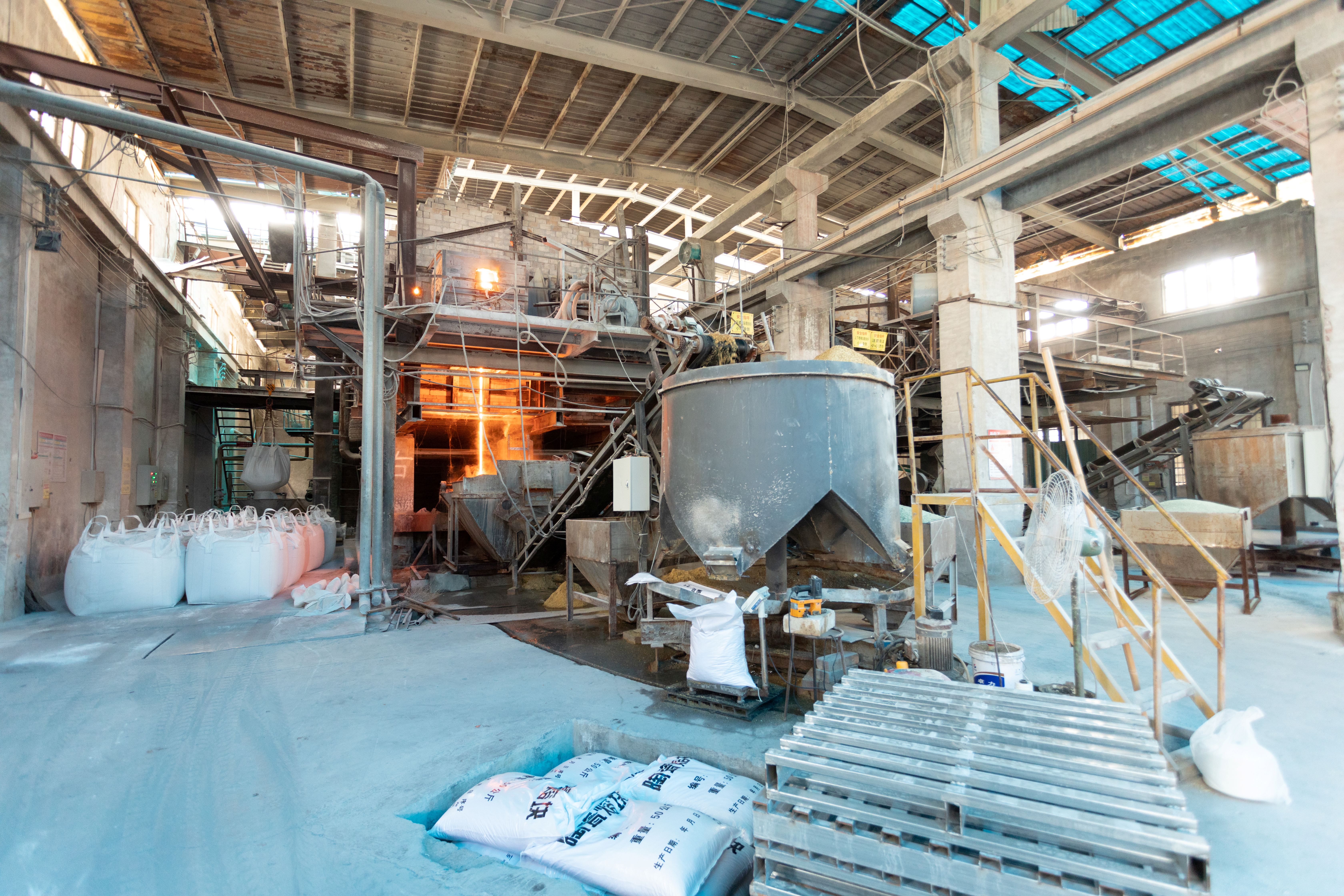
Use Cases: Matching the Engobe Frit to the Production Route
The four models map onto recognisable production situations rather than abstract categories.
Single-fired wall tiles with a waterproof engobe
Single-fired wall tiles combine body firing, engobe and glaze in one pass at 1080–1180°C. RFT8-7-HH is specified for high-expansion bodies on this route, while RFT8-9-HL is used where the whiteness target is high-end. Both are documented for waterproof engobe formulations.
Double-fired wall tiles on a lower-temperature line
Double-fired production typically runs cooler and depends on a frit that melts fully within the cycle. RFT8-7-LL, at 1050–1100°C, is the model positioned for waterproof engobe in this route, and it is described as a key frit product for the application.
Floor tiles with an engobe layer
Floor tile bodies are often thicker and expand differently from wall tile bodies. The T8 series is documented for floor tile engobe as well as wall tile engobe, so the same family can serve both product lines when the expansion values are checked individually.
High-temperature lines needing expansion adjustment
Where the kiln runs hot but the body has modest expansion, RFT8-7-HL is used to adjust firing temperature and thermal expansion, and it can be combined with the low-temperature titanium frit to reach the required balance.
Comparison: T8 Titanium Frit Models for Engobe
The table below compares the four documented models on the parameters that drive an engobe selection. All values are as stated in the product specifications.
| Model | Firing temperature | Thermal expansion coefficient (listed) | Titanium content | Documented engobe role |
|---|---|---|---|---|
| RFT8-7-HH | 1080–1180°C | 290 | approx. 7% | Bodies with high thermal expansion; good thermal stability and elasticity; excellent whiteness |
| RFT8-7-HL | 1080–1180°C | 180 | approx. 7% | Bodies with low thermal expansion; adjusts firing temperature and thermal expansion |
| RFT8-7-LL | 1050–1100°C | 220 | approx. 7% | Low-temperature firing; waterproof engobe for double-fired wall tiles |
| RFT8-9-HL | 1080–1180°C | 180 | approx. 9% | High-end wall tiles; excellent thermal stability, excellent whiteness |
The specifications list the thermal expansion coefficient as a numeric value; confirm the unit convention with your technical team before aligning it with body measurements.
A second comparison is useful when the engobe is being specified alongside the rest of the tile stack, because it clarifies which frit category belongs at which layer.
| Frit category | Example model | Documented temperature range | Documented role |
|---|---|---|---|
| Titanium frit (engobe) | RFT8-9-HL | 1080–1180°C | Whiteness and waterproof engobe for wall tiles and floor tiles |
| Transparent frit | RFTR-01 | 1060–1130°C | Surface glaze with high transparency and gloss for wall tiles |
| Matte frit | RFM-01 / RFM-02 | 1050–1120°C / 1100–1150°C | Matte effect for wall tiles; fine matte for floor tiles with low blistering tendency |
| Wear-resistant frit | RFS-W01 | Not stated in the specification | Glaze durability for polished-glaze and rustic tiles |
| Boron frit | RFL-B01 | 600–900°C | Low-temperature applications including grinding wheels, coatings and glass coatings |
| High-lead frit | RFL-HL01 | 500–800°C | Low-temperature colour glazes, high-gloss glazes, solar cell applications |
| Silica-free frit | RFSF-01 | Not stated in the specification | Quartz slab and engineered stone; no free crystalline silica |
Frequently Asked Questions
Are there compliance or handling requirements to confirm before specifying a ceramic frit?
It depends on the material. Where a formulation uses a lead-containing low-temperature frit, the applicable regulatory and handling requirements should be confirmed for the intended market and application before use. For markets with strict limits on free crystalline silica, RENOVA's silica-free frit for quartz slabs is formulated without free crystalline silica. For titanium frit used in engobe, the applicable national product and food-contact requirements of the destination market should be checked with the supplier and your compliance team, since requirements differ by market.
Can RENOVA recommend the right engobe frit for our body and kiln?
Yes. A recommendation is made on the basis of the customer's specific production conditions and requirements. The technical team evaluates factors such as raw materials, kiln type, firing temperature and production process to select the appropriate product, and can then work with the customer's factory technicians to fine-tune the formulation and application process.
What is the minimum order quantity for engobe frit, and how is it priced?
The minimum order quantity depends on the specific product and order details, so it is confirmed against the product and quantity requested rather than set as a single figure. On pricing, RENOVA supplies directly and states that it maintains competitive direct-supply pricing alongside stable product quality; an indicative quotation requires the model, the expected volume and the destination.
Can we test samples before placing an order?
Yes. Samples can be provided once a suitable product has been identified against your requirements and production conditions, and they can be used for testing and evaluation before an order is placed. For an engobe, the meaningful test is a full application trial — engobe preparation, application, firing and finish inspection — rather than a material check alone.
What is the delivery time for a frit order?
Delivery time depends on the specific product and order details, including the model selected and the quantity required. To receive an estimated lead time, share your product requirements and order quantity with the team at RENOVA INDUSTRIAL & TRADING CO., LTD.; the same enquiry can cover the technical data sheet, a sample request and a quotation in one exchange.
Conclusion
Engobe frit controls a layer that buyers rarely see but always judge — the layer that decides whether a tile hides its body, holds a clean white background, survives firing without cracking and resists water in service. The specification logic is narrow: measure the body's expansion, fix the firing window, set the whiteness target, then confirm the choice on a trial rather than on a data sheet.
Within that logic, the T8 Titanium Frit series from RENOVA covers the main engobe routes through four documented models: high expansion at 1080–1180°C, lower expansion at the same range, low firing at 1050–1100°C for double-fired wall tiles, and a higher-titanium grade for high-end whiteness. Each is a starting point for a formulation trial, not a finished answer — which is why the technical support around the product matters as much as the product itself.
Next step: match a titanium frit to your body
Send your body expansion, peak firing temperature and whiteness target, and the RENOVA technical team will propose a T8 Titanium Frit model and a trial plan. Samples can be arranged once a suitable grade is identified.
Email: rick@renovafs.com · Tel: +86 189-2598-9980 · Website: renovafs.com
RENOVA INDUSTRIAL & TRADING CO., LTD. — ceramic frits and glazes, Foshan, Guangdong, China.
Have Questions or Need More Details?
Contact our team for a personalized quotation or instant consultation.
Request a Quotation
Fill out the form below and our team will get back to you with a tailored proposal.
WhatsApp Direct Chat
Prefer to chat in real-time? Message us on WhatsApp for instant assistance & quick answers.
- Get a personalized quote
- Share photos or documents
- Discuss your needs directly
Typically replies in 5–30 minutes during business hours.