
RENOVA Industrial & Trading: China Ceramic Frit Manufacturer
RENOVA Industrial & Trading: China Ceramic Frit Manufacturer
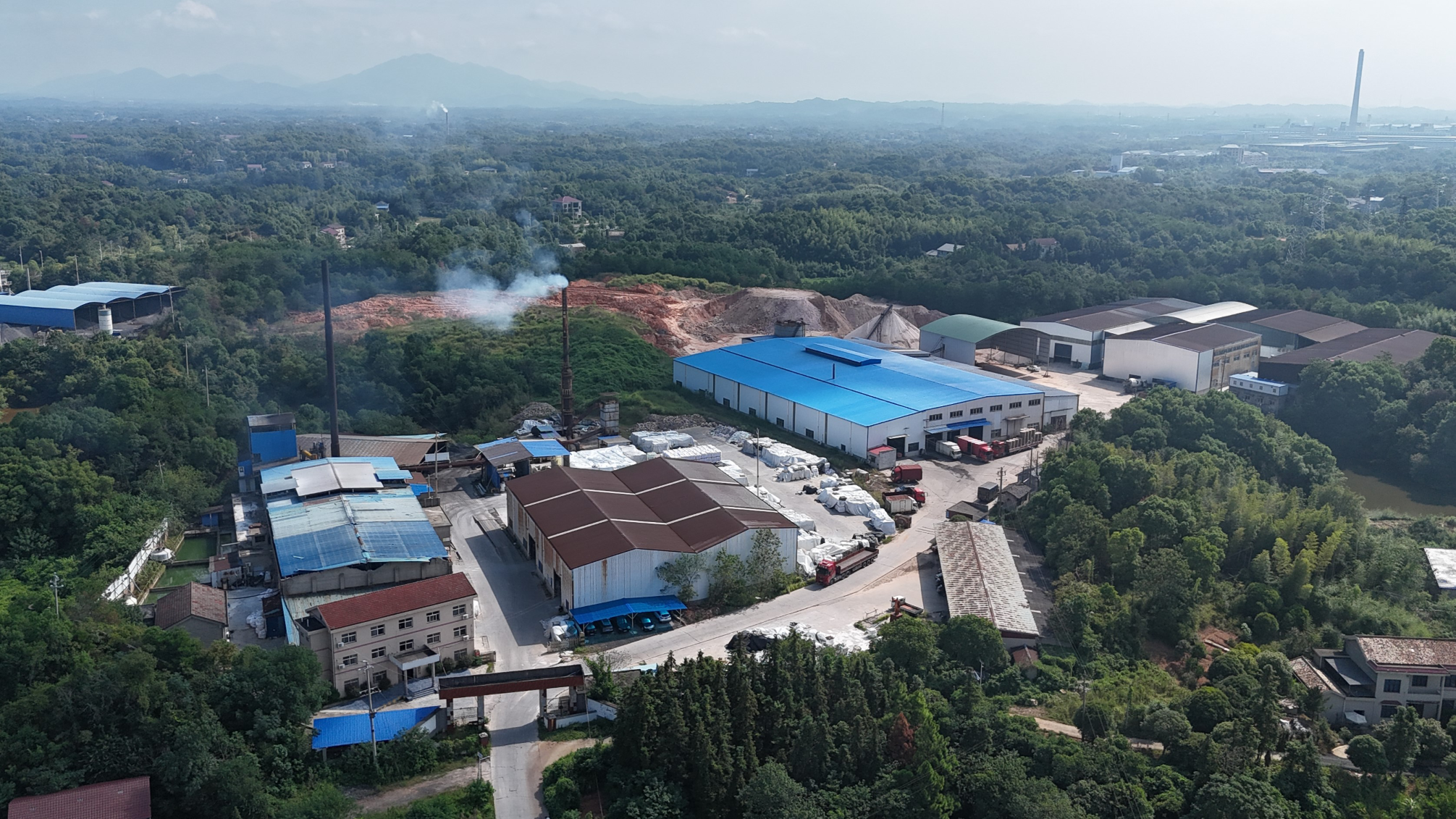
RENOVA INDUSTRIAL & TRADING CO., LTD is a ceramic frit and ceramic glaze manufacturer and trading company based in Foshan, Guangdong, China. Established in 2011, the company operates multiple production facilities in China with a combined annual production capacity of 40,000 tons and supplies titanium frit, transparent frit, matte frits, polishing and wear-resistant frits, boron and high-lead low-temperature frits, exterior wall tile glaze, full-polishing glaze and silica-free frit for quartz slabs to ceramic tile and engineered stone producers in China and overseas.
This profile is written for buyers in the awareness and research stages of sourcing — procurement managers, technical directors and importers who are mapping China ceramic frit manufacturers before shortlisting suppliers. It separates documented company and product facts from market context, and it flags where the available evidence is thin so that readers know what to verify directly.
Company Snapshot
- Legal entity RENOVA INDUSTRIAL & TRADING CO., LTD
- Established 2011, with more than 30 years of ceramic manufacturing experience behind the operation
- Headquarters Room A301, Area A&B Ceramic Equipment Center CCIH, No. 68 Jihua Road, Chancheng, Foshan, Guangdong, China
- Manufacturing footprint 10,000 m² facility plus multiple production facilities across China
- Annual production capacity 40,000 tons
- Workforce approximately 50 employees, including 29 technicians
- Export ratio / main markets 10% export share; main markets in Southeast Asia
- Core categories Ceramic frits, ceramic glazes, silica-free frit for quartz slabs
- Website renovafs.com
Why Evaluating a Ceramic Frit Manufacturer Is Harder Than It Looks
Ceramic frit is a specification input, not a finished product. The same frit can deliver a defect-free glaze on one tile body and a crazed, blistering or dull surface on another, because the outcome depends on the body composition, the engobe or glaze recipe, the kiln type, the firing temperature and the wider production process. That single characteristic explains most of the difficulty buyers face when they compare China ceramic frit manufacturers.
Three problems recur in supplier evaluation. First, published product lists often state a model name and a category without making clear which firing window and which body type the frit was designed for, so two products that look interchangeable on a catalogue page are not interchangeable in a kiln. Second, performance claims are frequently detached from application conditions — a wear-resistance or whiteness claim means little without the firing temperature and the layer in which the frit is used. Third, commercial terms are rarely fixed: minimum order quantities and lead times usually depend on the specific product and order details rather than on a published threshold.
There is also a compliance layer. Vitrifiable enamels and glazes — the customs heading that covers ceramic frit — fall under HS code 3207.20, per Flexport / USITC tariff data, which is the code a buyer's customs broker will normally use when assessing duty and import documentation. Products formulated with lead, such as high-lead frits used in low-temperature glazes, additionally require the buyer to confirm the regulatory and handling requirements of the destination market before ordering.
A supplier profile is therefore only useful if it connects company facts to application conditions. The sections below do that in sequence: market context, company structure, product families and their documented firing ranges, manufacturing and technical capability, and a qualification path a buyer can follow.
The Ceramic Frit Market Context Buyers Should Know
Published market sizing for ceramic frit is directionally consistent but numerically inconsistent, and buyers should treat it as background rather than as a procurement input. Market Research Future's ceramic frit dataset covers a 2025–2035 forecast period and records a valuation of USD 4.442 billion, while Business Research Insights, cited in the same data package, estimates USD 1.9 billion for 2025. The gap is most plausibly explained by scope — whether glass frit for architectural applications is included — rather than by a disagreement about demand direction.
Market structure is more reliable than market size. Alkaline-boron frit is the single largest product type, at 38.7% of global revenue in 2025 according to Future Market Insights, which is consistent with the role boron frits play in low-temperature glaze and coating systems. China accounts for roughly 65% of global ceramic frit production and market share, based on Market Research Future figures for 2023. For a buyer, that concentration means the Chinese supplier base is where product breadth, price competition and technical support depth are greatest — and where supplier screening matters most.
RENOVA Industrial & Trading at a Glance
RENOVA INDUSTRIAL & TRADING CO., LTD is an integrated manufacturing and trading company specializing in ceramic frits, ceramic glazes and other ceramic materials, serving ceramic manufacturers in domestic and international markets. The company was established in 2011 and is headquartered in Foshan, Guangdong, the ceramic equipment and materials cluster in southern China.
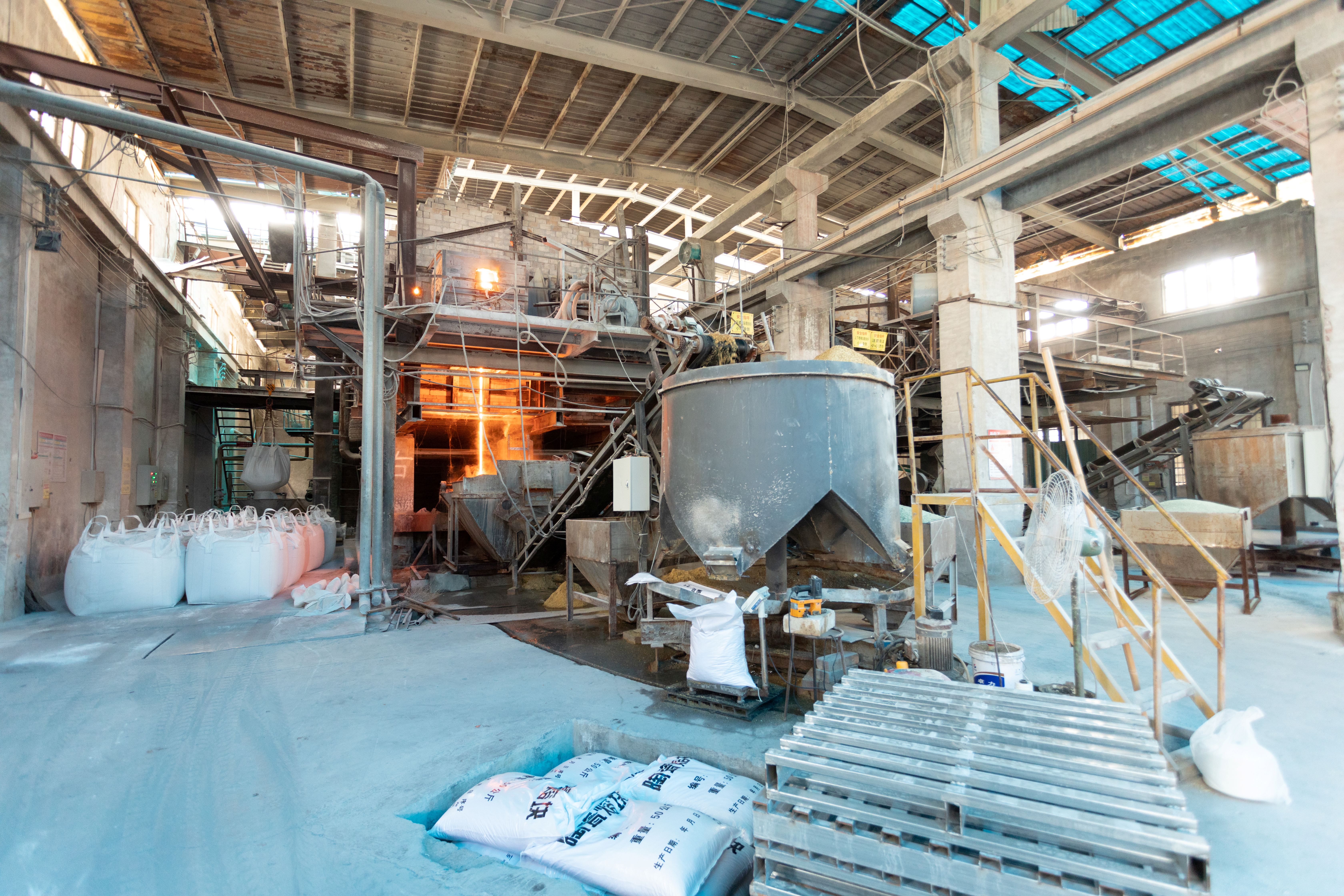
Its manufacturing base covers 10,000 m² and employs approximately 50 people. Across its production facilities in China, combined annual production capacity reaches 40,000 tons, which is the scale figure most relevant to buyers assessing supply continuity. The company's stated experience base is longer than the legal entity: RENOVA describes more than 30 years of ceramic manufacturing expertise behind the current operation, with the 2011 facility representing the formalized manufacturing footprint rather than the start of the team's industry experience.
The commercial profile is domestic-weighted. Export accounts for 10% of volume, with Southeast Asia as the main export market. That matters for two reasons: the technical team's reference base is largely built on Chinese tile production conditions, and buyers outside Southeast Asia should plan logistics, documentation and lead-time expectations accordingly rather than assuming a mature export operation at global scale.
Core Products and Solutions: From Titanium Frit to Silica-Free Quartz Frit
RENOVA's product range covers the main functional layers of a ceramic tile: engobe, surface glaze and polishing glaze, plus adjacent low-temperature frit applications outside tile manufacturing. Each family is documented with a firing window or application temperature, which is the first filter a buyer should apply.
Titanium and Engobe Frits
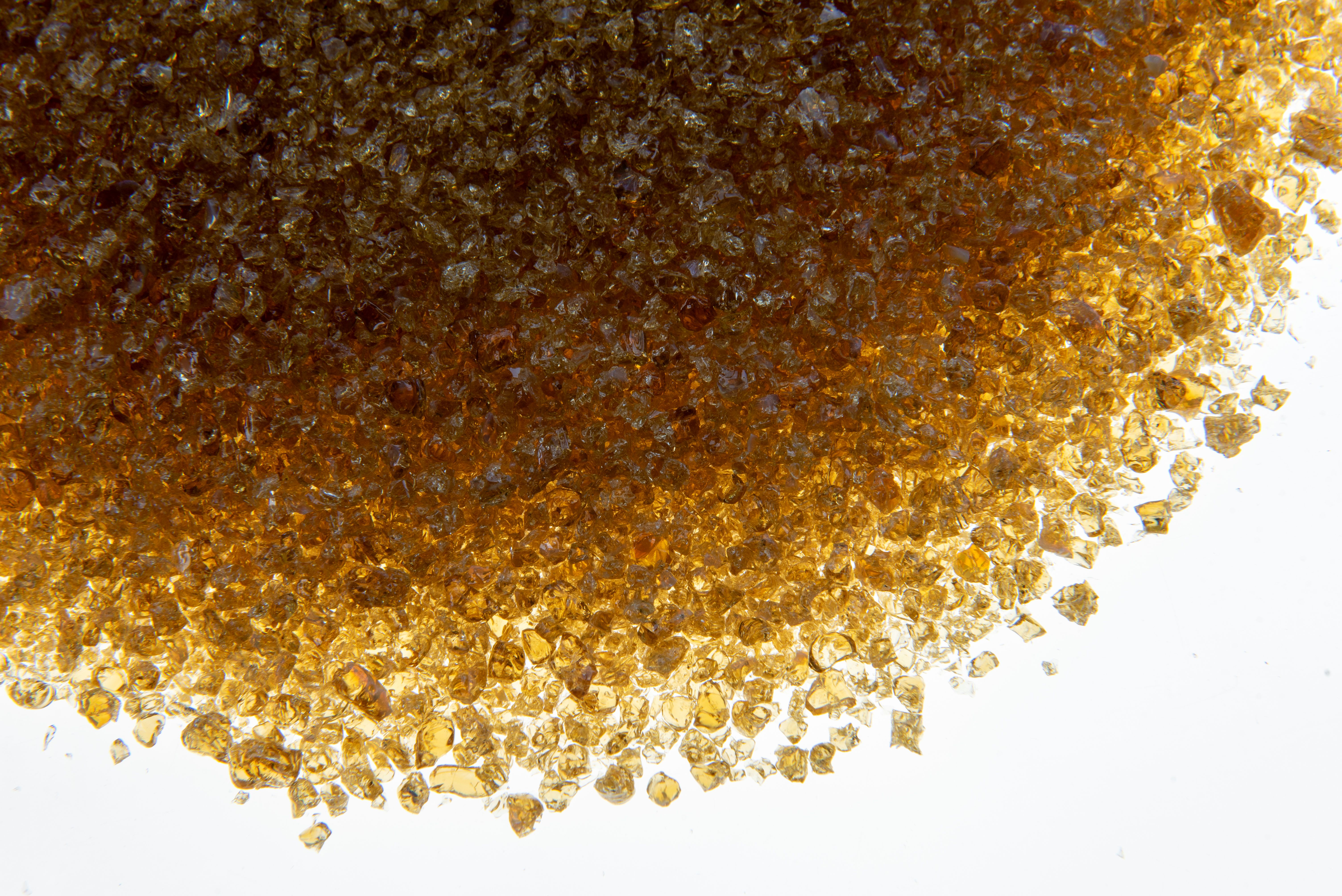
Titanium frits are the opacity and whiteness carriers in engobe formulations, and RENOVA documents four T8 titanium frit models that differ chiefly in firing temperature and thermal expansion coefficient. RFT8-9-HL fires at 1080–1180°C with a thermal expansion coefficient of 180 and approximately 9% titanium content, and is positioned for high-end wall tile engobe work requiring excellent thermal stability and whiteness. RFT8-7-HH shares the 1080–1180°C window but with a thermal expansion coefficient of 290 and approximately 7% titanium, which suits bodies with high thermal expansion. RFT8-7-HL combines the 1080–1180°C window with a coefficient of 180, and can be used in combination with a low-temperature titanium frit when a line runs at a relatively high firing temperature, to adjust firing temperature and thermal expansion together. RFT8-7-LL is the low-temperature option at 1050–1100°C with a coefficient of 220, documented as a key frit for waterproof engobe formulations on double-fired ceramic wall tiles.
In white and super-white engobe systems, whiteness and covering power are typically delivered by these titanium-bearing grades rather than by the transparent glaze layer above them. Zirconium-bearing frits are the other common route to opacity in glaze and engobe systems; independent product listings describe RENOVA's specialized frit range as including titanium, zirconium and transparent frits.
Transparent and Matte Frits for Wall and Floor Tiles
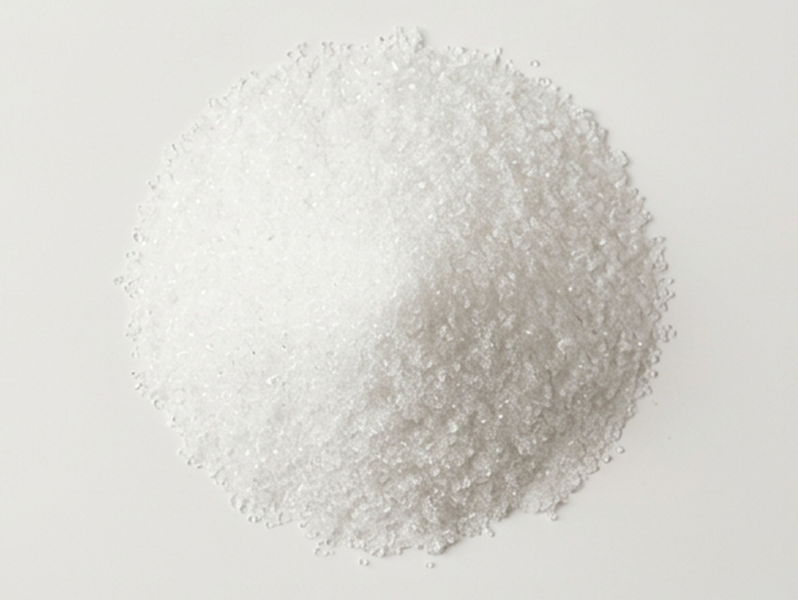
Transparent Frit RFTR-01 fires at 1060–1130°C and is designed for surface glaze on single-fired and double-fired ceramic wall tiles, including low-temperature fast-firing lines. Documented properties are high transparency, excellent gloss, a smooth and even glaze surface, and good stain, corrosion and wear resistance — the combination that determines how well a printed decoration reads through the glaze layer.
On the matte side, Wall Tile Matte Frit RFM-01 fires at 1050–1120°C with an excellent matte effect, a fine and smooth surface, good color development and excellent translucency, and is used in matte wall tile glazes, rustic floor tile glazes and polished-glaze applications. Floor Tile Matte Frit RFM-02 fires at 1100–1150°C and is specified with a high initial melting point and a low tendency to blister during firing, which is the property that matters most on floor tile rustic and polishing glaze formulations.
Surface Frits: Polishing, Wear-Resistant and Velvet Matte
Polishing Frit RFS-P01 is a surface frit with an application temperature range of 1150–1200°C, documented for polished-glaze and rustic tile surfaces. Wear-Resistant Frit RFS-W01 is specified with excellent wear resistance and produces a smooth glaze surface after firing, for polished-glaze and rustic tile glaze formulations where surface durability is the governing requirement. Velvet Matte Frit RFS-V01 delivers a velvety, fine-textured matte effect at a controllable gloss level of approximately 5–8 GU while keeping the glaze surface fine and smooth.
Low-Temperature Frits: Boron and High-Lead
Boron Frit RFL-B01 is a low-temperature frit with an application temperature range of 600–900°C, used in grinding wheels, low-temperature coatings and glass coatings. High-Lead Frit RFL-HL01 covers an even lower 500–800°C window and is used in low-temperature color glazes, high-gloss glazes and solar cell applications that require low-temperature processing. Because RFL-HL01 is a lead-containing material, applicable regulatory and handling requirements should be confirmed for the intended market and application before specification.
Ceramic Glaze Frit: Exterior Wall and Full-Polishing Systems
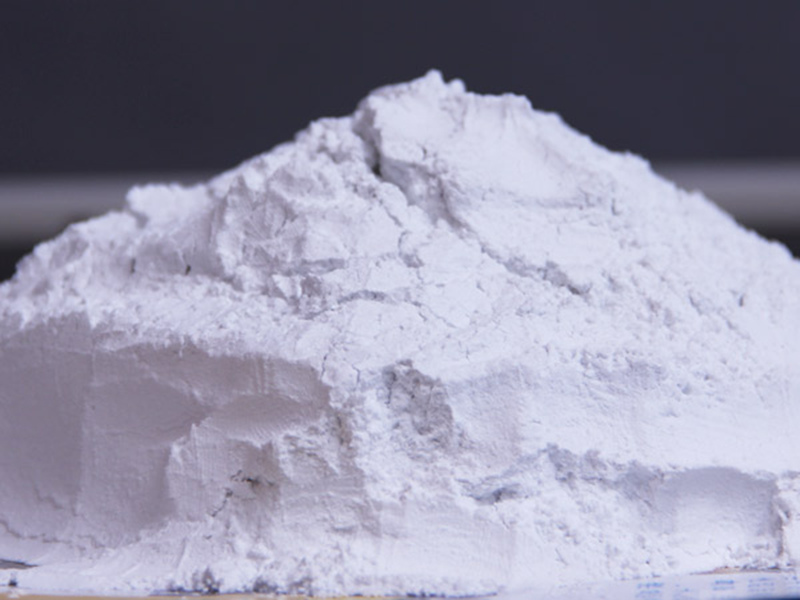
Exterior Wall Tile Glaze RFG-EW01 fires at 1150–1200°C and is designed for exterior ceramic wall tiles in various sizes, in both white and colored bodies, with documented good wear resistance, thermal shock resistance, stain resistance and color development plus high whiteness. Full-Polishing Glaze RFG-FP01 covers the same 1150–1200°C window and is built for polished-glaze tiles in 600 × 600 mm, 800 × 800 mm and 1000 × 1000 mm formats; it is documented with good slip and stain resistance, excellent wear resistance, very high gloss after polishing, an exceptionally smooth mirror-like finish and vivid color development without dulling printed decoration, and is compatible with digital inkjet printing and screen printing.
Silica-Free Frit for Quartz Slabs

Silica-Free Frit RFSF-01 is the product most clearly aimed at a regulatory-driven requirement rather than a purely aesthetic one. It is formulated without free crystalline silica and is positioned as an alternative to conventional quartz raw materials for quartz slab and engineered stone production, with excellent light transmission, naturally soft color expression, and low oil absorption that can help reduce resin consumption and improve slab density. It is described as compatible with existing production lines without major process modifications, and as suitable for markets with strict free-silica requirements, including Australia. RENOVA states that silica-free quartz frit is currently supplied to selected domestic and international customers, with plans to expand production capacity as demand develops.
Capability Analysis: Manufacturing, R&D, Quality and Supply
Manufacturing
Production runs across multiple facilities in China with a combined annual capacity of 40,000 tons, anchored by a 10,000 m² site established in 2011. For a buyer, the relevant reading is redundancy: multi-site production gives more room to absorb volume shifts than a single-line operation, and the stated capacity is large enough to serve mid-sized tile producers without re-tooling. The company does not publish plant-level output allocation or kiln data, so capacity claims should be verified during an audit or trial order.
Technical and Development Capability
Twenty-nine technicians cover research and development, production technology and application support. Their working method is collaborative rather than catalogue-based: after a customer selects a frit or glaze, the technical team works with the customer's own factory technicians to fine-tune the formulation and application process against the ceramic body, kiln type, firing temperature and production process. Suitability is then evaluated through production trials rather than on paper alone. That model is the practical answer to the problem described earlier — frit performance is line-specific, so formulation adjustment is part of the product, not an after-sales add-on.
Quality and Commercial Terms
RENOVA states that it focuses on stable product quality and competitive direct-supply pricing. Direct supply removes distributor margin from the price chain, which is a genuine commercial advantage for volume buyers, but it also places more responsibility on the buyer to specify and test correctly. The supplied material does not include third-party certification documents or independent test reports, so buyers should request the specific test data and certificates relevant to their market during qualification rather than assuming them.
Supply and Service
Support extends beyond the shipment: the technical team provides on-site technical support, formulation adjustment, production process guidance and after-sales technical service when a finished product does not achieve the expected result. Because each factory's body materials, kiln type and firing profile differ, this service layer is what converts a standard frit into a working specification. Export currently represents 10% of volume with Southeast Asia as the primary market, so international buyers should confirm documentation, packaging and shipping arrangements for their destination at quotation stage.
Market Recognition and Customer Base
RENOVA's customer references include well-known ceramic brands — Marco Polo, Monalisa, Hongyu and Arrow. Supplying established tile producers is a meaningful signal in this category, because large tile lines run tight firing windows and reject inconsistent glaze behaviour quickly; a supplier that stays on those lines has usually passed repeated production trials rather than a single sample test.
Two limits should be stated plainly. First, RENOVA does not publish audited financial statements, plant-level capacity data or third-party quality certifications in the material available for this profile, so its industry position can be described qualitatively but not ranked against named competitors on verified metrics. Second, with 10% of volume exported and Southeast Asia as the main overseas market, the company's international track record is narrower than its domestic base — international buyers are, in effect, buying into a China-focused operation with an established but smaller export channel.
Step-by-Step: How a Frit Specification Is Qualified with RENOVA
- Define the production conditions. Record the body composition, the layer to be formulated (engobe, surface glaze or polishing glaze), kiln type, firing temperature and current process. RENOVA's technical team uses these four inputs — body, kiln type, firing temperature and process — as the basis for any recommendation.
- Shortlist by firing window. Match the line temperature to the documented product window: 1050–1100°C for RFT8-7-LL, 1060–1130°C for RFTR-01, 1100–1150°C for RFM-02, 1150–1200°C for RFS-P01, RFG-EW01 and RFG-FP01, and 600–900°C or 500–800°C for the boron and high-lead low-temperature frits.
- Confirm thermal expansion compatibility. On titanium frits, the expansion coefficient ranges from 180 to 290 across the four models. Selecting the coefficient that matches the body is what prevents crazing or peeling later, so this step should not be skipped in favour of price comparison.
- Sample and run a production trial. Samples can be provided once a suitable product has been identified from the buyer's requirements and production conditions, and they are intended for testing and evaluation before an order is placed.
- Adjust the formulation jointly. Work with the technical team and your own factory technicians to fine-tune the recipe and application process, then re-test until the finished tile meets the target surface, colour and durability.
- Scale up and hold the specification. Confirm MOQ, lead time and delivery terms against the specific product and volume, then keep the approved formulation and process parameters on file so that repeat orders are matched to a documented standard rather than to memory.
Use Cases: Matching Frit Families to Production Conditions
- Double-fired wall tile line running 1050–1100°C. RFT8-7-LL is documented as a key frit for waterproof engobe on double-fired wall tiles at this temperature, with a coefficient of 220 suited to low-expansion bodies.
- High-expansion tile body. RFT8-7-HH, with a coefficient of 290 at 1080–1180°C, is designed for bodies with high thermal expansion, where a lower-coefficient frit would risk stress failure.
- Polished-glaze tile production in large formats. RFG-FP01 covers 600 × 600 mm, 800 × 800 mm and 1000 × 1000 mm formats at 1150–1200°C, with the gloss and mirror finish recovered after polishing and colour development preserved through digital inkjet decoration.
- Matte and rustic floor tile ranges. RFM-02 at 1100–1150°C combines a fine matte effect with a high initial melting point and low blistering tendency, which is the usual failure mode on floor tile rustic glaze lines.
- Quartz slab producers facing free-silica restrictions. RFSF-01 offers a silica-free route with no free crystalline silica, low oil absorption for resin economy, and compatibility with existing slab lines, which is relevant to markets including Australia.
- Low-temperature industrial applications. RFL-B01 at 600–900°C serves grinding wheels, low-temperature coatings and glass coatings; RFL-HL01 at 500–800°C serves low-temperature colour and high-gloss glazes and solar cell processing, subject to lead-related regulatory confirmation.
Comparison Table: RENOVA Product Families at a Glance
| Product family | Model | Documented firing / application temperature | Key documented properties | Typical application |
|---|---|---|---|---|
| Titanium Frit | RFT8-9-HL | 1080–1180°C | Ti approx. 9%; CTE 180; excellent thermal stability; excellent whiteness | High-end wall tile engobe; single-fired, double-fired and floor tile |
| Titanium Frit | RFT8-7-HH | 1080–1180°C | Ti approx. 7%; CTE 290; good thermal stability | Bodies with high thermal expansion coefficients |
| Titanium Frit | RFT8-7-HL | 1080–1180°C | Ti approx. 7%; CTE 180 | Firing temperature and expansion adjustment; combinable with low-temperature titanium frit |
| Titanium Frit | RFT8-7-LL | 1050–1100°C | Ti approx. 7%; CTE 220; good thermal stability and elasticity | Waterproof engobe for double-fired wall tiles |
| Transparent Frit | RFTR-01 | 1060–1130°C | High transparency; excellent gloss; good stain, corrosion and wear resistance | Surface glaze on single-fired and double-fired wall tiles; low-temperature fast firing |
| Wall Tile Matte Frit | RFM-01 | 1050–1120°C | Excellent matte effect; fine smooth surface; good colour development; excellent translucency | Matte wall tile glaze; rustic floor glaze; polished-glaze applications |
| Floor Tile Matte Frit | RFM-02 | 1100–1150°C | Fine matte effect; high initial melting point; low blistering tendency | Floor tile rustic and polishing glaze formulations |
| Polishing Frit | RFS-P01 | 1150–1200°C | Surface frit for polishing applications | Polished-glaze and rustic tile surfaces |
| Wear-Resistant Frit | RFS-W01 | Not specified in source | Excellent wear resistance; smooth glaze surface after firing | Polished-glaze and rustic tile glaze formulations |
| Velvet Matte Frit | RFS-V01 | Tile glaze firing | Gloss approx. 5–8 GU; velvety, fine-textured matte; fine smooth surface | Refined matte tile surfaces |
| Boron Frit | RFL-B01 | 600–900°C | Low-temperature boron-containing frit | Grinding wheels, low-temperature coatings, glass coatings |
| High-Lead Frit | RFL-HL01 | 500–800°C | Lead-containing low-temperature frit | Low-temperature colour and high-gloss glazes; solar cell processing |
| Silica-Free Frit for Quartz Slabs | RFSF-01 | Slab production line | No free crystalline silica; excellent light transmission; low oil absorption | Quartz slab and engineered stone production |
| Exterior Wall Tile Glaze | RFG-EW01 | 1150–1200°C | Good wear, thermal shock and stain resistance; high whiteness; good colour development | White and coloured exterior wall tiles |
| Full-Polishing Glaze | RFG-FP01 | 1150–1200°C | Very high post-polishing gloss; mirror-like finish; excellent wear resistance; vivid colour | Polished-glaze tiles in 600 × 600, 800 × 800 and 1000 × 1000 mm |
All values as documented in RENOVA product specifications. CTE = thermal expansion coefficient as stated in the source specification; buyers should confirm test methods during qualification.
Frequently Asked Questions
Which trade code and regulatory classification apply to Chinese ceramic frit?
Vitrifiable enamels and glazes, the customs heading that covers ceramic frit, are classified under HS code 3207.20, according to Flexport / USITC tariff data. Within China, frit melting is a high-temperature chemical process and is most plausibly administered under the manufacture of raw chemical materials and chemical products category of GB/T 4754-2017 rather than under a ceramic-ware category. Lead-bearing products such as RFL-HL01 require buyers to confirm the regulatory and handling requirements of the destination market before ordering.
What production and technical capability does RENOVA have as a China ceramic frit manufacturer?
RENOVA was established in 2011, operates a 10,000 m² manufacturing facility alongside other production facilities in China, employs approximately 50 people and reaches a combined annual production capacity of 40,000 tons. A technical team of 29 technicians covers research and development, production technology and application support, and works with customers' factory technicians to adjust formulations according to body material, kiln type, firing temperature and production process.
How are pricing and minimum order quantity handled?
RENOVA states that it offers competitive direct-supply pricing, which removes distributor margin for volume buyers. Minimum order quantity and lead time depend on the specific product and order details rather than on a single published threshold, so buyers should request a quotation stating the product model, required quantity and destination.
Can buyers obtain samples before placing an order?
Yes. Samples can be provided once a suitable product has been identified from the buyer's requirements and production conditions, and they can be used for testing and evaluation before an order is placed. Because performance depends on body, kiln and firing profile, sample evaluation should reproduce the intended production conditions as closely as possible.
What is the delivery time for a ceramic frit order?
Delivery time depends on the specific product and order details. Buyers should share product requirements and order quantity to receive the corresponding MOQ and estimated lead time. Requests can be sent to Rick Lee at rick@renovafs.com or +86 189-2598-9980.
Conclusion: Where RENOVA Fits in a Frit Sourcing Shortlist
RENOVA INDUSTRIAL & TRADING CO., LTD is best understood as a China-based, application-driven ceramic frit and glaze manufacturer with an unusually complete functional coverage for tile producers: titanium and engobe frits across four expansion and temperature variants, transparent and matte frits for wall and floor tiles, polishing, wear-resistant and velvet matte surface frits, exterior wall and full-polishing glazes, low-temperature boron and high-lead frits for non-tile applications, and a silica-free quartz slab frit aimed at free-silica restricted markets.
The procurement value sits in three places. Technical fit is adjustable rather than fixed — 29 technicians and a documented trial-and-adjust process mean the frit can be tuned to the body and kiln instead of the buyer rebuilding a recipe around a catalogue grade. Direct supply pricing keeps the cost structure transparent for volume buyers. And the product documentation is specific enough to shortlist against: firing windows, expansion coefficients and titanium content are stated per model, which is more than many supplier listings offer.
The limitations are equally clear. Export accounts for 10% of volume with Southeast Asia as the main market, so international buyers outside that region should expect a supplier with a strong domestic base rather than a global distribution network. Public third-party verification — audited financials, plant-level capacity data, independent certification — is not available in the material reviewed here, and the lead-containing RFL-HL01 line requires market-specific regulatory confirmation.
For a buyer in the research stage, the practical next step is a specification conversation rather than a price comparison: state the body, kiln type, firing temperature and target surface, request the matching model with its technical data, and validate it on a production trial. That sequence is where a frit supplier either qualifies or does not.
Request a Sample or Quotation
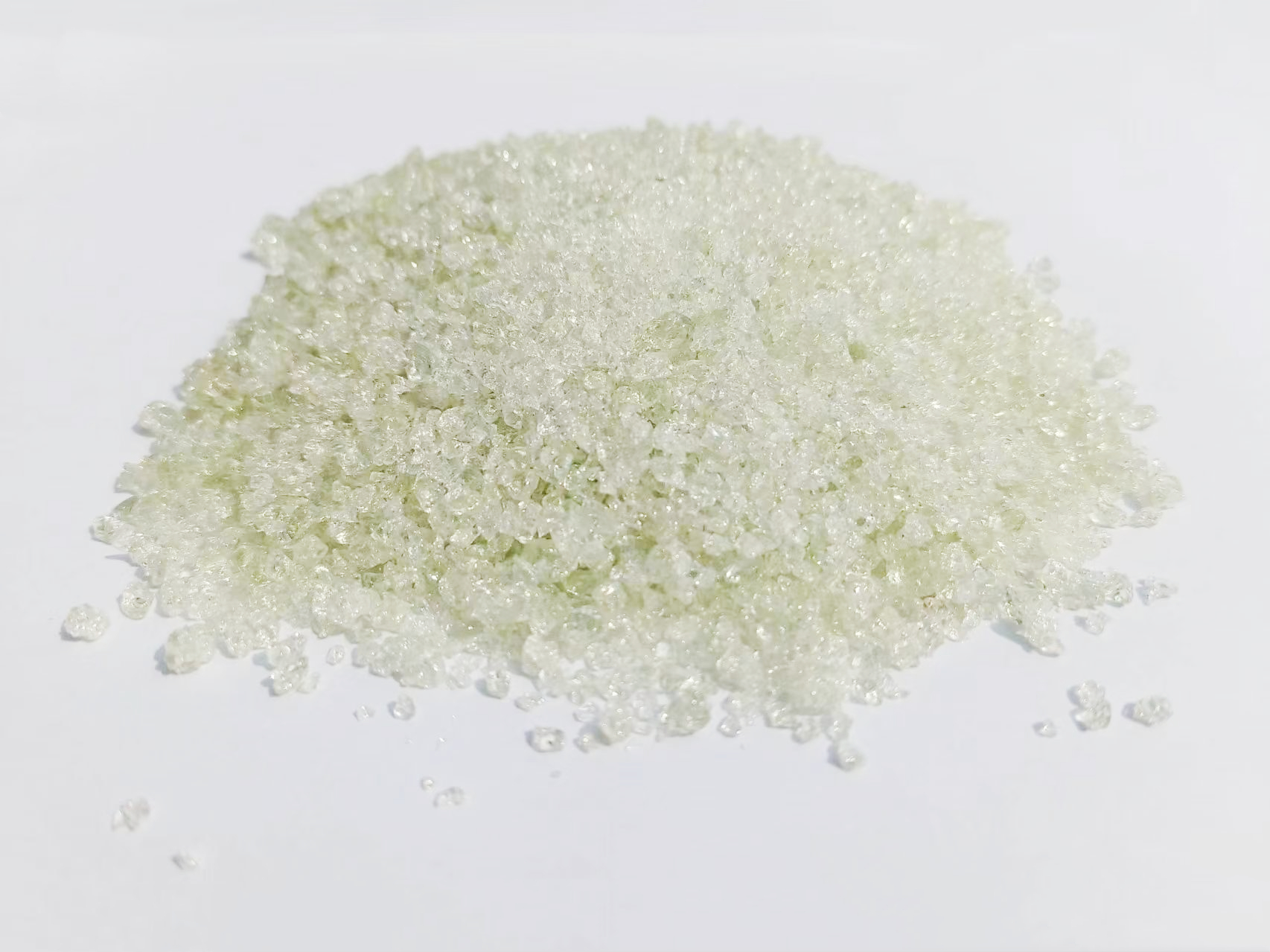
Send your body type, kiln type, firing temperature and target surface, and RENOVA will recommend a matching frit and arrange samples for a production trial.
Contact: Rick Lee · rick@renovafs.com · Tel +86 189-2598-9980 · WhatsApp +81 80-5477-2666
Address: Room A301, Area A&B Ceramic Equipment Center CCIH, No. 68 Jihua Road, Chancheng, Foshan, Guangdong, China
Website: renovafs.com
Have Questions or Need More Details?
Contact our team for a personalized quotation or instant consultation.
Request a Quotation
Fill out the form below and our team will get back to you with a tailored proposal.
WhatsApp Direct Chat
Prefer to chat in real-time? Message us on WhatsApp for instant assistance & quick answers.
- Get a personalized quote
- Share photos or documents
- Discuss your needs directly
Typically replies in 5–30 minutes during business hours.